Building a Camp at Black Rock City

On August 1, the Golden Spike was driven into the dry lakebed in Nevada that will become Black Rock City, home to the annual Burning Man festival. From there, teams of city planners, surveyors, and enthusiastic Burners will create a city of 65,000 people, complete with streets, camps, medical and fire services, art, and general shenanigans. And then they will erase it as if it never existed.

img_6551
Black Rock City, just getting started

Chris and I had Early Entrance passes this year, so on Sunday August 23, we helped our camp owners pack our entire camp infrastructure into two moving vans (plus one shipping container that stays year-round in Gerlach, Nevada), and on Monday morning we left Phoenix and headed north. By Tuesday afternoon, we had presented our tickets at the Gate, and were cruising across an almost-empty playa to map out our camp.

A beautiful night to camp under the stars

It took until well after sunset to stake out the perimeter of our camp, as well as the outside edges of where our main shady space would be, and we hadn’t unloaded the moving vans yet, so we just slept outside under the stars on our air mattress. In the morning, the real work began: we unloaded everything from both 26 foot moving vans. We tried to group stuff together, such as kitchen items, tarps, camouflage netting, and metal fittings to make the structures, coolers filled with food, ice, and drinks, and the pieces needed for our Human Carcass Wash, which is our camp’s gift to the playa every year.

On Thursday and Friday, more campers arrived, so we were able to unload the shipping container that stays in Gerlach, which holds more of our stuff and the items belonging to our sister camps, Temple of Bacchus and the Twisted Swan Celtic bar. We got all ten of our coolers and our tools under a shady roof built in between the two moving vans, and then got started on our main shady space that our camp utilizes.

Our kitchen wasn’t set up yet, so breakfast was scrambled eggs and chorizo on the griddle

The first step was to lay out the giant floor pieces that make up our space. In the past we used heavy canvas tarps, but after last year’s “Mud Burn”, we needed to buy new ones. So this year we tried using recycled billboards that we got from a recycled materials website. One of the Burning Man tenets is sustainability, so we figured we’d try to use some things that didn’t need to go in a landfill. We staked them down, and then constructed the poles that make our walls and roof framework. We stretched the canvas tarps we use as roofing across the top, then raised them up. Last, we hung the camouflage netting on the sides, which allows in a breeze but gives privacy to some extent.

It takes a lot of people to raise these roofs!

Once our shady spaces were intact, our camp started feeling more like home. We added in 50 or 60 camp chairs, hand washing stations, cooking stations, and our serving line. We unpacked our costume exchange closet (which takes up ten bins- we take our outfits very seriously), and put out two massage tables and all the blacklight art that we keep in our front area for general viewing. Last, we added “the man” artwork that was a gift from one of our past campers, and then the finishing touch- a series of lasers at our front entrance that play percussion sounds anytime someone enters or exits (always hilarious). A couple of bike racks, and set up was complete.

Happily, this year, all our construction efforts held up, even with some pretty good winds and one rainy night. Another week went by and then it was time to take it all down. Everyone pitched in, and in only two days’ time, it was all packed up and ready to store for the year.

Time to get all this back in the trucks

In April, our camp will have a weekend party where we take everything out of storage, clean it, inventory it, and make a list of what needs to be purchased for the 2027 Burn. Until then, all that’s left is to put away our own personal camping items, do a big load of laundry, and look back at all of our pictures. For a look at some of the art from past Burning Man years, you can click on my 2018, 2019, or 2022 Burning Man adventure.

Chris Hikes the Continental Divide (pt 2)

This year, Chris spent July back on the trail, continuing north along the CDT. I dropped him off at Chama, New Mexico, hiked the first mile with him, and then he continued north, while I took the car to visit a friend in Durango. A few days later, and 70 trail miles later for him, I met up with Chris at Wolf Creek Ski Area, and we had a zero day in Pagosa Springs. We visited the local Walmart, had a delicious sandwich at The Peak Deli, bought some new hiking shoes at Foot Prints, and spent the afternoon at The Overlook, a fun mineral bath house that features over a dozen hot tubs and pools, all at different temperatures. Pro tip: take a hat if you want to spend time in the pools up on the roof overlooking the town!
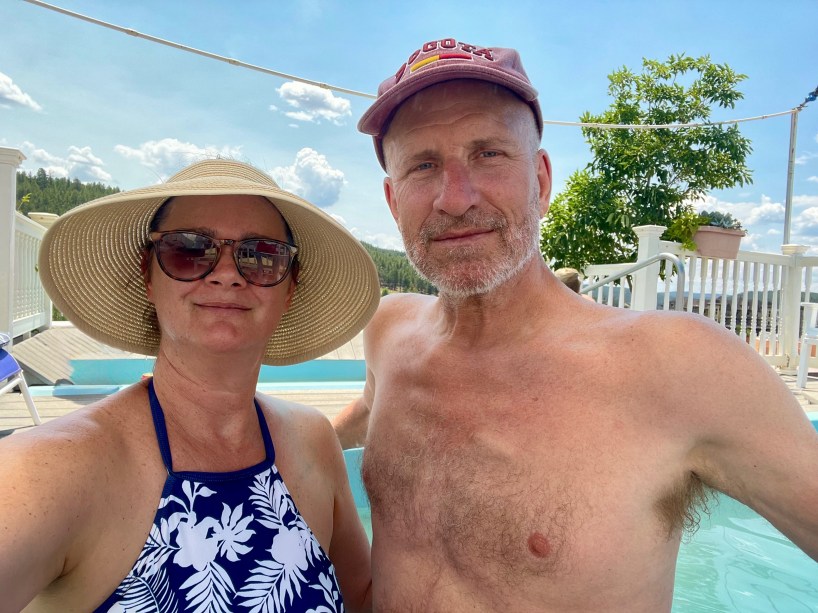
A day off-trail spent at a mineral bath is a day well spent!

After his time off-trail, I left Chris at Wolf Creek Ski Area, and I drove up to South Fork to chill for a couple of days while he hiked. It’s a cute town and I enjoyed my stay at the Spruce Lodge. I took advantage of the fair weather and went on a short hike of my own. There’s also a neat “rail bike” that runs along the Rio Grande River between South Fork and Wagon Wheel Gap, through the Coller State Wildlife Area. Of course, hunting and fishing, hiking and riding ATVs are highlights of the area too. I bet this area is hopping during the snow season! The pizza at SoFo Pizza is worth a stop, in my opinion.
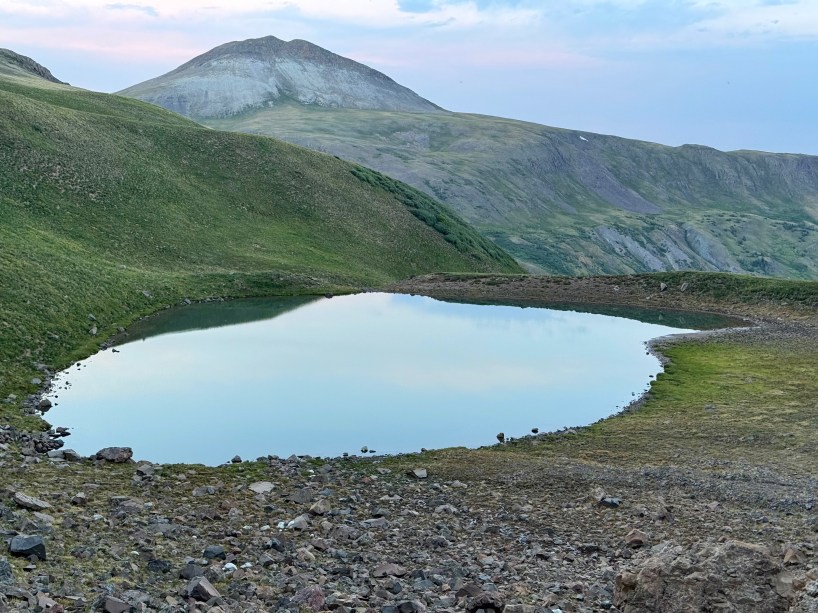
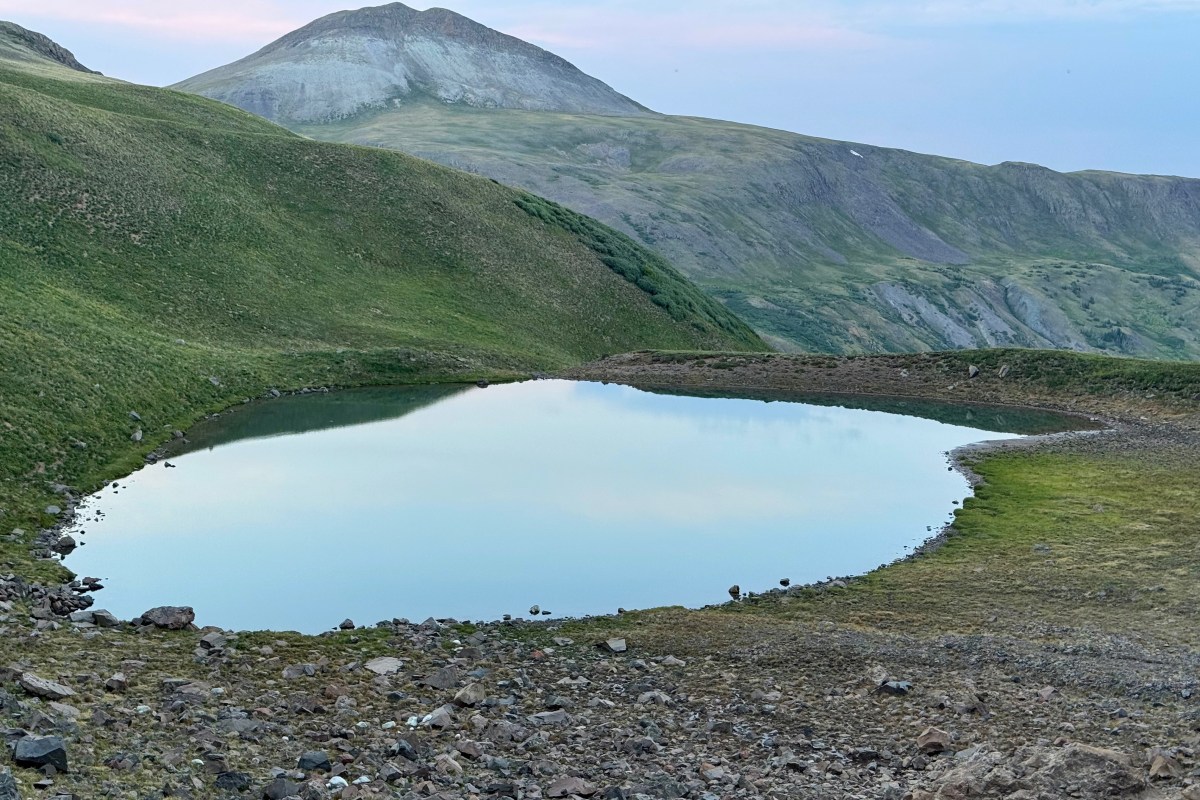
A beautiful alpine lake along the trail

Our next rendezvous point was just a few miles outside of Creede. I arrived a little early at our agreed-upon spot, and set up my hammock to wait. A half hour or so later, I saw Chris clopping down the trail, having finished another 40 mile stretch. I bundled up my hammock and we went into Creede for lunch. Creede, a historic silver mining town, is one of my favorite small towns in Colorado. It has a handful of bars, restaurants, outfitters, art galleries, and even a drama reportory. There’s often a festival or event happening in town in the summer months. But plan ahead, because there are only 3 or 4 small hotels there. There are no major hotel chains, but there are lots of Airbnbs. They can get pretty pricey though.
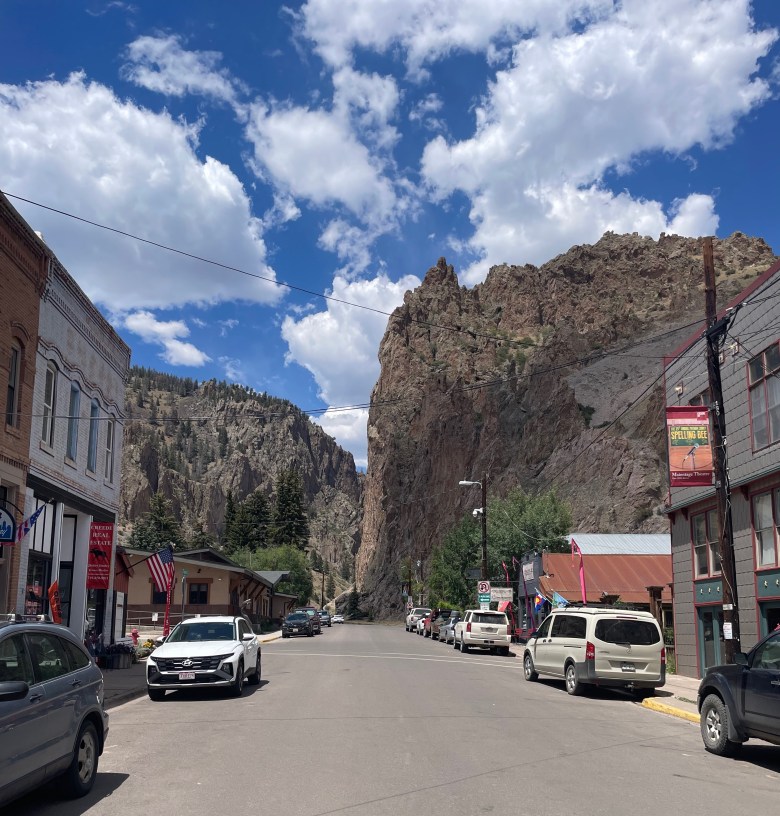
Historic Creede, with hills full of silver

Chris stayed with me for a day in South Fork, resting his feet, and then I took him back to Creede so that he could reverse “slack-pack” a particularly brutal uphill climb out of the town. We drove up to the top of the 10-mile Bachelor Loop and he walked the trail southbound, heading back down into Creede without his heavy backpack. I visited a few shops and bars in town (fantastic ice cream) and picked him up a few hours later. The next day, we drove up to the same spot and he continued north, but at least he didn’t have to do four hours of uphill climbing to get there. Plus we got to see a momma moose and her two calves on the road.
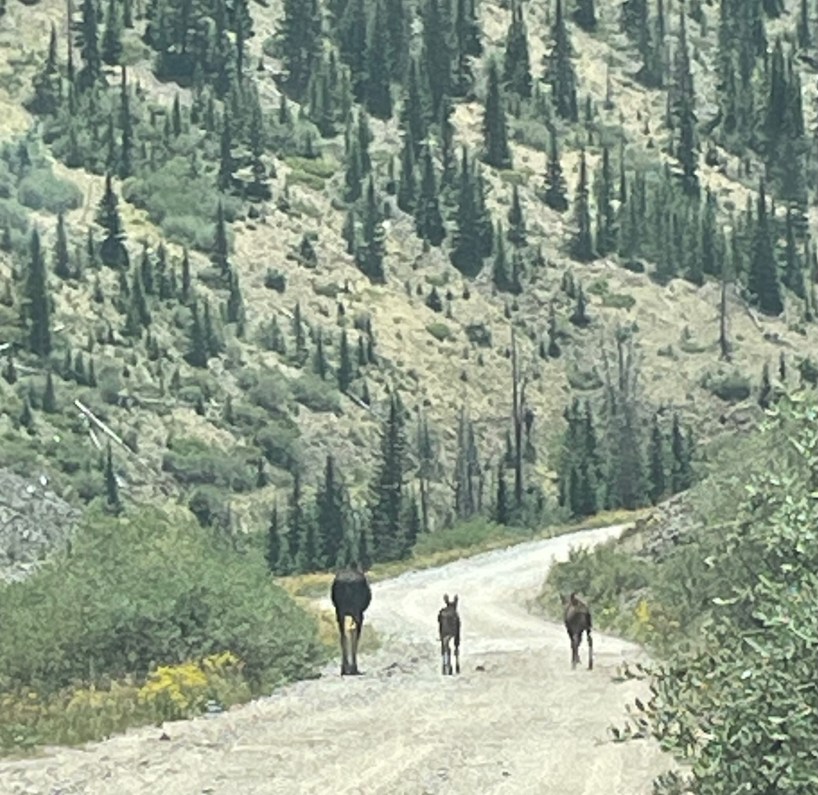
Drop off point, elevation 9,000 feet

Chris’s knee had been hurting him all through this stretch of Colorado, but he finished up one more 30 mile section between Creede and Cochetopa Pass. I thought about staying a night in Saguache, but after visiting the tiny town and their slightly creepy museum, I decided to wait at Gunnison for Chris to arrive. I have to say, the drive between Cochetopa Pass and Highway 50, as it winds through a river valley, is quite lovely. But since we were a ways into July, the days were getting pretty hot (although the nights were still a lot cooler than we get in Texas). Next year, hopefully, Chris and our hiking friend Piñata will be able to start from Cochetopa Pass and head north a little earlier in the season, in mid-May, and avoid the heat and the fires that were burning near Leadville and other parts of Colorado.
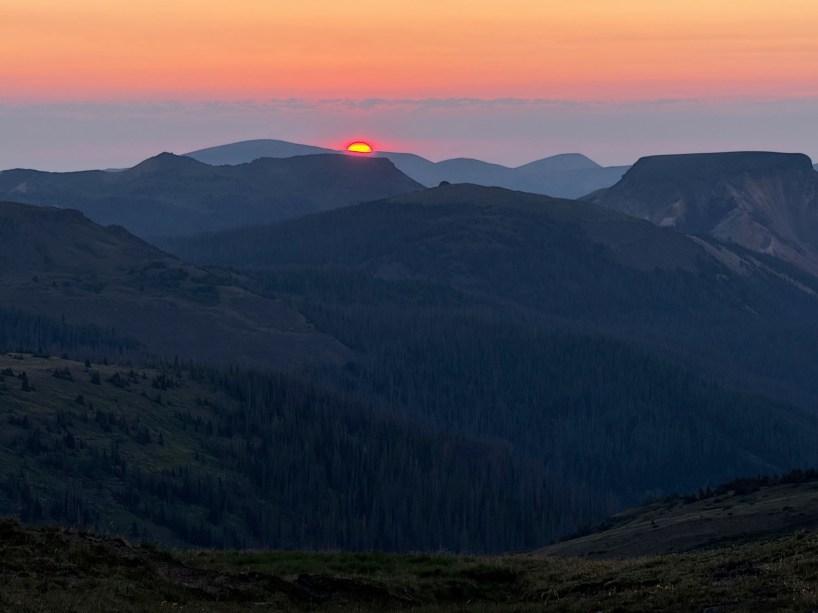
Another beautiful sunset on the trail

All in all, Chris managed another 200 miles of the CDT, bringing his total to over 1000 miles on the trail so far. Check back with us next year to read more about his hike further north, or click here for the post about the Arizona sections, or here for posts about the Appalachian Trail thru-hike of 2014 or the Pacific Crest Trail thru-hike of 2021.
Take a Bath in Berkeley Springs, West Virginia

Berkeley Springs is the kind of place that feels timeless- you can easily imagine the first settlers in this small town, even as you enjoy the modern amenities it offers now. Known historically as the Town of Bath, it has been welcoming travelers for centuries with its mineral-rich warm springs, mountain views, and small‑town charm. Whether you’re craving a restorative weekend, an outdoor adventure, or a cozy getaway filled with art, food, and history, Berkeley Springs offers a little bit of everything—and then some.

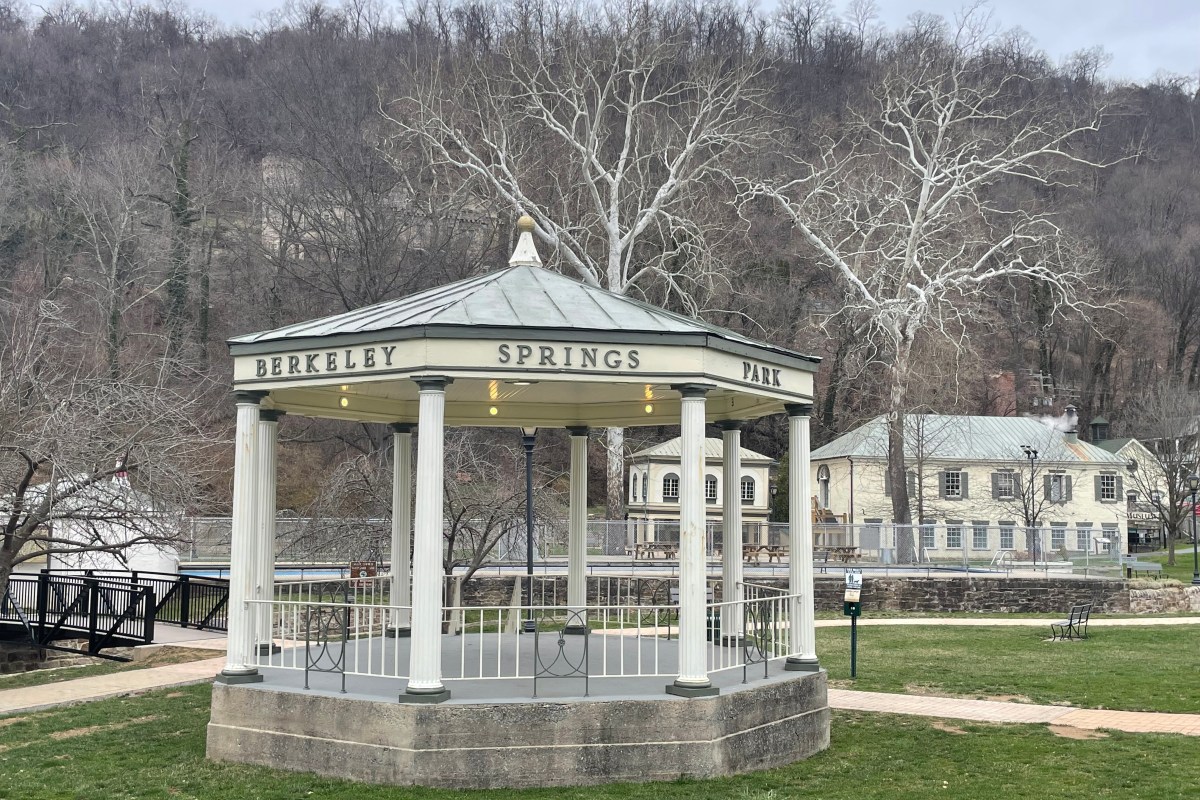
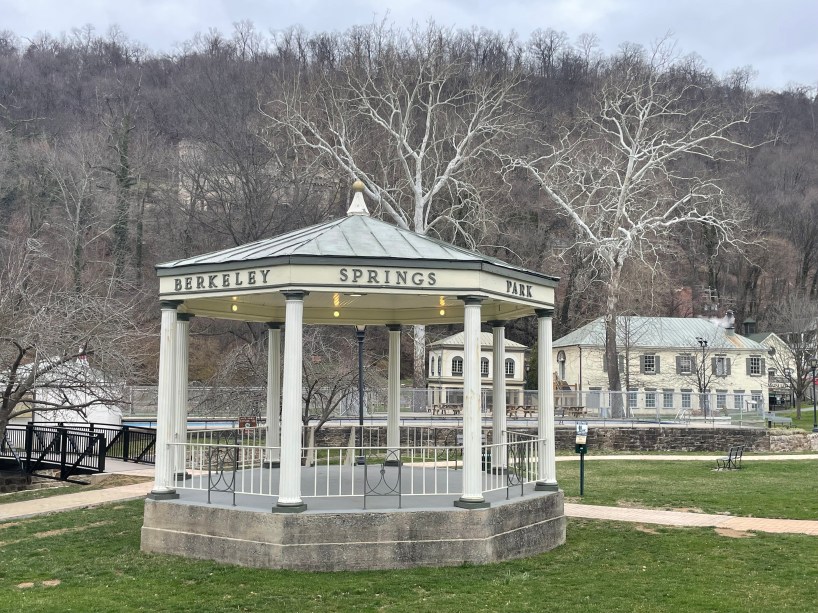
Berkeley Springs’ warm mineral water springs have drawn visitors since the 1700s—including George Washington himself. Today, the heart of town is still Berkeley Springs State Park, where the warm, clear waters bubble up at a consistent 74.3°F. Visitors can soak in historic Roman baths, book private mineral tubs, or simply relax near the spring-fed fountains. The park is especially lovely in spring and fall, when blooming trees or fiery foliage frame the historic bathhouse.

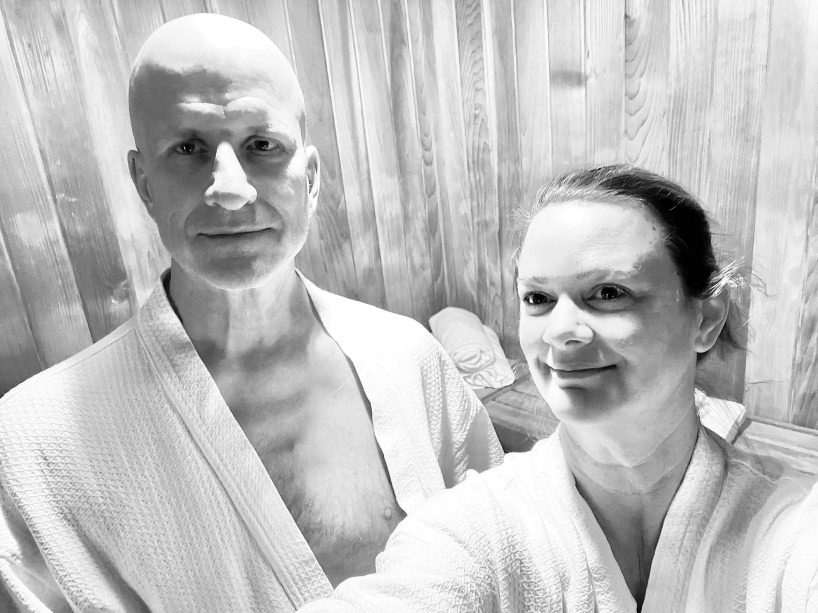
The springs aren’t just a novelty—they’re a tradition. Generations have come here to “take the waters,” and the town continues to honor that heritage with spa treatments, massages, and wellness experiences rooted in its past. Chris and I indulged in a sauna, shower, and Roman bath trio at the state park’s main bath house, which cost about $80 for the two of us (be sure to ask about a military discount if you served).

Ready for our sauna!

While the warm springs may be the star, the surrounding landscape is just as captivating. Just 15 minutes from downtown, Cacapon Resort State Park spans more than 6,000 acres of forests, trails, and scenic overlooks. It’s a paradise for hikers, mountain bikers, horseback riders, and families looking for a day of fresh air. In summer, Lake Cacapon becomes a hub for swimming and paddleboarding, while fall transforms the park into a kaleidoscope of color. We visited Berkeley Springs at the tail end of winter, with just a bit of snow on the ground, as spring was just around the corner. 

For a quick but unforgettable view, head to Prospect Peak Overlook, one of the most photographed views in the region. From here, layers of mountains and river valleys stretch into the distance—a perfect spot for sunset watchers and photographers.

Berkeley Springs may be small, but it’s rich with stories. A visit to the Museum of the Berkeley Springs helps explain how the springs shaped the town’s identity, from Indigenous use to colonial spa culture.

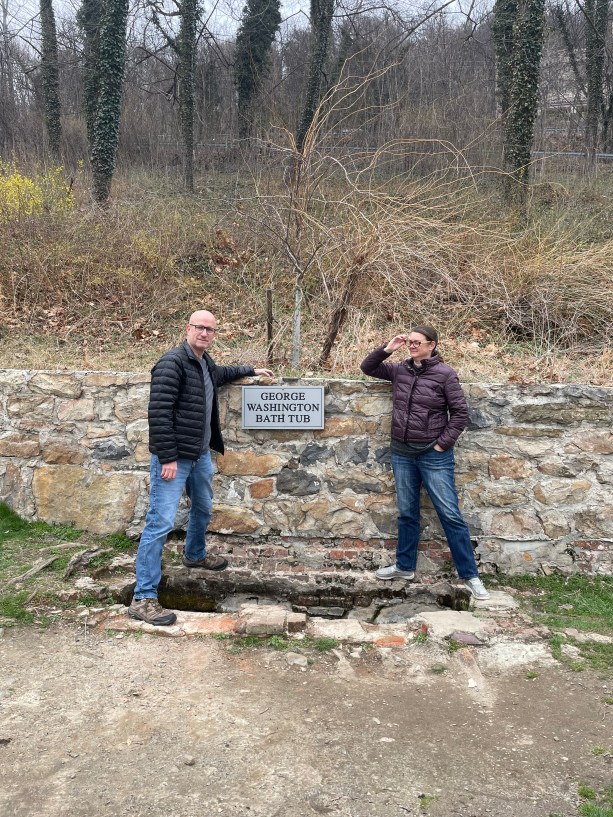
Wandering through town, you’ll find historic landmarks tucked between boutiques, cafés, and galleries. One quirky must‑see is George Washington’s Bathtub, a stone outline marking where the first president once soaked in the warm waters. It’s a fun reminder that even great leaders needed a little self‑care. No, you can’t take a bath in GW’s tub!

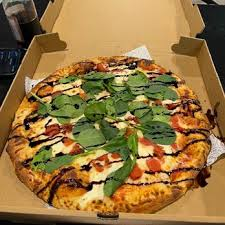
For a small town, Berkeley Springs offers an impressive variety of dining options. From cozy cafés to upscale restaurants, you’ll find something to satisfy every craving. The town’s culinary scene reflects its welcoming atmosphere—warm, unpretentious, and rooted in local flavor. We especially enjoyed morning coffee and muffins at Fairfax Coffee House, and later the creative choices at Mythical Pizza. 

Craft beer lovers will appreciate the two local breweries, each offering its own take on West Virginia’s brewing traditions. After a day of hiking or soaking, there’s nothing better than settling in with a cold pint and a hearty meal.

The town even hosts the International Water Tasting each February—a quirky, beloved event known as the “Academy Awards of Water,” complete with a “Water Rush” where attendees can grab as many bottles as they can carry.

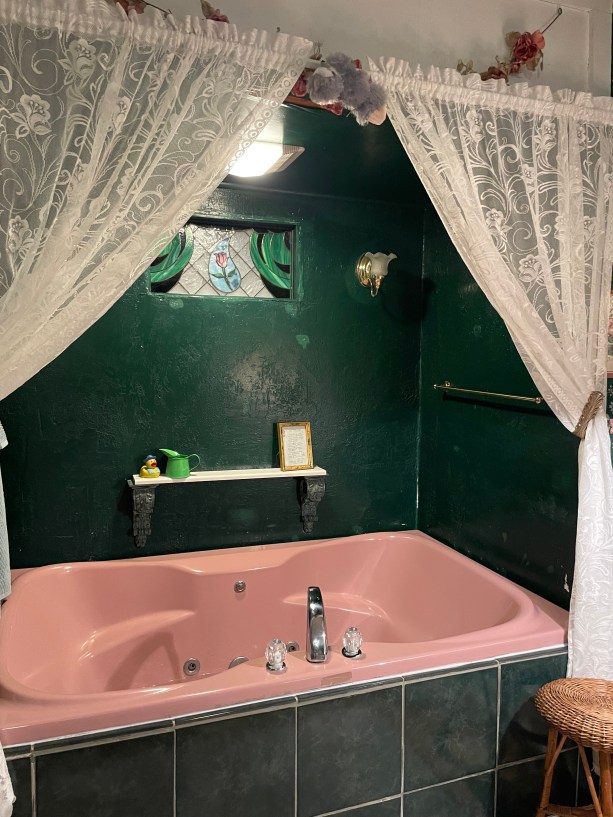
Berkeley Springs offers a wide range of accommodations, from charming bed‑and‑breakfasts to modern vacation rentals nestled in the woods.  Many visitors choose to stay in cabins near Cacapon State Park, where mornings begin with birdsong and mountain mist. Others prefer the convenience of staying in town, steps away from spas, shops, and restaurants. The main anchor point of the town is the Country Inn of Berkeley Springs, featuring 60 guest rooms, a spa, tavern, and gardens. We found a cute little AirBnB that featured both an electric fireplace and a jetted bath tub, just one block off the main street that runs through town. 

A jet tub in my bedroom? Yes!


Berkeley Springs is a 90‑minute drive from the Washington, D.C. and Baltimore metro areas, making it an easy weekend escape. Once you arrive, the town is walkable, and most attractions are just a short drive away.