Building a Camp at Black Rock City

On August 1, the Golden Spike was driven into the dry lakebed in Nevada that will become Black Rock City, home to the annual Burning Man festival. From there, teams of city planners, surveyors, and enthusiastic Burners will create a city of 65,000 people, complete with streets, camps, medical and fire services, art, and general shenanigans. And then they will erase it as if it never existed.
img_6551
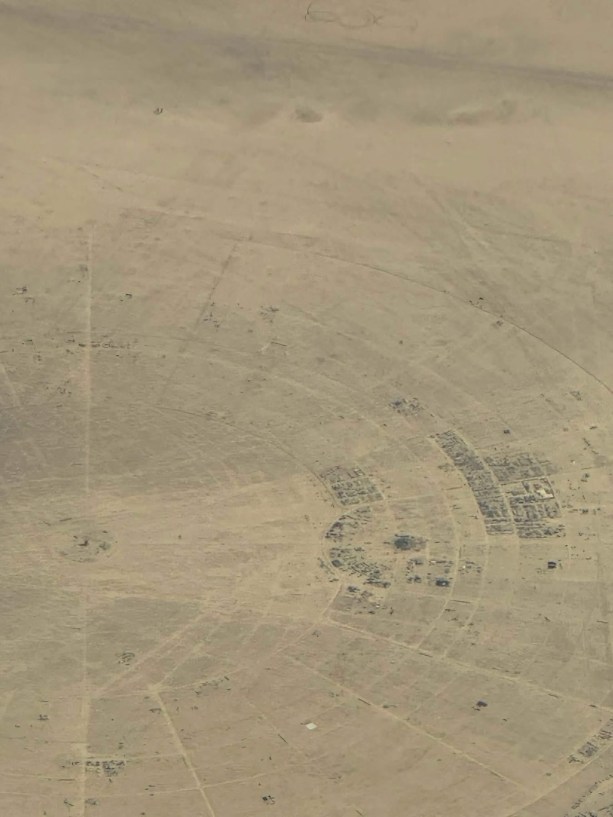
Black Rock City, just getting started

Chris and I had Early Entrance passes this year, so on Sunday August 23, we helped our camp owners pack our entire camp infrastructure into two moving vans (plus one shipping container that stays year-round in Gerlach, Nevada), and on Monday morning we left Phoenix and headed north. By Tuesday afternoon, we had presented our tickets at the Gate, and were cruising across an almost-empty playa to map out our camp.
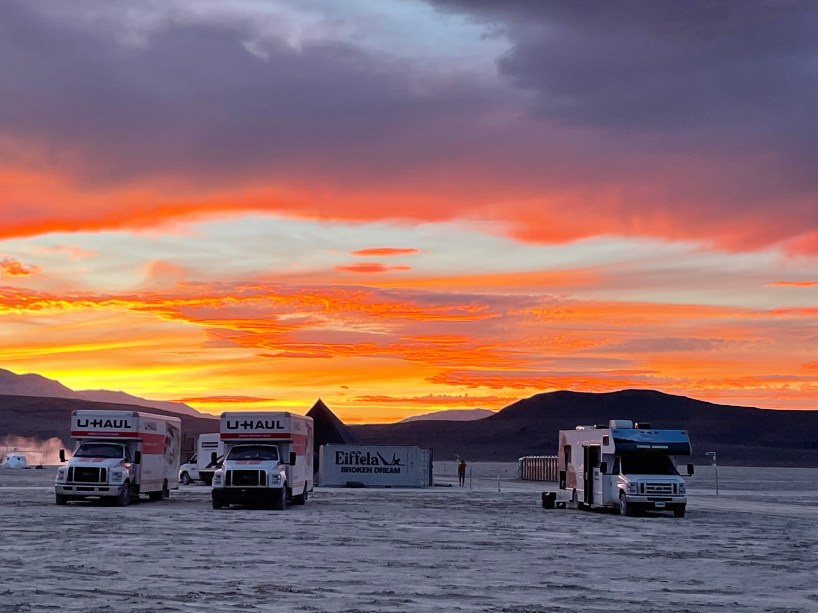
A beautiful night to camp under the stars

It took until well after sunset to stake out the perimeter of our camp, as well as the outside edges of where our main shady space would be, and we hadn’t unloaded the moving vans yet, so we just slept outside under the stars on our air mattress. In the morning, the real work began: we unloaded everything from both 26 foot moving vans. We tried to group stuff together, such as kitchen items, tarps, camouflage netting, and metal fittings to make the structures, coolers filled with food, ice, and drinks, and the pieces needed for our Human Carcass Wash, which is our camp’s gift to the playa every year.
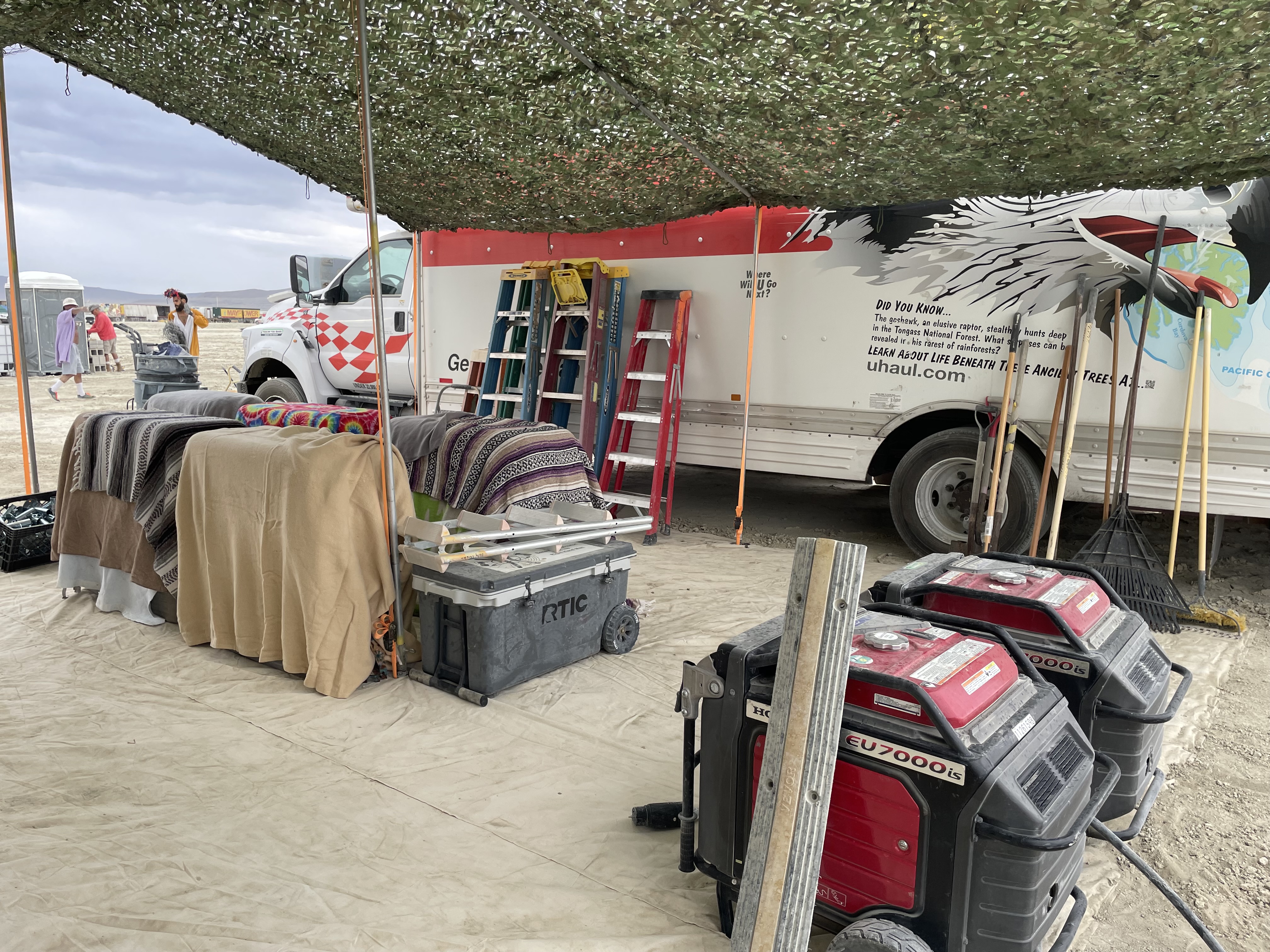
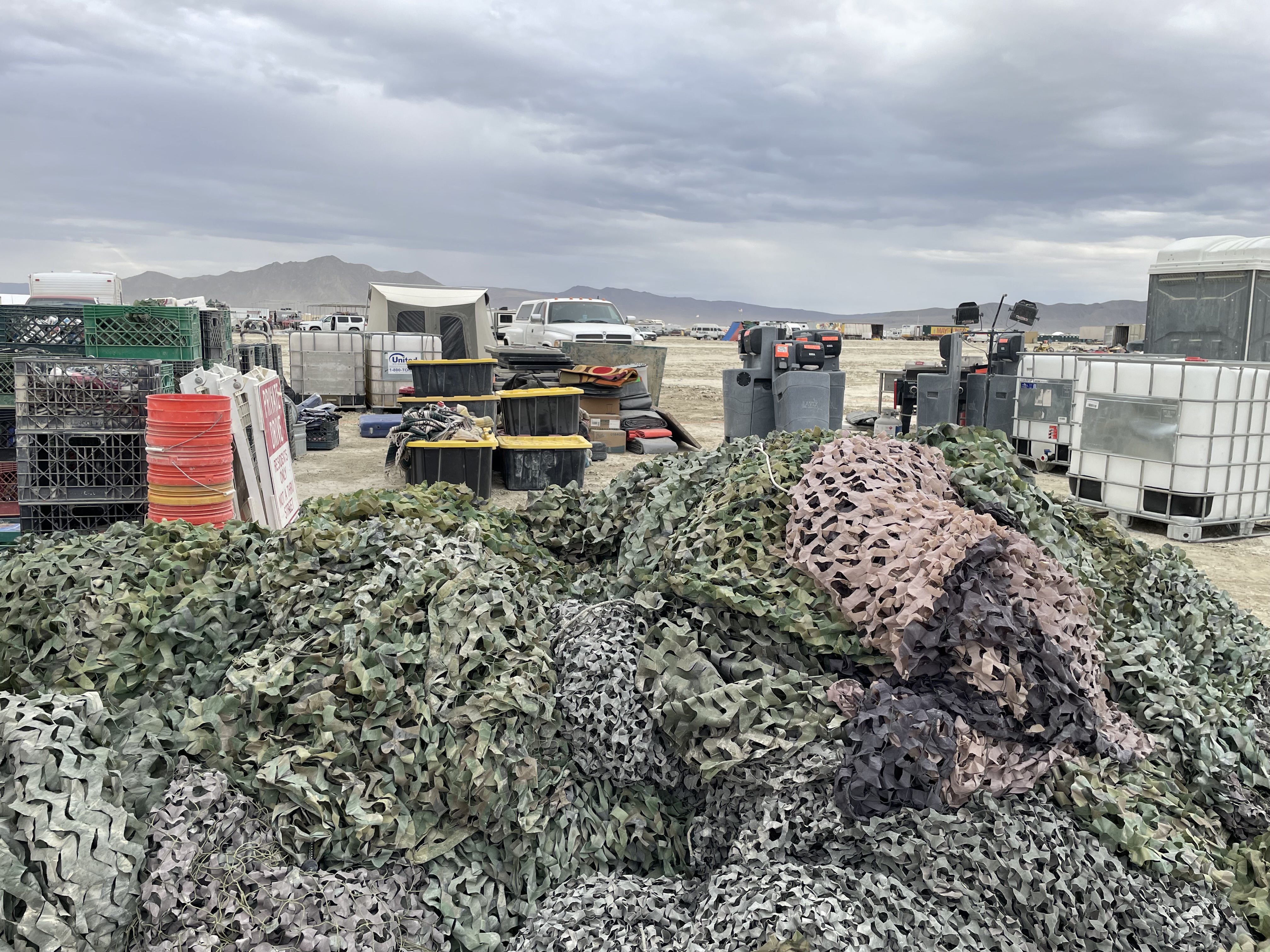
On Thursday and Friday, more campers arrived, so we were able to unload the shipping container that stays in Gerlach, which holds more of our stuff and the items belonging to our sister camps, Temple of Bacchus and the Twisted Swan Celtic bar. We got all ten of our coolers and our tools under a shady roof built in between the two moving vans, and then got started on our main shady space that our camp utilizes.
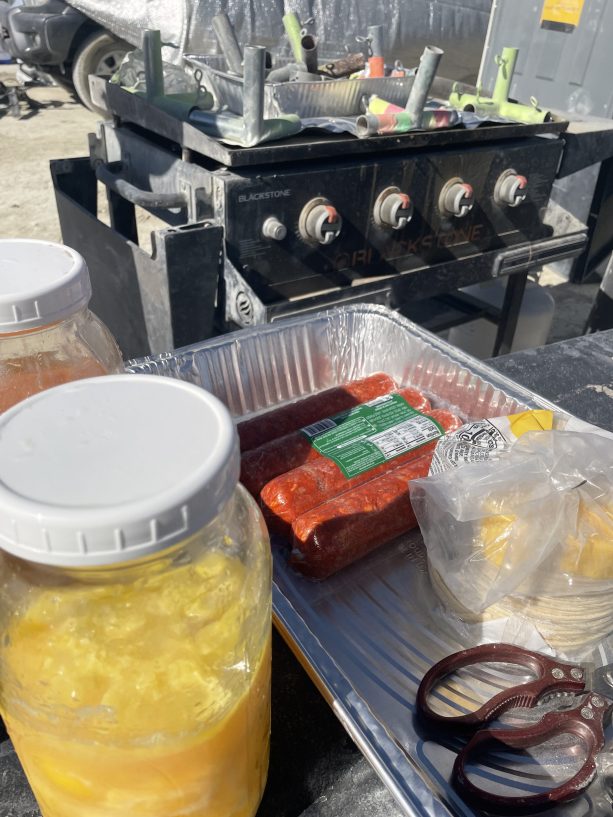
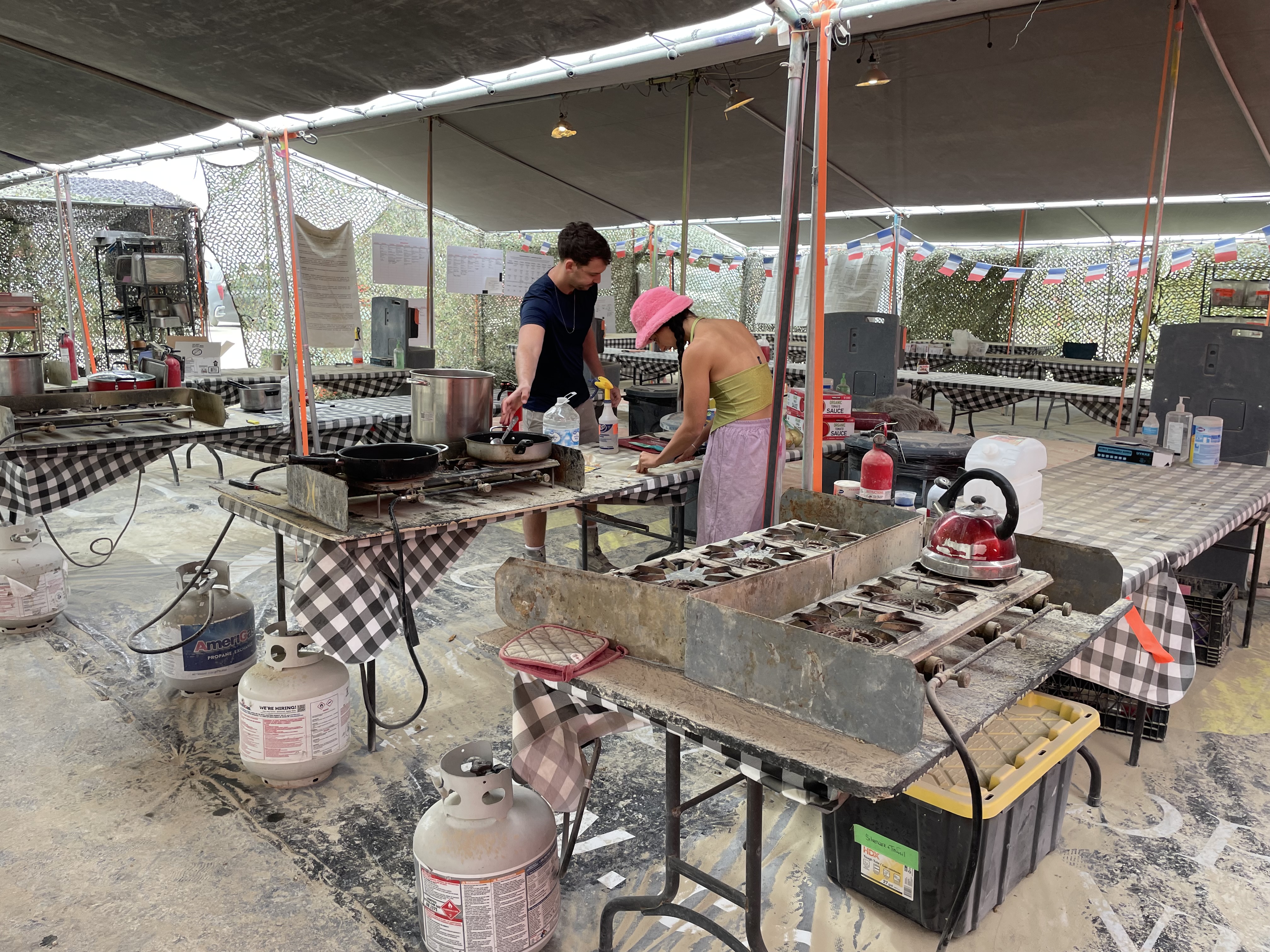
Our kitchen wasn’t set up yet, so breakfast was scrambled eggs and chorizo on the griddle

The first step was to lay out the giant floor pieces that make up our space. In the past we used heavy canvas tarps, but after last year’s “Mud Burn”, we needed to buy new ones. So this year we tried using recycled billboards that we got from a recycled materials website. One of the Burning Man tenets is sustainability, so we figured we’d try to use some things that didn’t need to go in a landfill. We staked them down, and then constructed the poles that make our walls and roof framework. We stretched the canvas tarps we use as roofing across the top, then raised them up. Last, we hung the camouflage netting on the sides, which allows in a breeze but gives privacy to some extent.
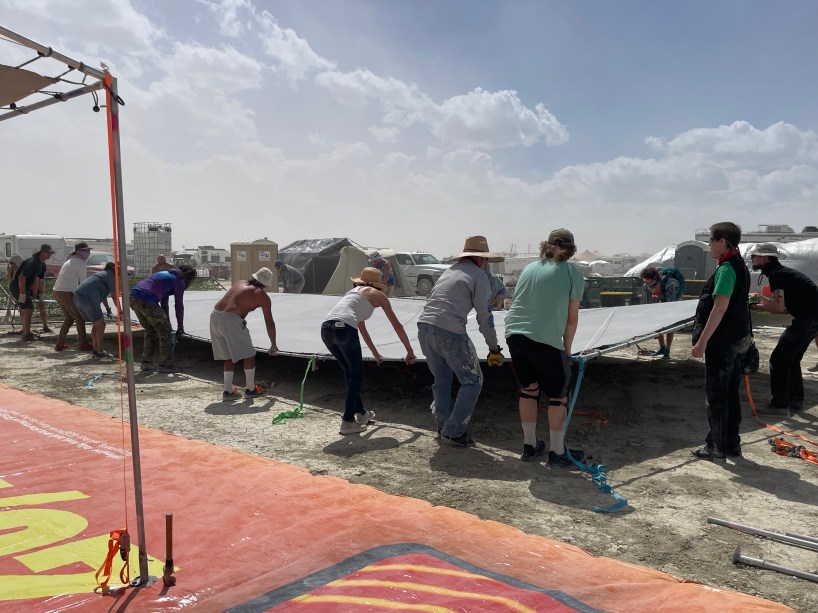
It takes a lot of people to raise these roofs!

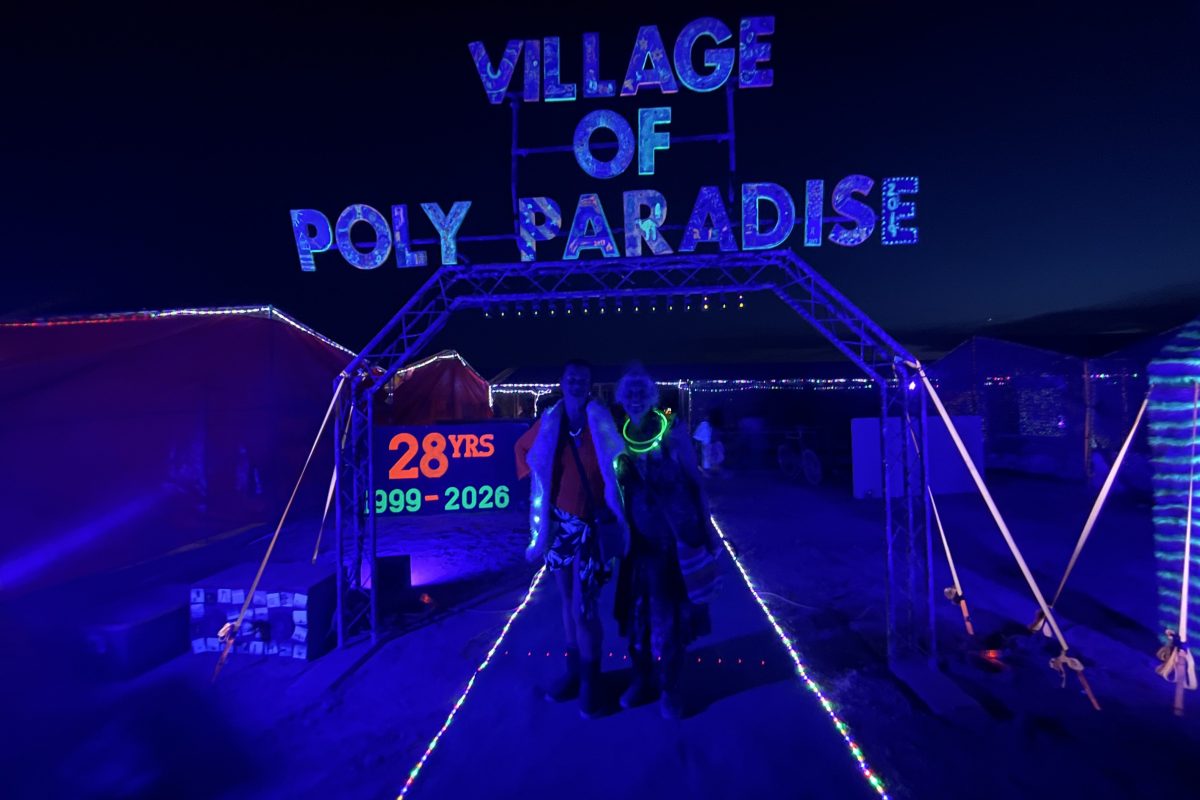
Once our shady spaces were intact, our camp started feeling more like home. We added in 50 or 60 camp chairs, hand washing stations, cooking stations, and our serving line. We unpacked our costume exchange closet (which takes up ten bins- we take our outfits very seriously), and put out two massage tables and all the blacklight art that we keep in our front area for general viewing. Last, we added “the man” artwork that was a gift from one of our past campers, and then the finishing touch- a series of lasers at our front entrance that play percussion sounds anytime someone enters or exits (always hilarious). A couple of bike racks, and set up was complete.
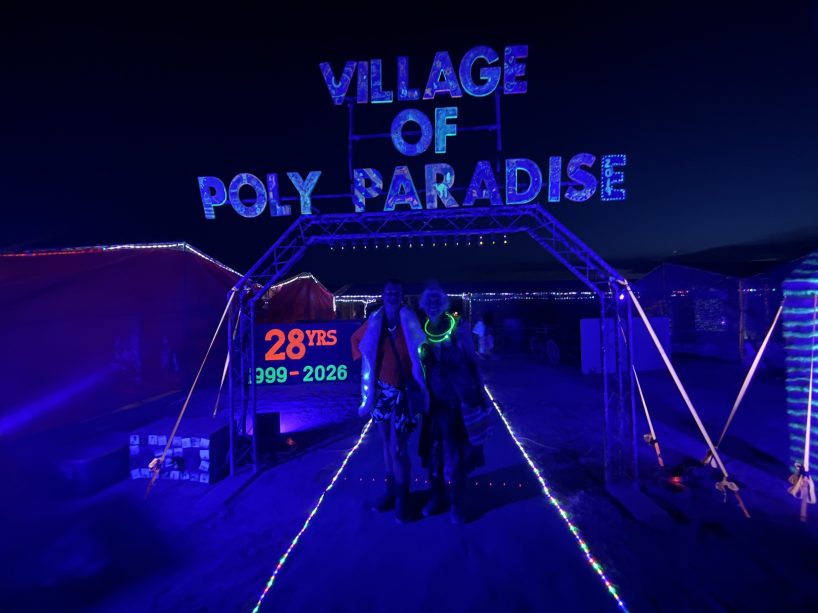
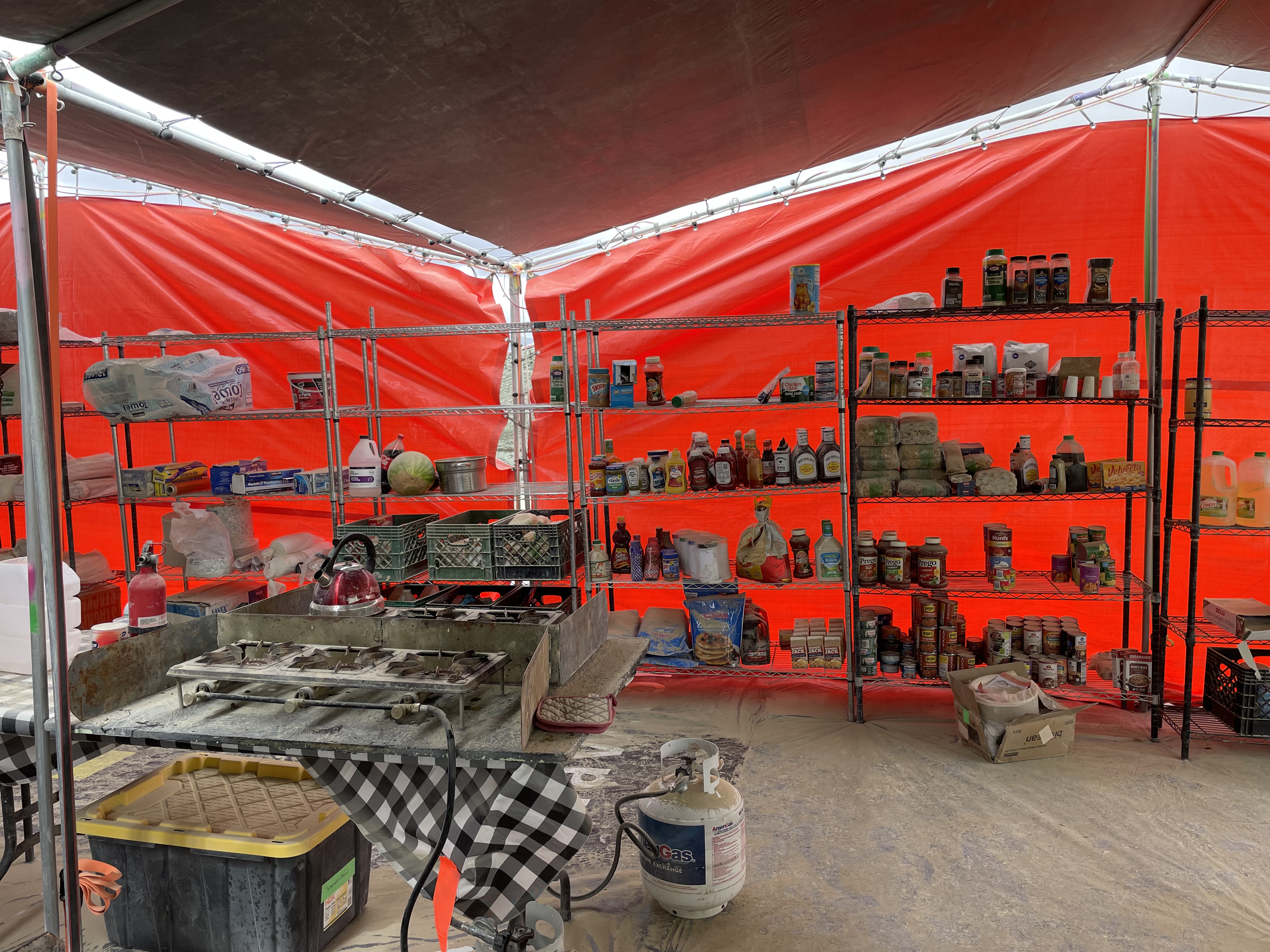
Happily, this year, all our construction efforts held up, even with some pretty good winds and one rainy night. Another week went by and then it was time to take it all down. Everyone pitched in, and in only two days’ time, it was all packed up and ready to store for the year.
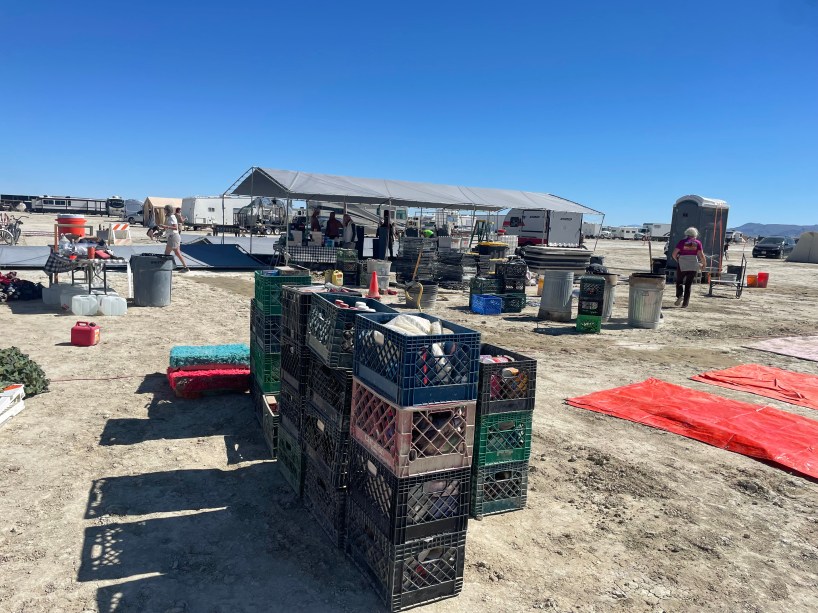
Time to get all this back in the trucks

In April, our camp will have a weekend party where we take everything out of storage, clean it, inventory it, and make a list of what needs to be purchased for the 2027 Burn. Until then, all that’s left is to put away our own personal camping items, do a big load of laundry, and look back at all of our pictures. For a look at some of the art from past Burning Man years, you can click on my 2018, 2019, or 2022 Burning Man adventure.

Beat the Heat with These Northern National Parks

Isle Royale National Park

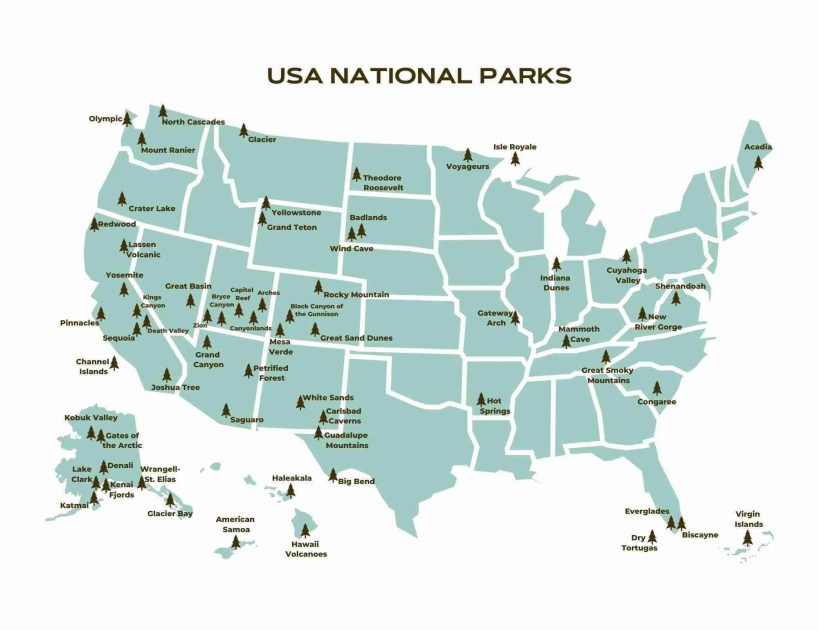
Even though I’m from Texas, I try everything I can to get out of the insane southern heat each year. Last summer we visited Maine, Newfoundland, and Labrador. This year we decided to head to some of the US national parks up north in an attempt to find cooler temps.

Time to head north

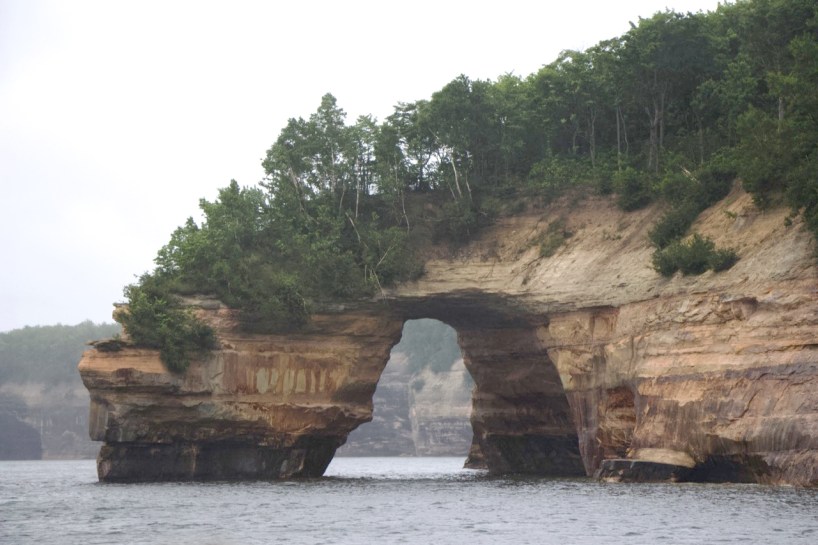
As we crossed the Mackinac Bridge into Michigan’s Upper Peninsula, we felt the cool breeze coming off the Great Lakes, and knew we had arrived in “the north”. If you’ve never been to the UP, I highly suggest you take a few extra days and visit Pictured Rocks National Lakeshore, as well as the Great Lakes Shipwreck Museum. Those are two of my favorite tourist attractions up that way, and definitely worth a visit.

Pictured Rocks National Lakeshore- do yourself a favor and do the boat ride!

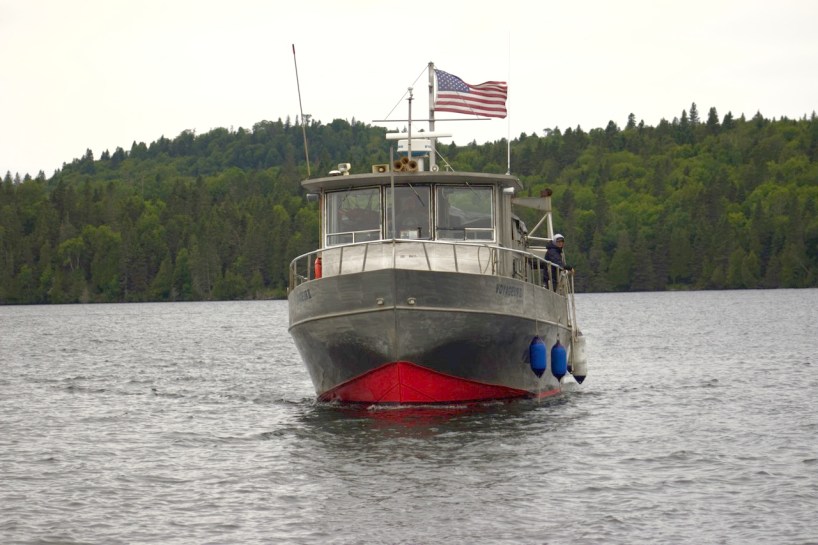
The first park on our list was Isle Royale National Park– the least visited park in the continental US. As it is an island, you can only access Isle Royale from upper Michigan (from Houghton, by boat, or Copper Harbor, by boat or sea plane), or from upper Minnesota (from Grand Marais by seaplane, or Grand Portage, by boat). Whichever mode of transport you choose, make sure to book well in advance (at least a month), and be forewarned that although it’s a national park, the transport is private, and quite costly. Of course, bring your national parks pass if you have one for free entry, and our camping on the island was free as well.

Established as a national park in 1931 by Herbert Hoover, this gem is only accessible by boat or seaplane

From Pictured Rocks, we drove to Grand Portage, Minnesota, and took a 7:30 am ferry (stay at the nearby Grand Portage Lodge and Casino for an easy morning). By 9:30, we were getting dropped off at the island’s Windigo visitor center, and walked to the nearby Cottonwood Campground with our camping gear. It’s only 1/4 of a mile away, so you won’t have to lug your stuff too far. There are potable water spigots at the campgrounds, so don’t worry about extra water for all your days in the park. We lucked out and were able to get a small camping shelter rather than a tent site, which was nice, because Isle Royale is often rainy (and putting up or taking down a tent in the rain is no fun).

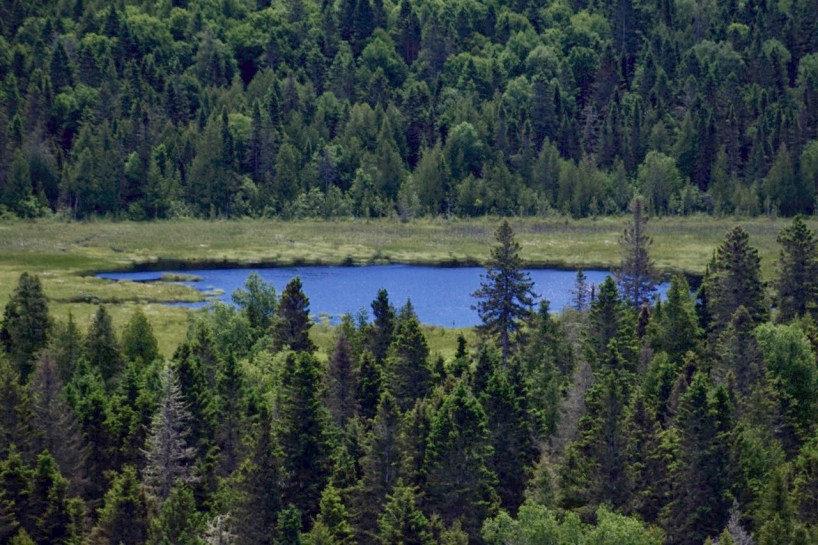
Feldtmann Lake Overlook hike, about six miles, definitely worth it

In our time on the island, we hiked, explored the Visitor Center, checked out the small store (they do have food there, including hot breakfast sandwiches, so you can supplement the camping food you need to bring), hiked some more, and looked for wildlife. Isle Royale has both moose and wolves, so visitors like to keep a sharp eye out. The Windigo side of the island only gets about 50 visitors a day, so it won’t take long to get to know your fellow campers and hikers and find out where they’ve spotted some wildlife.

We spotted four moose while we were on Isle Royale. They can be unpredictable, so keep your distance, and keep a tree between you and them (we have a good telephoto lens)

In addition to Windigo, you can visit the other end of the island, Rock Harbor. You can take a boat there (from Windigo or from the mainland), or you can do a multi-day hike of the 45 mile stretch. Rock Harbor also features a nice lodge and restaurant.

Boardwalks, bridges, and hiking trails connect various campgrounds on the island

Even in July, the temperatures on Isle Royale ranged from pleasantly sunny and warm low 70s, down to cool and rainy 45 at night. Bring lots of layers, bug spray, and waterproof bags. We had a spectacular sunny day, cool night, and rainy morning while we were there.

After ferrying back to Minnesota, we were only a few miles from the Canadian border. Just after crossing over we saw a wolf! Canada has the best wildlife!

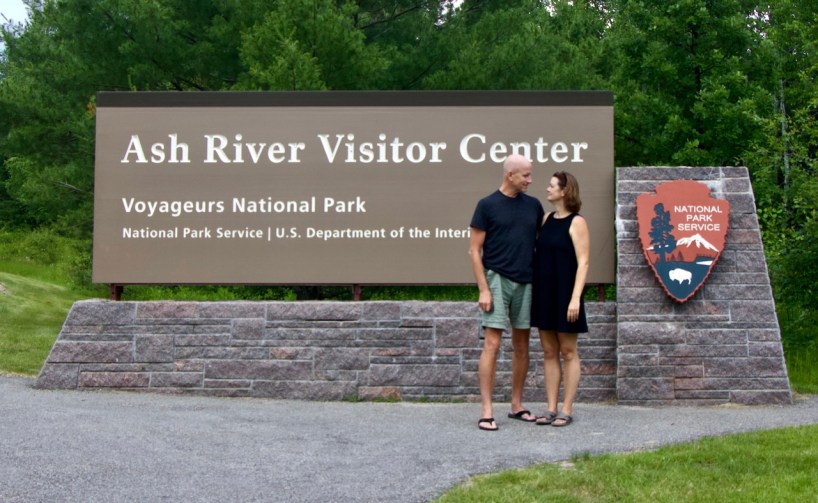
Voyageurs National Park is only 4-5 hours west of Isle Royale, so we drove the Canadian route to get there, stopping at Thunder Bay and Kakabeka Falls along the way. I always love taking Canadian roads because of their beautiful scenery, and lack of advertising billboards. We spent a lovely evening at the Bay View Motel in Fort Frances, next to the delicious Harbourage Restaurant. At International Falls, we crossed back over to the US, and visited the Rainy Lake Visitor Center and then the Ash River Visitor Center.

Our 51st National Park together!

Spread across 210,000 acres, the star feature of Voyageurs National Park is the lakes, rivers, and inlets, so I’d highly recommend booking a NPS boat tour in advance, renting a kayak or canoe, or even staying on a houseboat nearby. There are also plenty of hiking trails and wildlife to view from land or from water, including beaver, otter, moose, and bears.

We actually saw this handsome fella about an hour after we left the park

Similar to Isle Royale, this northern national park features excellent weather in the summer. Temps while we were there ranged between 77 and sunny, down to about 60 during a rainstorm. Voyageurs does tend to be very buggy, so long pants, bug spray, and even a net hat might be a good investment if you plan to spend a few days here.

Bring your rain jacket too!

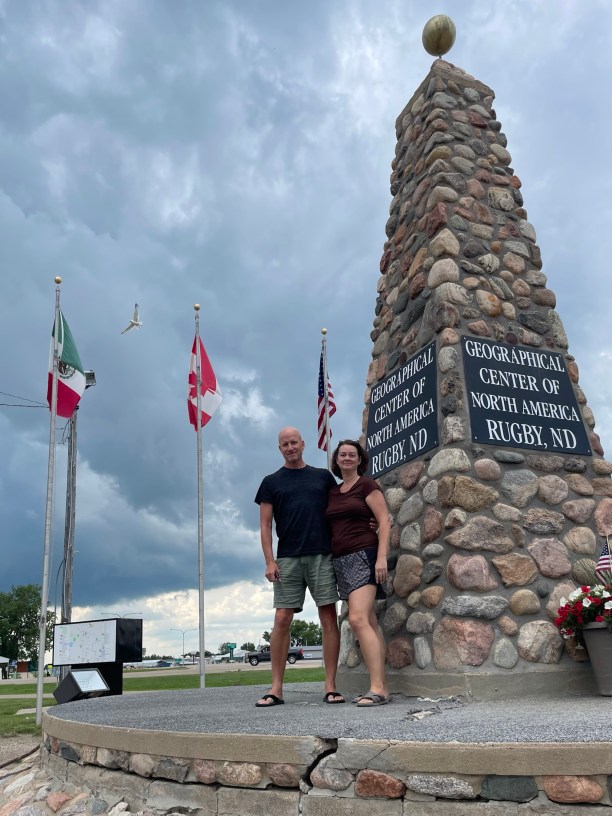
After Voyageurs, we had one more northern park on our list that we had not done yet. We passed into North Dakota, and after stopping at the Geographical Center of North America, we arrived at Theodore Roosevelt National Park.

We are soooo centered

Theodore Roosevelt National Park is spread across three distinct “units” (north, south, and Elkhorn, linked by the Little Missouri River), and we visited two. This park is 70,000 acres, and was designated a National Park in 1978- the only one named after a person! Roosevelt built a cabin at Elkhorn and lived there for several years, studying ranching, hunting, and conservation, before he became president in 1901.

Similar to the Badlands of the Dakotas, the rock formations here are shaped by erosion

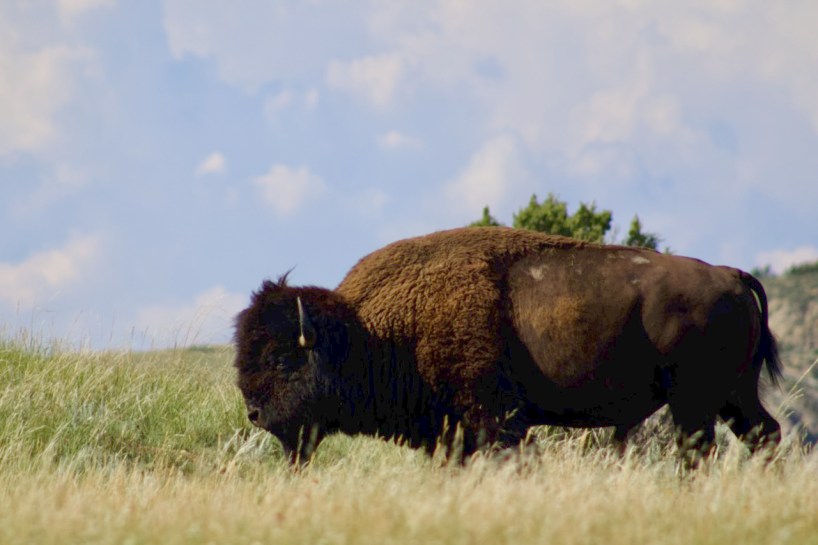
The park has a semi-arid climate and features pronghorn, mustangs, elk, bison, bighorn sheep, prairie dogs, coyotes, cougars, and more. We almost crested 80 degrees while we were there, but some late afternoon cloud coverage kept us in the upper 70’s. Since it was 101 back home with a hurricane bearing down on our state, we were happy with 79 degrees and a light rain shower!

Wild buffalo roam the prairie in the park
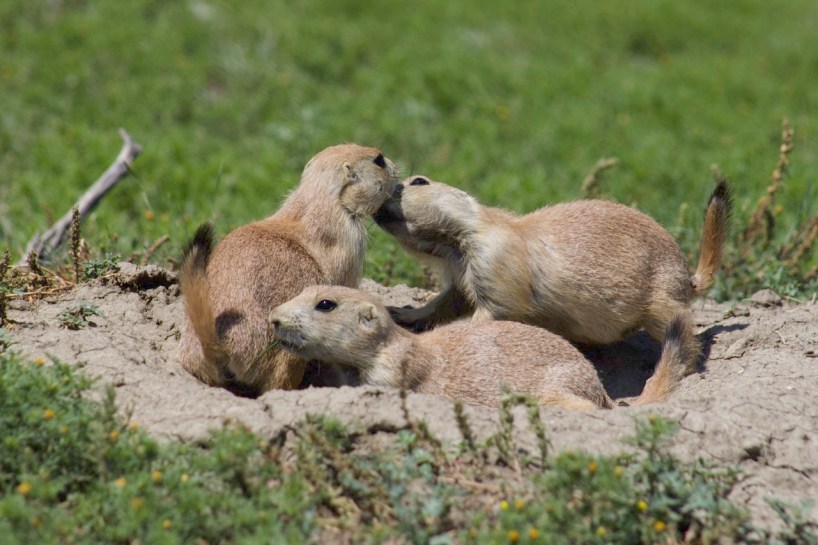
You can visit several prairie dog towns and watch these cute critters at play!

Formed by layers of ash from volcanoes 65 million years ago, layered with sediment brought by wind, water, and freezing, the hills of the badlands can present really interesting striped colors and formations. Lazy rivers that have formed oxbow lakes meander along the prairie as well, growing rings of cottonwood trees along their banks. Fossils from a long-ago swamp in this area have revealed large clams, crocodiles, alligators, turtles, and champsosaurs.

Oxbow overlook

Exploring our national parks is a fun pastime for us. We love getting out in nature, taking a hike, watching for wildlife. Learning about the history and geography of each area is fascinating too. Each park has its own unique setting to enjoy and partake in. Which national parks have you visited? What was your favorite? Leave us a comment.

Interested in this kind of content? Hit the subscribe button!

Oklahoma, where the wind comes sweepin’ down the plain

Deah and Chris standing in front of Welcome to Oklahoma Border sign

Oklahoma is OK!

With school about to start just around the corner, Chris and I (Deah) wanted to get out of town for a few days and go camping and see some (socially distanced) sights. We packed up our car and headed north.

Broken Bow Lake

We stayed the first night at Broken Bow Lake, at the Beaver’s Bend State Park campground. At just $16 a spot, this campground was the perfect chance for us to get out into some nature. Since it was the end of July, it was plenty hot, but we cooled off in the Mountain Fork River, which was surprisingly cold. In the evening as we ate our dinner, we saw a fox stroll by, and with an early start the next morning, we saw families of deer and families of fishermen out enjoying the cool morning.

Beaver Bend State Park
Getting back to nature

Fort Smith Arkansas

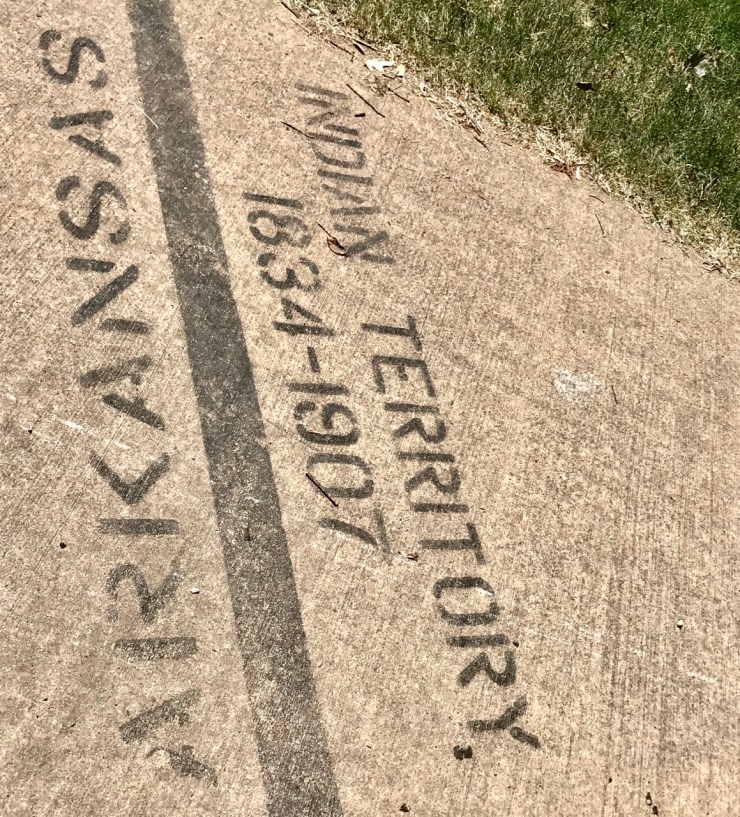
Okay, to tell the truth, we had forgotten a crucial part of our camping gear, so we had to call it a night after just one night and head to a city. We weren’t too far from Fort Smith, Arkansas, so we drove that way to learn about this town which was once the border between Arkansas and Indian Territory. Between the hanging deaths of 86 men by “Hanging Judge” Parker, and the years the town legalized prostitution, Fort Smith has an interesting history. They also have some delicious craft beers.

The border between Arkansas and Indian Territory
Fort Smith National Historic Park

Tahlequah, OK

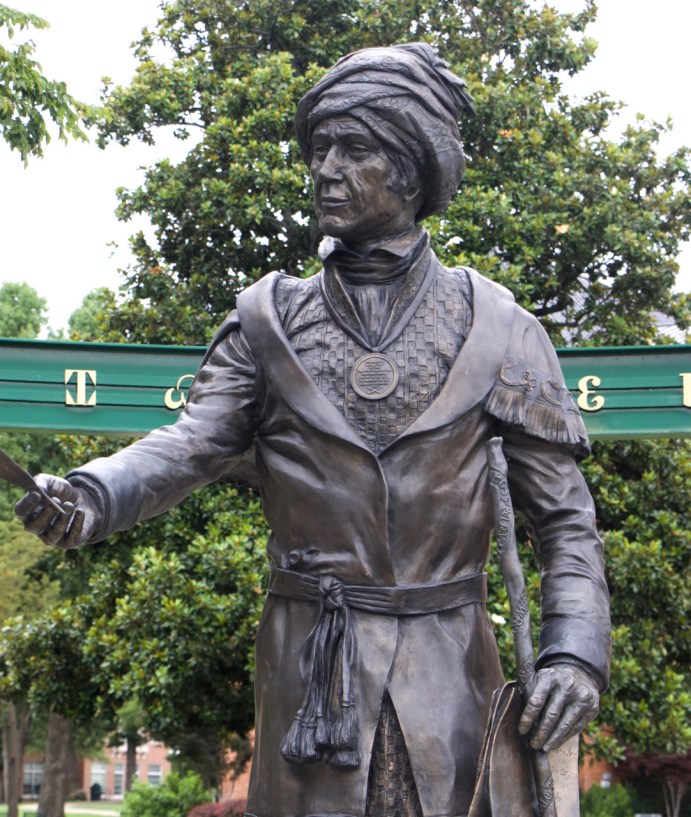
From Fort Smith, we headed back into Tahlequah to explore a little bit of the Cherokee history of the area. Although the Cherokee Supreme Court Museum and the Cherokee Prison Museum were both temporarily closed, we did a self-guided walking tour through town to learn about the founding of the town. Northeastern State University has a beautiful campus there and it’s just a beautiful area all around.

Sequoyah, creator of the Cherokee Syllabary

Tulsa, OK

We arrived in Tulsa in a rain storm and had to sit out a bit before doing our sightseeing. Always happy to try some Mexican food, we chose El Rancho Grande, featured in this list of the 9 Best Restaurants in Tulsa (it was delicious). Later, we did enjoy the “Cathedral District” of the city with it’s massive churches, as well as the huge park called The Gathering Place along the Arkansas River. On the following day, we spent a few hours at the Gilcrease Museum, full of art and artifacts from the American West and Native Americans. Both their indoor spaces and their grounds (as well as the stunning views from some of their back areas) were a treat to walk around and take in.

Chris visiting The Golden Driller in Tulsa
Frederic Remington’s “The Bronco Buster”

Stillwater, OK

A trip to Oklahoma never seems complete without a stop at Stillwater’s Eskimo Joe’s Jumpin’ Jukejoint. We sat at the bar and had a chopped beef burger and tried a local beer. The bartender suggested we stop off at Pop’s in Arcadia on our way to the capital, so we did.

Not the best food, but great marketing

Oklahoma City, OK

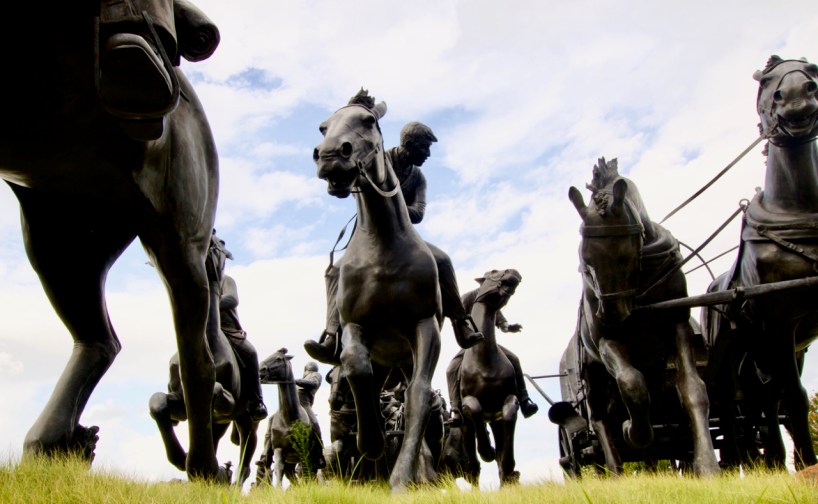
Oklahoma City is a sprawling city with a vibrant downtown area. We headed first to the Centennial Land Run Monument, commemorating the date when over 50,000 people from all over the country came to claim their own corner of two million acres of land. We also visited the haunting memorial to the victims of the Oklahoma City bombing in 1995, an event I remember all too well. The memorial, and the museum next to it, is worth visiting.

Centennial Land Run Monument
Oklahoma City Bombing Memorial

We also visited the National Cowboy and Western Heritage Museum, a sprawling museum that would take days to properly see. Right now the entrants for the Prix de West art exhibition are on display, and wow, I don’t know how the judges can tell who’s winning. They are all stunning pieces of art. In addition, there are dozens of exhibits ranging from a full size rodeo, art of the American west, an entire western town named Prosperity Junction, and Native American art. And that’s just the inside! Outside the building, you can find and play in life-size replicas of a Kiowa tipi, a Pueblo cliff dwelling, a Chickasaw Council House, a train Depot, and more. There were simply not enough hours in the day to fully explore this museum (formerly known as the Cowboy Hall of Fame).

2002 Prix de West winner: Teller of Tales by Martin Grelle

Lake Texoma

To conclude our trip, I wanted one more night near a lake, but we had to settle for a cabin rather than camp. After a fantastic lunch at Bedlam BBQ, we headed to the lake that straddles the border between Texas and Oklahoma, and found Willow Springs Marina. They have cabins, cottages, and RV sites there, as well as a marina. We had just taken a dip in the lake when suddenly the temperature dropped 14 degrees, a wind blew in, and the skies opened. We made it back to our cabin and watched the storm for a few hours. By the next morning, the sun was out and the lake was calm again. A perfect end to our week away.

A summer storm blows in

Have you been to Oklahoma? There’s a surprising amount to see there- this list is by no means comprehensive! What’s your favorite thing to see in the state?

Big Bend National Park

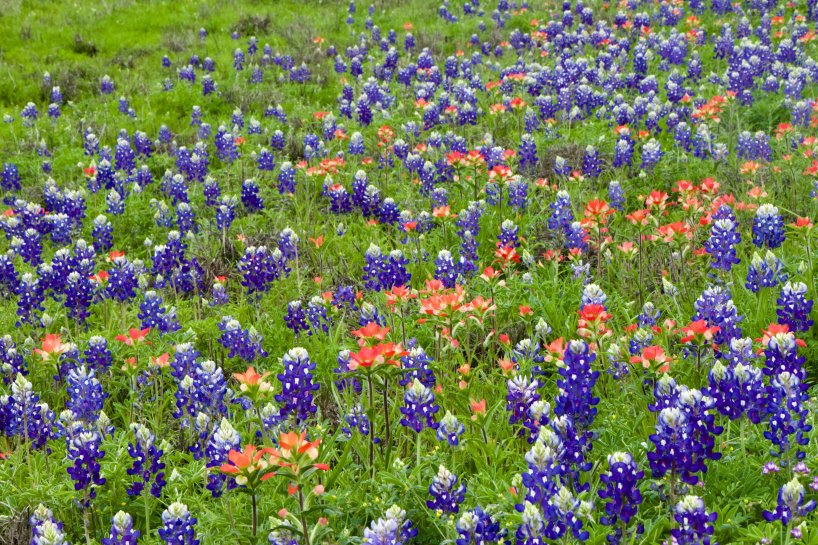
I am originally from Texas, but moved away in 2003. Last year we returned to live in Texas, so we decided to go to Big Bend National Park over my Spring Break. With some reports of the Covid-19 contagion coming in, we decided to pack our own food for the trip and to camp, so as to be able to isolate ourselves as much as possible. We left the Austin area and drove across the beautiful central hill country, where the sides of the highways and byways are carpeted with bluebonnets during the month of March.
Ever since Lady Bird Johnson was First Lady, the Texas Department of Transportation has sown more than 30,000 pounds of bluebonnet seeds around the state annually.

Before entering Big Bend, we took a spin around the town of Marfa, a place I had heard of (due to the mysterious “Marfa lights” and also from their reputation as a Bohemian artists’ colony). I wish we could have stayed in town and eaten there, but we were already heeding warnings to not bring any outside germs into small rural communities so we just did a pass through.

With a population of only 1800, you stand a good chance of exploring all of Marfa in a long weekend. Keep an eye out for celebs like Matthew McConaughey

We spent the first day at Big Bend driving the scenic Maxwell Drive, which is essentially the west half of the park. We headed all the way to the Mexican border, where we hiked into the Santa Elena Canyon, fording an off-shoot of the Rio Grande River. The area was busy with hikers and kayakers, but people were staying a fair distance apart. The amazing effects of the eroding power of water were on full display in the canyon, with 1500 foot towering cliffs on either side of us.

Santa Elena Canyon
Chris hiking up the Santa Elena Canyon
Deah fording an offshoot of the Rio Grande to get to the Santa Elena Canyon viewpoint

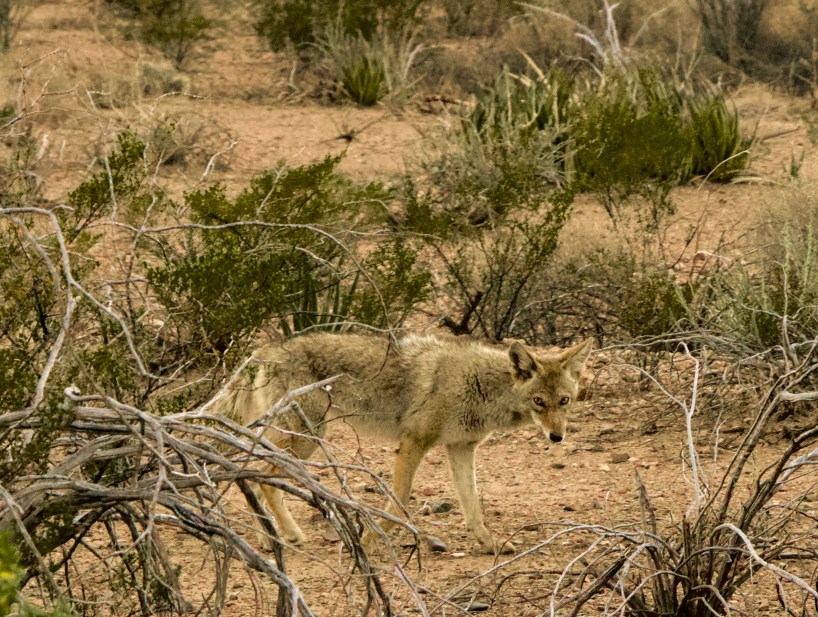
Later, we drove the Chisos Basin drive. It was approaching sunset and there were some beautiful views. On the way out of that area, we spotted a coyote and were able to snap a pic. We also spotted some golden eagles flying around and Chris got a nice shot of those.

Spotting the wildlife around the park
A Golden Eagle

We camped near the ghost town of Terlingua. There are a number of cabin rentals, small hotels, bars, and restaurants there. Of course, they are most famous for their annual chili cook off in November. We had our own dinner to cook at our campsite so we just took a drive through town to see the dusty sights.

Terlingua: population 2,000 but this small town swells to over 10,000 annually with the chili cookoff
High on a hill overlooking the road into Terlingua

The next day we explored the eastern half of Big Bend. We made up a breakfast at the picnic tables at Dugout Wells. There we encountered a woman waiting for a scheduled ranger talk, but soon found out that the visitor’s center had been closed and all ranger talks and guided walks were canceled for the time being (campgrounds still open for the week). We continued our drive all the way to the eastern end of the park, to the Rio Grande Village, and hiked a bit into the Boquillas Canyon. Along the way, we saw small homemade souvenir “caches” of trinkets made by residents of the village of Boquilla, Mexico (you can leave the money in a jar and they come collect it later). We were serenaded across the border river by a man with a wonderful singing voice, his song echoing across the canyon. In normal operating times, if you bring your passport (kids just need a birth certificate or proof of citizenship) you can cross the river at Boquillas Crossing ($5 rowboat round trip) and have lunch and explore the small Mexican village. However, the crossing was closed this week.

A small souvenir stand
Recent rains had the cacti in full bloom while we were there

Along the southeastern edge of the park, we were able to hike to and enjoy a hot springs. Many years ago there were actually cotton plantations in this area, with dozens of workers and a somewhat-thriving industry. In fact, in the 1860s they even imported 30 camels and their handlers from North Africa to use to explore and patrol the area!

A hot springs built on the sides of the Rio Grande River

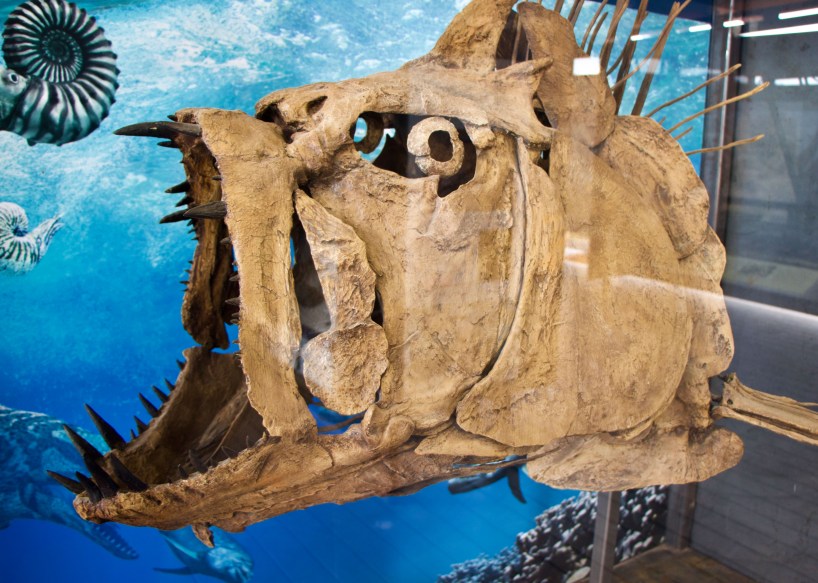
With more and more dire news coming in every time we stopped to check messages, we decided to cut our trip short and head home. We made one final stop on our way out of the park at the Fossil Discovery Exhibit (built in 2017), where some of the largest fossil finds in the US have occurred. Over 1200 fossils spanning 130 million years of geohistory have been found there. You can see a replica of some of the largest dinosaurs that ever existed, such as the Tyrannosaurus Rex, the Deinosuchus (an alligatoroid bigger than a school bus!), and the Quetzalcoatlus northropi (the largest flying creature). Fossil finds from all three giants have been found in the park’s perimeter.

Xiphactinus, a giant spiny fish from the Late Cretaceous Era

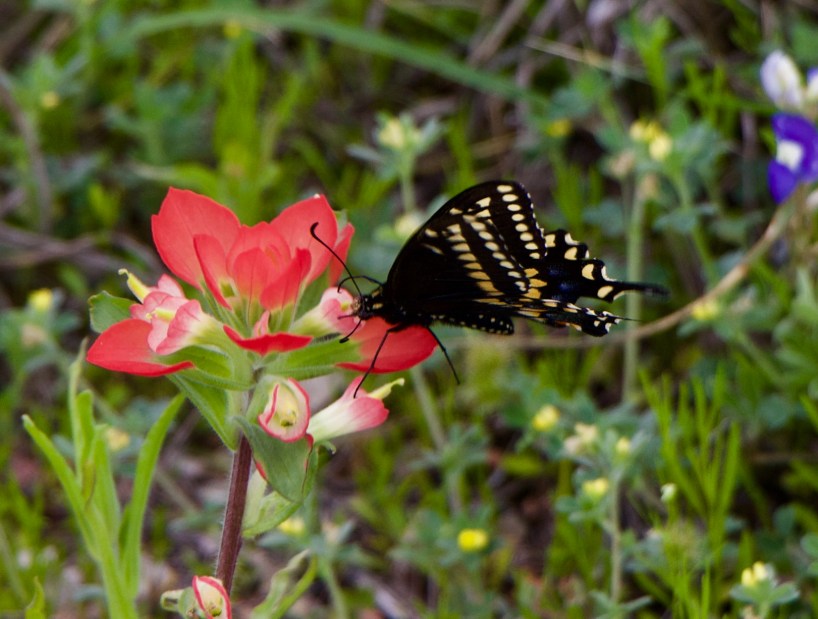
We exited the park via the Persimmon Gap entrance, and spent one more night in the area, and drove home the next day. The bluebonnets, Indian paintbrushes, and other wildflowers were a welcome sight to us as we headed home to make a decision about Chris’s Pacific Crest Trail hike plans.

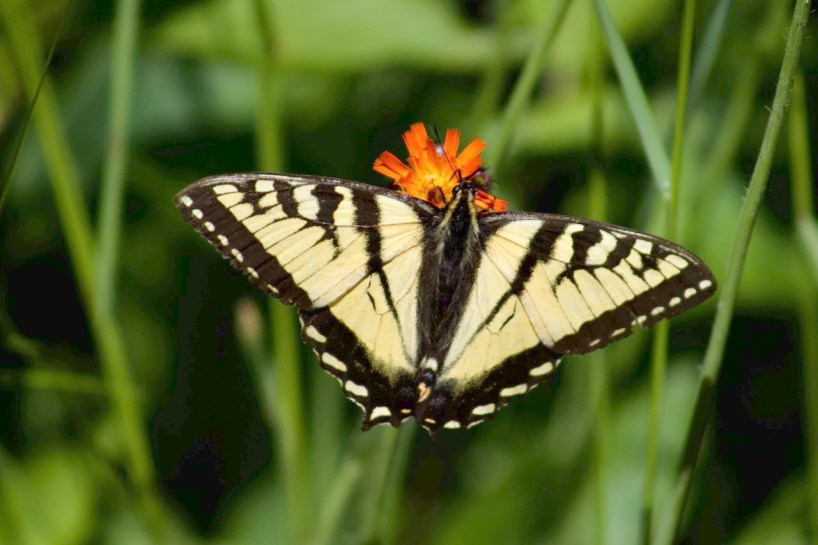
A butterfly does his thing


Road Trip: Utah, Idaho, Yellowstone, Colorado, New Mexico

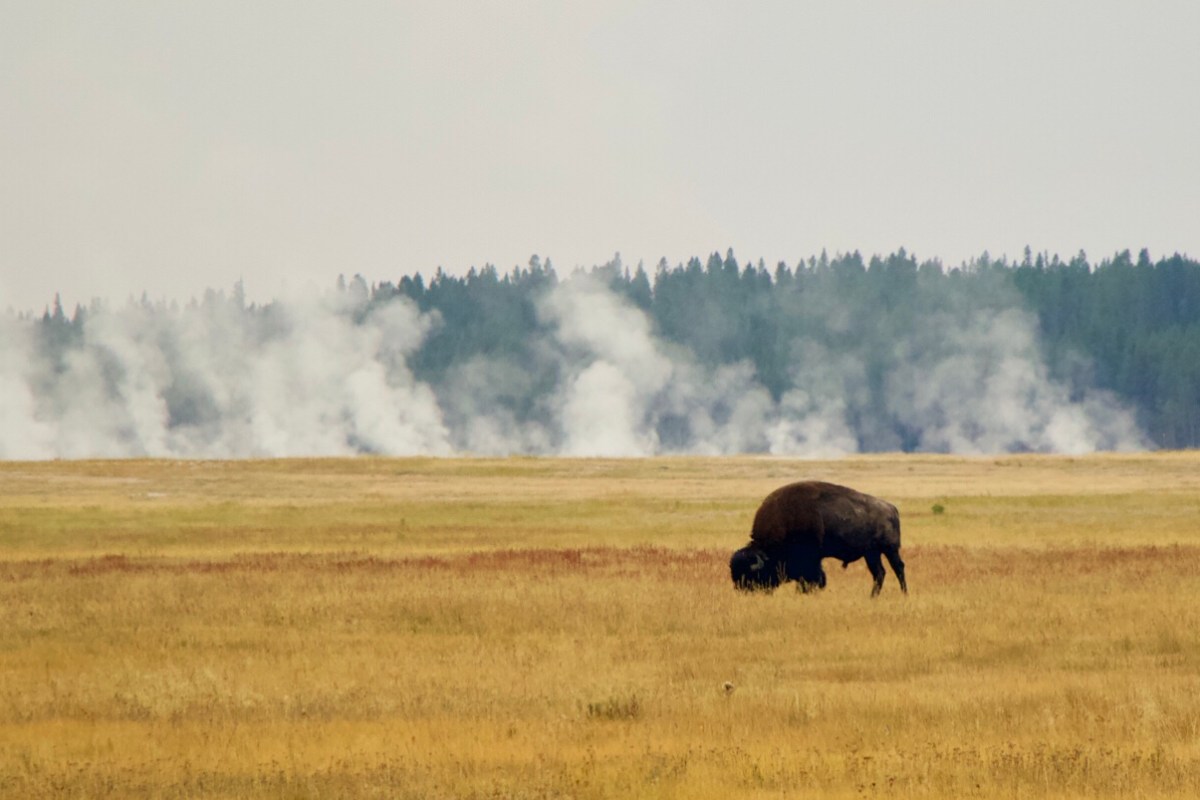
bison in front of steam geysers Yellowstone national park Wyoming

After a couple of days in Reno getting all the playa dust off of ourselves and our stuff, and generally recovering from Burning Man (does anyone ever really recover from Burning Man?), we headed to Utah. We went to Salt Lake City and their awesome Visitor Center (seriously, they gave us espressos, biscotti, popcorn, and great brochures), visited Temple Square, and also spent some time out at Antelope Island in the Great Salt Lake, where you can float in the salty water, drive amongst bison and sheep, and hike.

Salt Lake City Temple

Chris Floating in Salt Lake

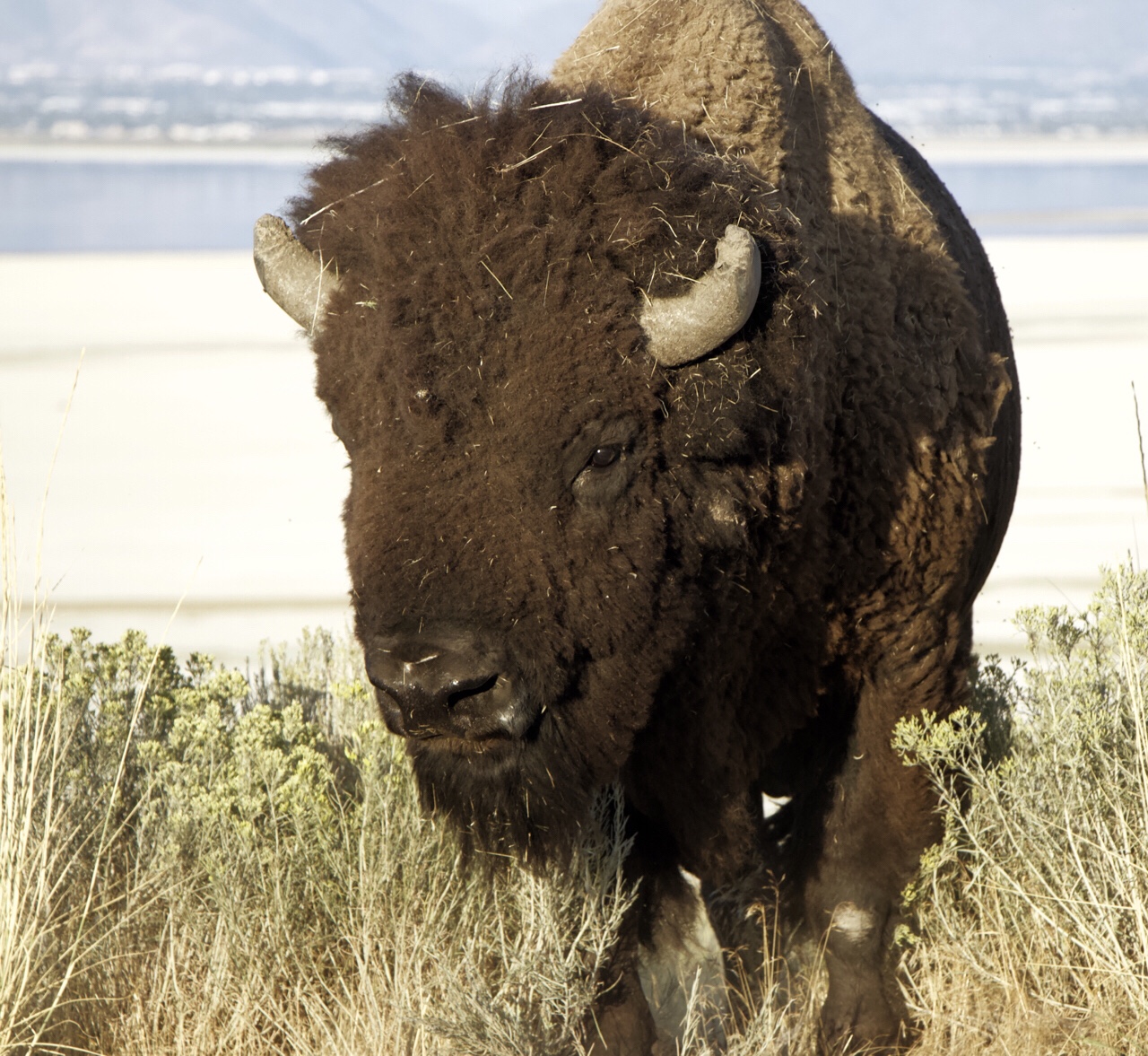
Antelope Island Bison

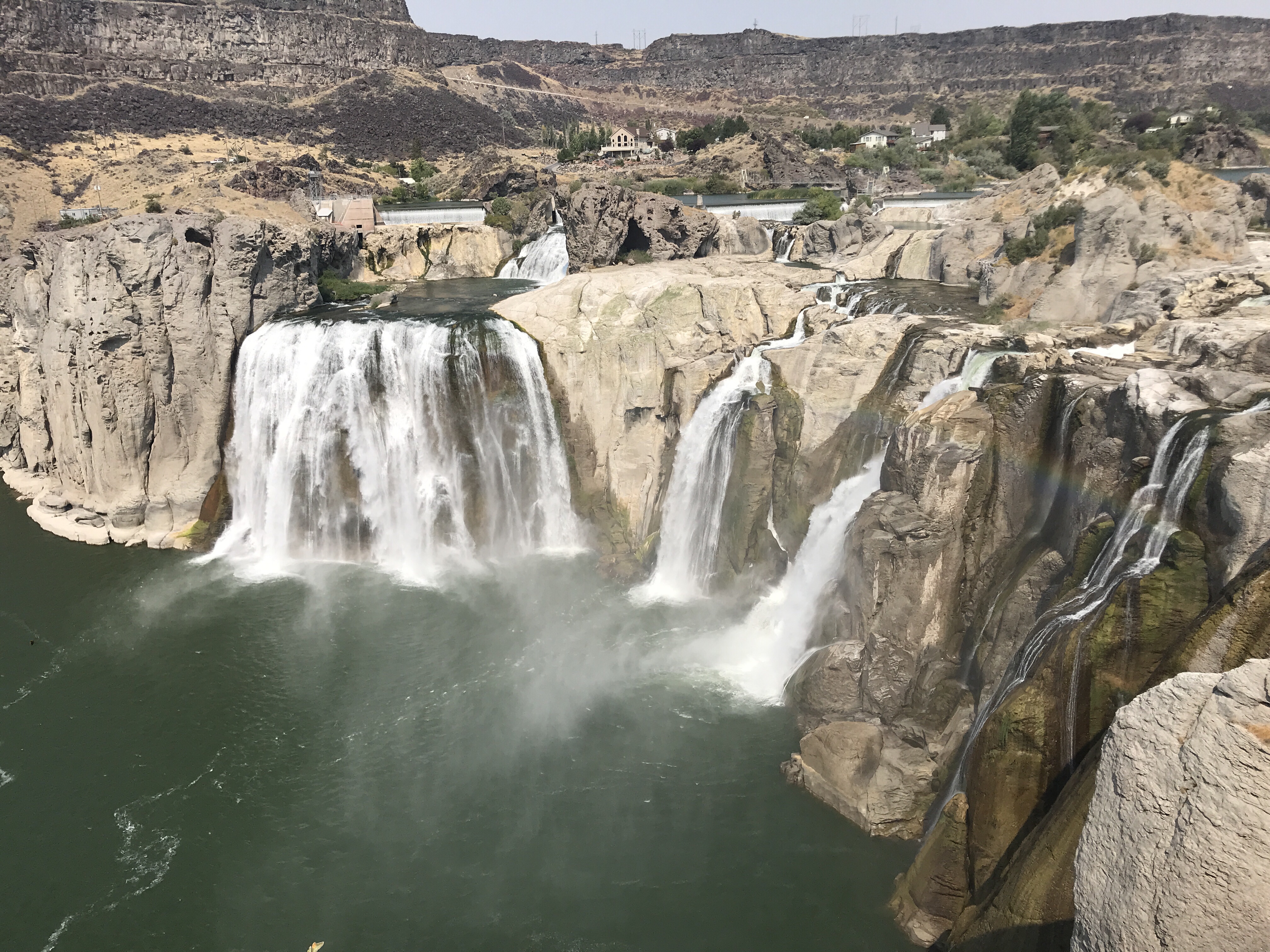
Heading into Idaho, we decided to stop and see Shoshone Falls, and were glad we did. It’s a beautiful park and not to be missed if you have the time for a quick stop.

Shoshone Falls

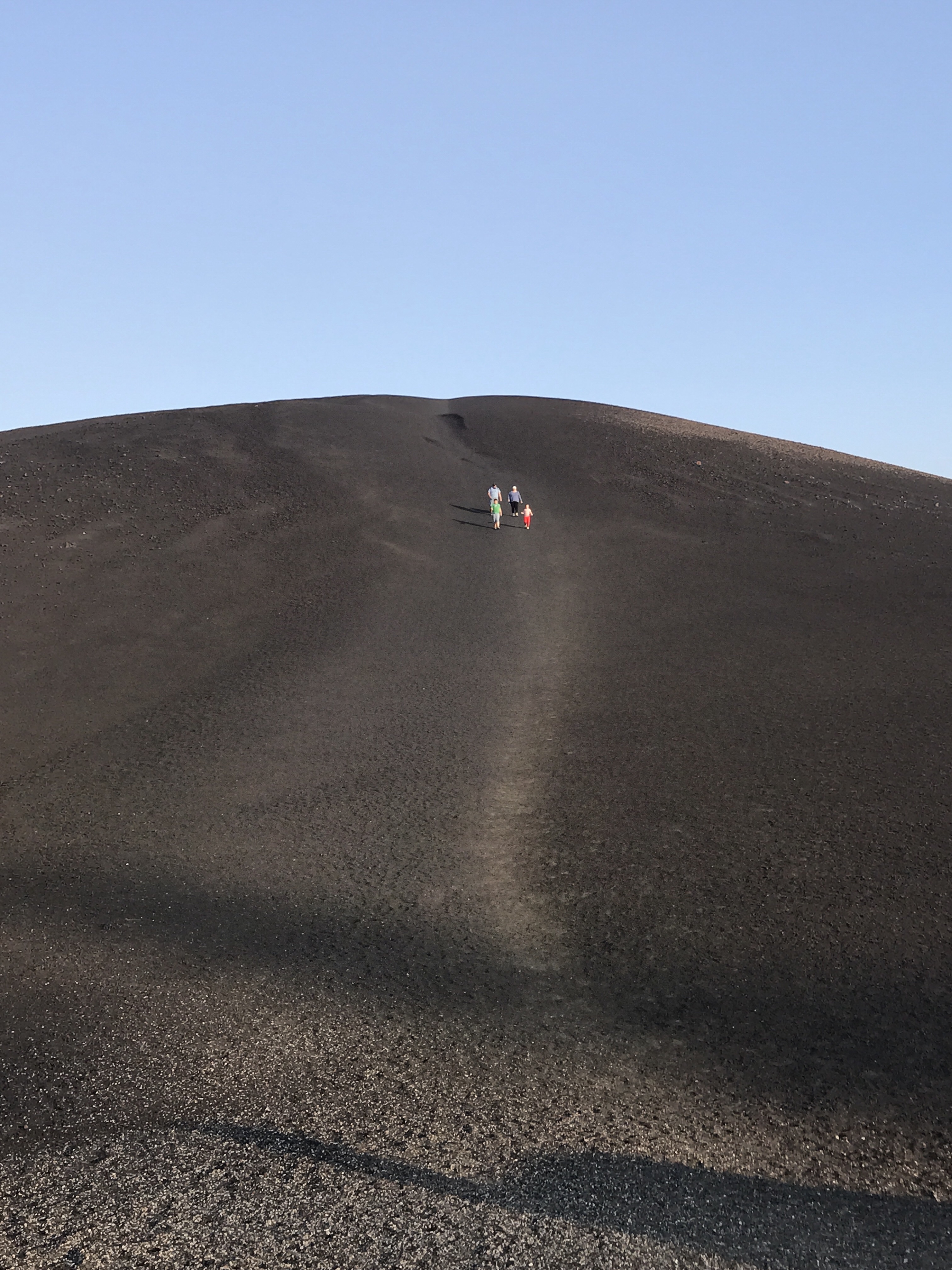
Driving east, we stopped next at Craters of the Moon National Park. We camped for a night there, and visited each of the stopping points on the seven mile park loop. What a strange and fantastic landscape! The 750,000 acres of volcanic debris are the perfect setting for NASA’s Mars experiments, and gives the visitor a glimpse into what our world looked like in the time of the volcanoes.

Craters Of The Moon National Park

Craters of the Moon National Park

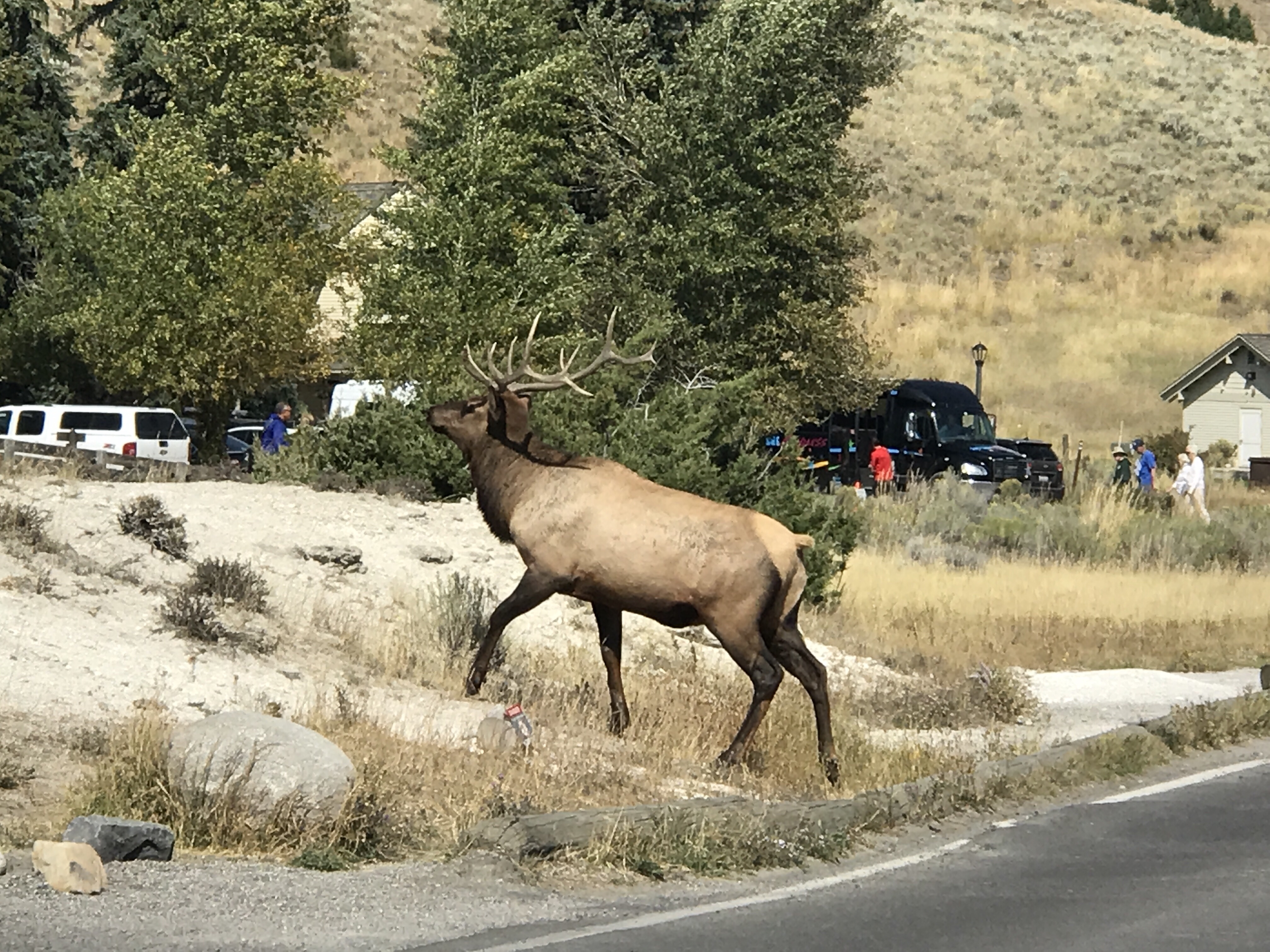
And then we were in Yellowstone National Park! We were able to get three nights’ at a campground, and we spent the first day going to see Old Faithful and the lower geyser basin.  On our second day, we drove to Lake Yellowstsone (it’s huge!) and also checked out the Grand Canyon of Yellowstone. On the third day, we went to Mammoth Falls and some of the other mudpots, geysers, and hot springs. And everywhere we went we saw animals, from pronghorn deer, to elk, to bison. Even though it was after Labor Day, the park was still really crowded- and the nights got down to 34 degrees! After three nights I had had enough and was ready to head south.

Chris Capturing the Beauty of Yellowstone

An Elk at Yellowstone

Mammoth Falls

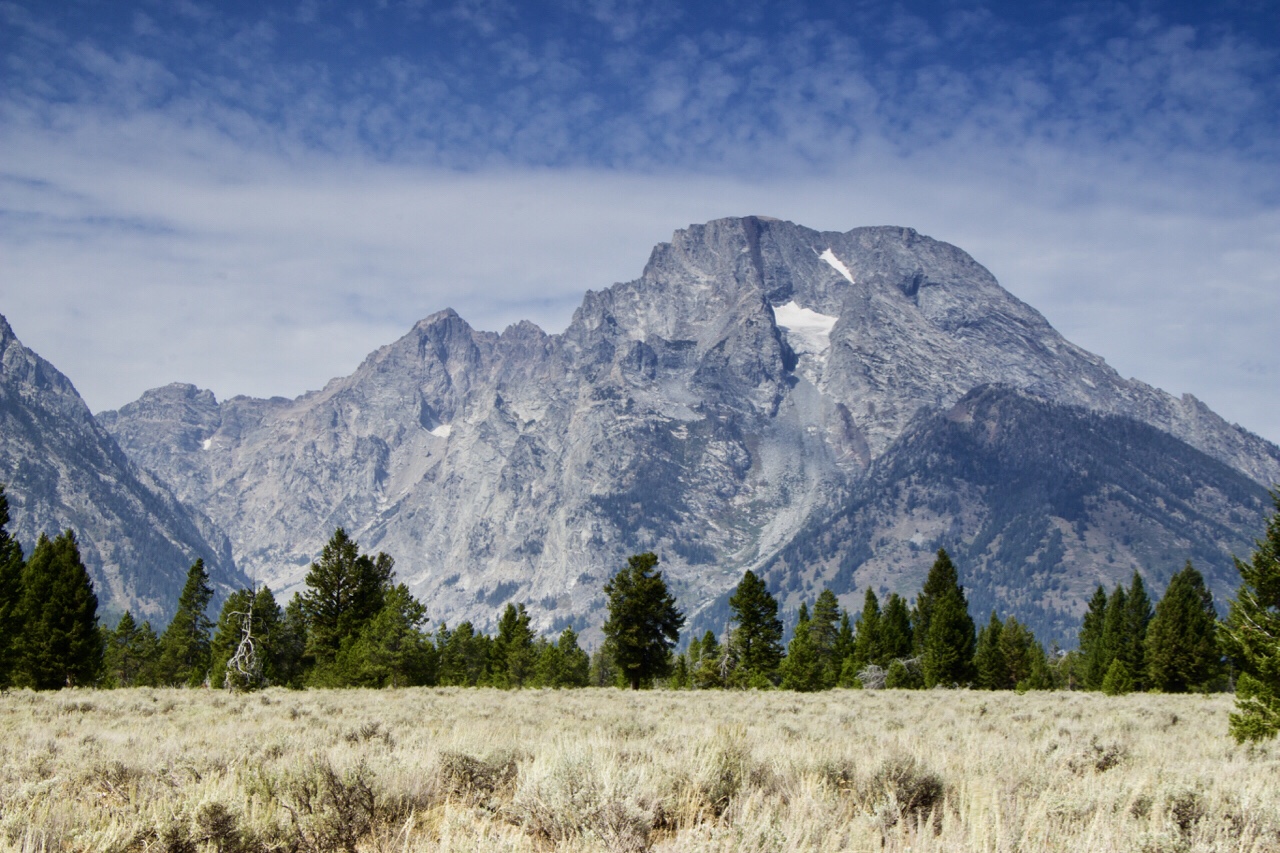
We drove south through Grand Teton National Park, where we saw a huge grizzly bear! Seriously huge, probably 600 pounds. That, coupled with the extreme beauty of the Tetons, made it an awesome day. A park not to be missed.

The Tetons

Wildlife at Grand Teton National Park

A grizzly bear!

We drove through Cheyenne, WY next, and stopped for some excellent barbecue at Tasty Bones, and visited a really great- and free!- museum on Wyoming’s history.  Some surprisingly interesting stuff in there!

Cheyenne, Wyoming

Instead of taking the boring ol’ highway south, we drove through Rocky Mountain National Park on the way from Cheyenne to Colorado Springs. We timed our drive around sunset, and saw tons of elk and deer, as well as some beautiful fall colors. We spent the night in Winter Park, a very cute ski town.

Rocky Mountain National Park

Next we spent a couple of days at Colorado Springs, home of the Air Force Academy. Mike took each of us up flying in a Cessna, so we got to see Colorado Springs from above. We also visited Garden of the Gods and drove to the top of Pike’s Peak.

Garden of the Gods, seen from above

img_5122
Chris and Deah at Pike’s Peak

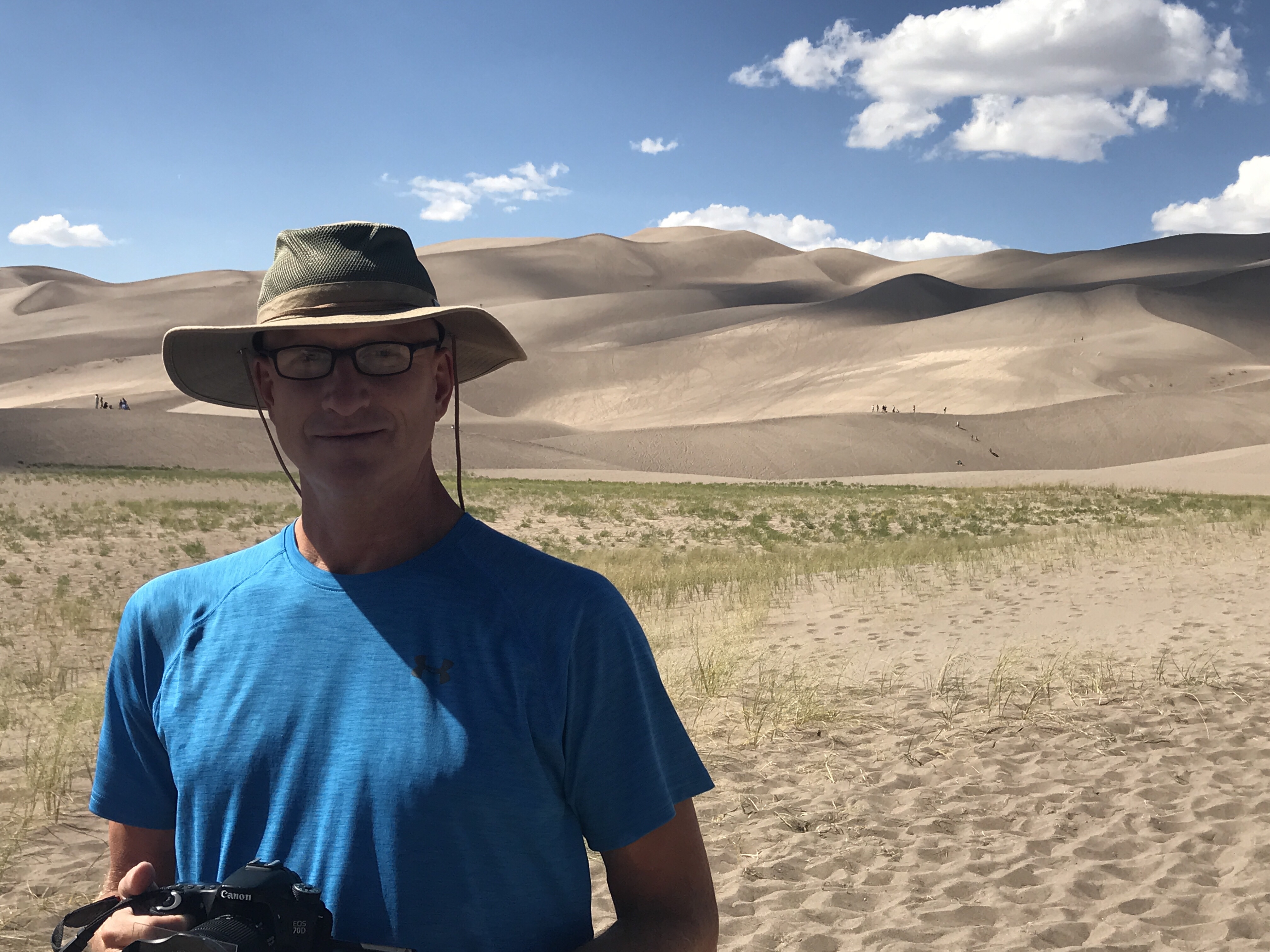
Leaving Colorado Springs, we headed west a little bit and passed through Great Sand Dunes National Park. Huuuuge sand dunes! There was no way I was making it even to the top of the first one. Check out how tiny the people look in this photo below:

Chris at Great Sand Dunes National Park

We arrived in Durango and spent two nights with two old friends of mine, Paul and Julie. We got to catch up with everything that’s happening in their lives, and we also got to drive out to see Mesa Verde National Park. These mesa-top alcove pueblos date back to the 13th century and give tons of clues about life in those times, while still leaving us with basic questions about the cliff dwellers.

Mesa Verde National Park

img_5149
A Kiva at Mesa Verde

From Durango we headed to New Mexico, where my friend Karen had invited us for an evening with her family. We spent the day wandering around Manhattan Project National Historic Park, which I really enjoyed. I had no idea there was a boys’ Ranch School on the site previously, and that it was appropriated by the War Department. We got to wander through some homes on Bathtub Row, and then we visited the Bradbury Science Museum– a super hands-on and informative museum about the Los Alamos Research Laboratory.

Los Alamos Ranch School

img_5182
Oppenheimer’s house at Los Alamos

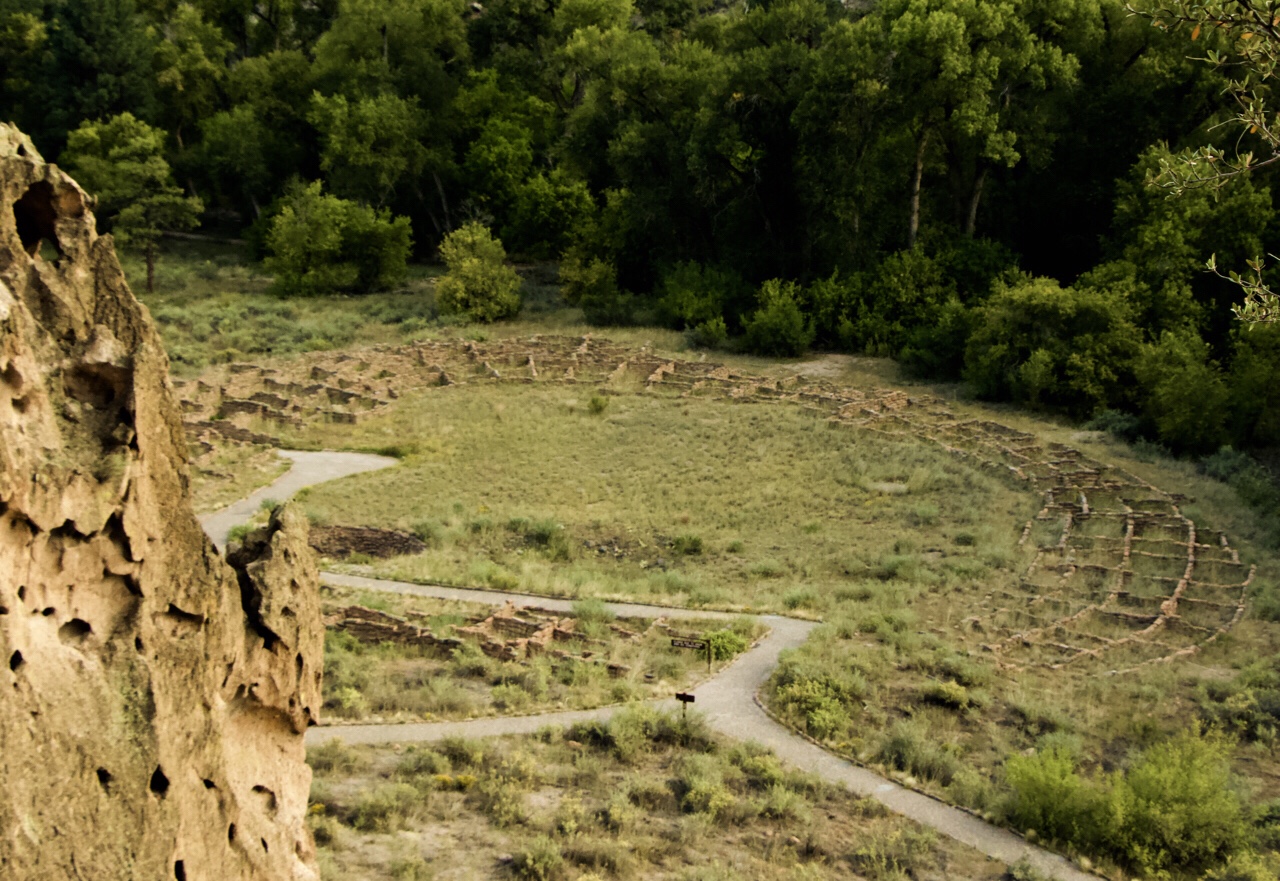
Between Los Alamos and Santa Fe, we had time to make a very quick stop in at Bandelier National Park- home to multi-storied alcove cliff homes dating back to the 1400s, as well as the remnants of a larger circular village named Tyuonyi, with over 500 rooms.

Deah at Bandelier National Park

Tyuioni village

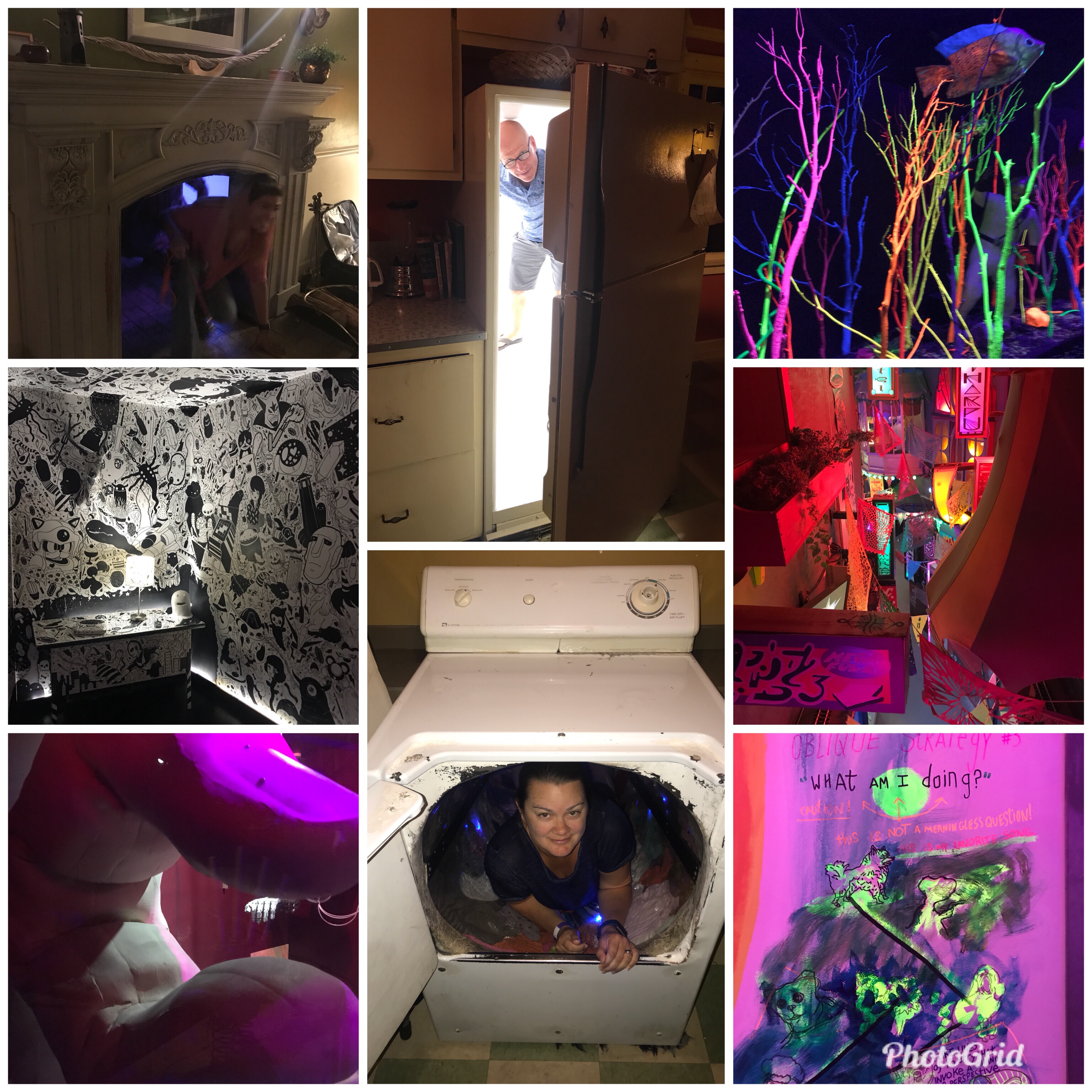
We walked around historic Santa Fe, including their beautiful church dating back to 1610, and of course ate tons of New Mexican food. On the way out of town, we spent the afternoon at Meow Wolf, a very interesting and strange immersive art experience. At $25, it’s pretty expensive, but it is such a unique experience that I’d recommend checking it out- there’s one coming to Denver and to Las Vegas soon. It’s too hard to describe in words so here’s a few pictures.

Santa Fe Cathedral

img_5208
Red or Green?

Meow Wolf

We took the Turquoise Trail from Santa Fe to Albuquerque, and then stayed with two of our friends from Burning Man, Alex and Debbie, at their home near Sandia Peak. A rainstorm rolled in and we watched it through the massive windows of their house, overlooking the city. We had a great evening with them as we talked about our Burning Man experiences and thoughts on the festival and travel in general.

Watching the rain pass over Albuquerque

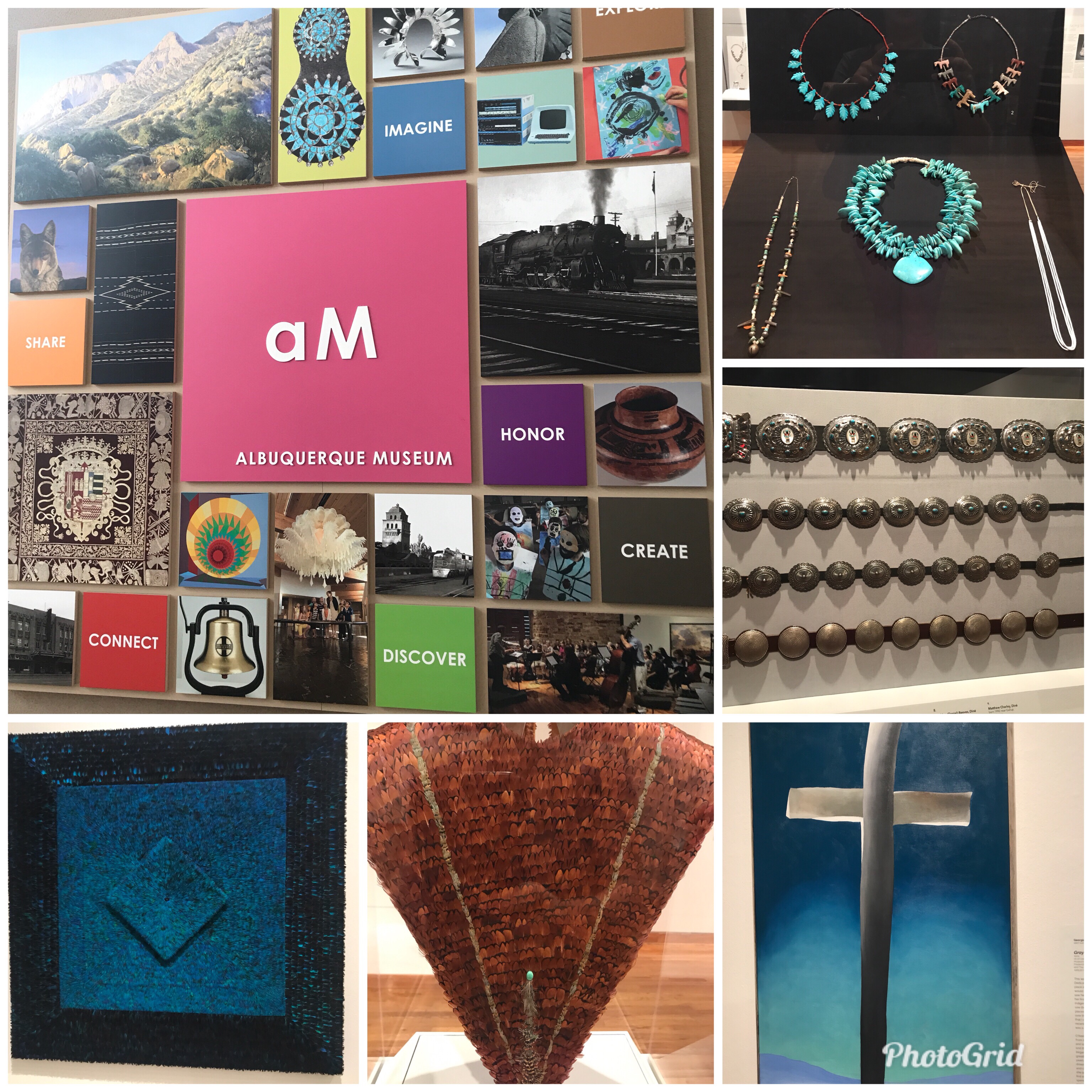
In Albuquerque the next day, we strolled through historic old town. Our favorite part was the Albuquerque Museum, which has seven galleries, of which the New Mexico Jewelry exhibit was our favorite. Amazing craftsmanship of both old and new jewelry, ranging from silver and turquoise to feathers and other found materials. Worth going to, and a very inexpensive museum at $6.

Albuquerque Museum

That was our furthest point west for this leg of the trip- we turned east and passed into Texas (my home state). We stayed the night in Amarillo, where we visited Carhenge (also known as Cadillac Ranch), a series of 10 Cadillacs that were buried in a farm field back in the 60’s. From there we went through Lubbock, keeping an eye out for fun street murals and Buddy Holly memorabilia (he was from there). And then finally we arrived in Arlington, Texas, my hometown, where some catching up with family and friends will now occur!

Carhenge

We fly to Nepal on October 15, so click the “Follow” button down below to get a post about our trekking there!

Have you been to any of these states? What was your favorite things to see there? What part of vacations do you like best- wild animals, beautiful scenery, or catching up with friends and family?