The Best of Iberia: Trails and Tapas

I had friends that were going to be visiting Portugal and Spain and when they shared their itinerary with me, I immediately thought “That sounds amazing” and wanted to go too. Serendipitously, while looking through some of my files, I found my credencial from when I started, but didn’t finish, the Camino Portuguese, and I realized that I needed to head to Porto and continue my hike, and then join my friends on their vacation.
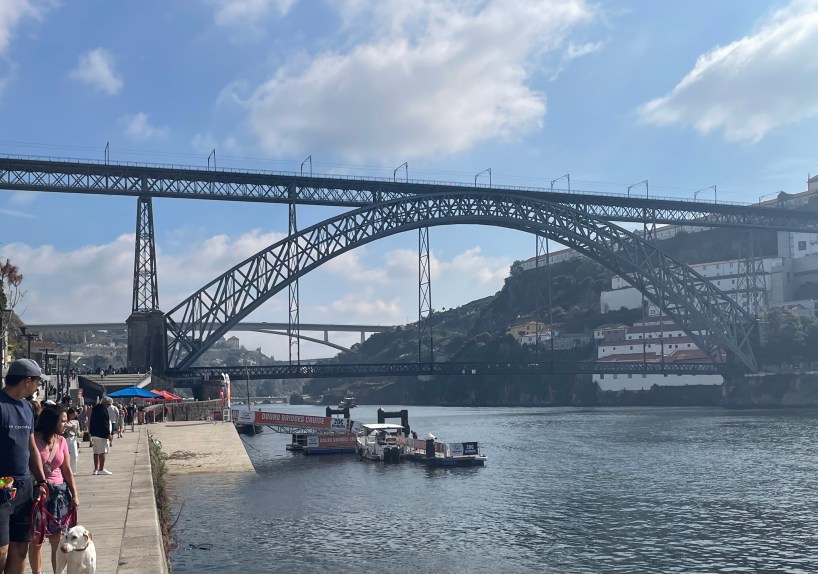
The Dom Luis I Bridge, created by a student of Gustave Eiffel

Luckily I had some miles to burn on my United account, as airfare is getting stupidly expensive. If you don’t already have an airline mileage credit card, get yourself one! And if you currently have one, check and see if it’s time to cancel that card and get a different one. If you’re not earing those bonus miles, you’re wasting your dollars! Anyway, I was able to fly into Porto for only about $20 (taxes and fees) after an overnight flight from Dallas, and as it was pouring down rain, I hopped in an Uber to find my friends at their Airbnb.

We spent the next three days in Porto, walking around, eating tapas, gazing at the beautiful iron bridges and blue azulejos tiles. After several lovely dinners together and a bit of sightseeing, I was ready to get back on the Camino.
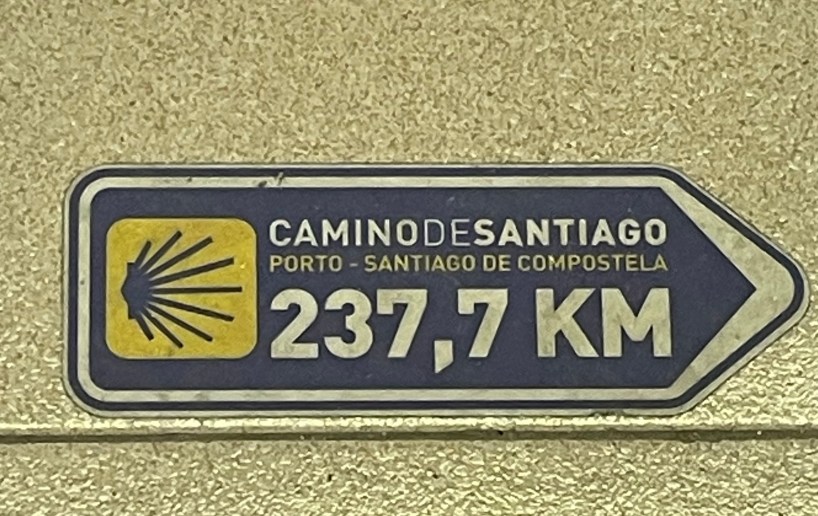
In 2022, Chris and I hiked 128 km from Coimbra to Porto. I won’t have time to finish in Santiago de Compostela, but we’ll see how far I get in the next six days!

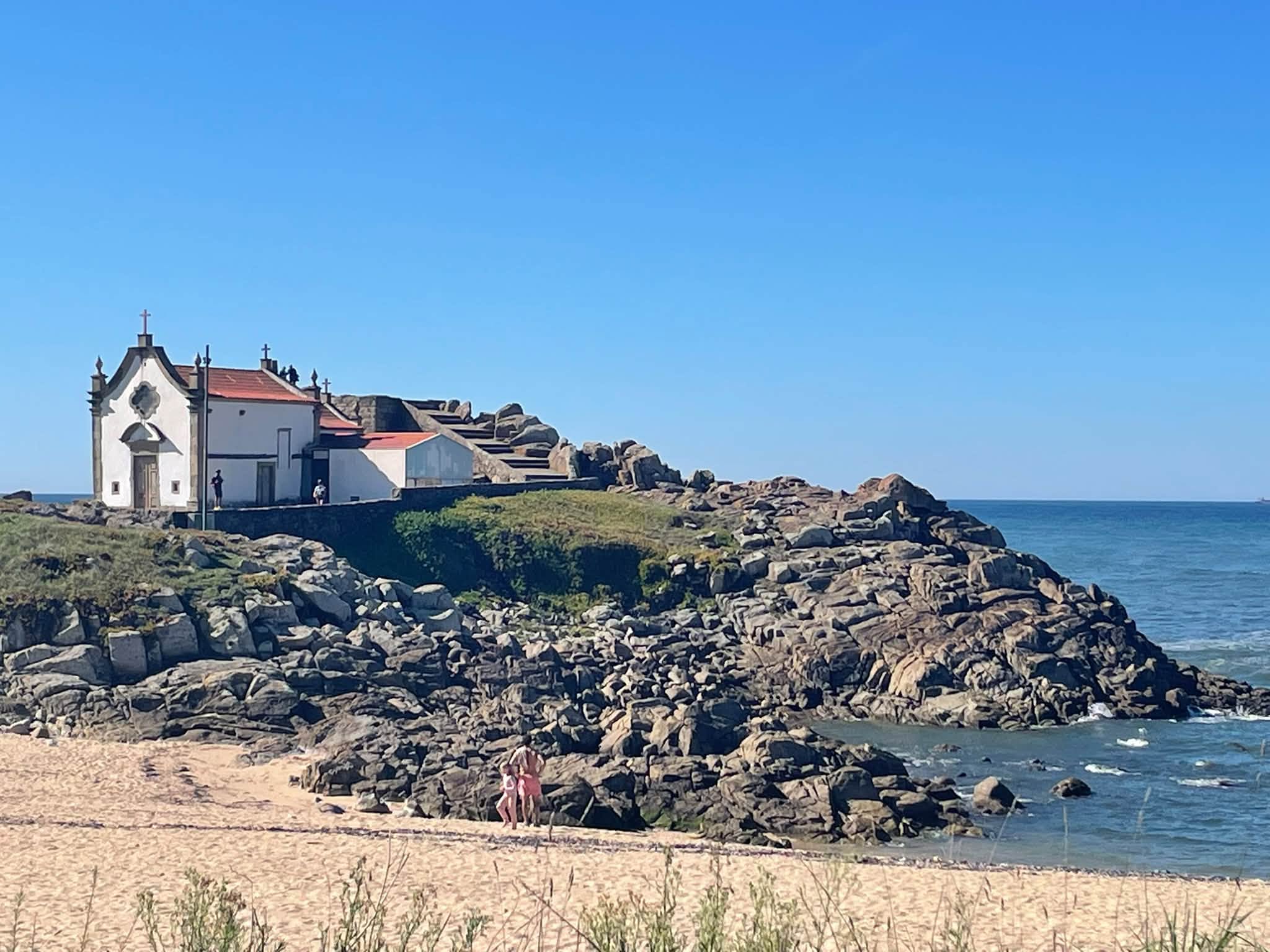
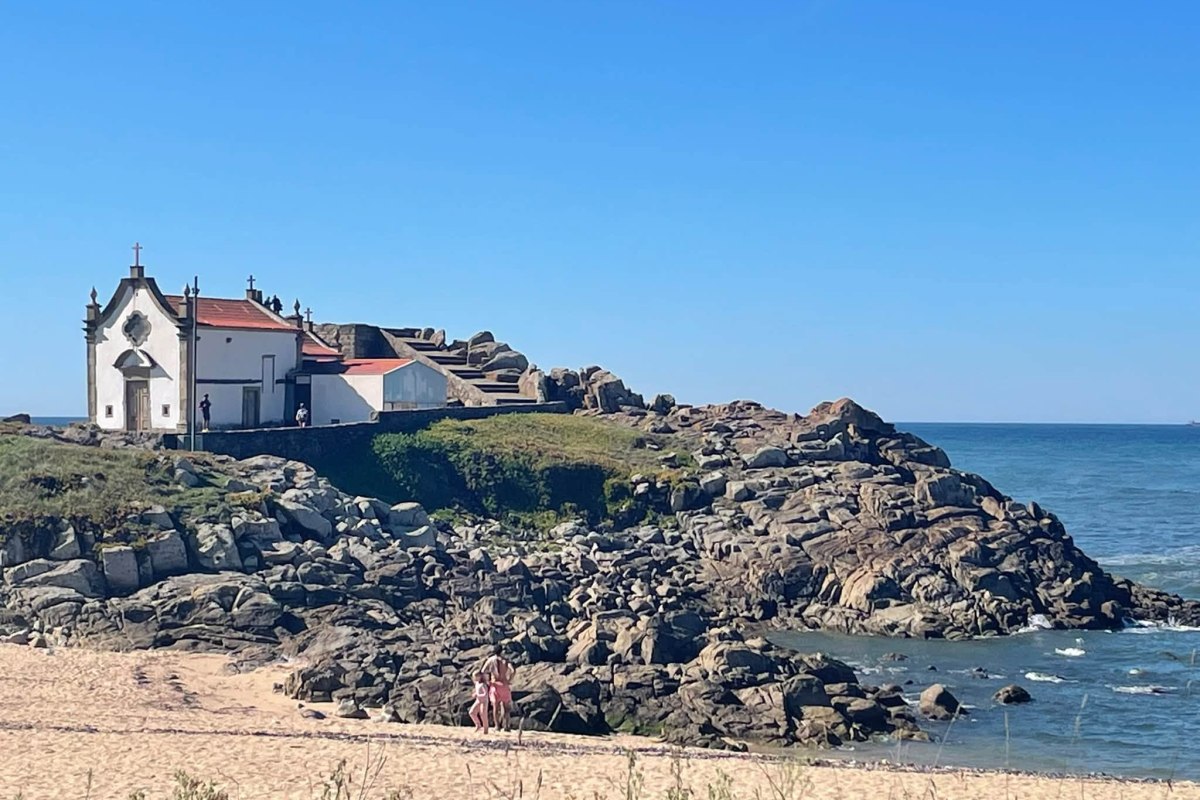
On my first day on the trail, I hiked from the Porto Cathedral to the fishing village of Matasinhos, which basically just feels like the edges of Porto. I chose to hike the Litoral Way, which is a variant of the Coastal route. I would recommend this route if you like to look out at the ocean, and if the weather is fair and not too windy. As the days progressed, I did get tired of the beach views and found myself thinking about switching over to the Central route, and spoke to several people who did make the switch. All the routes join up at Redondela, Spain, so ultimately it doesn’t matter too much. For me, I hiked from Matasinhos to Vila Chá (definitely have cash if you plan to stop there), and then on to Póvoa de Varzim, where I enjoyed an afternoon massage and bought a new, bigger pair of shoes. And then I meandered up to Esposende, a nice break from the coastline as it wound through some eucalyptus forests, and ended in Viana do Castelo. By that point I had a blister on one foot, a bruise on another, and plantar fasciitis in both, so I decided to rest up for a day, and then head on over to Spain to meet up with Chris and our friends. Another 80 km done, and only 150 km to one day finish! Maybe by bike, since my feet seem to hate hiking.
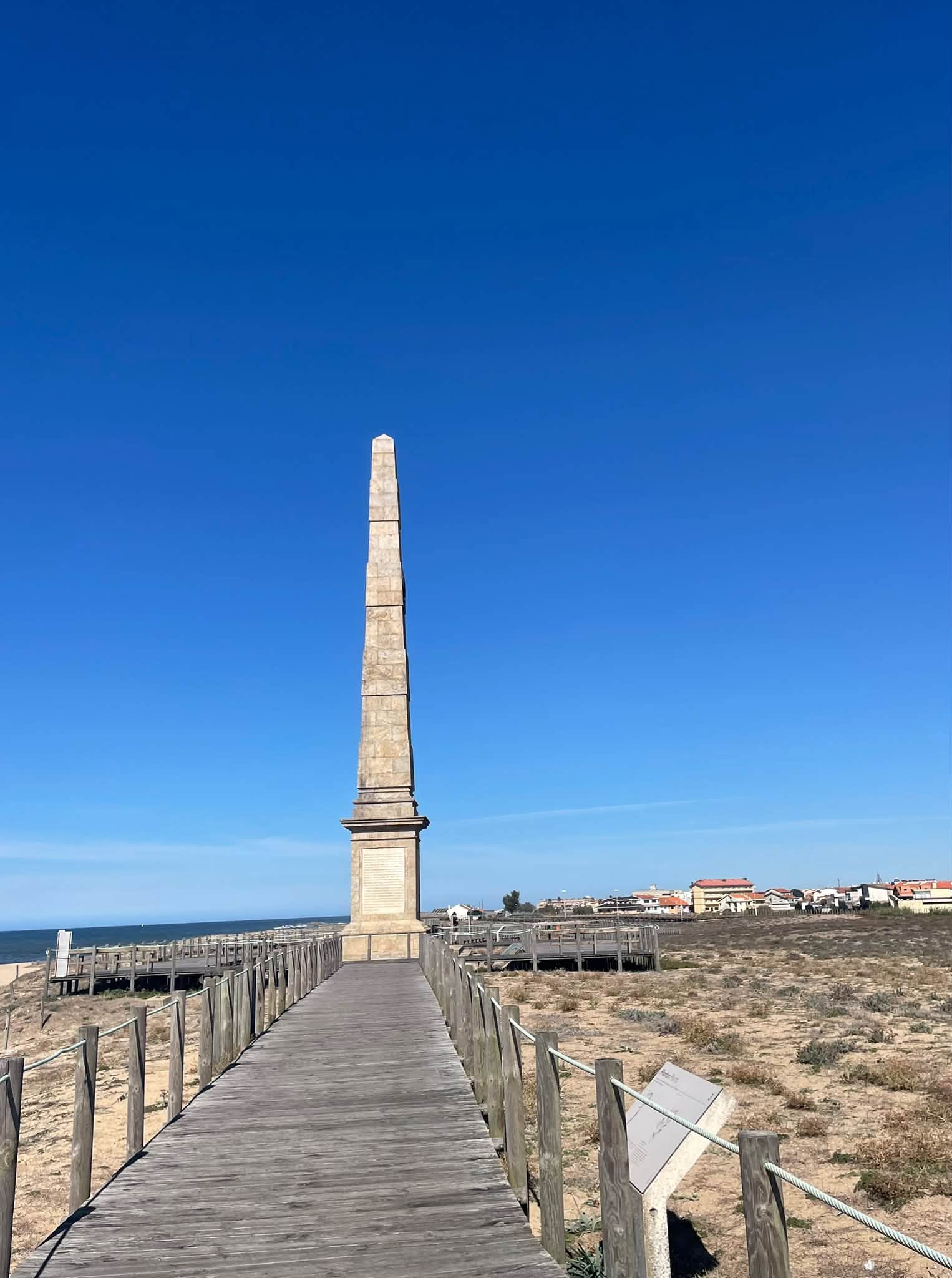
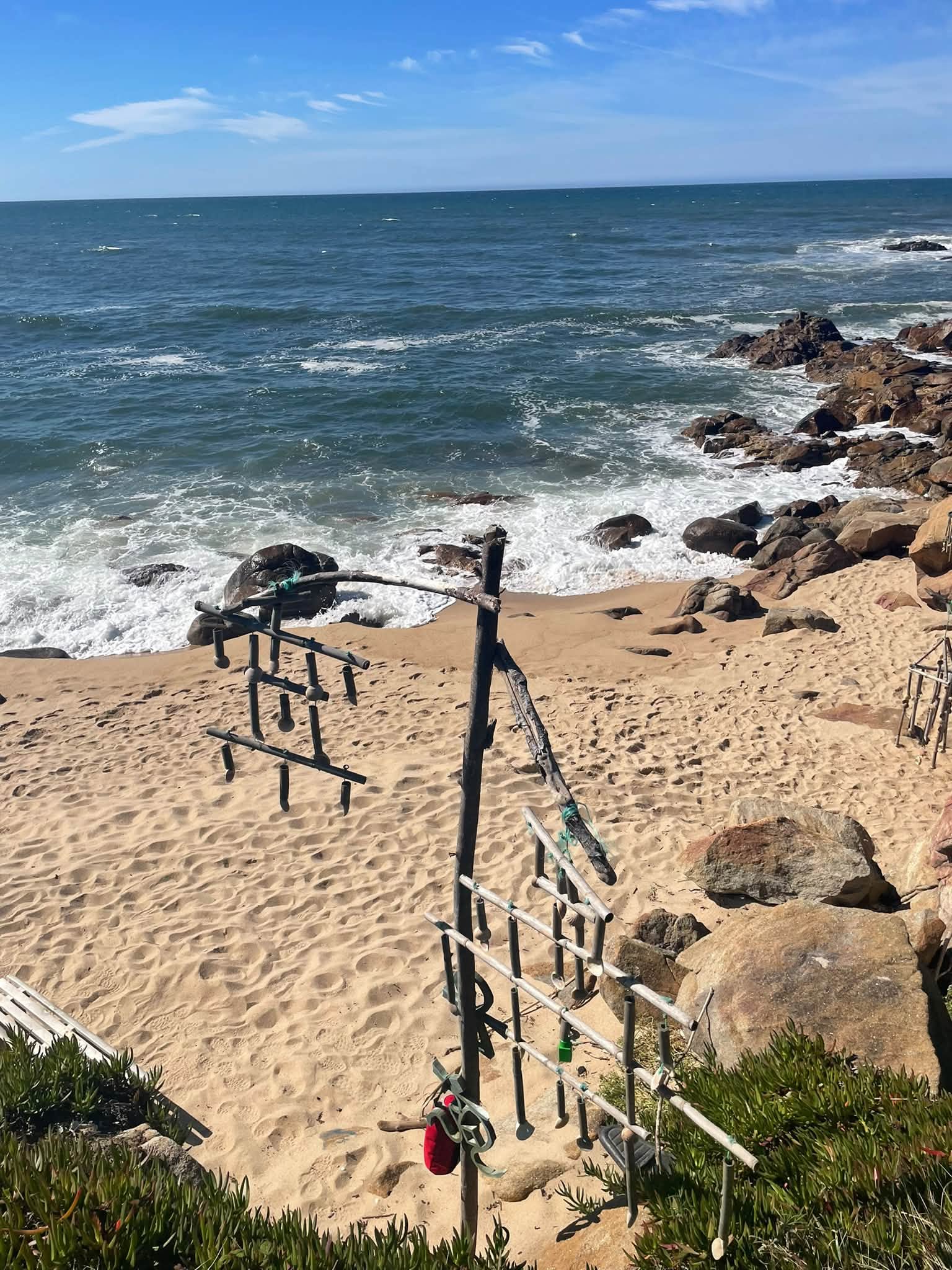
Views from the Camino Portuguese

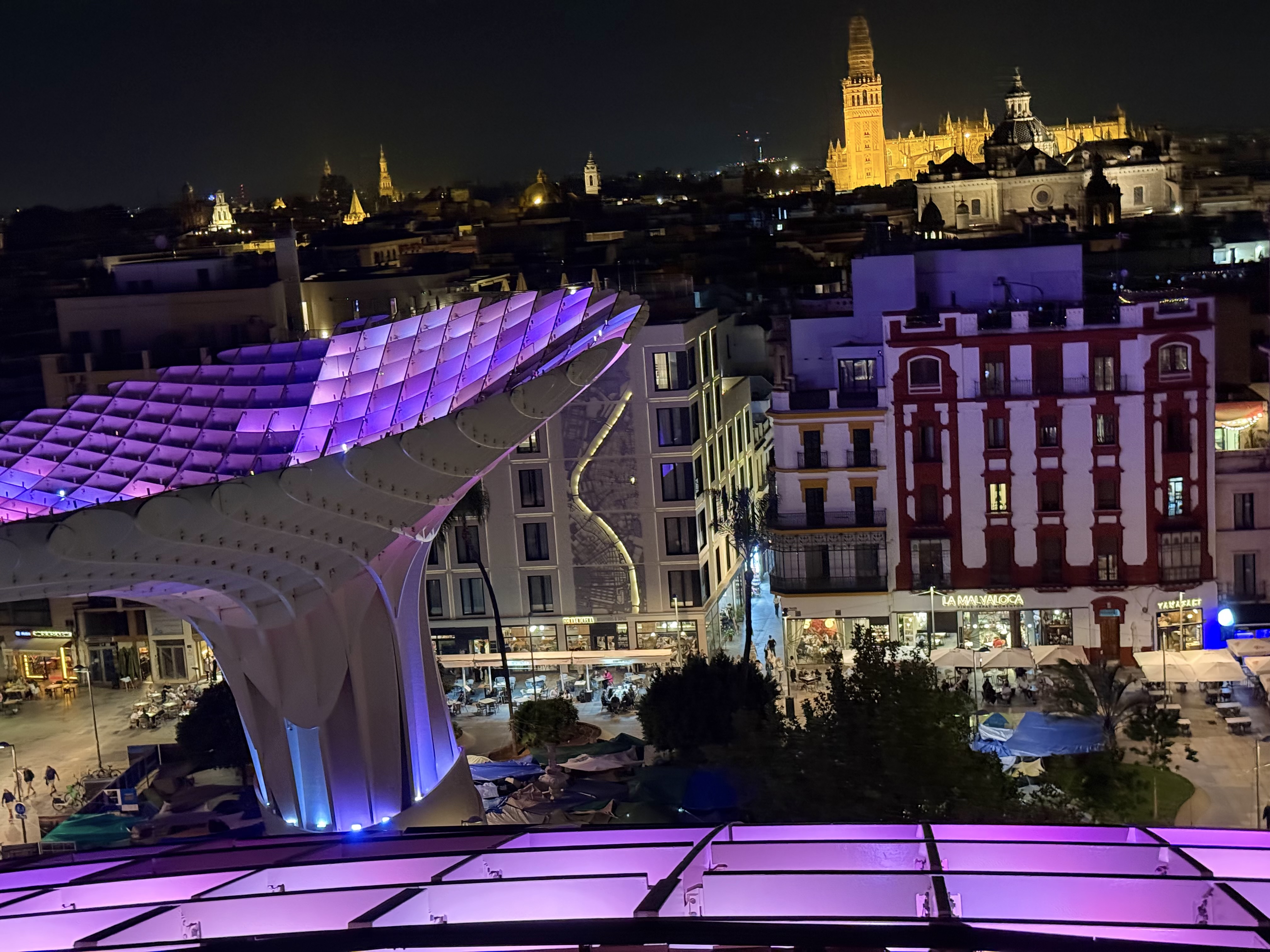
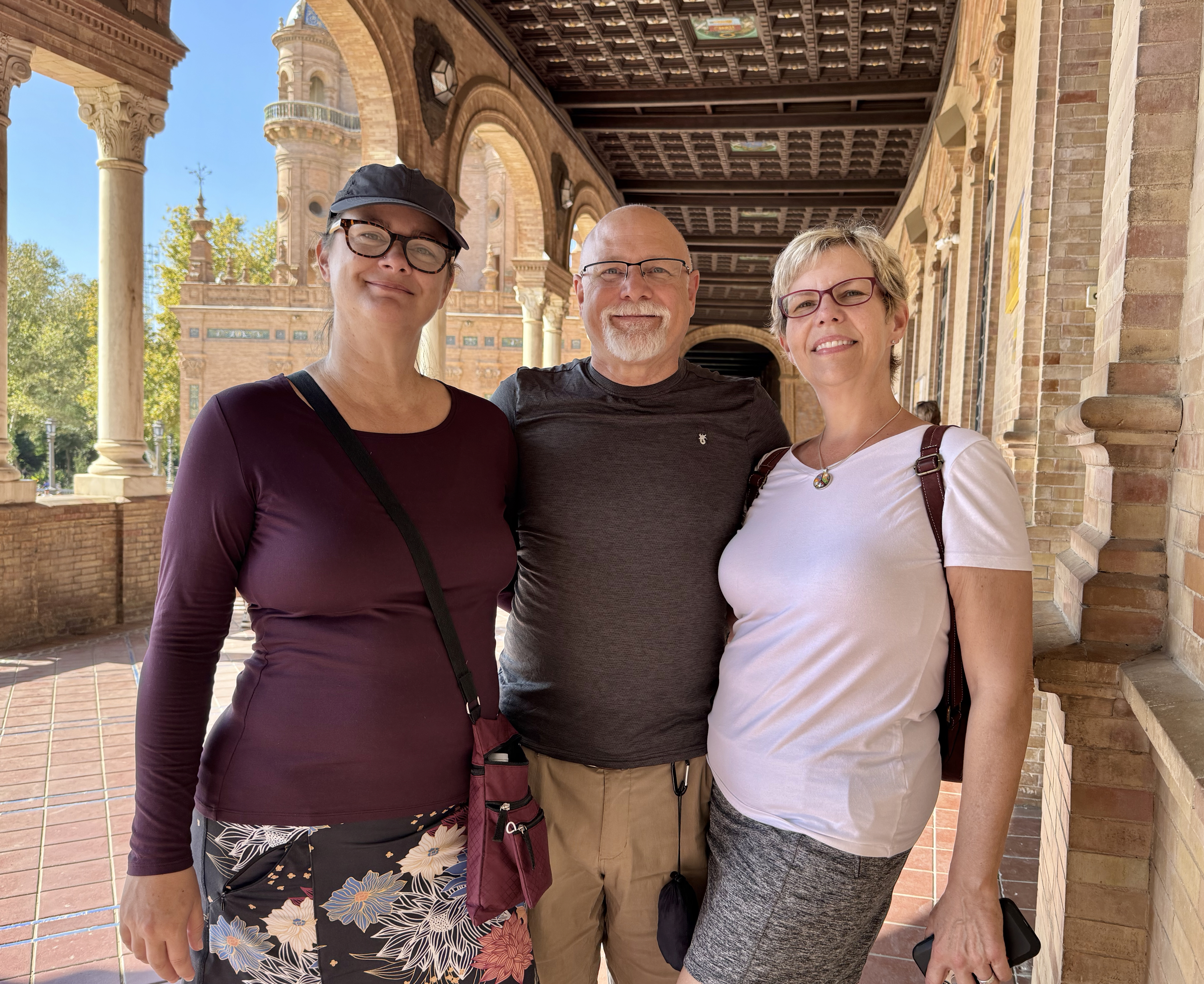
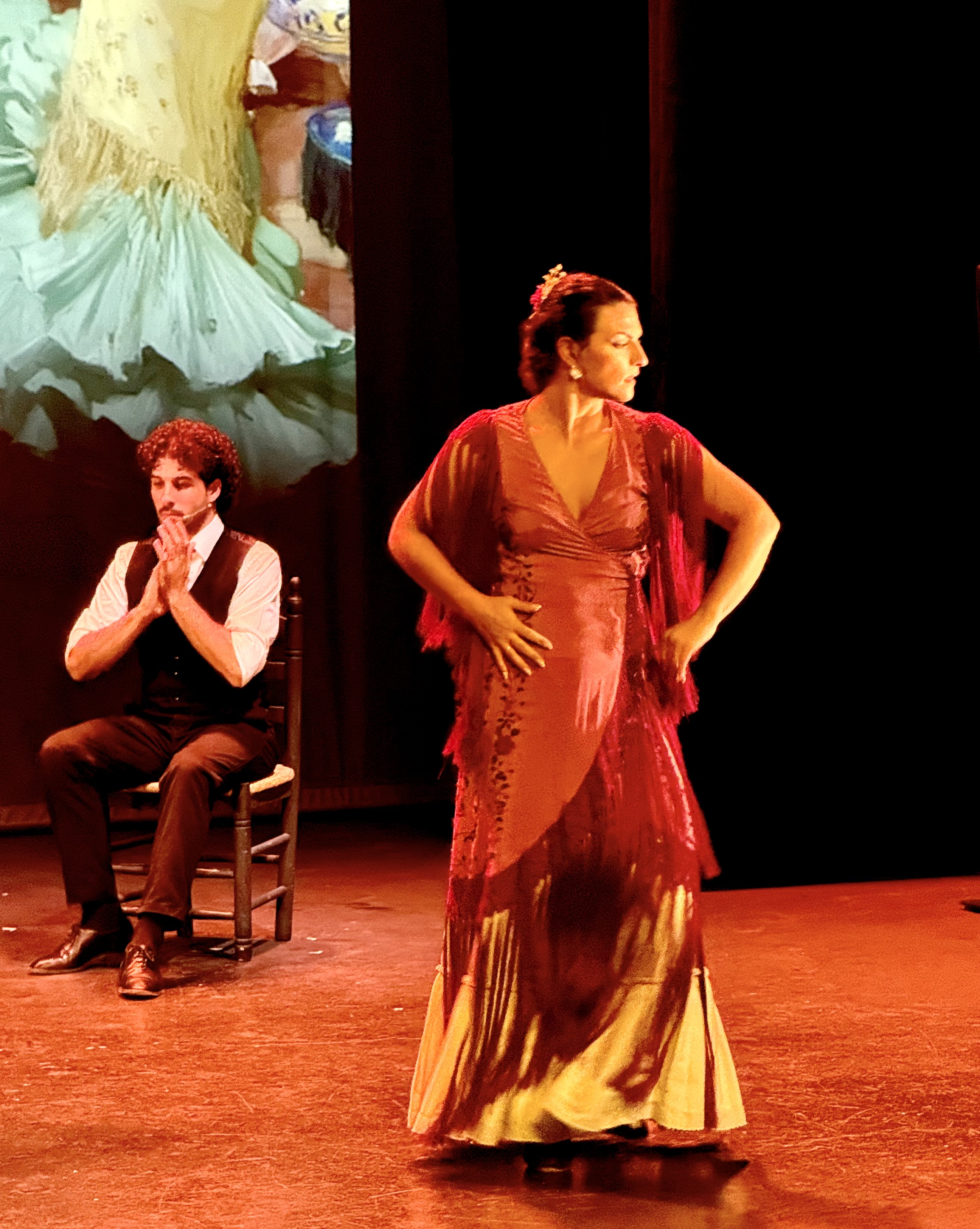
I met back up with my friends in Seville, and Chris joined us there as well. We had a sweet apartment right above Alfalfa Plaza in the downtown zone. The plaza had everything we needed- a cheese shop, a bakery, a bar, a sardiniera, and a butcher- so it was hard to leave the nearby tapas places, but we did get out and explore Seville as well. We went on a historic city walking tour, which showed us the beautiful Plaza de España, and we went to a flamenco show. On our last day and night there, we visited the “Setas de Sevilla”, a truly amazing work of art and engineering. All in all, we enjoyed Seville quite a lot- what a fun city!
After all that hiking, and all that sightseeing, it was time for a break! Chris and I, and our three friends headed to the Costa del Sol, for a few days at a seaside resort town. I lucked out and found a last-minute condo outside of Marbella, and we loved our stay there. It was close to the beach, the weather was fabulous, and there were a ton of cafes, bars, and restaurants to visit for dinner each evening- no car needed. It was a very relaxed and chill time. I highly recommend taking a vacation from your vacation when you need it.
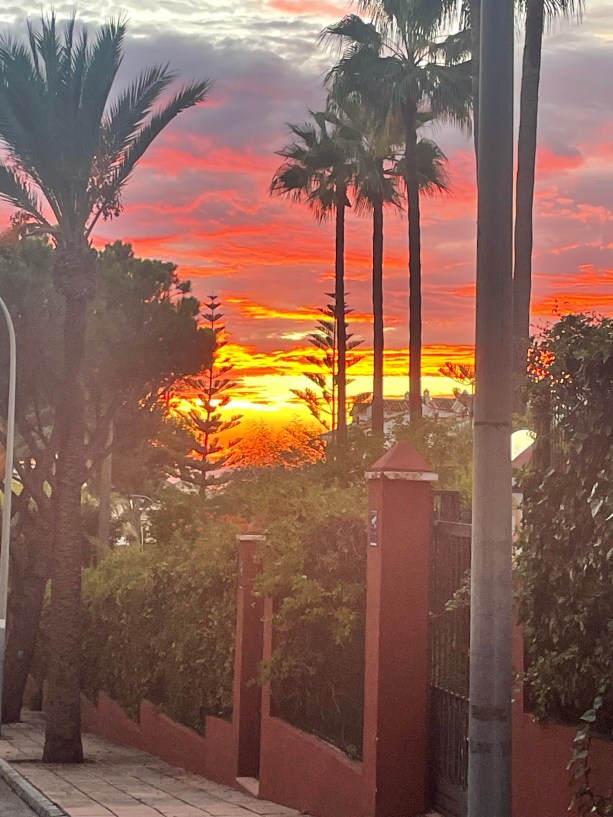
Palm trees and beach vibes

With just a few days left before our return to the US, we wanted to see a little more of Andalusia. It was too late to get tickets to see the fortress at Alhambra, but since our friends were going, we hopped in the car with them and went for the day to visit the gardens and buildings that are free to the public, and we had lunch in Granada- a delicious chilled salmorejo soup, fried sardines, croquetas, and more tapas. We also visited Cordoba, to see their famous red-and-white arched mosque-cathedral, as well as their other sites (Cordoba has more World Heritage sites than any other city in the world!). We walked along the Roman bridge at dusk, ate our fair share of salmorejo and fried eggplant with honey, and drank various Spanish wines. Cordoba is renowned for their patios and interior gardens, so a slow walk through the alleys of their historic city is guaranteed to surprise and delight if you have the time to not be in a hurry. To me, it’s worth staying a few nights to truly explore Cordoba and its culture.
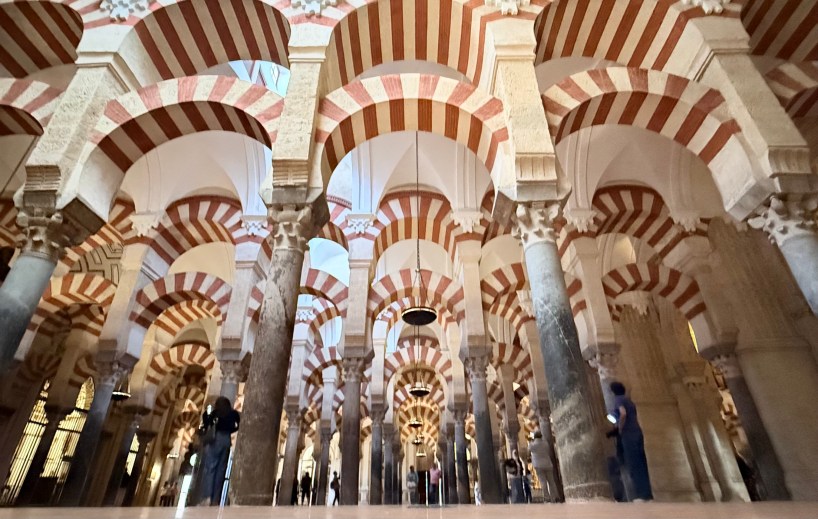
Built in 785 as a mosque, this beautiful structure became a cathedral in 1236 under Ferdinand and Isabella’s reconquista of the area

And then it was time to head back to the US. Delta had pretty good flights, so once again, we utilized some Skymiles we had that were going to expire, and were able to get ourselves back home for a good price. After three weeks in Portugal and Spain, we were happy to see family and friends and settle in to the one good season of weather we get here in north Texas.
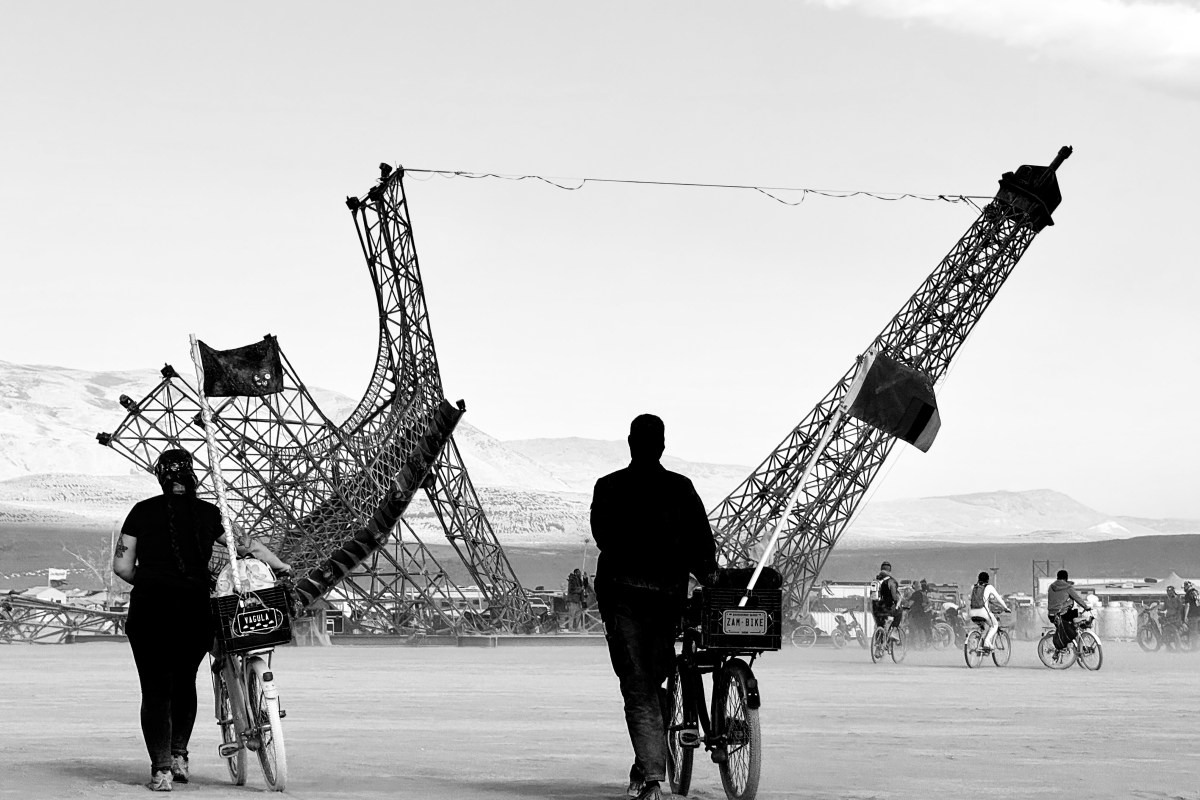
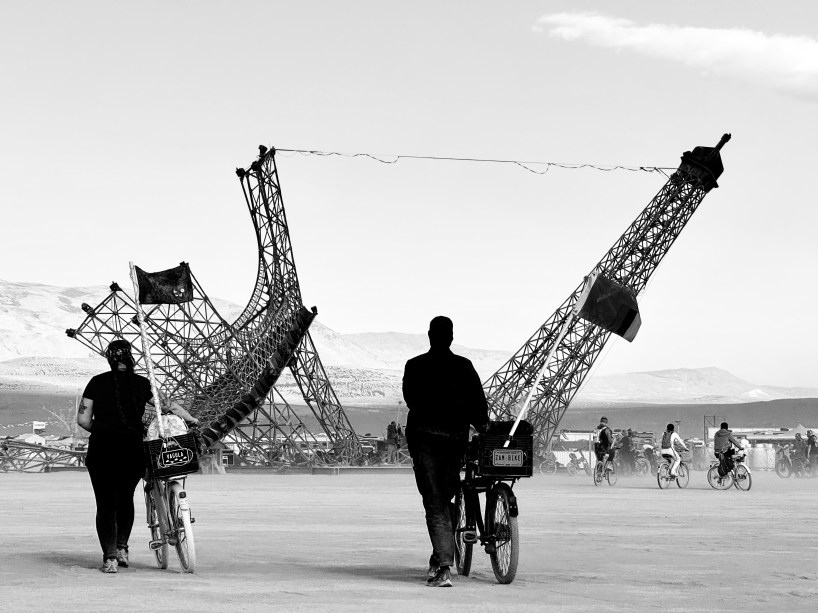
Burning Man 2026

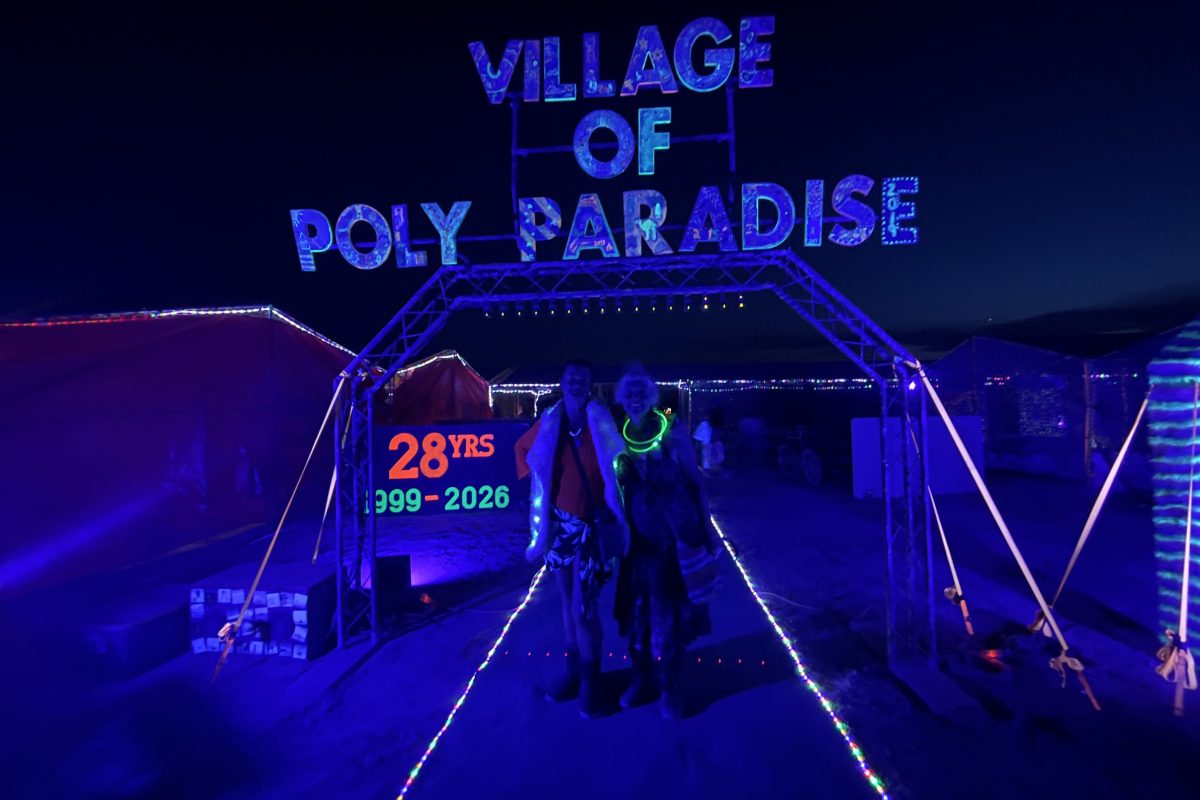
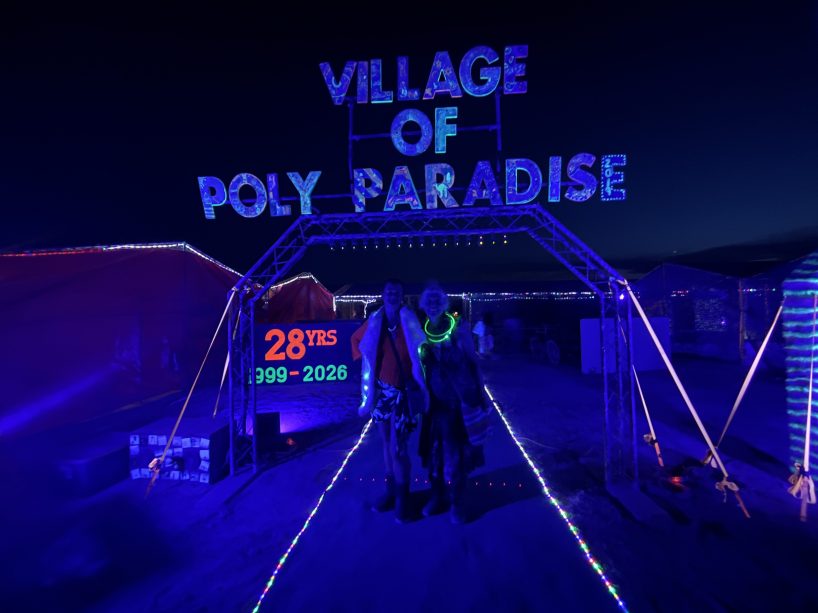
I couldn’t let September finish without posting pictures of some of my favorite art pieces at Burning Man this year. We went early, for Build Week, which I documented in this post. It was a lot of work, but worth it, to have our wonderful Poly Paradise camp all set up as our base for the Burn. And then it was time to explore! Here’s some of my favorite art pieces and theme camps.

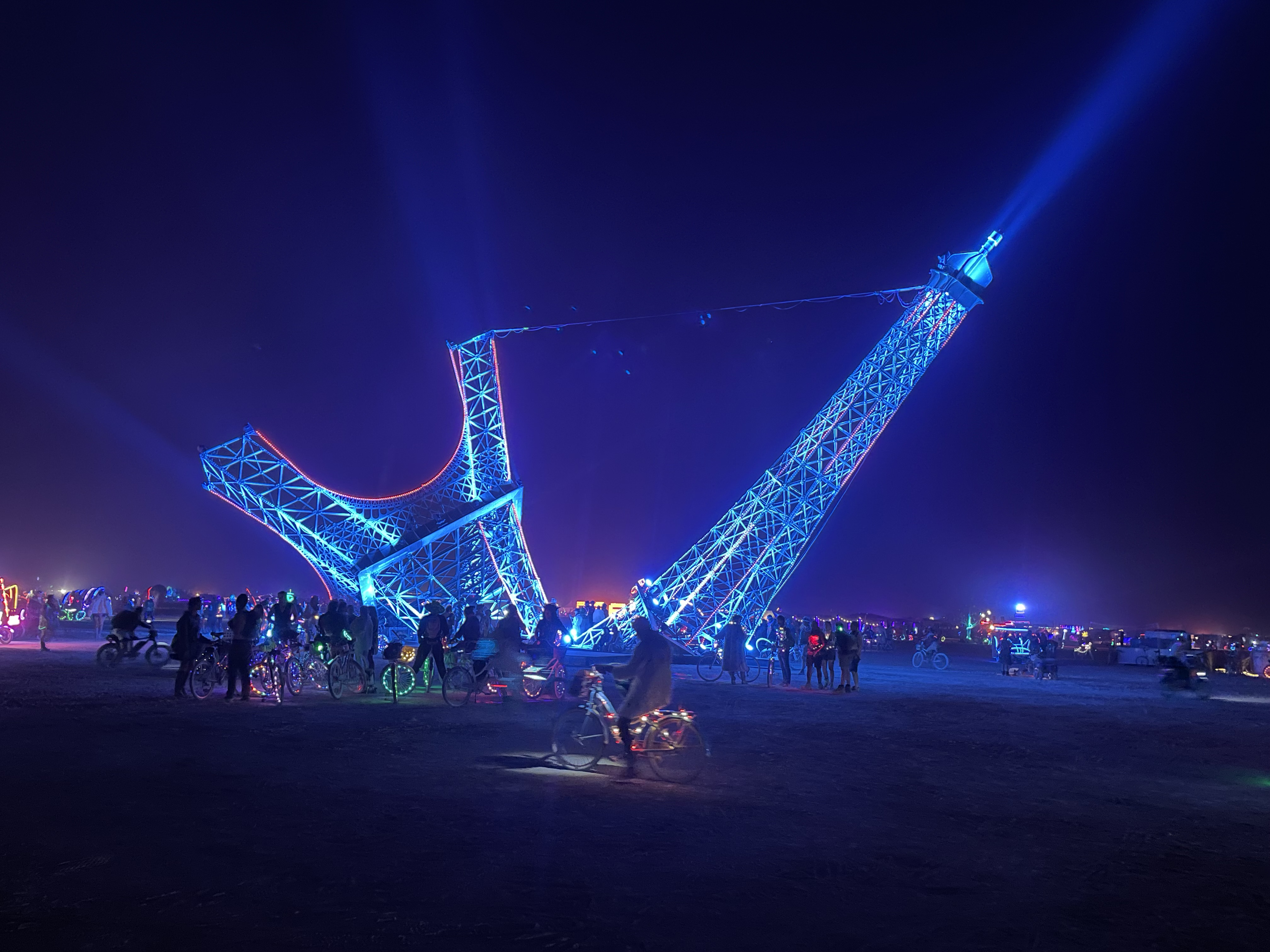
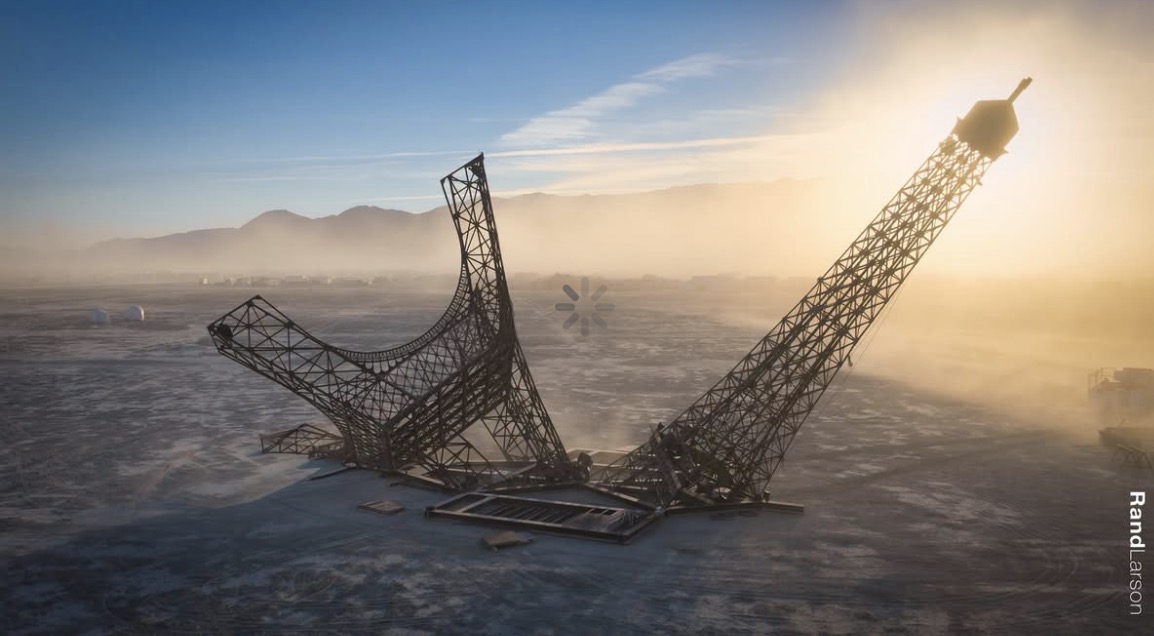
The talk of the playa this year was “Eifela: Broken Dreams” and as luck would have it, the creators of this project camped with us at Poly Paradise. They were a great group of guys from France, and for most of them, it was their first burn! I can’t wait to see where the structure’s creator, Philippe Maindron, takes it next. I predict it will be back for another burn next year. This piece looked spectacular, whether it was during the day, at night, or in the dust.

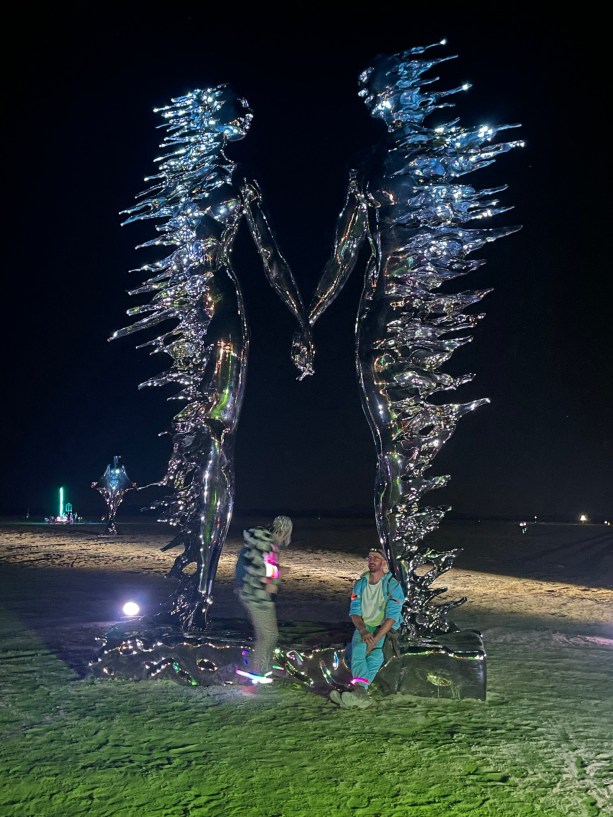
I like to look for art pieces I’ve seen in previous years, and see how the artist has transformed their work from burn to burn. I’ve followed Michael Benisty’s work since my first burn in 2018. This year’s, titled “Only Love Will Remain” was the first piece I looked for on my first playa walk. It’s easy to find, as it’s over 26 feet tall.

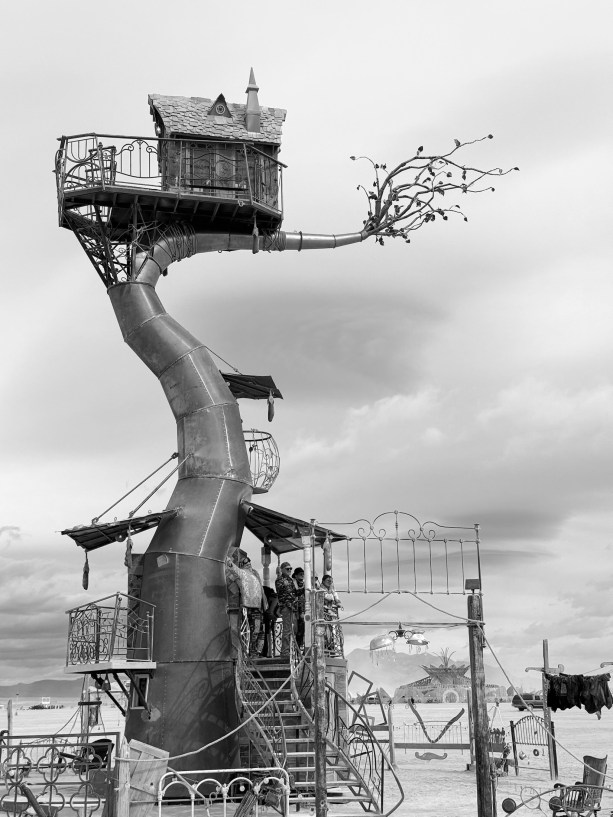
The magical treehouse-inspired art piece called “Above and Below” was fantastic. Even though we didn’t get to climb up it, we spent a lot of time exploring the base of the structure, filled with objects, stories, and mystery. You really want to take your time with this one, as each bit of it is quirky and inventive. The artist, Sean Orlando, lives in California.

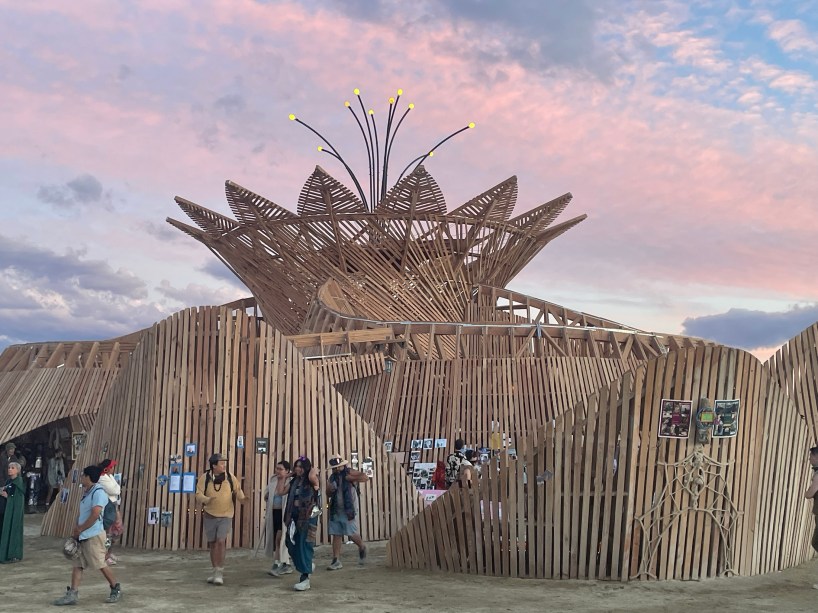
The temple design each year always captivates me. This year’s “Temple of the Moon” was inspired by a night flower that blooms only at night once a year. With no way to capture it, the viewer has no choice but to be fully present and relinquish it at dawn. The same is true of the temple, as it will burn at the close of the festival, along with the mementoes and memories left behind by this year’s participants.

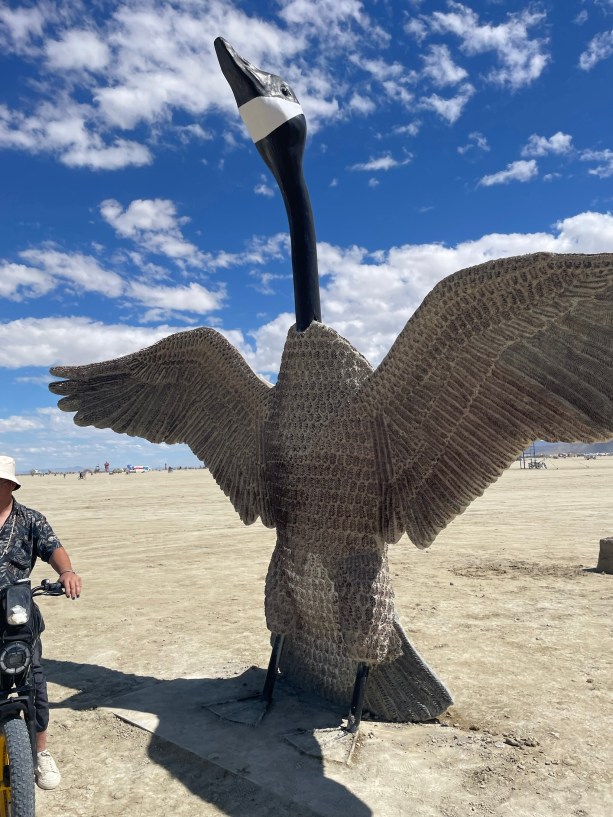
I thought this piece, called “Penny the Goose” was fun- and then I realized it is comprised of Canadian and US pennies. Considering the penny was recently put out of production by our government, this was an interesting take by artists Robert and Lisa Ferguson. At 16 feet tall, it’s quite large and I bet pretty heavy! When not at Burning Man, she resides in San Francisco, California.

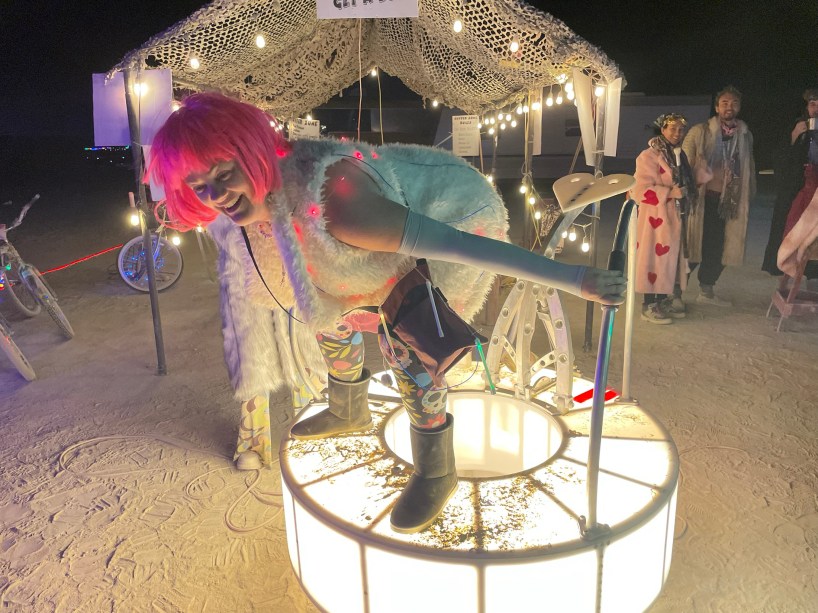
It’s not all art all the time. A lot of the fun of Burning Man is walking around and visiting the various theme camps. With over 1000 camps, there’s always something going on near you. We discovered that Spanky’s Wine Bar, one of our favorites, was just a couple of blocks from us this year. Spanky’s is guaranteed to give you a good time, especially if you’re brave.

I’m sure this won’t hurt… much

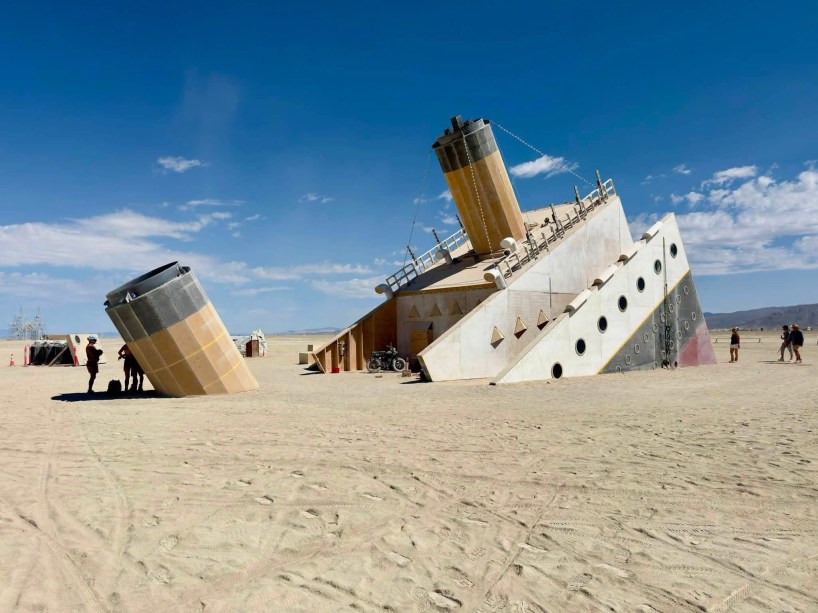
What originally started as an art car was turned into a 200 foot, broken Titanic ship, half buried in the sand. It featured ropes you could climb and swing on, flame cannons, and interactive lights. It was burned the night before The Man burned this year, amidst a raging wind storm. What will this group think of next?

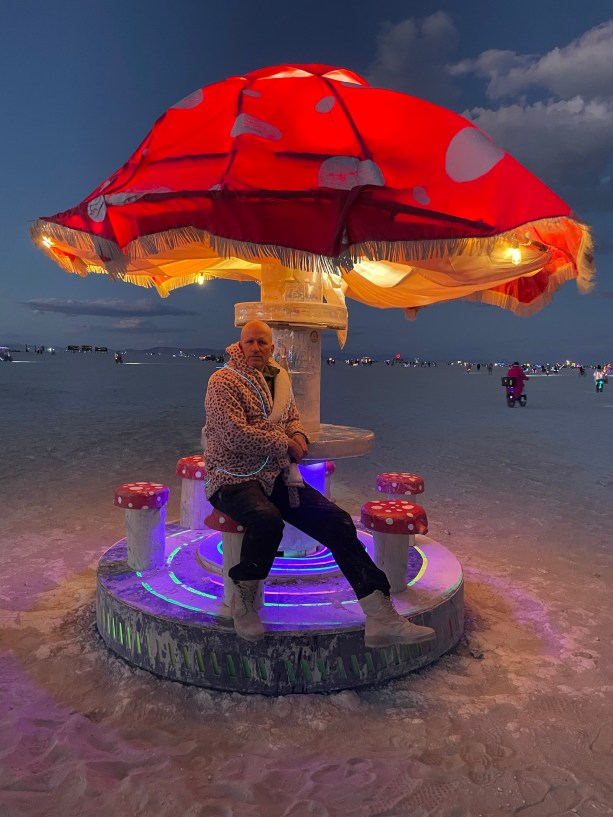
What, you’ve never been on a disco mushroom merry-go-round? Then you haven’t lived. This piece featured over 10,000 disco tiles and recycled wooden spools, with a polka-dot canopy. It’s basically a cousin of their piece, Disco Snail. We thought this picture should be titled “Chris on Shrooms”, lol.

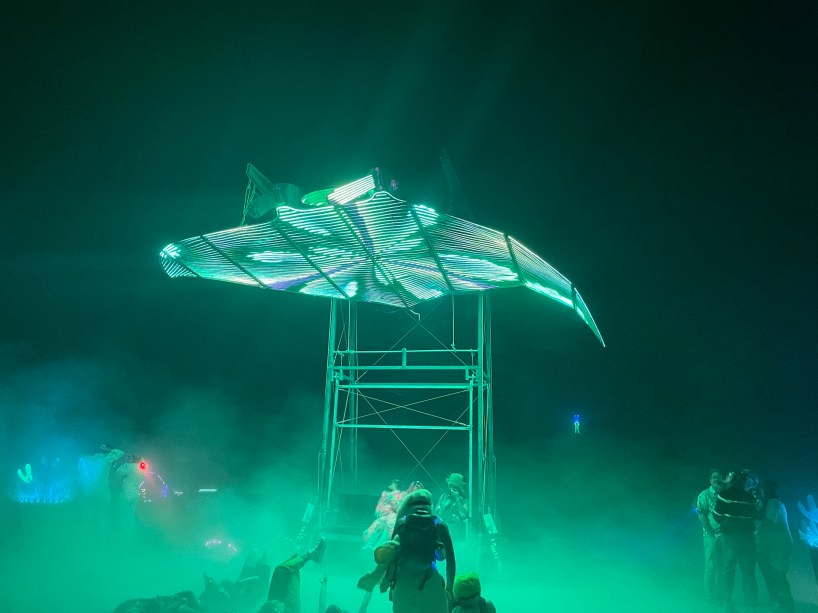
Once you’ve conquered your fear of the dust, there’s nothing better than surrendering to it and laying down to look at the night sky- especially if right above you is the LED mechanical manta ray sculpture called Hahalua (Hawaiian for manta ray). Even better, it moves and undulates the way a manta ray would, as it plays music ranging from classical to modern. I heard that they were doing a “Dark Side of the Moon” at midnight after the Man burned, but I didn’t go out to check.

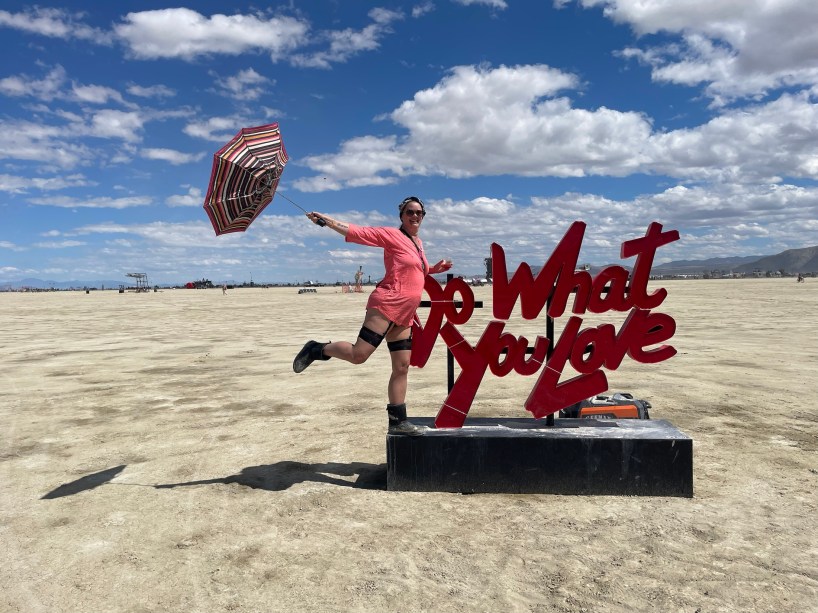
I find the messages in Burning Man art can be applied to my own life, and this one was no different. “Do what you love” reminded me to seek out the joy in life. As I was trying to take a selfie, a man on a bike came along and offered to take the picture for me. I handed him my camera, a gust of wind came up, and this wonderful photo came into being, like kismet.

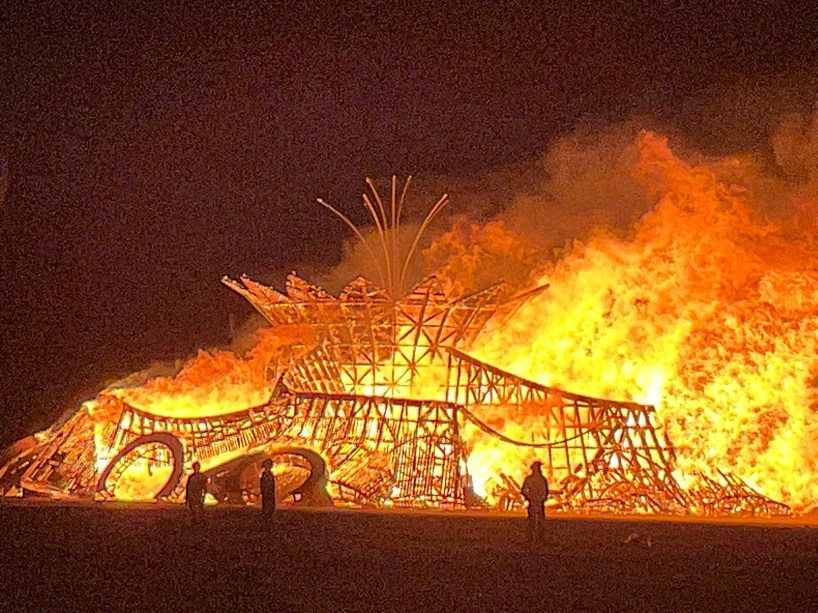
There’s so much more to profile, but I’ll close this year’s post with one of the temple burning. To me, it’s always the best burning piece because you can see the scaffolding for several minutes come alive inside the flame. The curved pieces often create a wind and fire vortex that is so beautiful. This year’s temple was no different. For a look at the Burning Man temple art pieces from the last 25 years, check out this exhibit at the Reno airport. Isn’t it amazing what we can do when we give artists a place to create and display their art?

Building a Camp at Black Rock City

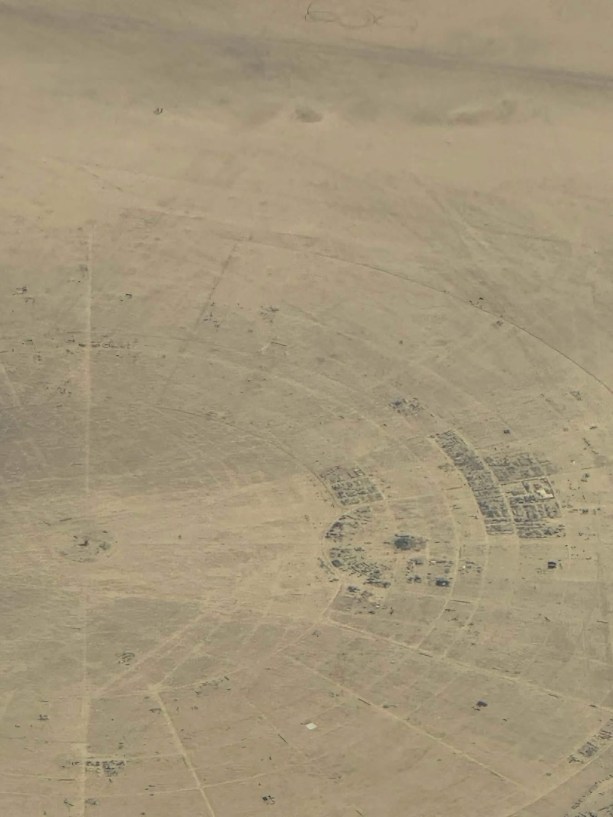
On August 1, the Golden Spike was driven into the dry lakebed in Nevada that will become Black Rock City, home to the annual Burning Man festival. From there, teams of city planners, surveyors, and enthusiastic Burners will create a city of 65,000 people, complete with streets, camps, medical and fire services, art, and general shenanigans. And then they will erase it as if it never existed.

img_6551
Black Rock City, just getting started

Chris and I had Early Entrance passes this year, so on Sunday August 23, we helped our camp owners pack our entire camp infrastructure into two moving vans (plus one shipping container that stays year-round in Gerlach, Nevada), and on Monday morning we left Phoenix and headed north. By Tuesday afternoon, we had presented our tickets at the Gate, and were cruising across an almost-empty playa to map out our camp.

A beautiful night to camp under the stars

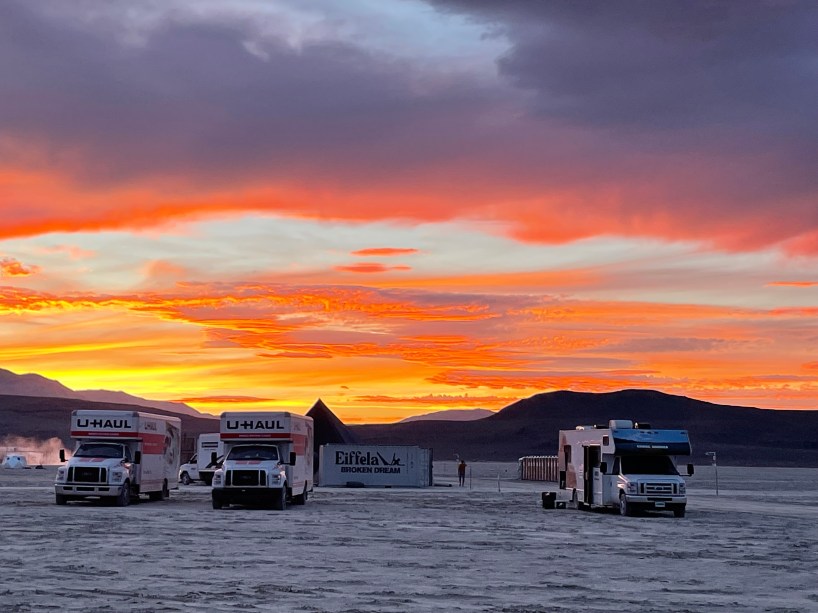
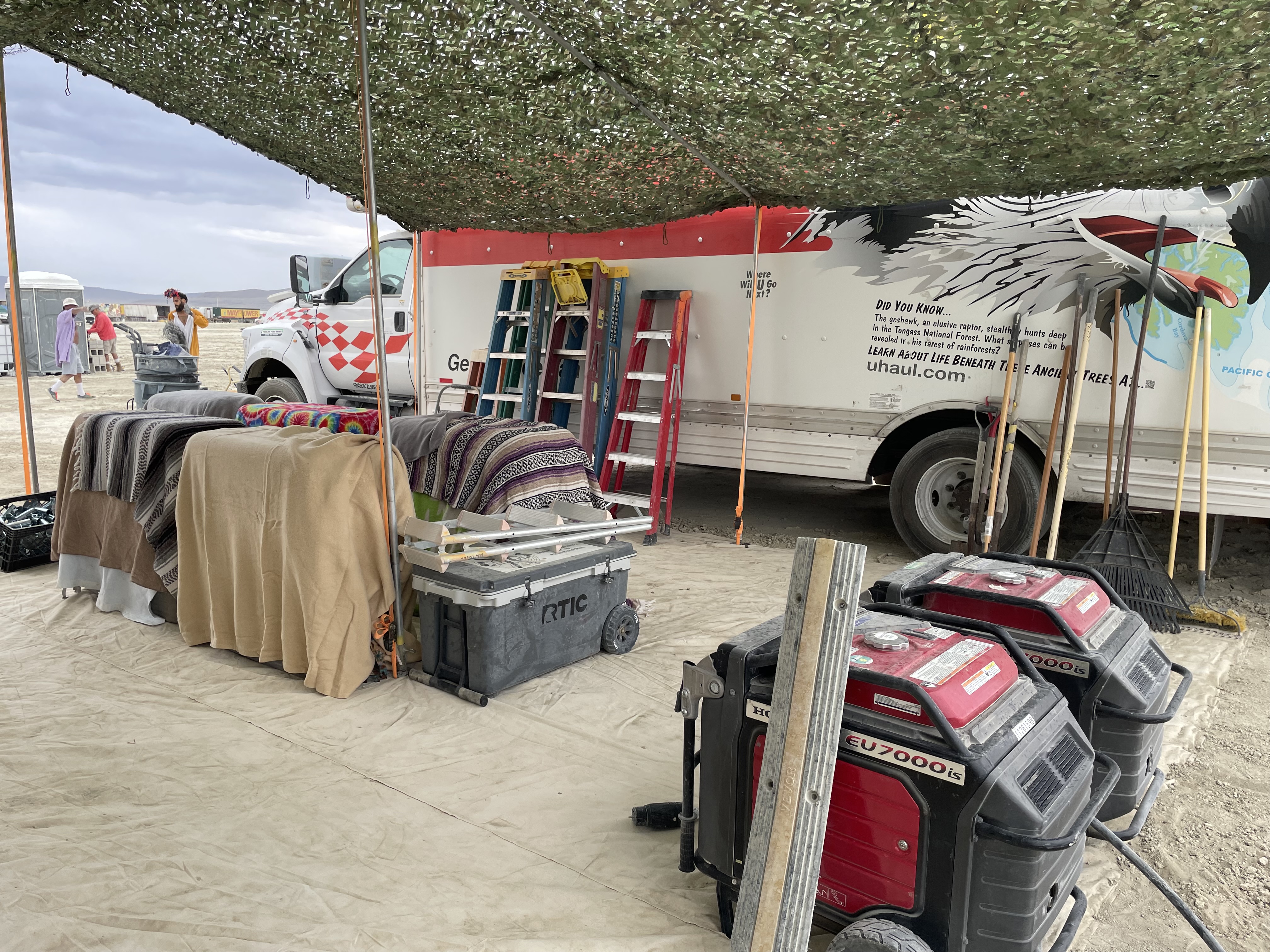
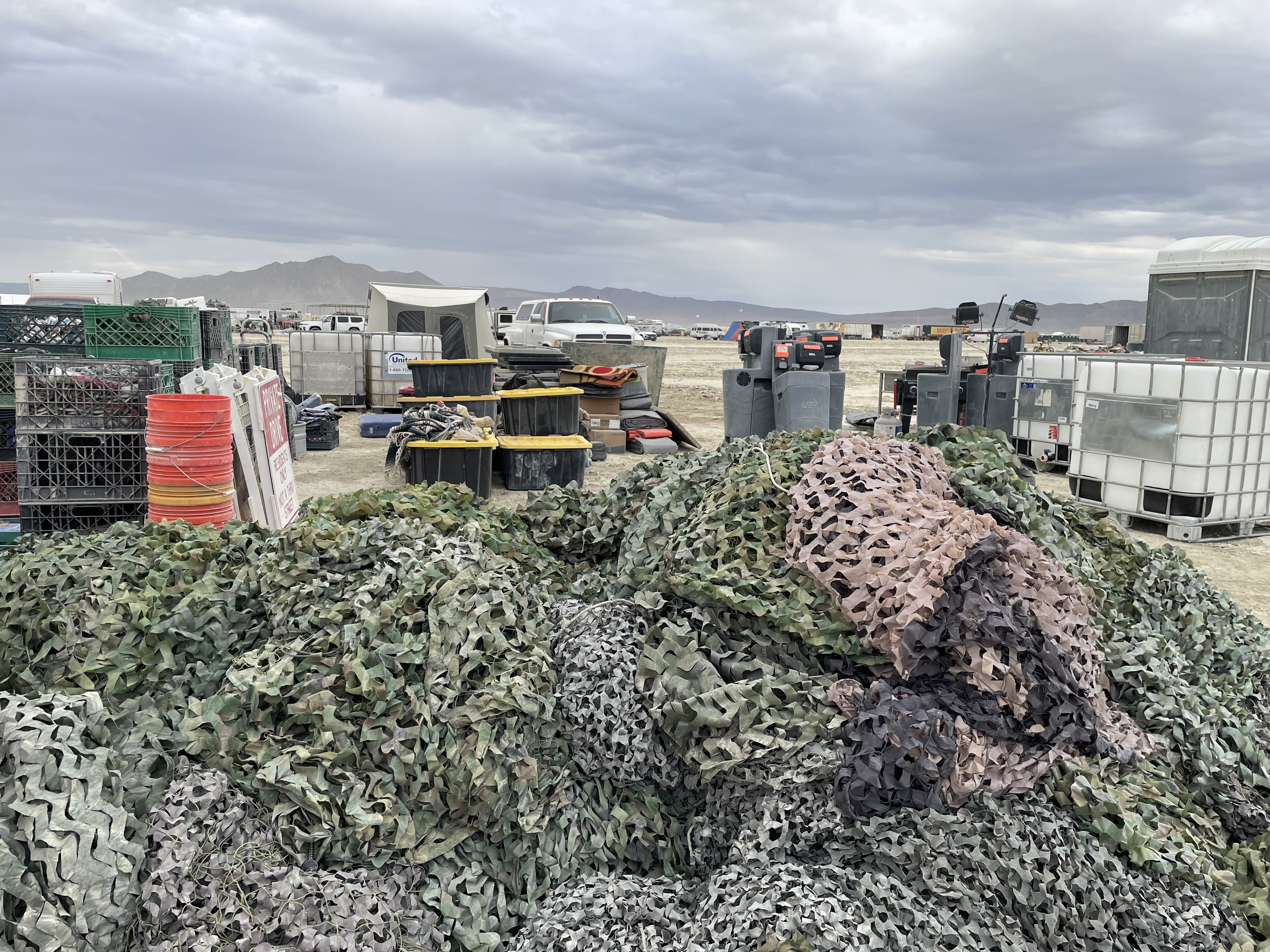
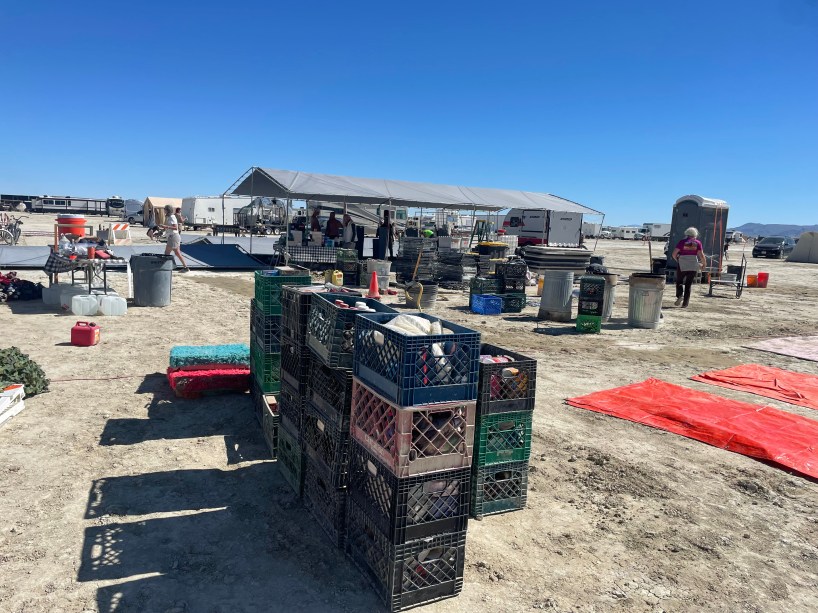
It took until well after sunset to stake out the perimeter of our camp, as well as the outside edges of where our main shady space would be, and we hadn’t unloaded the moving vans yet, so we just slept outside under the stars on our air mattress. In the morning, the real work began: we unloaded everything from both 26 foot moving vans. We tried to group stuff together, such as kitchen items, tarps, camouflage netting, and metal fittings to make the structures, coolers filled with food, ice, and drinks, and the pieces needed for our Human Carcass Wash, which is our camp’s gift to the playa every year.

On Thursday and Friday, more campers arrived, so we were able to unload the shipping container that stays in Gerlach, which holds more of our stuff and the items belonging to our sister camps, Temple of Bacchus and the Twisted Swan Celtic bar. We got all ten of our coolers and our tools under a shady roof built in between the two moving vans, and then got started on our main shady space that our camp utilizes.

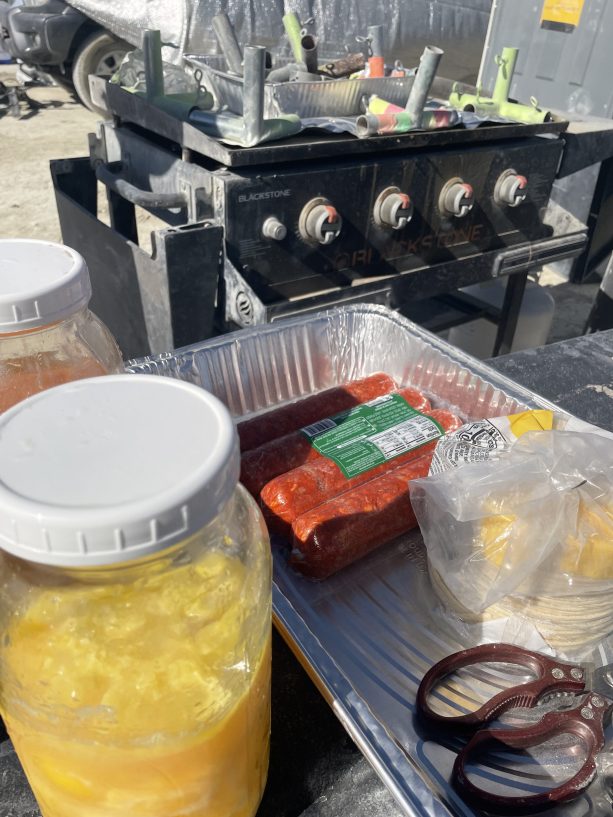
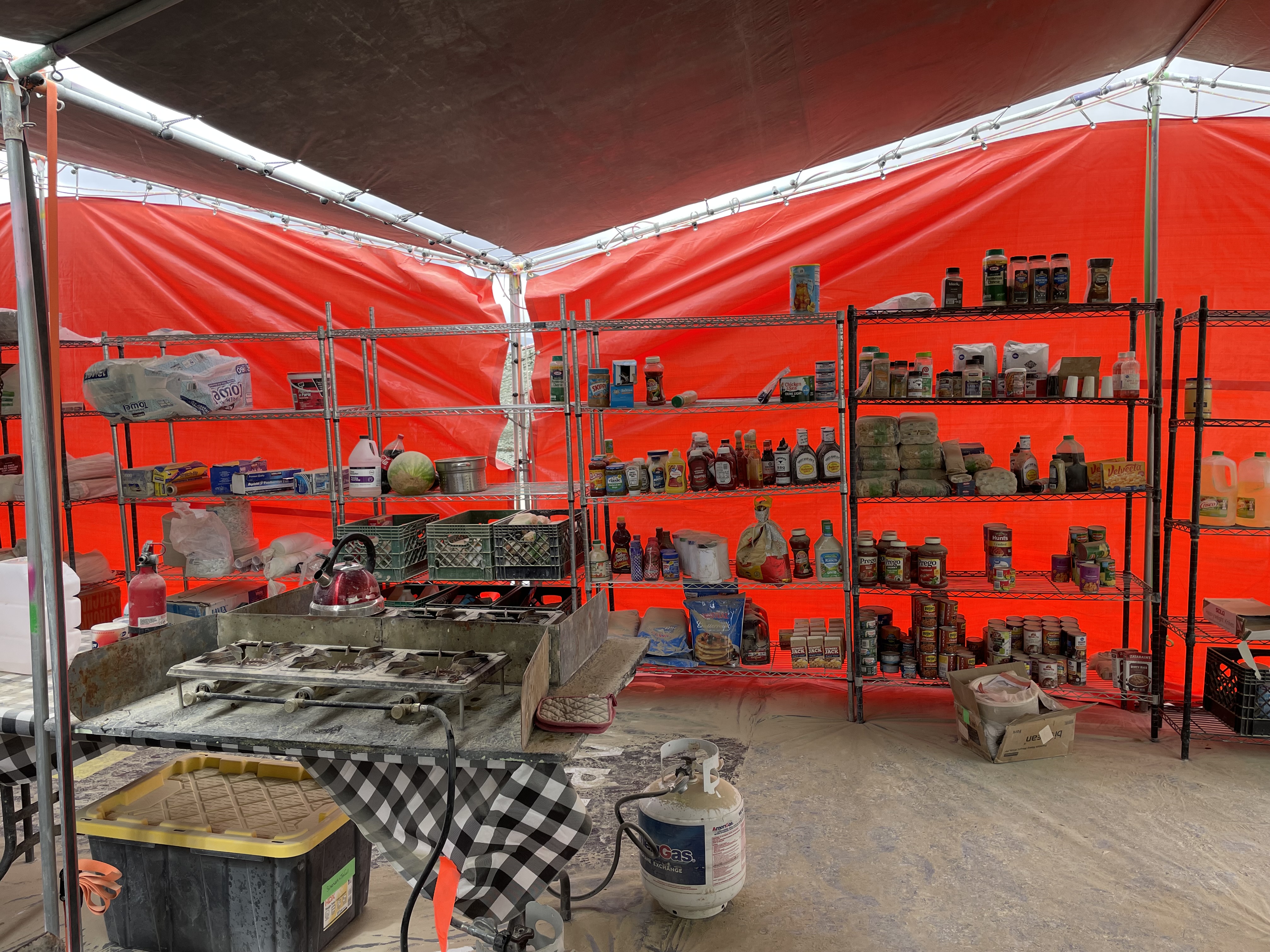
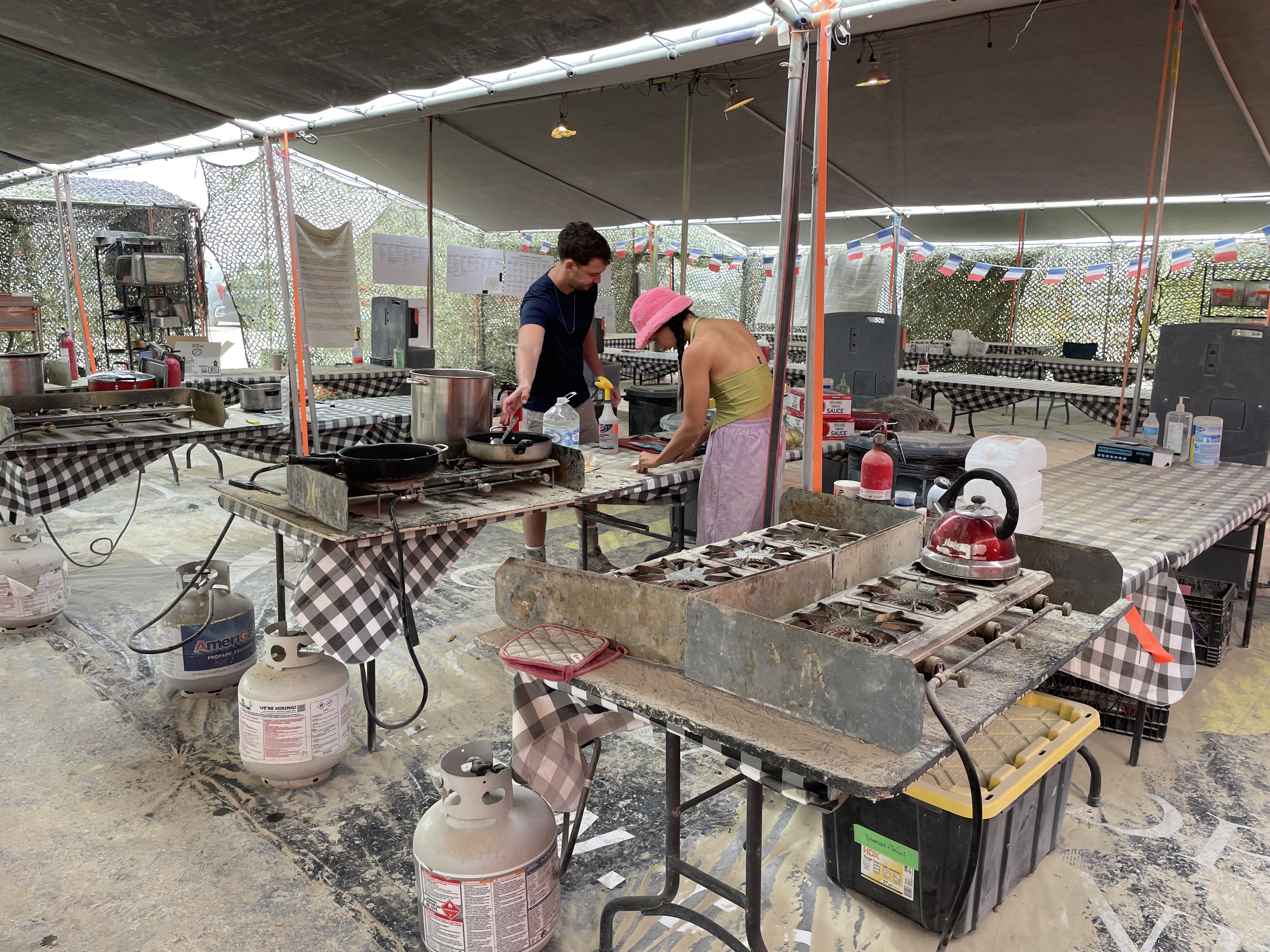
Our kitchen wasn’t set up yet, so breakfast was scrambled eggs and chorizo on the griddle

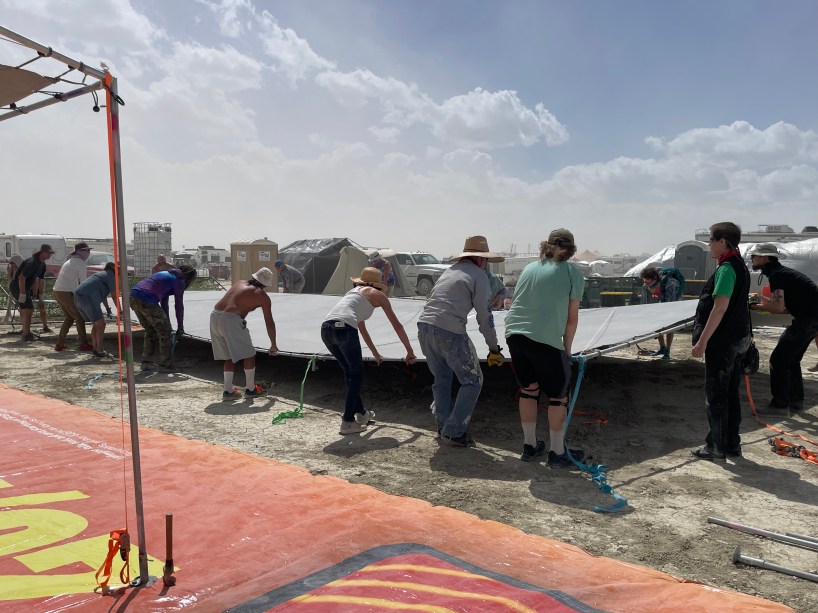
The first step was to lay out the giant floor pieces that make up our space. In the past we used heavy canvas tarps, but after last year’s “Mud Burn”, we needed to buy new ones. So this year we tried using recycled billboards that we got from a recycled materials website. One of the Burning Man tenets is sustainability, so we figured we’d try to use some things that didn’t need to go in a landfill. We staked them down, and then constructed the poles that make our walls and roof framework. We stretched the canvas tarps we use as roofing across the top, then raised them up. Last, we hung the camouflage netting on the sides, which allows in a breeze but gives privacy to some extent.

It takes a lot of people to raise these roofs!

Once our shady spaces were intact, our camp started feeling more like home. We added in 50 or 60 camp chairs, hand washing stations, cooking stations, and our serving line. We unpacked our costume exchange closet (which takes up ten bins- we take our outfits very seriously), and put out two massage tables and all the blacklight art that we keep in our front area for general viewing. Last, we added “the man” artwork that was a gift from one of our past campers, and then the finishing touch- a series of lasers at our front entrance that play percussion sounds anytime someone enters or exits (always hilarious). A couple of bike racks, and set up was complete.

Happily, this year, all our construction efforts held up, even with some pretty good winds and one rainy night. Another week went by and then it was time to take it all down. Everyone pitched in, and in only two days’ time, it was all packed up and ready to store for the year.

Time to get all this back in the trucks

In April, our camp will have a weekend party where we take everything out of storage, clean it, inventory it, and make a list of what needs to be purchased for the 2027 Burn. Until then, all that’s left is to put away our own personal camping items, do a big load of laundry, and look back at all of our pictures. For a look at some of the art from past Burning Man years, you can click on my 2018, 2019, or 2022 Burning Man adventure.

Chris Hikes the Continental Divide (pt 2)

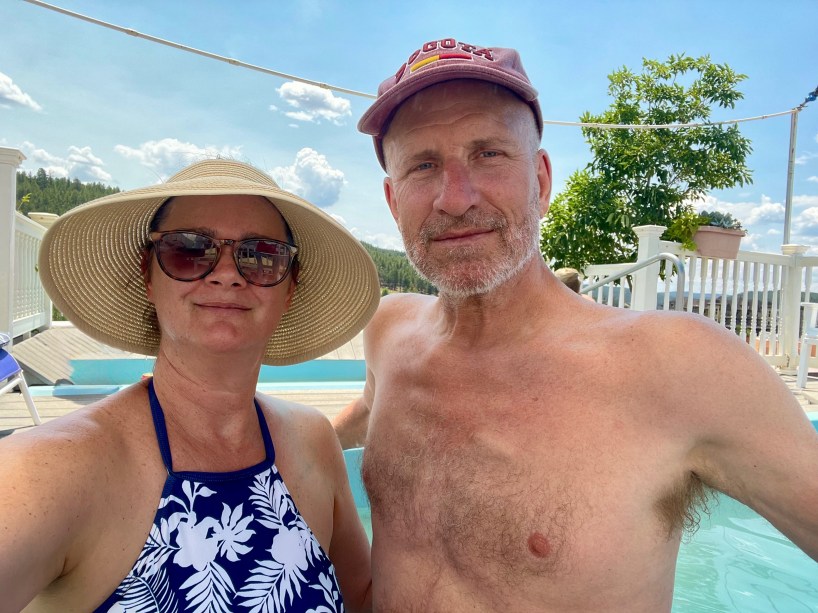
This year, Chris spent July back on the trail, continuing north along the CDT. I dropped him off at Chama, New Mexico, hiked the first mile with him, and then he continued north, while I took the car to visit a friend in Durango. A few days later, and 70 trail miles later for him, I met up with Chris at Wolf Creek Ski Area, and we had a zero day in Pagosa Springs. We visited the local Walmart, had a delicious sandwich at The Peak Deli, bought some new hiking shoes at Foot Prints, and spent the afternoon at The Overlook, a fun mineral bath house that features over a dozen hot tubs and pools, all at different temperatures. Pro tip: take a hat if you want to spend time in the pools up on the roof overlooking the town!

A day off-trail spent at a mineral bath is a day well spent!

After his time off-trail, I left Chris at Wolf Creek Ski Area, and I drove up to South Fork to chill for a couple of days while he hiked. It’s a cute town and I enjoyed my stay at the Spruce Lodge. I took advantage of the fair weather and went on a short hike of my own. There’s also a neat “rail bike” that runs along the Rio Grande River between South Fork and Wagon Wheel Gap, through the Coller State Wildlife Area. Of course, hunting and fishing, hiking and riding ATVs are highlights of the area too. I bet this area is hopping during the snow season! The pizza at SoFo Pizza is worth a stop, in my opinion.

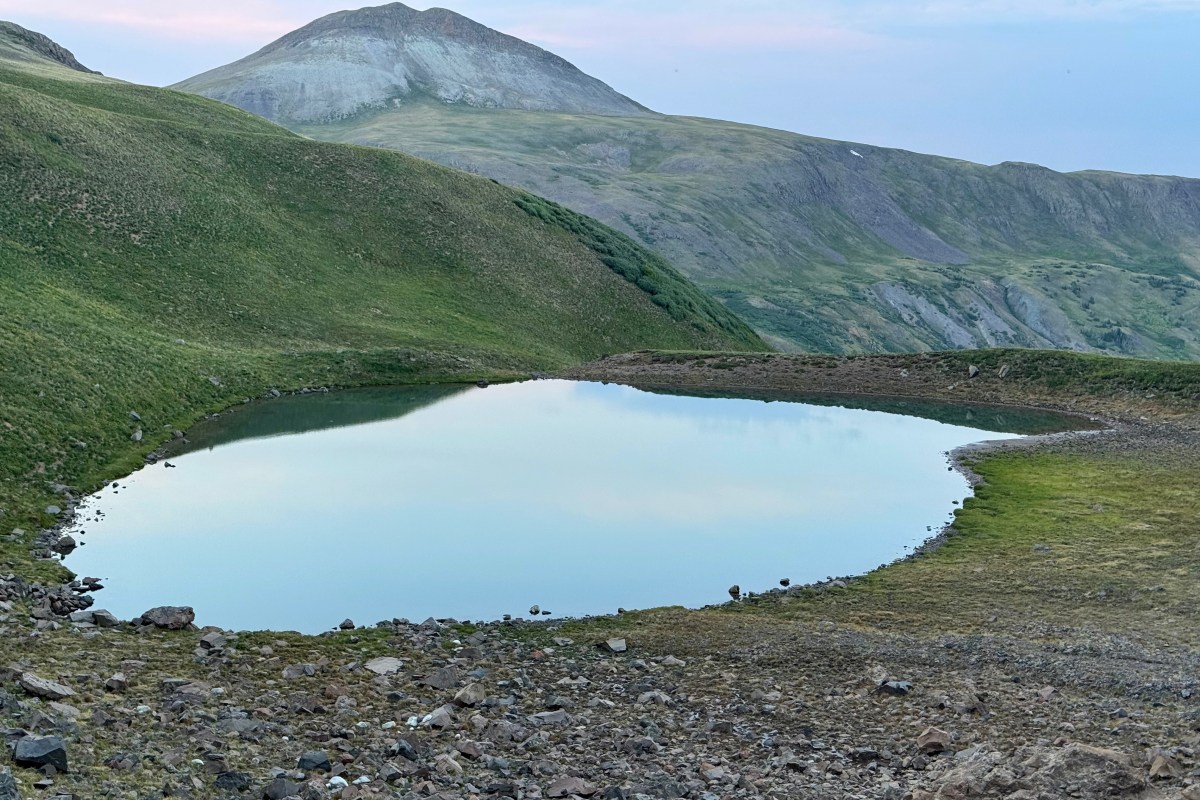
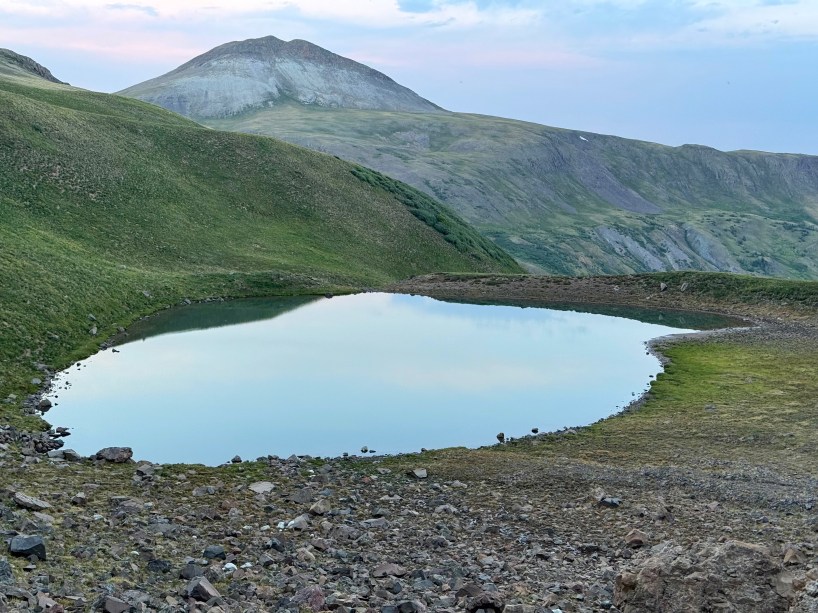
A beautiful alpine lake along the trail

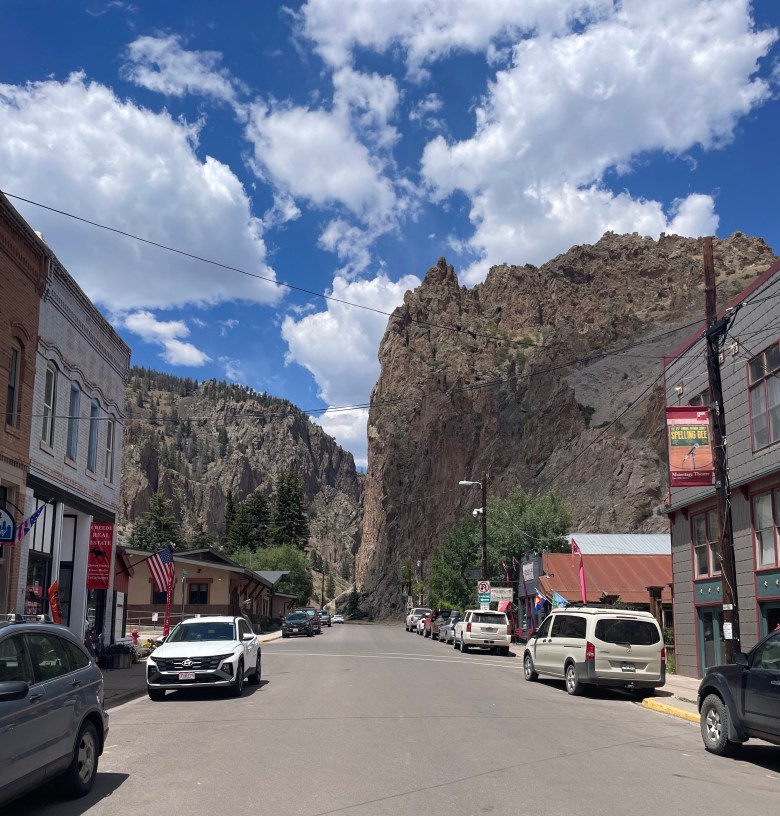
Our next rendezvous point was just a few miles outside of Creede. I arrived a little early at our agreed-upon spot, and set up my hammock to wait. A half hour or so later, I saw Chris clopping down the trail, having finished another 40 mile stretch. I bundled up my hammock and we went into Creede for lunch. Creede, a historic silver mining town, is one of my favorite small towns in Colorado. It has a handful of bars, restaurants, outfitters, art galleries, and even a drama reportory. There’s often a festival or event happening in town in the summer months. But plan ahead, because there are only 3 or 4 small hotels there. There are no major hotel chains, but there are lots of Airbnbs. They can get pretty pricey though.

Historic Creede, with hills full of silver

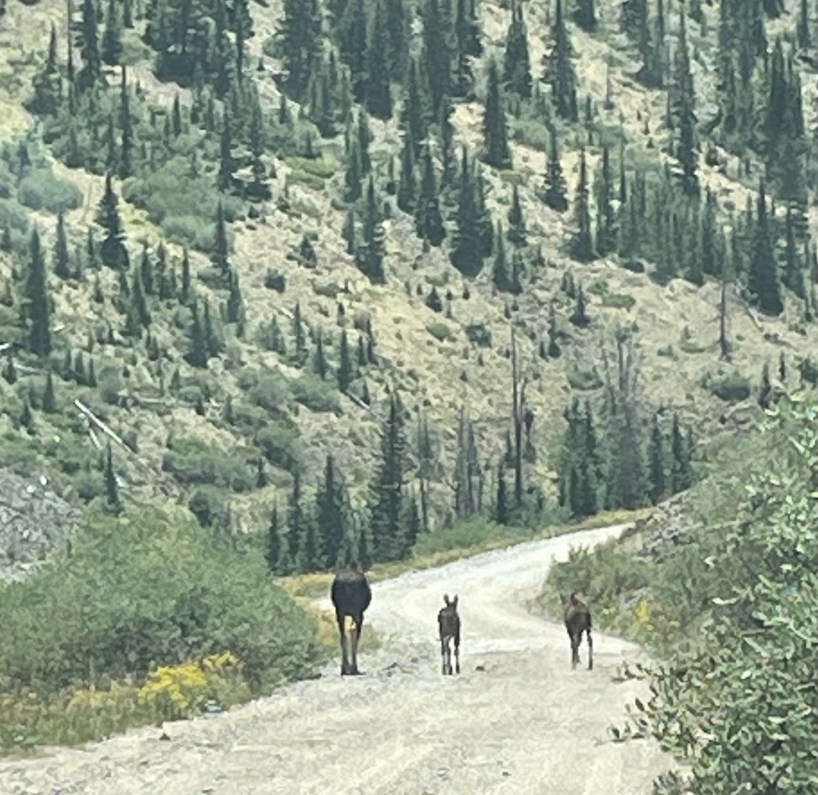
Chris stayed with me for a day in South Fork, resting his feet, and then I took him back to Creede so that he could reverse “slack-pack” a particularly brutal uphill climb out of the town. We drove up to the top of the 10-mile Bachelor Loop and he walked the trail southbound, heading back down into Creede without his heavy backpack. I visited a few shops and bars in town (fantastic ice cream) and picked him up a few hours later. The next day, we drove up to the same spot and he continued north, but at least he didn’t have to do four hours of uphill climbing to get there. Plus we got to see a momma moose and her two calves on the road.

Drop off point, elevation 9,000 feet

Chris’s knee had been hurting him all through this stretch of Colorado, but he finished up one more 30 mile section between Creede and Cochetopa Pass. I thought about staying a night in Saguache, but after visiting the tiny town and their slightly creepy museum, I decided to wait at Gunnison for Chris to arrive. I have to say, the drive between Cochetopa Pass and Highway 50, as it winds through a river valley, is quite lovely. But since we were a ways into July, the days were getting pretty hot (although the nights were still a lot cooler than we get in Texas). Next year, hopefully, Chris and our hiking friend Piñata will be able to start from Cochetopa Pass and head north a little earlier in the season, in mid-May, and avoid the heat and the fires that were burning near Leadville and other parts of Colorado.

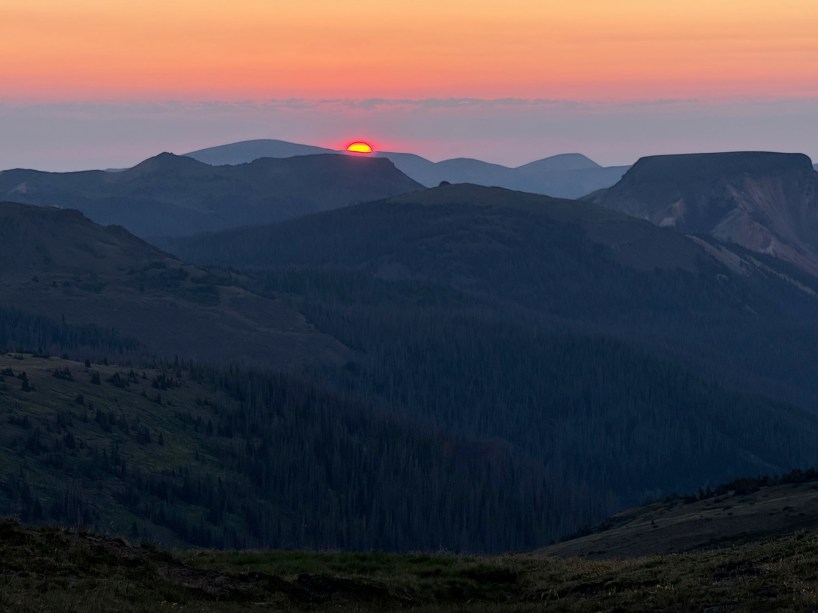
Another beautiful sunset on the trail

All in all, Chris managed another 200 miles of the CDT, bringing his total to over 1000 miles on the trail so far. Check back with us next year to read more about his hike further north, or click here for the post about the Arizona sections, or here for posts about the Appalachian Trail thru-hike of 2014 or the Pacific Crest Trail thru-hike of 2021.

Take a Bath in Berkeley Springs, West Virginia

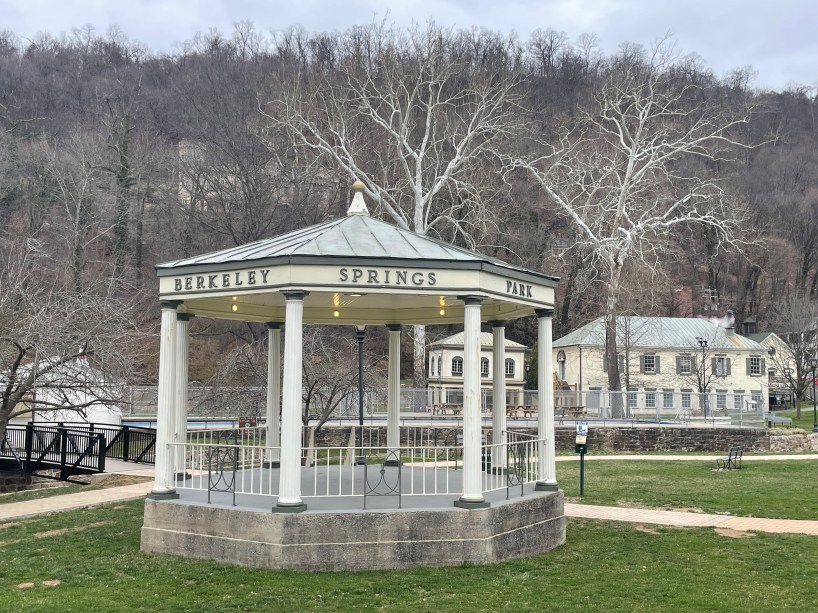
Berkeley Springs is the kind of place that feels timeless- you can easily imagine the first settlers in this small town, even as you enjoy the modern amenities it offers now. Known historically as the Town of Bath, it has been welcoming travelers for centuries with its mineral-rich warm springs, mountain views, and small‑town charm. Whether you’re craving a restorative weekend, an outdoor adventure, or a cozy getaway filled with art, food, and history, Berkeley Springs offers a little bit of everything—and then some.

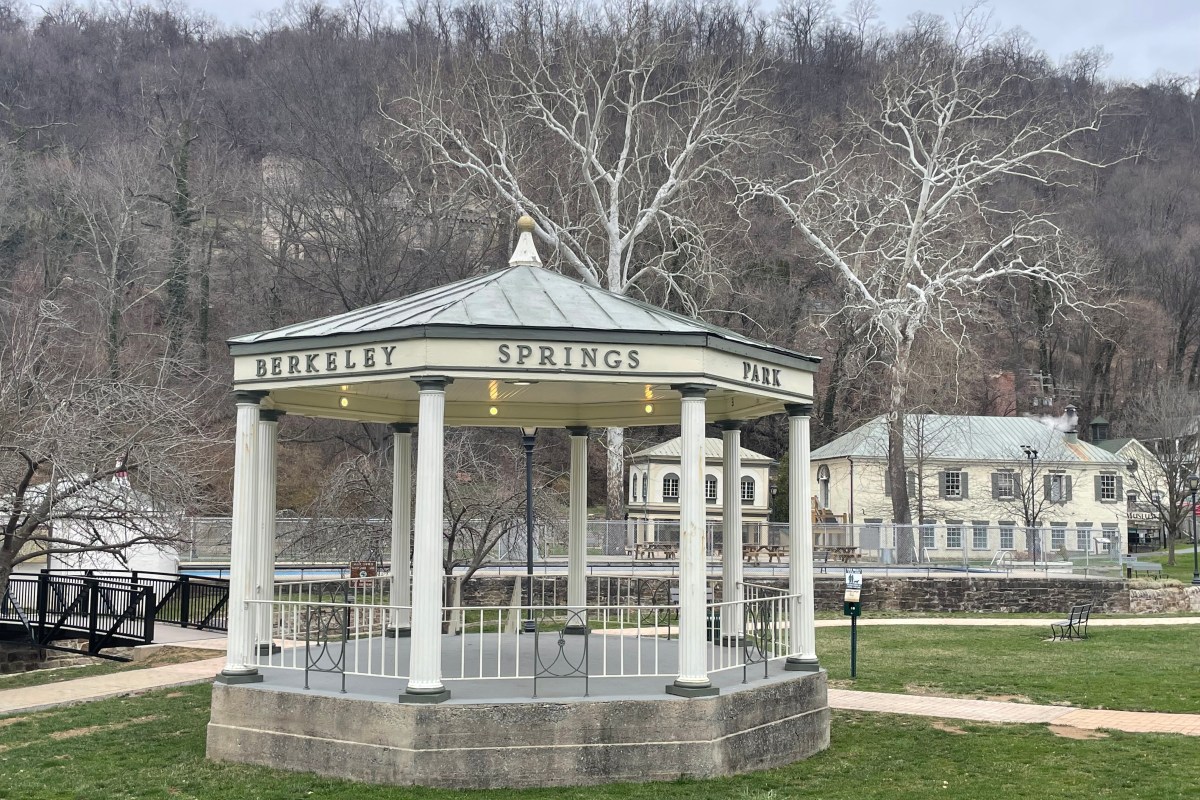
Berkeley Springs’ warm mineral water springs have drawn visitors since the 1700s—including George Washington himself. Today, the heart of town is still Berkeley Springs State Park, where the warm, clear waters bubble up at a consistent 74.3°F. Visitors can soak in historic Roman baths, book private mineral tubs, or simply relax near the spring-fed fountains. The park is especially lovely in spring and fall, when blooming trees or fiery foliage frame the historic bathhouse.

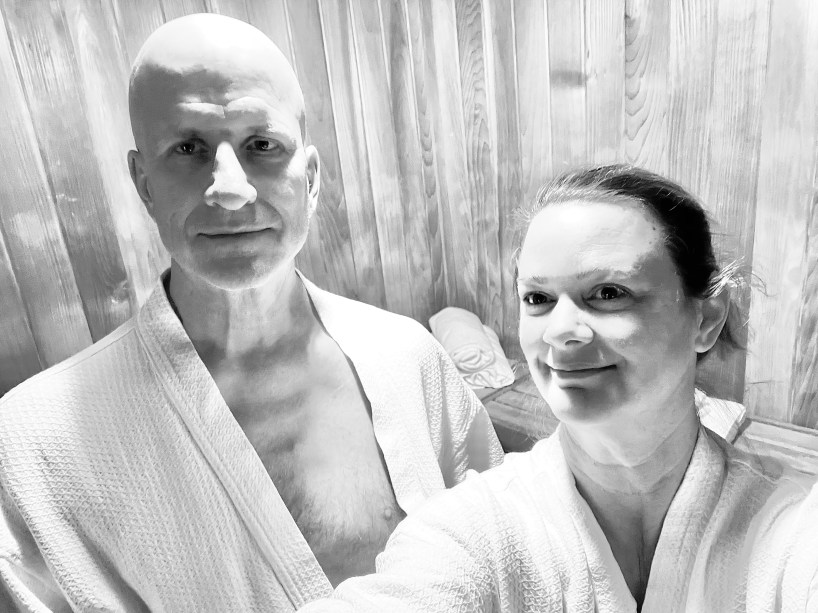
The springs aren’t just a novelty—they’re a tradition. Generations have come here to “take the waters,” and the town continues to honor that heritage with spa treatments, massages, and wellness experiences rooted in its past. Chris and I indulged in a sauna, shower, and Roman bath trio at the state park’s main bath house, which cost about $80 for the two of us (be sure to ask about a military discount if you served).

Ready for our sauna!

While the warm springs may be the star, the surrounding landscape is just as captivating. Just 15 minutes from downtown, Cacapon Resort State Park spans more than 6,000 acres of forests, trails, and scenic overlooks. It’s a paradise for hikers, mountain bikers, horseback riders, and families looking for a day of fresh air. In summer, Lake Cacapon becomes a hub for swimming and paddleboarding, while fall transforms the park into a kaleidoscope of color. We visited Berkeley Springs at the tail end of winter, with just a bit of snow on the ground, as spring was just around the corner. 

For a quick but unforgettable view, head to Prospect Peak Overlook, one of the most photographed views in the region. From here, layers of mountains and river valleys stretch into the distance—a perfect spot for sunset watchers and photographers.

Berkeley Springs may be small, but it’s rich with stories. A visit to the Museum of the Berkeley Springs helps explain how the springs shaped the town’s identity, from Indigenous use to colonial spa culture.

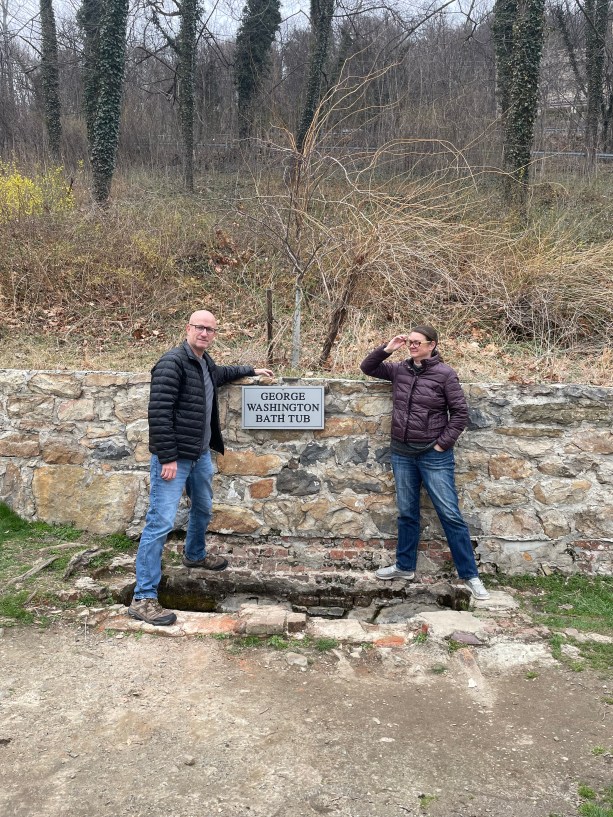
Wandering through town, you’ll find historic landmarks tucked between boutiques, cafés, and galleries. One quirky must‑see is George Washington’s Bathtub, a stone outline marking where the first president once soaked in the warm waters. It’s a fun reminder that even great leaders needed a little self‑care. No, you can’t take a bath in GW’s tub!

For a small town, Berkeley Springs offers an impressive variety of dining options. From cozy cafés to upscale restaurants, you’ll find something to satisfy every craving. The town’s culinary scene reflects its welcoming atmosphere—warm, unpretentious, and rooted in local flavor. We especially enjoyed morning coffee and muffins at Fairfax Coffee House, and later the creative choices at Mythical Pizza. 

Craft beer lovers will appreciate the two local breweries, each offering its own take on West Virginia’s brewing traditions. After a day of hiking or soaking, there’s nothing better than settling in with a cold pint and a hearty meal.

The town even hosts the International Water Tasting each February—a quirky, beloved event known as the “Academy Awards of Water,” complete with a “Water Rush” where attendees can grab as many bottles as they can carry.

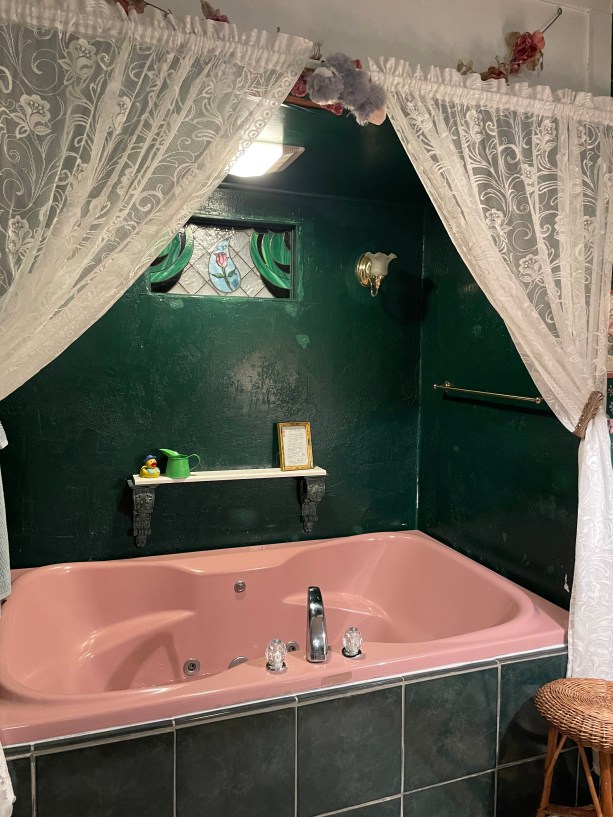
Berkeley Springs offers a wide range of accommodations, from charming bed‑and‑breakfasts to modern vacation rentals nestled in the woods.  Many visitors choose to stay in cabins near Cacapon State Park, where mornings begin with birdsong and mountain mist. Others prefer the convenience of staying in town, steps away from spas, shops, and restaurants. The main anchor point of the town is the Country Inn of Berkeley Springs, featuring 60 guest rooms, a spa, tavern, and gardens. We found a cute little AirBnB that featured both an electric fireplace and a jetted bath tub, just one block off the main street that runs through town. 

A jet tub in my bedroom? Yes!


Berkeley Springs is a 90‑minute drive from the Washington, D.C. and Baltimore metro areas, making it an easy weekend escape. Once you arrive, the town is walkable, and most attractions are just a short drive away.