Interview with Chris: Diving and Thriving in the Pacific Islands

Our fearless traveler Chris is often again, wending his way through the last four independent island nations in the north Pacific Ocean. He visited Chuuk, Micronesia, then Palau, East Timor, and the Solomon Islands. Here’s what he had to say about his adventure.

Q: Once again, you ventured off without your wife (me). Why did you travel solo this time?

Deah recently went back to work, and it’s hard to get enough time off to get all the way out to the Pacific islands and back. We talked about going together in the summer months, when she has more time off, but there were other places higher on her bucket list. Plus, visiting these island nations involves a LOT of flight time, which isn’t her favorite thing. So it worked out better for me to go by myself. I promised to be home for her Spring Break so we could go somewhere on her list.

Staying in Chuuk

Q: I know you enjoy scuba diving. Where all did you scuba dive on this trip, and what did you see?

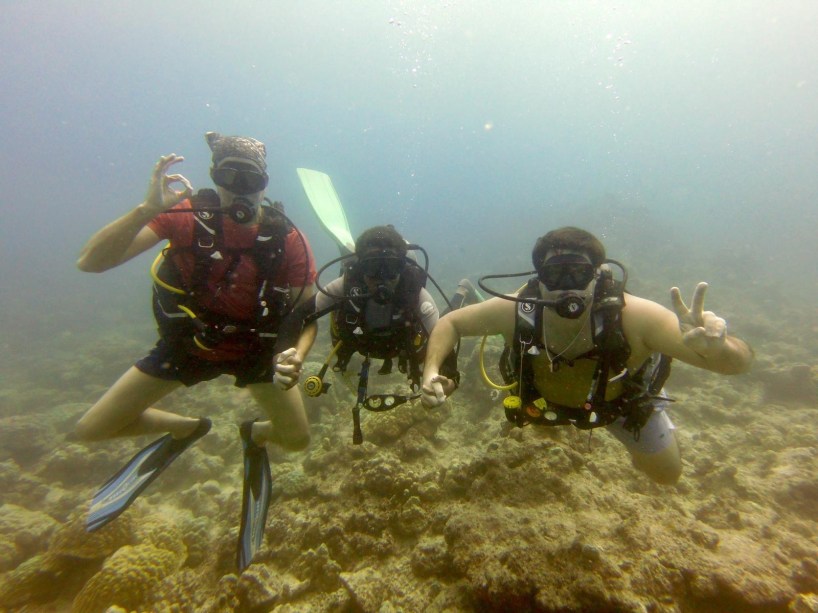
I went diving in Chuuk, Palau, and East Timor, and snorkeled in Guadalcanal, Solomon Islands. This time I brought a Go-Pro with me, because I’d been wanting to shoot some underwater videos. I did a lot of wreck diving, to see some Japanese ships from World War 2. My favorite diving excursion was to see the manta rays in Palau, with Blue Marlin Diving Company.

Diving with the Manta Rays in Palau

Q: I know it takes a lot of flights to get to these islands. How many flights did you have to take for this trip?

13 flights in total. We had accrued points with both American and United, so we were able to use those points rather than dollars for several flights. From Texas to Hawaii, then I hopped on the United Island Hopper to get to Chuuk and to Palau. I also had to overnight in Manila, Bali, and Darwin in order to get to the rest of my destinations. All in all, it was a lot of flying time. It’s hard to get all the Pacific Islands in one trip due to the many flights.
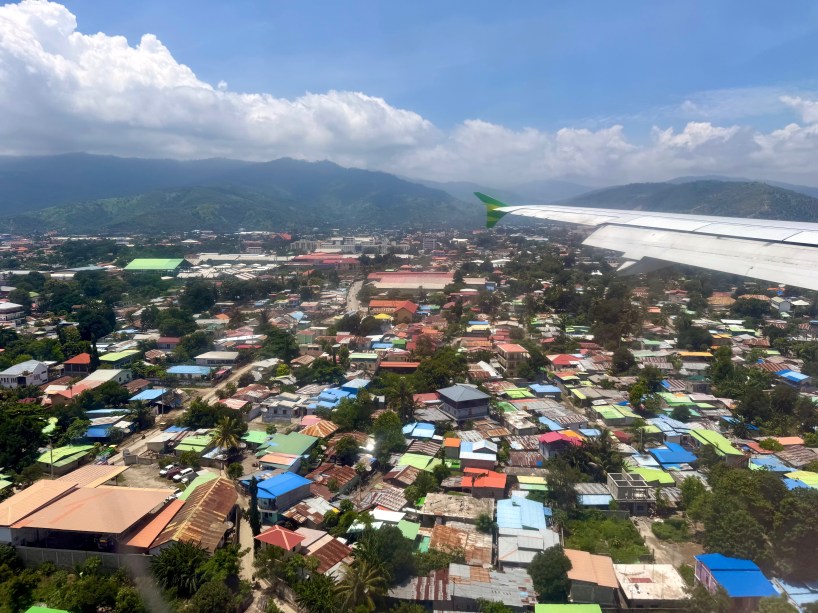
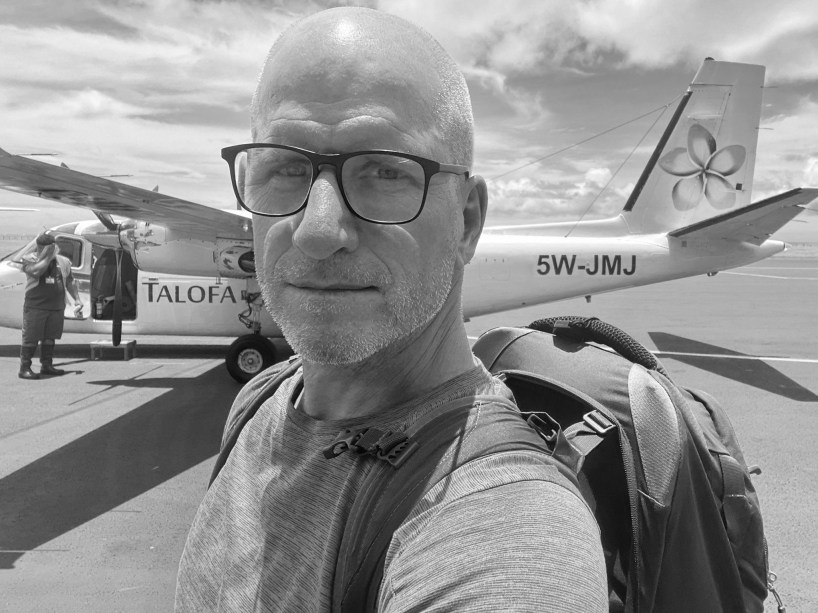
Flying into Dili, East Timor

Q: What kind of food did you eat on this trip? Anything you really liked?

The islands tend to have a lot of starches like ramen noodles, rice, fewer fresh vegetables, and canned meats. I liked the Japanese and the Philippino breakfast menus, as they had fresh options. In East Timor I really liked the fish grilled in banana leaves.

Q: How would you rate the friendliness level of the islanders? What kinds other travelers did you meet there?

Polynesian people, in my travels, have always been welcoming and friendly, open to questions, and easy to get along with. Many of the other travelers I met were NGO-types doing sports diplomacy, health directives, and UN workers, and Japanese tourists. A lot of the people I met at my hotels or in airports were people trying to get to the end of their countries list, like me.

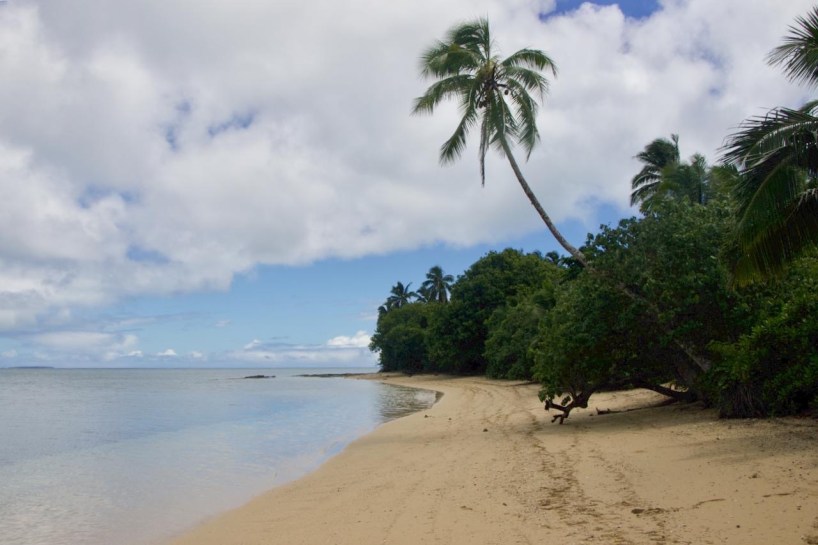
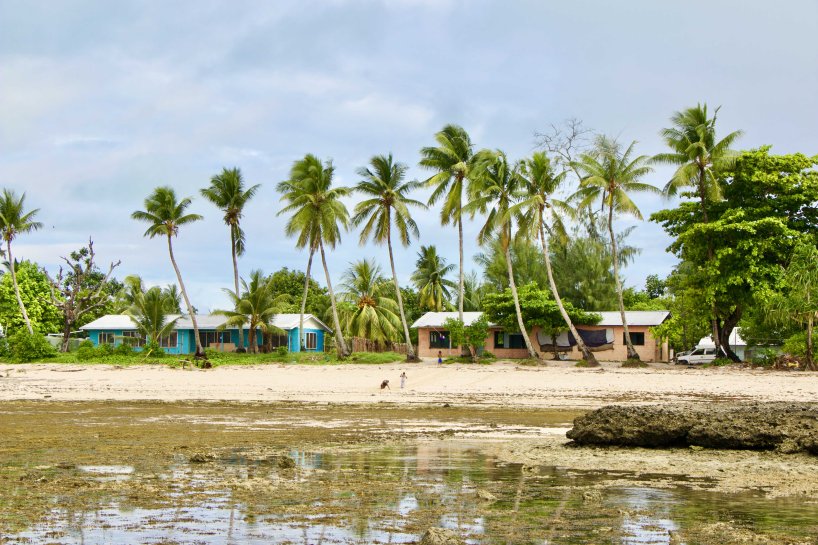
Some local kids playing on the beach in East Timor

Q: So the conclusion of this trip brings you to how many countries left that you’d like to visit?

I have fifteen left on my United Nations list. Some are active war zones, while others are difficult to get a visa to, especially now that there’s a list of 44 countries that have travel restrictions to the United States. It’s likely those countries will make it harder for Americans to visit them as well.
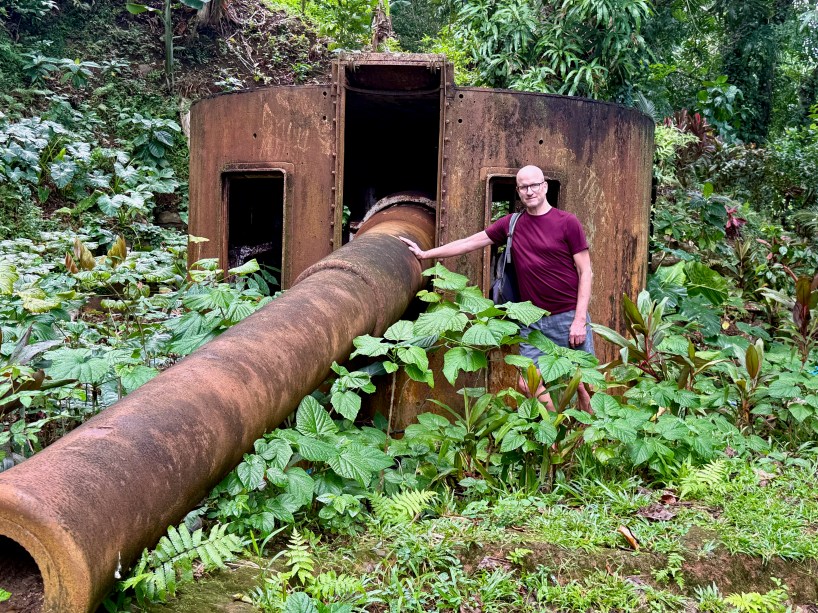
Chris at Chuuk, visiting a Japanese gun emplacement from World War 2

Interview with Chris: Navigating the South Pacific

It’s been a while since our fearless traveler, Chris, the other half of Palm Tree Musings, took a trip by himself. On this journey he started off with me (Deah), in Hawaii, and then visited Samoa, Tonga, Vanuatu, Fiji and Tuvalu on his own. Here are a few questions and answers about his trip.

1. Why’d you leave your wife behind?

I asked her to go in this trip, but she refused. I think she’s tired of islands, plus she hates long plane rides. I did finally talk her into coming with me as far as Hawaii, though, and we spent ten days there. Then she was happy to spend some time at home by herself, a little stay-cation.

Ready to venture fearlessly alone

2. Why did you pick these 4 nations for this trip?

I only have 23 countries to visit in the world left, but a few are active war zones and a few have visa issues. So I figured I’d better get these while I have the time. It’s tough getting all the way out to this area of the world, and you have to allow a little bit of extra time, because the flights are sometimes unreliable and can really domino into a problem if there’s a cancellation or delay.

If you’re looking for almost-deserted beaches, Tonga is a great place to start

3. Did you have any trouble like that on this trip?

Yes, my plane leaving Vanuatu was cancelled due to mechanical issues, and that airline doesn’t have any backup planes. That put me returning to Fiji much later than I planned, endangering my connection to Tuvalu. I had to do a wild cab ride from Nadi to Suva, Fiji at break-neck speed, at high cost, but it turned out all right. A few other travelers were in a similar position. You have to be pro-active to make sure an issue gets fixed in time.

4. You visited both Samoa and American Somoa. Any differences between the islands?

I found the culture on both to be about the same. People commute between the islands frequently because of family ties. There are several small flights a day, as well as a ferry once a week. There is a National Park on the US side, and you can use US dollars there. The international date line runs between the two.

Somoa

5. The low-lying island of Tuvalu is quite threatened by climate change and sea level rise. Did you discuss the topic with any islanders, or see evidence of concern while you were there?

I talked to several islanders that brought it up. Some of them had friends or family that have already migrated to Australia, New Zealand, or the US to avoid sea-level problems in the future. It’s definitely present in the minds of the islanders, as they look to preserve their culture if not their home island. Also they are seeing the coral reefs start to die off as the waters warm.

6. While you were on Tonga, you probably ate a lot of fish. What other foods are popular there?

A lot of starches, like ramen noodles and roots and tubers such as taro and cassava, potatoes and yams. On Sundays everything is closed so you’d better go to a shop the day before and buy some instant noodles and tuna. Of course there’s fish all day, every day. I went on a boat trip and the guy caught a fish and used his knife to fillet it right there- the freshest sushi I’ve ever had. Red meat is much harder to come by.

Extremely fresh fish, with taro, cassava, yam, and corn. A typical meal in these islands.

7. Vanuatu and Fiji are part of Melanesia, while Tonga, Tuvalu, and Samoa are Polynesian in culture. What’s the main difference?

It’s mainly a difference of geography, but there are some cultural and historical differences as well. Polynesia spans from Hawaii to New Zealand, and as far east as Easter Island. Melanesia is north of Australia, and north of that is Micronesia. Melanesia sort of encompasses the “Ring of Fire”, so volcanic islands with high cliffs and eroding volcanos. Polynesian islands are flatter, with more coral reefs. The volcanic activity there was much older, forming atolls, which are made by ancient volcanoes that collapsed back into the sea. Culturally, the Polynesians came from SE Asia, while Micronesians are descended from indigenous islanders. The Polynesians were seafarers and knew how to navigate by the stars.

8. I know you love scuba diving, so did you get a chance to dive on this trip?

Yes, I dove with Big Blue Vanuatu. They visit several reefs and wrecks around the atoll. I really enjoyed diving “the cathedral”, an underwater cave with an open roof. If you’re staying in or near Port Vila, I recommend them.

9. What’s the hardest thing about planning a trip like this?

You have to plan a lot of one-way and return-trip flights on a variety of airlines. It’s helpful to have some airline miles with some of the big ones like American Airlines, Fiji Airways, or Hawaiian Airlines. You’re also crossing the international date line several times, so it’s easy to get confused while you’re booking flights. I found that making a mind map helped me.

10. What is next in your travel plans?

After hiking both the Appalachian Trail and Pacific Crest Trail, I’m ready to start the Continental Divide Trail. Hopefully Deah will provide support for that, as she did on my other hikes. Also I’m hoping we can both go to Western Australia this summer, making a few stops at Palau, Micronesia, and Solomon Islands along the way.
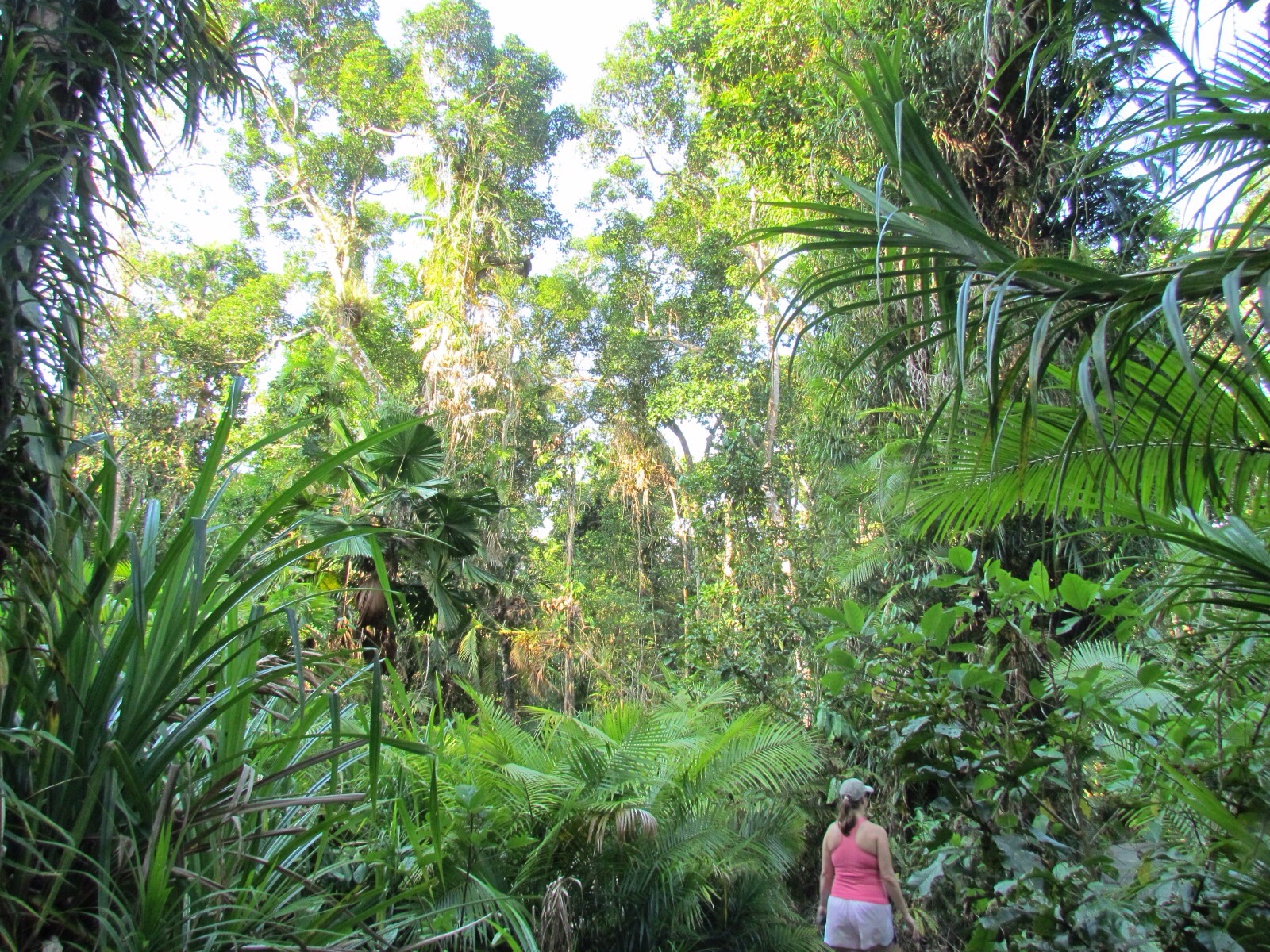
Thanks Chris for showing us the Pacific Islands, and answering these questions!

Feeling Terrific in the Pacific

Blue Pacific Ocean waves crashing near Abaiang Island Kiribati

*****Guest post by Chris******

After “settling down” in Austin and spending way too much time at Home Depot, I wanted to travel again.  Deah was busy with her new job, but suggested I go solo on the condition that I write a guest blog-post.  I’m no Shakespeare, but ventured out regardless for a three week Pacific trip to Marshall Islands, Nauru, and Kiribati.

I spent several days on Majuro Atoll, Marshall Islands on both ends of the trip. It’s accessible via the United Airline island hopper flight starting in Honolulu. Due to the Compact of Free Association with the USA, Majuro has a somewhat American feel to it; brands, beers, T-shirts, people with relatives in the States, etc. It’s a long, skinny island, but easy to get around by frequent taxis and infrequent buses.

The international airport of Majuro, Marshall Islands. Tiny place but has a cafe, bar, wifi, etc.
The Peace Park build by the Japanese and Marshallese governments commemorates all those killed in the Pacific during World War II. About 30 minutes by car from Majuro.
This guy (?) was about the size of my little fingernail. There were lots of critters on the reef that were easy to see by walking out during low tide.
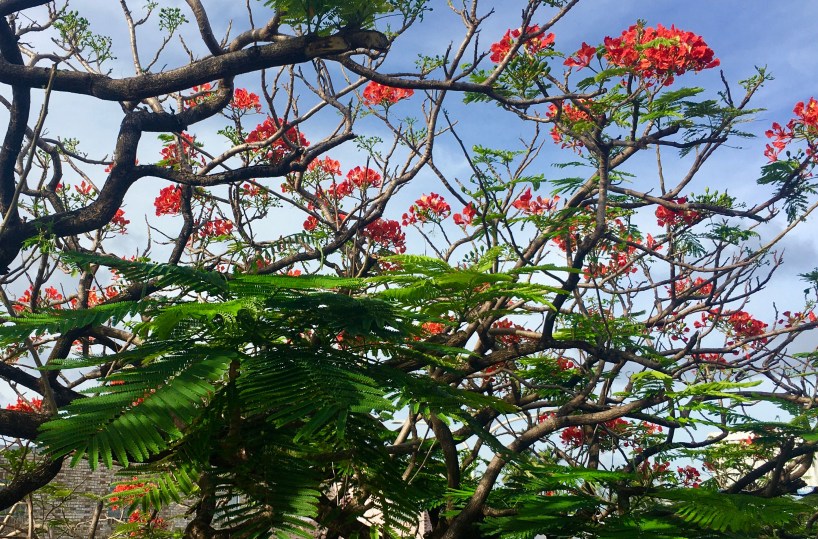
A “flame tree” outside the Flame Tree Restaurant.

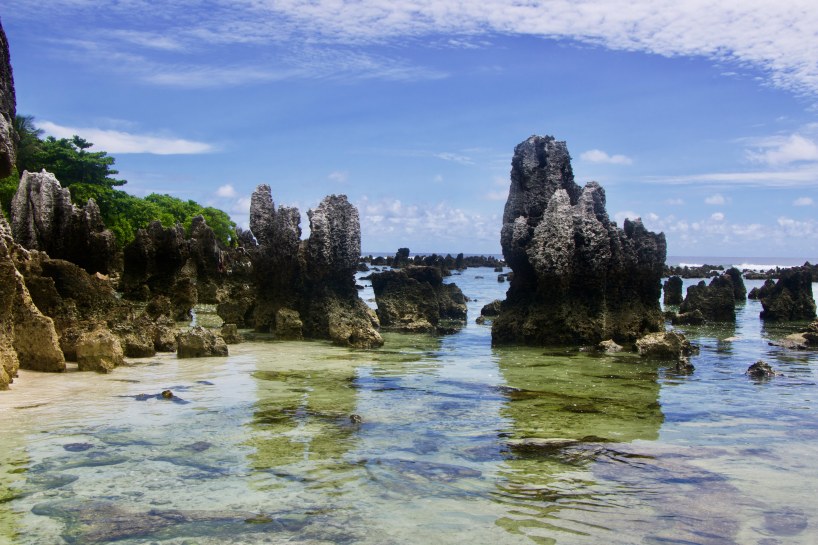
After a Nauru Airlines flight delay of 48 hours, I arrived in Nauru; an island nation that used to be one of the world’s richest per capita, but is unfortunately now one of the poorest.  This change was due to over-exploitation of massive phosphate deposits by foreign countries and later Nauru itself.  The removal of the phosphate left a lot of coral pinnacle formations.  It only takes about three hours to hike around the entire country; four if it’s really hot and you stop for the occasional beer or dip in the ocean. 

Welcome to Nauru. This is the entire country.
Coral pinnacle formations.
Cantilever used to load and unload ships. Currently ships can’t get closer than the edge of the reef. There is a quay under construction.
Weightlifting is popular for both women and men on Nauru.
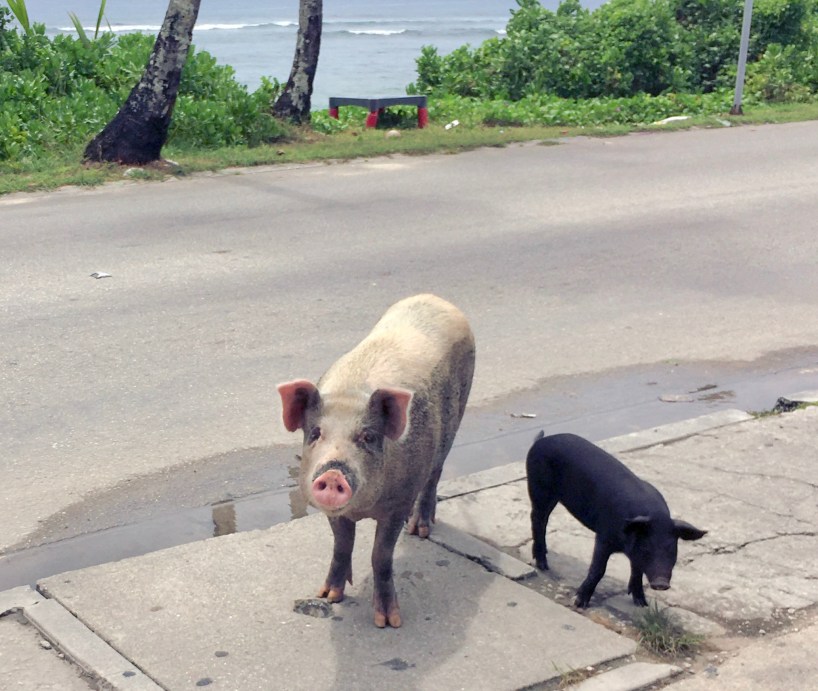
Weightlifters need loads of protein, so these little piggies better be careful.
Engine from a phosphate train on display outside of a tiny museum on Nauru’s history.

Next up was Kiribati; one of the world’s smallest countries by landmass, yet one of the largest by sea territory.  I visited two islands; Tarawa and Abaiang.  South Tarawa was full of small villages and towns, busy, and easy to get around in by mini bus. One of the main Tarawa attractions is the World War II battle site and its Japanese coastal guns and bunkers. Abaiang was less developed, rustic, and more laid back. I got there and back by two-hour boat ride, but there is a occasional plane option. Both islands had lots of places to swim (high tide) and walk out to look for various critters (low tide). The Kiribati people I met were all friendly and helpful. I enjoyed both islands.

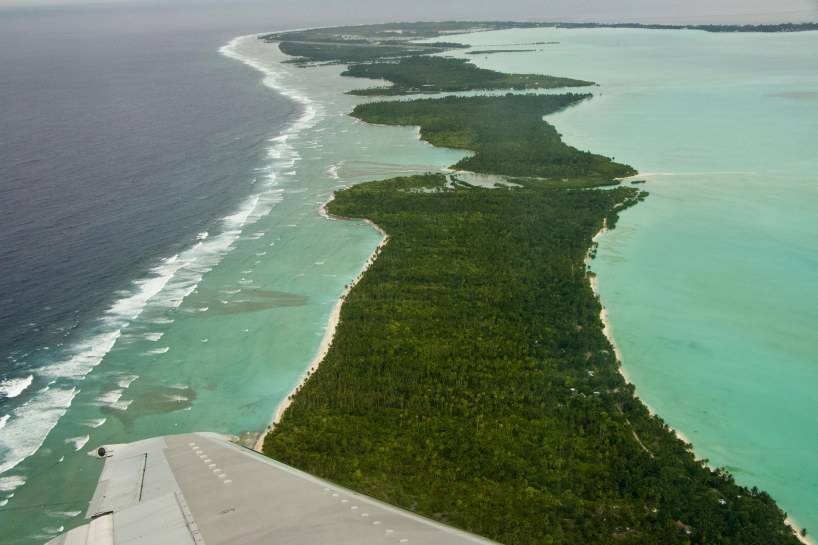
Blue on the ocean side and green on the lagoon side of Tarawa atoll, Kiribati.
Japanese gun and bunkers left over from the World War II battle of Tarawa.
Looking back at Tarawa during low tide.
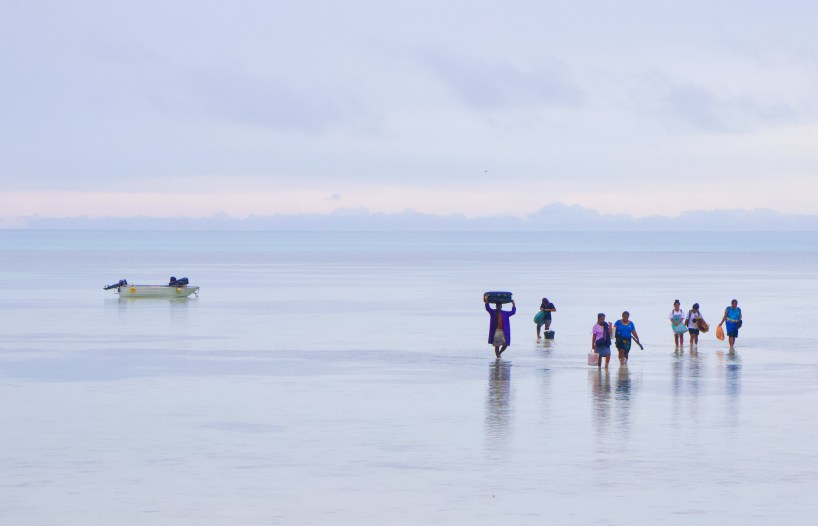
Passengers first ride a 25-passenger boat from Tarawa, then transfer in groups to a tiny motorboat, and finally walk through the swallow water to arrive to Abaiang atoll.

All in all it was a fun trip to three countries with three distinct personalities. The most challenging parts were getting a Nauru visa and scheduling flights. The best part was meeting lots of really friendly people in a relaxing part of the world.

New Zealand: A Stray Bus Adventure

blue lakes white mountains tongariro crossing best day hike in new zealand

Several people we have met on our various travels have told us about how beautiful New Zealand is. So we decided to come check it out for ourselves.

New Zealand has green pastures, white-capped mountains, blue Continue reading “New Zealand: A Stray Bus Adventure”

Australia in One Month

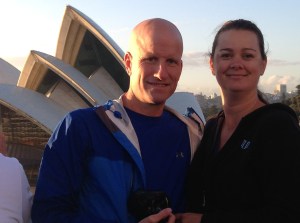
Sydney Harbor and Opera House Australia

Chris and I spent a wonderful month in Australia. Many of the things we did, and the sights we saw, we knew about before we travelled here. The lovely Sydney Opera House, the Harbor Bridge, Bondi Beach. Visiting friends in Adelaide and Melbourne. Seeing the outback and Uluru, and of course diving in the Great Barrier Reef. But so much more! The convict sites that tell the history of settling Australia, the free parks and museums, camping….

Sydney
Sydney!

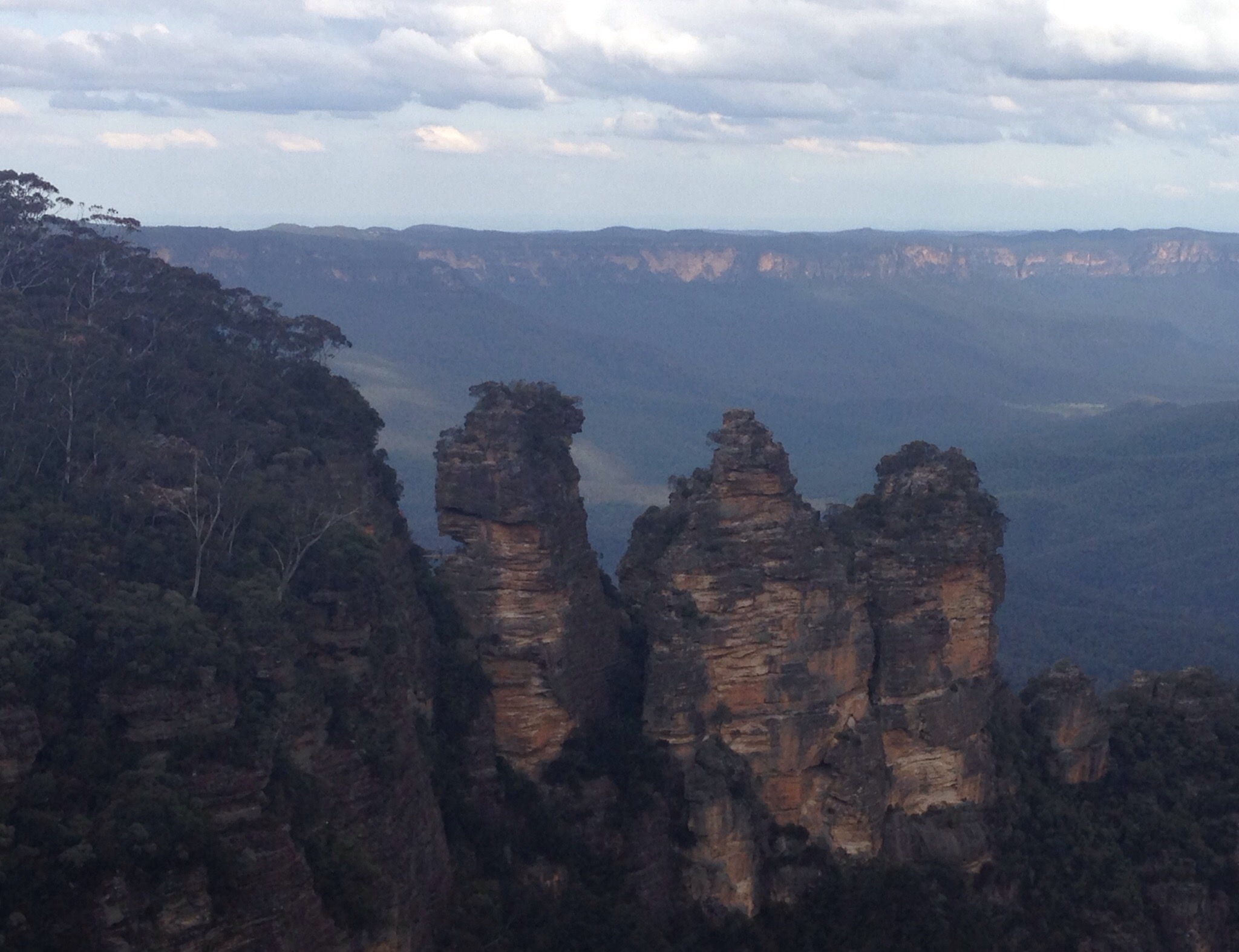
Once we disembarked from our repositioning cruise and started talking to people and tour guides, we saw so much more of Australia. After a few days in Sydney, we rented a camper van for a month and started off. We visited the Blue Mountains, named for the blue haze that arises from the eucalyptus oil catching dust particles. Very pretty (and fresh smelling!). We visited the fashionable parts of Melbourne with my friend and local Melanie, trying new eateries and going for walks around St Kilda. The Great Ocean Road, along Shipwreck Coast, was incredible. The effects of wind and waves on sandstone cliffs is beautiful. There are more than 1200 ships under those waves!

We visited our friends Ben and Jo in Adelaide, that we had met in Galapagos over our Christmas break, and staying at their house and tried some Vegemite. Ben took us to visit the fairy penguins, feed kangaroos, and hug koalas. Jo took us to four wineries to sample southern Australia’s wines, and we had a lovely picnic. While we were there we actually saw a koala in a tree in their front yard- a sight that they assured us they had NEVER seen before (koalas usually do not come too close to towns).

We drove out into the outback, staying a night in an old opal mine in the mining town of Coober Pedy. Then we made it to Uluru, the ancient red rock in the center of Australia. A very sacred place for the aboriginals. We stayed in Alice Springs for a couple of days, then headed east to Cairns. We stopped off at a place called Devil’s Marbles along the way and played around on the huge boulders. We watched the stars, the eclipse, the full moon, and the international space station from the moon roof in our campervan. Sleeping in the outback is awesome.

Before settling in at Cairns, we went to the Daintree National rainforest….. The oldest rainforest in the world. This place has a staggering abundance of animals and plants that are found nowhere else. We did some driving bits, some walking bits, and a crocodile-spotting cruise. No beach time, because of the crocs and the jellyfish.

Finally, Cairns. This place is like spring break year round. Fire dancers! Pools! Nightclubs! Concerts! Our hostel is a bit wild. But for three days we went on a live aboard dive trip to the reef, and loved every minute of it. We saw massive turtles, heaps of fish, about a dozen sharks, and my personal favorite, the Maori Wrasse- it’s called that because the markings on the fish look like tribal tattoos. And they’re huge! Like four feet long. Friendly, and curious about us humans.

So…… Now we leave Australia, headed to New Zealand. Check back in 3 or 4 weeks for details!