Kissama Game Park, Angola

with the park rangers out in the bush angola

I spent this past week driving around Kissama (Quiçama) Game Park, which is 1 million hectares (2.2 million acres).  Of course we didn’t drive through the whole thing.  About 1/4 of the park is fenced in and that is where the majority of the animals, such as elephants, giraffes, zebras, and more are.

with the park rangers out in the bush angola
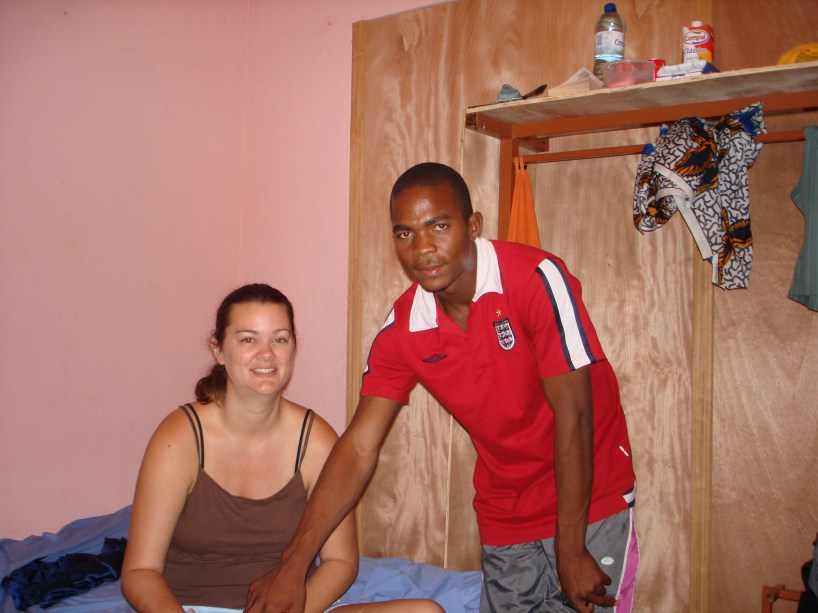
Our Group- I’m in the gray tank top

Our task was to drive around to about 40 villages located within the park and ask the sobas (the head man of each village) when was the last time they saw any big game.  We were trying to determine if there are any elephants or palancas left in the park- most of the big game were shot for meat during the 30 years of Angolan civil war here.  We went to villages that consisted of maybe 10-15 huts, no roads, no electricity, and no running water.  The villages don’t have cattle because of the tse-tse flies. These are areas of Angola that the colonizing Portuguese never even went into for that reason (and the malaria). 

children in african village, hut with thatched roof, angola
A Quiçama village

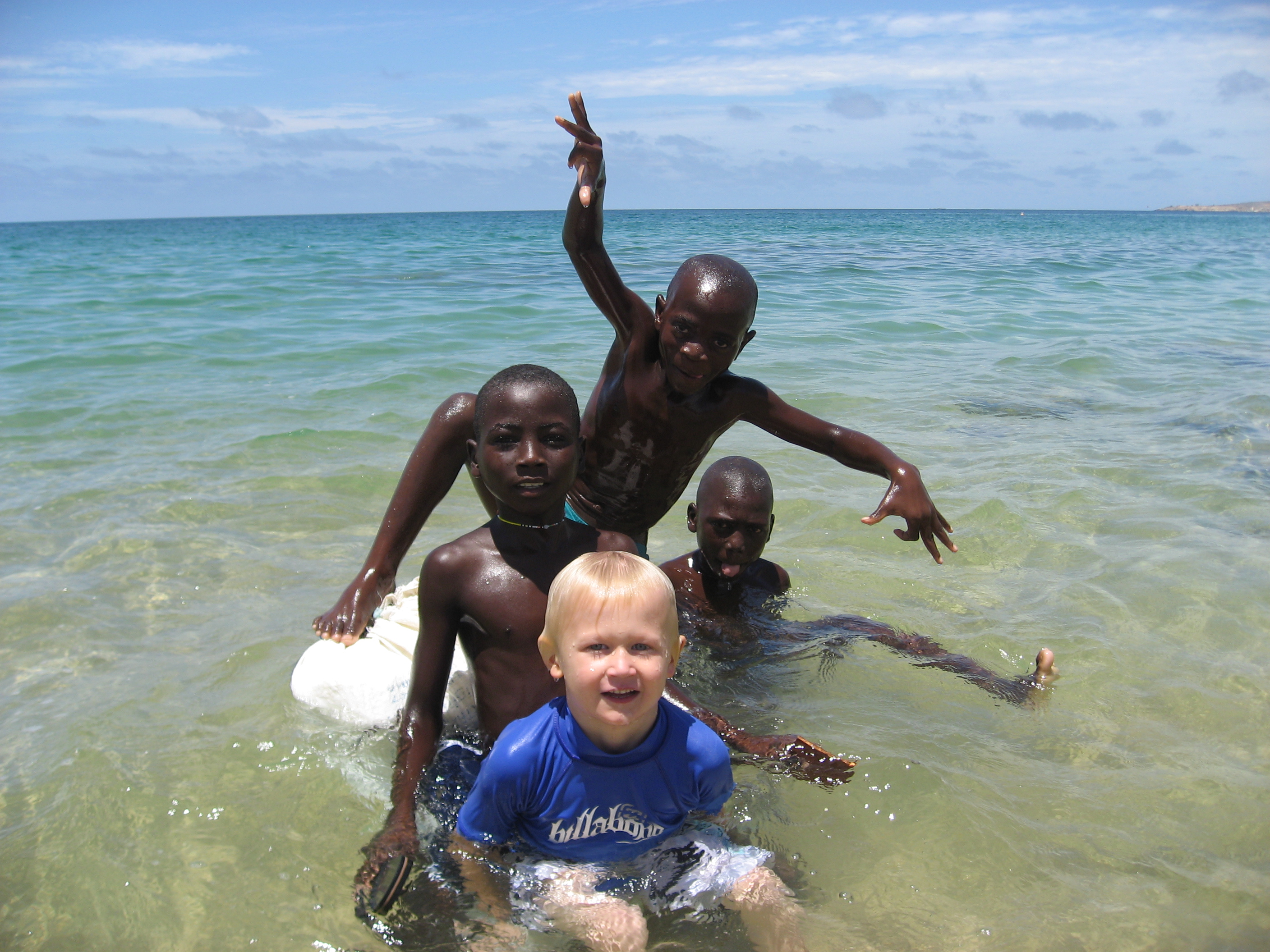
Each village we went to, the soba would invite us into the ondjaingo (a large round thatched hut that they use for a type of town hall meeting, where villagers take their complaints or they have celebrations).  They would greet us and the game warden would ask his questions.  Roland, the game warden, has only been in this area once in his six years as warden- and before that, it had been 30 years since a warden visited.  So they had had two visits from park officials in the last 35 years.  I sensed that most of the villages had not seen a white woman in years, and some of the children, perhaps never.  It is very uncommon for a woman here to travel into the bush.

round ondjaingo hut thatched roof village africa angola
An ondjaingo hut

Roland is the game warden and who oversaw the “Operation Noah’s Ark” six years ago, in which 200 animals were flown in from South African game parks to repopulate Angola’s parks.  He is also former South African Special Forces.  Along with us, we had two men from the Angolan Ministry of the Environment, who were there to check on the conservation and management of the park (it seems there were some tensions between them and the park manager, so I tried to keep my mouth shut and my ears open. Millions of dollars are at stake for managing this land). I got to practice my Portuguese a lot this week!  Also we had Meghan, the ambassador’s niece, who is in vet school and had just finished a 4 week “Vets in the Wild” program in Kruger park in South Africa.  In addition, we had 7 armed Angolan guards/ trackers that work for the national park- all former military and some former poachers.  We were armed for two reasons- one, the animals, but also because there have been firefights with poachers in some areas of the parks.  As these villages are on national park lands, they are not allowed to hunt the animals…. even though they domesticate no animals besides the pig and only cultivate cassava (manioc)as a food crop. 

So, we drove around for 5 days, asking villagers about the animals, and also asking questions such as “How many children are in your village?”. (Rural Angolan women average 7.7 births each). “Do you have a school? Do you have a generator?  Do you cultivate any crops?  Do you have any animals?  Are you going to vote in the election in September?  Has anyone from MPLA visited this village lately?  Has anyone from UNITA visted?  When was the last time a car came through here?”.  Some places said they saw a car maybe once a week. Some villages had brand new shiny bikes that had just been delivered from MPLA (the party of the current- and only- president).

children in african village angola thatched roof mud hut
Village Life

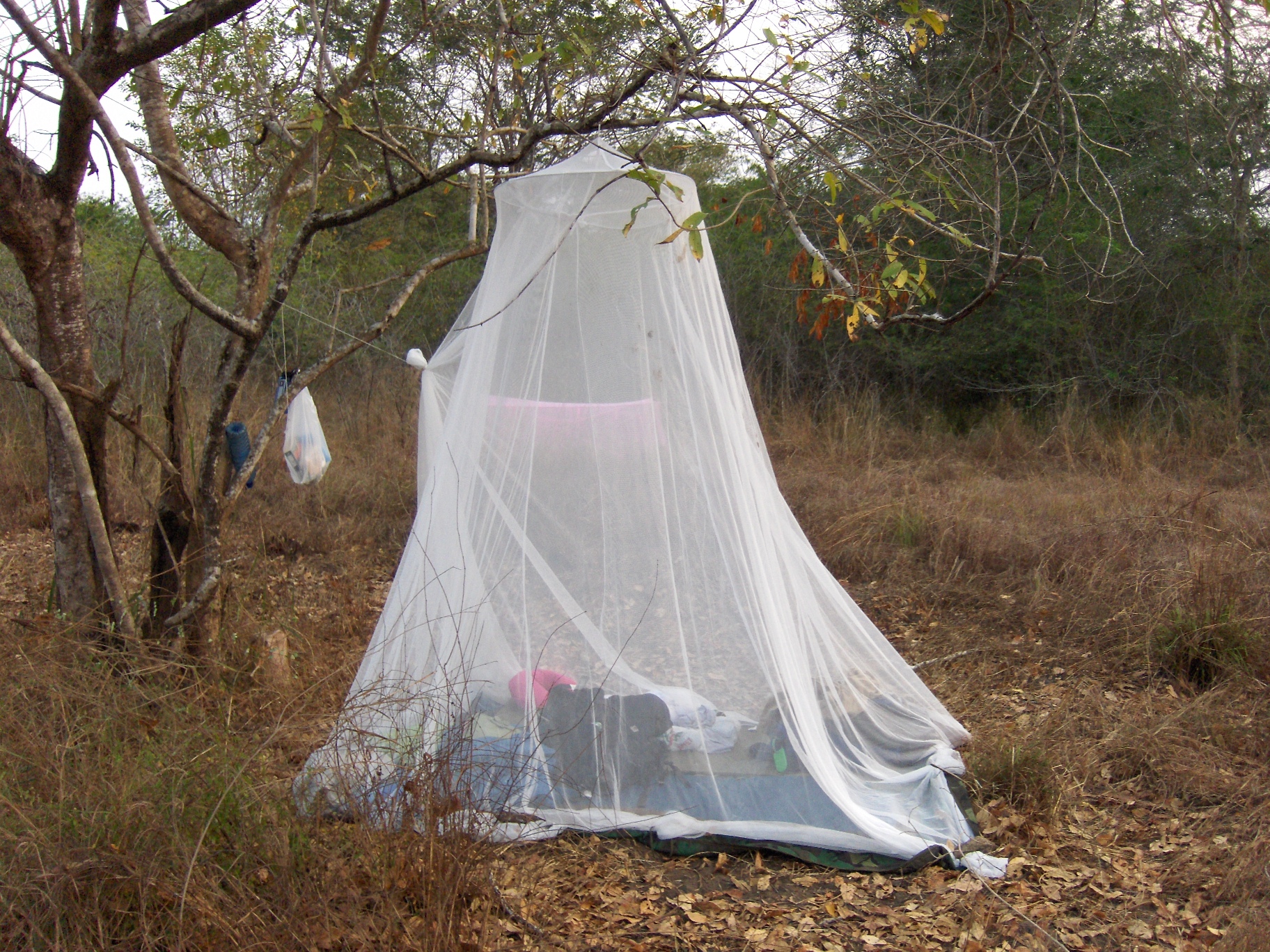
We drove for 7 to 8 hours each day, but only covered between 60 and 100 kilometers (40 to 65 miles).  It was very rough travel.  We got stuck fording streams and got multiple flat tires (we had two land cruisers and a pick up truck with our supplies, and we all had extra tires).  One land cruiser tipped over when it fell into a hole (I was in it, and it was scary!  The guards all had to tip it back the right way while Roland tried to drive out of the hole in the ground.  I just hung on to the door handle).  The brush was higher than the car- 3 meters (9 feet) tall.  We were never on a paved road the whole trip- just dirt tracks.  We camped on the ground each night under mosquito nets- no tents- and it was beautiful to look up and see the moon and the Southern Cross.  The a/c didn’t work so well in the cars so we often had the windows open, so if you weren’t in the lead car you got plenty dusty (I washed my hair three times when I got home).  Chris sent me with 12 bottles of water and 12 MRE’s and that was what I ate all week. 
bush camping africa angola mosquito net
My “tent”

All in all, it was an interesting trip.  It was not what I would call “fun”.  But certainly educational and enlightening, and as Roland said, a historical trip. Some interesting facts about Angola:  77.2% of their budget comes from oil money…. they produce 1.9 million barrels of oil per day….  they have one of the fastest growing economies in the world (due to oil production and prices)…. yet have some of the poorest citizens in the world. 

This next month should be interesting. I’ll be in Portugal for 10 days, then as soon as I get back, Chris and I will be heading north to observe the elections in another province.  The elections are for the Assembly (Congress, basically), not the President (there has not been a Presidential election here since ’92, and the president has actually been in power since 1979).  Hopefully the elections will be peaceful.  MPLA dominates now but perhaps more UNITA will be elected as a backlash to the incredible governmental waste and corruption that is present here. Angola is certainly a country that is ripe for change.
From Cape Town To Etosha Game Park

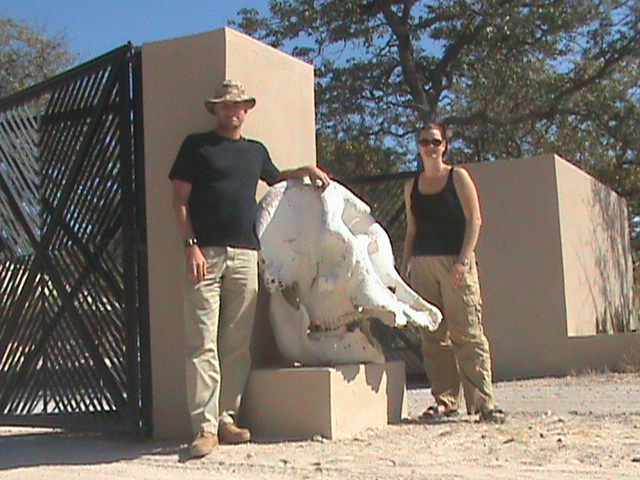
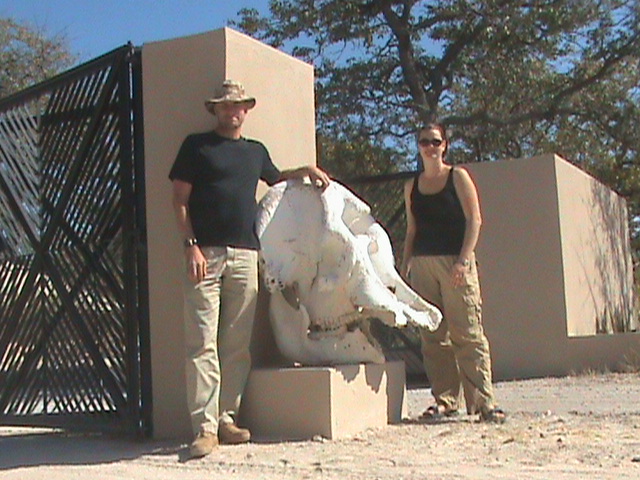
Chris and Deah outside Etosha Game Park gate, Namibia

After a really, really long flight (24 hours, via New York and Dakar), I arrived in Cape Town, South Africa.  I had pre-booked a hostel that included airport pickup, and on the way I got to see a little bit of the scenery as we entered the city.  I checked in at the Sunflower Stop, and went for a little walk down to the ocean to stretch out my legs and watch the sun set.  This was the farthest south in the southern hemisphere I had ever been- and although it wasn’t freezing cold, it was definitely “winter” time here, even though it had been high summer when I left Texas the day before!

Sunflower Stop Hostel. Photo Credit: Sunflower Stop website

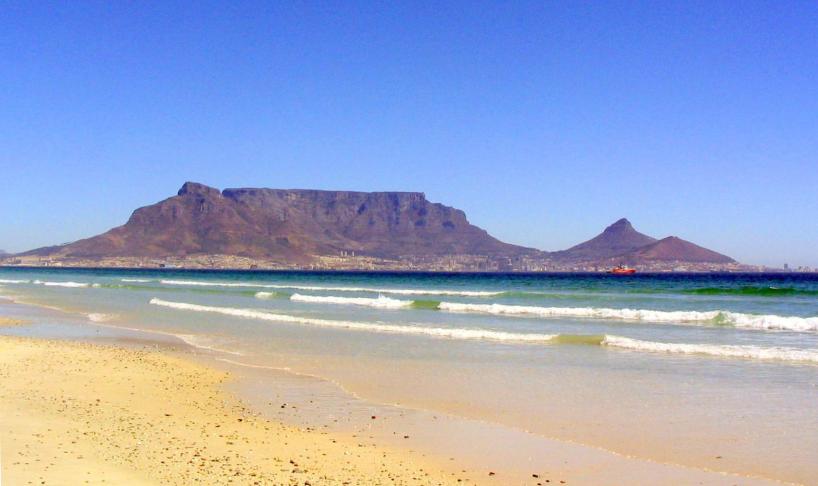
The next day, I went to the Victoria and Albert Waterfront, where I could pick up the Hop On/ Hop Off bus.  Chris and I have discovered that this is a great way to see a new city, because for about $15 you can get transportation all around the city for a whole day, plus some interesting facts on the history and culture of the place.  It really helps me plan what all I want to see while I’m visiting a city.  Some of the stops were the Two Oceans Aquarium, the original Dutch fort from the 16th century, the Robben Island Gateway, the South African Gold Museum, St George’s Cathedral, the District Six Museum, and of course, the Table Mountain Cable Car. Table Mountain is a beautiful mountain that towers over the back of the city, and you can take a cable car up to the very top of the mountain and see for miles all around.  It’s really an incredible vista and definitely worth the price of the cable car.  With a picnic, or if the restaurant was open (it was closed for renovations), this attraction alone would be worth a day’s exploration- especially if you were brave enough to hike up and down the mountain (3 hour round trip, I am told).

Table Mountain. Photo credit: CC

But as I was in the city only a short time, I got back on the bus, which was then heading for the southwestern edge of Cape Town, an area studded with beautiful homes and long stretches of sandy beaches.  I enjoyed the ride so much that I went on another whole circuit of the bus route on the same day just to enjoy the views.

The next day, I went on a wine farm tour with a group of people.  There were 14 of us, plus our driver, who really knew a lot about the region and was a great guide.  We visited four wine farms.  The first one also specialized in cheese, which is a particular weakness of mine!  We sampled 7 wines, and tons of cheeses- goat milk cheese, cow milk cheese, soft ones, hard ones, cheese rolled in chakalaka, a South African spice- yummy!  Then we left Fairhaven farm, and headed to another wine farm, and this one had a chocolate shop attached.  Mmm, chocolate and red wine, nothing better (except cheese and wine).  Our third stop was a wine farm specializing in Pinotage (a mixture of Pinot Noire and Cinsault), where we also had lunch.  Delicious.  Finally, a stop at a last wine farm, which also had some ports.  We all basically dozed the entire trip back to the city, and I was so full from my lunch that I didn’t even bother with dinner.

Fairhaven Vineyard. Photo Credit Deah Hester

I spoke with Chris that night, and he and two friends had left Luanda and were headed down to Etosha Game Park in Namibia; the plan was to meet up with them over the weekend and drive back up to Luanda with them.

My last full day in Cape Town I went on an early morning ferry to Robben Island, a small island off the coast.  This is an island that has a long history of being used as an isolation point, first for lepers, and later for political prisoners (including its most famous inhabitant for 20 years, Nelson Mandela).  Robben Island also has tons of penguins!  Which are really fun to see.  After the ferry ride over, we took a bus tour of the island, and our tour guide gave us a very interesting history of the island.  Then we got out and walked around several of the prison units, listening to stories told by former inmates (who are now tour guides there).  Then a quick look at the penguins by the beach, and then the ferry ride to the mainland.

Maximum Security Prison, Robben Island. Photo Credit: CC

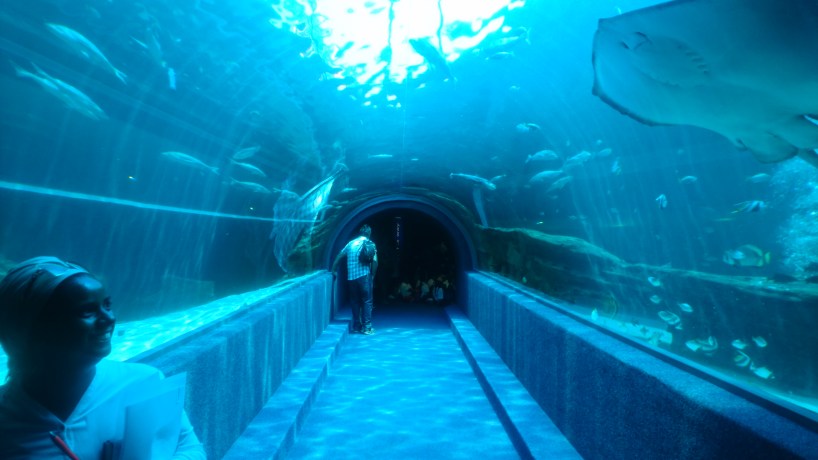
After Robben Island, I had a great lunch of fried seafood down at the Victoria and Albert Waterfront (until a seagull stole some of my calamari!), and then I toured the Two Oceans Aquarium.  Their shark tank is famous, holding dozens of sharks and rays, and you can walk completely around it 360 degrees, ending at a large viewing window that is over 30 feet wide and 15 feet tall.  You really get a panoramic view of the creatures swimming in the shark tank.  Another famous exhibit is their live kelp forest, one of only two in the world, a huge tank full of live kelp over 18 feet tall with thousands of fishes swimming in and out of the stalks.  The aquarium is definitely a great place to spend an afternoon.

Two Oceans Aquarium Shark Tunnel. Photo Credit: CC

Friday, my last morning, I left the hostel and took a cab ride over to the area of town where the train and bus station is.  I still had about two hours before I needed to get my bus to Namibia, so I had the cab driver drop me off several blocks north of the train station, at the start of the Company Gardens, a huge section of gardens that were once owned by the Dutch East India Company.  It was starting to rain that morning (the weather had been surprisingly dry for winter in Cape Town all week), but it was still nice walking through the Gardens and seeing several of the old historic buildings in the area, including St. George’s Cathedral (the home church of Bishop Desmond Tutu).

Company Gardens, Cape Town. Photo Credit: CC

At last our bus was ready to leave to go to Windhoek, the capital of Namibia. It was a long bus ride- 20 hours- but it was nice to see the countryside go by.  I guess I could have flown but I enjoyed most of the bus rid.  I particularly enjoyed the sunset and the sunrise.  I didn’t sleep much during the night, and for long periods of time I would sit watching the stars out the giant bus window to my right.  The stars were amazingly bright as we drove north through the bottom part of Namibia, which is not very densely inhabited or polluted.

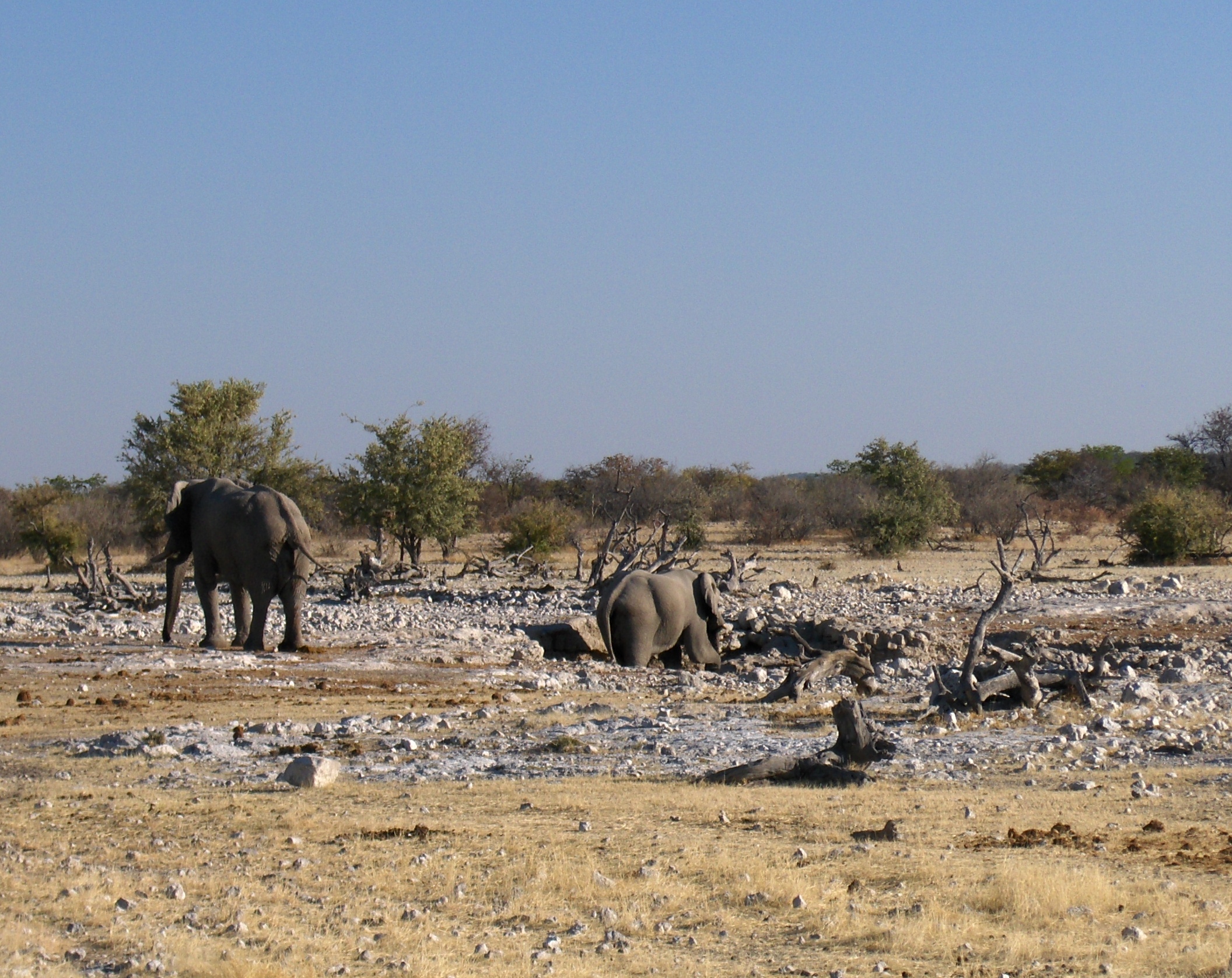
We arrived in Windhoek and I met up with a group that was going to the game park. I didn’t know if Chris had been able to make it out of Angola in time to meet me or not, so I signed up for a 3 day camping safari.  We left Windhoek around 10 am and drove north to Etosha Game Park, one of the largest game parks in Africa.  We stopped for lunch along the way.  However, pretty soon after arriving in the game park I spotted Chris, who had a cabin, as opposed to sleeping on the ground in a tent with my safari group.  We went on a night drive that evening, which turned out to be absolutely freezing in an open-safari car.  Over the course of Friday and Saturday we saw tons of animals at the game park, including zebras, giraffes, elephants, warthogs, kudus, springboks, elands, rhinoceros, foxes, and ostriches.  In all, we saw everything we had wanted to see except for cats- we never saw any lions in Etosha.

After a couple of days at the game park, we started heading back up towards Angola.  We spent one last night in Namibia, at a great little inn just south of the border, where I had the best dinner ever- a kudu steak.  Wow.  It was awesome.  The place also served pineapple pancakes for breakfast. Delicious!

Finally we crossed the border into Angola and started heading north.  We were figuring it would take two days of hard driving, or three days if we went a little slower, to get back to Luanda.  Unfortunately, there was no gas to be found in the small towns in the south, and we wound up having to buy gas from a street seller…. Which ten minutes later caused our fuel pump to break.  We got the fuel pump somewhat repaired, which of course took hours, but then not too much later it broke again, this time for good.  We were still quite a ways from any major town, so we got towed for a while by some Angolans in a truck.  They towed us until dark, but as the roads are really bad, it wasn’t safe to continue on that night.  The four of us- Chris, me, Delvis, and Noel- slept in the car that night on the side of the road.  The next day we got another tow, and finally made it to the town of Lubango by early afternoon.  In Lubango we found a body shop that could order the part we needed, and we got a hotel room to figure out what to do next.  If we had had more time, we would have stayed in Lubango and waited for the car to get fixed, but Chris, Delvis and Noel needed to return to Luanda for a 4th of July function at the Embassy.  So, the following day, we wound up getting a quick flight from Lubango to Luanda, thus saving ourselves the last 12 hour leg of our driving journey.  A week later some other guys from the office flew down to Lubango and drove the car back up to Luanda after it was fixed.

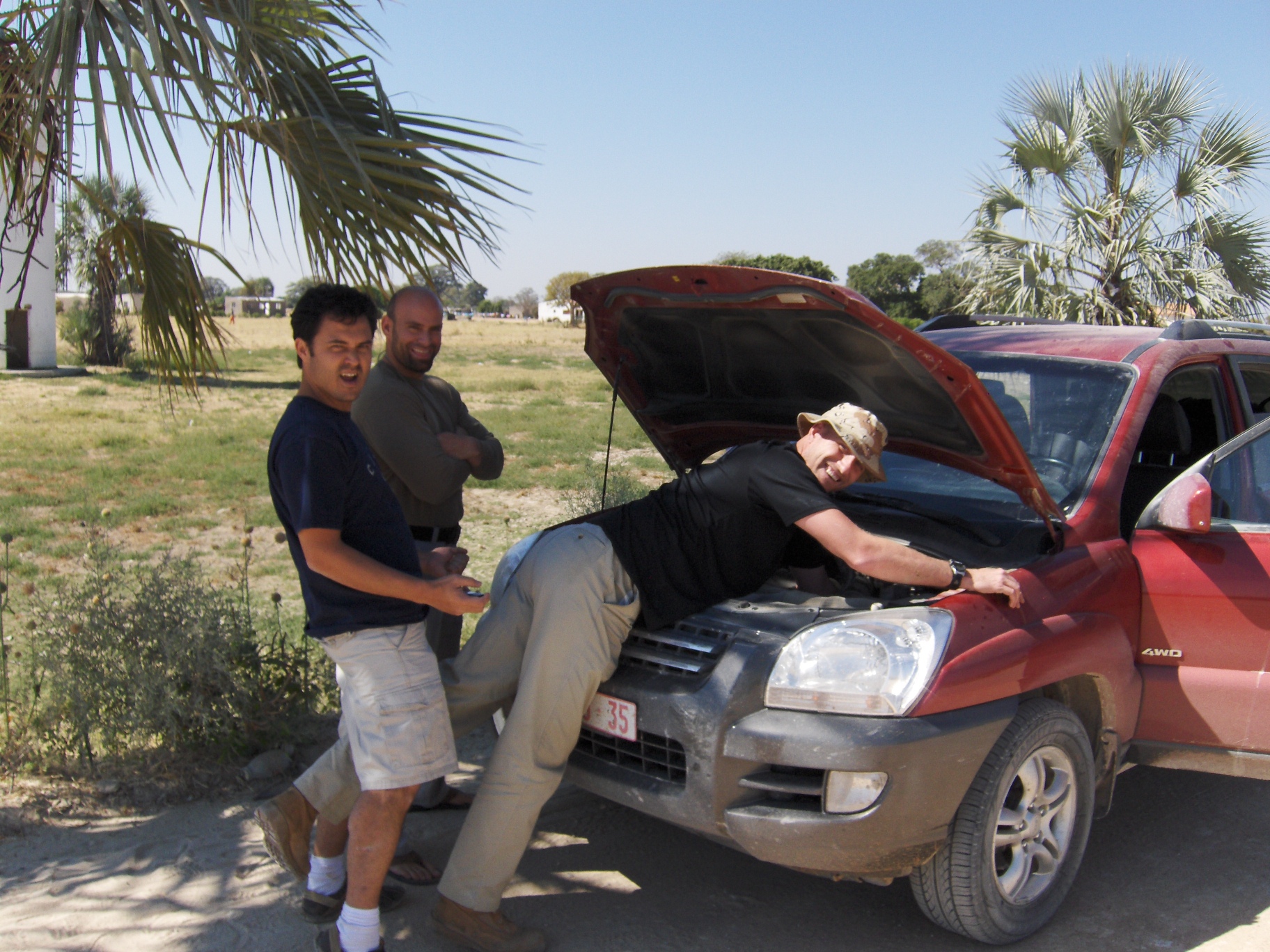
three guys fixing a car
Noel and Chris, fixing the car

All in all, I really enjoyed my visit to Cape Town and to Etosha Game Park.  I would love to return to Cape Town- in fact, I think I could live in that city for a long time and be happy there. I liked Namibia, as well, and am hoping to go back in late November, early December to visit some other parts of it- they have the second largest canyon in the world, Fish River Canyon, as well as the Skeleton Coast, which looks fascinating, plus the Caprivi Strip and Okavanga Delta, both of which are en route to Victoria Falls, a destination I hope to see in December before I fly out of Africa.  So much to see on this continent and so little time!

*Note: Most of my Cape Town pictures were lost, so I later had to fill in this post with pics from the internet. In general I try to use only my own pictures for my blog but this time it was unavoidable.

The Secrets of Sao Tome

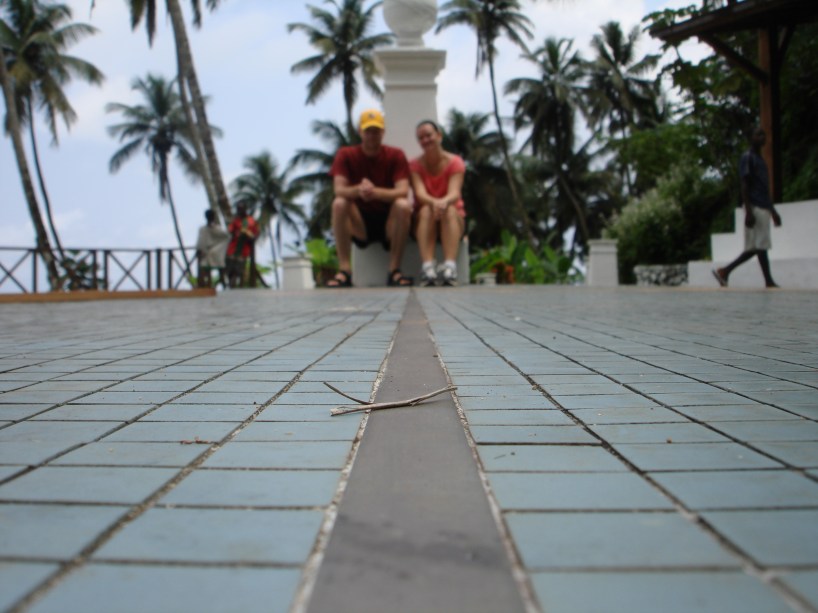
couple sitting on equator line sao tome island

Chris and I spent the week before Christmas on the island of Sao Tome. We had a wonderful vacation- it was so great to get out of Angola! During our week on the island, Chris got his diving certification at Club Maxel Dive Center, we stayed at some really nice hotels, and we also stayed in a little hut down on the beach. Very secluded and very hidden! I’m not telling the name here because I want it to stay hidden!

We rented a car and drove all over the island, which is pretty small, and enjoyed several meals and drinks at Café e Companha, also known as MJ’s, a little expat hang out in the downtown. We also visited the Claudio Carallo chocoalate factory. We stayed the last 3 days at a nice hotel right on the beach, and while we were there we met some really nice people- one of them invited us to his house one night for an awesome South African braii (barbecue).

Pico cao grande tall rock sao tome
Pico Cao Grande

We ate at a fabulous old plantation, Roca Săo Joăo dos Angolares, that is now owned by a Portuguese chef and had the best meal… ever.  

old portuguese plantation house sao tome
Old Portuguese plantation house

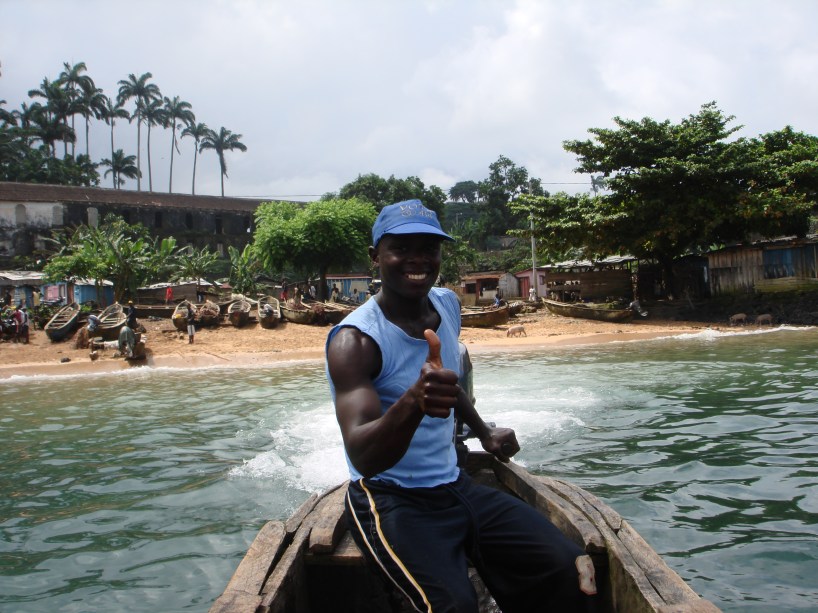
I think Chris’s favorite part of the trip was when we rented a small boat from some fishermen and boated over to the small island “Ilhéu das Rolas” that has the equator running through it. We beached the boat and climbed up a hill to the point where the “actual” imaginary line runs through the island.

Sao Tome is a really, really beautiful place. Like Angola, they were originally a Portuguese colony, so a lot of people there speak Portuguese, but also a kind of English creole. Dotted throughout the island are tons of old Portuguese plantation houses that have been abandoned since the Portuguese left in 1975. Some people are starting to reclaim those houses and are turning them into eco-lodges, hotels, and restaurants. I think Sao Tome is a place that would be really cool to visit again in ten years. I had a great time and it was a wonderful way to spend Christmas.

That Time I Spent Thanksgiving in Jail- in Africa

the village of N'Dalatando Angola


Yes, the rumors are true. I was arrested last weekend and thrown in the slammer. In Africa. As Jonathan says “All respectable expats have spent some time in jail. Welcome to Africa!”. Here’s the story:

Chris and I were taking a road trip to the Calendula waterfalls, about 8 hours away from Luanda. Naturally with a long drive like that we would take turns driving. However, we both forgot all abut the fact that my purse had been stolen the previous weekend, and my driver’s license along with it. Of course about half an hour after I start driving, we get pulled over. It was just a routine police check just before N’Dalentando, the capital of Kwanze Norte province. Chris showed his id cards but they also asked for mine. I didn’t have my driver’s license, and I had left my passport at home (we had thought it would be safer there). So the police took us into the city, to the Office of Immigration.

truck falling into sinkhole in Africa
Giant sinkhole in town

We spent the rest of the day (Thursday) dealing with Immigration. They were mainly concerned about seeing my passport. But they were also acting like it wasn’t that big of a deal, so we thought they would eventually just let us go. Everything in Africa takes time. But by the end of the day, they still were dealing with us, so they made us spend the night there. We slept in the car in the parking lot of the immigration building. We called a friend in Luanda and he got the key to the house, and retrieved my passport.

Friday morning, our friend in Luanda took my passport to the Immigration office in Luanda and showed it to them, and they called the guys in N’Dalentando, and we were done. We thought. Then the immigration guys said we needed to go see the police chief about the driving without a license charge. So we drove over there. When we got there, a woman asked us a bunch of questions, and decided we needed to see the judge. So we drove to the courthouse, and waited around there a while. Finally, the judge asked a bunch of questions (mainly the same ones) and informed us that the penalty for driving without a license in Angola is one month in jail! We explained about the stolen license, and she said she needed to see a copy of the license, and until she did, I was going to jail. And with that, she picked up her purse and left for the day! Even though it was only 2:30 in the afternoon.

We were pretty freaked out about the jail part, so I called Ken, in Texas, and asked him to go to my parents’ house, and look through the mail- I had ordered a new license when my purse was stolen, so it should have arrived. Chris was going to call Ken back in an hour or so, and the police took me off to jail. They took my shoelaces. Chris gave me some clothes from our backpacks to use as pillows, and a magazine, and some bottled water. I went into the cell and the guard locked the door. The cell had no electricity, it was about 5″x8″, and it had an outdoor latrine. I was the only one in there for a few hours.

Chris had found a courthouse clerk named Amadou, who spoke some English, so they went off together to go find a way to get me released. He promised to return in a couple of hours with some dinner.
Being in jail wasn’t too bad. The guards were really nice and came over to talk to me and play music for me on their cell phones. After a while we started doing Portuguese/English lessons. You learn a lot of words when you’re in trouble with the law in a foreign country. I learned more Portuguese in those four days than I did in the first four weeks I was here.

Meanwhile, Chris was busy, finding a phone with charge in it and some phone minutes (his phone charge was gone and we hadn’t brought the charger with us), finding internet connection (he had to go to four or five places before he found the only one in town, at the Catholic Mission), and coordinating with Ken in Texas and other people in Luanda. Ken had retrieved my new driver’s license and scanned it in and emailed it to Chris, who got it printed out. He brought me some dinner- an MRE and some juice- and said he was going to look for the judge or the police chief, and he’d be back later.

The sun sets here around 7 pm and when there’s no electricity, there’s nothing to do except lay down and try to sleep. Another woman, Vivi, was brought to my cell for a while, but released about an hour later (her husband was abusing her so they put her in jail for “protection”). I couldn’t really sleep- all I had was a blanket (from Vivi- she told me she’d come pick it up the next day) and a somewhat dirty sheet, on a concrete floor- so I sat up in the doorway with a lit candle for a while. I was still sitting up like that when Chris came in again at 9:30, and said they were releasing me from jail.

I was out of jail but we had to stay in town for the weekend. I was basically detained under house arrest. We found one restaurant to get lunches and dinners, but other than that I just stayed at the “hotel” (an empty boarding house, maybe?) we found. If I left the hotel, the police followed us around. But really, they were pretty nice about it and were just trying to keep an eye out for us, I think. We hung out in the city (town, really, it wasn’t that big-maybe five or six main streets) on Saturday and Sunday, and then Monday morning we went to the courthouse. We met with the same judge, who took us into to a “tribunal”, a short trial with three judges. The other judges didn’t seem to really care at all about this whole situation, but for some reason my original judge really had a thing for keeping the case going. Finally, after a couple of hours, I was declared “absolvo” and released. I waited a good half hour while some guy on a manual typewriter typed up a copy of my release papers,– and then actually SEWED my court case shut with twine– and then we beat it out of town. We never did get to see the waterfalls.

All in all, it was an interesting weekend. I learned a lot of Portuguese. I got a close look at the Angolan justice system. An even closer look at an Angolan jail. And, it was an excellent lesson in reminding me to always keep paper copies of my documents with me. It wound up being a very cheap Thanksgiving vacation- when we added it up, we came to about $270 for a five day trip. Of course, two of those nights were in the car and two nights were in a very scary “hotel”- I use quotation marks because I can guarantee that unless you’ve been to a third world country, you haven’t seen a place like this. But at least along the way we met some really interesting people, and a few people like Amadou and Americano, a police officer who was very helpful. And we got to have an adventure.

Arriving in Angola

Dallas to Chicago, Chicago to London, London to Lisbon; after 36 hours I was ready to land in Luanda, Angola. The man next to me on the plane asked me if I had ever been to Angola. “You’re going to hate it”, he said. And that was my introduction to Africa.

SanAir plane on runway
Flying into Angola

Luanda, the capital city of Angola, is a large city with modern skyscrapers, electronic billboards, and an unbelievable amount of traffic. There are very few traffic lights here; they are big on round-abouts, and left turns are illegal. There aren’t taxis here, but there are small mini-buses called “particulars” that swarm over the city, taking people from one neighborhood- barrio- to another. The city is covered with this red dirt, which immediately turns to red mud during the rainy season. A formerly communist country, Luanda has streets named “Rua Ho Chi Minh”, “Avenida Lenine”, and “Avenida Comandante Che Guevara”. Luanda is not the worst capital city in the world, but it isn’t the best either.

Luanda, Angola


Shortly after arriving here, we had a midnight (okay, 8 pm) hash “pub crawl” from our house and discovered 6 or 7 small bars right in our neighborhood, which is called Miramar. Good to know that we can walk to several small places, given the traffic here. The Marine House is two blocks away, the US Embassy is three blocks away, and the school where I am working part-time at is 4 blocks from here. Chris and I both walk to work most days.

There are few roads in and out of the city, and the traffic makes it really hard to get out of Luanda. You have to be prepared to sit for long periods of time in traffic jams, due to police checks, broken-down vehicles, and sometimes just completely unexplainable delays. Luanda Sul, where the international school is, is only 15 kilometers outside the city but it takes at least an hour to get there. Even people who live inside Luanda, if they leave work between 5 and 7 pm, can take up to an hour to get home (or longer on really bad days). Chris is very lucky to live so close to his work.


We leave Luanda as often as we can- we went to Luanda Sul and visited an artisan market there- selling all kinds of crafts ranging from cheetah skins to tribal masks to carved ivory. We bought some hand-painted cloth (tablecloth and placemats) that are very pretty, and a necklace and earring set made of cow bone. Also, we took the road going north to visit some beaches, including one that has the skeletal remains of several old ships, mostly Russian ones. One weekend we went south, and wound up at a fishing lodge on the River Kwanza. It was quite nice.


This weekend Chris had to be in Lobito, a town several hours south of here, to do some work thing and I went with him. It’s a pretty long drive- as Angola is the size of Texas and California put together, you can drive for several days and still be in Angola. If we drove for like a million hours east, we’d eventually hit Zambia, and to the north is Congo and Democratic Republic of Congo (used to be Zaire). Anyway, Lobito is fun, a little colonial city and a taste of small-town Africa.


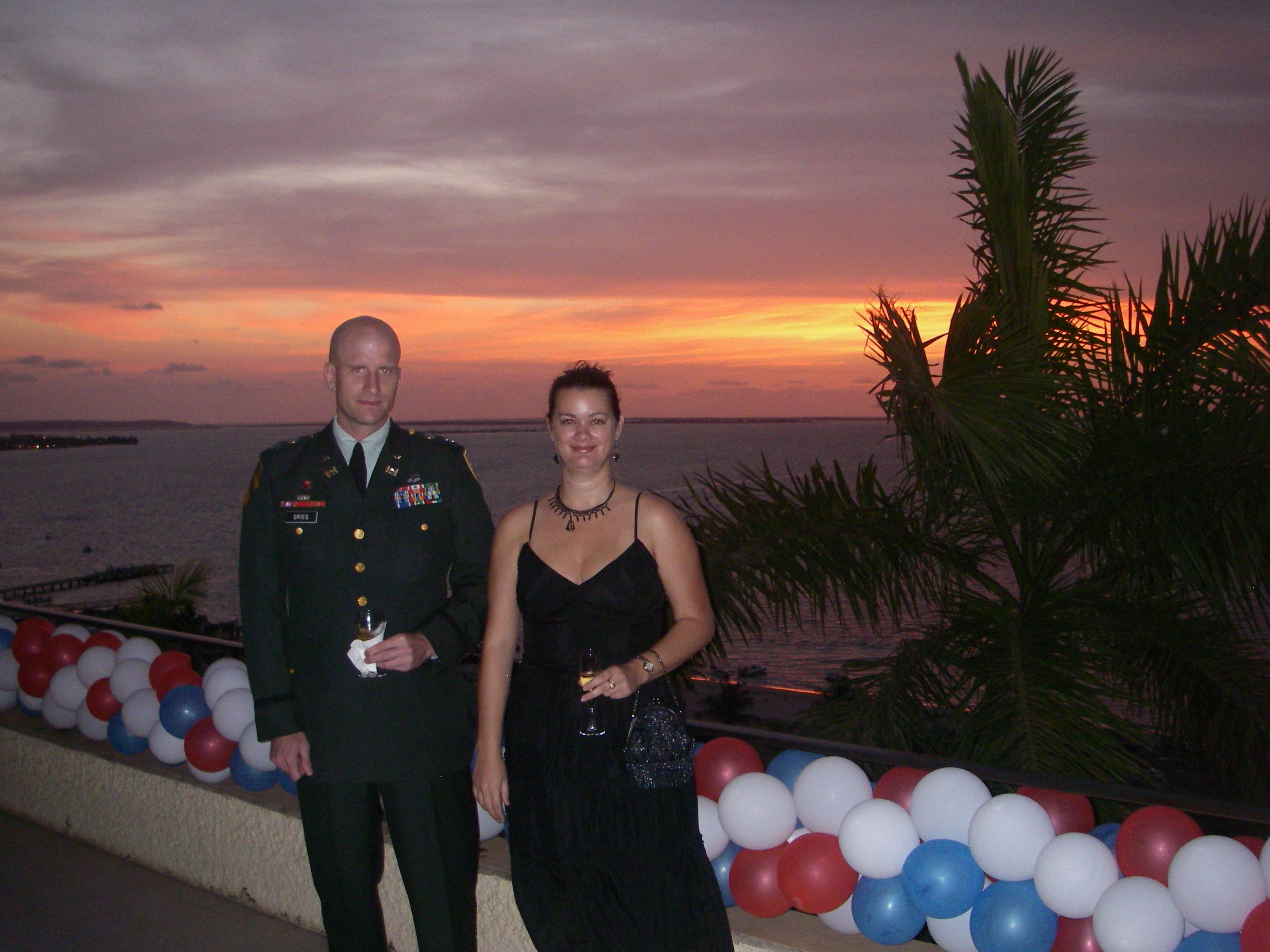
All in all, it’s an interesting and sometimes challenging place to live. It’s super expensive. It’s very crowded. The best thing about it is that it has Chris in it. I enjoyed going to the Marine Ball with him this year. We’re enjoying our time together and planning lots of fun adventures.

couple at marine ball in Luanda Angola
Chris and Deah, Marine Ball 2007