The Netherlands and Belgium

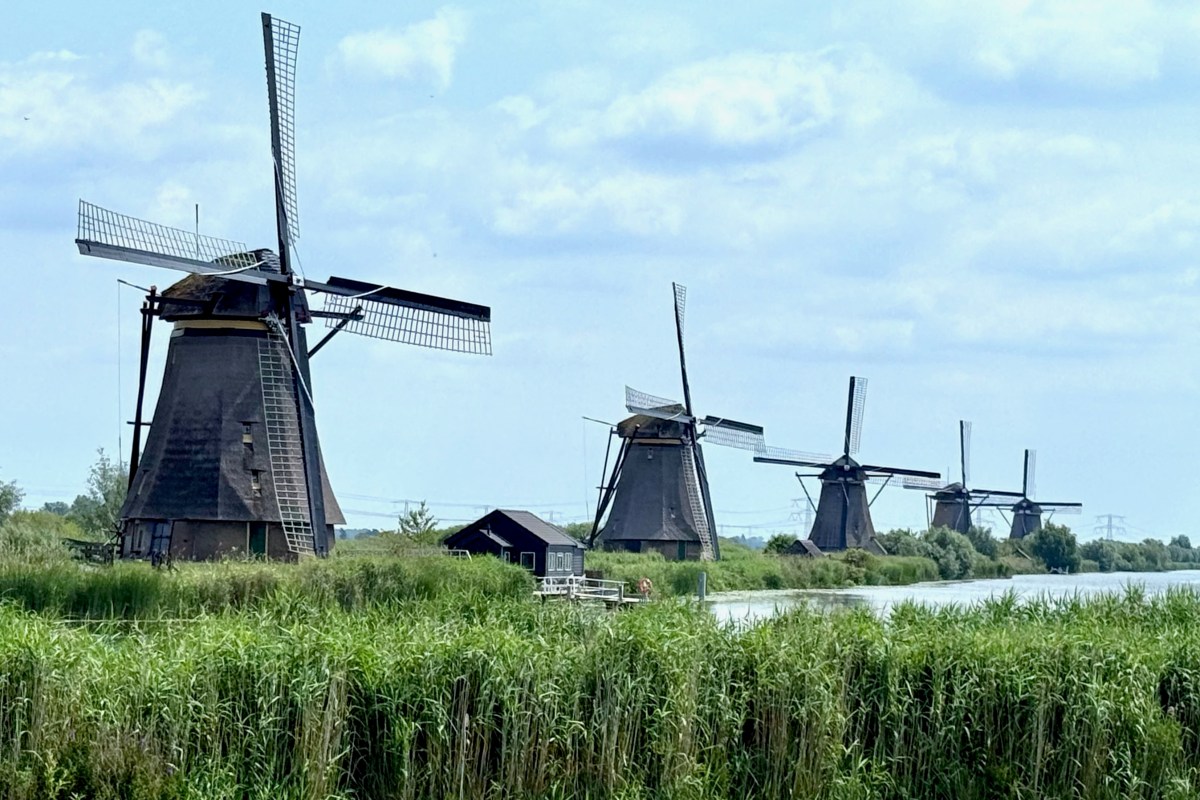
Windmills line a canal in the Dutch countryside

Knowing that by early June the summer heat would arrive where I live, I wanted to pick a place to travel that would have delightfully cool, even rainy, weather. We chose The Netherlands and Belgium, flying in and out of Amsterdam (strangely, a whole lot less miles on United than other nearby airports). We packed our rain jackets in our backpacks, and away we went!
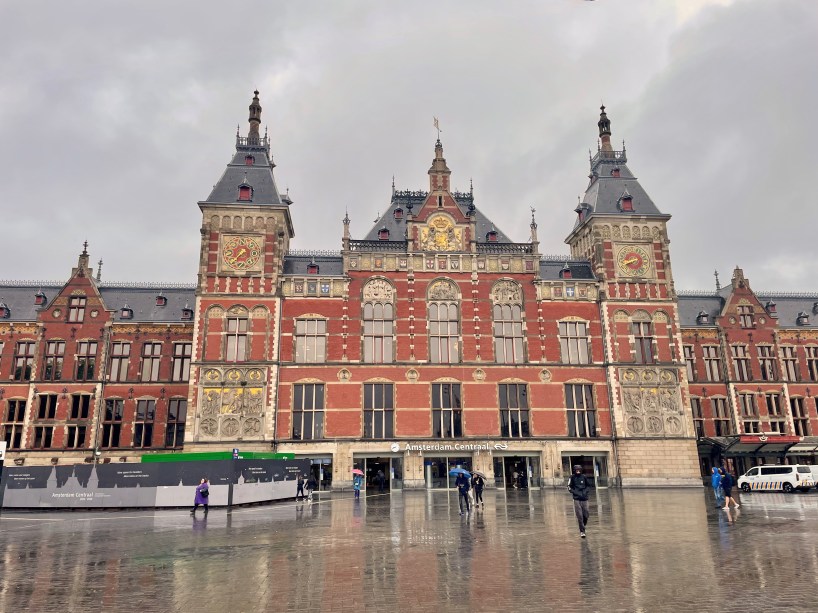
A cool and rainy morning as we arrive at Central Station

Our first two days, in Amsterdam, we were glad we had packed our long pants and our rainjackets, and our hotel kindly offered us an umbrella, which we definitely needed. We explored the area near the Damrak, the red light district, the Tulip Museum, and a Rembrandt/Van Gogh exhibit, and loved it. We dodged speeding bicycles and ate bacalhau from Portugal, nasi goreng from Indonesia, gyros from Turkey, and canneloni from Italy, and loved that too. We did not get to visit the Anne Frank house, as it was fully booked for the next six weeks. Plan early on that one, friends!

The word for “tulip” stems from the word for “turban”, as the flowers originated in the Kazakhstan area of Asia

From Amsterdam, we headed down to Antwerp to get a sense of Belgium. Unfortunately there was a train strike that day, and all busses were booked, so we wound up Ubering there. Ouch. It was pricey, but only a 90 minute drive, and then we were there. I love how close European cities are to each other. In north Texas you can drive for 90 minutes and only be one county away.

No trains running today in Netherlands. Time to go to plan B.

In Antwerp we visited a diamond museum, and we set out to try as many Belgian beers as humanly possible. Also as many Belgian fries. We went on a food tour of Antwerp, and enjoyed it so much, we went on a food tour of Bruges a few days later. Did you know there’s two different kinds of Belgian waffles? I like the smaller, denser kind with the sugar baked right in. Delicious!! We stayed three nights in Bruges and added a visit to the North Sea at Oostend. It was not quite so balmy and in fact rather chilly, so we didn’t get any true “beach time”, which actually was fine with me. We had thought to find Belgium’s one nude beach but in the end didn’t bother since there was no way we were getting undressed anyway.

Food tour for 10 euros? Yes I will. Twice!

We caught a train from Bruges to Ghent, a cute little medieval city featuring an old castle, monasteries, public squares, and a large Friday market. It was so easy for a few days to take my mind away from the trials and tribulations of living in a big metropolis such as Dallas/Fort Worth, and imagine life in the 8th century in Europe (not that I would necessarily want to trade, as I happen to like sanitation and air conditioning a lot).
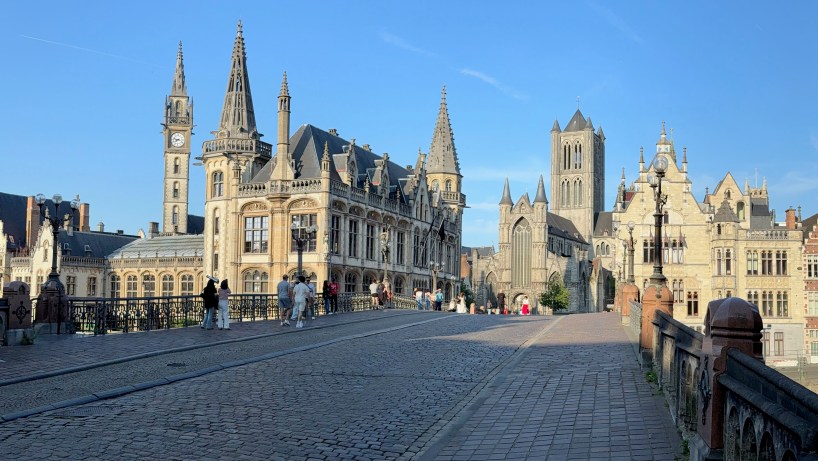
Ghent

Although there is a whole lot of Belgium we hadn’t yet seen, it was time to travel north up to the Netherlands again. We took a train from Ghent to Rotterdam. After these smaller, medieval cities, Rotterdam seems so big and so modern! After near total destruction in the second World War, the city was practically rebuilt from the ground up in the following years, during some really interesting architectural times.
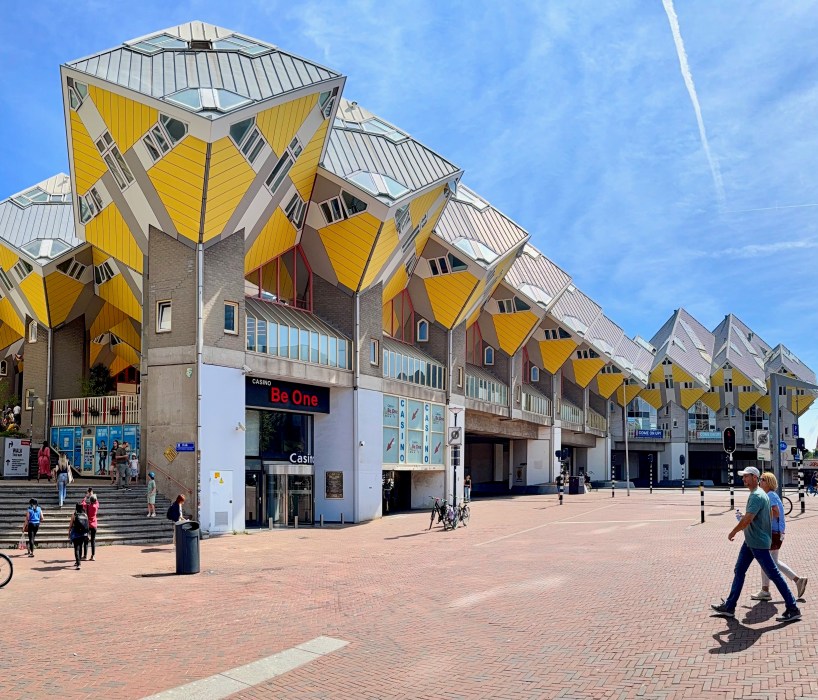
The Cube Houses. Not sure if I could get used to everything being a bit slanted.

We took a waterbus to Kinderdijke, a system of 16 windmills that are still operating to drain canals and form dry land, which is how about 20% of the Netherlands has been formed over the past 500 years. Two of the windmills are museums, and you can go inside them and see how people lived in them and worked the canals. The other 14 windmills actually still have families living in them now!

Ready to go live in a windmill!

After Rotterdam, we took a train to The Hague. There was a lot going on there, in preparation for a huge NATO summit featuring Trump himself. We went to check out an anti-NATO/anti-Trump protest, and noted the increased police presence. In the end, we took a day trip out to Madurodam to get away from it all. Madurodam is a fun outdoor theme park, featuring dozens of large-size “miniatures” of some of the regions’ most famous buildings, such as Kinderdyke, various palaces and judicial buildings, and the Schipol airport. It’s fun to roam through the miniatures, pretending like you’re a giant.

That’s a really big duck! No, just a miniature Dutch house.

Our last stop before returning to Amseterdam was Delft, to see the Royal Delft Museum and factory. The museum tour is really well organized, and you can watch actual current artists and factory workers as they churn out new and ever-evolving Delft pottery, 400 years after the company began. We also really enjoyed staying at the Social Hub in Delft, where we had access to free laundry, a yoga class, bikes, and more. The place had a really nice vibe and we liked it a lot.
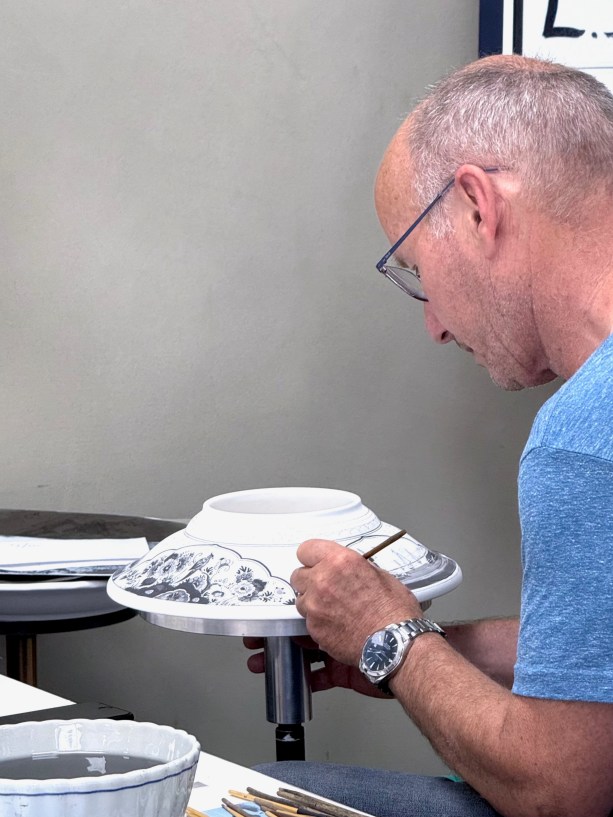
Industry secret: the Delft blue is actually black ink! It turns blue during the kiln firing procedure.

We circled back to Amsterdam and spent the last couple of days wandering through the less-touristed areas of town, such as some residential areas, a large central park, and made sure we sampled the last few dishes we’d been craving, such as an Argentinian steak, a Dutch treat called Bitterballen, and stroopwaffel cannolis. We took a half day trip out to the small town of Edam, home of Edam cheese, to check out their Wednesday market. We picked up soft cheese, spelt bread, chocolates, and blueberrries, and walked to the coastal town of Volendam, which is a super cute fishing town only about 2 km from Edam. We sat on a picnic bench at the wharf and watched the boats sail in and out of the harbor, and tried to keep our picnic safe from the seagulls.
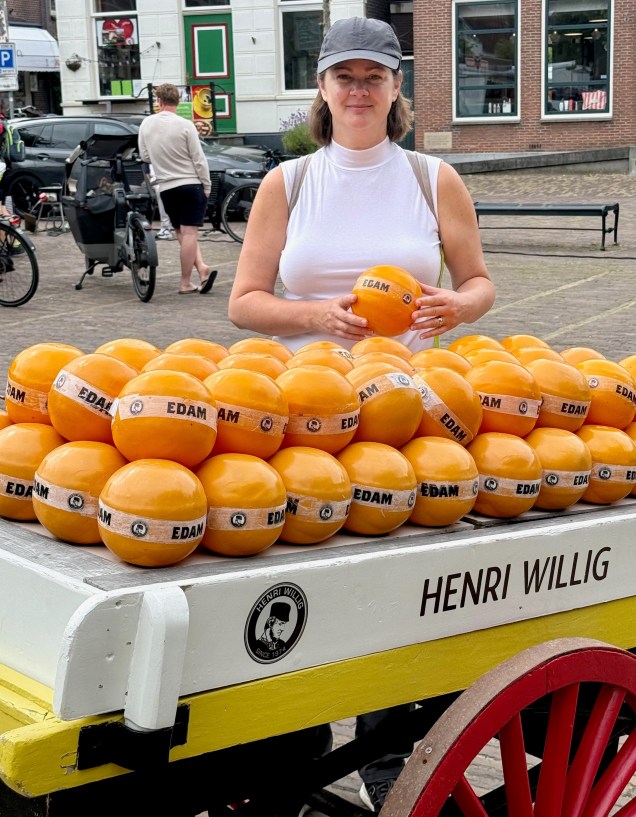
Trying to calculate how much cheese I can fit into my carry on

Not a moment too soon, as a heat wave was about to engulf Europe, it was time to head home and check on our parents, siblings, and friends. Still a month to go on summer break for me, so July is sure to bring some fun trips as well. Be sure to check back soon!

Courthouses of Texas

A year into the pandemic, I started itching to get traveling again, but it wasn’t considered safe yet, and many of the destinations we wanted to go to weren’t feasible. We decided to spend my Spring Break visiting a couple of the state parks near us, and enjoy some time outdoors. We found ourselves up in Hood County, Texas, enjoying the lake and the quaint downtown. I snapped a picture of the historic old courthouse in the town square. I didn’t know it then, but a four-year quest had just begun.

The Hood County Courthouse in Granbury. I always see a kind of turtle-monster peering over the top of the building. I can’t un-see it.

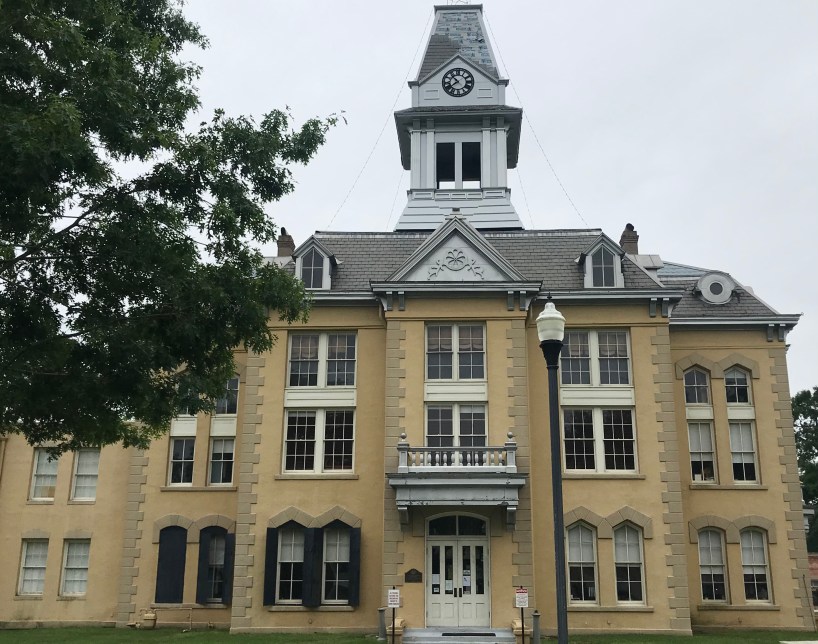
A couple of days later, we had lunch with a friend in Weatherford. “Let’s stop by their courthouse, it’s such a pretty one” I said. We drove over, parked, and I took a picture. At the time I had no intention of going to every county courthouse in the state. I just took a picture because we happened to be there.

The Parker County Courthouse, in Weatherford, which I happen to think is one of the prettiest in the state, was built in 1886

On the way home from our state park vacation, we passed through Hillsboro and Waco. It was only a short detour off the highway to see their courthouses, plus I thought it would be nice to get an ice cream or a coffee at a cute little town square shop. We took some pictures and headed home. The next weekend, we visited a couple of the counties near Austin, where we were currently living. It was nice getting out of town and going for a short drive, when so much of the usual entertainment venues of our state were still closed.

That summer, Chris hiked the Pacific Crest Trail, and I forgot all about my courthouses for a while. But in the fall, I started thinking about them again. I thought about how I would love to show my husband, who was not a Texan, all the beautiful corners of my home state. There were probably parts of the state even I had never been to- Texas is, after all, a very big state, bigger than France or Germany in Europe, and bigger than the northeast US states combined. We used some of our fall weekends to take long drives to the piney woods of east Texas, and down to the Gulf coast of south Texas. We’d start out on a Saturday, visit two or three courthouses, stopping for coffee or ice cream, and then another one or two courthouses, and look for a local spot to eat dinner. We’d stay the night, and then pick another four or five counties to visit on the way home. It was fun to look at the different styles of courthouses, and guess which decade and which century they’d been built in.

Once I looked it up and realized that Texas has 254 county seats, each with its own county courthouse, we realized we had to get strategic with our drives. We started plotting out on the map the most efficient route to take in 8-9 courthouses in a weekend. We didn’t want to do more than that, because after a while they all start to blur together and the project would become less enjoyable. Our main goal was to see and enjoy our beautiful state. We made time for stays at nearby state parks, short hikes, and local restaurants. We took back roads and stayed at family-owned motels. We visited as many Texas Monthly BBQ Award winners as we could. We learned that “courthouse tourism” is a thing- many small, dying towns have started revitalizing their town squares with weekend farmers’ markets, movies on the lawn, food fairs, and holiday light shows. As people moved out of dense urban centers during the pandemic, many of them looked to smaller counties in Texas to move to- counties like Bastrop, near Austin, saw huge growth when the Tesla Gigafactory was built in Del Valle. We started to see pop up weekend boutiques selling chic Texas styles, and more and more Airbnbs for people who wanted to get out of the city for a night or two.

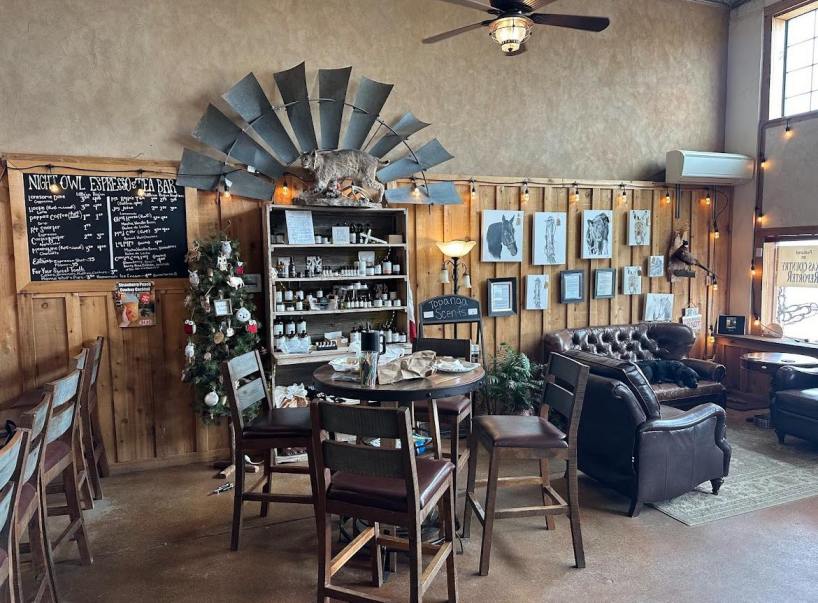
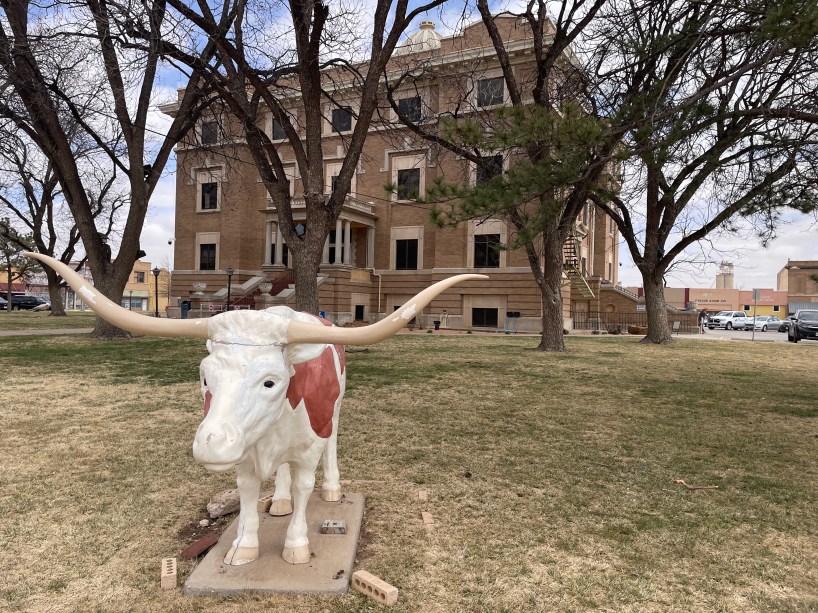
As 2022 turned into 2023, we continued visiting courthouses when we could, but the world was opening up and we wanted to travel abroad as well. We put our project on hold and went to South America for a year. But when we returned, we plotted out another drive across our state to nab some more courthouses. We drove through Littlefield, Texas, and met Waylon Jennings’ brother James, who owns a small liquor store and memorabilia museum dedicated to his brother and friends such as Buddy Holly, Johnny Cash, and Shooter Jennings. We learned why several courthouses up in the plains area have Comanche Trail arrows displayed, a project created by artist Charles A Smith. And in Silverton, we met Rowdy, the county’s only blind barista, and his guide dog Trevor. Even in the midst of a contentious election season. we enjoyed chatting with Texans of all stripes as we visited county seats and their lovely courthouses.

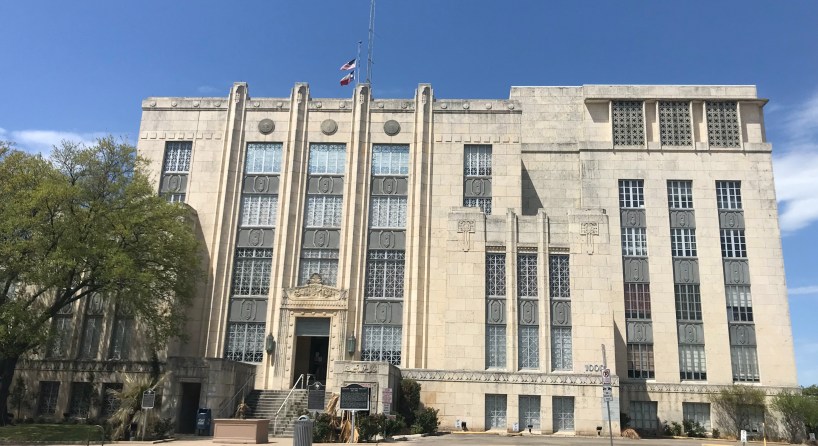
After four years to the day, I can say I have now been to every corner of my state. We visited our last courthouse over my Spring Break in March of 2025. From the windy llano estacado of the panhandle, to the bayous of east Texas, down to the coastal waters, the Mexico border towns, the rolling hills of central Texas, and the dry desert west, this state has so many interesting places. We boast 89 beautiful state parks (hmmm maybe another project in the making) as well as 14 national sites, including Big Bend National Park and Guadalupe Mountains National Park. Of course you can spend an entire weekend in just San Antonio alone, enjoying the River Walk and learning abut the Alamo, seeing the Bear County Courthouse, or getting out to tiny Helotes to see a show at the John T Floore’s Country Store. Fort Worth has a beautiful courthouse, built in 1895, but while you’re there, be sure to get out to the Trinity River Trails, or the Stockyards, or see who’s playing at Billy Bob’s Texas. And of course you can look for the “Marfa” lights, or just stargaze at Big Bend, one of the International Dark Sky Parks, and even take a very short boat ride to Mexico after you’ve visited the courthouse. In all honesty, you can visit the 254 Texas county courthouses in just a few weeks- or you can visit them one at a time, and take in all the diversity of this state. If you’re interested in hearing more about some of my favorite parts, leave me a comment below!
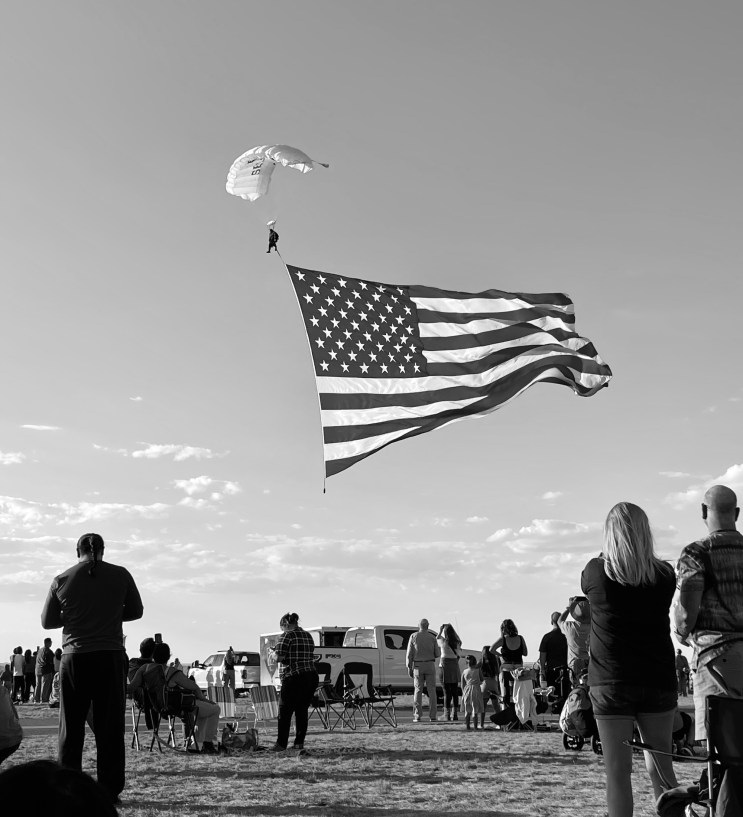
Hale County Courthouse, Plainview Texas, built in 1910- turned out to be our last one

Interview with Chris: Diving and Thriving in the Pacific Islands

Our fearless traveler Chris is often again, wending his way through the last four independent island nations in the north Pacific Ocean. He visited Chuuk, Micronesia, then Palau, East Timor, and the Solomon Islands. Here’s what he had to say about his adventure.

Q: Once again, you ventured off without your wife (me). Why did you travel solo this time?

Deah recently went back to work, and it’s hard to get enough time off to get all the way out to the Pacific islands and back. We talked about going together in the summer months, when she has more time off, but there were other places higher on her bucket list. Plus, visiting these island nations involves a LOT of flight time, which isn’t her favorite thing. So it worked out better for me to go by myself. I promised to be home for her Spring Break so we could go somewhere on her list.

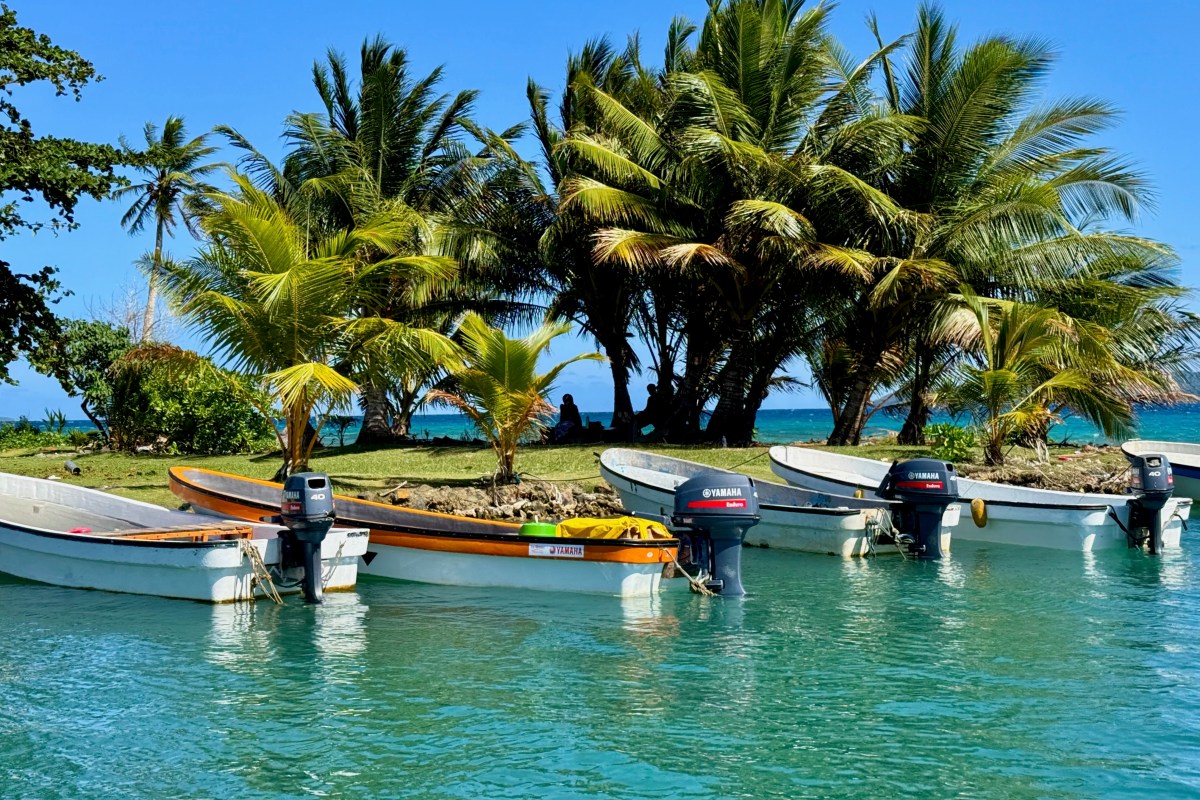
Staying in Chuuk

Q: I know you enjoy scuba diving. Where all did you scuba dive on this trip, and what did you see?

I went diving in Chuuk, Palau, and East Timor, and snorkeled in Guadalcanal, Solomon Islands. This time I brought a Go-Pro with me, because I’d been wanting to shoot some underwater videos. I did a lot of wreck diving, to see some Japanese ships from World War 2. My favorite diving excursion was to see the manta rays in Palau, with Blue Marlin Diving Company.

Diving with the Manta Rays in Palau

Q: I know it takes a lot of flights to get to these islands. How many flights did you have to take for this trip?

13 flights in total. We had accrued points with both American and United, so we were able to use those points rather than dollars for several flights. From Texas to Hawaii, then I hopped on the United Island Hopper to get to Chuuk and to Palau. I also had to overnight in Manila, Bali, and Darwin in order to get to the rest of my destinations. All in all, it was a lot of flying time. It’s hard to get all the Pacific Islands in one trip due to the many flights.

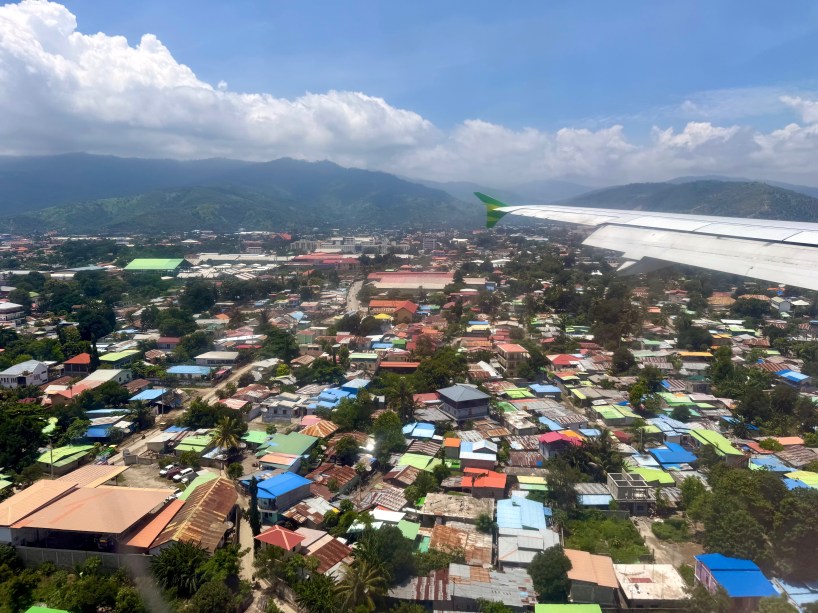
Flying into Dili, East Timor

Q: What kind of food did you eat on this trip? Anything you really liked?

The islands tend to have a lot of starches like ramen noodles, rice, fewer fresh vegetables, and canned meats. I liked the Japanese and the Philippino breakfast menus, as they had fresh options. In East Timor I really liked the fish grilled in banana leaves.

Q: How would you rate the friendliness level of the islanders? What kinds other travelers did you meet there?

Polynesian people, in my travels, have always been welcoming and friendly, open to questions, and easy to get along with. Many of the other travelers I met were NGO-types doing sports diplomacy, health directives, and UN workers, and Japanese tourists. A lot of the people I met at my hotels or in airports were people trying to get to the end of their countries list, like me.

Some local kids playing on the beach in East Timor

Q: So the conclusion of this trip brings you to how many countries left that you’d like to visit?

I have fifteen left on my United Nations list. Some are active war zones, while others are difficult to get a visa to, especially now that there’s a list of 44 countries that have travel restrictions to the United States. It’s likely those countries will make it harder for Americans to visit them as well.

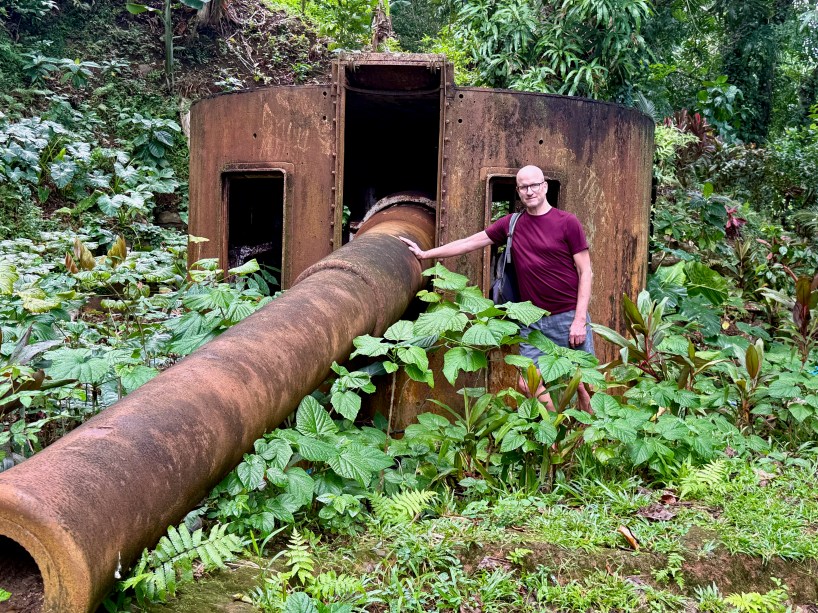
Chris at Chuuk, visiting a Japanese gun emplacement from World War 2

Taxco, the silver capital of Mexico

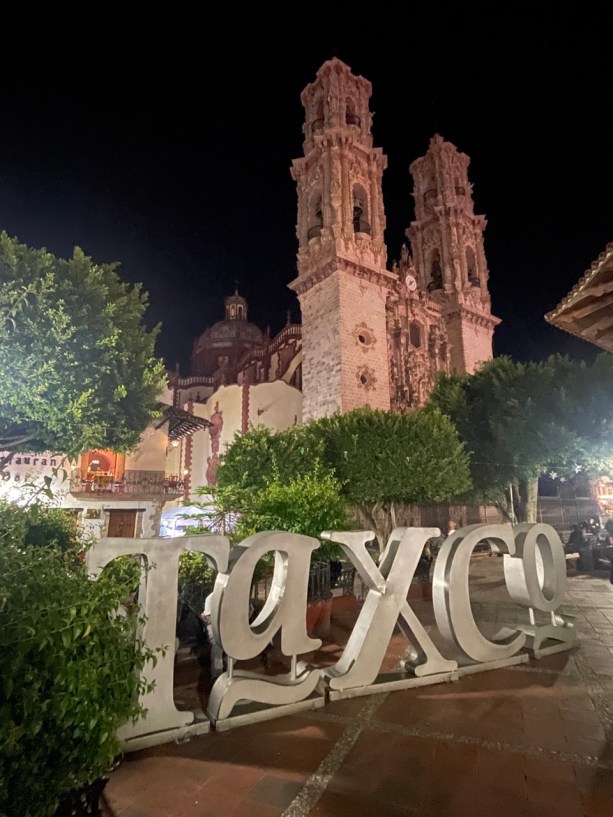
Taxco Mexico main church

November is such a nice time of year to visit Mexico- beautiful weather, low crowds- so this year we decided to spend Thanksgiving break in Taxco, one of Mexico’s “Pueblo Magicos”, or Magic Towns. These charming small cities feature walkable city centers, historic churches and plazas, and plenty of delicious options to eat and drink.

Arriving at the Mexico City airport, there’s three easy ways to get to downtown, or to any of the main bus stations. You can hop in a taxi, take the Metrobus, or walk all the way down to Door One and access the subway. For 15 pesos (75¢ US) you can buy a metro card, and then each ride is 5 pesos (25¢). Two people can share one metro card. We transferred to the blue line’s last stop, the Tasqueño bus terminal. It’s a very nice, very modern bus terminal, and we found busses departing for Tasco every 90 minutes. 554 pesos later (approx $25 USD), we had two bus tickets on Costa Lines and were on our way.

We arrived in Taxco two and a half hours later and walked from the central bus station to our hotel, the Posada de San Javier ($65 per night for a king suite, with breakfast). The city of Taxco trails down the side of a mountain, so it doesn’t matter where you stay- everywhere you go is going to be a short but steep climb from your hotel or restaurant or the main zocalo. Just take it slow and steady, or hop in one of the ubiquitous VW taxis that constantly circle the plazas.

The stunning main feature of Taxco is the twin-spired baroque Church of Santa Pisca, built from 1751-1759. Everything else in the historic city can be found in relation to the church. Wanting to really relax on our trip, we spent four days in town and found ourselves lounging on rooftop terraces, enjoying coffees and chilaquiles in the mornings or hot chocolates and churros in the evenings. We spotted a few other gringo tourists in town, but the majority seemed to be visitors from other parts of Mexico or Latin America. Taxco feels safe, is easy to walk around, and has options to fit any budget.

The main plaza, or zocalo

Our favorite activities in Taxco:

  1. Take the cable car up to the Hotel Montetaxco and enjoy the view from their mirador, while sipping a juice cocktail. It costs 9 pesos to hop in a collectivo (combi) to reach the base of the teleferico. Round trip tickets on the cable car are 120 pesos, or you can take the cable car up and walk down.
  2. Visit the Pre-Historic Mine, located underneath the Hotel Posada de la Mision. Tickets are 180 pesos and come with a mezcal cocktail afterwards at the hotel bar. The tour is in Spanish but the guide translates parts of it.
  3. Visit the silversmith shops or workshops, pretty much all over the city. Look for the .925 or .950 stamp if you’re looking to buy, or just enjoy watching the sheer talent of the artisan workers.
  4. Eat pozole at any number of pozolerias (Tia Calle was very inexpensive, if not very atmospheric).
  5. Try the region’s pink rosa mole dish, made with rose petals and white chocolate. We enjoyed the dish at La Parroquia, which features balconies and a terrace overlooking the main zocalo. A perfect al fresco dinner spot.
  6. Plenty of places offer chocolate and churros, but we liked Chu Cho, nestled in Plazuela de Bernal, for their wide variety of toppings (try the marzipan!).
  7. Visit the Pozas Azules (blue swimming holes). You can take a full-day guided tour from one of the tour operators in town, or just walk to the main road and grab a combi heading out of town toward Acapulco (the stop is in front of the Coppell building). The combi costs 35 pesos, and entrance to the pools is 100 pesos.
  8. Tour the Spratling Pre-Hispaña Museum. Spratling put Taxco on the map in 1929 and made sure its pre-Hispanic culture would be preserved. This museum features his private collection of artifacts. Worth a visit, and only 75 pesos per person.
  9. For another beautiful view of the town, visit the Cristo Rey statue above the main plaza. It takes about 45 minutes to walk up there, or take a taxi for 80 pesos.
  10. Eat as much ice cream as possible. We liked the Crema y Nata Heladeria, tucked into the bend right at Plaza Del Convento. Delicious!

Have you been to Taxco, or another of the Pueblos Magicos in Mexico? What was your favorite part?

Albuquerque Balloon Fiesta 

After wanting to go for several years, we finally made the time to go to Albuquerque, New Mexico for their annual balloon fiesta. And wow, am I glad we did!

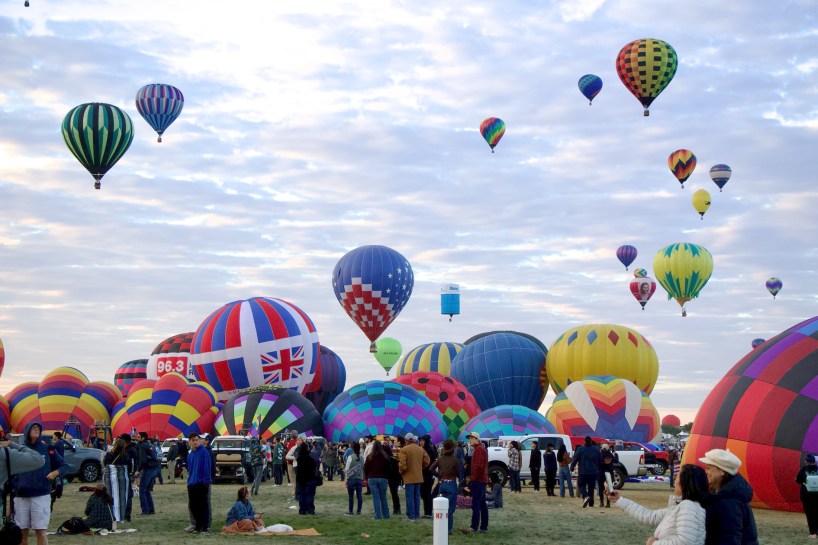
The balloon fiesta is now in its 52nd year, with over 700 balloon pilots and their teams working hard every day for two weeks to launch their balloons every morning, and provide other fun activities in the evenings, such as a “glow”, a drone show, concerts, indigenous dancing, and skydiving.

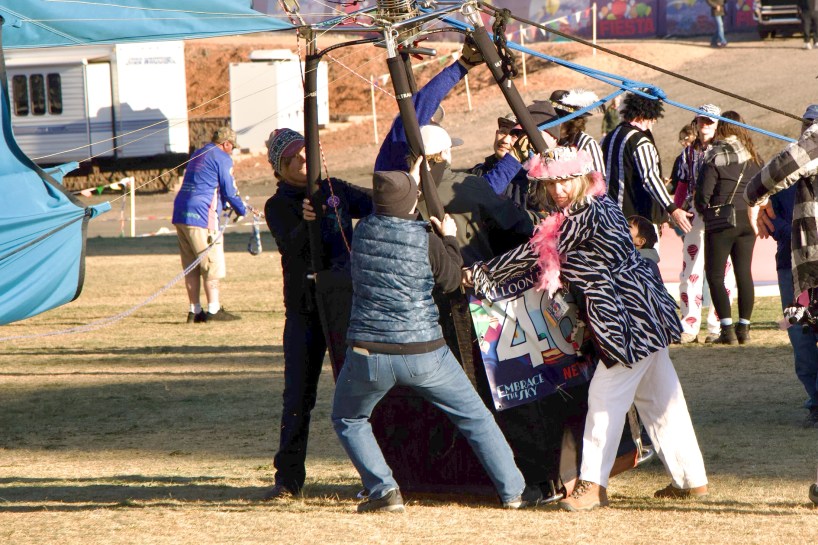
We stayed with friends of ours who live in the area, and one of them is a “zebra”, or Launch Director, for the fiesta. They are called zebras because they wear black and white only, so they can be seen on the fields as they direct the launch of multiple balloons near them during the daily Mass Ascension.

A zebra in action, helping to launch a balloon

Because balloons most frequently launch at sunrise, we had to get up very early in order to get to the festival and be in place in time for sunrise. By 5 AM, thousands of visitors were arriving at the balloon fiesta complex, getting ready for the 7 AM sunrise. We had backstage passes from our friend, so we were able to access the breakfast provided to the pilot and their teams, as well as warm up a bit in the facilities. It’s very cold in the morning before the sun comes up. Be sure to dress in layers, and even bring a blanket to wrap up in. The city of Albuquerque is at quite a high elevation, in the mornings and evenings can get very cool.

I would recommend purchasing tickets to both a morning event and an evening event, and possible a third morning or evening as back up. The tickets are fairly inexpensive at $15 for general admission, and kids 12 and under are free. Each year, one day of the festival is free for New Mexico residents. Visitors can pay for parking at the balloon complex, or can purchase Park and Ride tickets and board a bus at the nearby mall or churches.

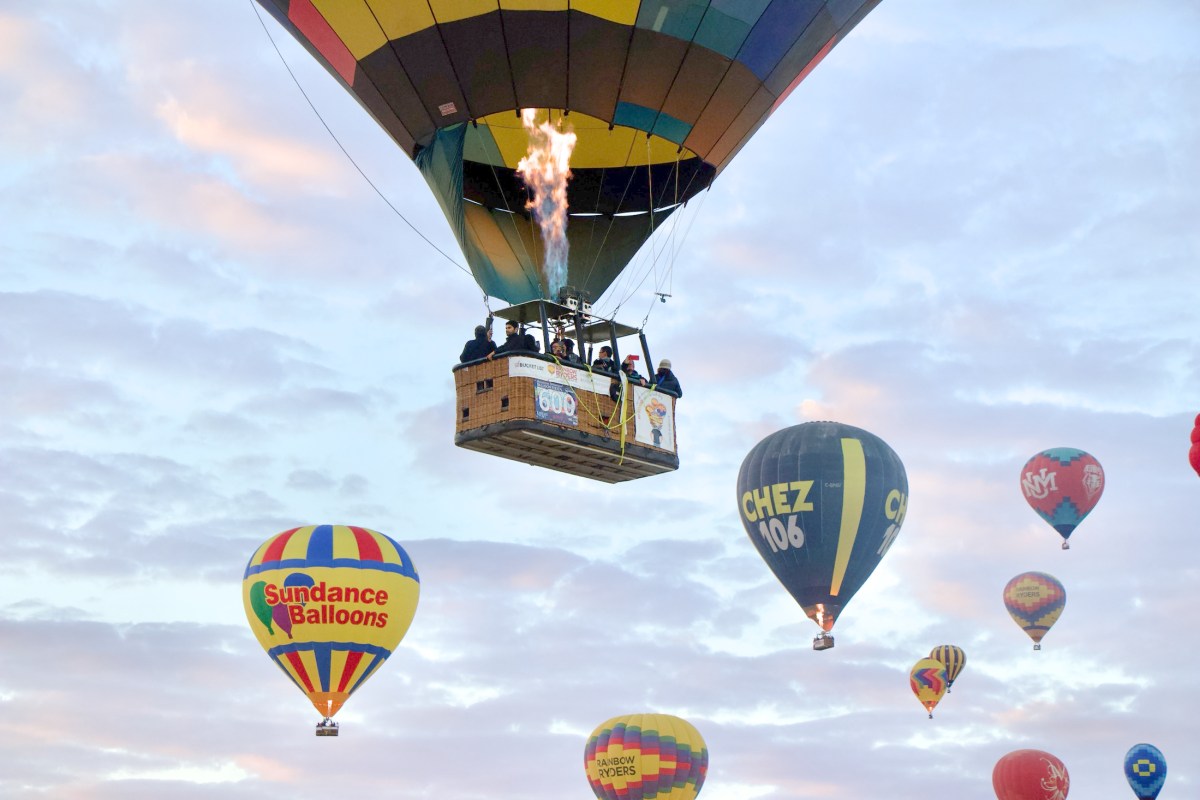
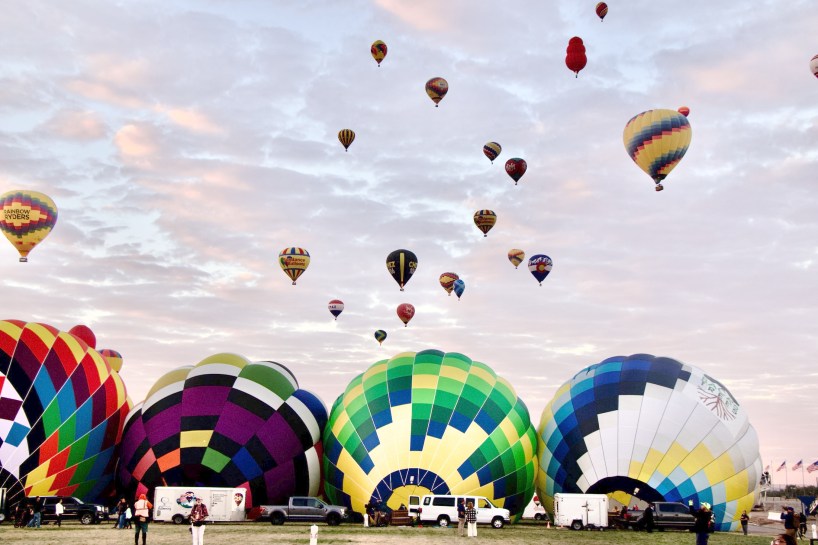
A wave of balloons get “fanned” with cold hair, before using hot propane gas to “stand up” and then launch

Have you been to a huge balloon festival? If you haven’t, I definitely recommend the one in Albuquerque! Now in it’s 52nd year, it is a classic.