Beat the Heat with These Northern National Parks

Isle Royale National Park

Even though I’m from Texas, I try everything I can to get out of the insane southern heat each year. Last summer we visited Maine, Newfoundland, and Labrador. This year we decided to head to some of the US national parks up north in an attempt to find cooler temps.

Time to head north

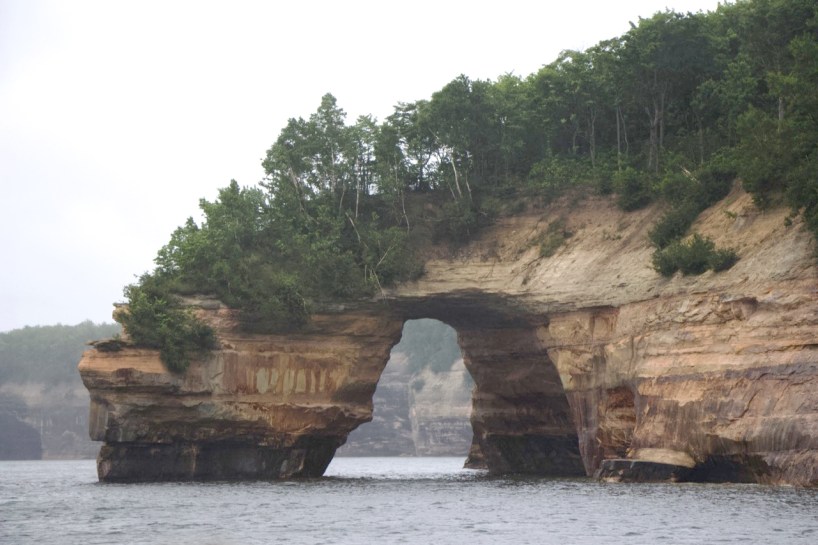
As we crossed the Mackinac Bridge into Michigan’s Upper Peninsula, we felt the cool breeze coming off the Great Lakes, and knew we had arrived in “the north”. If you’ve never been to the UP, I highly suggest you take a few extra days and visit Pictured Rocks National Lakeshore, as well as the Great Lakes Shipwreck Museum. Those are two of my favorite tourist attractions up that way, and definitely worth a visit.

Pictured Rocks National Lakeshore- do yourself a favor and do the boat ride!

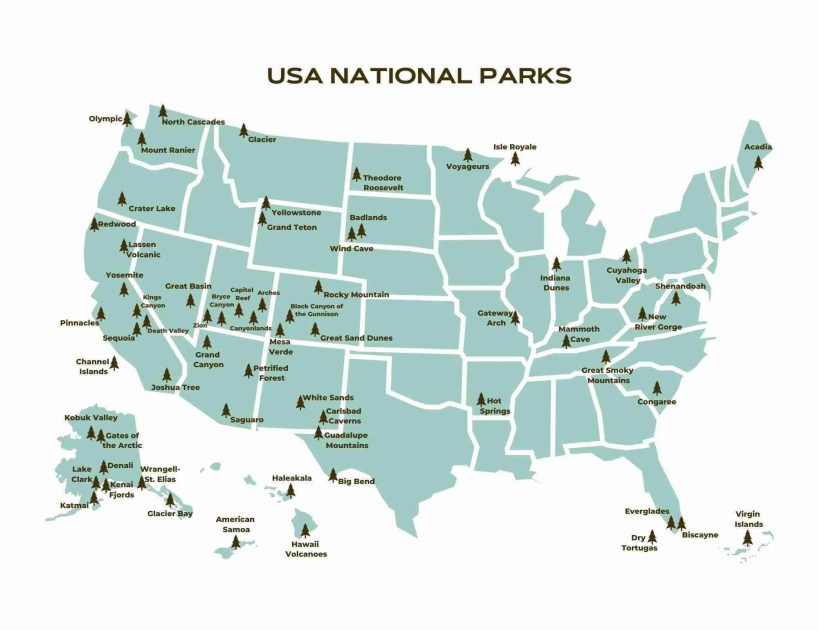
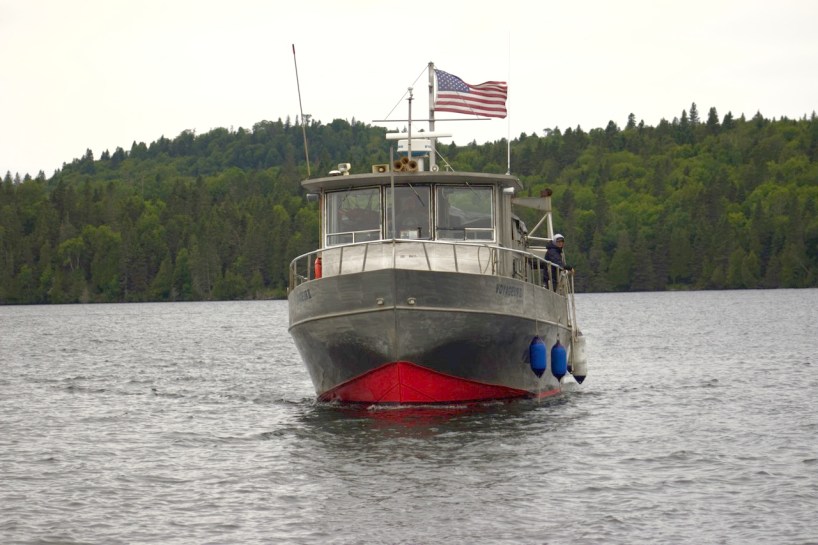
The first park on our list was Isle Royale National Park– the least visited park in the continental US. As it is an island, you can only access Isle Royale from upper Michigan (from Houghton, by boat, or Copper Harbor, by boat or sea plane), or from upper Minnesota (from Grand Marais by seaplane, or Grand Portage, by boat). Whichever mode of transport you choose, make sure to book well in advance (at least a month), and be forewarned that although it’s a national park, the transport is private, and quite costly. Of course, bring your national parks pass if you have one for free entry, and our camping on the island was free as well.

Established as a national park in 1931 by Herbert Hoover, this gem is only accessible by boat or seaplane

From Pictured Rocks, we drove to Grand Portage, Minnesota, and took a 7:30 am ferry (stay at the nearby Grand Portage Lodge and Casino for an easy morning). By 9:30, we were getting dropped off at the island’s Windigo visitor center, and walked to the nearby Cottonwood Campground with our camping gear. It’s only 1/4 of a mile away, so you won’t have to lug your stuff too far. There are potable water spigots at the campgrounds, so don’t worry about extra water for all your days in the park. We lucked out and were able to get a small camping shelter rather than a tent site, which was nice, because Isle Royale is often rainy (and putting up or taking down a tent in the rain is no fun).

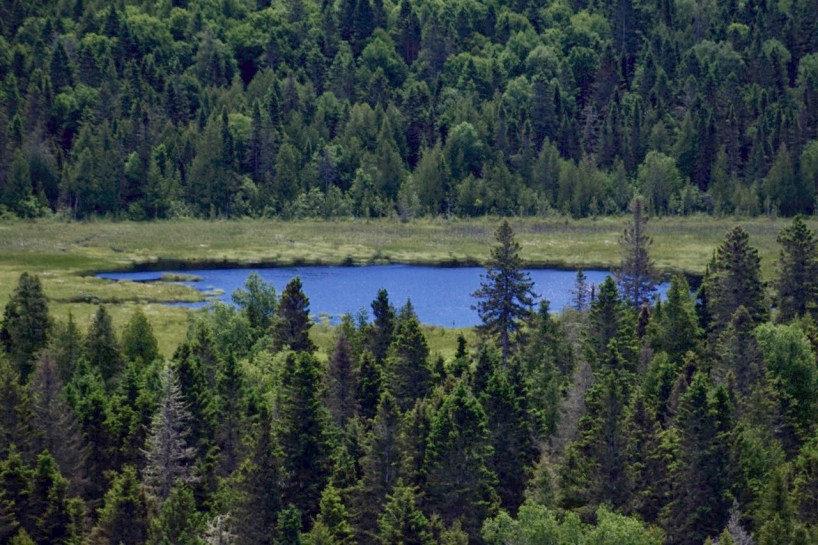
Feldtmann Lake Overlook hike, about six miles, definitely worth it

In our time on the island, we hiked, explored the Visitor Center, checked out the small store (they do have food there, including hot breakfast sandwiches, so you can supplement the camping food you need to bring), hiked some more, and looked for wildlife. Isle Royale has both moose and wolves, so visitors like to keep a sharp eye out. The Windigo side of the island only gets about 50 visitors a day, so it won’t take long to get to know your fellow campers and hikers and find out where they’ve spotted some wildlife.

We spotted four moose while we were on Isle Royale. They can be unpredictable, so keep your distance, and keep a tree between you and them (we have a good telephoto lens)

In addition to Windigo, you can visit the other end of the island, Rock Harbor. You can take a boat there (from Windigo or from the mainland), or you can do a multi-day hike of the 45 mile stretch. Rock Harbor also features a nice lodge and restaurant.

Boardwalks, bridges, and hiking trails connect various campgrounds on the island

Even in July, the temperatures on Isle Royale ranged from pleasantly sunny and warm low 70s, down to cool and rainy 45 at night. Bring lots of layers, bug spray, and waterproof bags. We had a spectacular sunny day, cool night, and rainy morning while we were there.

After ferrying back to Minnesota, we were only a few miles from the Canadian border. Just after crossing over we saw a wolf! Canada has the best wildlife!

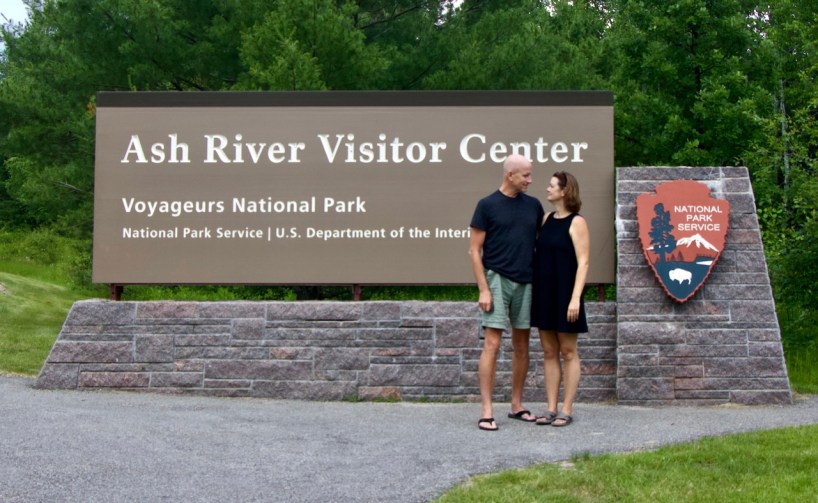
Voyageurs National Park is only 4-5 hours west of Isle Royale, so we drove the Canadian route to get there, stopping at Thunder Bay and Kakabeka Falls along the way. I always love taking Canadian roads because of their beautiful scenery, and lack of advertising billboards. We spent a lovely evening at the Bay View Motel in Fort Frances, next to the delicious Harbourage Restaurant. At International Falls, we crossed back over to the US, and visited the Rainy Lake Visitor Center and then the Ash River Visitor Center.
Our 51st National Park together!

Spread across 210,000 acres, the star feature of Voyageurs National Park is the lakes, rivers, and inlets, so I’d highly recommend booking a NPS boat tour in advance, renting a kayak or canoe, or even staying on a houseboat nearby. There are also plenty of hiking trails and wildlife to view from land or from water, including beaver, otter, moose, and bears.

We actually saw this handsome fella about an hour after we left the park

Similar to Isle Royale, this northern national park features excellent weather in the summer. Temps while we were there ranged between 77 and sunny, down to about 60 during a rainstorm. Voyageurs does tend to be very buggy, so long pants, bug spray, and even a net hat might be a good investment if you plan to spend a few days here.

Bring your rain jacket too!

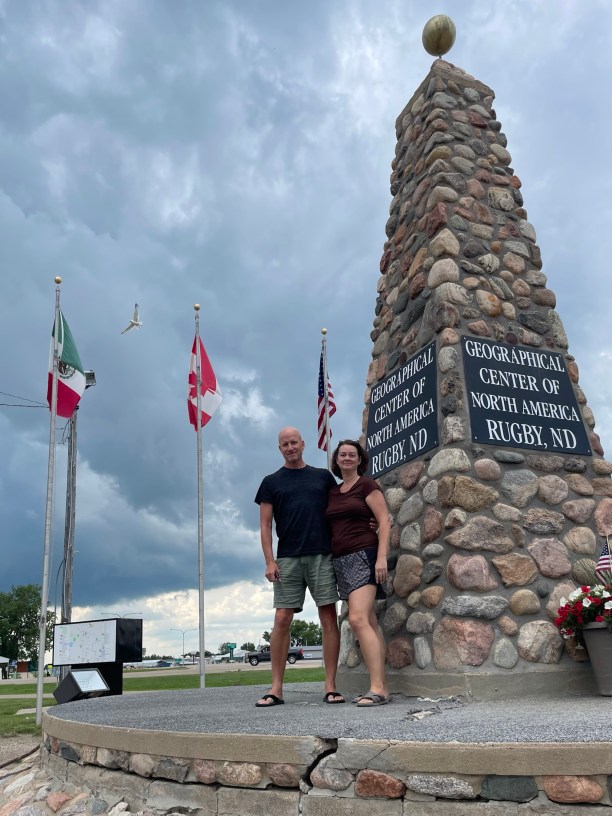
After Voyageurs, we had one more northern park on our list that we had not done yet. We passed into North Dakota, and after stopping at the Geographical Center of North America, we arrived at Theodore Roosevelt National Park.

We are soooo centered

Theodore Roosevelt National Park is spread across three distinct “units” (north, south, and Elkhorn, linked by the Little Missouri River), and we visited two. This park is 70,000 acres, and was designated a National Park in 1978- the only one named after a person! Roosevelt built a cabin at Elkhorn and lived there for several years, studying ranching, hunting, and conservation, before he became president in 1901.

Similar to the Badlands of the Dakotas, the rock formations here are shaped by erosion

The park has a semi-arid climate and features pronghorn, mustangs, elk, bison, bighorn sheep, prairie dogs, coyotes, cougars, and more. We almost crested 80 degrees while we were there, but some late afternoon cloud coverage kept us in the upper 70’s. Since it was 101 back home with a hurricane bearing down on our state, we were happy with 79 degrees and a light rain shower!

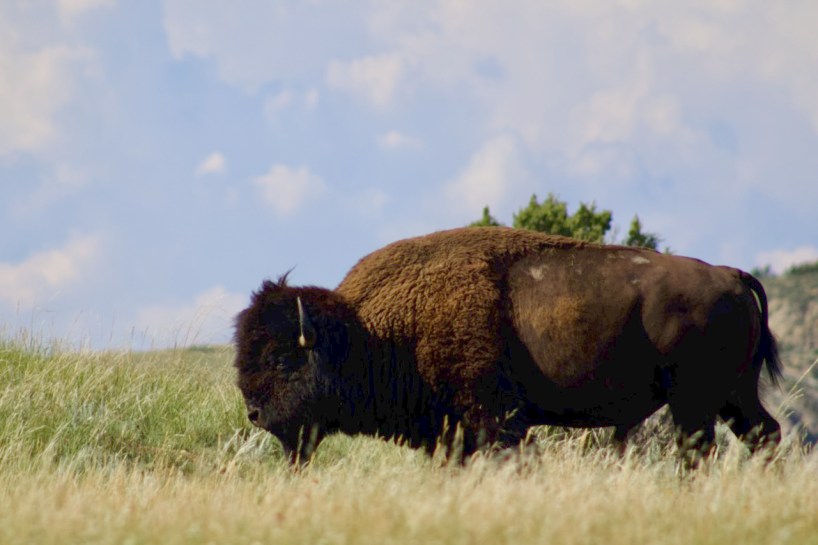
Wild buffalo roam the prairie in the park
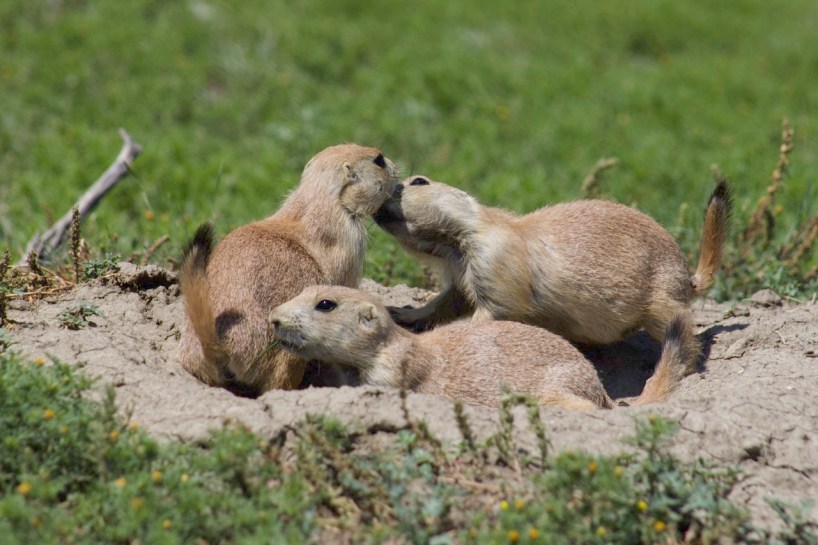
You can visit several prairie dog towns and watch these cute critters at play!

Formed by layers of ash from volcanoes 65 million years ago, layered with sediment brought by wind, water, and freezing, the hills of the badlands can present really interesting striped colors and formations. Lazy rivers that have formed oxbow lakes meander along the prairie as well, growing rings of cottonwood trees along their banks. Fossils from a long-ago swamp in this area have revealed large clams, crocodiles, alligators, turtles, and champsosaurs.

Oxbow overlook

Exploring our national parks is a fun pastime for us. We love getting out in nature, taking a hike, watching for wildlife. Learning about the history and geography of each area is fascinating too. Each park has its own unique setting to enjoy and partake in. Which national parks have you visited? What was your favorite? Leave us a comment.

Interested in this kind of content? Hit the subscribe button!

Hiking the Continental Divide Trail (New Mexico)

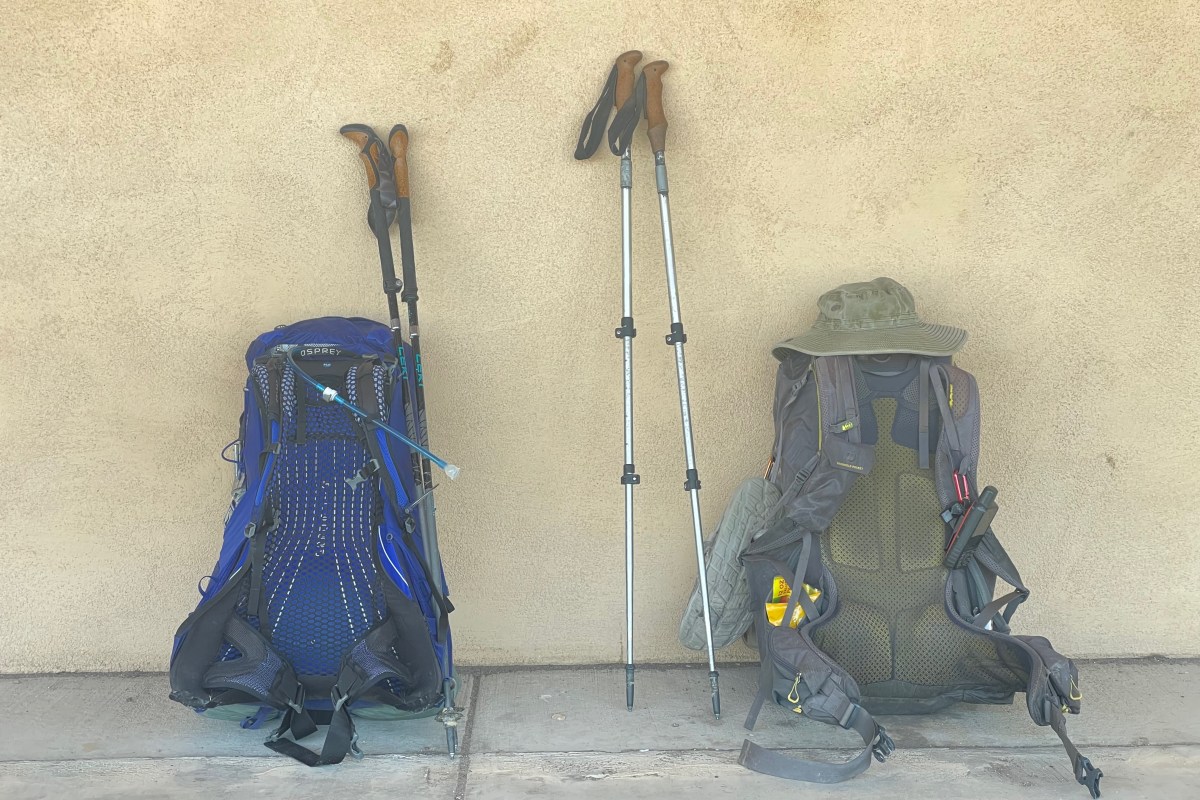
This past month, one half of the Palm Tree Musings duo started a section hike of the Continental Divide Trail. Having previously completed a through-hike of both the Appalachian Trail and the Pacific Crest Trail, Chris decided to try a section hike for this next adventure. Here’s the particulars of the first 400 miles, all of which are in the New Mexico section of the 3200 total miles of the trail, which spans five states.

Getting Started

Chris started his hike at the Mexico/New Mexico border near Hachita on April 23. To get there, he took a Greyhound Bus to Lordsburg, New Mexico, and then arranged for a hiker shuttle to the starting monument, as well as a couple of water caches in the desert. Over the next week, he and his hiking partner Piñata hiked across flat desert and arid mountains to get back to Lordsburg, where I met them for a day or two of rest and relaxation in Silver City.

Long Haul and Piñata, at the start of their hike
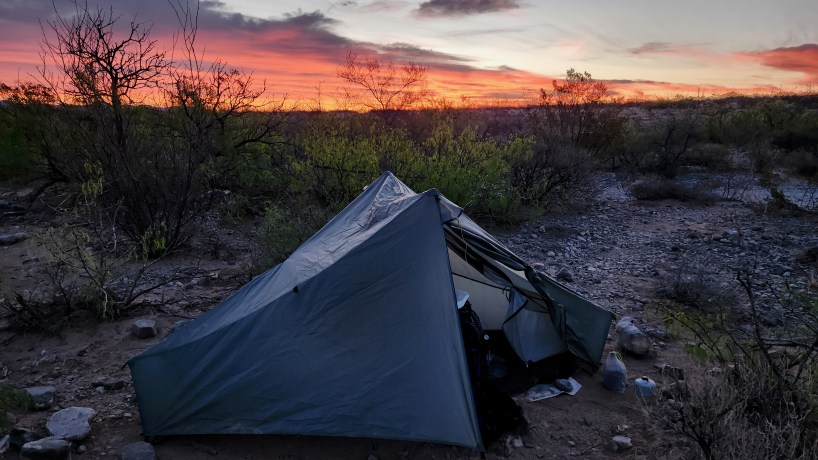
Chris’s new ultra-light tent
Some parts of the trail are paved, some are dirt roads, and some are barely-there paths through the mountains

The Trail Town of Silver City

Silver City is a fun trail town to visit and take a zero day (Lordsburg is not). The main street of town features a dozen or so restaurants and bars, as well as a grocery, a small museum, several vintage thrift shops, and other fun things to explore. There are several motels, Airbnbs, and hostels in town, and pretty much any day in April or May you’ll see other hikers in town resting up. Silver City Post Office and Urgent Care Clinic are easily accessible and had great customer service (we visited both). The three of us enjoyed our Airbnb, trivia night at the Little Toad Creek Brewery, and a visit to the nearby Gila Cliffs National Monument. It was a welcome rest from the trail, as well as our anniversary (the third we’ve spent on a long distance hike) and then the hikers were off again, heading north.

Meeting my hikers just outside of Lordsburg
An afternoon at the Gila Cliffs National Monument
Resupplying from the grocery store and loading up for the next stretch

Silver City to Grant’s Pass

Sufficiently rested up, Long Haul and Piñata continued their hike, which they were planning to end around Albuquerque. They hiked through the Gila National Forest, crossing the Gila River dozens of times. Near the Cliffs National Monument, they rested a day at Doc Campbell’s Post, a hiker-friendly respite near some hot springs. From there they continued north, sleeping on the trail and hiking 20-25 mile days. The weather was getting warmer, and they often started at 6 am, stopping in the afternoon under a tree for a siesta in the hottest part of the day, then continuing for some more miles in the evening. Chris and Piñata stopped for a night in Reserve, and were able to get a shower and a rest at The Frisco Lodging and RV Park. Refreshed, they got back on the trail, but were met with some rain and even some hail near Alegres Mountain. Happily, they found a hiker’s lean-to nearby, and were able to shelter out of the weather. They dried out at the Toaster Hostel in Pie Town (which does, in fact, have two places to get pie), and then pushed on for their last leg of this section. They arrived in Grant, New Mexico, on May 19, 27 days after they started their hike. From there, a quick bus ride to Albuquerque, and they were back to civilization, no longer hikers, and ready to start planning their next section hike. Stay tuned for more information on that!

Crossing the Gila River
Any shelter will help when a storm rolls in
Official end point to this section of their hike

Have you hiked the Continental Divide Trail? Drop your best trail hints below.

Do You Need a Car to Visit Hawaii? Here’s how we saved $1100

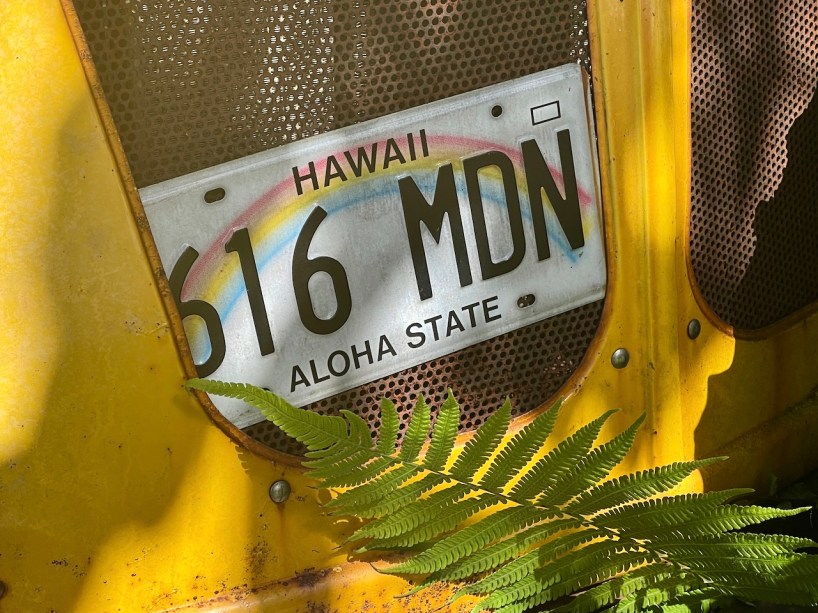
Hawaii Road to Hana license plate

When we started planning a visit to Hawaii, I knew it was going to be pricey. But it was my 50th state, and we wanted to do it up big. While I was booking our hotels and flights in and out of two islands, I questioned whether we needed to rent a car. I checked a few rental prices, but at an average cost of $140 a day for 10 days it was really going to add up. Instead I used a few savvy traveler tips and saved us over $1100.

No car? No problem

1. Walk away from the airport

When we arrived in Kona, on the Big Island, we checked to see how much an Uber to our guesthouse would be. It was only 4 miles away, but the price of the ride was $40. I didn’t want to walk all the way, because it was up in the hills, but after being on a plane for seven hours, I was ready to stretch my legs. We strapped on our backpacks (we always travel light) and we walked about 1 mile from the terminal until we were off the airport grounds. At that point we checked the Uber app and at only $16 we were ready to hop in. Obviously this tip won’t work in busy airports like DFW or LaGuardia, but you can try it at airports that are more walkable, or that have metros to leave the airport grounds.

Airport Ubers, Lyfts, and taxis often add an airport tax, so avoid that by leaving the airport grounds if it’s safe to do so

2. Take the public bus

As of February 2024, the public buses on both the Big Island and Maui are free. I don’t know about the other islands, because I did not visit them on this trip. We were able to pick up a public bus going from Kona to Hilo, very close to our accommodations. It was a beautiful ride across the island, meandering in and out of quaint little towns, along the seashore and over the mountains. We enjoyed our “tour” of the island, and saved ourselves the price of a rental car, or a shuttle from Kona to Hilo. Normally the Hawaii buses are $1-2, depending on your age. Not bad!

This bus on Maui took us from Ka’anapali back to the airport in about an hour- free!

3. Check the website of your destination attraction

When we are visiting an attraction that is a bit outside of town, I often check their website to see if they mention if they are on a public bus route, or a metro or subway. We knew we wanted to visit Haleakala National Park and since we didn’t have a car, I wasn’t sure how we were going to get there. When I checked the National Park website, I noticed that the Big Island public bus goes straight to the Visitor Center. While the bus is free, getting into the national park does cost $15. The bus driver will stop at the front gates so that you can pay. If you have a US national parks pass, you can use it at the ones in Hawaii so make sure you bring it along on your trip. There were four buses a day that dropped off at the national park, so you could return in the same day or like us, spend the night in the park itself.

I love national parks that are in public bus routes!

4. Rent a car with Turo

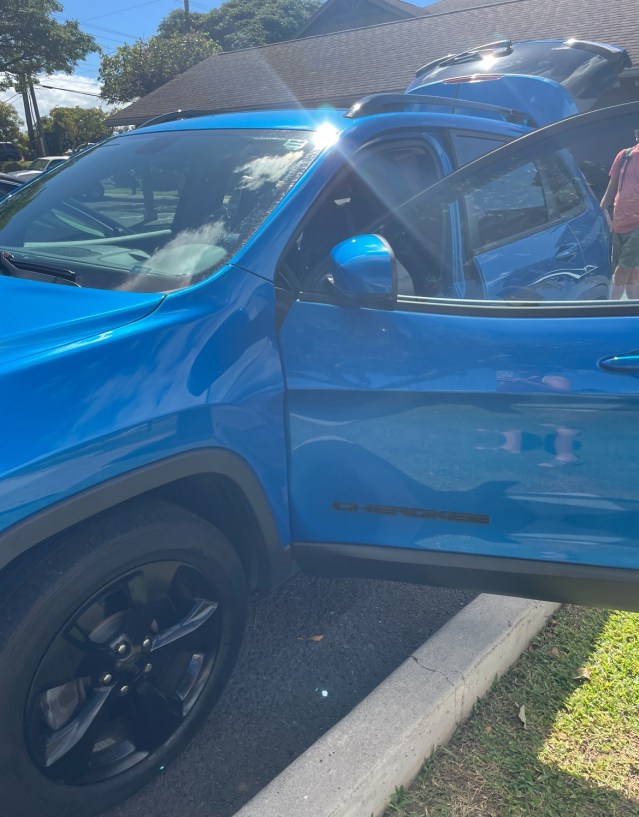
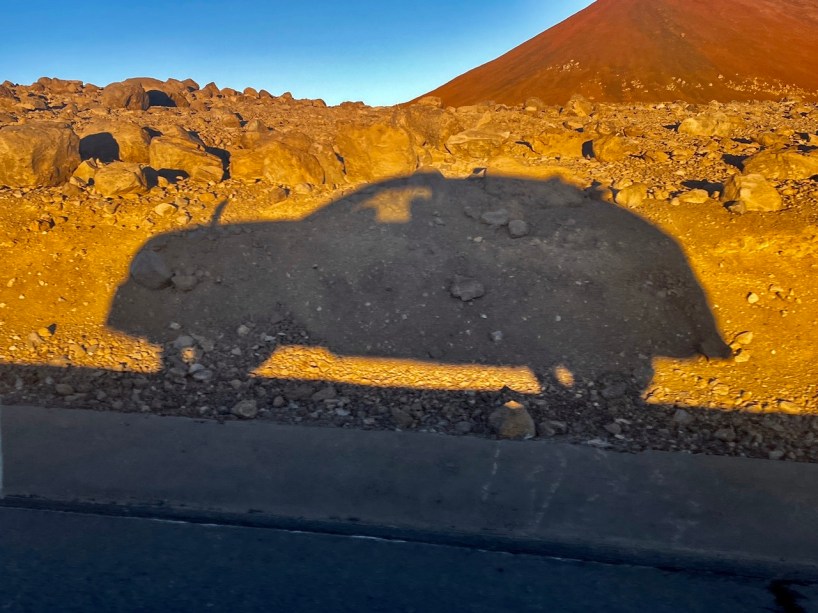
I wanted to do two other things that were not on a public bus route. But I still wasn’t willing to pay $140 to rent a car for one day. So I checked on the Turo app, and found a car near our hotel for just $56 a day. Turo is a way for regular people to loan out their cars for short periods of time. With taxes and fees it came to about $80, and unlimited miles so I knew we could get to the places we needed to go. We picked up the rental car at 10 AM, and drove to the Green Sand beach for a hike. Then we drove all the way up to the Mauna Kea observatory to watch the sunset. I was worried we would not be back in time to turn in the car, but when I messaged the car owner in the app, he very quickly responded and encouraged me to enjoy the sunset and get the car back when we were finished. On the way back down from the hill, we refueled the car, returned it to the owner, and walked back to our hotel. By turning in the car on that same night, we also saved ourselves a $25 parking fee at our hotel.

We carefully inspected our Turo rental before taking it out for the day

5. Look for free tours with your hotel or hostel

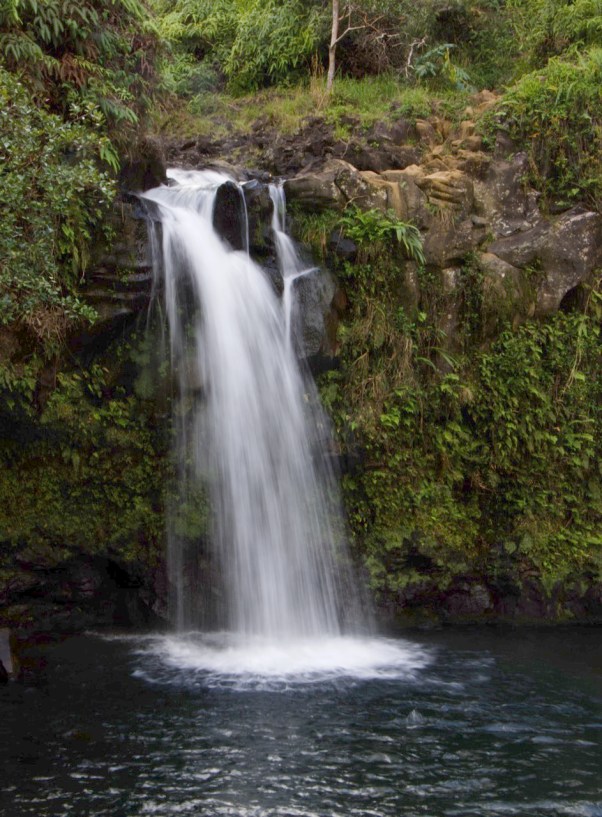
When we arrived on Maui, we could tell that accommodations were going to be very expensive. We decided to stay at a hostel in Kahului, in part because they offered a shared van tour every day of the week to different parts of the island. One of the days we were staying there, we signed up for the “Road to Hana” tour and along with 13 other people, we had a fun day trip, stopping at waterfalls, black sand beaches, food trucks, and getting vegan ice cream, as well as swimming at the beach, and watching the sea turtles and surfers. It was a great way to spend the day and we got to see way more than we would’ve even known to go look at if we had been traveling on our own. At the end of the day we tipped our driver to show our appreciation.

Our hostel van tour took us to some great spots that we may not have found on our own

6. Talk to your fellow travelers

One day we took the van tour, a few people missed the chance to sign up and the tour spots filled. Four of the other guests decided to go in on a car together. They followed the van tour, and each one covered 1/4 of the cost of the rental. In the past I have wound up sharing a car and the costs with hostel or guesthouse friends, and it’s a great way to see some sights that are further away than the immediate city- and make a new friend!

Our hostel tour guide took us to a beach that had sea turtles chilling out

7. Try a carpooling app

Speaking of sharing costs, there are other ride-sharing and car-pooling apps. I’ve looked at both Hitch (Texas, Florida, Oklahoma area) and BlablaCar (Canada and Europe), which are great for one-way trips. The CarpoolWorld app offers rides between various Hawaiian cities. Basically, if someone needs to go from, say, Austin to Houston, they can check and see if a driver is planning on making that drive (or a longer one that includes those cities). The driver will probably charge a small fee, but it’s not exactly the same as a taxi or Uber, because the driver is already planning to take that drive and is happy to have a passenger to share the costs. It’s an interesting way to match up drivers with passengers, with over 26 million people a year using BlablaCar.

Share the ride and split the costs!

In short, there are lots of ways to avoid renting a car. Using public buses, sharing rides, and taking a walk now and then can help overly-congested tourist places have fewer cars on the road, save on costs, and lower carbon emissions. For us, it meant we could spend more time gazing out the window and enjoying our surroundings, while still getting to where we wanted to go. A win/win situation!

The view from one of our bus rides on Maui

Have you tried an alternative method of transportation? Let me know about it in the comments below!

15 Free Things To Do in South Florida and the Keys

Florida Keys Dry Tortugas National Park Fort Jefferson

We recently bought tickets to go to Dry Tortugas National Park, and those tickets are not cheap. Add to that a few days in the Keys, and your budget will definitely feel the pinch. However, as we discovered, there were plenty of free (and almost free) things to do in our two weeks between Fort Lauderdale and Key West. There was one card in our wallet that helped us out the most- our military ID. Read on to find over 15 free things to do in the area.

1. Alligator Alley (Tamiami Trail)

It is free to drive across parts of both the Everglades and Big Cypress along the Tamiami Trail. You will see quite a lot of wildlife as you drive. If you enter the Everglades National Park at one of its entrances, it will cost you $30 per car. However, if you have a national parks pass, a military ID (retired and active duty both get in free now, plus up to 4 accompanying occupants), or a 5th grader, you can visit inside the park for free.

2. The Ochopee Post Office

This small post office is the tiniest post office in the United States. It used to to be a storage shed! It’s just off the Tamiami Trail, before you reach Everglades City if you’re heading west. Stop by and take a picture, it’s really cute. Yes, it still sends mail! Thanks to Charles McCool for suggesting this one- find out why this post office is especially important to him.

3. Clyde Butcher Big Cypress Gallery

For some stunning nature photographs, visit the Big Cypress gallery of renowned artists Clyde and Niki Butcher. Their gallery also features art from other artists. Outside their shop is a short nature walk, and you can usually see a gator or two in the pond by their parking lot.

Florida Everglades Clyde Butcher photography

4. Museum of the Everglades

This small museum in Everglades City is really good. From their beautiful pine floor, to their extensive array of information about how the Tamiami Trail and Everglades City came to be, this museum is not to be missed. The museum is free, but you can always drop a few dollars in their donation jar, they do appreciate it.

Almost free: Smallwood Store

If you’re already as far west as Everglades City, you might as well continue down the road the last few miles and visit Smallwood Store in Chokoloskee. This old building, perched on pilings, is a real treasure. Built in 1906 as the first general store in the area, this is an actual “Indian trading post”, also post office, restaurant, shoe repair, bank, and apothecary. It does cost $5 to enter, but I found it well worth the price to go inside and look around. The breeze coming through there off the water can’t be beat.

5. Big Cypress National Preserve

Although national parks have entry fees, national preserves and national forests do not. Be sure to stop in at the HP Williams Roadside Park and check out their board walk- we saw tons of gators in the waters. We also saw manatees at the Kirby Storter Roadside Park a bit further down the Tamiami Trail.

6. Loop Road Scenic Drive

Taking this narrow dirt road will add some time to your Tamiami Trail drive, but we saw so much wildlife here that it was absolutely worth it. Recently graded, the road parallels cypress swamps and features gators, herons, cranes, turtles, and more. Keep an eye out for barred owls as well.

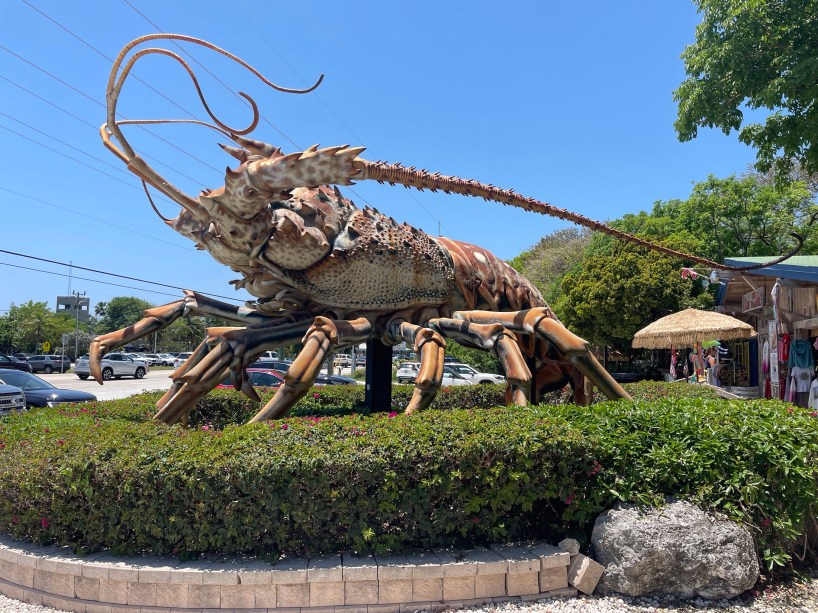
7. Betsy the lobster

As you head south into the Keys, you can’t miss Rain Barrel Village, which features a huge (40 foot) sculpture of a lobster out front. Rain Barrel Village might look like a t-shirt shop and bar, but if you walk through to the back yard, you’ll find some lovely art galleries, glass studios, and shady spots to sit.

8. National Key Deer Refuge

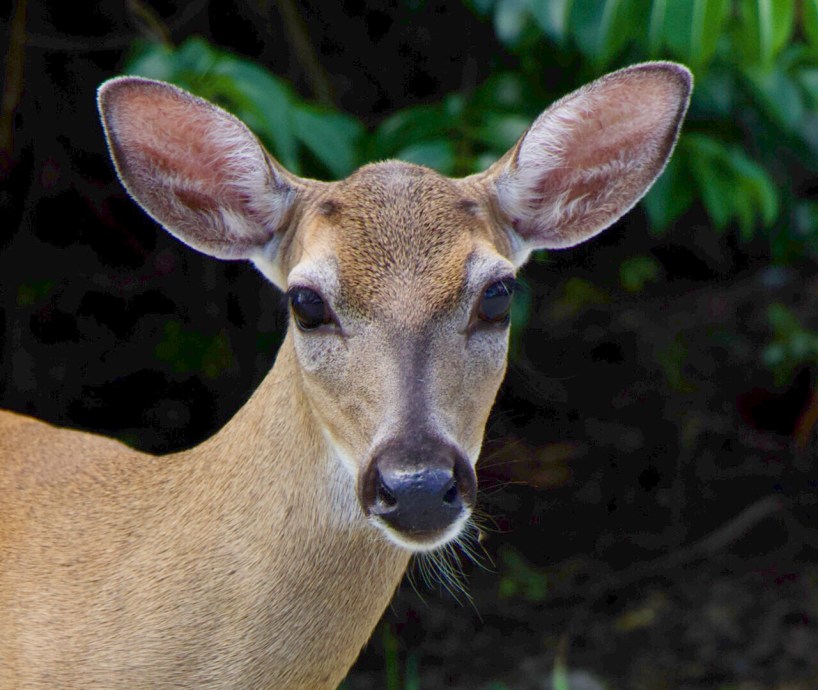
It’s only open three days a week, but you can stop in and learn about the Key deer at the refuge on Pine Key. Like a lot of wild animals that live on islands, this species is smaller than deer found on the mainland. If the refuge isn’t open, you can turn into one of the side streets near there and probably spot some if you drive slowly.

Almost or maybe free: Zachary Taylor State Park

This fort on Key West is a Florida state park, but if you have a Florida State Parks pass- or a military ID- you can enter for free. The fort, which is a sister fort to the one at Dry Tortuga, is really interesting in how it helped shorten the Civil War by as much as two years. Free guided ranger talk at 11 am daily. The park also has a nice, sandy beach, where you can picnic or buy concessions.

9. Books & Books @ The Studios

If you’re a literary fan, you probably already know that Key West was the home of Ernest Hemingway for nine years. But did you know that author Judy Blume lives here as well? Visit the bookstore she runs with her husband, and be sure to check out the Key West history section.

10. Visit the sister shop of Hemingway’s Pilar at the Bass Pro Shop in Marathon

In 1933, Hemingway went on a fishing trip in this boat. He liked it so much that he kept the brochure, and had another one made! He named it the Pilar, and you can see it today at his house in Cuba. The original ship can be seen at the Bass Pro Shop in Marathon on your way down the Keys. You can also see this boat feature in the movie “Key Largo” as the Santana boat that Bogart sails at the end of the movie.

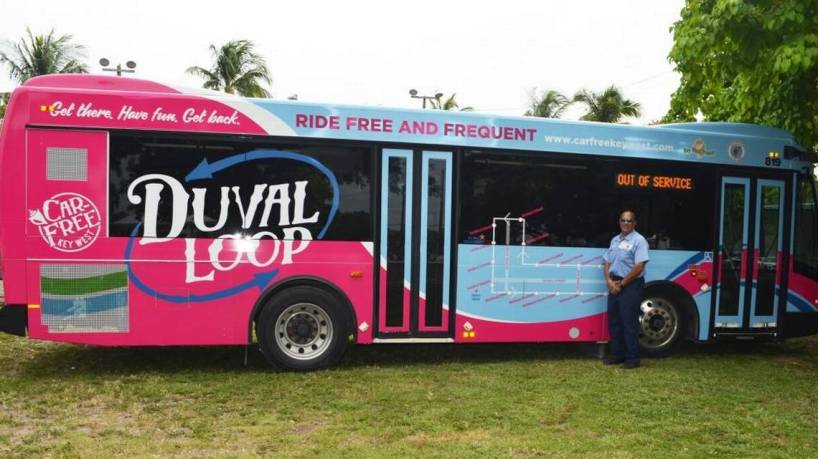
11. Ride the Duval Loop bus in Key West.

This bus stops at 16 points around historic Key West and is absolutely free. You can see their live map at kwtransit.com. A bus arrives every 20-30 minutes. Bonus: use your military ID to get onto the base and park for free at Trumbo Point gate- saving you $5 an hour or $40 daily on downtown parking fees. Stop #1 on the Duval Loop route is just one block from Trumbo gate.

Not free, but half the price: stay at the Navy Lodge

If you are active duty or retired military, you can stay at the Navy Lodge on Dredger’s Key for $135 a night- a huge saving from Key West hotel prices. You can call for a reservation starting 30 days out from your intended stay. But call as soon as you can- they only have 26 rooms.

12. Cool off at Truman Waterfront Park

It’s pretty hot in Key West, but there are some places to cool off. If you have kids with you, one excellent place is the Truman Waterfront Park. They have a splash pad there, and in Thursdays you can visit the Farmer’s Market from 2-5 pm.

13. Visit the Southernmost Point(s)

Of course you can’t visit Key West without visiting the southernmost point. Just walk down Whitehead Street until you get to the very end, and you’ll see the famous painted monument. But if you REALLY want to get to the southern point, you’ll need to go into the nearby naval air station, which is built in a mile of reclaimed land.

14. Wander up and down Duval Street

I don’t think it’s possible to visit very many of the bars, restaurants, boutiques, and art galleries without opening your wallet often, but it’s free to try! Even just people watching and reading all the funny t-shirts is a pretty good time.

15. Grab a book (or drop one off) at the Green Parrot’s Little Free Library

I hate trying to read on my phone or e-reader when I’m at the beach- a paperback works much better! If you need one, or finished yours and want to drop it off, I spotted several Little Free Libraries around town. This one at the Green Parrot is particularly well-located.

Borrow free snorkel equipment at Fort Jefferson:

Okay, so really this one isn’t free. It’s pretty expensive to visit the Dry Tortugas National Park. The only ways to get there are to sail your own boat, take a seaplane, or take the Yankee Clipper ferry, which will run you $200 per person. Be sure to take your national parks pass with you to get $15 off per person. However, they will provide a free breakfast, free lunch, and free snorkel equipment at the beach, as well as a free guided tour of the fort. We really enjoyed our day and felt in the end, it was worth the cost!

I’m sure there are more free (and almost free) things to do in South Florida, but these were some of my favorites. If you’ve visited the area, let us know your favorite things to do!

Bolivia: A Country of Contrasts

Salt desert sunset bolivia

Our Bolivian adventure began at the southern La Quiaca/Villazon border, where, despite having all our documents printed and ready to go (visa application, visa application confirmation, hotel itinerary, exit flight, yellow fever card, and our bank statement, plus $160 in US cash), it still took us more than six hours to get the actual visa stamp. But we prevailed, and at last we had our 30 day visa for Bolivia.

Deah Argentina Bolivia
Waiting…. patiently… for the Bolivian consulate to re-open after a lengthy lunch

Uyuni

We immediately headed for Uyuni, where we booked a tour with Discovery Colored Lagoons for a three day, two night tour of the Salt Desert. What am interesting area! On the first day of our tour, we visited the old train cemetery, where rusted locomotives that once extracted Bolivia’s mineral wealth now rest. We saw the Dakar rally monument from the years that the race passed through this part of the continent . We visited the Salt Flats, and took fun “perspectives” pictures. And that night we stayed at a hotel made of actual salt bricks.

Chris and Deah Salt Desert Bolivia
The endless stretch of white salt desert makes trick photography fun.

For the next two days, we drove around the desert with our tour group, visiting several lagoons, looking for flamingos, vicuñas (wild llamas), and viscochas (wild, long-tailed rabbits). Ringed by volcanoes and mountains, the altiplano desert in Bolivia is stunning. The second night of our tour, after dinner, we soaked under the stars in a natural hot spring, while our guide pointed out the Milky Way and the Quechua constellations. Wow! A night to remember, for sure.

Salt desert lagoons
The colored lagoons of the Uyuni Desert

Potosí

After our tour, we went to Potosí, home to a silver mine (Cerro Rico) that has been in constant active use for more than 500 years. This small Bolivian city once had more inhabitants than Paris or Madrid! The backbone of the Spanish empire’s mineral extraction, Potosí was home to hundreds of silversmiths. We went on a tour of the Museum de Moneda- which was really fascinating – as well as a tour of a working mine (booked through Koala Den). Well, Chris did. I only made it 20 minutes before I had to leave the mine- claustrophobia really caught up to me! In addition, being one of the highest altitude cities in the world, it was hard enough to breathe outside, let alone inside a mine deep in a mountain.

Potosi Bolivia silver mine
A miner getting ready to go back into the mountain to look for more silver ore. In a good month he will make approximately $100, after paying for his equipment, supplies (including buying his own dynamite), and tax to the mine company and the government

Sucre

After Potosí, we took a bus to Sucre, where we spent New Year’s Eve. The day before the holiday, we went to the Parque Cretacico, home of more than 5,000 dinosaur prints preserved from 65 million years ago in limestone. It was a fun outing! On the bus ride there, we met a gal from our Facebook travel group Every Passport Stamp (for super nerdy travelers like ourselves), as well as two Kiwis that we wound up spending New Year’s Eve with. It was nice to share the holiday- and a meal at a French restaurant- with some new travel pals.

La Paz

I could not face a 12 hour bus ride from Sucre to La Paz, so we found a quick flight and arrived in record time. We stayed three nights in a beautiful, 400 year old building that once housed a monastery. La Paz is… a busy, crowded, bustling city. Technically not the capital of Bolivia (constitutionally, Sucre is), La Paz is viewed as the administrative capital of the country. The best thing I can say for La Paz, and it’s sister-city El Alto, is they have a pretty cool cable car system. With 28 stations and 8 lines, it’s a fun and easy way to get around the two cities, without spending hours in traffic breathing in the fines from the trufli in front of you.

The cable cars can get you from 3000 meters above sea level to more than 4000 meters in no time at all… and for less than $1USD a ride

Lake Titicaca

Several travelers we had met along the way had encouraged us to go to Isla del Sol on Lake Titicaca, which is just three hours from La Paz. We bussed out to Copacabana, at the edge of the lake, and spent one night there. The next day we took a boat to the Isla, which is considered to be the birthplace of the Inca Empire. This simple, peaceful island has no roads or cars, and only about 800 families live there. We spent the next two days hiking along the Inca Camino, visiting the Roca Sagrada, and looking at 500-year old ruins of a small Incan village. The main town of the island, Yumani, site at 4,100 meters above sea level- while the days were warm, the nights were cold! We huddled under our alpaca wool blankets at our hostel, the Palacio del Inca.

Relaxing on Isla del Sol, halfway between mainland Peru and Bolivia

Samaipata

After Lake Titicaca, we were nearing our time to leave Bolivia. Our exit flight was from Santa Cruz airport, in the eastern sub-tropical part of the country. We flew there (rather than taking a 17 hour bus), and spent our last 3 days in Samaipata, a small village in the hills just outside of Santa Cruz. Peaceful, walkable, surrounded on three sides by Amboró National Park (also called the Cloud Forest due to low-lying fog), this town was a treat to relax in. The hammocks at the Andorina Hostel were the perfect place to read a book, write a blog, or take a nap. On one day we walked into the hills to visit an animal rescue park, but mainly we just… chilled out.

Dirt roads, green hills, blue skies… Samaipata is super relaxing
This part of our travels is tapir-ing off to an end

And then it was time to leave Bolivia. We were ready for a break from our travels, and wanted to codon friends and family in the US for a bit. In a month we’ll continue our South American adventures, probably starting with Brazil. Stay tuned!