Our fearless traveler Chris is often again, wending his way through the last four independent island nations in the north Pacific Ocean. He visited Chuuk, Micronesia, then Palau, East Timor, and the Solomon Islands. Here’s what he had to say about his adventure.
Q: Once again, you ventured off without your wife (me). Why did you travel solo this time?
Deah recently went back to work, and it’s hard to get enough time off to get all the way out to the Pacific islands and back. We talked about going together in the summer months, when she has more time off, but there were other places higher on her bucket list. Plus, visiting these island nations involves a LOT of flight time, which isn’t her favorite thing. So it worked out better for me to go by myself. I promised to be home for her Spring Break so we could go somewhere on her list.
Staying in Chuuk
Q: I know you enjoy scuba diving. Where all did you scuba dive on this trip, and what did you see?
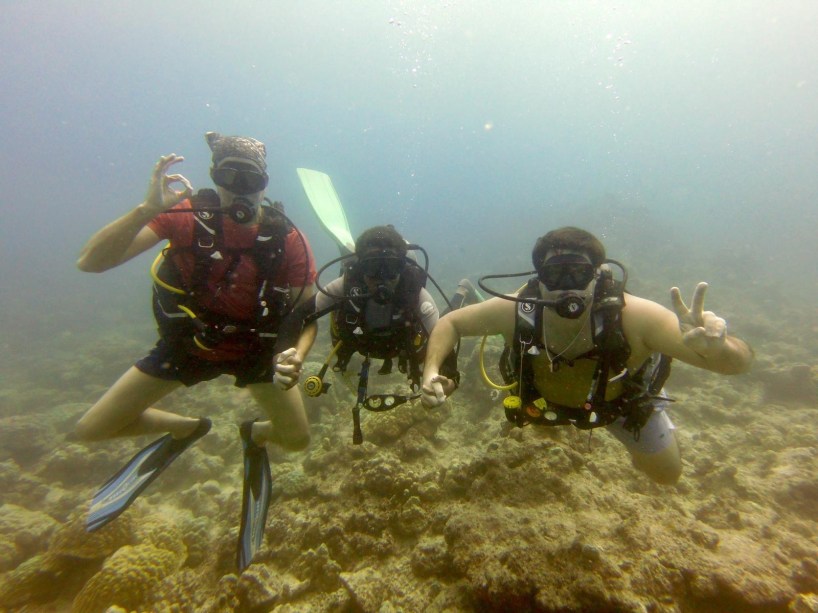
I went diving in Chuuk, Palau, and East Timor, and snorkeled in Guadalcanal, Solomon Islands. This time I brought a Go-Pro with me, because I’d been wanting to shoot some underwater videos. I did a lot of wreck diving, to see some Japanese ships from World War 2. My favorite diving excursion was to see the manta rays in Palau, with Blue Marlin Diving Company.
Diving with the Manta Rays in Palau
Q: I know it takes a lot of flights to get to these islands. How many flights did you have to take for this trip?
13 flights in total. We had accrued points with both American and United, so we were able to use those points rather than dollars for several flights. From Texas to Hawaii, then I hopped on the United Island Hopper to get to Chuuk and to Palau. I also had to overnight in Manila, Bali, and Darwin in order to get to the rest of my destinations. All in all, it was a lot of flying time. It’s hard to get all the Pacific Islands in one trip due to the many flights.
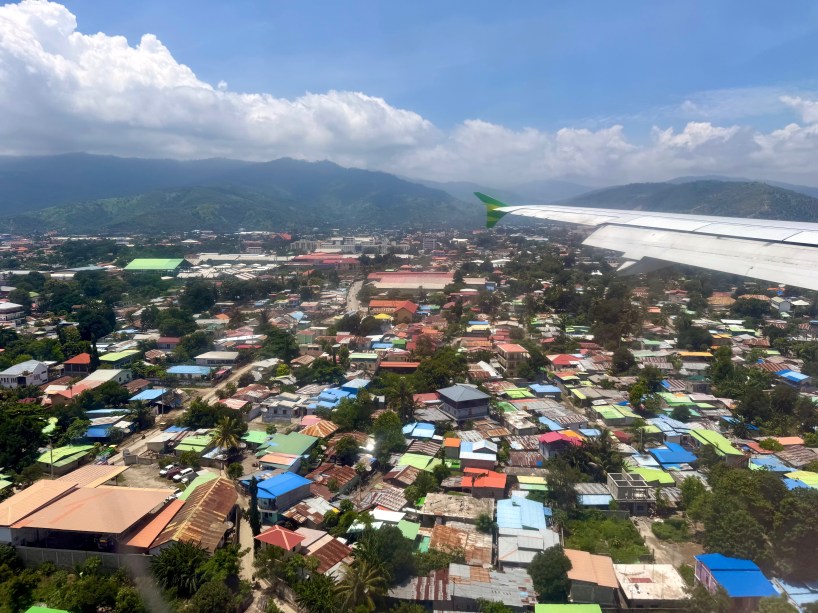
Flying into Dili, East Timor
Q: What kind of food did you eat on this trip? Anything you really liked?
The islands tend to have a lot of starches like ramen noodles, rice, fewer fresh vegetables, and canned meats. I liked the Japanese and the Philippino breakfast menus, as they had fresh options. In East Timor I really liked the fish grilled in banana leaves.
Q: How would you rate the friendliness level of the islanders? What kinds other travelers did you meet there?
Polynesian people, in my travels, have always been welcoming and friendly, open to questions, and easy to get along with. Many of the other travelers I met were NGO-types doing sports diplomacy, health directives, and UN workers, and Japanese tourists. A lot of the people I met at my hotels or in airports were people trying to get to the end of their countries list, like me.
Some local kids playing on the beach in East Timor
Q: So the conclusion of this trip brings you to how many countries left that you’d like to visit?
I have fifteen left on my United Nations list. Some are active war zones, while others are difficult to get a visa to, especially now that there’s a list of 44 countries that have travel restrictions to the United States. It’s likely those countries will make it harder for Americans to visit them as well.
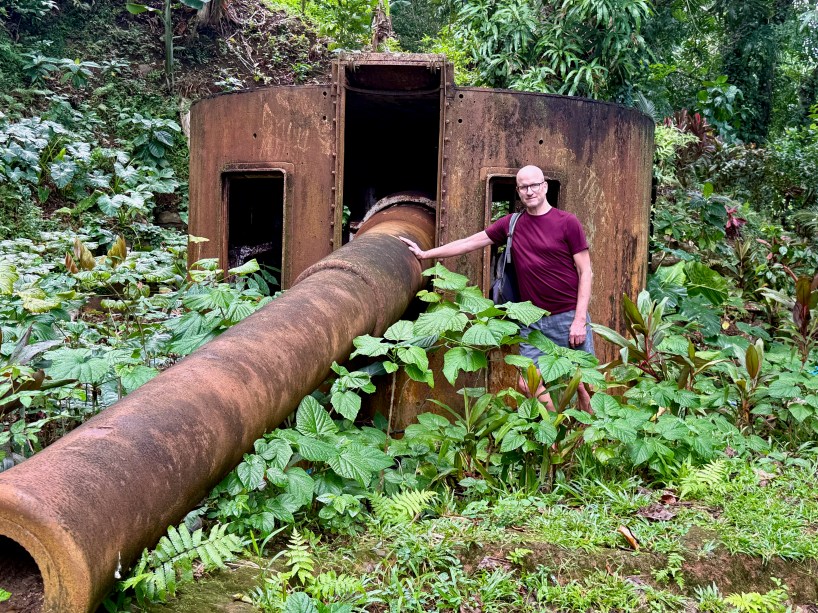
Chris at Chuuk, visiting a Japanese gun emplacement from World War 2
November is such a nice time of year to visit Mexico- beautiful weather, low crowds- so this year we decided to spend Thanksgiving break in Taxco, one of Mexico’s “Pueblo Magicos”, or Magic Towns. These charming small cities feature walkable city centers, historic churches and plazas, and plenty of delicious options to eat and drink.
Arriving at the Mexico City airport, there’s three easy ways to get to downtown, or to any of the main bus stations. You can hop in a taxi, take the Metrobus, or walk all the way down to Door One and access the subway. For 15 pesos (75¢ US) you can buy a metro card, and then each ride is 5 pesos (25¢). Two people can share one metro card. We transferred to the blue line’s last stop, the Tasqueño bus terminal. It’s a very nice, very modern bus terminal, and we found busses departing for Tasco every 90 minutes. 554 pesos later (approx $25 USD), we had two bus tickets on Costa Lines and were on our way.
We arrived in Taxco two and a half hours later and walked from the central bus station to our hotel, the Posada de San Javier ($65 per night for a king suite, with breakfast). The city of Taxco trails down the side of a mountain, so it doesn’t matter where you stay- everywhere you go is going to be a short but steep climb from your hotel or restaurant or the main zocalo. Just take it slow and steady, or hop in one of the ubiquitous VW taxis that constantly circle the plazas.
The stunning main feature of Taxco is the twin-spired baroque Church of Santa Pisca, built from 1751-1759. Everything else in the historic city can be found in relation to the church. Wanting to really relax on our trip, we spent four days in town and found ourselves lounging on rooftop terraces, enjoying coffees and chilaquiles in the mornings or hot chocolates and churros in the evenings. We spotted a few other gringo tourists in town, but the majority seemed to be visitors from other parts of Mexico or Latin America. Taxco feels safe, is easy to walk around, and has options to fit any budget.
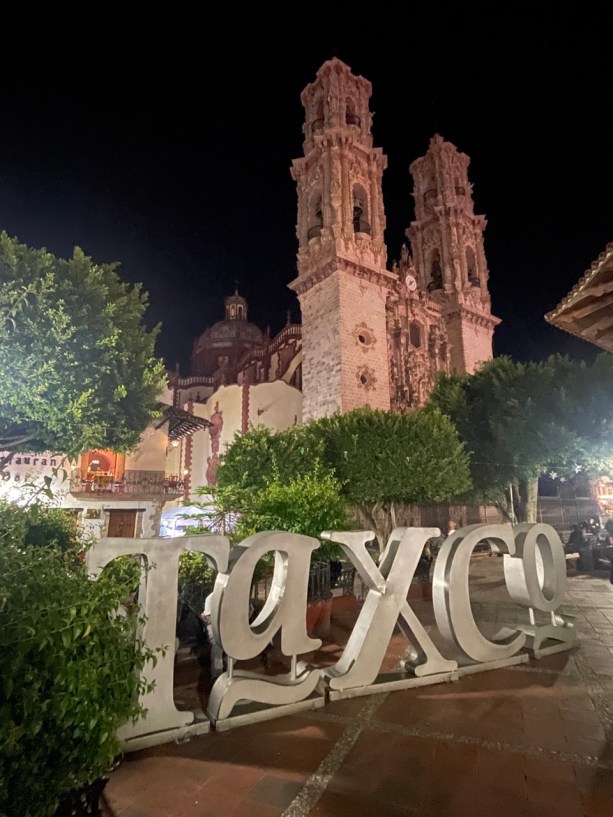
The main plaza, or zocalo
Our favorite activities in Taxco:
Take the cable car up to the Hotel Montetaxco and enjoy the view from their mirador, while sipping a juice cocktail. It costs 9 pesos to hop in a collectivo (combi) to reach the base of the teleferico. Round trip tickets on the cable car are 120 pesos, or you can take the cable car up and walk down.
Visit the Pre-Historic Mine, located underneath the Hotel Posada de la Mision. Tickets are 180 pesos and come with a mezcal cocktail afterwards at the hotel bar. The tour is in Spanish but the guide translates parts of it.
Visit the silversmith shops or workshops, pretty much all over the city. Look for the .925 or .950 stamp if you’re looking to buy, or just enjoy watching the sheer talent of the artisan workers.
Eat pozole at any number of pozolerias (Tia Calle was very inexpensive, if not very atmospheric).
Try the region’s pink rosa mole dish, made with rose petals and white chocolate. We enjoyed the dish at La Parroquia, which features balconies and a terrace overlooking the main zocalo. A perfect al fresco dinner spot.
Plenty of places offer chocolate and churros, but we liked Chu Cho, nestled in Plazuela de Bernal, for their wide variety of toppings (try the marzipan!).
Visit the Pozas Azules (blue swimming holes). You can take a full-day guided tour from one of the tour operators in town, or just walk to the main road and grab a combi heading out of town toward Acapulco (the stop is in front of the Coppell building). The combi costs 35 pesos, and entrance to the pools is 100 pesos.
Tour the Spratling Pre-Hispaña Museum. Spratling put Taxco on the map in 1929 and made sure its pre-Hispanic culture would be preserved. This museum features his private collection of artifacts. Worth a visit, and only 75 pesos per person.
For another beautiful view of the town, visit the Cristo Rey statue above the main plaza. It takes about 45 minutes to walk up there, or take a taxi for 80 pesos.
Eat as much ice cream as possible. We liked the Crema y Nata Heladeria, tucked into the bend right at Plaza Del Convento. Delicious!
Pozole- try all three varieties Inside the silver minePurchasing tickets for the cable carAt the Pozas AzulesChurro and chocolate
Have you been to Taxco, or another of the Pueblos Magicos in Mexico? What was your favorite part?
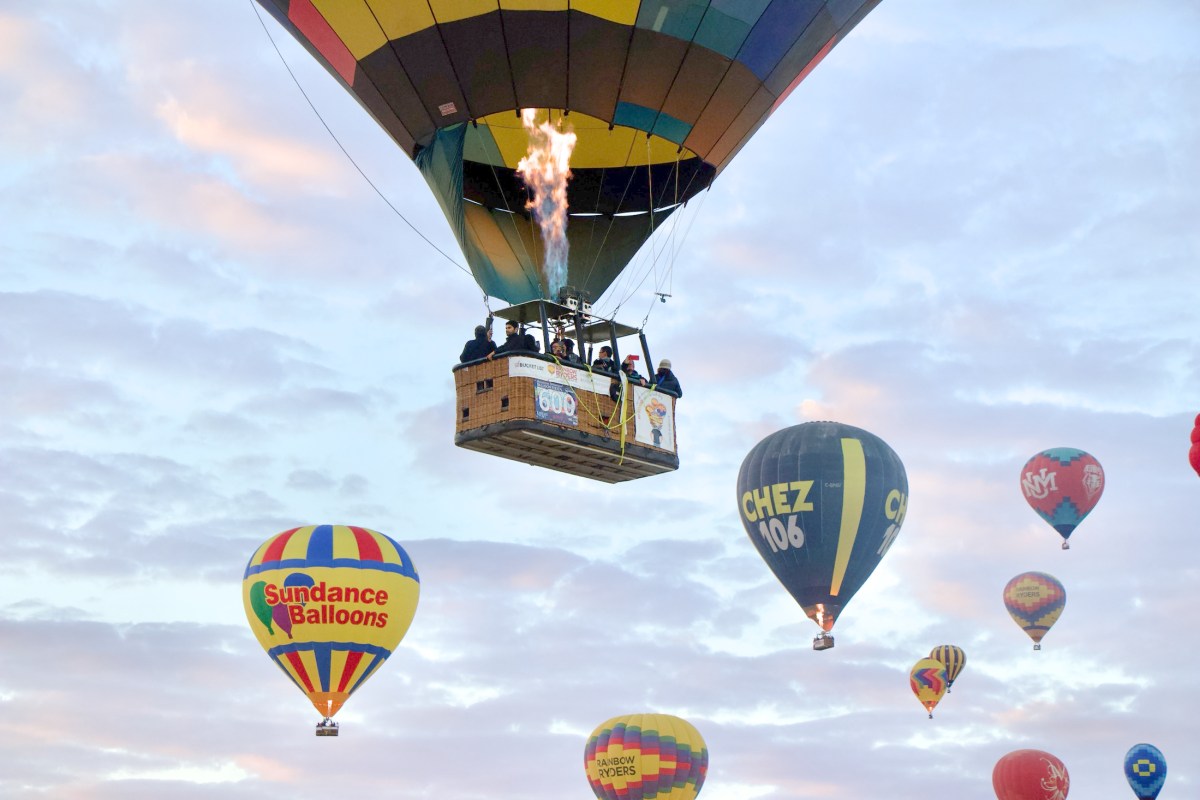
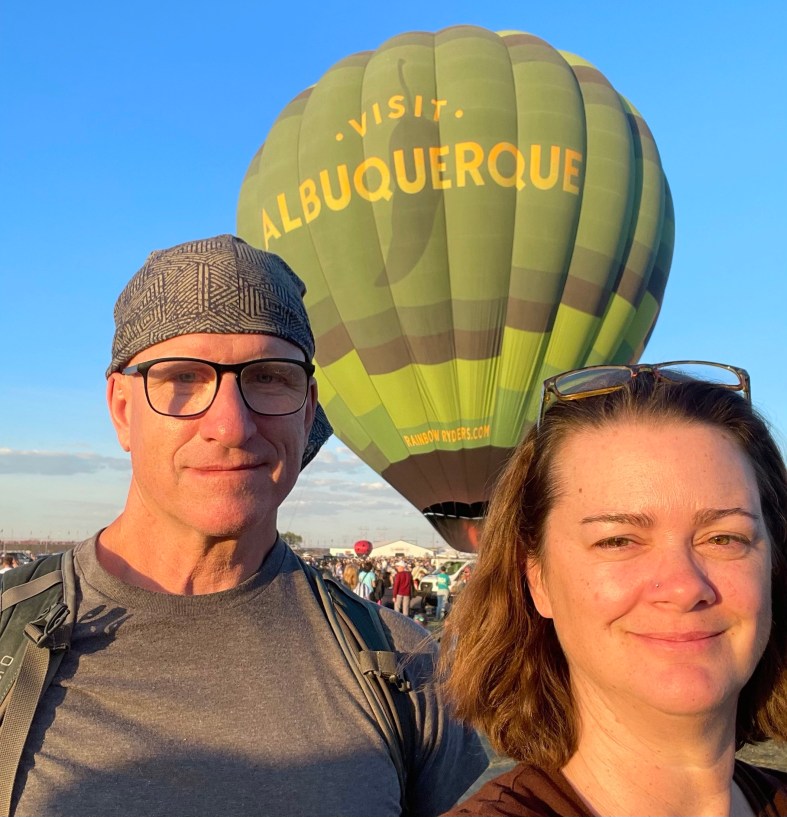
After wanting to go for several years, we finally made the time to go to Albuquerque, New Mexico for their annual balloon fiesta. And wow, am I glad we did!
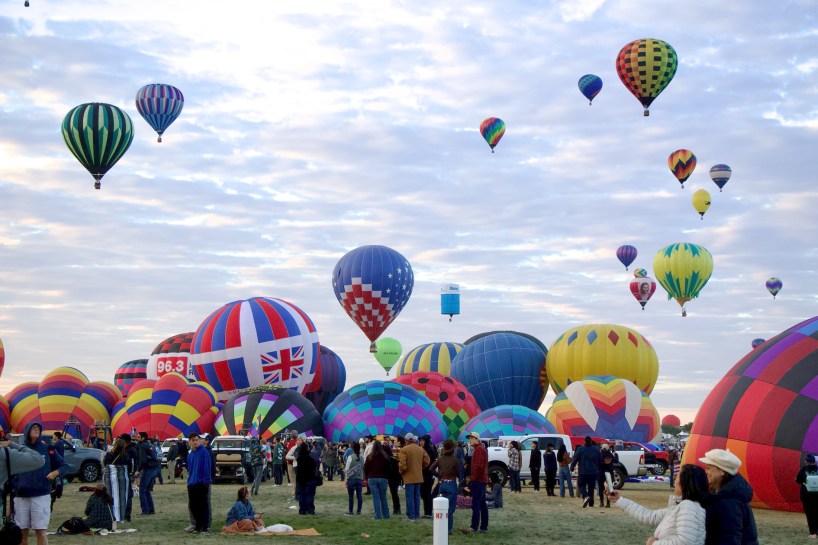
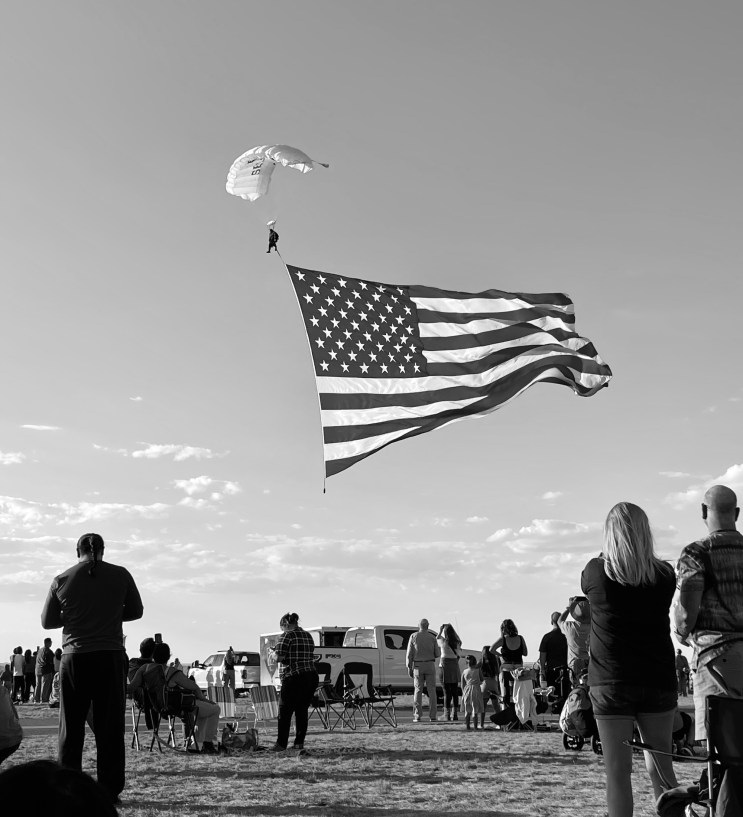
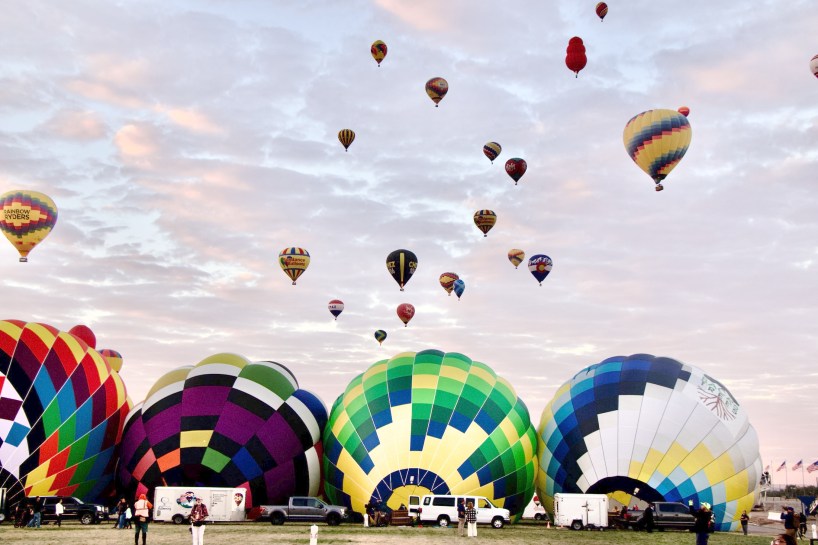
The balloon fiesta is now in its 52nd year, with over 700 balloon pilots and their teams working hard every day for two weeks to launch their balloons every morning, and provide other fun activities in the evenings, such as a “glow”, a drone show, concerts, indigenous dancing, and skydiving.
Skydivers and the fireworks showWatching the “glow” and then the mass ascension of 700 balloons
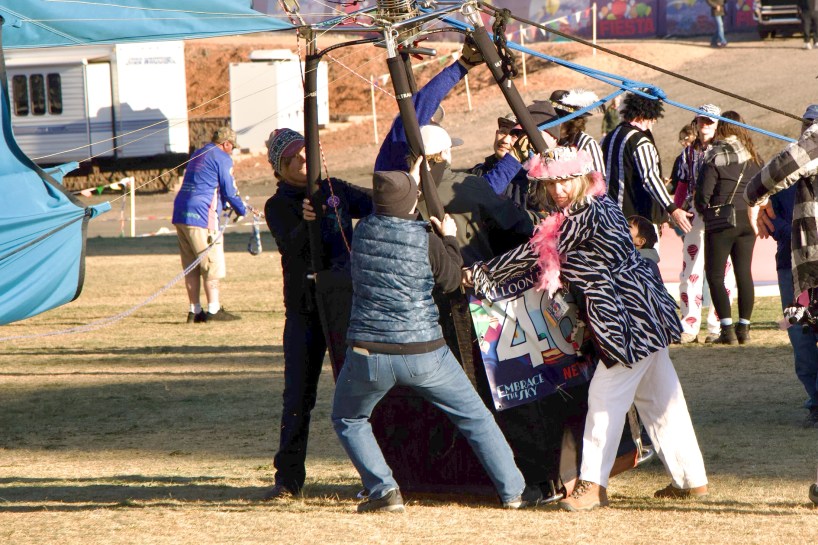
We stayed with friends of ours who live in the area, and one of them is a “zebra”, or Launch Director, for the fiesta. They are called zebras because they wear black and white only, so they can be seen on the fields as they direct the launch of multiple balloons near them during the daily Mass Ascension.
A zebra in action, helping to launch a balloon
Because balloons most frequently launch at sunrise, we had to get up very early in order to get to the festival and be in place in time for sunrise. By 5 AM, thousands of visitors were arriving at the balloon fiesta complex, getting ready for the 7 AM sunrise. We had backstage passes from our friend, so we were able to access the breakfast provided to the pilot and their teams, as well as warm up a bit in the facilities. It’s very cold in the morning before the sun comes up. Be sure to dress in layers, and even bring a blanket to wrap up in. The city of Albuquerque is at quite a high elevation, in the mornings and evenings can get very cool.
I would recommend purchasing tickets to both a morning event and an evening event, and possible a third morning or evening as back up. The tickets are fairly inexpensive at $15 for general admission, and kids 12 and under are free. Each year, one day of the festival is free for New Mexico residents. Visitors can pay for parking at the balloon complex, or can purchase Park and Ride tickets and board a bus at the nearby mall or churches.
A wave of balloons get “fanned” with cold hair, before using hot propane gas to “stand up” and then launch
Have you been to a huge balloon festival? If you haven’t, I definitely recommend the one in Albuquerque! Now in it’s 52nd year, it is a classic.
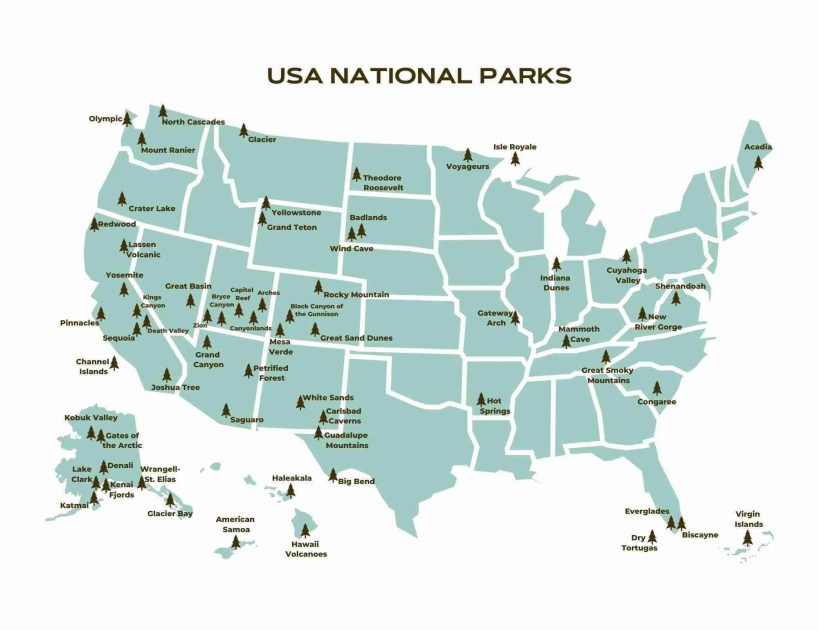
Even though I’m from Texas, I try everything I can to get out of the insane southern heat each year. Last summer we visited Maine, Newfoundland, and Labrador. This year we decided to head to some of the US national parks up north in an attempt to find cooler temps.
Time to head north
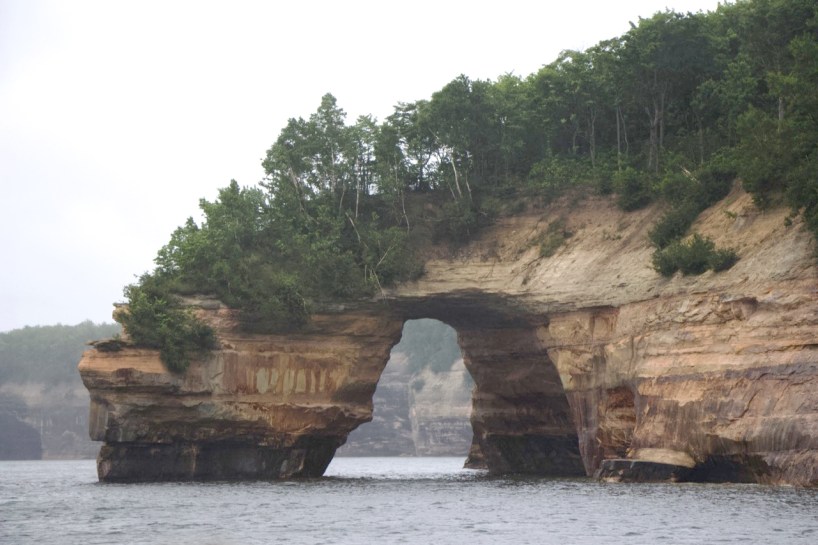
As we crossed the Mackinac Bridge into Michigan’s Upper Peninsula, we felt the cool breeze coming off the Great Lakes, and knew we had arrived in “the north”. If you’ve never been to the UP, I highly suggest you take a few extra days and visit Pictured Rocks National Lakeshore, as well as the Great Lakes Shipwreck Museum. Those are two of my favorite tourist attractions up that way, and definitely worth a visit.
Pictured Rocks National Lakeshore- do yourself a favor and do the boat ride!
The first park on our list was Isle Royale National Park– the least visited park in the continental US. As it is an island, you can only access Isle Royale from upper Michigan (from Houghton, by boat, or Copper Harbor, by boat or sea plane), or from upper Minnesota (from Grand Marais by seaplane, or Grand Portage, by boat). Whichever mode of transport you choose, make sure to book well in advance (at least a month), and be forewarned that although it’s a national park, the transport is private, and quite costly. Of course, bring your national parks pass if you have one for free entry, and our camping on the island was free as well.
Established as a national park in 1931 by Herbert Hoover, this gem is only accessible by boat or seaplane
From Pictured Rocks, we drove to Grand Portage, Minnesota, and took a 7:30 am ferry (stay at the nearby Grand Portage Lodge and Casino for an easy morning). By 9:30, we were getting dropped off at the island’s Windigo visitor center, and walked to the nearby Cottonwood Campground with our camping gear. It’s only 1/4 of a mile away, so you won’t have to lug your stuff too far. There are potable water spigots at the campgrounds, so don’t worry about extra water for all your days in the park. We lucked out and were able to get a small camping shelter rather than a tent site, which was nice, because Isle Royale is often rainy (and putting up or taking down a tent in the rain is no fun).
Feldtmann Lake Overlook hike, about six miles, definitely worth it
In our time on the island, we hiked, explored the Visitor Center, checked out the small store (they do have food there, including hot breakfast sandwiches, so you can supplement the camping food you need to bring), hiked some more, and looked for wildlife. Isle Royale has both moose and wolves, so visitors like to keep a sharp eye out. The Windigo side of the island only gets about 50 visitors a day, so it won’t take long to get to know your fellow campers and hikers and find out where they’ve spotted some wildlife.
We spotted four moose while we were on Isle Royale. They can be unpredictable, so keep your distance, and keep a tree between you and them (we have a good telephoto lens)
In addition to Windigo, you can visit the other end of the island, Rock Harbor. You can take a boat there (from Windigo or from the mainland), or you can do a multi-day hike of the 45 mile stretch. Rock Harbor also features a nice lodge and restaurant.
Boardwalks, bridges, and hiking trails connect various campgrounds on the island
Even in July, the temperatures on Isle Royale ranged from pleasantly sunny and warm low 70s, down to cool and rainy 45 at night. Bring lots of layers, bug spray, and waterproof bags. We had a spectacular sunny day, cool night, and rainy morning while we were there.
After ferrying back to Minnesota, we were only a few miles from the Canadian border. Just after crossing over we saw a wolf! Canada has the best wildlife!
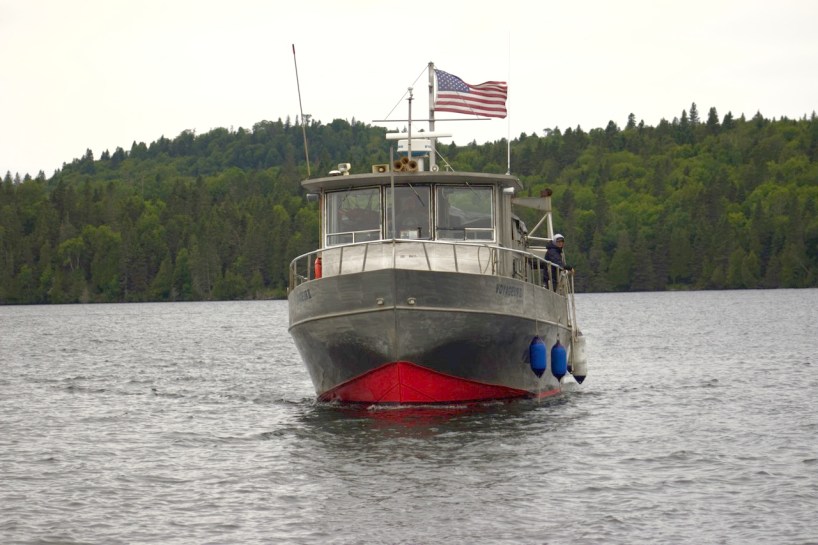
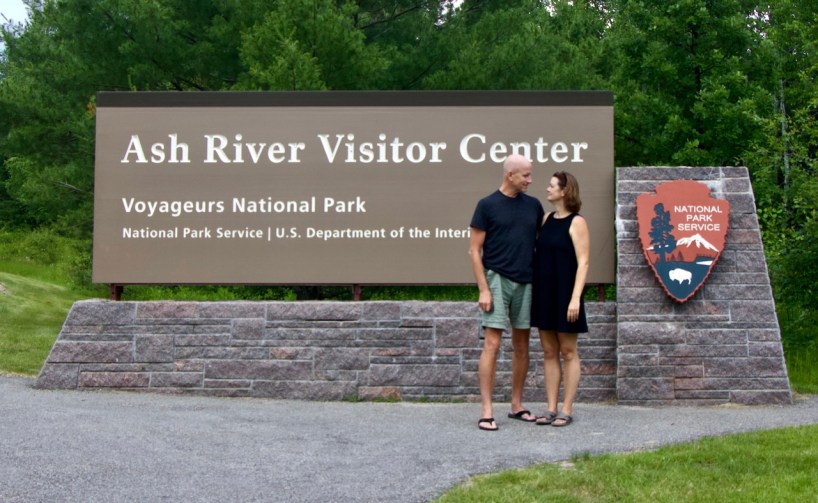
Voyageurs National Park is only 4-5 hours west of Isle Royale, so we drove the Canadian route to get there, stopping at Thunder Bay and Kakabeka Falls along the way. I always love taking Canadian roads because of their beautiful scenery, and lack of advertising billboards. We spent a lovely evening at the Bay View Motel in Fort Frances, next to the delicious Harbourage Restaurant. At International Falls, we crossed back over to the US, and visited the Rainy Lake Visitor Center and then the Ash River Visitor Center.
Our 51st National Park together!
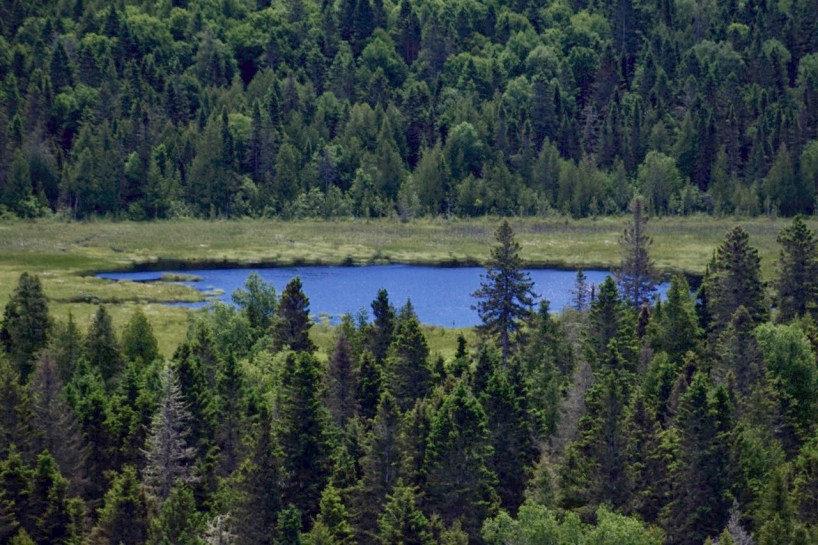
Spread across 210,000 acres, the star feature of Voyageurs National Park is the lakes, rivers, and inlets, so I’d highly recommend booking a NPS boat tour in advance, renting a kayak or canoe, or even staying on a houseboat nearby. There are also plenty of hiking trails and wildlife to view from land or from water, including beaver, otter, moose, and bears.
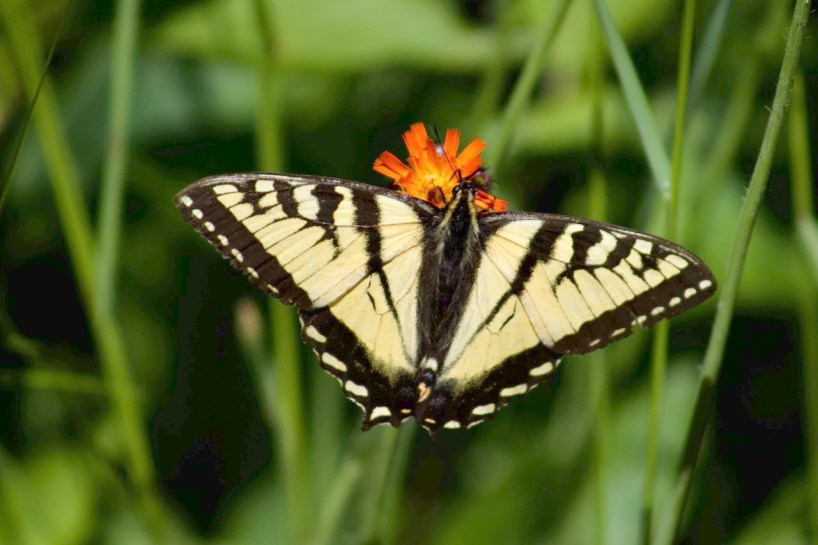
We actually saw this handsome fella about an hour after we left the park
Similar to Isle Royale, this northern national park features excellent weather in the summer. Temps while we were there ranged between 77 and sunny, down to about 60 during a rainstorm. Voyageurs does tend to be very buggy, so long pants, bug spray, and even a net hat might be a good investment if you plan to spend a few days here.
Bring your rain jacket too!
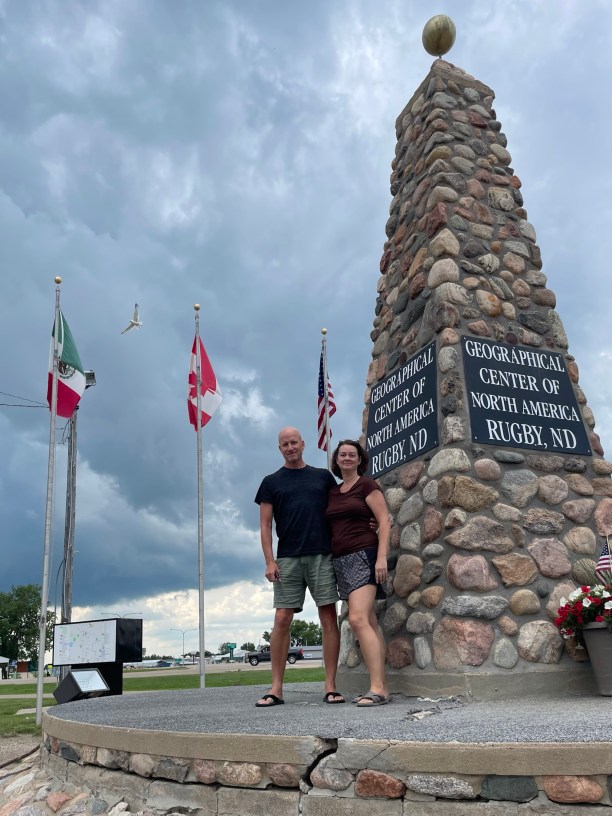
After Voyageurs, we had one more northern park on our list that we had not done yet. We passed into North Dakota, and after stopping at the Geographical Center of North America, we arrived at Theodore Roosevelt National Park.
We are soooo centered
Theodore Roosevelt National Park is spread across three distinct “units” (north, south, and Elkhorn, linked by the Little Missouri River), and we visited two. This park is 70,000 acres, and was designated a National Park in 1978- the only one named after a person! Roosevelt built a cabin at Elkhorn and lived there for several years, studying ranching, hunting, and conservation, before he became president in 1901.
Similar to the Badlands of the Dakotas, the rock formations here are shaped by erosion
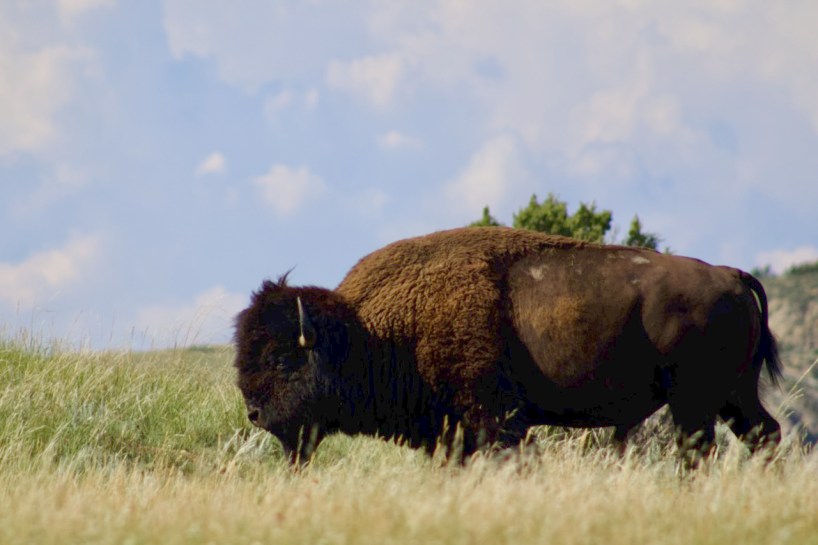
The park has a semi-arid climate and features pronghorn, mustangs, elk, bison, bighorn sheep, prairie dogs, coyotes, cougars, and more. We almost crested 80 degrees while we were there, but some late afternoon cloud coverage kept us in the upper 70’s. Since it was 101 back home with a hurricane bearing down on our state, we were happy with 79 degrees and a light rain shower!
Wild buffalo roam the prairie in the park
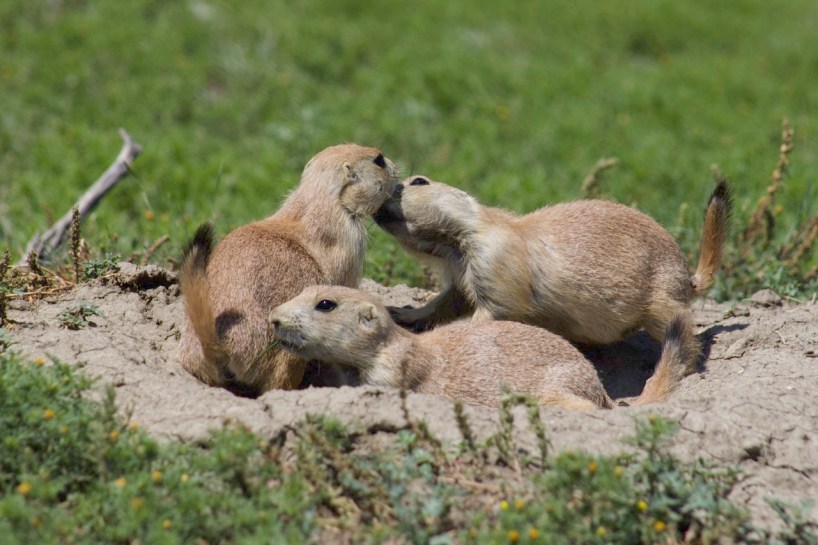
You can visit several prairie dog towns and watch these cute critters at play!
Formed by layers of ash from volcanoes 65 million years ago, layered with sediment brought by wind, water, and freezing, the hills of the badlands can present really interesting striped colors and formations. Lazy rivers that have formed oxbow lakes meander along the prairie as well, growing rings of cottonwood trees along their banks. Fossils from a long-ago swamp in this area have revealed large clams, crocodiles, alligators, turtles, and champsosaurs.
Oxbow overlook
Exploring our national parks is a fun pastime for us. We love getting out in nature, taking a hike, watching for wildlife. Learning about the history and geography of each area is fascinating too. Each park has its own unique setting to enjoy and partake in. Which national parks have you visited? What was your favorite? Leave us a comment.
Interested in this kind of content? Hit the subscribe button!
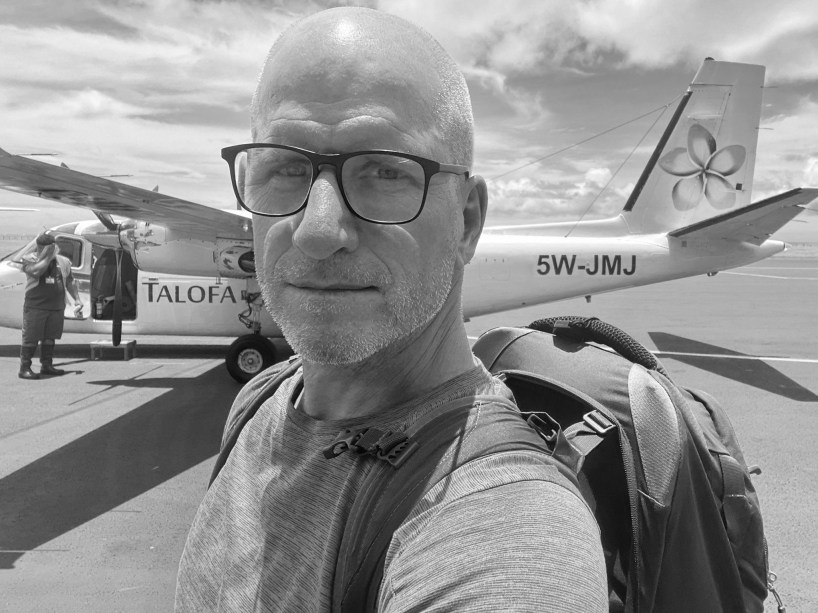
It’s been a while since our fearless traveler, Chris, the other half of Palm Tree Musings, took a trip by himself. On this journey he started off with me (Deah), in Hawaii, and then visited Samoa, Tonga, Vanuatu, Fiji and Tuvalu on his own. Here are a few questions and answers about his trip.
1. Why’d you leave your wife behind?
I asked her to go in this trip, but she refused. I think she’s tired of islands, plus she hates long plane rides. I did finally talk her into coming with me as far as Hawaii, though, and we spent ten days there. Then she was happy to spend some time at home by herself, a little stay-cation.
Ready to venture fearlessly alone
2. Why did you pick these 4 nations for this trip?
I only have 23 countries to visit in the world left, but a few are active war zones and a few have visa issues. So I figured I’d better get these while I have the time. It’s tough getting all the way out to this area of the world, and you have to allow a little bit of extra time, because the flights are sometimes unreliable and can really domino into a problem if there’s a cancellation or delay.
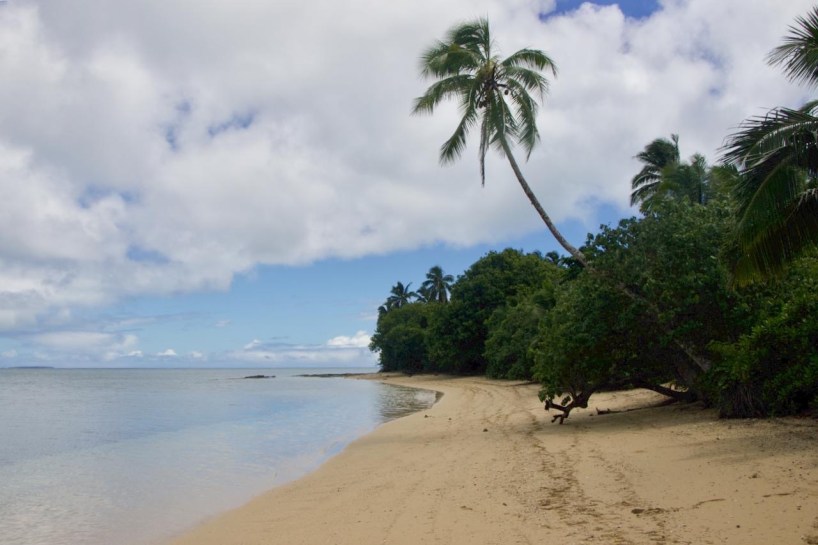
If you’re looking for almost-deserted beaches, Tonga is a great place to start
3. Did you have any trouble like that on this trip?
Yes, my plane leaving Vanuatu was cancelled due to mechanical issues, and that airline doesn’t have any backup planes. That put me returning to Fiji much later than I planned, endangering my connection to Tuvalu. I had to do a wild cab ride from Nadi to Suva, Fiji at break-neck speed, at high cost, but it turned out all right. A few other travelers were in a similar position. You have to be pro-active to make sure an issue gets fixed in time.
4. You visited both Samoa and American Somoa. Any differences between the islands?
I found the culture on both to be about the same. People commute between the islands frequently because of family ties. There are several small flights a day, as well as a ferry once a week. There is a National Park on the US side, and you can use US dollars there. The international date line runs between the two.
Somoa
5. The low-lying island of Tuvalu is quite threatened by climate change and sea level rise. Did you discuss the topic with any islanders, or see evidence of concern while you were there?
I talked to several islanders that brought it up. Some of them had friends or family that have already migrated to Australia, New Zealand, or the US to avoid sea-level problems in the future. It’s definitely present in the minds of the islanders, as they look to preserve their culture if not their home island. Also they are seeing the coral reefs start to die off as the waters warm.
6. While you were on Tonga, you probably ate a lot of fish. What other foods are popular there?
A lot of starches, like ramen noodles and roots and tubers such as taro and cassava, potatoes and yams. On Sundays everything is closed so you’d better go to a shop the day before and buy some instant noodles and tuna. Of course there’s fish all day, every day. I went on a boat trip and the guy caught a fish and used his knife to fillet it right there- the freshest sushi I’ve ever had. Red meat is much harder to come by.
Extremely fresh fish, with taro, cassava, yam, and corn. A typical meal in these islands.
7. Vanuatu and Fiji are part of Melanesia, while Tonga, Tuvalu, and Samoa are Polynesian in culture. What’s the main difference?
It’s mainly a difference of geography, but there are some cultural and historical differences as well. Polynesia spans from Hawaii to New Zealand, and as far east as Easter Island. Melanesia is north of Australia, and north of that is Micronesia. Melanesia sort of encompasses the “Ring of Fire”, so volcanic islands with high cliffs and eroding volcanos. Polynesian islands are flatter, with more coral reefs. The volcanic activity there was much older, forming atolls, which are made by ancient volcanoes that collapsed back into the sea. Culturally, the Polynesians came from SE Asia, while Micronesians are descended from indigenous islanders. The Polynesians were seafarers and knew how to navigate by the stars.
8. I know you love scuba diving, so did you get a chance to dive on this trip?
Yes, I dove with Big Blue Vanuatu. They visit several reefs and wrecks around the atoll. I really enjoyed diving “the cathedral”, an underwater cave with an open roof. If you’re staying in or near Port Vila, I recommend them.
9. What’s the hardest thing about planning a trip like this?
You have to plan a lot of one-way and return-trip flights on a variety of airlines. It’s helpful to have some airline miles with some of the big ones like American Airlines, Fiji Airways, or Hawaiian Airlines. You’re also crossing the international date line several times, so it’s easy to get confused while you’re booking flights. I found that making a mind map helped me.
10. What is next in your travel plans?
After hiking both the Appalachian Trail and Pacific Crest Trail, I’m ready to start the Continental Divide Trail. Hopefully Deah will provide support for that, as she did on my other hikes. Also I’m hoping we can both go to Western Australia this summer, making a few stops at Palau, Micronesia, and Solomon Islands along the way.
Thanks Chris for showing us the Pacific Islands, and answering these questions!
























 PalmTreeMusings