From Ushuaia to Iguazu: An Adventure through Argentina and Uruguay

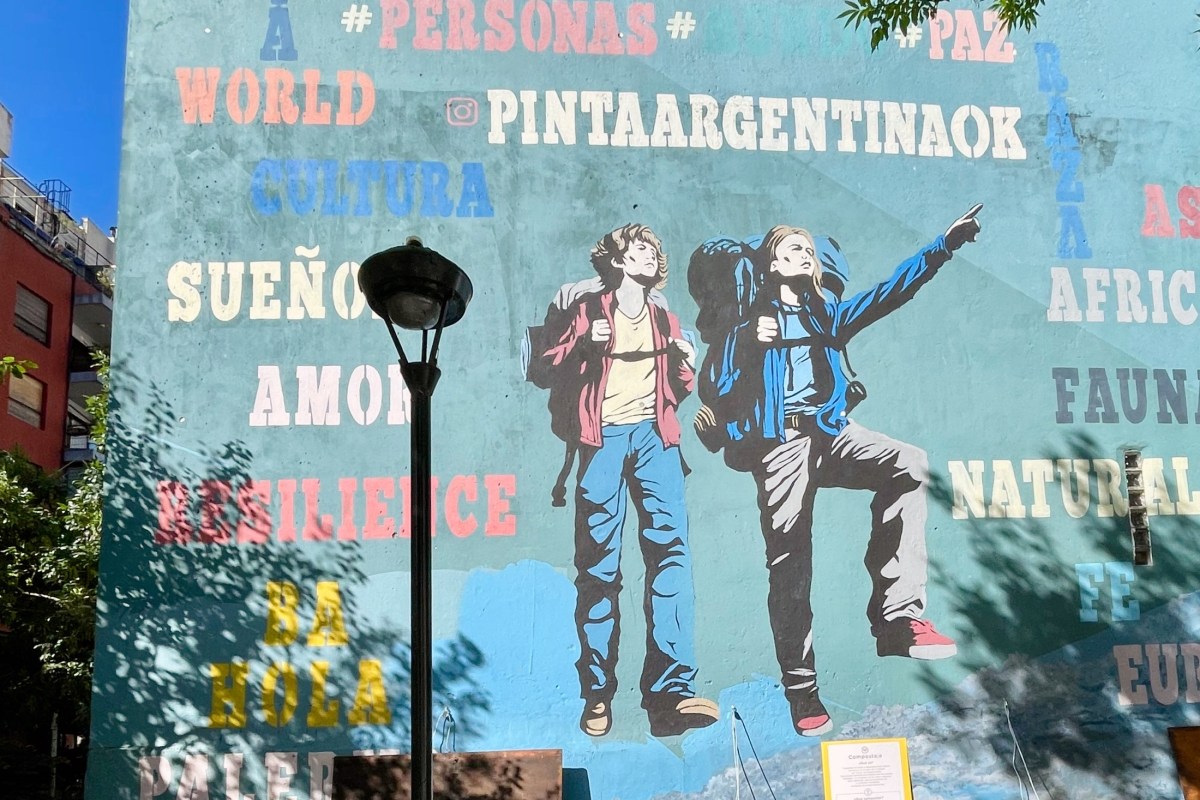
20221105 argentina, buenos aires street art

As it is the world’s eighth largest country, it’s difficult get a trip through Argentina into just one blog post. And to add Uruguay in as well! But I will do my best to give the highlights and most pertinent information from our month here in this beautiful part of South America.

If you are a carnivore, look no further than Argentina

Patagonia

Our Antarctic cruise docked in Ushuaia on Thanksgiving Day, and after making it clear to us that yes, we really needed to leave the boat (or pony up a quick $4000 for the next sailing), we found our guesthouse and set about to getting our land legs back. We took a local bus to Tierra Del Fuego National Park and did some hiking out there ($15 US for the round trip bus tickets, and $10 US/ 3000 pesos for the entry to the park). The park borders the Straits of Magellan, with the snowy peaks of Chilean mountains visible just a few miles away. Later, we listened to the sounds of an entire town cheering as Argentina scored in the World Cup. We also visited the Western Union to get some cash (the “Blue Dollar” rate for USD is twice as good as the “official” ATM rate). Armed with – literally- fat stacks of cash, and nowhere to go but north, we took a night bus up to Calafate.

Once thought to be empty of people, explorers named this area “Tierra del Fuego” when they saw cookfires from their boats

Calafate is the home to several of Patagonia’s national parks, including the Perito Moreno glacier. As our bus rolled through mile after mile of pampas, we saw plenty of rheas (a type of ostrich), guanacas (a type of camelid that looks like a llama), rabbits, sheep, and mara (long-legged relatives of the guinea pig). Calafate is a cute little town filled with great parrilladas (grills) and North Face clothing outfitters, there are endless opportunities in Calafate to get out and enjoy nature. From hiking, to boating, to horseback riding, the Argentinian side of Patagonia does not disappoint. And the long days in the Southern Hemisphere’s summer make it easier to fit it all in.
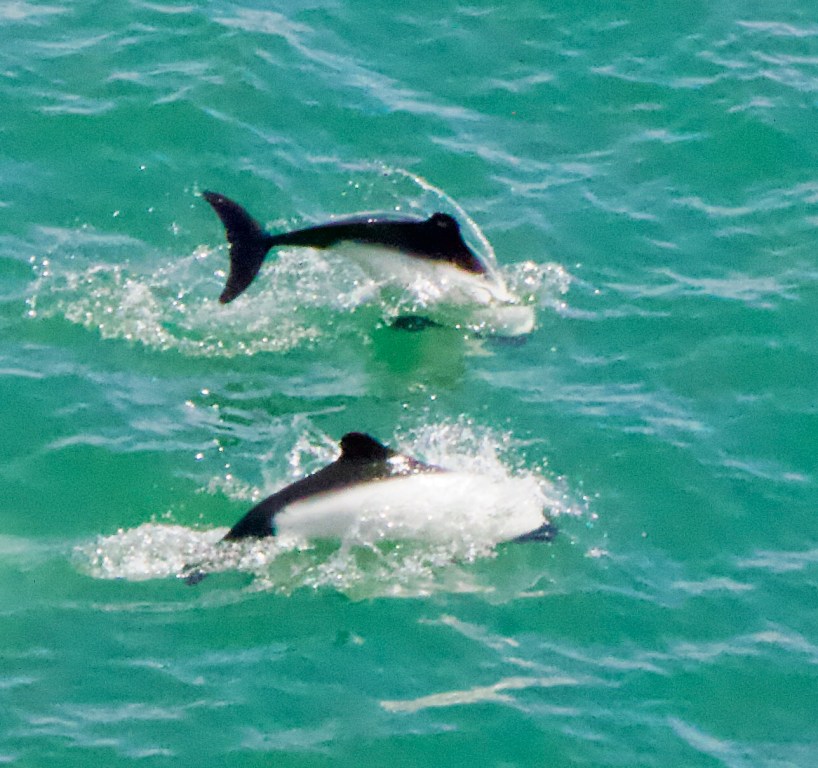
We spotted these Commerson’s dolphins- also known as panda dolphins- as we ferried across the Straits of Magellan leaving Ushuaia

It’s nearly the same price for the public bus to the Perito Moreno National Park as it is for a tour shuttle, so we opted for Caltour to pick us up, take us the 80km to the glacier, and return us to town four hours later ($25 USD for the bus, and about $13 entry/4000 pesos). While out at the park, visitors can walk along boardwalks that face the huge glacier, waiting for a loud crack! and a chance to film the ice calving, and they can opt for a boat that gets up and close (but not too close) to the glacier at the waterline.

I was so excited to have caught this huge chunk of ice calving off the Perito Moreno glacier!

From Calafate we faced a choice. We could take a 24 hour bus ride along “Route 40” to the picturesque town of Bariloche, in Argentina’s Lake District, and then another 21 hour bus to Buenos Aires… or we could take a 3 hour flight. We decided on the flight.

The Argentine flag flying proudly in front of Buenos Aires’ Congress building

Buenos Aires

Buenos Aires is a lively city, that barely seems to sleep. It has a very European feeling to it, in large part due to the huge numbers of Italians who migrated there during the early part of last century. The Italian heritage of the city can be felt in the high percentage of bookshops, coffee culture, pizza, and ice cream.
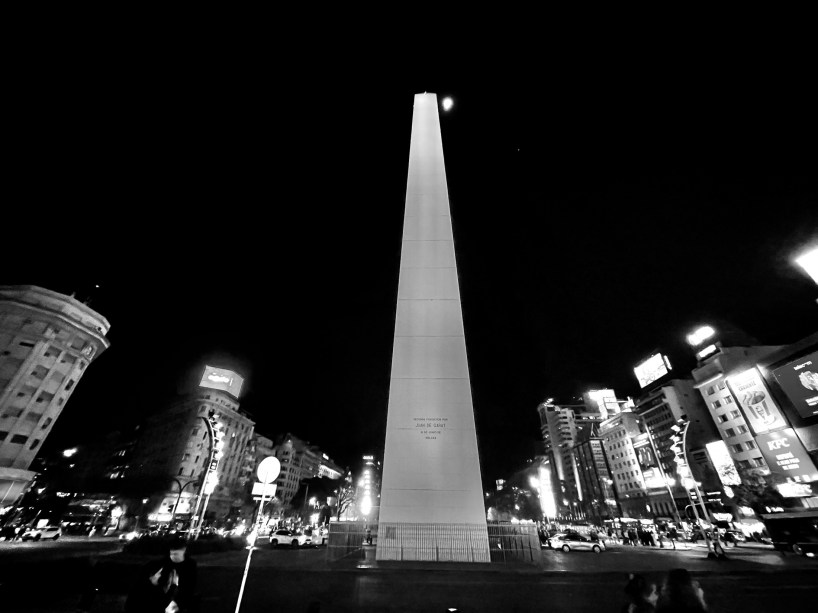
The obelisk in Buenos Aires makes an excellent reference point when roaming around the city

We wound up spending eight days in Buenos Ares and were able to experience a few different neighborhoods. We visited Boca, home to BA’s most famous soccer team, and the nearby Plaza Dorrega for a milonga (an outdoor tango show). We had a walk through the Mercado San Telmo, eating a delicious choripan (chorizo sausage on bread, with a chimichurri sauce). We took a walking tour around the Palermo area and Recoleta, and saw Eva Peron’s grave, and another walking tour that taught us about different street art movements.

Tango dancers put on a show at Plaza Dorrega

For a couple of nights, we stayed in a private room at the Viajero Hostel, which was a really fun place to stay. We met some other travelers, took an empanada-making class, a tango lesson, sang in a karaoke night, and enjoyed a pizza tour of the city. Nearby, we visited the Ataneo Grand Splendid Bookstore, voted “most beautiful bookstore in the world” by National Geographic (and by me).

The Ataneo Grand Splendid Bookstore, a former theater

It’s easy to take a ferry ride to Uruguay, so when we were ready to leave Buenos Aires, we booked tickets with Bosquebus ferry ($100 USD by credit card online, or half that if paying the blue dollar rate in cash). We had time to visit the Puerto Madero nature reserve while waiting for our ferry, and then we were off to Colonia, Uruguay!

Uruguay

You can visit the small historic city of Colonia in just one day from Buenos Aires, but we stayed two nights and enjoyed strolling around the cobblestone streets, rhododendrons exploding everywhere, and trying out their “national” dish of chivito (a thinly cooked steak, with mozzarella, ham, tomatoes, mayonnaise and black or green olives, and commonly also bacon and fried or hard-boiled eggs, served as a sandwich in a bun). Colonia is definitely high on my list of places to see, a welcome respite from the hustle and bustle of Buenos Aires.

The lighthouse in Colonia rests against the one wall remaining from the city’s first church

From Colonia we took a bus to Montevideo, where we stayed for four days. You can also take a Bosquebus straight from BA to Montevideo, but it takes longer, and if you have to choose, I suggest Colonia. The bus between the two takes about 3 hours with stops, 2 of you catch an express. We arrived at Tres Cruces bus terminal, found our hotel (it felt strange to deal with credit cards again after using cash in Argentina), and signed up for a GuruWalk walking tour.

Spring has sprung; in fact, summer is nigh

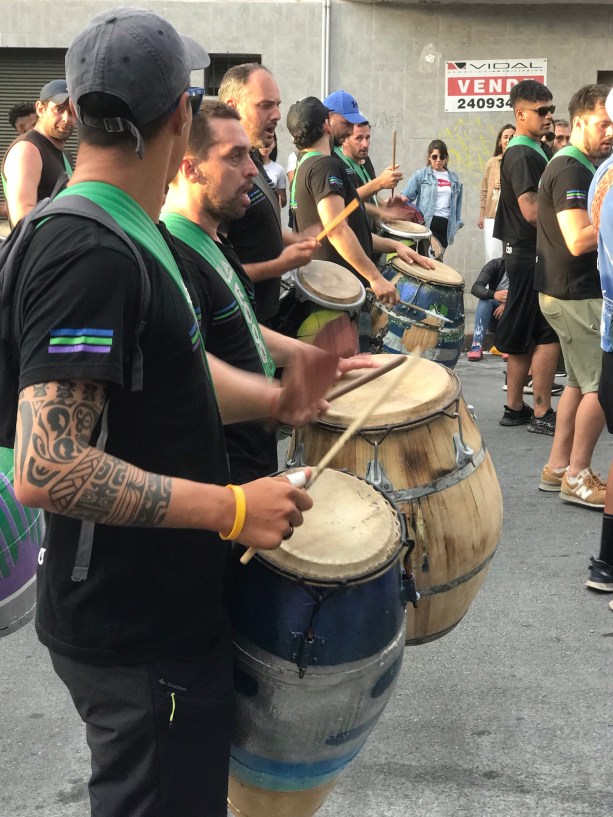
Most of Uruguay’s 3.5 million residents live in Montevideo, but it is still not a super crowded capital city. There is plenty of shopping, the city is lined with beaches (on the Rio de la Plata, not the ocean), and there is a cute little historic center. They claim to have south Americas oldest working theater. I particularly liked their indoor port market, constructed from an old iron London train station. Our favorite experience there was when we happened upon a huge Candombe parade, featuring 25 local groups practicing their Carnival routines with drums, flags, dancers, and more. Wow! It was breathtaking.

From Montevideo, we took a six hour bus north to Salto, to visit the hot springs. Pro tip: take the public shuttle bus from Salto to Hot Springs Daymán, not a taxi! It leaves every half hour and takes just 15 minutes, and costs 50 pesos each person. We were mainly using Salto as a place to break our long journey north, but I did really like the town, and the hotel owners were incredibly kind and let us stay for a very late check out, as we had a night bus. We soaked in the thermal waters as long as we could. We crossed the border back into Argentina at Salto/Concordia, and took a night bus from Concordia north to Puerto Iguazu (13 hours, 15,000 pesos or $50 USD).
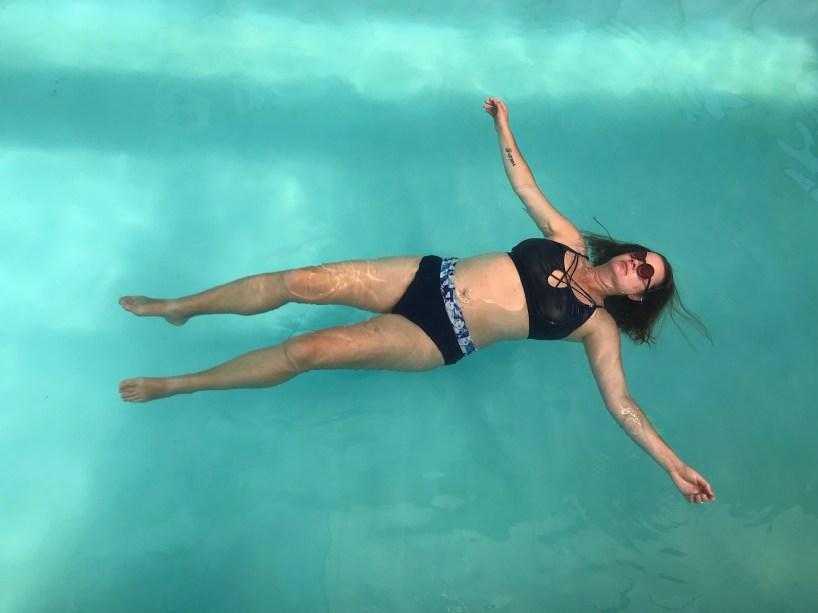
Soaking those aching joints!

Iguazu Falls

Arriving in Puerto Iguazu, the most northern city in Argentina, it was noticeable hotter and more humid than anywhere else we’d been so far. Luckily, we got a hotel with a pool, and were able to cool off in the water. The public bus runs to the Iguazu Falks National Park every thirty minutes, so it was easy to catch a bus and visit the park on our own (entry 4000 pesos/ $12 USD at the Blue Dollar rate). And… wow. It is impressive. The sheer magnitude of water forming the falls, 3 km wide and 80 meters tall, is astounding.

The falls from the Argentinian side
Iguazu wildlife: a butterfly, two coaties, a capuchin monkey, and a toucan

The following day, we took a bus over to the Brazilian side. And if I had been impressed the day before? Wow. Seeing the “Devil’s Throat” from the Brazilian side was incredible.

Chris at Foz do Iguaçu, Brazil

And with that, we’d gone from the southern-most city in Argentina to the northern-most. There’s no way to see all of this great country, but we tried our best. Now it’s on to Paraguay, and then Bolivia. Stay tuned!

Salta

(Edited 12/20 to add Salta). We wound up taking a night bus from Asuncion, Paraguay, and re-entering Argentina for a few days more days en-route to Bolivia. We arrived in Salta and spent a couple of days exploring this medium-sized city. We joined a walking tour that meets every night (Mon-Fri) at 6 pm in front of the cathedral and that helped us get oriented. Our guide also suggested dinner at El Charrua, which was probably the best steak dinner we had in Argentina. While we were in town, Salta had a free museum night, and we visited three of them. The most interesting, to me, was the Museum of High Altitude Archaeology, which features three of the child sacrifices from the Incas. Both creepy and fascinating, from a sociological and archaeological perspective!
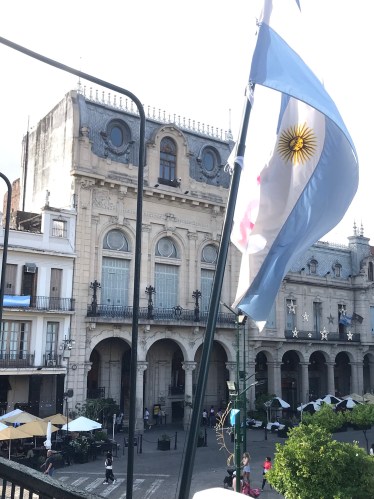
Salta, the 5th largest city in Argentina

The next day was the final game of the World Cup, and of course Argentina was playing. What a game! We needed to take a bus towards Bolivia, so we watched with our bus mates and we all cheered as Argentina won. Champions of the world!! When we arrived in Humahuaca, our final city in Argentina, the entire town was gathering to celebrate.

Argentina celebrates the World Cup

The next day we spent a quiet day in Humahuaca. From the old town you can see the Andes mountains, and an area called “The Hills of 14 Colors”. The cobblestone streets and small buildings, along with the dark eyes and dark hair of the inhabitants were an indication that Bolivia was just a few miles away. The next day, we took a two hour bus, and arrived at the Bolivian border.

Humahuaca, Argentina

Looking for last-minute Antarctica tickets? Eight FAQ answered

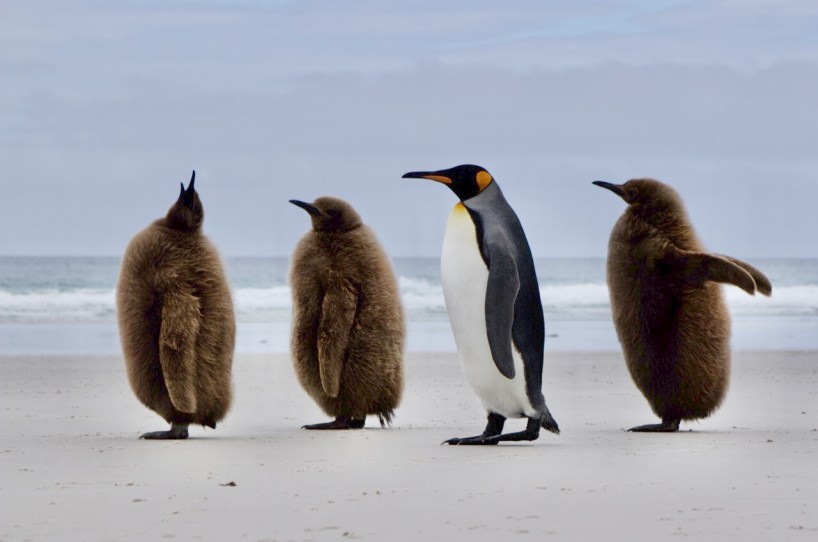
King penguins antarctica

When Chris and I (Deah) set out on our year-long South American journey, we hoped that a visit to Antarctica would be in our near future. I set about to researching how to make that happen, and two months later, we were on a boat heading to our seventh continent. Here’s the most frequent eight questions I’ve heard from friends and travelers on how to score the very best deals to go to Antarctica.

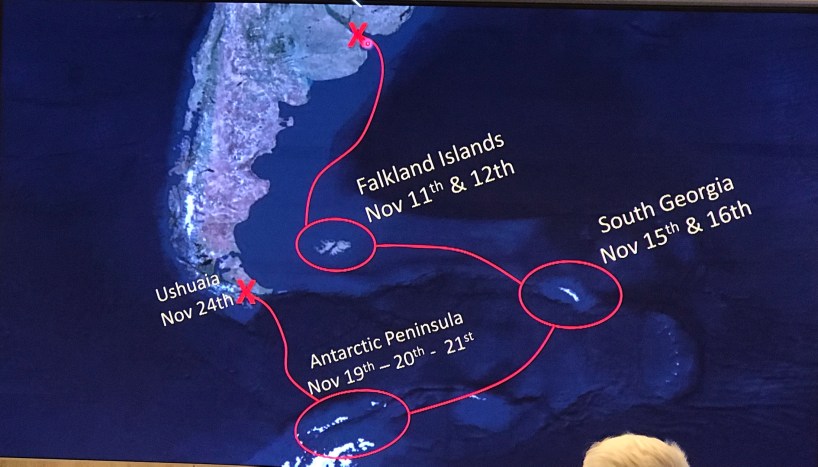
Our itinerary was perfect for us!

1. What is the best time of year to visit Antarctica?

Aside from getting a paid or volunteer job at a research station, your only options for cruising to Antarctica are going to be in the Southern Hemisphere’s summer months- namely, November through February. This is the only time that the pack ice breaks up enough, and storms calm enough, to get ships in and out across the Drake Passage and to the continent. At the beginning of those months you will see more seals and more fantastic snow and ice, while in later months you will see more newly-hatched penguins born towards the end of summer. Cruises do tend to get more expensive as the summer goes on, although there are always last-minute cancellations.

November is the best month for ice and snow

2. What are the best sources for gathering information about trips to Antarctica?

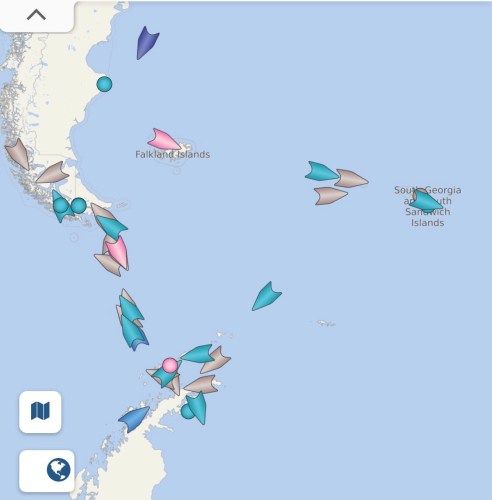
I start my searches online for recent travel blogs so that I can read first-hand accounts of people who have recently taken similar adventures. Add keywords like “travel blog” and “backpacking” to rule out news articles and marketing sites for cruise lines (although those can have good info as well). Since travel has changed a lot post-Covid, add in “2022” to your search to get the most updated information. The website Cruisemapper has a wealth of good info as well.

If a cruise might be in your future, this is a great site to start your searching.

The single best place I got information for this trip was by joining a private group on Facebook, the Antarctic Travel Group. By reading through the past several months’ of posts for that group, I was able to get a great overview of Antarctic travel: do’s and dont’s, what to pack, reviews of various cruise companies, and what to do in town before and after a cruise if you have extra time.

I’m sure there are other groups, but this one was a wealth of information

3. Should I just go to Ushuaia and wait at the dock?

It used to be that you could show up at the Ushuaia (Argentina’s most southern city) airport and get an empty seat on a resupply flight to Antarctica (not anymore). You can also get to Ushuaia and walk through the small town and talk to various cruise operators and look for a last minute deal. People get ill, miss a flight, or have other emergencies, and can’t make their cruise. Of course the cruise line still wants to fill that cabin, and may offer a serious last-minute discount.

You want to fill that last-minute cabin, don’t you?

However, you can essentially do the same thing by establishing a dialogue with cruise travel agencies online. I reached out to Intrepid, Hurtigruten, and Quark, and got standard email replies. However, I had best results by starting a WhatsApp conversation with Freestyle Adventure and Epic Polar travel agencies. By letting them know what places you’re interested in getting to, the size of boat you want, and the rough dates you can be available- and by touching base with them frequently- you can be first in line when they get an awesome new deal or a last-minute discount. We had all those text conversations while we were traveling around Chile, ready to take a quick flight or bus, rather than sitting around Ushuaia waiting.

Large cruise ships can only sail near the continent, not land, so if you want to get out and touch the Antarctic continent, opt for a small-to-medium size

4. What should I pack?

Layers. Layers. Layers. The cruises to Antarctica do go in the “summer” months, but it is still cold and windy at the lower latitudes. You will want a base layer (thermal leggings, long johns, or fleece-lined tights), t shirts, long sleeved shirts such as microfleece, and of course hat and gloves. Most boats require that you bring water-proof pants, to keep you dry while out in the zodiacs. We were already traveling when we booked our cruise, and were able to purchase rain pants in a hiking town in Patagonia. Our ship had a (free) launderette on board, so even though we went on a 17-day sailing, we only needed one set of everything.

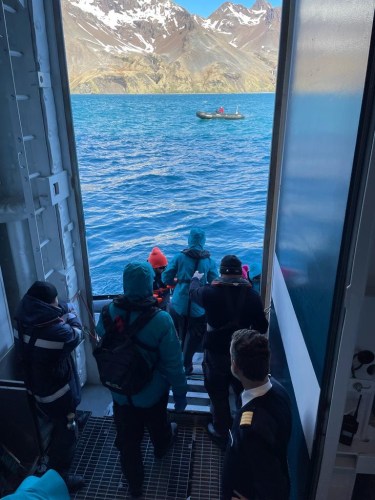
Expedition-style cruises do not use tenders to get you to a dock. They use zodiacs, and most landings will be in 6 inches to 2 feet of water. The muck boots and rain pants (or ski pants) will keep you dry underneath while you’re on shore

Most boats (but not all- check with your travel agent or whoever you purchase from) will provide you with waterproof “muck boots” for the wet landings, and will provide a branded parka that you can keep after the cruise. Ours were 3-in-1 jackets, so they had a warm down layer and a waterproof Gortex outer layer. Don’t bother wasting room in your carry-on if you don’t need to!
Our 3-in-1 parkas kept us warm and dry, even on zodiac rides. Don’t overlayer- you can actually get too warm!

5. What camera should I take?

In general, you want to take a camera that you’re already comfortable with. That being said, if there’s one place in the world where you might want something nicer than a cell phone camera or a simple point-and-shoot, it’s Antarctica. Many people on the boat- but not all- will have special lenses for long-distance, close-up photography. You can also rent one if you like to try one out. For us, Chris captured our best shots with his Canon 70D, while I used our iPhone 12 to create short videos, panoramas, slow-motion, and time-lapse shots.

These king penguins were captured by our Canon

Some cruises have an additional photography course “add on”, typically an extra $1000, which gets you invited to lectures and small group landings with an expert photographer. Our ship, the SH Vega, had award-winning photographer Renato Granieri. He gave several photography lectures to any interested guests, as well as a link to his photo album of the cruise when we disembarked.

A tip from Renato: focus on one individual in a sea of many

6. Are all cruises pretty much the same?

Not really. Ships can vary in size, from about 100 passengers up to 2000 or more. They can vary in the level of luxury- the MV Ushuaia is a former NOAA research vessel, very basic, while we traveled in the Swan Hellenic Vega, which was pretty much five-star (not our usual scene!). I researched other cruises that had add-ons such as arctic camping, kayaking, snow-shoeing, and photography. Some cruises are “classic” Antarctica, meaning they essentially leave Ushuaia, cross the Drake Passage, visit the South Shetland islands, and attempt to reach the Antarctic peninsula. Other ships, such as ours, leave from Buenos Aires, and ours included stops in the Falkland Islands (Malvinas) and South Georgia islands. With all ships, there is no guarantee that wind and weather will allow for a landing on the continent- but do check ahead of time that your ship has applied for and secured permits to at least try. Every ship that goes to the Antarctic is a part of IAATO, and they coordinate all the permits and ensure that Antarctica stays as pristine as possible.

Although you will see penguins and seals in Antarctica, the truly massive colonies live in South Georgia Islands. Don’t miss those!

7. What do you do while you’re on board?

It can easily be two or three days’ sailing between Buenos Aires, Falklands, South Georgia, Shetland islands, and Ushuaia, so there will be days at sea with no landings. Some ships have a sauna, gym, spa, and pool, as well as a beauty salon and massage room. Ships have both “formal” and “informal” dining. Even the formal dining, an amazing five-course dinner, is less “formal-wear”- our ship specifically asked us not to wear high heels on board. And there are several lounges, a science lab, and a library. Did I mention wine tastings and cocktail parties with caviar? That too.

Thanks to our lessons in whale behavior, we were able to anticipate where these humpbacks would breach next.

In between landings, on most ships, various expedition leaders and experts will give talks or lectures, which may be video-recorded and viewable from your stateroom. We had a lecture on the Falklands Conflict, photography workshops from Renato, tales of PolarAJ’s North Pole trek, and history lessons about Ernest Shackleton and other polar explorers. We also had Citizen Science opportunities to identify bird species, whales, seaweed, and clouds.

A photography lesson from Renato

If all that’s not enough, we had a selection of movies on our tv (similar to the kind on airplanes), and we had free WiFi for the duration of the sailing. I know that some other ships have a WiFi package that costs extra. Or you can choose to disconnect and spend your time editing your 8000 penguin pictures!

Do we need to keep this picture of a penguin jumping into the Antarctic? Yes. Yes we do.

8. Do you need insurance?

Yes. You really do. Because we have trip insurance through our United Explorer credit card, and are extremely flexible with our travel style, we rarely opt for extra travel insurance. However, most Antarctic cruises will require that you get an additional medical and evacuation insurance that covers up to $500,000 per person. Read these carefully- they can be quite sneaky in the wording and not “actually” cover Antarctica. I used insuremytrip to get a baseline idea of policies, but based on a tip from my ATG Facebook group, found a very reasonable policy via our USAA banking/insurance company. For less than $200, we were able to insure our trip against medical complications.

Just imagine the medical attention you’d need if one of these seals came for you.

I can tell you that the day we left port, two other ships had to return home early due to medical emergencies on board. They were in the Drake Passage and could not get a helicopter evacuation. Once they returned to port, passengers scrambled to get a different flight home, hotel stays, or an alternative sailing. Also on our sailing, we had a passenger with a medical emergency while in the Falkland Islands, who needed hospitalization and a flight back to South America. And, tragically, another ship on our sailing route had a terrible zodiac accident resulting in two deaths. They immediately headed back to Ushuaia. All of this is to say that you may be the person on board needing medical attention, or you may have your travel arrangements affected by external factors. Antarctic travel is very precarious- and passengers tend to skew toward the mid-elderly- so be prepared and protect your trip.

Luckily no medical attention was needed after I attempted this- twice.

Going to Antarctica was a dream come true for us. I was incredibly happy to finally make it happen, after thinking about it for YEARS. Best of all, we were able to purchase last-minute tickets at less than HALF the price listed on the ship’s website. By doing our research, reaching out to agencies, and being super flexible, Antarctica was finally within our reach.

“Pssst! Check out those savvy travelers- what a great deal they got!”

Questions about visiting Antarctica? Drop them below and I would be happy to answer. Let’s get you that fantastic deal to the White Continent!

Rapa Nui (Easter Island) Reopens for Tourism: how to get there

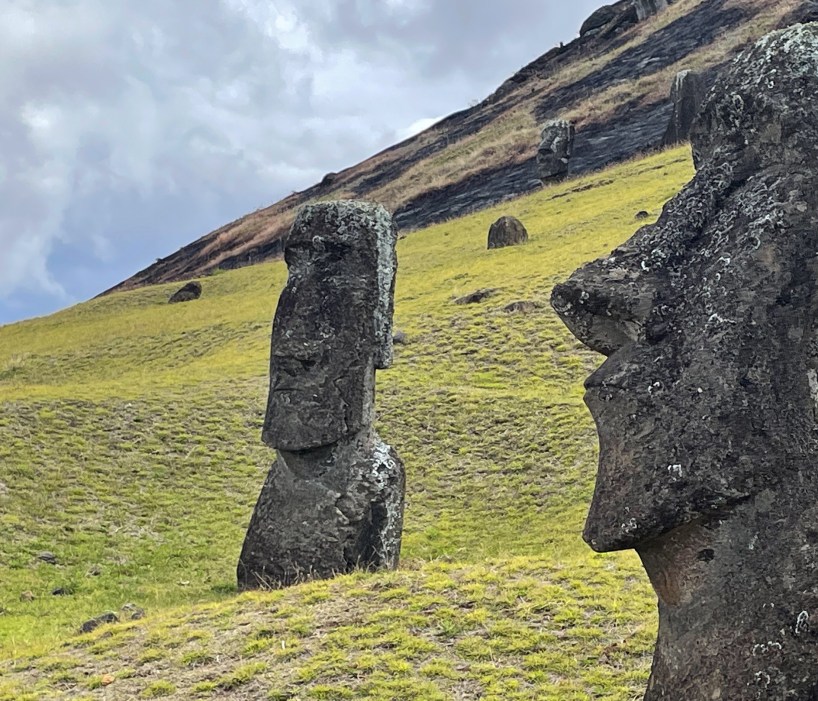
Moai on Rapa Nui, Easter Island, Chile

After being closed for two years due to the pandemic, the island of Rapa Nui (also known as Easter Island or Isla de Pascua) has reopened as of Aug 4, 2022. Chris and I visited the weekend of October 7, just a couple of days after a fire swept through the national park, damaging several of the moai. Fortuitously, when we visited, an investigation team was on the scene, and all national park sites were once again open to the public.

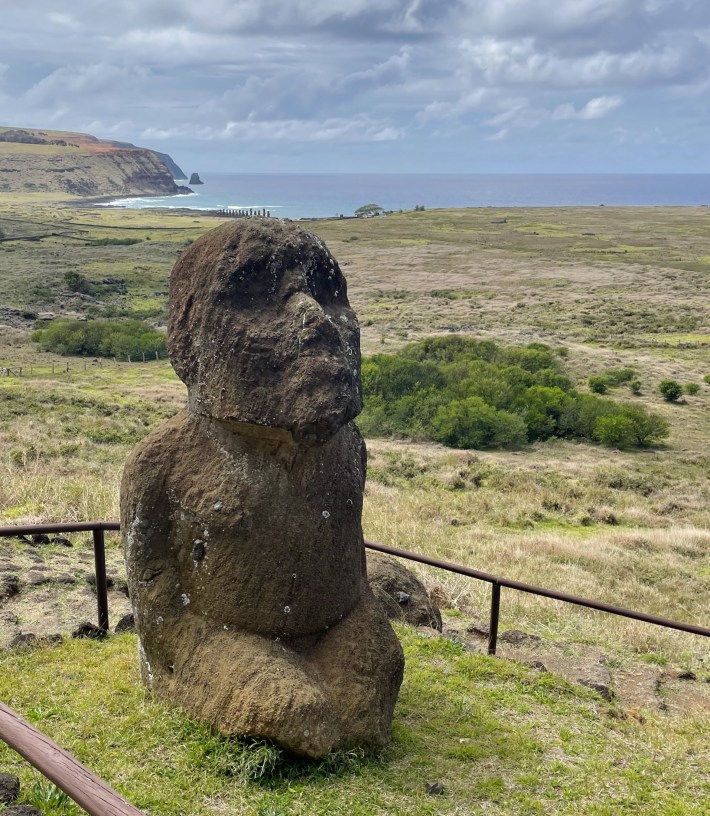
Two moai, located near the volcanic stone quarry that all moai were carved from. Nearly half of the island’s 887 moai still wait at the Rano Raraku quarry, never having been transported to the island’s villages in ancient times.

Getting to Rapa Nui can be tricky, but not impossible. Only one airline, Latam Airlines, currently flies here. Pre-pandemic, there were daily flights from Santiago, Chile, as well as weekly flights connecting Rapa Nui to Tahiti. The best (cheapest) way to get a ticket on Latam Airlines is to access it via their “Chilean” website (as in, use a VPN, or when it asks you if you’d like to redirect to the US Latam site, click “no”). You will have to navigate through the site in Spanish, but it’s pretty straightforward. For now, you can only purchase a ticket originating in Santiago Chile. If you go through the other Latam portals, the fare will be increased by quite a bit.

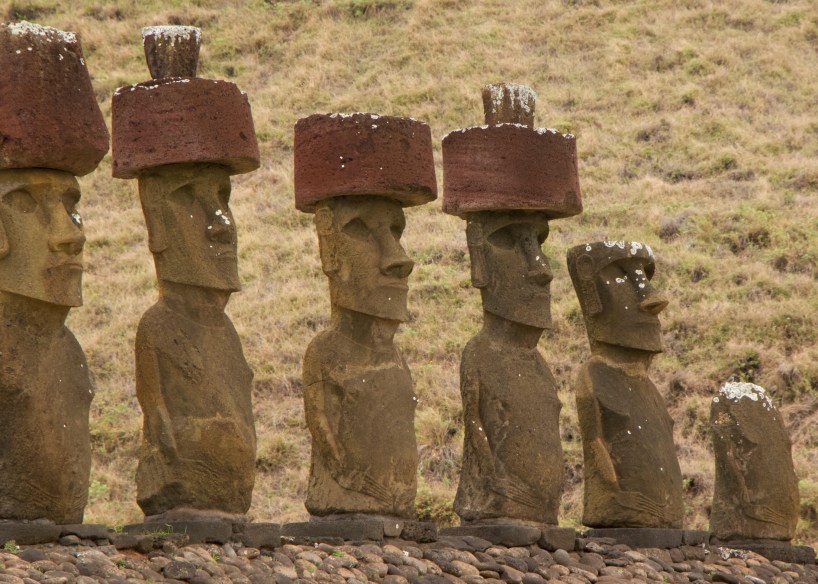
Traveling via Latam Airlines may be tricky, but not as tricky as sailing from Micronesia. Polynesian oral tradition says that these 7 explorers reached Rapa Nui, and in a dream, Chief Hotu Matu’a saw that they had arrived successfully. They are the only 7 moai to face the sea, anticipating the chief’s arrival from Hiva

The second step is to secure your accommodations. Per the Latam website, you must book with a Sernatur designated accommodation, or have a letter of invite from an island resident. However, this is not too much of a worry, as basically all hotels and cabañas on the island are registered with Sernatur. With a population of only 7000, everyone here knows everyone else, and tourism is the main income generator, so everyone is following the official rules.

Ancient Rapa Nuians lived in these thatched houses shaped like upside-down boats. Now, most of the island’s population of 7,000 live in Hanga Roa, the only city on the island.

To visit Chile, you will need to enter your vaccine information to the government website Mevacuno. Be sure to do this a few days before you go, as it takes 24-72 hours to go through the approval process. Your hotel will likely send you this link as well, as will Latam Airlines. As of October 1, you do not need a PCR test to enter Chile.

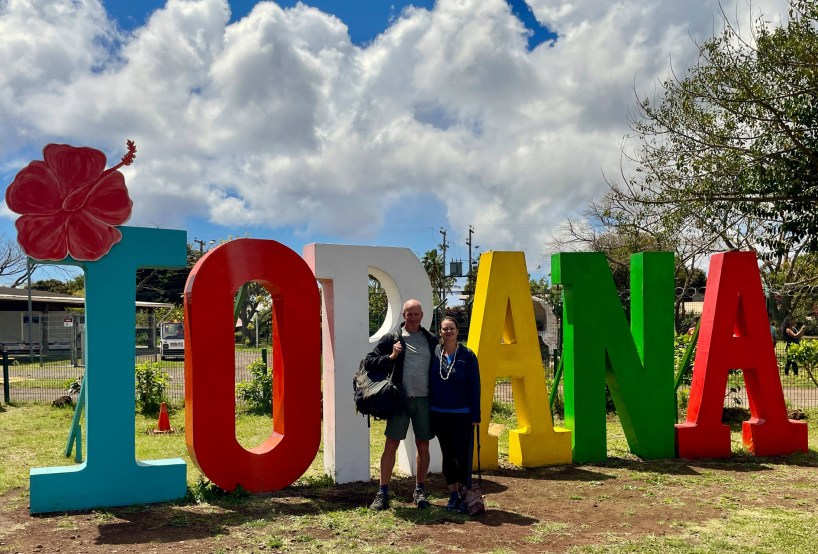
Iorana! It means “welcome”; very similar to Kia Ora in New Zealand and Ia Orana in Tahiti

However! You do need a PCR test to enter Rapa Nui. You must take a test 24 hours prior to your flight from Santiago to the island. You can do this at the airport (go to the Domestic terminal), or at other locations around town. This test costs about $22 (cash or card, USD or pesos is fine) at the airport, and we received our results in about six hours. There is also a testing site at the Hilton Garden Inn near the airport.

Apparently, as of December 1, 2022, the Covid test 24 hours prior to arrival is no longer mandated.

It’s only a 20 minute walk from the island’s airport to Ahu Tahai, a beautiful sunset point. You do not need the national park pass here.

Once you get the result from the testing facility (this will be sent to you in an email), you will need to upload this to the FUI, a form that allows you to enter Rapa Nui. And now the paperwork is done! Head to the airport, find the Latam Airlines ticket counters, and present your printouts or screenshots of your hotel reservation, your Mevacuno, your PCR test results, and your FUI. They will double and triple check you so it’s easiest to have it all at your fingertips when you present your passport to get your boarding pass. Despite having all this, they still asked to see our physical vaccine cards- so bring those as well.

Only about 45 of the moai were ever completely finished: carved out of volcanic rock, transported to a village, inserting eyes and a pukao (top knot), and raised into a vertical position. The rest of the moai either remain at the quarry, or were broken in transit.

This sounds like a lot, but just take it one step at a time. Your hotel will likely send you reminders along the way. As you plan your trip, consider how long you want to stay and what you want to see there. Be aware that in order to see the sites, you MUST purchase a national park pass, which costs $80USD (you can purchase online or at the info point in town, and you can use cash, credit, USD or Chilean pesos). The park pass is good for up to ten days. You will need to show this at each of the dozen or so national park sites across the island. I guess you could stand at the edge of the road and look in from afar, but did you really fly all the way here to not see them close up?

The next step to getting here is to climb down this crater, cut enough reeds to make a float, swim out to a nearby island Motu Nui, and wait for the first bird’s egg of spring. First one with an egg wins! Just kidding, you don’t have to do that- but for 200 years, warriors would compete each spring for dominance of political and social power, in a Birdman Competition on the island.

Do the moai have bodies buried beneath the earth? Only one moai was ever carved with a body and feet, in a kneeling position. The rest of the moai have heads and torsos, and were meant to rest upon raised funerary platforms (ahu)- not planted in the ground. There are some moai that fell over the ages, and have been partially buried by erosion.

Do you need to rent a car? Do you need a guide? As of October 2022, you must have a registered guide to visit the national park sites (this is a fairly new requirement, so older blogs might say differently). So you can either rent a car and hire a guide for the day, find a group tour, or hire a guide who has a car. In our case, our hotel hooked us up with Tararainor Tour, owned and operated by local guide Jorge Tepano, and we had a wonderful time with him. We did a full day tour and two half day tours with Jorge, and learned so much about the island, it’s people, and their history. He really knows his stuff and I highly recommend him.

Jorge shows us where two moai began to be carved from the volcanic motherstone- but were never completed.

I know a lot of travelers chafe at “having” to employ a guide, but think of it this way. This island has been closed to tourism for two years. The hotels, the restaurants, the guides, everyone has suffered, with very little help from the Chilean government or UNESCO. The least we can do is employ a guide to share their knowledge with us, and ensure their family can remain on their ancestral island. In addition, people without guide supervision continuously do dumb stuff at tourist sites around the world, disrespecting and even damaging priceless historical artifacts.

Rapa Nui is a beautiful island, and believe me- you will appreciate it so much more with a local guide

Would I recommend wading through the paperwork, uploading the information, paying for price of the tickets, etc., just to see some thousand-year-old statues? I absolutely would.

Questions about Rapa Nui? Drop them below and let me know!

The Movie Trail of Malta

Birgu, Malta

Even if you’ve never been to Malta, that doesn’t mean you’ve never seen some of its natural and historical beauty! Malta has featured as a filming location in dozens of movies over the years, so chances are, you’re more familiar with Malta than you think.

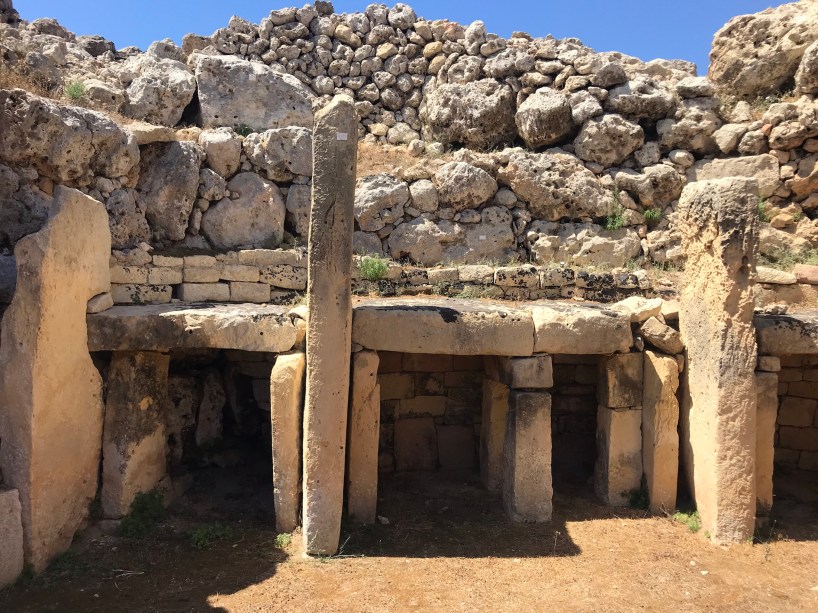
The oldest structures on Malta- in fact, the oldest structures on Earth– date back to 3500 BC. These prehistoric megalithic temples on both Malta and it’s sister island Gozo showed up in the 1953 movie The Malta Story, starring a young Alec Guinness.

These temples have stood here on earth longer than the pyramids in Egypt, or Stonehenge.

As Malta has long been a handy place for resupplying with water from its fresh water springs, ancient seafaring societies such as the Phoenicians, Greeks, and Romans established a presence on these three islands. It’s not hard to see why they would choose some of the beaches and caves here to film scenes from Clash of the Titans (1981) and Troy (2004). The scene showing Achilles (Brad Pitt) talking with his mother, the sea nymph Thetis, was filmed on the Maltese island of Comino.

Ghajn Tuffieha Bay, on the north coast of Malta, was used for the beach scene when the Greeks land at Troy (photo credit: moviesmadeinmalta)

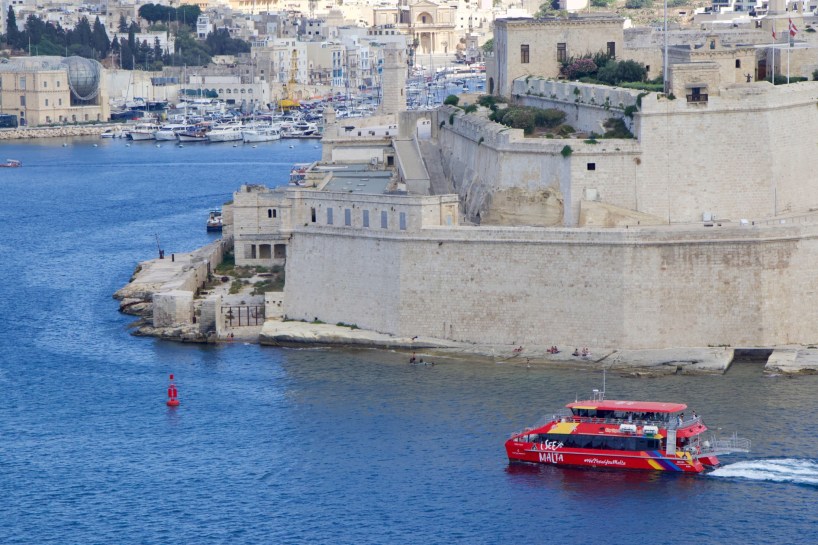
With its monochromatic sandstone walls, it’s easy to see why Malta has represented other scenes from Ancient Greece and Rome as well. Fort Ricasoli, just across the Grand Harbor from Valletta, was turned into ancient Rome for 19 weeks while they filmed Gladiator here in 1999. In fact, it was after a night of drinking at “The Pub” in Valletta that Oliver Reed, who played Antonio’s Proximo, died- which is why his final scene had to have some CGI magic to complete.

Fort Ricasoli, now controlled by the Malta Film Commission, was used for Gladiator and for the movie Troy.

Filming Troy wasn’t the only time Brad Pitt visited Malta. He and Angelina Jolie honeymooned here, and she directed By The Sea on the island of Gozo, one of the three islands that make up Malta. You can also spot some of Gozo in Game of Thrones season one – the Dothraki wedding- and in Clash of the Titans- the scene featuring the battle of the Kraken was shot at the Azure Window.

The Azure Window, before it’s collapse in 2017 (photo credit: Condé Nast)

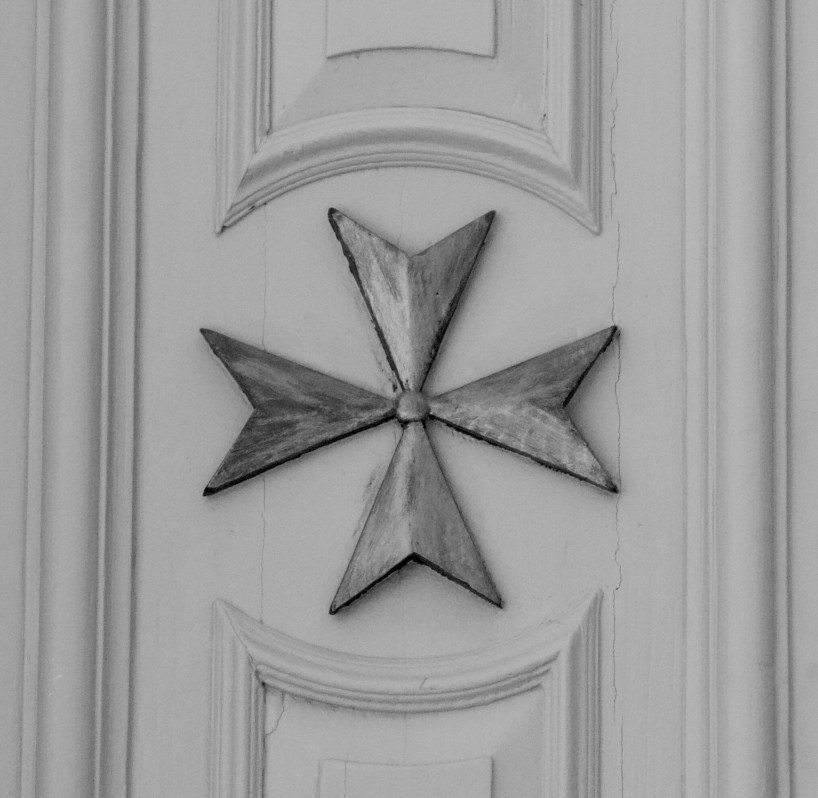
In the late Middle ages, Malta was home to the Hospitaller Order of St John of Jerusalem, so it is no surprise that Malta would be a perfect place to film movies set in the times of the Crusades. The Order built most of the island’s defense fortifications in the 200 years they ruled Malta as a vassal state of Sicily (from 1530 to 1798). Roman Polanski’s 1984 movie “Pirates” was filmed here, as was 1995’s Cutthroat Island, starring Geena Davis. The city of Valletta has also doubled as both “Italy” and “France”, in movies such as Murder on the Orient Express, the DaVinci Code, and The Count of Monte Cristo.

The Grand Harbor makes an excellent Grand Canal in Venice

Not all the movies filmed here take advantage of Malta’s distant past. Thanks to being a British Protectorate from 1800 to 1964, a number of buildings were built in the modern neo-classical style. You can see some of these buildings in Munich (2005), and The Holiday (2021).

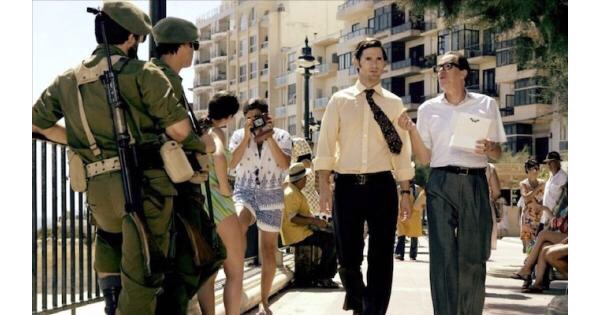
The Tel Aviv promenade scenes in “Munich” were actually filmed in Sliema, Malta (photo credit: common sense media)

In fact, some of Malta’s film locations feature the current times or the near-future. Thanks to the adaptability of the streets of Valletta and the Grand Harbor itself, Malta has acted as Jerusalem in World War Z, and as the African coast in Captain Philips, starring Tom Hanks.

The walls around Birgu, one of the Three Cities across from Valletta: just add zombies, and you have the scene from World War Z as Brad Pitt is leaving Jerusalem

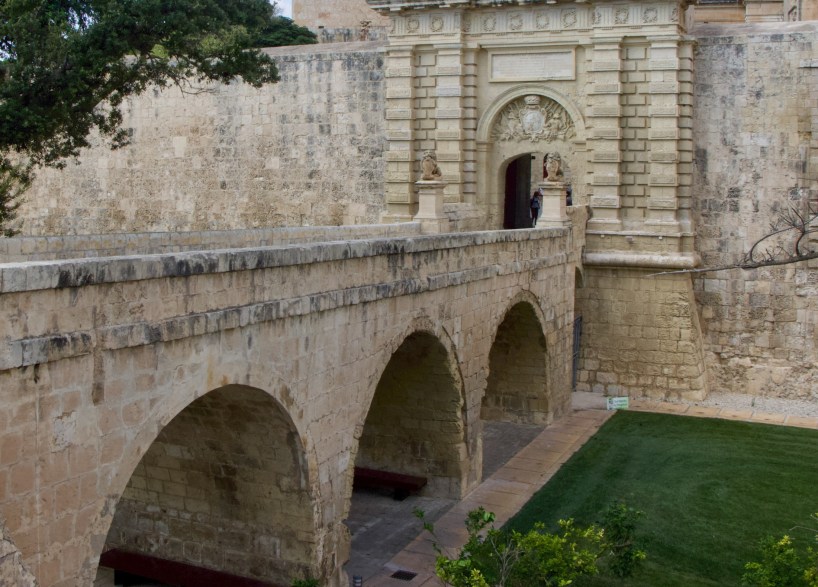
Finally, the timeless features of Malta lend themselves seamlessly to sets that are neither historical nor geographical, at least not in our world. The popular video game, Assassin’s Creed, was filmed as a movie here. Game of Thrones season one used several locations around Malta, including the city of Mdina, posing as the Red Keep in King’s Landing, and Littlefinger’s brothel.

The Mdina Gate, and the last place Catelyn Stark saw Ned Stark alive

Even Malta underground gets in on the movie action. Valletta has three levels of underground tunnels, some of which have existed for hundreds of years. The knights built tunnels for water collection as well as sewage purposes, and in the 1940s, thousands of Maltese spent considerable time in bomb shelters as more than 17,000 tons of bombs dropped on the island. You can tour some of these underground tunnels via the Lascaris War Rooms museum, and see them in action in the film The Malta Story.

These tunnels sheltered 10,000 people in 1941-1942

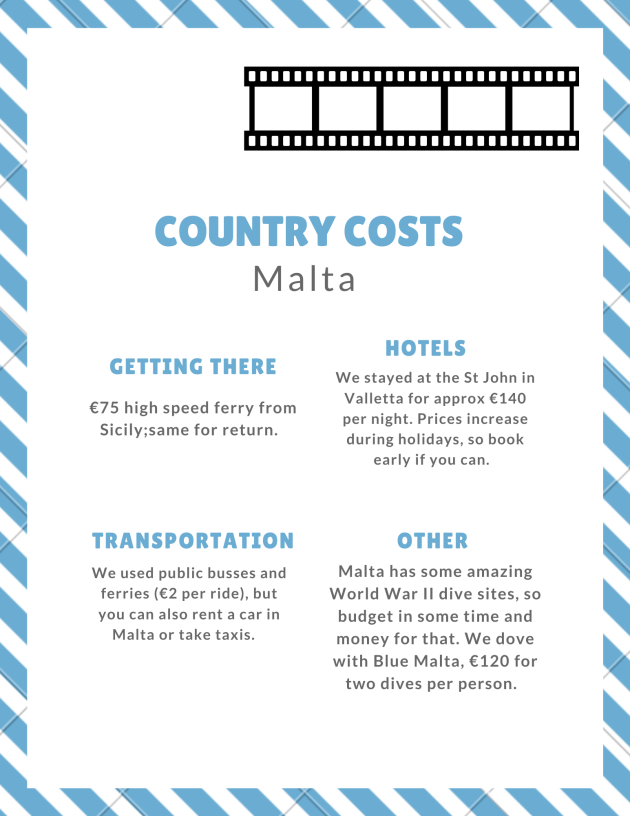
If you’re ready to come visit Malta and see these sights for yourself, it’s not difficult to get here. You can take a a high speed ferry from Sicily, or fly in using various airlines (RyanAir has a hub here so look for great deals). Once on the island, there is an excellent public bus network (each ride €2 but includes a 2 hour transfer window), as well as multiple daily ferries to the Three Cities, Gozo, and Comino. With 300 days of sunshine here, it gets quite warm in the summer, but the rest of the year can be quite nice.

Two weeks in Tunisia

I heart Tunis sign, Tunisia

It may seem as though Tunisia, perched on the northern end of Africa, is very far away and inaccessible, but really that’s not true! With nine international airports, and visa-free up to 90 days for many nationalities, getting in and out of Tunisia is not all that difficult.

Since Chris and I were already very near Tunisia geographically, we decided to take a GNV ferry from Sicily to Tunis. However, if you’re in Europe, many international airlines fly into the Tunis-Carthage airport as well as the other main airports of the country, including Lufthansa, Air France, Alitalia, Turkish Airlines, and Emirates. (Also TunisAir if you’re feeling really brave).

The tomb of Tunisia’s first President, Habib Bourguiba

We started our two weeks in-country in the city of Tunis. The Carleton Hotel provided a soft landing for us, at a very reasonable rate. This century-old hotel has friendly staff and an amazing breakfast. Our first day here was part of the Eid holiday, so we visited the medina and found it was almost empty, but a few shops were open. We returned the next day to experience it with a bustling crowd, and then went back that night for a tour with Salah, who we found on Guruwalk. We were really impressed by the small details he pointed out to us- embellishments and motifs we never would have noticed on our own- and the number of beautiful antique buildings he got us into, hidden behind otherwise nondescript doors.

Al-Zaytuna Mosque, built 698 AD, in the middle of the Tunis medina

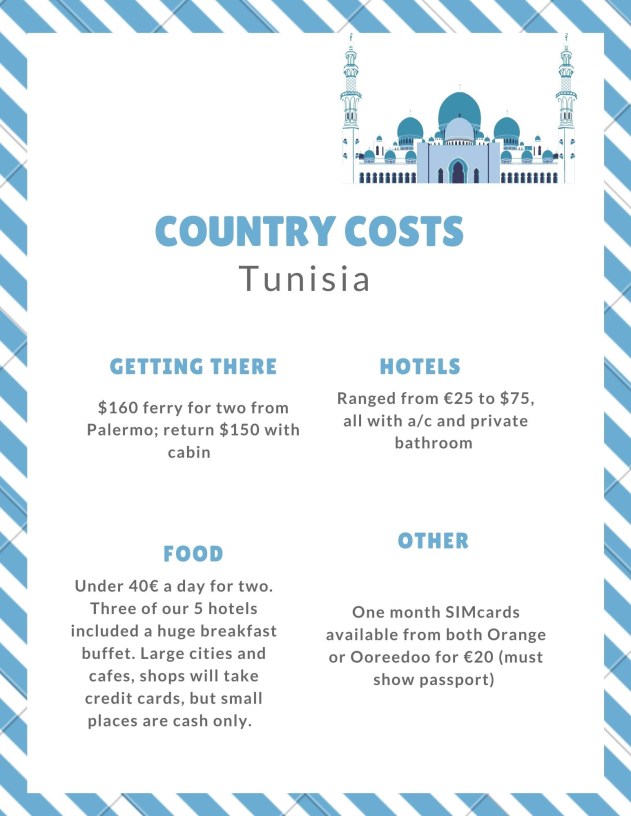
It’s fairly easy to get around Tunisia, as long as you have a bit of patience. We wanted to visit some cities in the south, so we got a train ticket (24 Dinar/$8US) for one of the 3 daily trains departing Tunis and arriving in Gabes. From there, we got a collective taxi (called a “louage“) for just 2 Dinar each to take us to Matmata, which happens to be where they filmed several scenes from two of the Star Wars movies. It’s very easy to walk around Matmata and visit the Hotel Sidi Idriss- also know as Luke Skywalkers’s family homestead- on your own (1 Dinar entry), or you can book the hotel via their Facebook page for approximately $20 a night. The small town of Matmata actually has a tiny tourist information office, and they sent us with a guide to show us the Hotel Sidi Idriss, as well as a Berber troglodyte (cave) house, where we had tea and bread with olive oil with the family living there. Again, you can do all this on your own, but we enjoyed chatting with our guide and didn’t mind the 30 Dinar ($10US) fee.

Matmata is considered “the doorway of the Sahara”, so from there you can choose to head further into the desert to see other Star Wars filming locations such as Nefta, Ksar Hadada, or Ong Jemel, or you can rent quads and go out to the sand dunes, or visit an oasis. Since Chris and I use to live in the middle of the Sahara desert, we decided instead to head north to El Djem, a small city two hours north of Gabes. El Djem is home to the third largest Roman coliseum (after the ones in Rome and Capua). Seating 35,000 people, it was built by the African Emperor Gordion the Third around 238 AD. Entrance to the colosseum is 12 Dinar ($4US) and also gets you in to the nearby Archaeological Museum, home to dozens of mosaics and other Roman artifacts found in the town, which the Romans called Thysdrus.

From El Djem, it’s a quick one hour train ride north to Sousse. Since this train will already be in progress coming from the south, it will likely already be a) late and b) full. Be prepared to stand for a while, even if you purchase first class seats (5 Dinar), or ride at the end of the car with an open doorway, hobo style. At least there’s a nice breeze!

Chris is ready to ride the rails

Sousse is home to a pretty good sized walled Medina, and the second best archaeological museum in Tunisia. For the past year, the National Bardo Museum in Tunis, which shares a building with the National Assembly, has been closed due to politics. There are no stated plans to reopen the museum, so if you’re into history, geography, and archaeology, head to the Sousse museum. At 10 dinar entry, it won’t break the bank, and it only takes an hour or two to visit. You can spend the rest of the day or the evening in the Medina of Sousse, or hop on a louage to go the short distance to Montesir, another walked city on the coast featuring a ribat (fort).

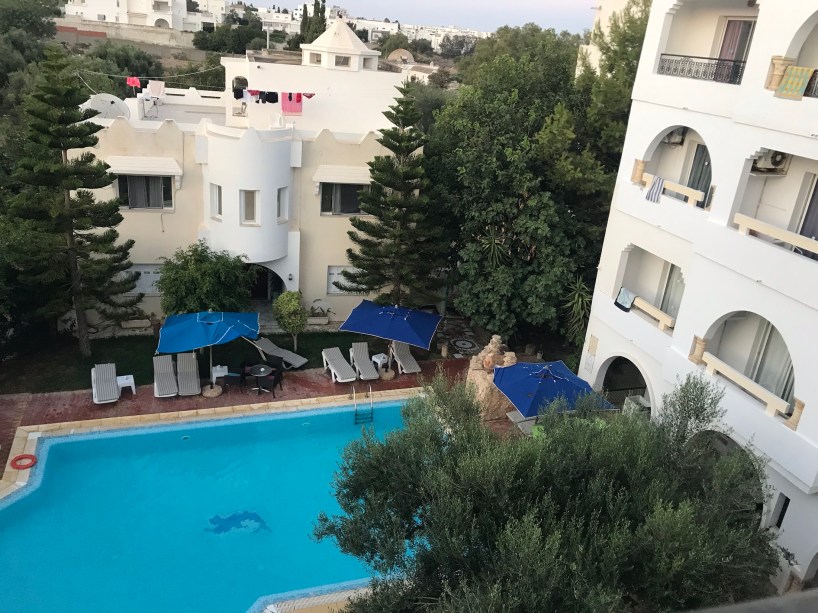
Heading north once more from Sousse and Monastir, we took a louage to Hammamet, a beach town full of resorts near Tunis. You can find hotels in this town for anywhere from $25 a night in up to $400 if you’re super fancy. We are not, so we stayed at the Hotel Residence Romane, complete with pool and a somewhat “private” beach across the road. Even better, there’s a German bakery next door, so we were quite happy with our choice. They also have a tour desk, and can get you set up with a 2 day/1 night tour to Matmata, El Djem, and the Tozeur desert at a pretty reasonable rate.

The Residence Romane

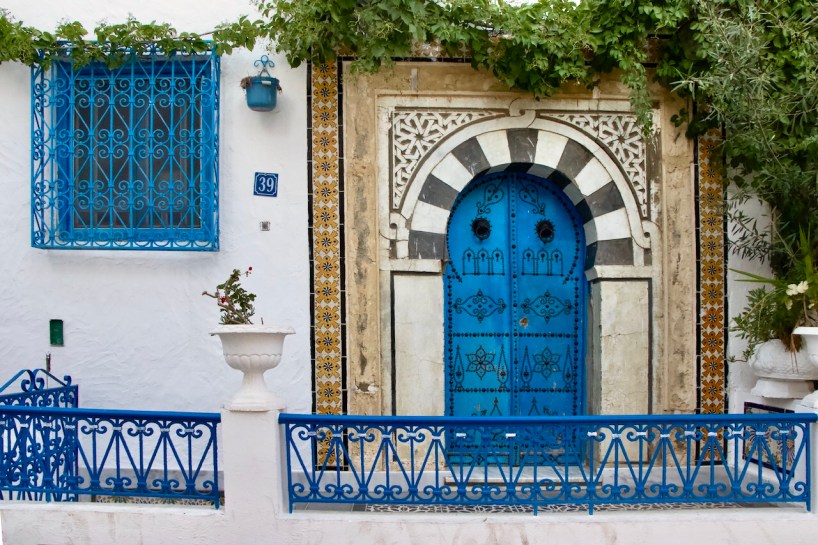
After three days at the beach, we wanted to visit Carthage. You can take a louage from Hammamet to Tunis, and from there switch to their light-rail system. It only has a few stops, and one of them is quite close to the Roman ruins, while the next station is at the foot of the hill that the blue and white city of Sidi Bou Said sits upon. Both areas are worth at least a full day and an evening of your time, if not more. Another nice place to visit, very close to the ruins of the Ancient Roman theater, is the American North Africa military cemetery.

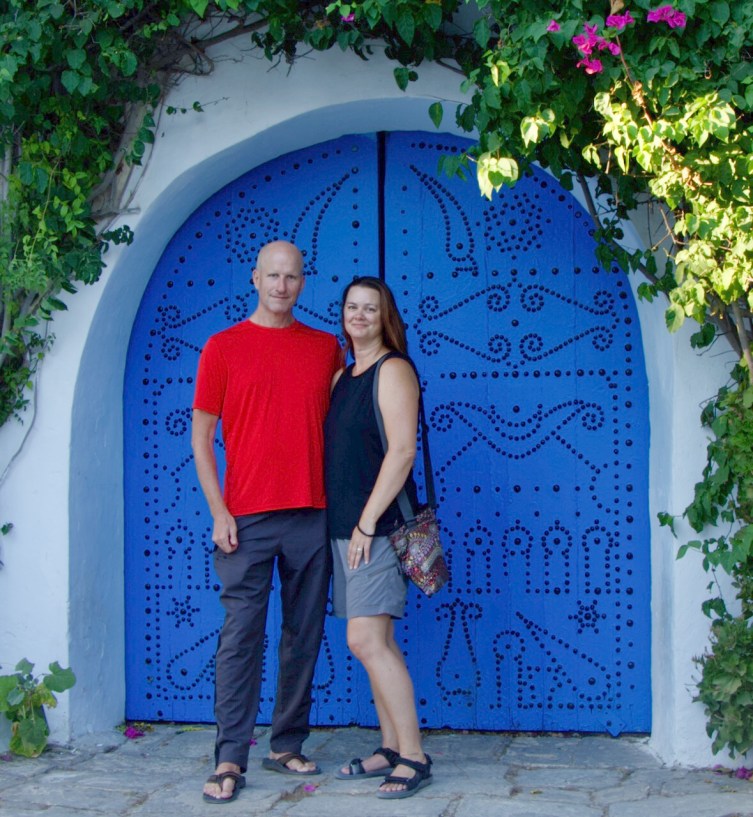
We enjoyed wrapping up our trip in the center of Carthage, staying in a small bungalow owned by a family that lives on the edge of Sidi Bou Said. Pro tip: we had a washing machine, so we were able to launder everything while we prepared for the next part of our trip. After one last stroll around the serene blue-and-white city, we were ready for our overnight ferry out of Tunisia.