Taxco, the silver capital of Mexico

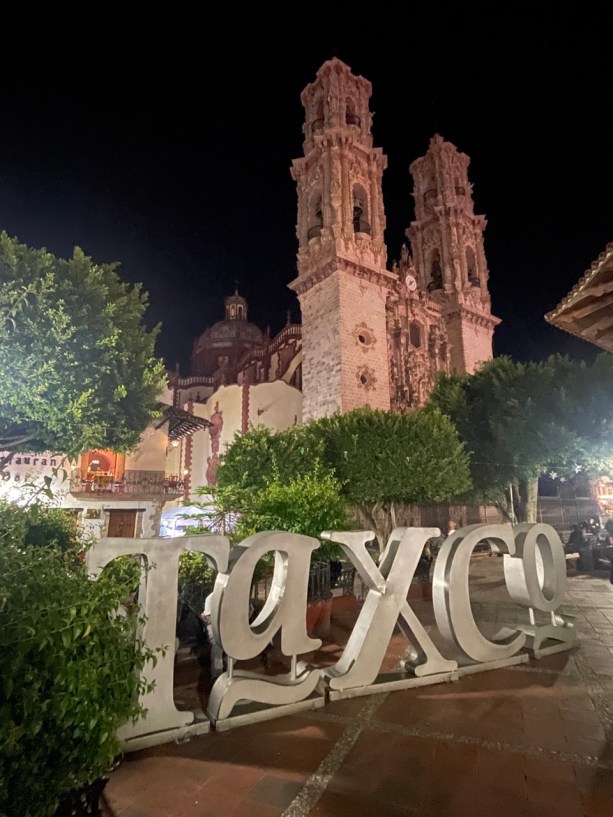
Taxco Mexico main church

November is such a nice time of year to visit Mexico- beautiful weather, low crowds- so this year we decided to spend Thanksgiving break in Taxco, one of Mexico’s “Pueblo Magicos”, or Magic Towns. These charming small cities feature walkable city centers, historic churches and plazas, and plenty of delicious options to eat and drink.

Arriving at the Mexico City airport, there’s three easy ways to get to downtown, or to any of the main bus stations. You can hop in a taxi, take the Metrobus, or walk all the way down to Door One and access the subway. For 15 pesos (75¢ US) you can buy a metro card, and then each ride is 5 pesos (25¢). Two people can share one metro card. We transferred to the blue line’s last stop, the Tasqueño bus terminal. It’s a very nice, very modern bus terminal, and we found busses departing for Tasco every 90 minutes. 554 pesos later (approx $25 USD), we had two bus tickets on Costa Lines and were on our way.

We arrived in Taxco two and a half hours later and walked from the central bus station to our hotel, the Posada de San Javier ($65 per night for a king suite, with breakfast). The city of Taxco trails down the side of a mountain, so it doesn’t matter where you stay- everywhere you go is going to be a short but steep climb from your hotel or restaurant or the main zocalo. Just take it slow and steady, or hop in one of the ubiquitous VW taxis that constantly circle the plazas.

The stunning main feature of Taxco is the twin-spired baroque Church of Santa Pisca, built from 1751-1759. Everything else in the historic city can be found in relation to the church. Wanting to really relax on our trip, we spent four days in town and found ourselves lounging on rooftop terraces, enjoying coffees and chilaquiles in the mornings or hot chocolates and churros in the evenings. We spotted a few other gringo tourists in town, but the majority seemed to be visitors from other parts of Mexico or Latin America. Taxco feels safe, is easy to walk around, and has options to fit any budget.

The main plaza, or zocalo

Our favorite activities in Taxco:

  1. Take the cable car up to the Hotel Montetaxco and enjoy the view from their mirador, while sipping a juice cocktail. It costs 9 pesos to hop in a collectivo (combi) to reach the base of the teleferico. Round trip tickets on the cable car are 120 pesos, or you can take the cable car up and walk down.
  2. Visit the Pre-Historic Mine, located underneath the Hotel Posada de la Mision. Tickets are 180 pesos and come with a mezcal cocktail afterwards at the hotel bar. The tour is in Spanish but the guide translates parts of it.
  3. Visit the silversmith shops or workshops, pretty much all over the city. Look for the .925 or .950 stamp if you’re looking to buy, or just enjoy watching the sheer talent of the artisan workers.
  4. Eat pozole at any number of pozolerias (Tia Calle was very inexpensive, if not very atmospheric).
  5. Try the region’s pink rosa mole dish, made with rose petals and white chocolate. We enjoyed the dish at La Parroquia, which features balconies and a terrace overlooking the main zocalo. A perfect al fresco dinner spot.
  6. Plenty of places offer chocolate and churros, but we liked Chu Cho, nestled in Plazuela de Bernal, for their wide variety of toppings (try the marzipan!).
  7. Visit the Pozas Azules (blue swimming holes). You can take a full-day guided tour from one of the tour operators in town, or just walk to the main road and grab a combi heading out of town toward Acapulco (the stop is in front of the Coppell building). The combi costs 35 pesos, and entrance to the pools is 100 pesos.
  8. Tour the Spratling Pre-Hispaña Museum. Spratling put Taxco on the map in 1929 and made sure its pre-Hispanic culture would be preserved. This museum features his private collection of artifacts. Worth a visit, and only 75 pesos per person.
  9. For another beautiful view of the town, visit the Cristo Rey statue above the main plaza. It takes about 45 minutes to walk up there, or take a taxi for 80 pesos.
  10. Eat as much ice cream as possible. We liked the Crema y Nata Heladeria, tucked into the bend right at Plaza Del Convento. Delicious!

Have you been to Taxco, or another of the Pueblos Magicos in Mexico? What was your favorite part?

Wow, Oaxaca!

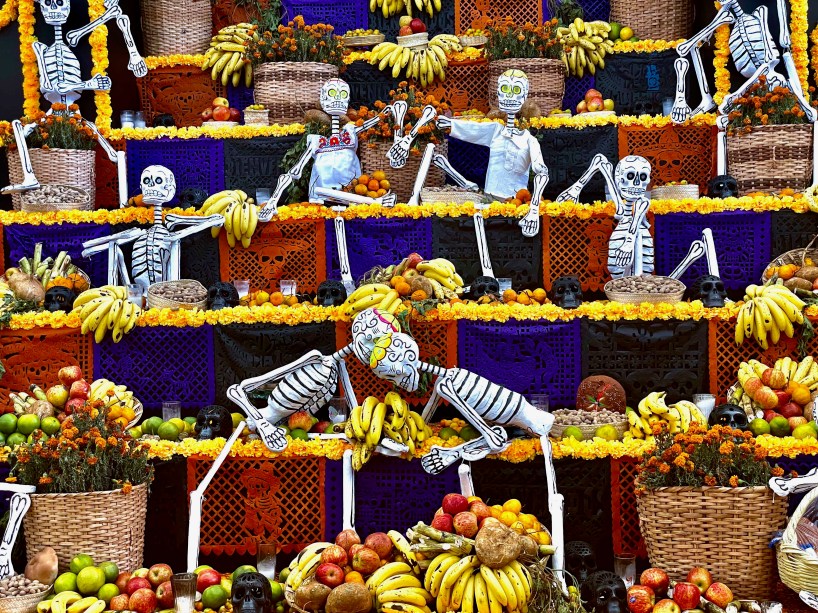
oaxaca-ofrenda skull

Busy with life and other adulting things, C and I decided we needed a break. I checked my Google Map to see what fun locations we had pinned as “Want to Visit”, and Oaxaca caught my eye. A month later, we were immersed in this cool town, wowed by the laid-back lifestyle, the temperate weather, and the fun things to do nearby. Read on to find out more about vibrant Oaxaca!

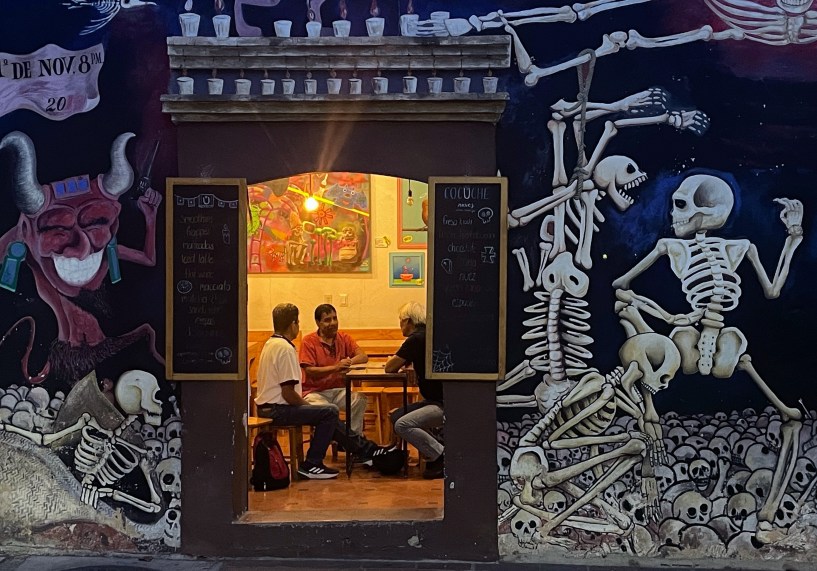
Dia de Muertos: Although the main day for this festival is the night of November 2, in Oaxaca they celebrate for a week straight, so try to stop by the town sometime in that week. You’ll find the plazas awash in yellow and gold chrysanthemums, ofrendas in front of every business, calendas parading around town, and skeletons everywhere. Not sure what Dia de Muertos is? Try watching the Disney movie Coco for a fun overview!

This ofrenda (altar) features flowers, fruit, corn, and other products as offerings

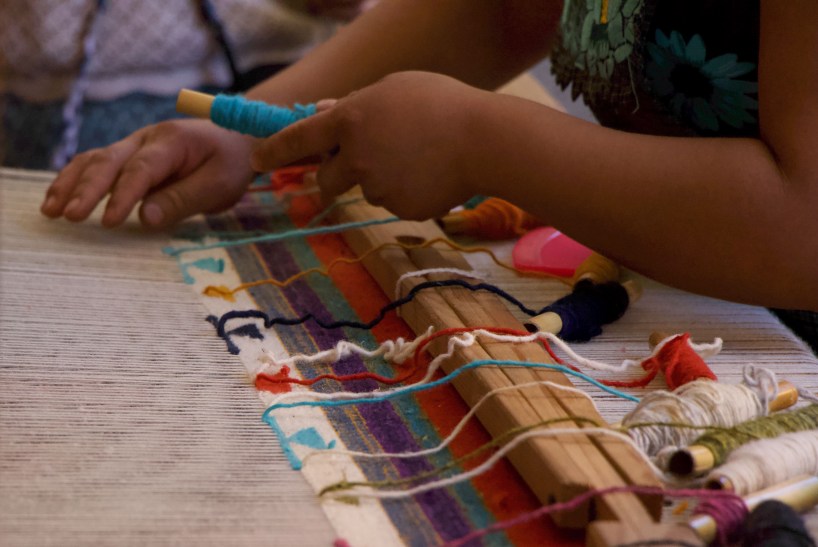
Besides this one-of-a-kind festival, there are plenty of things to do in Oaxaca. An area of great importance to the Zapotec people, the Oaxaca valley has been settled for thousands of years. Families in the region still make mezcal from the blue agave plant using the same time-honored traditions as their forbears, and nearby, entire families use natural ingredients to dye wool and create rugs and tapestries using ancient techniques.

Mt Alban historical site: Inhabited for over 1500 years, Monte Alban is an important site for the Zapotec people, as well as the Olmec and the Mixtecs. The archeological site is laid out according to the stars, and features several pyramids, tombs, and terraces. Visiting the site is fairly easy; you can join a day tour, on sale at the zocalo (main plaza) in Oaxaca, you can take a private taxi, or you can take a shuttle bus, which departs from the front of the Hotel Rivera del Angel (2 blocks south of the zocalo, costs 100 pesos). Once at the ruins, plan for about 3 hours, and entry is 90 pesos for foreigners. Tip: Take an umbrella or wear a hat; the sun is strong up there.

This site was the Zapotec capital city between about 500 AD and 800 AD, a home to almost 30,000 people

Day tour to the Hierve el Agua: Another popular day trip is visiting the Hierve el Agua. You can do this on your own, but it’s rather far out of town, so it’s very easy to do a full day tour, which visits several sites in the same general direction. We booked our day trip from one of the touts in the zocalo, and got picked up from our hotel at 8 am. We visited Santa Maria del Tule, a small town that features the largest tree (by circumference) in the world. Then we visited a family rug-making factory, and learned all about the natural dying techniques and how long it takes to make their intricate and colorful patterns. We also visited Mitla, another set of archaeological ruins, and had lunch. The afternoon was spent at Hierve el Agua (“the water boils”) to swim in the springs and see the limestone cliffs. We ended the day with a tour of a small mezcal factory, along with a tasting, and were dropped off back at home at 8 pm. The tours range from 400 to 500 pesos, so try to strike a good bargain!

These rugs and other tapestries take 2-4 weeks and are completely made by hand

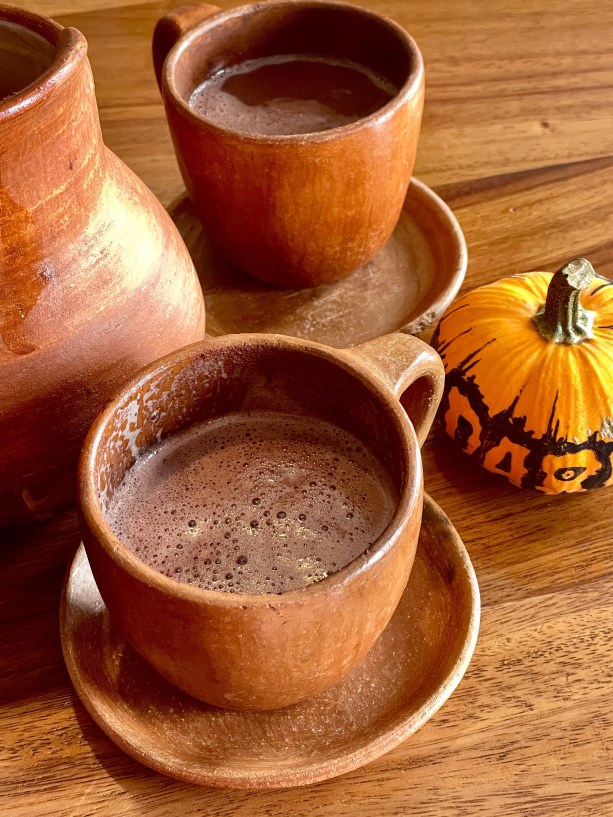
Enjoy the coffee culture: Or, even better, enjoy a Mexican beverage of choice. We found so many cafes and outdoor terraces, perfect for enjoying a cold beer, a tasty coffee, or my personal favorite, chocolate y agua. Another fun one to try is tejate, made from toasted corn, cacao beans, cacao flowers, ice, and sugar. Of course, if it’s 5:00 somewhere, you may as well try one of the dozens of kinds of mezcals, made from the local blue agave cactus.

Seasoned with spices such as chile, anise, or cardamom, the Mexican hot chocolate drink is delicious day or night

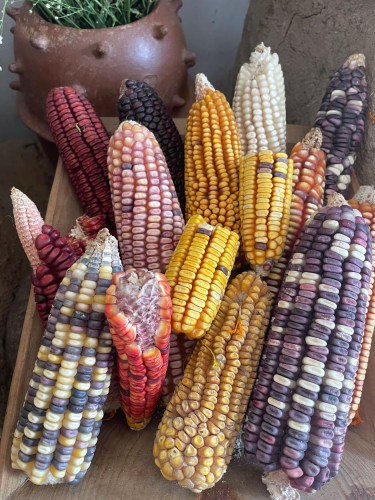
Sample the culinary delights: If you like food, then Oaxaca is a great place for you. From dozens of varieties of corn, several different kinds of tomatoes, and of course all kinds of chiles, you can try a different meal every time you go out. Oaxaceños are known for their seven unique mole sauces (rojo, coloradito, amarillo, verde, negro, chichilo, and manchamantel), as well as the tlayuda, a thin, crispy tortilla covered with beans, cheese, lettuce, avocado, meat, and salsa. Yes, it sounds like a taco, but it’s also… not. Best to just try it for yourself.

Visit the historical city center: The Spaniards invaded Oaxaca and had declared it a city by 1529, and immediately began laying the streets in a grid pattern and building churches, cathedrals, and plazas. The zocalo, or main plaza, of Oaxaca is always filled with musicians, tourists, locals, art exhibits, concerts, and more. There are two sixteenth-century churches in Oaxaca, both of which are worth a visit for their architecture and their lovely surrounding grounds.

The Church and Convent of Santo Domingo de Guzman, dating back to 1551, also includes the grounds of the Botanic Garden

Explore nearby neighborhoods: In addition to spending a lot of time in the main historic center, we also did some exploring in the nearby neighborhoods. We especially liked both Barrio de Jalatlaco and Xochimilco, slightly north of the city center. Using our Guruwalks app, we booked a walking tour for each neighborhood. In Jalatlaco, we looked at some of the fabulous street art, and ended at a delicious local taco stand (which we returned to the next night for more!). In Xochimilco, we found a hidden organic market, visited a mezcaleria, and ended in a cemetery, still decorated for Dia de Muertos.

Mexico was the last country to still produce the old VW Bug, so there are still plenty to see on the streets here

Logistics:
You can fly direct to Oaxaca from US cities DFW, Houston, and Los Angeles. If you’re already in Mexico or South America, you can fly directly from Cancun, Guadalajara, Guatemala City, Merida, Mexico City (Santa Lucia), Monterrey, or Tijuana.
There is no Uber presently in Oaxaca. The best way to get around is to call a taxi company, take a collecctivo taxi from the airport, or take the public bus.
Hotels in Oaxaca run anywhere from $10US a night to several hundred, depending on how fancy you need to be. We stayed at a hotel two blocks from the Zocalo called Hotel Dainzu, and paid $45 a night for a double bed, private bathroom, with a balcony. Later in the week we stayed at an AirBnB in Xochimilco for approximately the same price, and later we tried another hotel in Jalatlaco, Casa Gubidxa, which was $40 per night, and featured a king sized bed and several rooftop terraces.

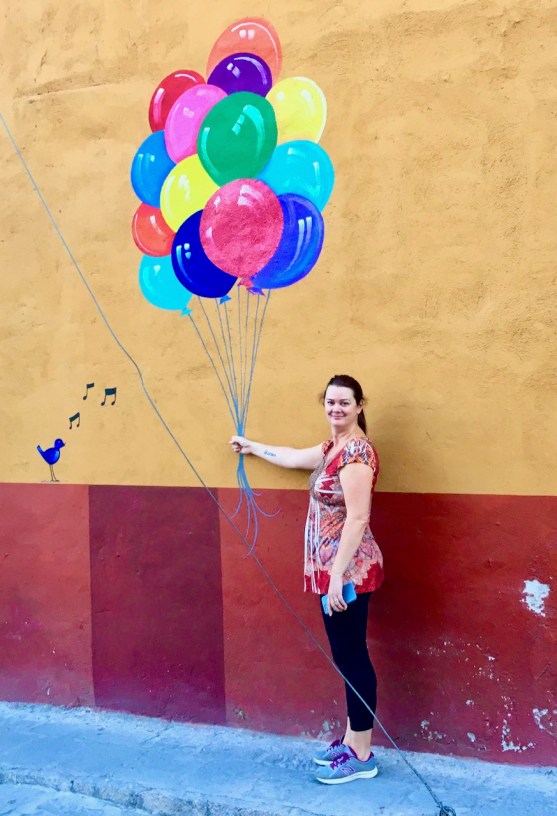
Jalatlaco is a particularly fun neighborhood, with painted murals, lots of boutique hotels, small churches, cafes, and late night places to stop for a drink

Have you been to Oaxaca? What was your favorite part of the town? Did you visit during Dia de Muertos, or another time of year?

San Miguel de Allende: The Jewel of Mexico

San Miguel De Allende cathedral

You may have noticed the small town of San Miguel de Allende popping up on your travel radar often in the past few years. In 2008, the city was granted a UNESCO World Heritage Site designation. It’s been voted “Best City in the World” by Travel and Leisure Magazine in 2013, 2017, 2018, 2020, and 2021. Conde Nast named it “Top Small City in the World” in 2021. All this is to say if you are looking for a beautiful, picturesque town, filled with history of the Mexican Revolution, and ornate, Gothic-style cathedrals, then you will certainly find it here. But if you are looking for a simple, Mexican village, with cheap prices and family-owned cafes, then you will have to look long and hard to find it in San Miguel de Allende.

The Parroquia de San Miguel Arcángel at Sunset

With over 10,000 expats moving to San Miguel de Allende over the last ten years, it is easy to see why locals call the main pedestrian area of the town “Gringo Gulch”. Join a walking tour and you will be surrounded by forty white North American faces, many of them clutching matching tote bags to commemorate the destination wedding they have all flown in for. At night in the main Jardín Allende, competing mariachi bands play for tips in each of the corners of the square. From our hotel El Portal’s rooftop patio, right in the heart of the main plaza, I counted four different mariachi bands waiting to play their tunes. Each evening we walked far beyond the central walking area, trying to find a simple taco stand, rather than polished chrome and glass rooftop bars where “Mexican Margaritas” go for $20 each.

Gentrification is nothing new to San Miguel de Allende. From the Spanish conversion of the Chichimecas starting in 1552, to the De La Canal family financing of the parks and plazas of the town, to the recent influx of expatriates, San Miguel de Allende has benefited from its location along Mexico’s silver mine route, its proximity to the capital, and its reputation as an artists colony. In 1937, a young man from Chicago wandered into town and was captivated. Along with a friend and a Model T Convertible, Sterling Dickinson was making a six-month tour of Mexico, and when he landed in San Miguel, he found a home for himself. By 1938, Dickinson had founded an art school in town, and after serving in World War II, he persuaded many soldiers to study art in San Miguel with their GI Bill, where the cost of living was low and the weather was beautiful all year long. For better or for worse, Dickinson helped put San Miguel de Allende on the map, and it has only grown busier, more crowded, and more touristic in the passing years. The average house in San Miguel now costs approximately $520,000.

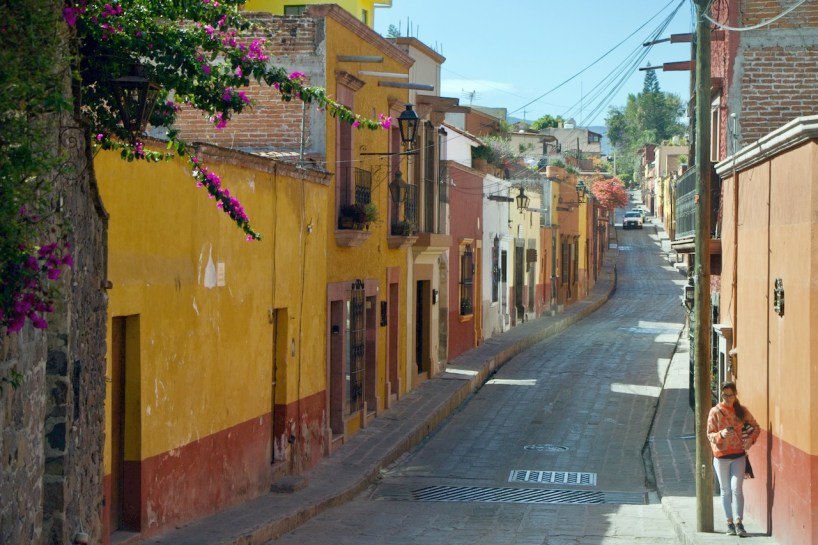
the cobblestone streets of San Miguel de Allende
The Cobblestone Streets of San Miguel de Allende

All of this is not to say that San Miguel is not a lovely place to visit. It is! But I couldn’t help but feel it was hard to find a unique and authentic experience there. We did go on a walking tour, which benefits Patronato Pro Niños (tour departs at 10 am Monday, Wednesday, and Friday, and costs 300 pesos). On this tour, led by the knowledgeable guide Dalí Amaro, we learned a lot about the history and culture of the city. It was definitely worth going on the tour to get a look behind the stone walls and gates of the city.

We also found the map for a recently-created art tour of some of the barrios of San Miguel. Although the Fat Bastard Art Walk only goes on Saturdays, he helpfully created a map of 5 different walks visitors can self-navigate and see the street art that adorns other quarters of the city. We enjoyed the walks through these neighborhoods, away from the central walking zone, and eating in the cafes we found along the way.

As always, I suggest taking a local bus to really see the area. San Miguel has a huge traffic problem- so much so that it is in danger of losing its UNESCO heritage designation- so I would urge all visitors to try to refrain from cabs and Ubers, and use the excellent local bus system (8 pesos per ride and as each route makes a circuit, you really can’t get lost). Take the #8 or #9 up to the mirador for a great sunset view, or the #6 to get to the central bus station to go to another city. We had an excellent experience using BajioGo to get a shared ride to the new Queretaro airport- they charged the same as an Uber and less than our hotel’s offer of a shuttle, and we got to meet two other travelers on our way and chat with them.

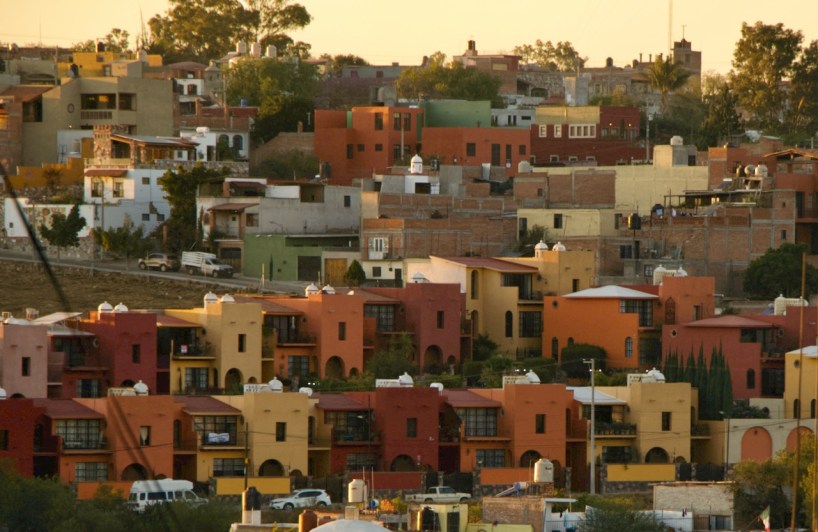
For a glimpse of the real village life, look in the outer barrios of San Miguel

If you are leaving San Miguel and returning directly to the United States and need a Covid test for re-entry, you can get one at a kiosk in the parking lot of the Hotel Rosewood for 550 pesos. They take about one hour and results will be emailed to you.

South Padre Island, Brownsville, and a quick hop into Mexico

We had a four day weekend off of work this month, so Chris and I decided to spend a little time at the beach. We packed up our car and drove down to South Padre Island down in the Rio Grande Valley of south Texas. Now, the last time I was in SPI was 1997 and it was college spring break week- and I was there to see Vanilla Ice in concert. So I was interested to see how the island had changed over the last 20+ years.

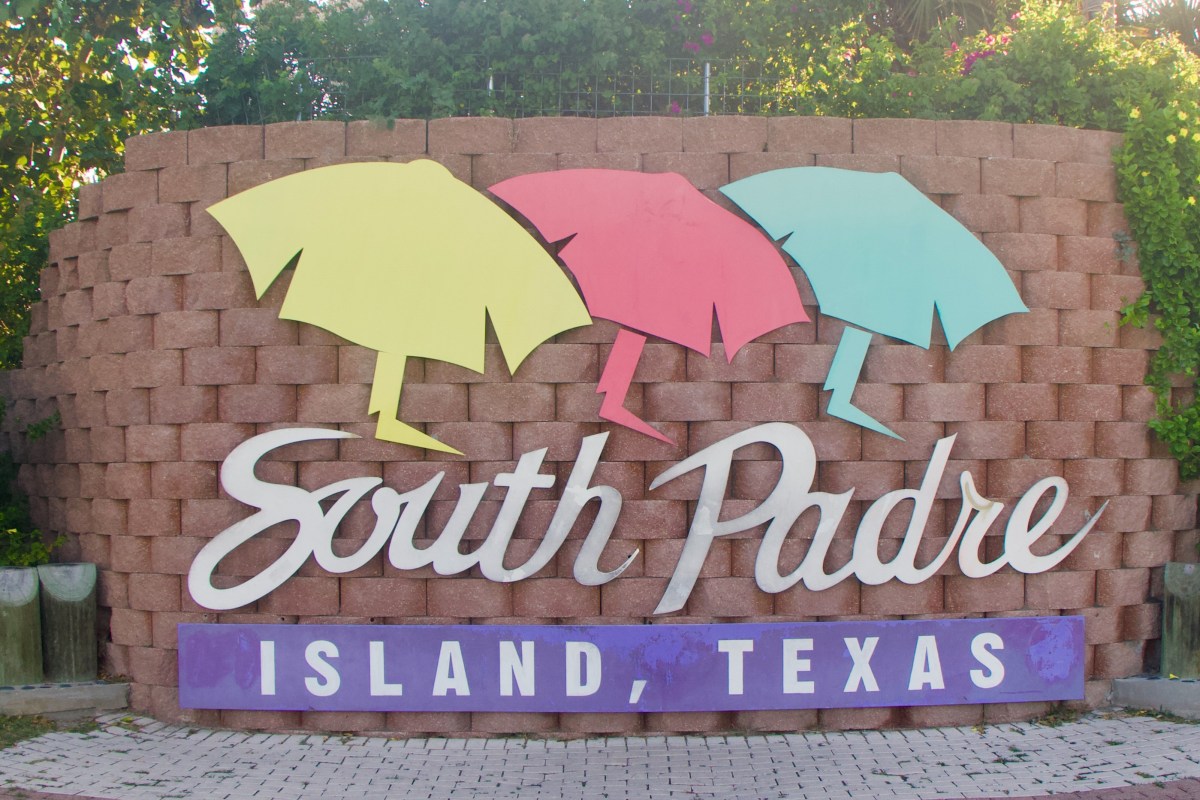
South Padre Island, Texas

There is exactly one way to get onto South Padre Island, and that is via the Queen Isabella Causeway, from Port Isabel. You cannot enter the island from a more northern point, so just know that if you want to visit, you will need to go alllllllll the way down to the bottom of Texas to get there. From Austin, it took us about six hours. We arrived in time to grab an early dinner at Dirty Al’s, a Cajun-style seafood joint directly on the water. You can eat indoors or outside, and enjoy the Gulf breeze while watching the sailboats come in and out of the harbor. You can also book an island tour, sportfishing boat, or dolphin-spotting cruise from some of the businesses just steps away.

SPI Harbor

The entire south end of the island is Isla Blanca Park, run by Cameron County. To access those parts, you’ll need to pay a $12 day pass, or $5 for Veterans (you can also get a monthly or annual pass). Some of the cleanest beaches and best sunset-watching spots are down in Isla Blanca Park, as well as RV spots, cabanas, and a huge statue of “Cristo de los Pescadores”. But don’t worry. South Padre Island has plenty of free beaches in the mid-island and northern island sections.

Sunset at the Queen Isabella Causeway
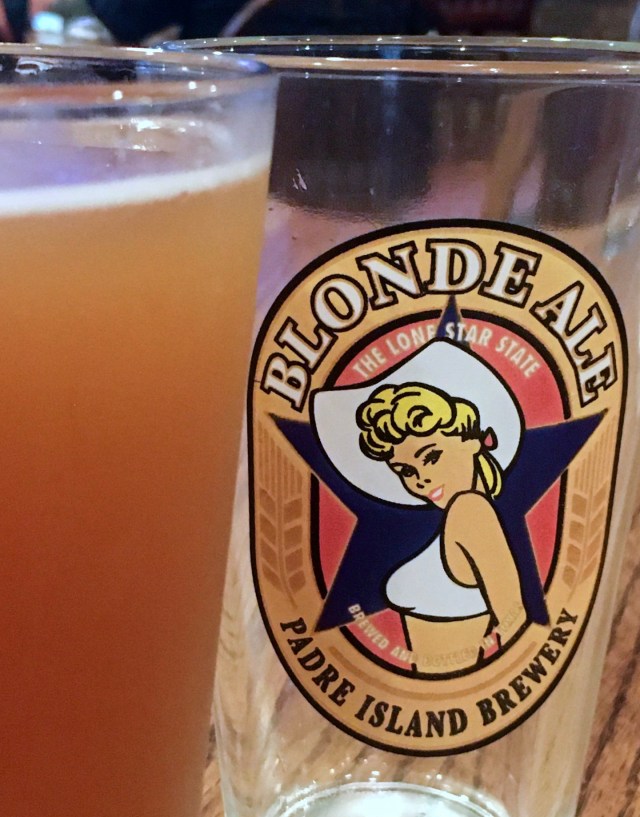
There’s always fresh, cold beer on tap at the Padre Island Brewing Company

For eating, drinking, and partying, most people head mid-island to Clayton’s, Bar Louie, and The Lookout. These 3 open-air bars are always full, with food and drink specials, music, and plenty of sandy feet. At night there’s usually a DJ or a band playing at one or more of these venues. For a more mellow vibe, try a local brew at the PI Brewing Company.

But South Padre Island has plenty to do for nature lovers as well. You can visit Sea Turtle Inc, or the SPI Birding and Nature Center. A bit further north from town, there’s the Stables, the SPI Equestrian and Events Centre. You can ride horses and zipline at the South Padre Island adventure park, or visit the Kite Boarding Ranch. If all of these sound too adventurous to you, just go to the end of State Road 100, and visit the beautiful white sand dunes and less-visited beaches in the north of the island.

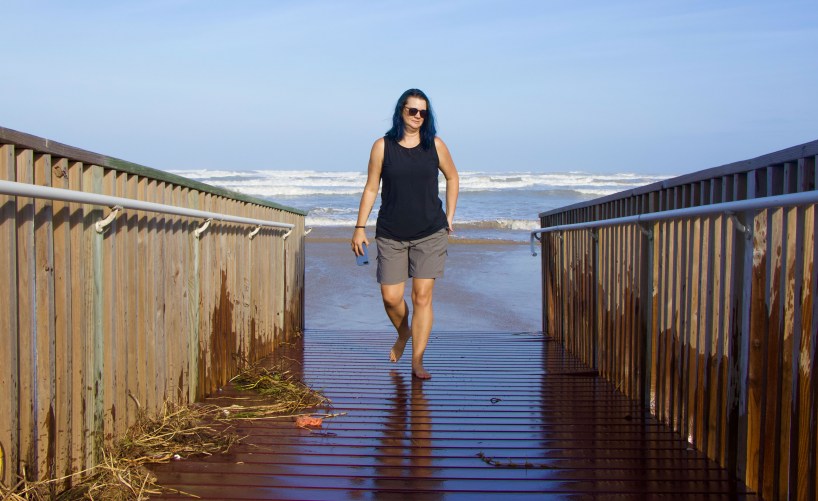
The surge was high this weekend due to Hurricane Delta!

While we were on SPI, a hurricane was affecting the tides throughout the Gulf of Mexico, so we took some time inland to explore a little as well. Just south of SPI you can visit the SpaceX launch site. Be warned: although only 6 or 7 miles south of SPI, it takes a while to get there- you’ll need to drive inland about 25 minutes, and then double back on another road to get to the space center (it’s just before Boca Chica State Park).

SpaceX Launch Site

And if you’re wondering- can you walk across the border to Mexico? The answer is yes. There are 3 international bridges located in Brownsville, Texas, linking to Matamoros, Mexico. We walked across the Gateway International Bridge with our passports and $1 in quarter for the toll. On the Mexican side, you can hop on a bus to pretty much anywhere in Mexico (prepare for some long rides), or just have a cerveza and some lunch, shop a little, and head on back. Just a block or two over the border is a large shop and restaurant called Garcia’s- they have great food and specials on Mexican products and liquors. They took our temperature before we entered and sanitized our hands. The line back into the US took a bit longer than the one heading south- prepare for a bit of a wait- but it only costs 25 cents. Not bad for an international trip!

Bienvenido a Mexico!

Housesitting in Monterrey, Mexico

Deah and Chris in Monterrey Mexico

For Thanksgiving week, Chris and I got to experience travel with a twist: we went as certified housesitters and cared for a cat while her owner was away. We’ve been members of the website Trusted Housesitters for a year now, and we finally found a gig that would match up with our schedule, plus a place we wanted to visit.

Although we could have flown from our home airport of Austin, there were cheaper and more direct flights from Continue reading “Housesitting in Monterrey, Mexico”