Don’t Yuck out on the Yucatan

If you’re looking for a solid week of adventure, fun, and food, look no further than the Yucatan Peninsula in Mexico. For ritzy beach and all-inclusive resorts lovers, look to the north end at Holbox, Cancun, Cozumel, and Playa del Carmen. If ‘pueblo magicos’ and dusty beach towns is more your style, consider the southern end, Tulum and Valledolid.

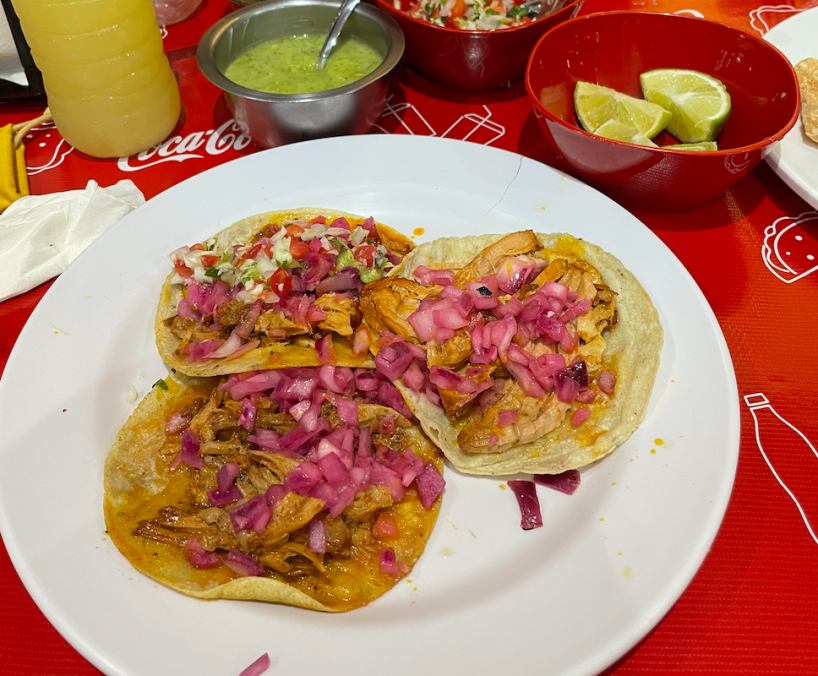
We wanted to visit some Mayan ruins and also dive at some cenotes, so we decided on exploring the quieter side of the Yucatan. We flew into the fairly new Tulum international airport, and hopped on the ADO shuttle bus into town. Our hotel was just two blocks from the bus station, so it was an easy walk to BAU Tulum, a cute boutique hotel. And then the search for tacos and cervezas was on!

Spoiler alert: it didn’t take long to find!

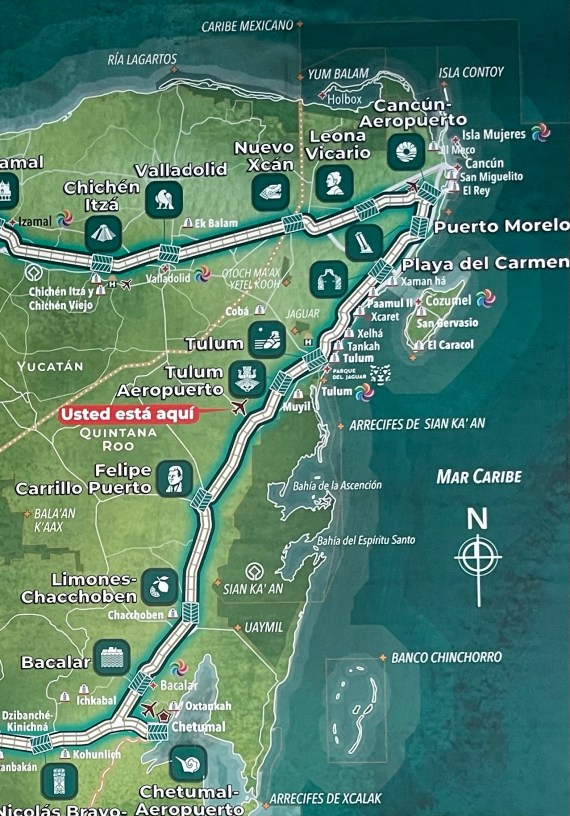
Tulum has a nearby international airport, as well as direct bus and train lines to nearby cities and tourist destinations. It has rounded the corner from “sleepy beach town” and is now considered pretty “boho chic” and might be on it’s way to “pricey resort town”. You can still get an inexpensive hotel and dinner out for under 500 Mexican pesos, but you can also visit one of the 8 Michelin-rated restaurants in town and stay at an upscale resort or condo. Tulum has a bit of a focus on health and wellness, so it still attracts a lot of backpackers, local tourists, and off-the-beaten path adventurists. It’s super easy to hop into a collectivo and visit sites north or south of town, or head to the ADO bus station to get a direct bus to Playa del Carmen, Valladolid, or Merida. There is also the Mayan Tren option if you want to take it direct north to Cancun or south to Chetumal.

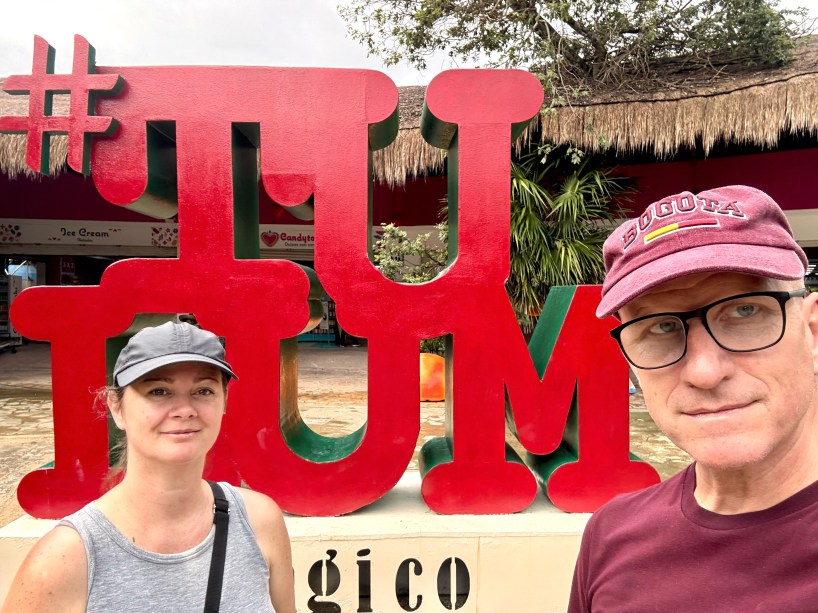
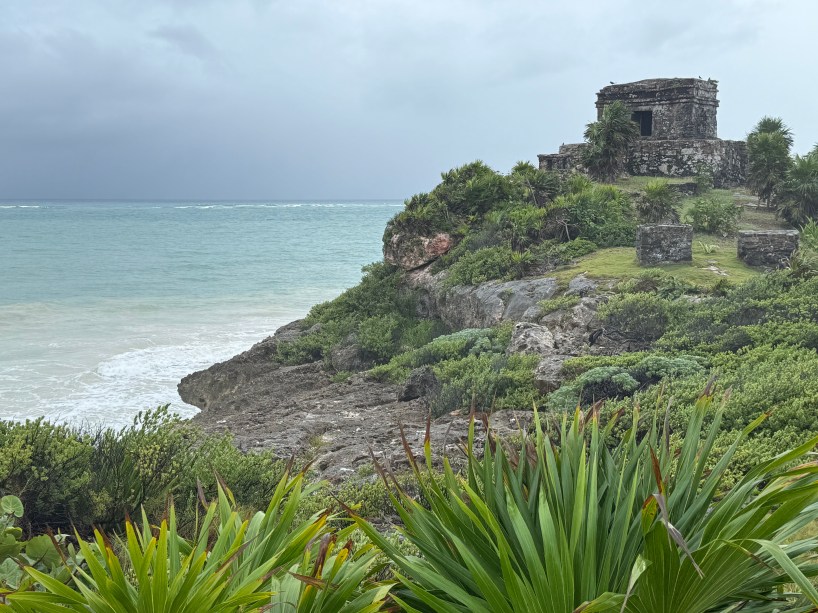
Just north of Tulum is the Tulum Ruins, a Mayan archeological site dating back to the 13th to 15th centuries, called the “City of the Dawn” due to it’s east-facing orientation at the edge of the peninsula. It is considered rare for the Mayans, because it is a walled city. It likely had a population of 1,000 to 2,000 people. It’s fairly easy to visit from the town of Tulum- you can actually walk or bike there from town, or just flag down a collectivo heading north and ask to be let out at the Tulum ruins, which should cost you about 30 pesos per person. Visiting the ruins, unfortunately, is not so inexpensive, and will run you closer to 400 pesos, as it is now part of Mexico’s official INAH (National Institute of Archeology and History). The entry ticket will get you into the museum, the ruins, the lighthouse, Jaguar Park, and a visit to the nearby beach. The ruins are open from 8 am to 5 pm daily.

The Tulum ruins are perched on a cliff overlooking the ocean

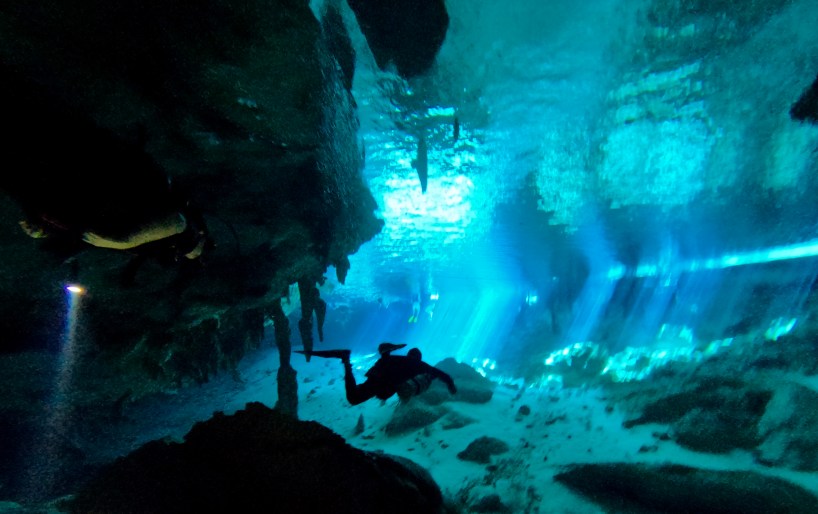
Another fun thing to do while in the area is to visit a cenote and take a swim. These natural sinkholes were formed ages ago by rainwater filtering through limestone caves, some with collapsed ceilings, letting in sunlight and rainwater. Civilizations as far back as the Mayans knew about these freshwater sources, and were considered sacred sites (many cenotes have had human bones excavated from their depths). The Yucatan has more cenotes than any other place in the world. One of the most famous, and most dived, cenotes is Dos Ojos. We contacted a local dive shop, Agua Clara, and they took us on a two-tank dive to this beautiful site. We did two 45-minute dives, swimming from one cenote, through a cave, and then into the other cenote, and then back again. The water was chilly but not freezing (I wore a shorty wetsuit, while Chris dove in just his swim trunks), and the fresh, cold water was stunningly clear. Swimming amongst the stalactites and stalagmites was something I will definitely never forget. What a wonder!

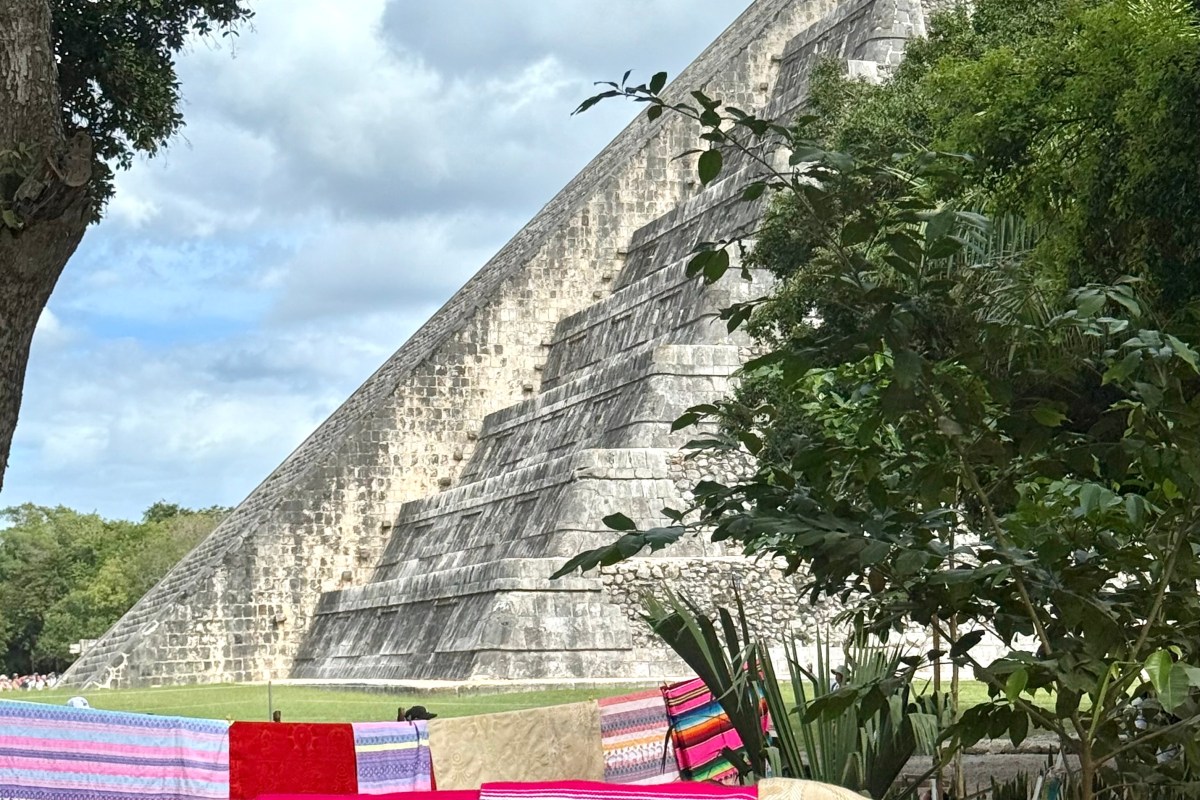
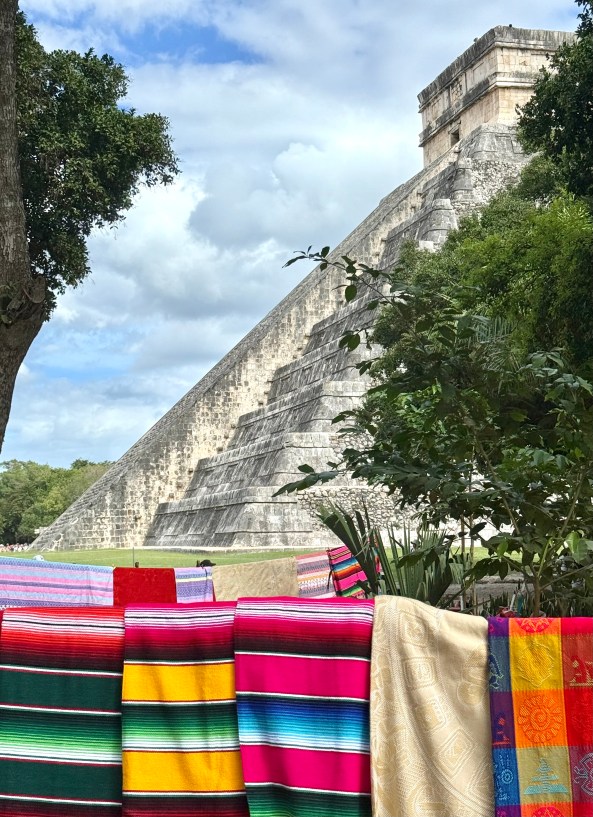
We liked roaming around Tulum a lot, but we wanted to check out Valladolid as well, another of Mexico’s “pueblos magicos”. Buses run daily between Tulum and Valladolid, so it was no problem hopping on one and arriving in the town two hours later. We settled in at Valladolid 48, a hotel/hostel just off the main shopping/dining area, and had a wander through town. The next day, we walked to the collectivo station and for 100 pesos, got a round-trip ticket to Chichen Itza and back (or you can get one that includes a visit to a nearby cenote on the return). The Chichen Itza ruins get pretty busy (and hot in the afternoons), so it’s advisable to go as early as you can. You’ll have to brave long rows of vendors selling everything from jewelry to statues, blankets to macrame, on your way in and out of the archeological site. This one will cost you around 600 pesos each, made in two different payments (one to the federal government of Mexico and one to the local Yucatan government). Once inside, you’ll run the gauntlet of even more vendors, but finally you get to the wide, open area and take a look at “El Castillo”, with 365 steps leading to the top of this four-sided pyramid. All of the monuments at Chichen Itza are roped off, no climbing, no touching, which is probably for the best. If they weren’t roped off, there would probably be a Coca-Cola refreshment stand at the top of one, with a guy selling soapstone pyramid statues next to it.

While in Valladolid, we visited an apiary in an old dried cenote and learned about different kinds of bees, we watched a sound and light show at the old convent church that told the history of the area, and we tried all kinds of different foods and drinks. One of our favorites was actually an Argentinian restaurant that makes their own kombucha and empañadas, called Tresvanbien. I wish we’d had time to visit there again, but the next day we wanted to try another new place, and didn’t regret the dinner at Papillon Taqueria, or drinks at The Mule Cantina in the Calzada de Los Frailles street. It’s close to the bus station and has plenty of options for casual or fine dining, and is a particular gem in the evenings.

If you get tired of tacos, there’s always empañadas

Have you visited the Yucatan? Do you prefer the beach, golf, and all-inclusive resorts in the north, or the ruins and the cenotes further south? Got a favorite taco stand you’d like to share? Tell us all about it.

The Best Things to Do in Bogotá, Colombia

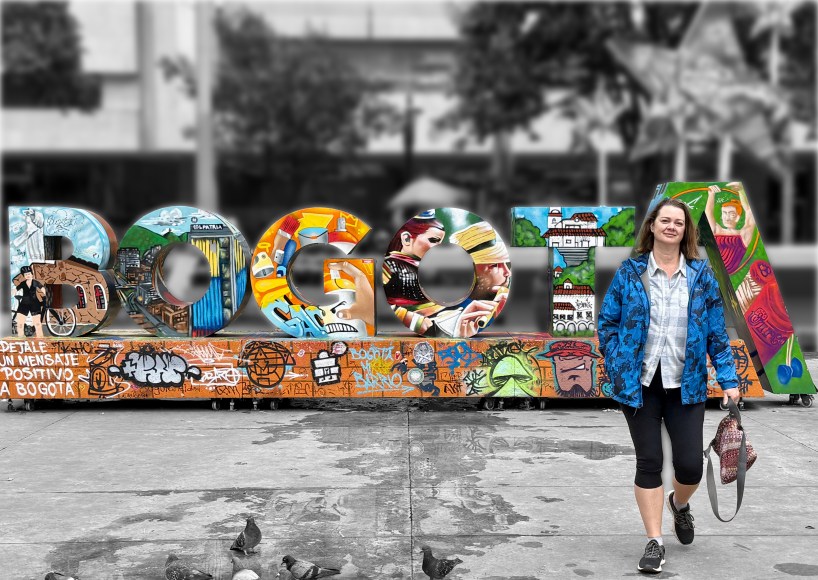
woman walking in front of letters that spell out Bogotá

With a week off for Thanksgiving Break, we decided to head to South America and visit one of the capital cities we’d never seen. From Dallas/Fort Worth it was a 5 hour, direct flight on American Airlines, landing in El Dorado International Airport. We arrived late at night, grabbed an Uber, and were at our hotel just outside the Candelaria neighborhood in downtown Bogotá in less than half an hour.

With six days to spend in the city, we got to sample a lot of great food, do some guided walks around town, visit several attractions, and enjoy the ever-changing Bogotá weather. Read on for a list of the best things to do in this vibrant city.

Guided Walking Tour

I like to use the Guru app to find a walking tour when I arrive in a new city. It helps me get oriented to where the main attractions in the city are, it familiarizes me with the history and the culture of the city, and I get my steps in, which is good, because I also like to ask the guides for suggestions on where to eat! In Bogotá we actually did three different walking tours- La Candelaria neighborhood, a food tour, and a tour about the political violence and cartels in Colombia. All of our guides were so well-informed and did such a good job showing us their beautiful city. I learned so much, especially from Hector, our guide from the conflict tour. Price: the walking tours are “free”, but be sure to tip your guide, about $10-12 US or 50,000 pesos.

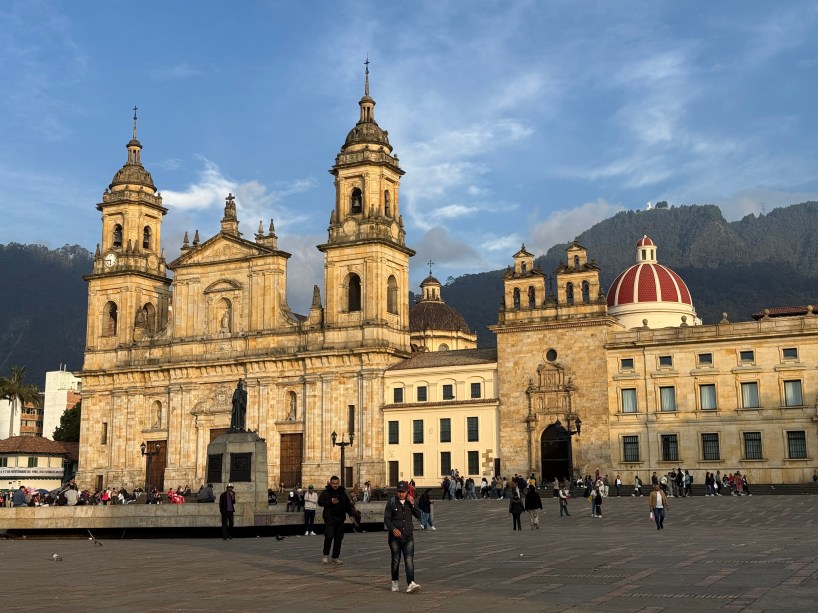
Catedral Primada de Bogotá

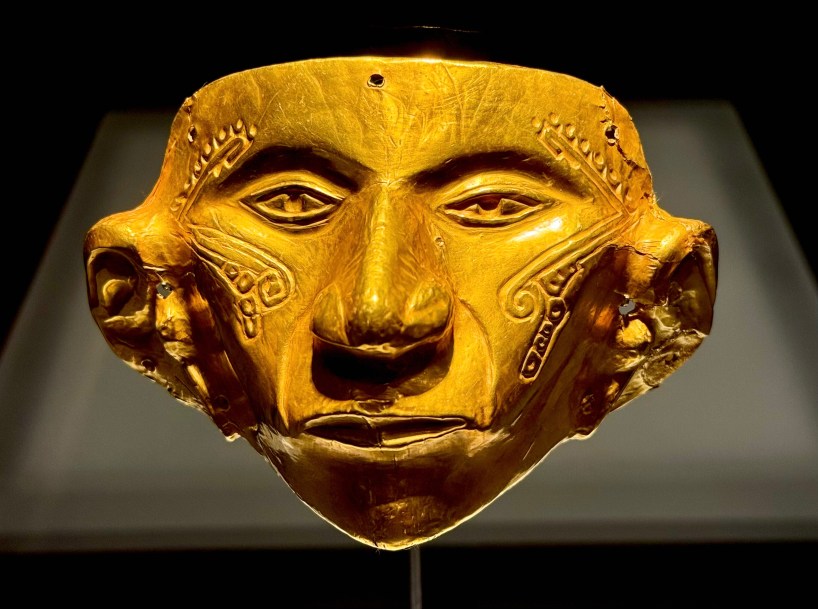
The Museo del Oro

Bogotá’s very existence owes a lot to the discovery of gold in the area, and it has shaped a lot of the history, culture, and conflict in the country. A visit to the Gold Museum is a must if you are in the city. They have a huge collection of over 55,000 pre-Hispanic artifacts, and the museum does such a good job explaining the social and spiritual contexts in which gold was used. The museum is open every day of the week, costs 5000 pesos (about $1.50 US), and is free on Sundays.

The Gold Museum welcomes over 500,000 visitors a year

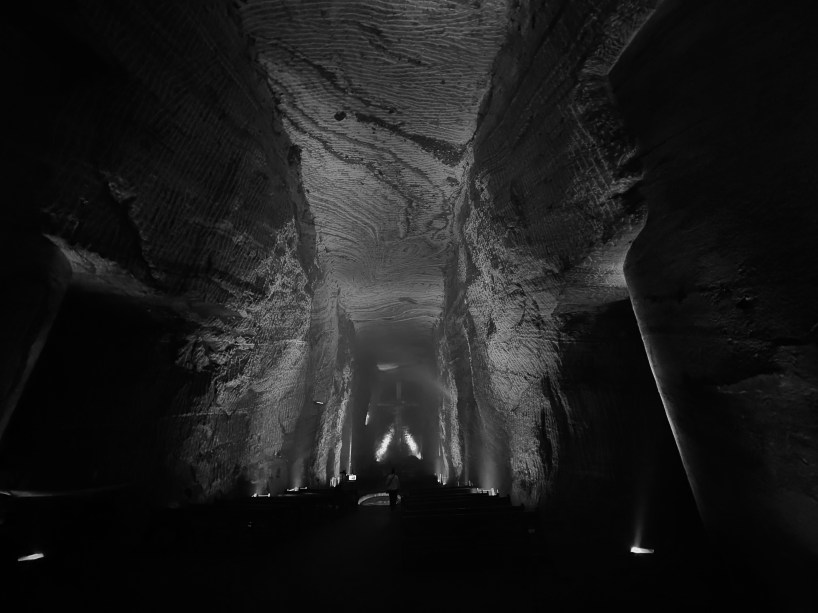
The Salt Cathedral

  • If you have an extra day, I hope you will take the time to go to Zipaquirá, just an hour or so outside of Bogotá. You can find a group tour (that will probably also include a visit to the nearby Guatavita Lake), but you can also easily do it on your own. We hopped on the TransMilenio bus system and took a bus that went to the North Portal, and then got on a second bus that went straight to Zipaquirá. The bus driver let us off in the center of town, and there are well-marked signs pointing to the Salt Cathedral. We purchased our tickets, and spent the next two hours wandering deeper and deeper into this old salt mine, which now houses a huge cathedral 600 feet underground. The audioguide, included in the ticket, is informative and easy to use. This attraction is considered one of the major wonders of Colombia, so don’t miss out! The cathedral is open every day of the week, and is a church on Sundays, so it can get quite busy then. The price is 34,000 pesos for nationals, and 55,000 pesos (about $15 USD) for foreigners.
A cavern in the salt mine

Monserrate

Of course, if we are going to visit an underground mine, we also have to see Bogotá from on high. Looming over one edge of the city is the green mountain of Monserrate, which stands at 10,341 feet. Luckily, you can take a funicular (cable car) or a teleferico (gondola) to get to the top. It costs 27,000 pesos (about $7 US) to do a round trip, but you can also walk up for free, or do what we did, which is buy a one way ticket up, and later spend an hour walking down the paved path. Sundays are half price, but also gets very crowded with families going to church at the top. At the top of the mountain there are a couple of restaurants, a church, bathrooms, and even a marker for the Camino de Santiago. It’s a nice place to spend a couple of hours, with a fantastic view of the sprawling city of Bogotá below you.

Bogotá viewed from above

Museo Nacional de Colombia

The weather is pretty temperate in Bogotá, but if the day is too hot or too rainy, you can spend a few hours indoors at the National Museum. The museum houses more than 20,000 objects, including a first edition of Nobel Prize winner Gabriel Garcia Marquez’s One Hundred Years of Solitude. A lot of thought has gone in to how to archive and exhibit the tumultuous history of Colombia, and you can tell as you walk through this museum. It’s only about a mile walk from the Candelaria area, or a quick uber or bus ride. The museum is closed Mondays, open 9 am to 6 pm the rest of the week, and is free for those under 6 or over 60. For foreigners, the entrance price is 40,000 pesos (about $10 US).

This former panopticon prison is now a museum

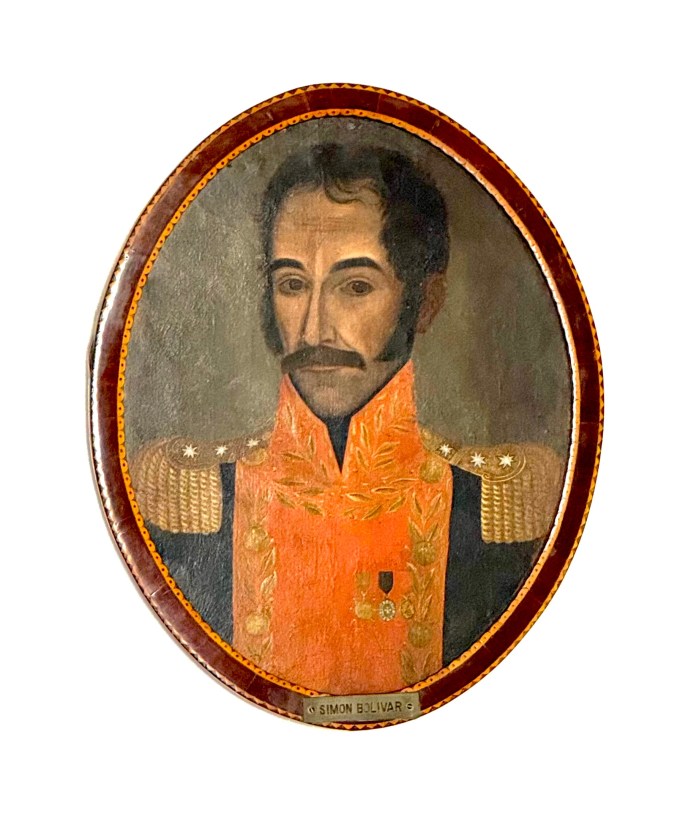
Quinta de Simon Bolivar

Generally regarded as the “Liberator of South America”, Simon Bolivar spent most of his adult life living in Colombia as its first president (some would say dictator). Upon achieving independence from Spain, Bolivar created “Gran Colombia”, which included modern-day Panama, Colombia, Ecuador, and Venezuela. You can visit his quinta, or country estate, which is now on the edge of modern-day Bogotá. In fact, it’s very close to the cable car for Montserrate, so it’s easy to visit both in one day. The house itself is well preserved and shows how Bolivar and his wife lived, and the gardens surrounding the house are probably the most beautiful, labyrinthine gardens I have visited in South America. Seniors over 60 can visit for free, as can all visitors on Wednesday afternoons. Otherwise, it is 50,000 pesos.

Simon Bolivar, 1783-1830

Sample Colombia’s varied dishes

Of course, all that touristing around is going to leave you very hungry. We enjoyed the Colombian cuisine so much that we did a food tour, but you can also sample local dishes on your own.

  • Keep an eye out for tamales, often served at breakfast or lunch, generally made with cornmeal and stuffed full of hardboiled eggs, shredded chicken, peas, carrots, and spices, then wrapped in banana leaves and steamed for hours.
  • We also liked the ajiaco soup, a hearty stew made with potatoes, corn, chicken, onion, garlic, and cilantro. It’s usually served with a portion of cream, capers, avocado, and rice. If you like pozole in Mexico, you’ll like this soup. Chris had it three times during our six day visit!
  • This is going to sound a little weird, but stay with me here. Colombians love cheese, and they love hot chocolate. So they figured, why not put the two together? We gave it a try and I have to say… it works! You slice the soft cheese into small chunks, stir them around in your hot chocolate, then eat with a spoon. Don’t knock it till you try it.
  • Fritanga, or bandeja paisa, is a large platter that is considered Colombia’s “national dish”. You’ll definitely want to share this with a friend. It usually consists of rice, beans, a fried egg, ground beef, chorizo or blood sausage, pork rinds (chicharrón), plantain, avocado, and arepa (corn cake). Yes, it’s all as delicious as it sounds.
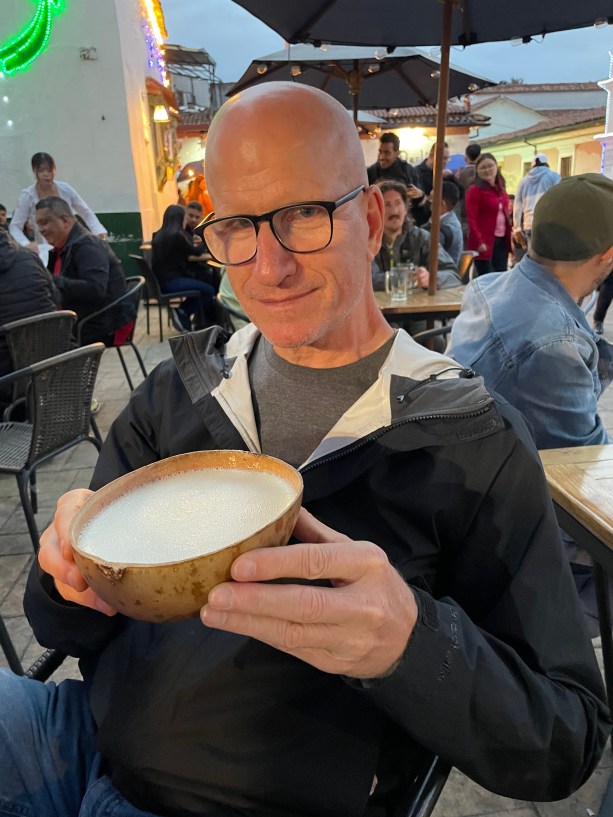
  • We found that in most evenings, Bogotá goes to bed fairly early, but on Friday and Saturday nights, people were out and about, eating and drinking with friends. That’s the perfect time to visit the Candelaria neighborhood and visit the Chorro de Quevedo plaza, home to the last remaining chicherias. You can sample their many-flavored fermented corn drinks and indulge in a bowl of it while crowd watching.
Chris enjoying a bowl of chicha

Relax and enjoy the coffee culture

Of course, Colombia is home to some of the best coffee in the world. Their rich volcanic soil, high altitude, and ideal climate makes coffee production in Colombia one of their biggest exports. They are, in fact, one of the only countries that produce 100% arabica beans. Some coffee plantations are planted near banana groves, while others are planted near cacao trees. Notes from both help create the rich, smooth taste of Colombian coffee. You can visit a coffee plantation within a few hours of Bogotá, or visit one of several coffee cafes in town that will explain the ins and outs of coffee production and various ways to prepare it. Then, sit back and relax with a cup of some of the purest coffee in the world, and reflect on how far Colombia has come in recent decades.

Learning about coffee at Arte y Pasion Cafe, a school for baristas

Have you visited Colombia? For a look at another part of this beautiful and varied country, check out our visit from several years ago to the north, when we visited Santa Marta and hiked the Ciudad Perdida!

The Netherlands and Belgium

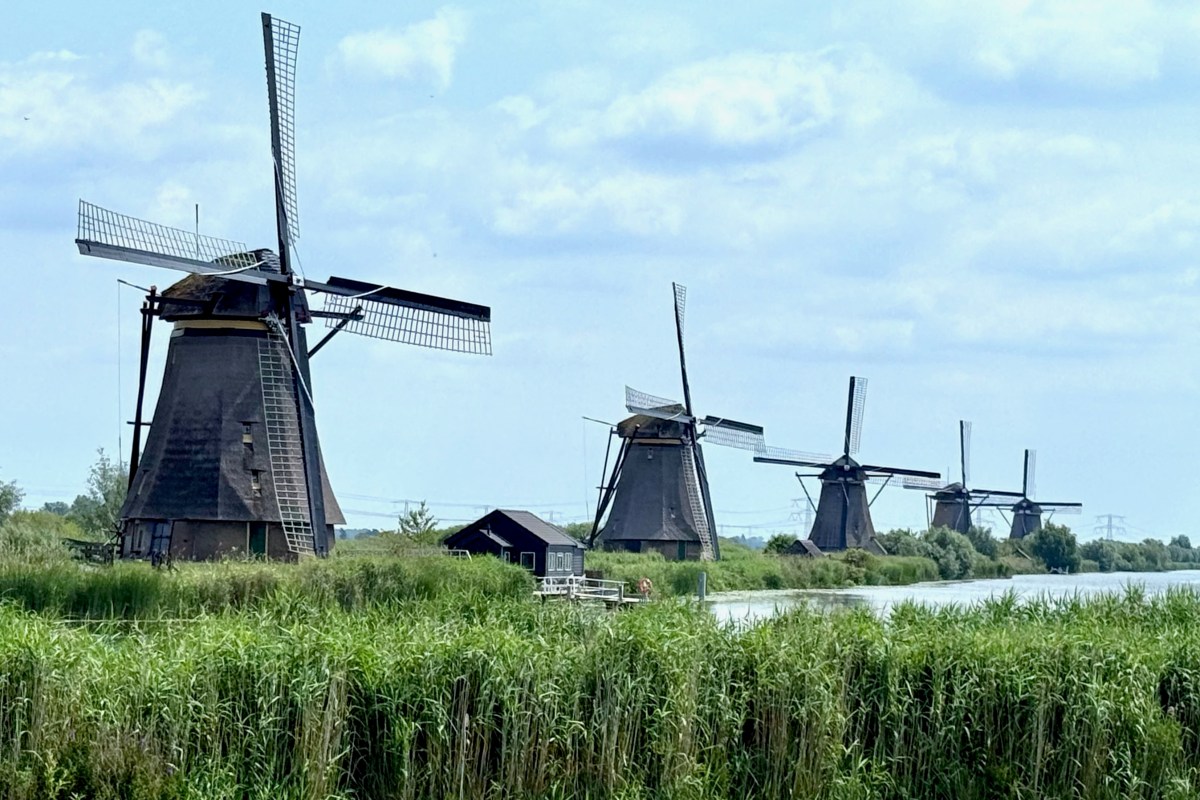
Windmills line a canal in the Dutch countryside

Knowing that by early June the summer heat would arrive where I live, I wanted to pick a place to travel that would have delightfully cool, even rainy, weather. We chose The Netherlands and Belgium, flying in and out of Amsterdam (strangely, a whole lot less miles on United than other nearby airports). We packed our rain jackets in our backpacks, and away we went!

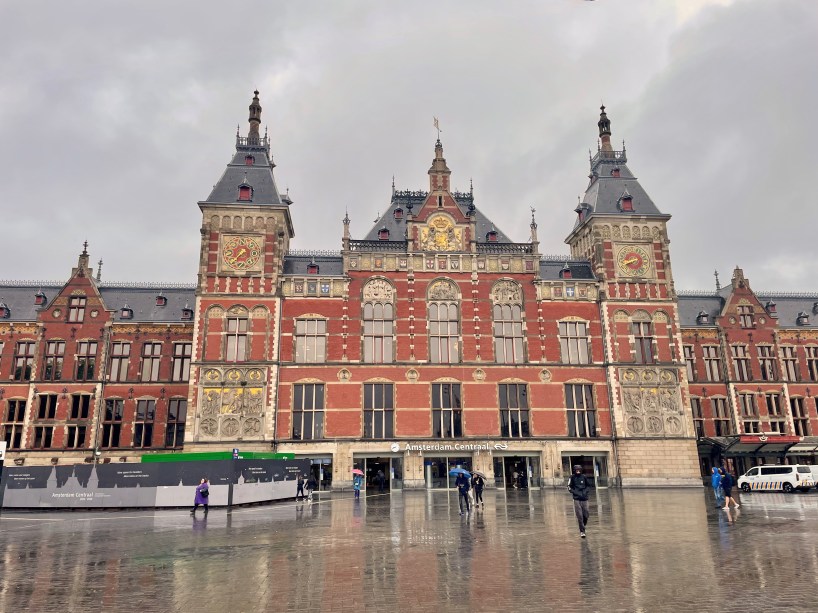
A cool and rainy morning as we arrive at Central Station

Our first two days, in Amsterdam, we were glad we had packed our long pants and our rainjackets, and our hotel kindly offered us an umbrella, which we definitely needed. We explored the area near the Damrak, the red light district, the Tulip Museum, and a Rembrandt/Van Gogh exhibit, and loved it. We dodged speeding bicycles and ate bacalhau from Portugal, nasi goreng from Indonesia, gyros from Turkey, and canneloni from Italy, and loved that too. We did not get to visit the Anne Frank house, as it was fully booked for the next six weeks. Plan early on that one, friends!

The word for “tulip” stems from the word for “turban”, as the flowers originated in the Kazakhstan area of Asia

From Amsterdam, we headed down to Antwerp to get a sense of Belgium. Unfortunately there was a train strike that day, and all busses were booked, so we wound up Ubering there. Ouch. It was pricey, but only a 90 minute drive, and then we were there. I love how close European cities are to each other. In north Texas you can drive for 90 minutes and only be one county away.
No trains running today in Netherlands. Time to go to plan B.

In Antwerp we visited a diamond museum, and we set out to try as many Belgian beers as humanly possible. Also as many Belgian fries. We went on a food tour of Antwerp, and enjoyed it so much, we went on a food tour of Bruges a few days later. Did you know there’s two different kinds of Belgian waffles? I like the smaller, denser kind with the sugar baked right in. Delicious!! We stayed three nights in Bruges and added a visit to the North Sea at Oostend. It was not quite so balmy and in fact rather chilly, so we didn’t get any true “beach time”, which actually was fine with me. We had thought to find Belgium’s one nude beach but in the end didn’t bother since there was no way we were getting undressed anyway.

Food tour for 10 euros? Yes I will. Twice!

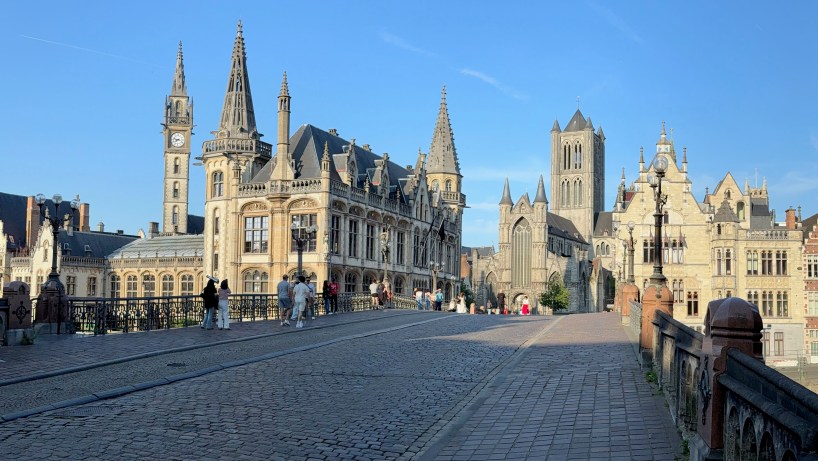
We caught a train from Bruges to Ghent, a cute little medieval city featuring an old castle, monasteries, public squares, and a large Friday market. It was so easy for a few days to take my mind away from the trials and tribulations of living in a big metropolis such as Dallas/Fort Worth, and imagine life in the 8th century in Europe (not that I would necessarily want to trade, as I happen to like sanitation and air conditioning a lot).

Ghent

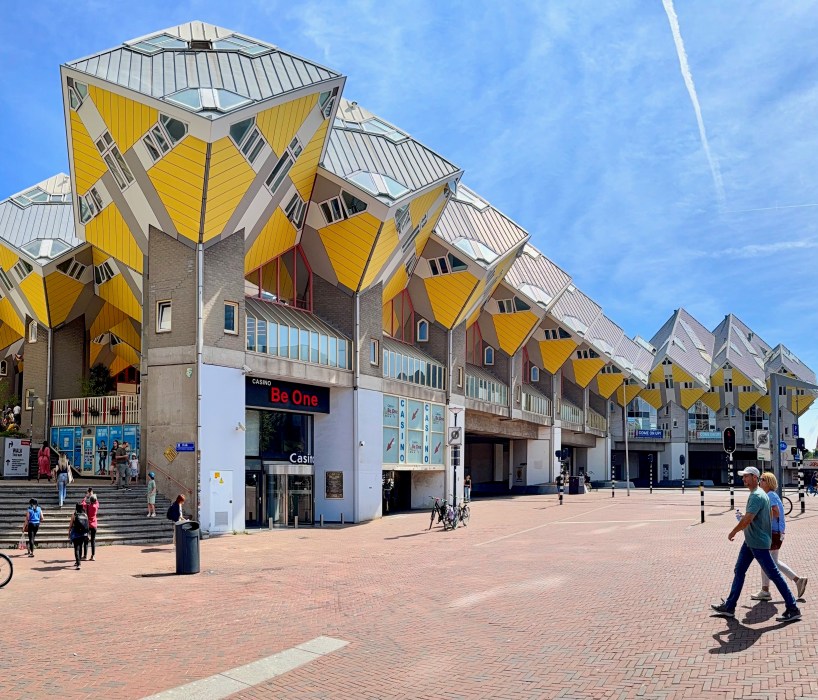
Although there is a whole lot of Belgium we hadn’t yet seen, it was time to travel north up to the Netherlands again. We took a train from Ghent to Rotterdam. After these smaller, medieval cities, Rotterdam seems so big and so modern! After near total destruction in the second World War, the city was practically rebuilt from the ground up in the following years, during some really interesting architectural times.

The Cube Houses. Not sure if I could get used to everything being a bit slanted.

We took a waterbus to Kinderdijke, a system of 16 windmills that are still operating to drain canals and form dry land, which is how about 20% of the Netherlands has been formed over the past 500 years. Two of the windmills are museums, and you can go inside them and see how people lived in them and worked the canals. The other 14 windmills actually still have families living in them now!

Ready to go live in a windmill!

After Rotterdam, we took a train to The Hague. There was a lot going on there, in preparation for a huge NATO summit featuring Trump himself. We went to check out an anti-NATO/anti-Trump protest, and noted the increased police presence. In the end, we took a day trip out to Madurodam to get away from it all. Madurodam is a fun outdoor theme park, featuring dozens of large-size “miniatures” of some of the regions’ most famous buildings, such as Kinderdyke, various palaces and judicial buildings, and the Schipol airport. It’s fun to roam through the miniatures, pretending like you’re a giant.

That’s a really big duck! No, just a miniature Dutch house.

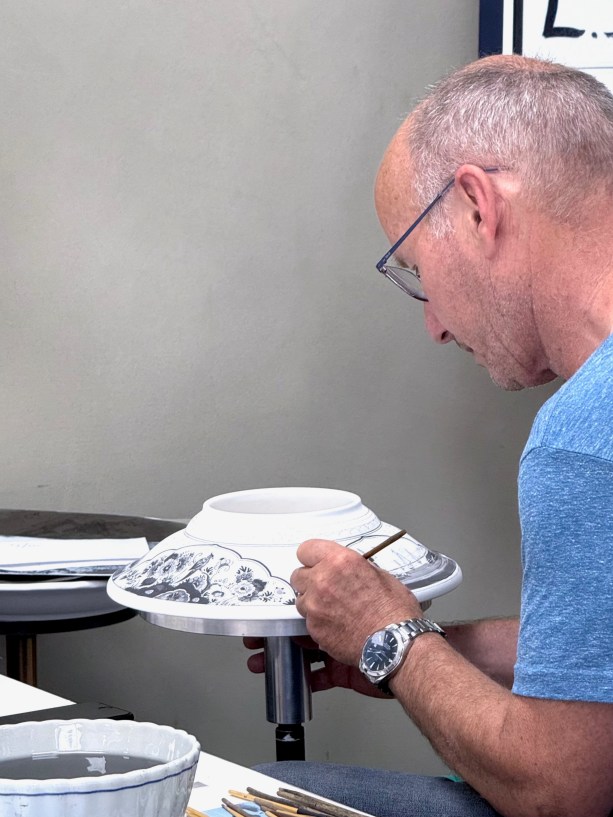
Our last stop before returning to Amseterdam was Delft, to see the Royal Delft Museum and factory. The museum tour is really well organized, and you can watch actual current artists and factory workers as they churn out new and ever-evolving Delft pottery, 400 years after the company began. We also really enjoyed staying at the Social Hub in Delft, where we had access to free laundry, a yoga class, bikes, and more. The place had a really nice vibe and we liked it a lot.

Industry secret: the Delft blue is actually black ink! It turns blue during the kiln firing procedure.

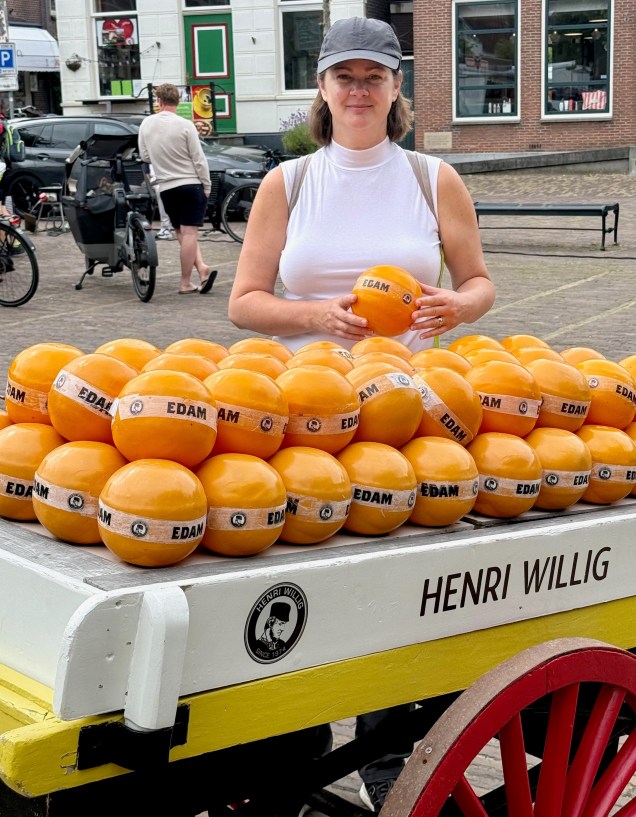
We circled back to Amsterdam and spent the last couple of days wandering through the less-touristed areas of town, such as some residential areas, a large central park, and made sure we sampled the last few dishes we’d been craving, such as an Argentinian steak, a Dutch treat called Bitterballen, and stroopwaffel cannolis. We took a half day trip out to the small town of Edam, home of Edam cheese, to check out their Wednesday market. We picked up soft cheese, spelt bread, chocolates, and blueberrries, and walked to the coastal town of Volendam, which is a super cute fishing town only about 2 km from Edam. We sat on a picnic bench at the wharf and watched the boats sail in and out of the harbor, and tried to keep our picnic safe from the seagulls.

Trying to calculate how much cheese I can fit into my carry on

Not a moment too soon, as a heat wave was about to engulf Europe, it was time to head home and check on our parents, siblings, and friends. Still a month to go on summer break for me, so July is sure to bring some fun trips as well. Be sure to check back soon!

Interview with Chris: Diving and Thriving in the Pacific Islands

Our fearless traveler Chris is often again, wending his way through the last four independent island nations in the north Pacific Ocean. He visited Chuuk, Micronesia, then Palau, East Timor, and the Solomon Islands. Here’s what he had to say about his adventure.

Q: Once again, you ventured off without your wife (me). Why did you travel solo this time?

Deah recently went back to work, and it’s hard to get enough time off to get all the way out to the Pacific islands and back. We talked about going together in the summer months, when she has more time off, but there were other places higher on her bucket list. Plus, visiting these island nations involves a LOT of flight time, which isn’t her favorite thing. So it worked out better for me to go by myself. I promised to be home for her Spring Break so we could go somewhere on her list.

Staying in Chuuk

Q: I know you enjoy scuba diving. Where all did you scuba dive on this trip, and what did you see?

I went diving in Chuuk, Palau, and East Timor, and snorkeled in Guadalcanal, Solomon Islands. This time I brought a Go-Pro with me, because I’d been wanting to shoot some underwater videos. I did a lot of wreck diving, to see some Japanese ships from World War 2. My favorite diving excursion was to see the manta rays in Palau, with Blue Marlin Diving Company.

Diving with the Manta Rays in Palau

Q: I know it takes a lot of flights to get to these islands. How many flights did you have to take for this trip?

13 flights in total. We had accrued points with both American and United, so we were able to use those points rather than dollars for several flights. From Texas to Hawaii, then I hopped on the United Island Hopper to get to Chuuk and to Palau. I also had to overnight in Manila, Bali, and Darwin in order to get to the rest of my destinations. All in all, it was a lot of flying time. It’s hard to get all the Pacific Islands in one trip due to the many flights.

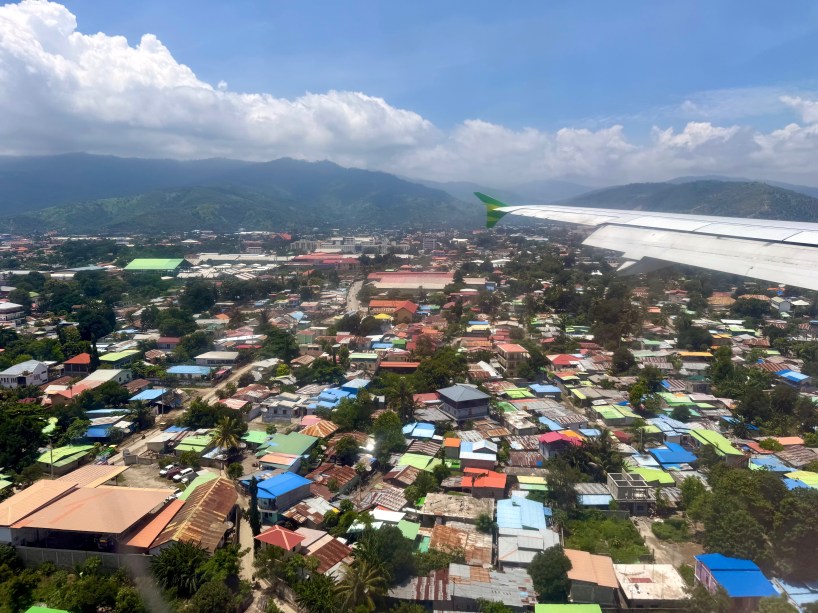
Flying into Dili, East Timor

Q: What kind of food did you eat on this trip? Anything you really liked?

The islands tend to have a lot of starches like ramen noodles, rice, fewer fresh vegetables, and canned meats. I liked the Japanese and the Philippino breakfast menus, as they had fresh options. In East Timor I really liked the fish grilled in banana leaves.

Q: How would you rate the friendliness level of the islanders? What kinds other travelers did you meet there?

Polynesian people, in my travels, have always been welcoming and friendly, open to questions, and easy to get along with. Many of the other travelers I met were NGO-types doing sports diplomacy, health directives, and UN workers, and Japanese tourists. A lot of the people I met at my hotels or in airports were people trying to get to the end of their countries list, like me.

Some local kids playing on the beach in East Timor

Q: So the conclusion of this trip brings you to how many countries left that you’d like to visit?

I have fifteen left on my United Nations list. Some are active war zones, while others are difficult to get a visa to, especially now that there’s a list of 44 countries that have travel restrictions to the United States. It’s likely those countries will make it harder for Americans to visit them as well.

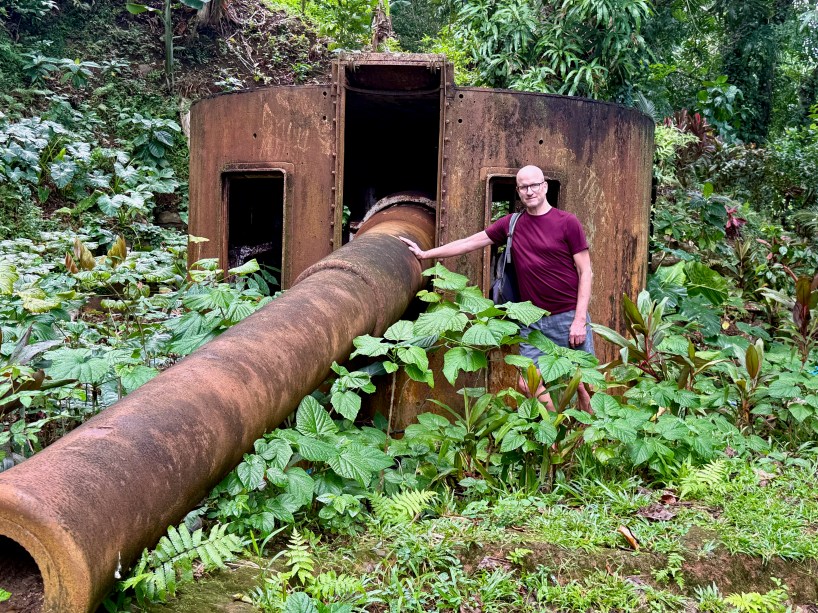
Chris at Chuuk, visiting a Japanese gun emplacement from World War 2

Taxco, the silver capital of Mexico

Taxco Mexico main church

November is such a nice time of year to visit Mexico- beautiful weather, low crowds- so this year we decided to spend Thanksgiving break in Taxco, one of Mexico’s “Pueblo Magicos”, or Magic Towns. These charming small cities feature walkable city centers, historic churches and plazas, and plenty of delicious options to eat and drink.

Arriving at the Mexico City airport, there’s three easy ways to get to downtown, or to any of the main bus stations. You can hop in a taxi, take the Metrobus, or walk all the way down to Door One and access the subway. For 15 pesos (75¢ US) you can buy a metro card, and then each ride is 5 pesos (25¢). Two people can share one metro card. We transferred to the blue line’s last stop, the Tasqueño bus terminal. It’s a very nice, very modern bus terminal, and we found busses departing for Tasco every 90 minutes. 554 pesos later (approx $25 USD), we had two bus tickets on Costa Lines and were on our way.
We arrived in Taxco two and a half hours later and walked from the central bus station to our hotel, the Posada de San Javier ($65 per night for a king suite, with breakfast). The city of Taxco trails down the side of a mountain, so it doesn’t matter where you stay- everywhere you go is going to be a short but steep climb from your hotel or restaurant or the main zocalo. Just take it slow and steady, or hop in one of the ubiquitous VW taxis that constantly circle the plazas.

The stunning main feature of Taxco is the twin-spired baroque Church of Santa Pisca, built from 1751-1759. Everything else in the historic city can be found in relation to the church. Wanting to really relax on our trip, we spent four days in town and found ourselves lounging on rooftop terraces, enjoying coffees and chilaquiles in the mornings or hot chocolates and churros in the evenings. We spotted a few other gringo tourists in town, but the majority seemed to be visitors from other parts of Mexico or Latin America. Taxco feels safe, is easy to walk around, and has options to fit any budget.

The main plaza, or zocalo

Our favorite activities in Taxco:

  1. Take the cable car up to the Hotel Montetaxco and enjoy the view from their mirador, while sipping a juice cocktail. It costs 9 pesos to hop in a collectivo (combi) to reach the base of the teleferico. Round trip tickets on the cable car are 120 pesos, or you can take the cable car up and walk down.
  2. Visit the Pre-Historic Mine, located underneath the Hotel Posada de la Mision. Tickets are 180 pesos and come with a mezcal cocktail afterwards at the hotel bar. The tour is in Spanish but the guide translates parts of it.
  3. Visit the silversmith shops or workshops, pretty much all over the city. Look for the .925 or .950 stamp if you’re looking to buy, or just enjoy watching the sheer talent of the artisan workers.
  4. Eat pozole at any number of pozolerias (Tia Calle was very inexpensive, if not very atmospheric).
  5. Try the region’s pink rosa mole dish, made with rose petals and white chocolate. We enjoyed the dish at La Parroquia, which features balconies and a terrace overlooking the main zocalo. A perfect al fresco dinner spot.
  6. Plenty of places offer chocolate and churros, but we liked Chu Cho, nestled in Plazuela de Bernal, for their wide variety of toppings (try the marzipan!).
  7. Visit the Pozas Azules (blue swimming holes). You can take a full-day guided tour from one of the tour operators in town, or just walk to the main road and grab a combi heading out of town toward Acapulco (the stop is in front of the Coppell building). The combi costs 35 pesos, and entrance to the pools is 100 pesos.
  8. Tour the Spratling Pre-Hispaña Museum. Spratling put Taxco on the map in 1929 and made sure its pre-Hispanic culture would be preserved. This museum features his private collection of artifacts. Worth a visit, and only 75 pesos per person.
  9. For another beautiful view of the town, visit the Cristo Rey statue above the main plaza. It takes about 45 minutes to walk up there, or take a taxi for 80 pesos.
  10. Eat as much ice cream as possible. We liked the Crema y Nata Heladeria, tucked into the bend right at Plaza Del Convento. Delicious!

Have you been to Taxco, or another of the Pueblos Magicos in Mexico? What was your favorite part?