
It’s been a while since our fearless traveler, Chris, the other half of Palm Tree Musings, took a trip by himself. On this journey he started off with me (Deah), in Hawaii, and then visited Samoa, Tonga, Vanuatu, Fiji and Tuvalu on his own. Here are a few questions and answers about his trip.
1. Why’d you leave your wife behind?
I asked her to go in this trip, but she refused. I think she’s tired of islands, plus she hates long plane rides. I did finally talk her into coming with me as far as Hawaii, though, and we spent ten days there. Then she was happy to spend some time at home by herself, a little stay-cation.
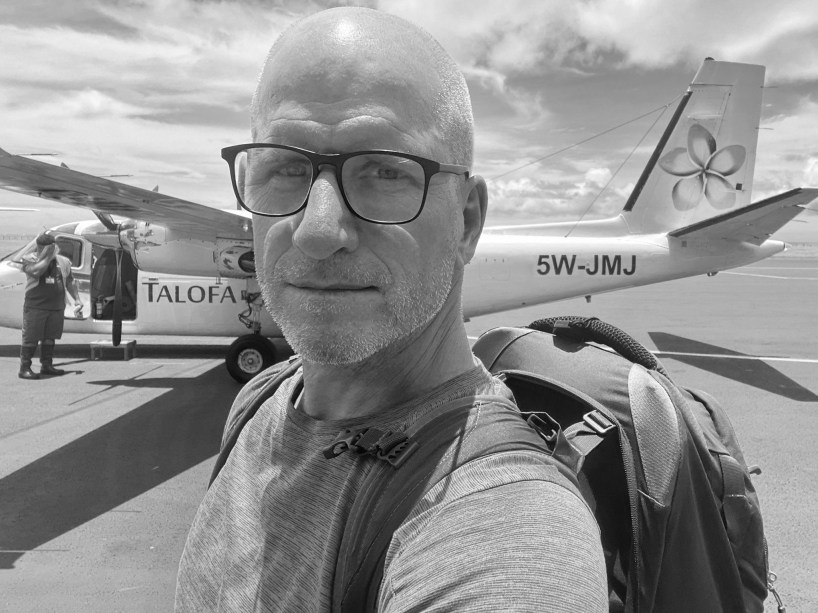
2. Why did you pick these 4 nations for this trip?
I only have 23 countries to visit in the world left, but a few are active war zones and a few have visa issues. So I figured I’d better get these while I have the time. It’s tough getting all the way out to this area of the world, and you have to allow a little bit of extra time, because the flights are sometimes unreliable and can really domino into a problem if there’s a cancellation or delay.
3. Did you have any trouble like that on this trip?
Yes, my plane leaving Vanuatu was cancelled due to mechanical issues, and that airline doesn’t have any backup planes. That put me returning to Fiji much later than I planned, endangering my connection to Tuvalu. I had to do a wild cab ride from Nadi to Suva, Fiji at break-neck speed, at high cost, but it turned out all right. A few other travelers were in a similar position. You have to be pro-active to make sure an issue gets fixed in time.

4. You visited both Samoa and American Somoa. Any differences between the islands?
I found the culture on both to be about the same. People commute between the islands frequently because of family ties. There are several small flights a day, as well as a ferry once a week. There is a National Park on the US side, and you can use US dollars there. The international date line runs between the two.

5. The low-lying island of Tuvalu is quite threatened by climate change and sea level rise. Did you discuss the topic with any islanders, or see evidence of concern while you were there?
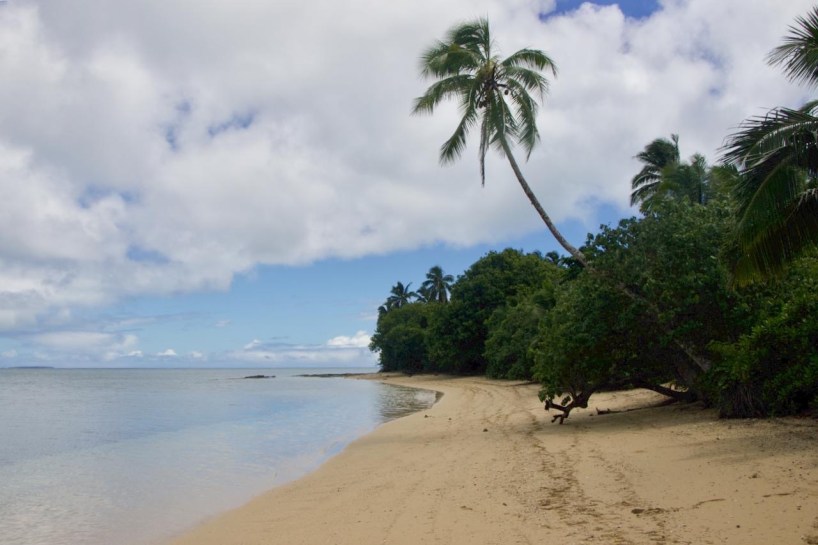
I talked to several islanders that brought it up. Some of them had friends or family that have already migrated to Australia, New Zealand, or the US to avoid sea-level problems in the future. It’s definitely present in the minds of the islanders, as they look to preserve their culture if not their home island. Also they are seeing the coral reefs start to die off as the waters warm.

6. While you were on Tonga, you probably ate a lot of fish. What other foods are popular there?
A lot of starches, like ramen noodles and roots and tubers such as taro and cassava, potatoes and yams. On Sundays everything is closed so you’d better go to a shop the day before and buy some instant noodles and tuna. Of course there’s fish all day, every day. I went on a boat trip and the guy caught a fish and used his knife to fillet it right there- the freshest sushi I’ve ever had. Red meat is much harder to come by.

7. Vanuatu and Fiji are part of Melanesia, while Tonga, Tuvalu, and Samoa are Polynesian in culture. What’s the main difference?
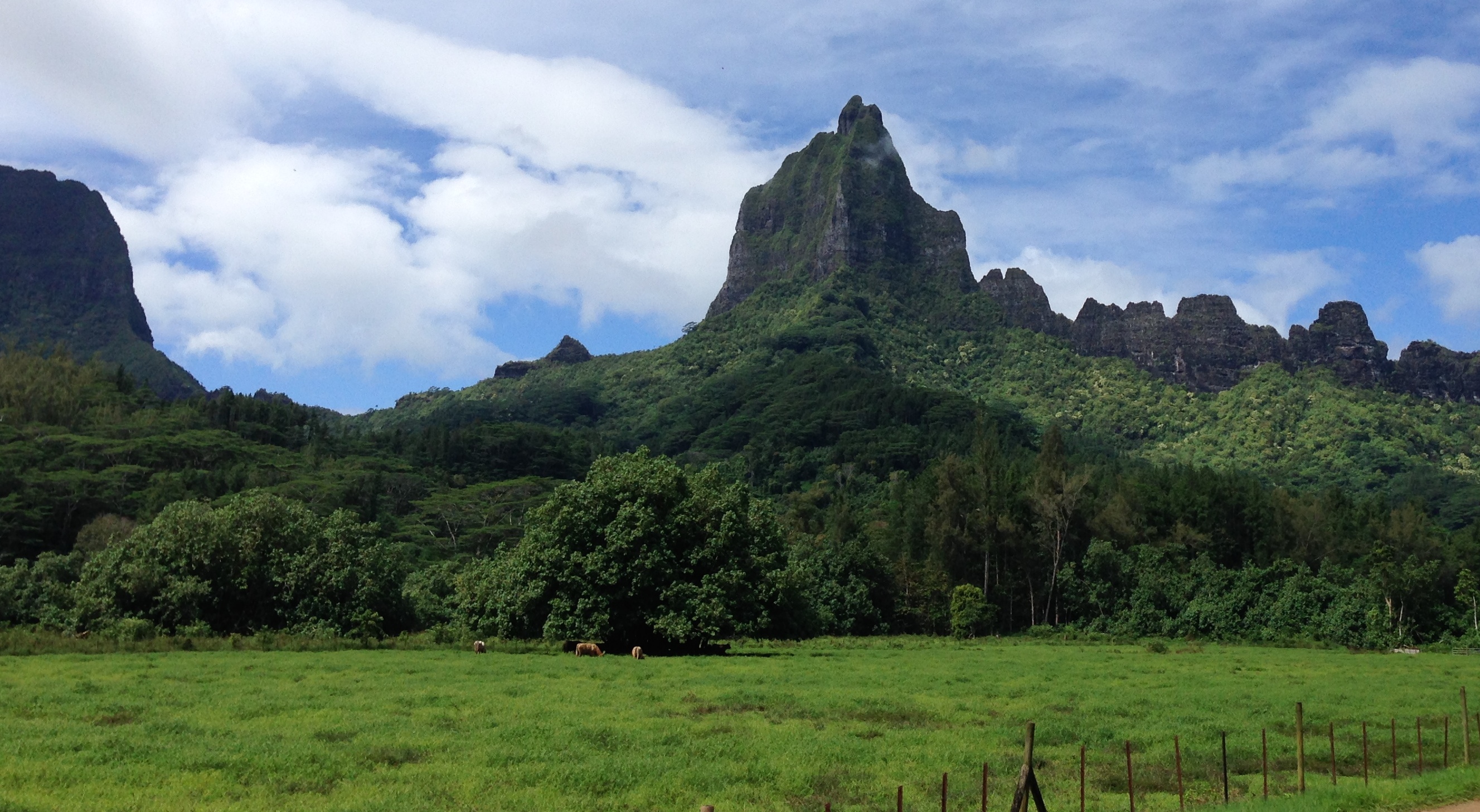
It’s mainly a difference of geography, but there are some cultural and historical differences as well. Polynesia spans from Hawaii to New Zealand, and as far east as Easter Island. Melanesia is north of Australia, and north of that is Micronesia. Melanesia sort of encompasses the “Ring of Fire”, so volcanic islands with high cliffs and eroding volcanos. Polynesian islands are flatter, with more coral reefs. The volcanic activity there was much older, forming atolls, which are made by ancient volcanoes that collapsed back into the sea. Culturally, the Polynesians came from SE Asia, while Micronesians are descended from indigenous islanders. The Polynesians were seafarers and knew how to navigate by the stars.

8. I know you love scuba diving, so did you get a chance to dive on this trip?
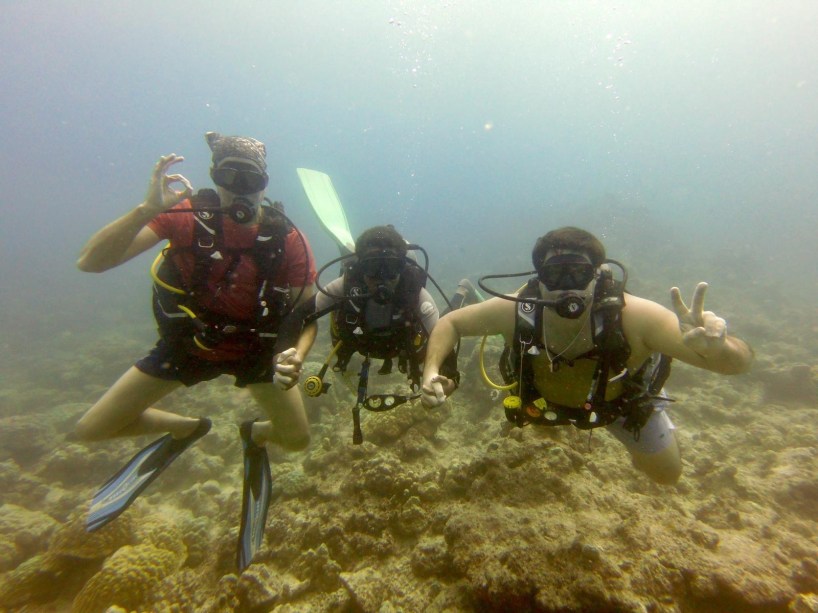
Yes, I dove with Big Blue Vanuatu. They visit several reefs and wrecks around the atoll. I really enjoyed diving “the cathedral”, an underwater cave with an open roof. If you’re staying in or near Port Vila, I recommend them.
9. What’s the hardest thing about planning a trip like this?
You have to plan a lot of one-way and return-trip flights on a variety of airlines. It’s helpful to have some airline miles with some of the big ones like American Airlines, Fiji Airways, or Hawaiian Airlines. You’re also crossing the international date line several times, so it’s easy to get confused while you’re booking flights. I found that making a mind map helped me.

10. What is next in your travel plans?
After hiking both the Appalachian Trail and Pacific Crest Trail, I’m ready to start the Continental Divide Trail. Hopefully Deah will provide support for that, as she did on my other hikes. Also I’m hoping we can both go to Western Australia this summer, making a few stops at Palau, Micronesia, and Solomon Islands along the way.
Thanks Chris for showing us the Pacific Islands, and answering these questions!



 PalmTreeMusings