Do You Need a Car to Visit Hawaii? Here’s how we saved $1100

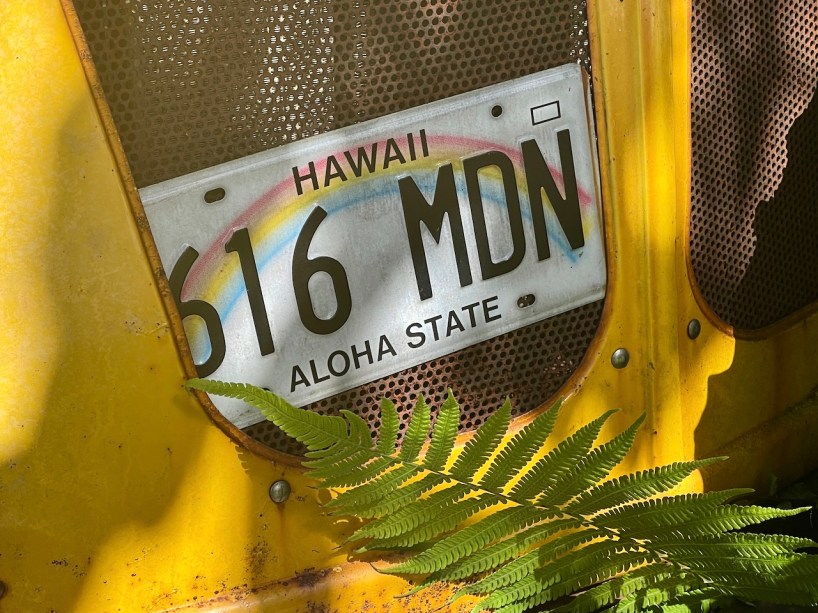
Hawaii Road to Hana license plate

When we started planning a visit to Hawaii, I knew it was going to be pricey. But it was my 50th state, and we wanted to do it up big. While I was booking our hotels and flights in and out of two islands, I questioned whether we needed to rent a car. I checked a few rental prices, but at an average cost of $140 a day for 10 days it was really going to add up. Instead I used a few savvy traveler tips and saved us over $1100.

No car? No problem

1. Walk away from the airport

When we arrived in Kona, on the Big Island, we checked to see how much an Uber to our guesthouse would be. It was only 4 miles away, but the price of the ride was $40. I didn’t want to walk all the way, because it was up in the hills, but after being on a plane for seven hours, I was ready to stretch my legs. We strapped on our backpacks (we always travel light) and we walked about 1 mile from the terminal until we were off the airport grounds. At that point we checked the Uber app and at only $16 we were ready to hop in. Obviously this tip won’t work in busy airports like DFW or LaGuardia, but you can try it at airports that are more walkable, or that have metros to leave the airport grounds.

Airport Ubers, Lyfts, and taxis often add an airport tax, so avoid that by leaving the airport grounds if it’s safe to do so

2. Take the public bus

As of February 2024, the public buses on both the Big Island and Maui are free. I don’t know about the other islands, because I did not visit them on this trip. We were able to pick up a public bus going from Kona to Hilo, very close to our accommodations. It was a beautiful ride across the island, meandering in and out of quaint little towns, along the seashore and over the mountains. We enjoyed our “tour” of the island, and saved ourselves the price of a rental car, or a shuttle from Kona to Hilo. Normally the Hawaii buses are $1-2, depending on your age. Not bad!

This bus on Maui took us from Ka’anapali back to the airport in about an hour- free!

3. Check the website of your destination attraction

When we are visiting an attraction that is a bit outside of town, I often check their website to see if they mention if they are on a public bus route, or a metro or subway. We knew we wanted to visit Haleakala National Park and since we didn’t have a car, I wasn’t sure how we were going to get there. When I checked the National Park website, I noticed that the Big Island public bus goes straight to the Visitor Center. While the bus is free, getting into the national park does cost $15. The bus driver will stop at the front gates so that you can pay. If you have a US national parks pass, you can use it at the ones in Hawaii so make sure you bring it along on your trip. There were four buses a day that dropped off at the national park, so you could return in the same day or like us, spend the night in the park itself.

I love national parks that are in public bus routes!

4. Rent a car with Turo

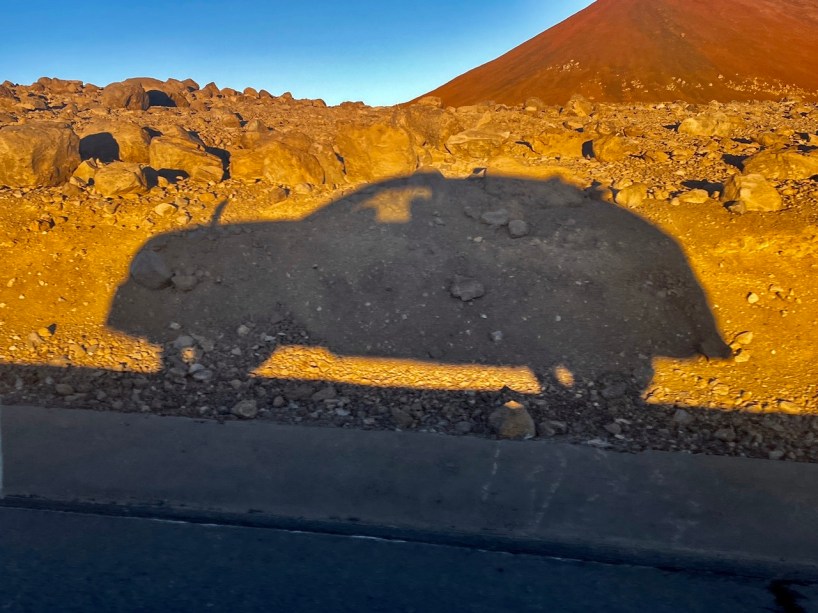
I wanted to do two other things that were not on a public bus route. But I still wasn’t willing to pay $140 to rent a car for one day. So I checked on the Turo app, and found a car near our hotel for just $56 a day. Turo is a way for regular people to loan out their cars for short periods of time. With taxes and fees it came to about $80, and unlimited miles so I knew we could get to the places we needed to go. We picked up the rental car at 10 AM, and drove to the Green Sand beach for a hike. Then we drove all the way up to the Mauna Kea observatory to watch the sunset. I was worried we would not be back in time to turn in the car, but when I messaged the car owner in the app, he very quickly responded and encouraged me to enjoy the sunset and get the car back when we were finished. On the way back down from the hill, we refueled the car, returned it to the owner, and walked back to our hotel. By turning in the car on that same night, we also saved ourselves a $25 parking fee at our hotel.

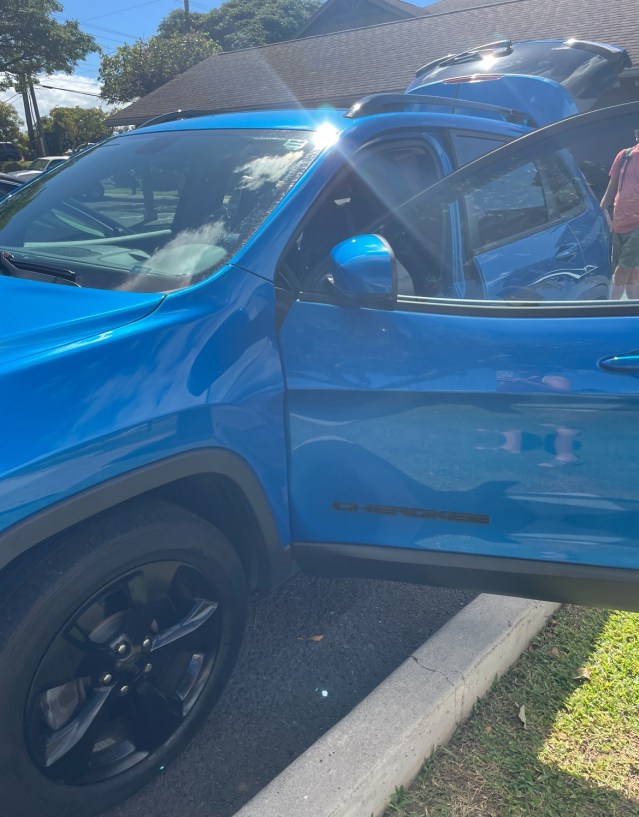
We carefully inspected our Turo rental before taking it out for the day

5. Look for free tours with your hotel or hostel

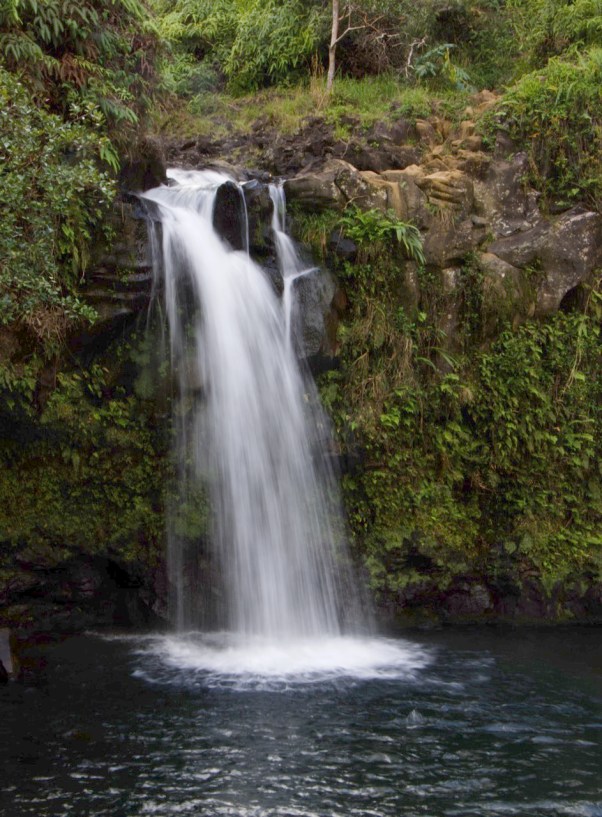
When we arrived on Maui, we could tell that accommodations were going to be very expensive. We decided to stay at a hostel in Kahului, in part because they offered a shared van tour every day of the week to different parts of the island. One of the days we were staying there, we signed up for the “Road to Hana” tour and along with 13 other people, we had a fun day trip, stopping at waterfalls, black sand beaches, food trucks, and getting vegan ice cream, as well as swimming at the beach, and watching the sea turtles and surfers. It was a great way to spend the day and we got to see way more than we would’ve even known to go look at if we had been traveling on our own. At the end of the day we tipped our driver to show our appreciation.

Our hostel van tour took us to some great spots that we may not have found on our own

6. Talk to your fellow travelers

One day we took the van tour, a few people missed the chance to sign up and the tour spots filled. Four of the other guests decided to go in on a car together. They followed the van tour, and each one covered 1/4 of the cost of the rental. In the past I have wound up sharing a car and the costs with hostel or guesthouse friends, and it’s a great way to see some sights that are further away than the immediate city- and make a new friend!

Our hostel tour guide took us to a beach that had sea turtles chilling out

7. Try a carpooling app

Speaking of sharing costs, there are other ride-sharing and car-pooling apps. I’ve looked at both Hitch (Texas, Florida, Oklahoma area) and BlablaCar (Canada and Europe), which are great for one-way trips. The CarpoolWorld app offers rides between various Hawaiian cities. Basically, if someone needs to go from, say, Austin to Houston, they can check and see if a driver is planning on making that drive (or a longer one that includes those cities). The driver will probably charge a small fee, but it’s not exactly the same as a taxi or Uber, because the driver is already planning to take that drive and is happy to have a passenger to share the costs. It’s an interesting way to match up drivers with passengers, with over 26 million people a year using BlablaCar.

Share the ride and split the costs!

In short, there are lots of ways to avoid renting a car. Using public buses, sharing rides, and taking a walk now and then can help overly-congested tourist places have fewer cars on the road, save on costs, and lower carbon emissions. For us, it meant we could spend more time gazing out the window and enjoying our surroundings, while still getting to where we wanted to go. A win/win situation!

The view from one of our bus rides on Maui

Have you tried an alternative method of transportation? Let me know about it in the comments below!

Wow, Oaxaca!

oaxaca-ofrenda skull

Busy with life and other adulting things, C and I decided we needed a break. I checked my Google Map to see what fun locations we had pinned as “Want to Visit”, and Oaxaca caught my eye. A month later, we were immersed in this cool town, wowed by the laid-back lifestyle, the temperate weather, and the fun things to do nearby. Read on to find out more about vibrant Oaxaca!

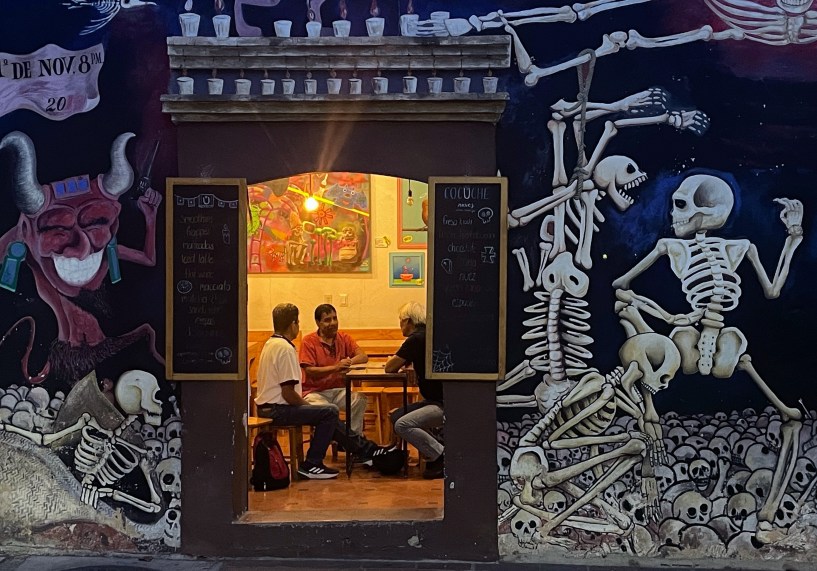
Dia de Muertos: Although the main day for this festival is the night of November 2, in Oaxaca they celebrate for a week straight, so try to stop by the town sometime in that week. You’ll find the plazas awash in yellow and gold chrysanthemums, ofrendas in front of every business, calendas parading around town, and skeletons everywhere. Not sure what Dia de Muertos is? Try watching the Disney movie Coco for a fun overview!

This ofrenda (altar) features flowers, fruit, corn, and other products as offerings

Besides this one-of-a-kind festival, there are plenty of things to do in Oaxaca. An area of great importance to the Zapotec people, the Oaxaca valley has been settled for thousands of years. Families in the region still make mezcal from the blue agave plant using the same time-honored traditions as their forbears, and nearby, entire families use natural ingredients to dye wool and create rugs and tapestries using ancient techniques.

Mt Alban historical site: Inhabited for over 1500 years, Monte Alban is an important site for the Zapotec people, as well as the Olmec and the Mixtecs. The archeological site is laid out according to the stars, and features several pyramids, tombs, and terraces. Visiting the site is fairly easy; you can join a day tour, on sale at the zocalo (main plaza) in Oaxaca, you can take a private taxi, or you can take a shuttle bus, which departs from the front of the Hotel Rivera del Angel (2 blocks south of the zocalo, costs 100 pesos). Once at the ruins, plan for about 3 hours, and entry is 90 pesos for foreigners. Tip: Take an umbrella or wear a hat; the sun is strong up there.

This site was the Zapotec capital city between about 500 AD and 800 AD, a home to almost 30,000 people

Day tour to the Hierve el Agua: Another popular day trip is visiting the Hierve el Agua. You can do this on your own, but it’s rather far out of town, so it’s very easy to do a full day tour, which visits several sites in the same general direction. We booked our day trip from one of the touts in the zocalo, and got picked up from our hotel at 8 am. We visited Santa Maria del Tule, a small town that features the largest tree (by circumference) in the world. Then we visited a family rug-making factory, and learned all about the natural dying techniques and how long it takes to make their intricate and colorful patterns. We also visited Mitla, another set of archaeological ruins, and had lunch. The afternoon was spent at Hierve el Agua (“the water boils”) to swim in the springs and see the limestone cliffs. We ended the day with a tour of a small mezcal factory, along with a tasting, and were dropped off back at home at 8 pm. The tours range from 400 to 500 pesos, so try to strike a good bargain!

These rugs and other tapestries take 2-4 weeks and are completely made by hand

Enjoy the coffee culture: Or, even better, enjoy a Mexican beverage of choice. We found so many cafes and outdoor terraces, perfect for enjoying a cold beer, a tasty coffee, or my personal favorite, chocolate y agua. Another fun one to try is tejate, made from toasted corn, cacao beans, cacao flowers, ice, and sugar. Of course, if it’s 5:00 somewhere, you may as well try one of the dozens of kinds of mezcals, made from the local blue agave cactus.

Seasoned with spices such as chile, anise, or cardamom, the Mexican hot chocolate drink is delicious day or night

Sample the culinary delights: If you like food, then Oaxaca is a great place for you. From dozens of varieties of corn, several different kinds of tomatoes, and of course all kinds of chiles, you can try a different meal every time you go out. Oaxaceños are known for their seven unique mole sauces (rojo, coloradito, amarillo, verde, negro, chichilo, and manchamantel), as well as the tlayuda, a thin, crispy tortilla covered with beans, cheese, lettuce, avocado, meat, and salsa. Yes, it sounds like a taco, but it’s also… not. Best to just try it for yourself.

Visit the historical city center: The Spaniards invaded Oaxaca and had declared it a city by 1529, and immediately began laying the streets in a grid pattern and building churches, cathedrals, and plazas. The zocalo, or main plaza, of Oaxaca is always filled with musicians, tourists, locals, art exhibits, concerts, and more. There are two sixteenth-century churches in Oaxaca, both of which are worth a visit for their architecture and their lovely surrounding grounds.

The Church and Convent of Santo Domingo de Guzman, dating back to 1551, also includes the grounds of the Botanic Garden

Explore nearby neighborhoods: In addition to spending a lot of time in the main historic center, we also did some exploring in the nearby neighborhoods. We especially liked both Barrio de Jalatlaco and Xochimilco, slightly north of the city center. Using our Guruwalks app, we booked a walking tour for each neighborhood. In Jalatlaco, we looked at some of the fabulous street art, and ended at a delicious local taco stand (which we returned to the next night for more!). In Xochimilco, we found a hidden organic market, visited a mezcaleria, and ended in a cemetery, still decorated for Dia de Muertos.

Mexico was the last country to still produce the old VW Bug, so there are still plenty to see on the streets here

Logistics:
You can fly direct to Oaxaca from US cities DFW, Houston, and Los Angeles. If you’re already in Mexico or South America, you can fly directly from Cancun, Guadalajara, Guatemala City, Merida, Mexico City (Santa Lucia), Monterrey, or Tijuana.
There is no Uber presently in Oaxaca. The best way to get around is to call a taxi company, take a collecctivo taxi from the airport, or take the public bus.
Hotels in Oaxaca run anywhere from $10US a night to several hundred, depending on how fancy you need to be. We stayed at a hotel two blocks from the Zocalo called Hotel Dainzu, and paid $45 a night for a double bed, private bathroom, with a balcony. Later in the week we stayed at an AirBnB in Xochimilco for approximately the same price, and later we tried another hotel in Jalatlaco, Casa Gubidxa, which was $40 per night, and featured a king sized bed and several rooftop terraces.

Jalatlaco is a particularly fun neighborhood, with painted murals, lots of boutique hotels, small churches, cafes, and late night places to stop for a drink

Have you been to Oaxaca? What was your favorite part of the town? Did you visit during Dia de Muertos, or another time of year?

Come From Away: Exploring Newfoundland and Labrador

20230723 canada, Newfoundland, Elliston

Last summer I felt like I was melting, so this year I wanted to go somewhere “cool”. We decided on Newfoundland and Labrador and wow!! I’m so glad we went. Canada, you’ve got the coolest provinces!

Because we love our car, and we always feel like the journey is about more than the destination, we decided to drive there. Up through Maine (stopping at Acadia National Park), through New Brunswick (stopping in St Andrews-by-the-Sea and Antigonish), and finally through Nova Scotia (driving the Cabot Trail and stopping in North Sydney). As Newfoundland is an island, you can only get there by flying or taking a ferry. You can, however, drive to Labrador, but it takes a very very long time along a route called Expedition 51.

All aboard! The ferry takes six hours and you can either get a cabin, or hang out in the common areas. There is a daytime and a nighttime ferry each day in the summer.

We took the ferry from North Sydney, and arrived in Port Aux Basques. After a one-night stop in the Codroy River Valley at a very homey cabin, we headed up to Gros Morne National Park. And wow. What a beautiful park. Miles and miles (or, km and km I should say), of green mountains, inland fjords, crystal blue waterways, and colorful wild flowers. We camped in the park, and went on the Western Brook Pond hike, and I found myself wondering why all of the southern US hasn’t moved up there yet.

Gros Morne is a UNESCO World Heritage Site due to its inland fjords. Do yourself a favor and book the boat trip.

It was hard to leave Gros Morne, but there’s so much more of Newfoundland and Labrador. Newfoundland itself is about the size of Virginia. We drove to the very far north along the Viking Trail, in order to visit L’anse Aux Meadows, the only settlement in Northern America that the Vikings definitively settled at. We were able to visit a recreation of a peat house, and talked to a few living history enactors who told us what life would have been like for the group that came with Leif Erickson, from nearby Greenland and Iceland. Vikings? Very cool.

Evidence shows that the Vikings overwintered here in 1021 CE, and off and in for the next decade or so

We were close to the ferry to mainland Labrador, so we hopped on the 90 minute ferry (this one does sell out, so book ahead, or get there early- they reserve 25% of the tickets for first-come first-served travelers). We wound up spending two days and two nights in Labrador, learning about the Basque whalers of the 17th century who hunted right whales, and poking around picturesque fishing villages such as Red Bay (pop. 142) and Mary’s Harbor (population 312). Best seafood chowder we’ve ever had, and greatly appreciated on a cold, foggy July evening.

The parks service at Red Bay World Heritage Site will run you out to Saddle Island for a walk around the old whaling station
While only 20 km away, it’s warm and sunny in this harbor !

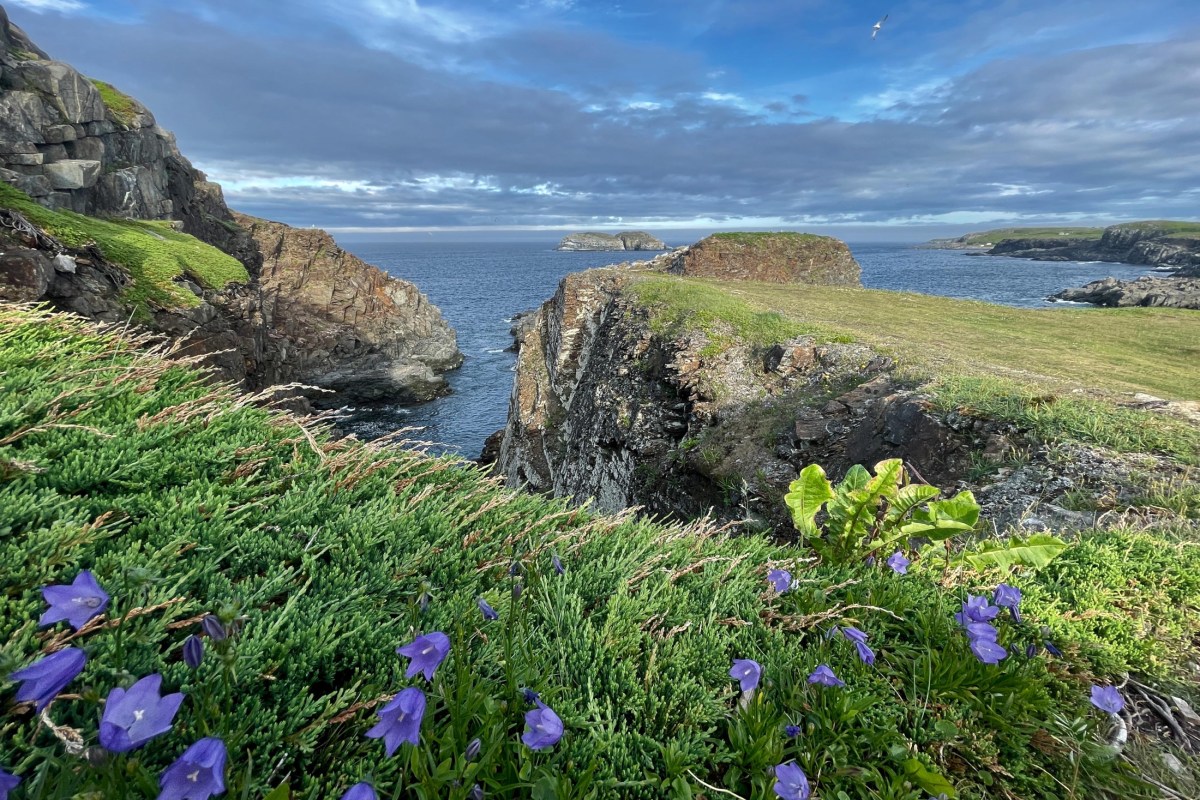
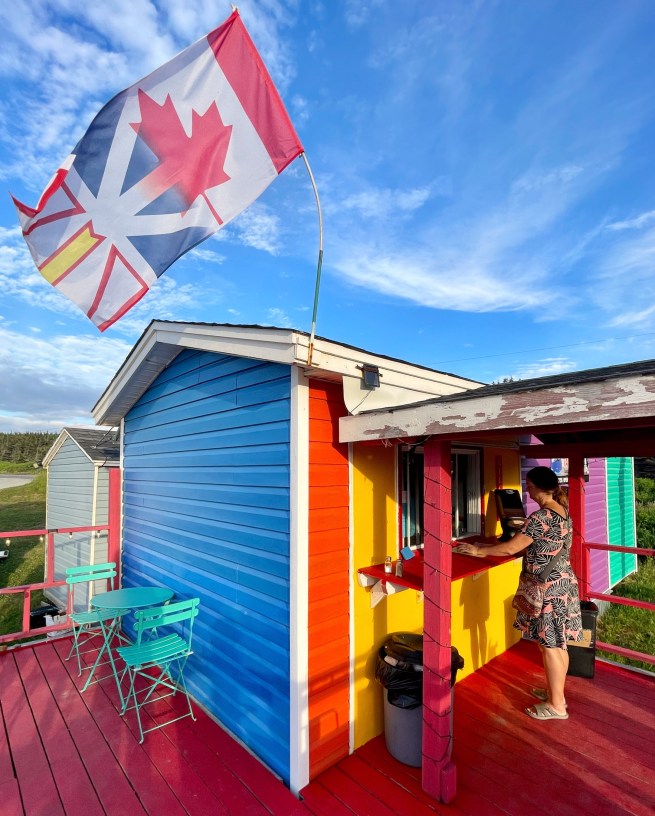
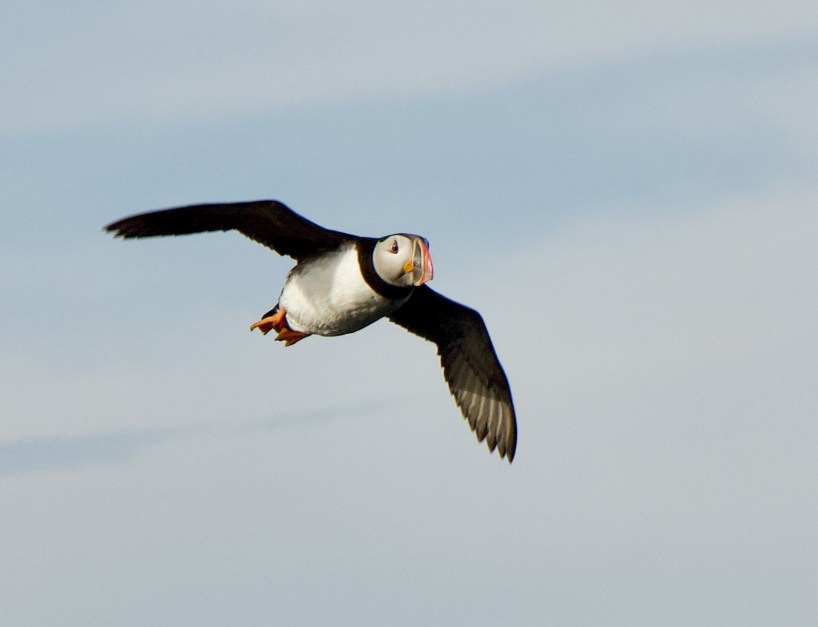
Back over to Newfoundland on the ferry, and we set off to find icebergs, puffins, whales, and France. Along the northeastern parts of the island, known as Iceberg Alley, it’s not uncommon to see hundreds of icebergs between April and August. We did see 6 or 7, from a distance, but you can also take boat tours that will go right up to them. Iceberg Alley is also prime viewing zones for both whales and puffins. From Twillingate to Elliston, we drove along winding narrow lanes that looked out over the ocean and the islands tucked away beyond the mainland shores. We camped near a puffin nesting area, and watched the funny little birds zoom around and dive for their dinner.

Baby puffins, by the way, are called pufflings.

Heading south, we took another ferry and arrived in France! The islands of St Pierre and Miquelon still belong to them, and thank goodness for it, or America would have gotten a whole lot less bootleg liquor during Prohibition. While the ferry to St Pierre is not very crowded, the small town over there only has four or five small hotels, so MAKE SURE you have a place to stay before you take the ONE ferry each day. We had a room reserved for one night, but desperately wanted to stay two. The kind folks at the visitor center found us a cheerful local man named Jean Marc who put us up for the night, who was a real joy to chat with. We also had an amazing lobster dinner that night, so I’m definitely glad we got to stay longer. Although you can see all of St Pierre in a day, why not take two? Or add three or four and see Miquelon- but staying overnight there is even harder, so plan carefully.

More than four million liters of whisky flowed through the tiny islands of St Pierre and Michelon during Prohibition

An hour after leaving France by boat, we were back in Canada. We had one more stop to make- St John’s, the capital. We wanted to stay in one of the colorful old Victorian townhomes along “Jellybean Row”, and were not disappointed with Rose Heritage Inn. Our room wasn’t quite ready, so we headed to the tiny fishing village of Quidi Vidi, and had a craft beer while listening to a live band, gazing out at the cutest. little. harbor. I’ve ever seen.

Chris at Quidi Vidi Brewery, which claims to make their beer with iceberg water!

The next day, we did some history touristing around the area. We went up to Signal Hill, where Marconi received the first transatlantic radio communication in 1901. We also went to the Cape Spear lighthouse, the easternmost point of Canada. Another cool and foggy day, as we hiked around the headland, we could hear whales off the coast, blowing air through their spouts.

Signal Hill: also the final battle of the Seven Years’ War

I honestly could have stayed in Newfoundland another month. But at some point we had reached the absolute furthest point from our home state of Texas, and we had to turn our car around and head south. We stopped in Gander along the way, and learned about their storied airport (from World War II to September 11, that airport had some some wild happenings). We attended a fiddle ceilidh in Nova Scotia on the way home, and lingered a bit in French Acadia in New Brunswick and Quebec provinces. But before we knew it, we had crossed the border out of Canada, and were back in the US, a bit dazed and dazzled by our time in Newfoundland and Labrador.

Caution: extreme views

15 Free Things To Do in South Florida and the Keys

Florida Keys Dry Tortugas National Park Fort Jefferson

We recently bought tickets to go to Dry Tortugas National Park, and those tickets are not cheap. Add to that a few days in the Keys, and your budget will definitely feel the pinch. However, as we discovered, there were plenty of free (and almost free) things to do in our two weeks between Fort Lauderdale and Key West. There was one card in our wallet that helped us out the most- our military ID. Read on to find over 15 free things to do in the area.

1. Alligator Alley (Tamiami Trail)

It is free to drive across parts of both the Everglades and Big Cypress along the Tamiami Trail. You will see quite a lot of wildlife as you drive. If you enter the Everglades National Park at one of its entrances, it will cost you $30 per car. However, if you have a national parks pass, a military ID (retired and active duty both get in free now, plus up to 4 accompanying occupants), or a 5th grader, you can visit inside the park for free.

2. The Ochopee Post Office

This small post office is the tiniest post office in the United States. It used to to be a storage shed! It’s just off the Tamiami Trail, before you reach Everglades City if you’re heading west. Stop by and take a picture, it’s really cute. Yes, it still sends mail! Thanks to Charles McCool for suggesting this one- find out why this post office is especially important to him.

3. Clyde Butcher Big Cypress Gallery

For some stunning nature photographs, visit the Big Cypress gallery of renowned artists Clyde and Niki Butcher. Their gallery also features art from other artists. Outside their shop is a short nature walk, and you can usually see a gator or two in the pond by their parking lot.

Florida Everglades Clyde Butcher photography

4. Museum of the Everglades

This small museum in Everglades City is really good. From their beautiful pine floor, to their extensive array of information about how the Tamiami Trail and Everglades City came to be, this museum is not to be missed. The museum is free, but you can always drop a few dollars in their donation jar, they do appreciate it.

Almost free: Smallwood Store

If you’re already as far west as Everglades City, you might as well continue down the road the last few miles and visit Smallwood Store in Chokoloskee. This old building, perched on pilings, is a real treasure. Built in 1906 as the first general store in the area, this is an actual “Indian trading post”, also post office, restaurant, shoe repair, bank, and apothecary. It does cost $5 to enter, but I found it well worth the price to go inside and look around. The breeze coming through there off the water can’t be beat.

5. Big Cypress National Preserve

Although national parks have entry fees, national preserves and national forests do not. Be sure to stop in at the HP Williams Roadside Park and check out their board walk- we saw tons of gators in the waters. We also saw manatees at the Kirby Storter Roadside Park a bit further down the Tamiami Trail.

6. Loop Road Scenic Drive

Taking this narrow dirt road will add some time to your Tamiami Trail drive, but we saw so much wildlife here that it was absolutely worth it. Recently graded, the road parallels cypress swamps and features gators, herons, cranes, turtles, and more. Keep an eye out for barred owls as well.

7. Betsy the lobster

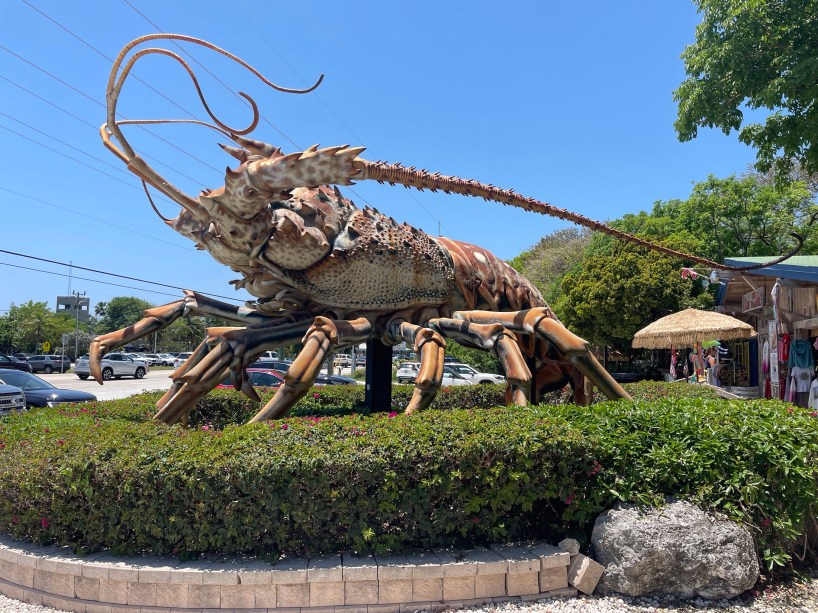
As you head south into the Keys, you can’t miss Rain Barrel Village, which features a huge (40 foot) sculpture of a lobster out front. Rain Barrel Village might look like a t-shirt shop and bar, but if you walk through to the back yard, you’ll find some lovely art galleries, glass studios, and shady spots to sit.

8. National Key Deer Refuge

It’s only open three days a week, but you can stop in and learn about the Key deer at the refuge on Pine Key. Like a lot of wild animals that live on islands, this species is smaller than deer found on the mainland. If the refuge isn’t open, you can turn into one of the side streets near there and probably spot some if you drive slowly.

Almost or maybe free: Zachary Taylor State Park

This fort on Key West is a Florida state park, but if you have a Florida State Parks pass- or a military ID- you can enter for free. The fort, which is a sister fort to the one at Dry Tortuga, is really interesting in how it helped shorten the Civil War by as much as two years. Free guided ranger talk at 11 am daily. The park also has a nice, sandy beach, where you can picnic or buy concessions.

9. Books & Books @ The Studios

If you’re a literary fan, you probably already know that Key West was the home of Ernest Hemingway for nine years. But did you know that author Judy Blume lives here as well? Visit the bookstore she runs with her husband, and be sure to check out the Key West history section.

10. Visit the sister shop of Hemingway’s Pilar at the Bass Pro Shop in Marathon

In 1933, Hemingway went on a fishing trip in this boat. He liked it so much that he kept the brochure, and had another one made! He named it the Pilar, and you can see it today at his house in Cuba. The original ship can be seen at the Bass Pro Shop in Marathon on your way down the Keys. You can also see this boat feature in the movie “Key Largo” as the Santana boat that Bogart sails at the end of the movie.

11. Ride the Duval Loop bus in Key West.

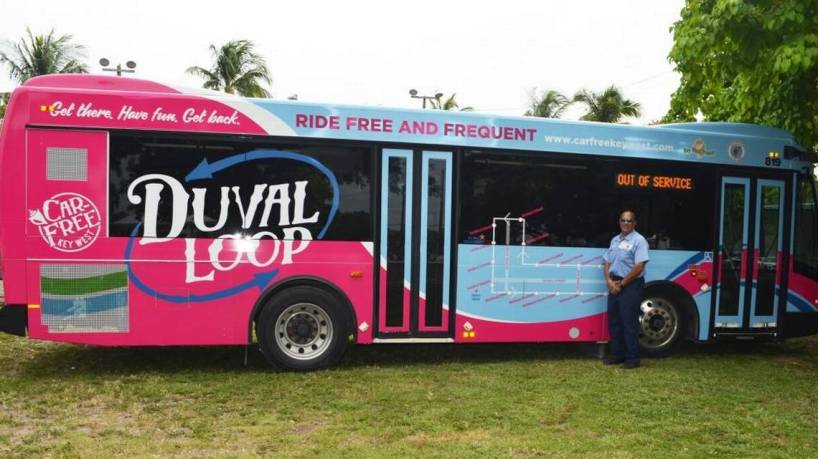
This bus stops at 16 points around historic Key West and is absolutely free. You can see their live map at kwtransit.com. A bus arrives every 20-30 minutes. Bonus: use your military ID to get onto the base and park for free at Trumbo Point gate- saving you $5 an hour or $40 daily on downtown parking fees. Stop #1 on the Duval Loop route is just one block from Trumbo gate.

Not free, but half the price: stay at the Navy Lodge

If you are active duty or retired military, you can stay at the Navy Lodge on Dredger’s Key for $135 a night- a huge saving from Key West hotel prices. You can call for a reservation starting 30 days out from your intended stay. But call as soon as you can- they only have 26 rooms.

12. Cool off at Truman Waterfront Park

It’s pretty hot in Key West, but there are some places to cool off. If you have kids with you, one excellent place is the Truman Waterfront Park. They have a splash pad there, and in Thursdays you can visit the Farmer’s Market from 2-5 pm.

13. Visit the Southernmost Point(s)

Of course you can’t visit Key West without visiting the southernmost point. Just walk down Whitehead Street until you get to the very end, and you’ll see the famous painted monument. But if you REALLY want to get to the southern point, you’ll need to go into the nearby naval air station, which is built in a mile of reclaimed land.

14. Wander up and down Duval Street

I don’t think it’s possible to visit very many of the bars, restaurants, boutiques, and art galleries without opening your wallet often, but it’s free to try! Even just people watching and reading all the funny t-shirts is a pretty good time.

15. Grab a book (or drop one off) at the Green Parrot’s Little Free Library

I hate trying to read on my phone or e-reader when I’m at the beach- a paperback works much better! If you need one, or finished yours and want to drop it off, I spotted several Little Free Libraries around town. This one at the Green Parrot is particularly well-located.

Borrow free snorkel equipment at Fort Jefferson:

Okay, so really this one isn’t free. It’s pretty expensive to visit the Dry Tortugas National Park. The only ways to get there are to sail your own boat, take a seaplane, or take the Yankee Clipper ferry, which will run you $200 per person. Be sure to take your national parks pass with you to get $15 off per person. However, they will provide a free breakfast, free lunch, and free snorkel equipment at the beach, as well as a free guided tour of the fort. We really enjoyed our day and felt in the end, it was worth the cost!

I’m sure there are more free (and almost free) things to do in South Florida, but these were some of my favorites. If you’ve visited the area, let us know your favorite things to do!

From Barbados to Barbuda: Easy Living in the Eastern Caribbean

There are over 7,000 islands in the Caribbean, and around 100 of them are populated. With a few weeks left in our year of exploring South America, we decided to finish off in the Caribbean. Of the 13 independent countries in the area, I needed to catch up on the last six, while Chris had a few select islands he wanted to not miss.

It’s not always easy to find direct flights between islands, so we used a combination of ferries, flights, and a cruise to get us to where we needed to be. You can read more about our quest for last-minute cruise tickets here. To find out which islands are connected via ferry, this ferry website turned out very useful. And to see which islands had direct flights to other islands, this Flight Connections website was our pal. The smaller airlines don’t always show up on Skyscanner or Expedia searches, so it’s sometimes worth taking a look to see which airlines fly to lesser-known cities.

Barbados

From its crystal clear waters, to its sandy white beaches, Barbados is a great first stop in the Caribbean. We flew direct from Guyana to Barbados, kicked around for a week in Bridgetown and in Holetown, and then jumped on a cruise ship for a week.

Continue reading “From Barbados to Barbuda: Easy Living in the Eastern Caribbean”