We recently bought tickets to go to Dry Tortugas National Park, and those tickets are not cheap. Add to that a few days in the Keys, and your budget will definitely feel the pinch. However, as we discovered, there were plenty of free (and almost free) things to do in our two weeks between Fort Lauderdale and Key West. There was one card in our wallet that helped us out the most- our military ID. Read on to find over 15 free things to do in the area.
1. Alligator Alley (Tamiami Trail)
It is free to drive across parts of both the Everglades and Big Cypress along the Tamiami Trail. You will see quite a lot of wildlife as you drive. If you enter the Everglades National Park at one of its entrances, it will cost you $30 per car. However, if you have a national parks pass, a military ID (retired and active duty both get in free now, plus up to 4 accompanying occupants), or a 5th grader, you can visit inside the park for free.
2. The Ochopee Post Office
This small post office is the tiniest post office in the United States. It used to to be a storage shed! It’s just off the Tamiami Trail, before you reach Everglades City if you’re heading west. Stop by and take a picture, it’s really cute. Yes, it still sends mail! Thanks to Charles McCool for suggesting this one- find out why this post office is especially important to him.
3. Clyde Butcher Big Cypress Gallery
For some stunning nature photographs, visit the Big Cypress gallery of renowned artists Clyde and Niki Butcher. Their gallery also features art from other artists. Outside their shop is a short nature walk, and you can usually see a gator or two in the pond by their parking lot.
4. Museum of the Everglades
This small museum in Everglades City is really good. From their beautiful pine floor, to their extensive array of information about how the Tamiami Trail and Everglades City came to be, this museum is not to be missed. The museum is free, but you can always drop a few dollars in their donation jar, they do appreciate it.
Almost free: Smallwood Store
If you’re already as far west as Everglades City, you might as well continue down the road the last few miles and visit Smallwood Store in Chokoloskee. This old building, perched on pilings, is a real treasure. Built in 1906 as the first general store in the area, this is an actual “Indian trading post”, also post office, restaurant, shoe repair, bank, and apothecary. It does cost $5 to enter, but I found it well worth the price to go inside and look around. The breeze coming through there off the water can’t be beat.
5. Big Cypress National Preserve
Although national parks have entry fees, national preserves and national forests do not. Be sure to stop in at the HP Williams Roadside Park and check out their board walk- we saw tons of gators in the waters. We also saw manatees at the Kirby Storter Roadside Park a bit further down the Tamiami Trail.
6. Loop Road Scenic Drive
Taking this narrow dirt road will add some time to your Tamiami Trail drive, but we saw so much wildlife here that it was absolutely worth it. Recently graded, the road parallels cypress swamps and features gators, herons, cranes, turtles, and more. Keep an eye out for barred owls as well.
7. Betsy the lobster
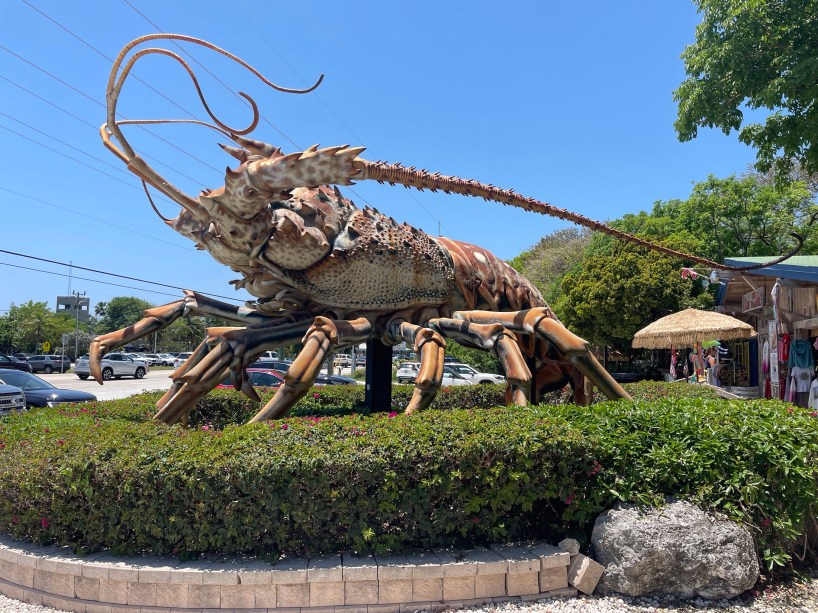
As you head south into the Keys, you can’t miss Rain Barrel Village, which features a huge (40 foot) sculpture of a lobster out front. Rain Barrel Village might look like a t-shirt shop and bar, but if you walk through to the back yard, you’ll find some lovely art galleries, glass studios, and shady spots to sit.
8. National Key Deer Refuge
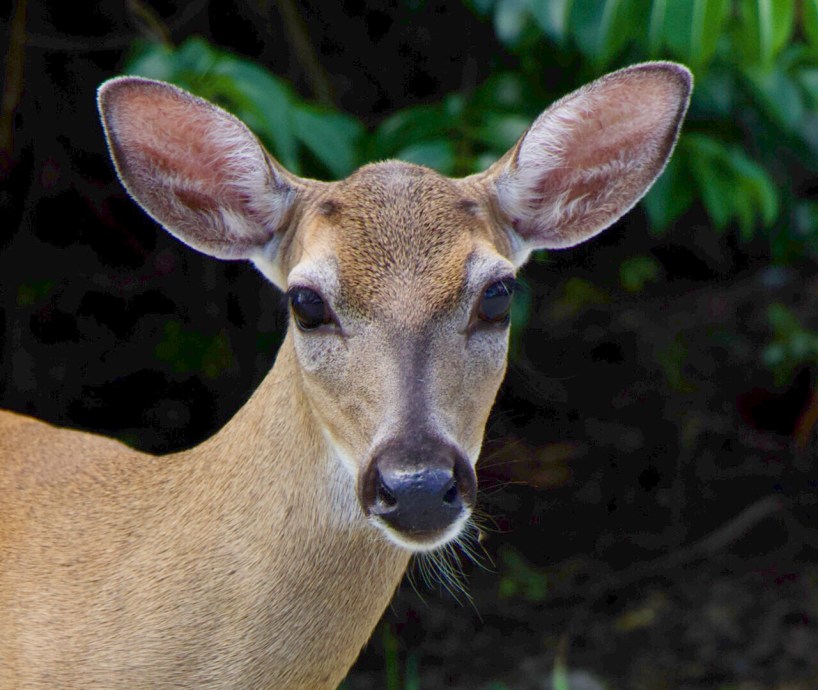
It’s only open three days a week, but you can stop in and learn about the Key deer at the refuge on Pine Key. Like a lot of wild animals that live on islands, this species is smaller than deer found on the mainland. If the refuge isn’t open, you can turn into one of the side streets near there and probably spot some if you drive slowly.
Almost or maybe free: Zachary Taylor State Park
This fort on Key West is a Florida state park, but if you have a Florida State Parks pass- or a military ID- you can enter for free. The fort, which is a sister fort to the one at Dry Tortuga, is really interesting in how it helped shorten the Civil War by as much as two years. Free guided ranger talk at 11 am daily. The park also has a nice, sandy beach, where you can picnic or buy concessions.
9. Books & Books @ The Studios
If you’re a literary fan, you probably already know that Key West was the home of Ernest Hemingway for nine years. But did you know that author Judy Blume lives here as well? Visit the bookstore she runs with her husband, and be sure to check out the Key West history section.
10. Visit the sister shop of Hemingway’s Pilar at the Bass Pro Shop in Marathon
In 1933, Hemingway went on a fishing trip in this boat. He liked it so much that he kept the brochure, and had another one made! He named it the Pilar, and you can see it today at his house in Cuba. The original ship can be seen at the Bass Pro Shop in Marathon on your way down the Keys. You can also see this boat feature in the movie “Key Largo” as the Santana boat that Bogart sails at the end of the movie.
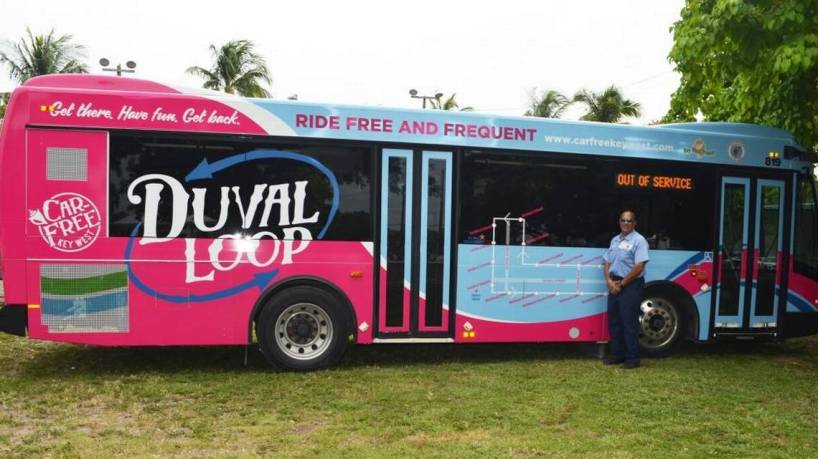
11. Ride the Duval Loop bus in Key West.
This bus stops at 16 points around historic Key West and is absolutely free. You can see their live map at kwtransit.com. A bus arrives every 20-30 minutes. Bonus: use your military ID to get onto the base and park for free at Trumbo Point gate- saving you $5 an hour or $40 daily on downtown parking fees. Stop #1 on the Duval Loop route is just one block from Trumbo gate.
Not free, but half the price: stay at the Navy Lodge
If you are active duty or retired military, you can stay at the Navy Lodge on Dredger’s Key for $135 a night- a huge saving from Key West hotel prices. You can call for a reservation starting 30 days out from your intended stay. But call as soon as you can- they only have 26 rooms.
12. Cool off at Truman Waterfront Park
It’s pretty hot in Key West, but there are some places to cool off. If you have kids with you, one excellent place is the Truman Waterfront Park. They have a splash pad there, and in Thursdays you can visit the Farmer’s Market from 2-5 pm.
13. Visit the Southernmost Point(s)
Of course you can’t visit Key West without visiting the southernmost point. Just walk down Whitehead Street until you get to the very end, and you’ll see the famous painted monument. But if you REALLY want to get to the southern point, you’ll need to go into the nearby naval air station, which is built in a mile of reclaimed land.
14. Wander up and down Duval Street
I don’t think it’s possible to visit very many of the bars, restaurants, boutiques, and art galleries without opening your wallet often, but it’s free to try! Even just people watching and reading all the funny t-shirts is a pretty good time.
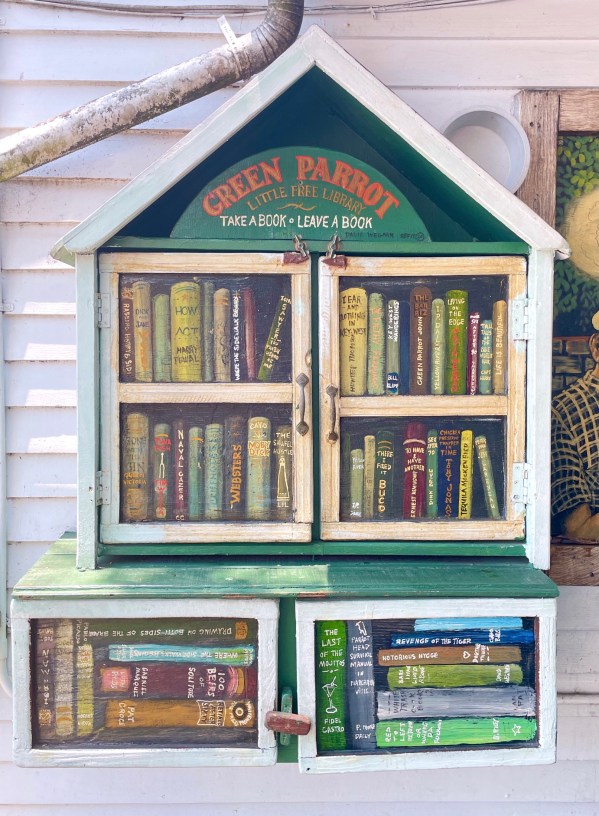
15. Grab a book (or drop one off) at the Green Parrot’s Little Free Library
I hate trying to read on my phone or e-reader when I’m at the beach- a paperback works much better! If you need one, or finished yours and want to drop it off, I spotted several Little Free Libraries around town. This one at the Green Parrot is particularly well-located.
Borrow free snorkel equipment at Fort Jefferson:
Okay, so really this one isn’t free. It’s pretty expensive to visit the Dry Tortugas National Park. The only ways to get there are to sail your own boat, take a seaplane, or take the Yankee Clipper ferry, which will run you $200 per person. Be sure to take your national parks pass with you to get $15 off per person. However, they will provide a free breakfast, free lunch, and free snorkel equipment at the beach, as well as a free guided tour of the fort. We really enjoyed our day and felt in the end, it was worth the cost!
I’m sure there are more free (and almost free) things to do in South Florida, but these were some of my favorites. If you’ve visited the area, let us know your favorite things to do!


















 PalmTreeMusings