The Baltics: Finland, Estonia, Latvia, Lithuania

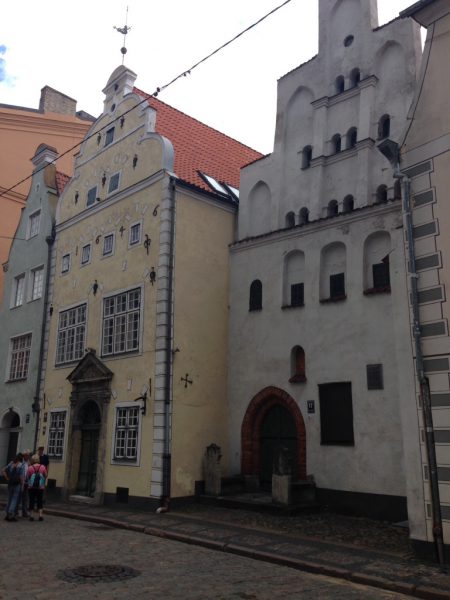
Three Brothers house Riga, Latvia

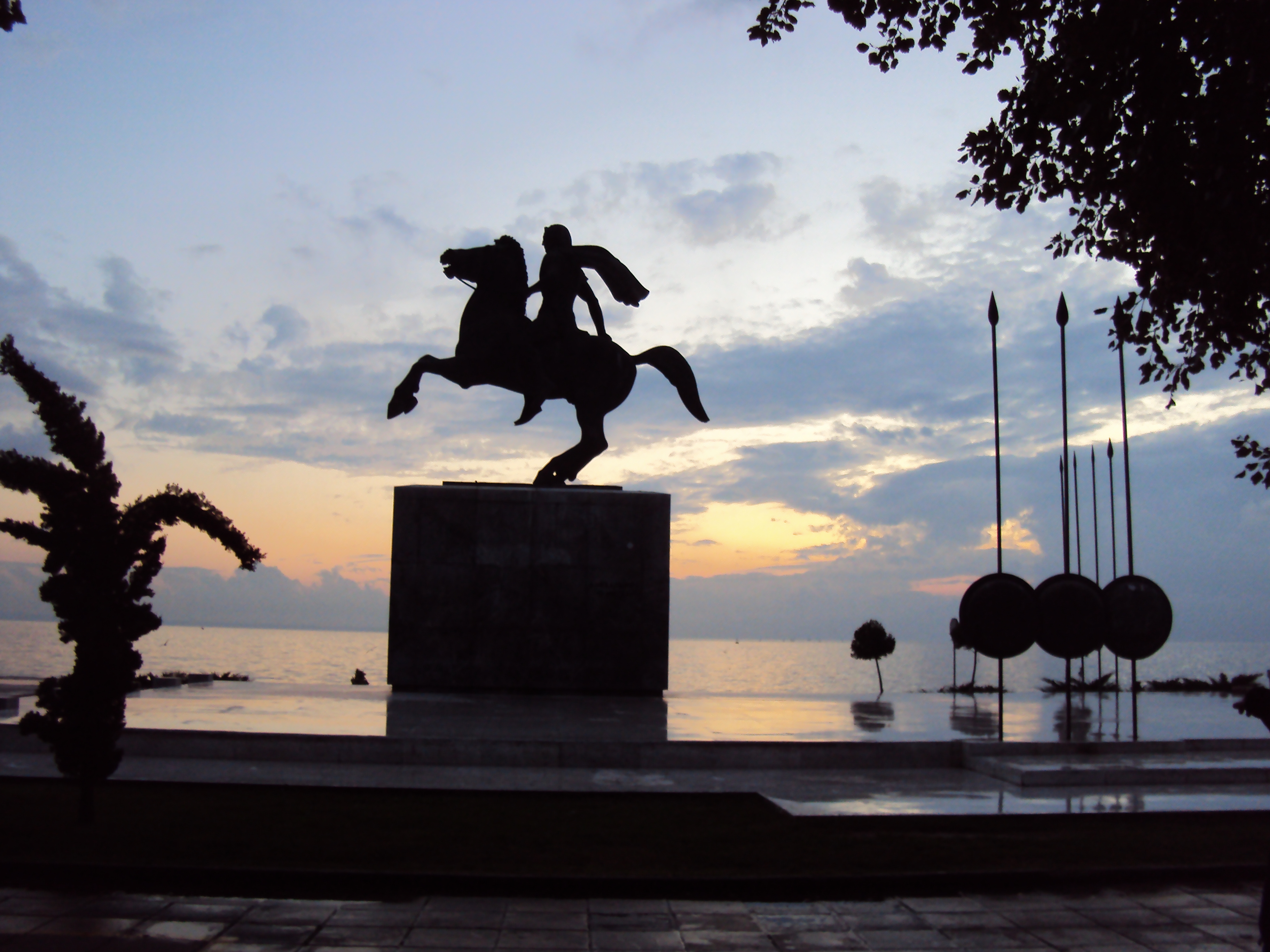
From Norway, we took a quick flight to Helsinki, “the daughter of the Baltic”. We stayed three nights at the Hotel Arthur, near the Central Train Station (designed, by the way, in the 1910 by the father of the architect who designed the St Louis Arch, JFK terminal, and Dulles Terminal). We spent a couple of days exploring the city.  We took the tram line #2, which makes a figure 8 around the city (and has a free audio guide online!) out to our furthest sight, and zig-zagged our walk back to the Central area. We saw the Flying Finn statue at the ’52 Olympics arena, the monument to composer Jean Sibelius, and the Rock Church, cut from a single huge granite boulder.  Closer in town, we visited the two cathedrals (the 1832 Neoclassical Lutheran church with a statue of Alexander II in front and the  1862 Uspenski Orthodox with 13 golden onion domes), both of which are lovely inside and out. Market Square, Senate Square, Market Hall, all really nice architecture as well as beautiful in the warm sunny weather. Helsinkians definitely savor the summer months- flowers abloom, grasses are green, bikes are out, and every park has a busker with a guitar strumming a tune.

The churches of Helsinki

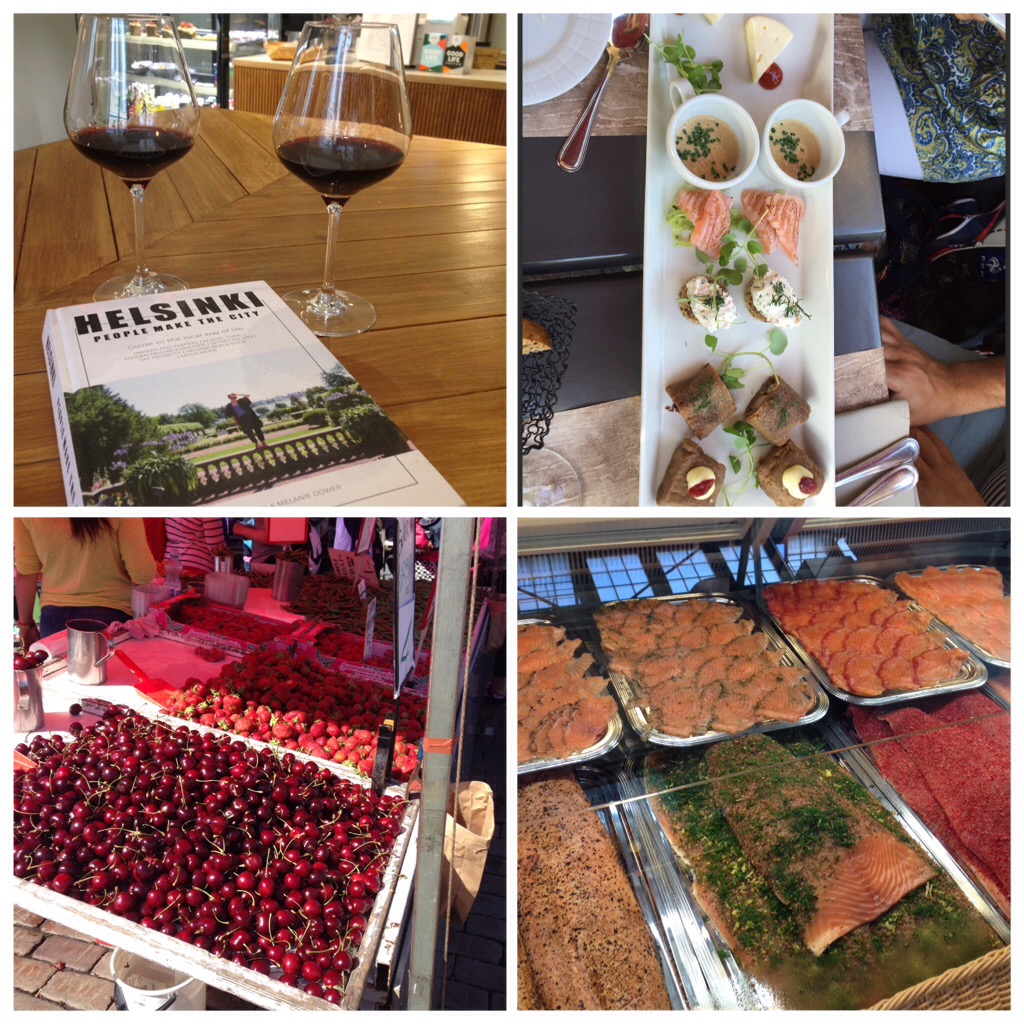
Our second night we went to dinner at Aino, one of those delightful European restaurants that serve tiny bite sized courses that are excruciatingly expensive but also quite delicious. We tried a sampler platter of Finnish vendace fish and pork pasty, ice cellar salmon with cucumber-fennel salad, creamy chanterelle soup, overnight cooked lamb neck, toast skagen, Finnish Brie cheese. For the main course, reindeer fillet with dill-butter mashed potatoes and lingonberries. Delicious, to say the least. We loved Helsinki and our only regret was not having time to get out into nature, within the islands near the city or in the lakes and rural areas further north where the Finns have their summer homes.
The food of Helsinki

It’s only a two hour ferry ride aboard a huge cruise ship to Tallinn, Estonia, so we headed south.  We stayed at Fat Margaret’s Hostel there, largely chosen because it is housed in an old 19th century building and it has a sauna and cold pool (and at just 40 euro per night for a private room ensuite, a break from the Scandinavia prices.  Also, a much needed laundry machine).  We spent the two days in Tallinn exploring the Old Town, the best preserved medieval city in Europe. Formerly ruled by Denmark, Germany, Sweden, Russia, the Nazis and then the Soviets, Estonia is now enjoying it’s 24 year independence (major exports: Skype and supermodels). The old city is full of 14th century churches, cobblestone alleyways, cafes, museums, and stone towers. Our two hour walking tour was so full of information, in fact, that we decided to use the same company to take their sightseeing bus trip from Tallinn to Riga the following day.

Tallinn Old Town

In Tallinn we found a Georgian restaurant, and had several dishes: eggplant, spicy cheese, khinkali dumplings, and lamb pie. And beer of course! It was so good we had to take a nap afterwards. But we returned to the Old Town in the evening and walked around in the setting sun (10 pm). Considering Estonia is the “least religious country in Europe”, they certainly have a lot of churches. The next day, seven of us took a bus tour. The tour guide really gave us a good overview of Estonian history and culture of the last 100 years. What major changes from the fall of the Soviet Union to now! Estonia is really looking to the future, with e-voting and e-residency (sometimes referred to as E-stonia) while still retaining their cultural pride and their 45% forested area. On the bus tour we stopped at the ruins of a castle built in 1245 at Viljandi, sandstone cliffs at Helme, and ate lunch at a pub in a village on the border between Estonia and Latvia.

Estonia


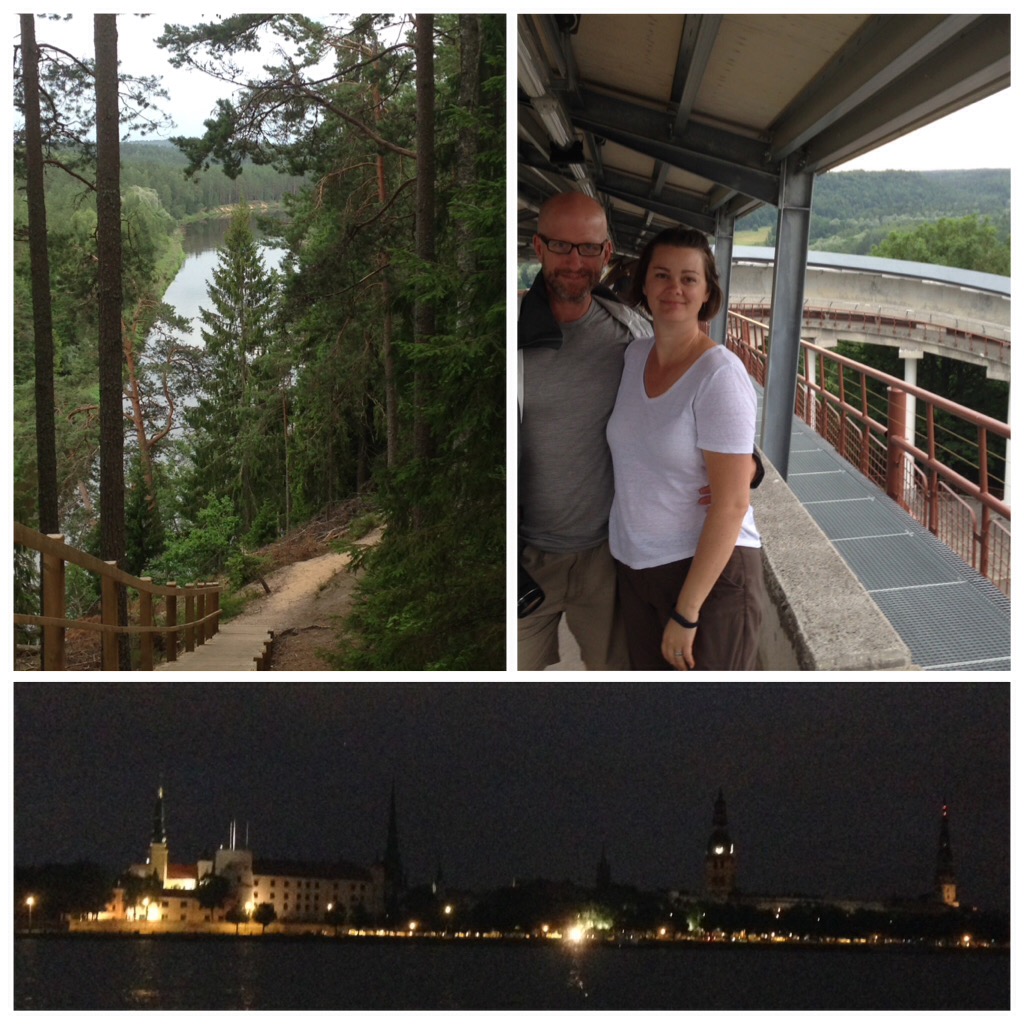
Crossing to the Latvian side, we went blueberry and lingonberry picking in a forest, toured the medieval old town of Cesis, and climbed the Soviet bobsled track in Sigulda. Arriving in the walled Old City in Riga, we were pleased to find our Hotel Konventa Seta (a renovated 16th century convent) had upgraded us to a junior suite, with a king sized bed. Nice! The first day we took a walking tour of the Old Town, and had a traditional meal of black beans with bacon, with a glass of kefir (because, as the waiter explained, the kefir buttermilk helps the beans not “do bad things in your stomach”), and black sausage with barley. And beer. Then, of course, a nap. By the time we woke up, we had time to walk around watching the sunset at 10 pm, and then we did a moonlit kayaking trip around the city of Riga on the river and the city canal.  A unique way to see the city’s bridges, which are all lit up at night.
Latvia

Riga was founded in 1201 as a base for the Germanic northern crusades, and later fell under the power of the Swedes and then the Russians. The old city is fairly well preserved,  but they are more well known for their large number of art nouveau buildings. Once surrounded by three moats for safety, the town finally turned the moats into a canal surrounded by parks in the mid-19th century and expanded beyond the old city. In the next two decades, when other European cities were adding a handful of art nouveau buildings, Riga built more than 700, hundreds of which still exist today. On Saturday we took a restored tram from 1901 to the suburban outskirts, where pre-war elites had beautiful summer homes, now being restored. Saturdays in July must be prime time for weddings in Latvia, because we saw no less than ten wedding parties out posing for pictures.

Old Town Riga

A quick four hours on a luxury bus found us in Vilnius, Lithuania on Sunday, where we stayed at Real House Apartments, a nice place we found for 40Euro.  Lithuania was once the largest country in Europe, stretching from the Baltic to the Black Sea.  Later part of the Lithuanian-Polish Commonwealth, it later became part of Russia, and then was forcibly incorporated into the Soviet Union.  Finally Lithuania gained its independence in 1990, the first of the Soviet republics to do so.

A few fun things about  Lithuania:

*They had one king (1253).  The later rulers were called Grand Dukes.

*Once pagan nature lovers, Lithuanians were converted to Christianity around 1250. Villagers were given a new name and a new shirt when they converted.  Priests would come to villages and perform mass baptisms, naming all the men John and all the women Maria. Villagers would get baptized more than once to receive several new shirts.  Now, Lithuania has a celebration every summer solstice for all the men named John.

*The previous mayor of Lithuania is quite popular on YouTube because of this video.

*Literati Street is full of plaques commemorating authors with a Lithuanian link- even just mentioning Lithuania in their book or visiting here for a few days. Number 28 is Thomas Harris, author of Silence of the Lambs- Dr. Lecter was born in Lithuania.

*A district of the capital city, Uzupis, has declared itself a republic, elected a President, and written a constitution.  Their parliament meets in a bar once a month (“Barliament”).

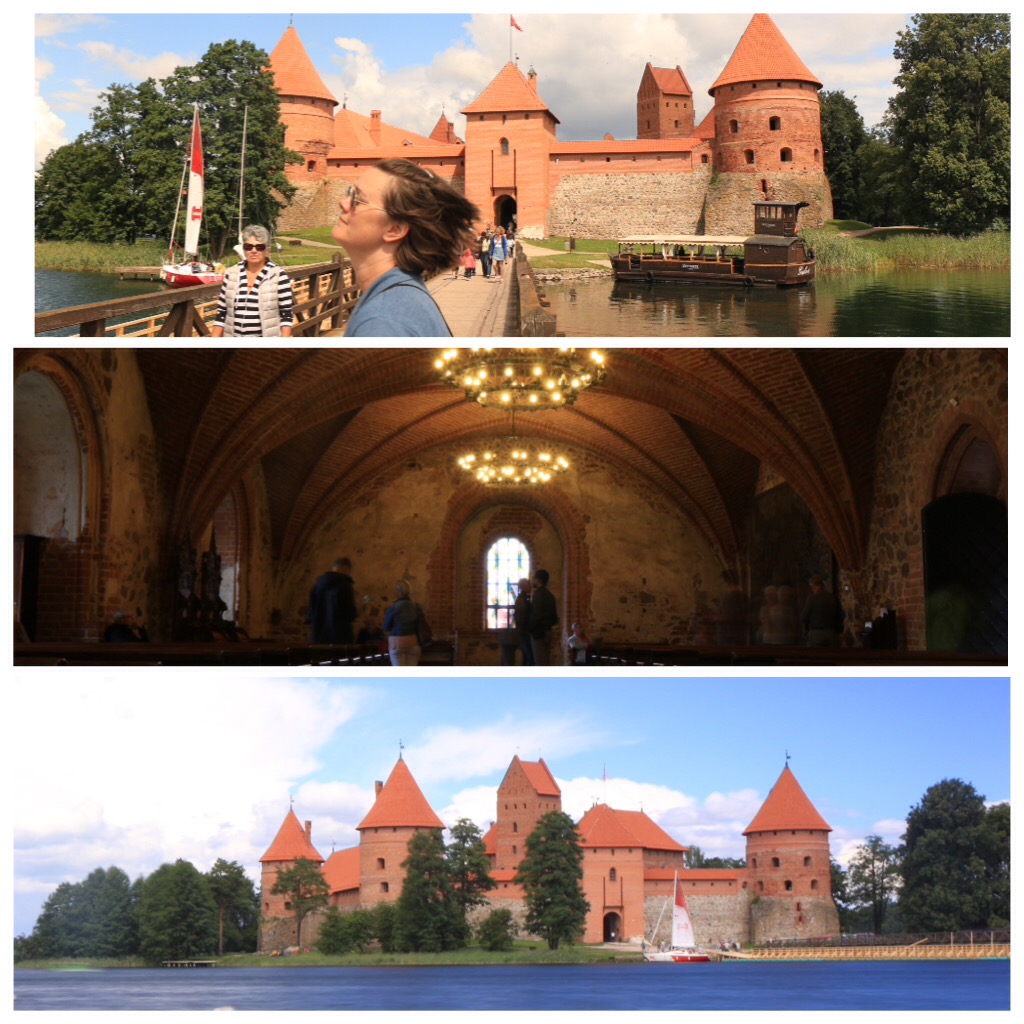
*Trakai, an island castle in a lake about 30 km outside of Vilnius, is the only island castle in Eastern Europe. Super easy to get to on public bus, you don’t need a tour group.

*In 1989, citizens of the three Baltic nations organized a 75 km human chain of 2 million people, stretching from Vilnius to Riga to Tallinn to protest Soviet rule. Lithuania gained independence a year later.

Old Vilnius
Castle at Trakai

And now, we will fly up to Sweden to spend a week with Nicole and Mark in Stockholm and Copenhagen. Check back soon!
Norway with our (mostly) grown kids!

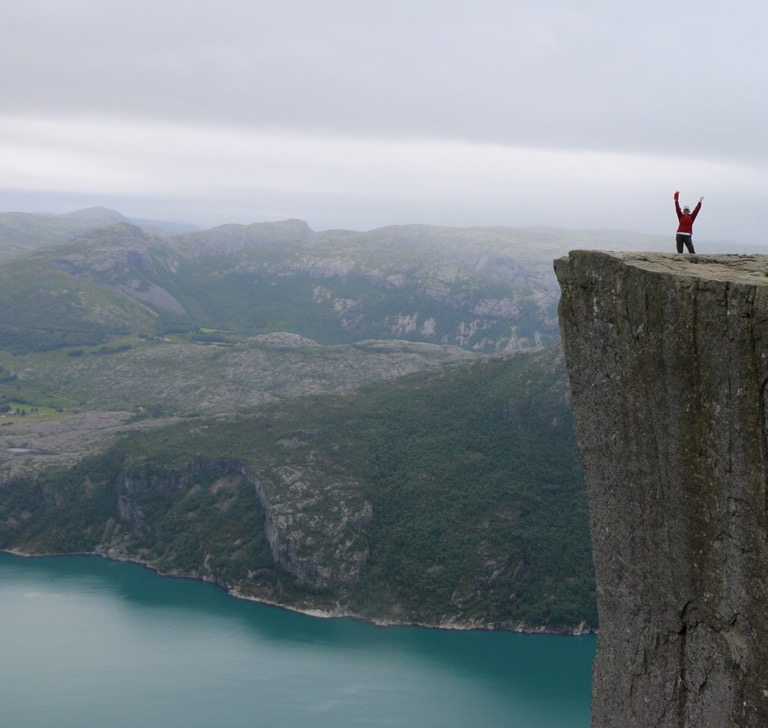
Pulpit Rock, Norway

We had a stopover in Iceland on our way to Norway, but we will stop there again on our way home in August so I’ll wait till then to recap it.

We arrived in Oslo at 9 pm, but with the sun not setting until 11 and our bodies two hours behind, it still felt like early evening to us. We saw the Domkirke on our way to our hotel, a beautiful church built in 1664.  We checked in to our HTL Grensen, which turned out to be in an excellent area for sightseeing- just one block from Parliament, City Hall, two blocks from the ferries, museums, and the palace. What a great travel agent we have!*

The next morning Chris’s two sons, 18 and 21, joined us for the week. We spent the first day on what probably felt like a forced march to them, visiting many of the free things to do in Oslo. We started at the beautiful Opera House, with its gleaming white sandstone and ramps that go from the water up to the roof. Inside they had a display of costumes from different productions that have been staged there. From there we meandered through the Radhus (City Hall), the Nobel Peace museum, the ferries to different islands, the quay promenade, and the Akershus Fortress. A quick stop at the National Library, and then a stroll through the Vigelund Sculpture Garden- the largest sculpture park created with just one person’s work. Finally a walk through the Royal Palace grounds, and then time for a rest. The kids were jet lagged and out for the count, but Chris and I went out to dinner at 8 and then discovered the Parliament building and a lovely park and sat and people-watched.

Beautiful Oslo

On Tuesday we all agreed we wanted to see Munch’s The Scream at the National Gallery, so we started there. It was quite a nice museum, arranged chronologically,  which gave you a nice sense of how some movements influenced others. A nice representation of all the greats, from Matisse to Cezanne, to Manet, Monet, and Munch. After, we took the ferry to see the open air Norwegian Customs museum (the highlight of which is the 12th c stave church), the Viking Ship Museum, and the boys went to the polar ship Fram museum and the Kon Tiki museum, while I relaxed outside in the park. We all had dinner, and then the kids decided to try out the metro to go see the Olympic ski jump.

It’s Museum Day in Oslo!

The next day, after an amazing breakfast at HTL, we boarded a train bound for Stavanger. What a beautiful countryside! Pine forests, farm houses, fishing villages, islands, and lots of water. Western Norway is gorgeous. The train was quite nice, with free tea and coffee, wifi, outlets, and a tv room for small children. Arriving at Stavenger, we walked around the lake to find our Comfort Hotel, and then set off for the Norwegian Oil Museum. It had a lot of interactive displays so it wasn’t as bad as I thought it might be. Afterwards we made the kids try some new Indian dishes for dinner.

Scenes from the train

Thursday was our hiking day. After another HUGE and awesome breakfast, we took a ferry and a bus to the base of Preikestolen, or Pulpit Rock. For two hours we hiked to the top, stopping to take in the views. And the view from the top? Wow.  Seriously, wow. No guard rails. No signs. Just you, your own common sense, and the power of Mother Nature. We spent an hour at the top and two more heading down, then back to town for us. Mexican food for dinner, and then this girl hit the sack while Chris and his oldest somehow had the energy to go visit Sverdifjell, the place where in 872, Norway was unified under one crown.

Pulpit Rock

On Friday we went up to Bergen, on a bus and two ferries, which was a nice little fjord tour as well as our cheap transport north. Upon arriving in the small town that was once the seat of the Hanseatic League, we found our P-Hotel, dropped our bags, and rode up the funicular to see the city from the top of Mt Floyen. Up there we walked around, found a lovely lake and forest, and enjoyed some nature. Back down at sea level, we walked around the UNESCO heritage site called Bryggen (the old shops and buildings that have been there for centuries) and wandered through the fortress of King Hakon and the Rosenkrantz tower.

Bergen

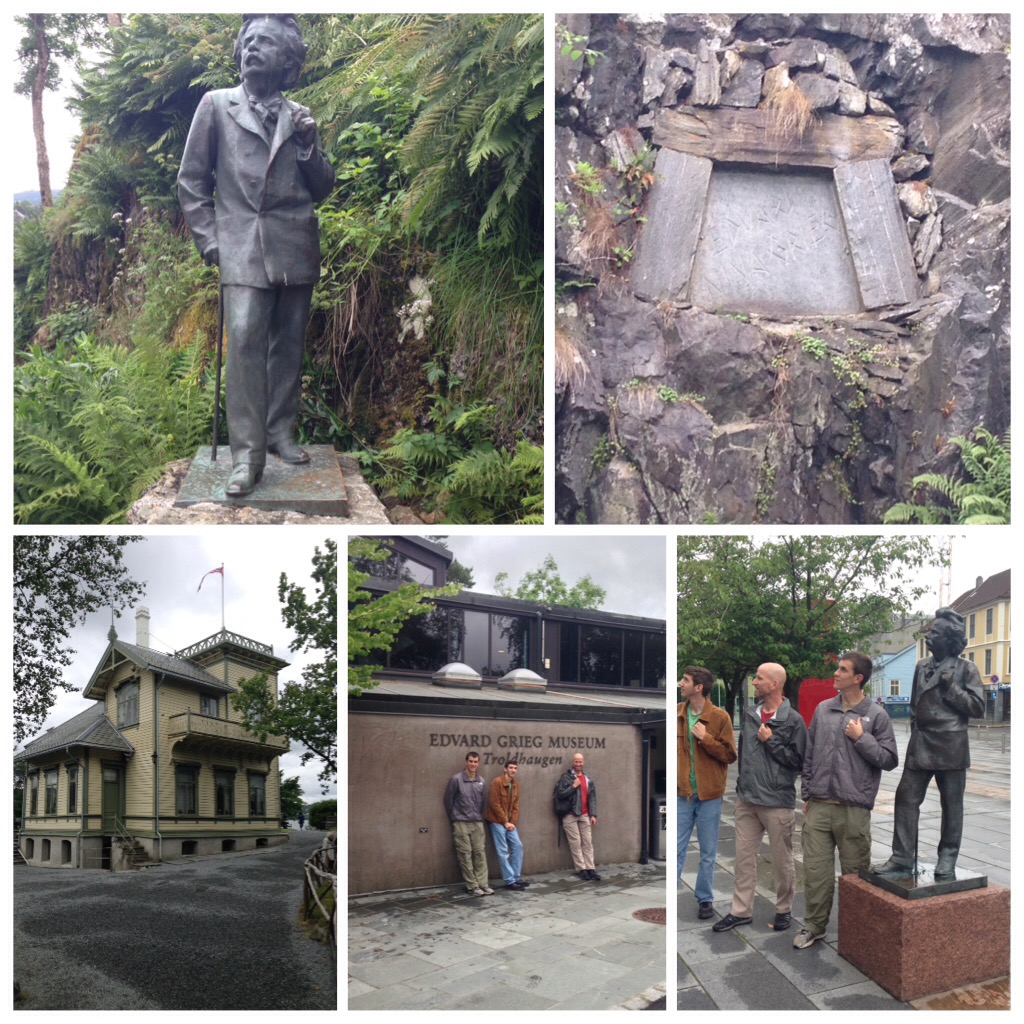
Yesterday, our last day, we visited the Edvard Grieg Troldhaugen (Troll Hill) estate. Chris is a Grieg and is distantly related, and in fact his dad had given us a family ring stamped with initials and dated 1872 to show the museum staff. At the museum the staff showed us a family tree, last updated in 1941, that had Chris’s father and aunt on it! The estate is quite pretty, consisting of a small museum, the composer’s house and a small hut by the lake he would use for work, the grave site of Edvard Grieg and his wife Nina, and a concert hall that looks out upon the lake. They have daily concerts there in the summer. After, we had enough time for giant kebabs for lunch and a quick trip to the Leprosy museum (they were closing in 15 minutes), before we put the kids on a bus to the airport, for their flight to Oslo and then home.  The pub near us had a live band playing and later a fun soccer crowd, so we sat outside and listened to the band play while we sipped hot chocolate.

The Grieg Boys at the Grieg Estate


Today we are resting! We’ve been going going going for ten days and we need today to reconcile receipts, read a book, write a blog, and plan the next leg of our trip: Finland and Estonia.  We leave on a flight this afternoon for Helsinki.  Stay tuned!

*me, hotels.com, and trip advisor

Christmas in Barcelona and Andorra

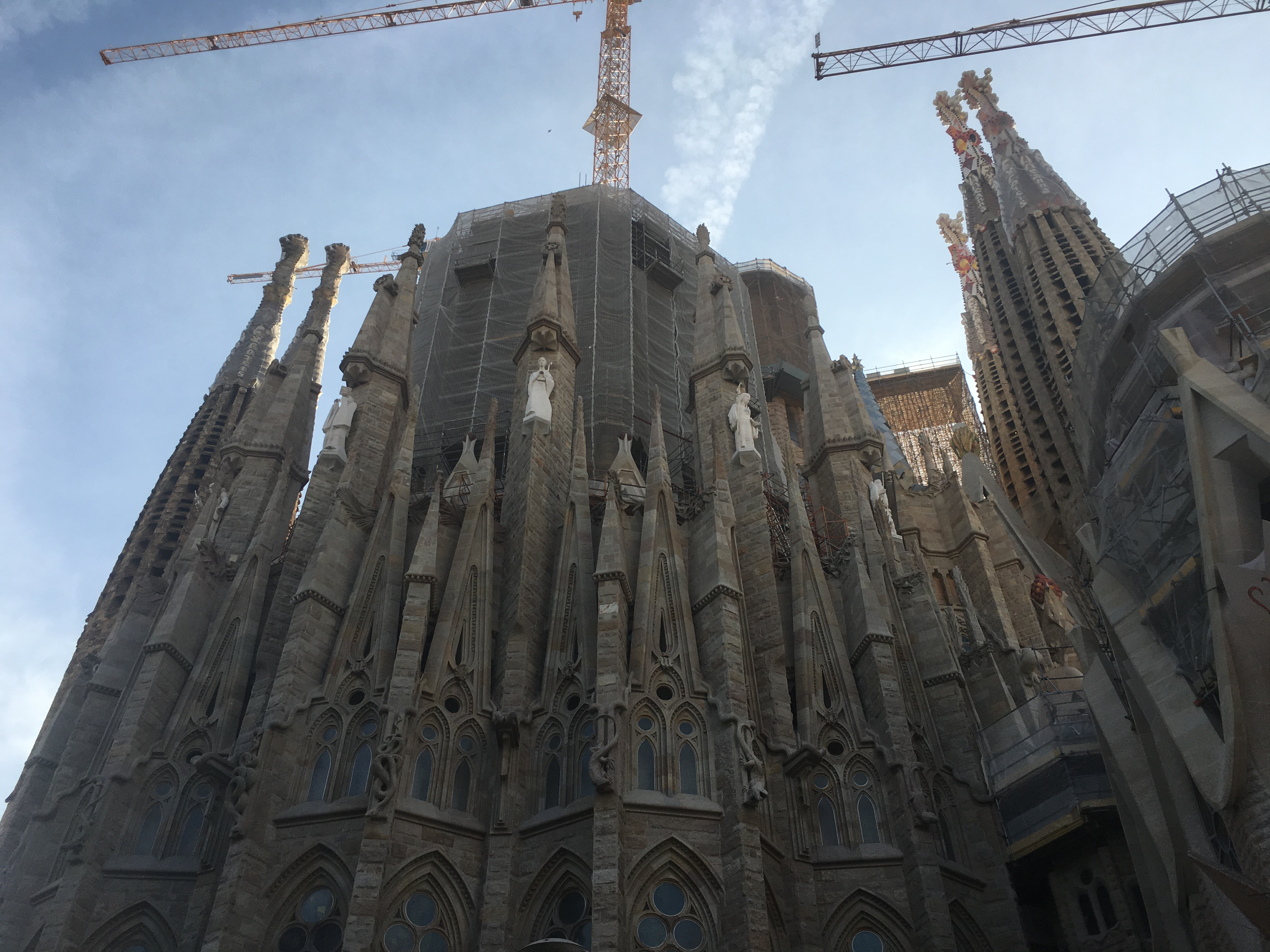
Panorama of the Sagrada Familia Barcelona

Upon realizing I hadn’t left the US for six months (the longest I’ve ever gone without using my passport), I knew we had to decide on Christmas break plans and buy some plane tickets.  We decided on Barcelona, because we figured they would have a mild December climate, and Andorra, only three hours away by bus.

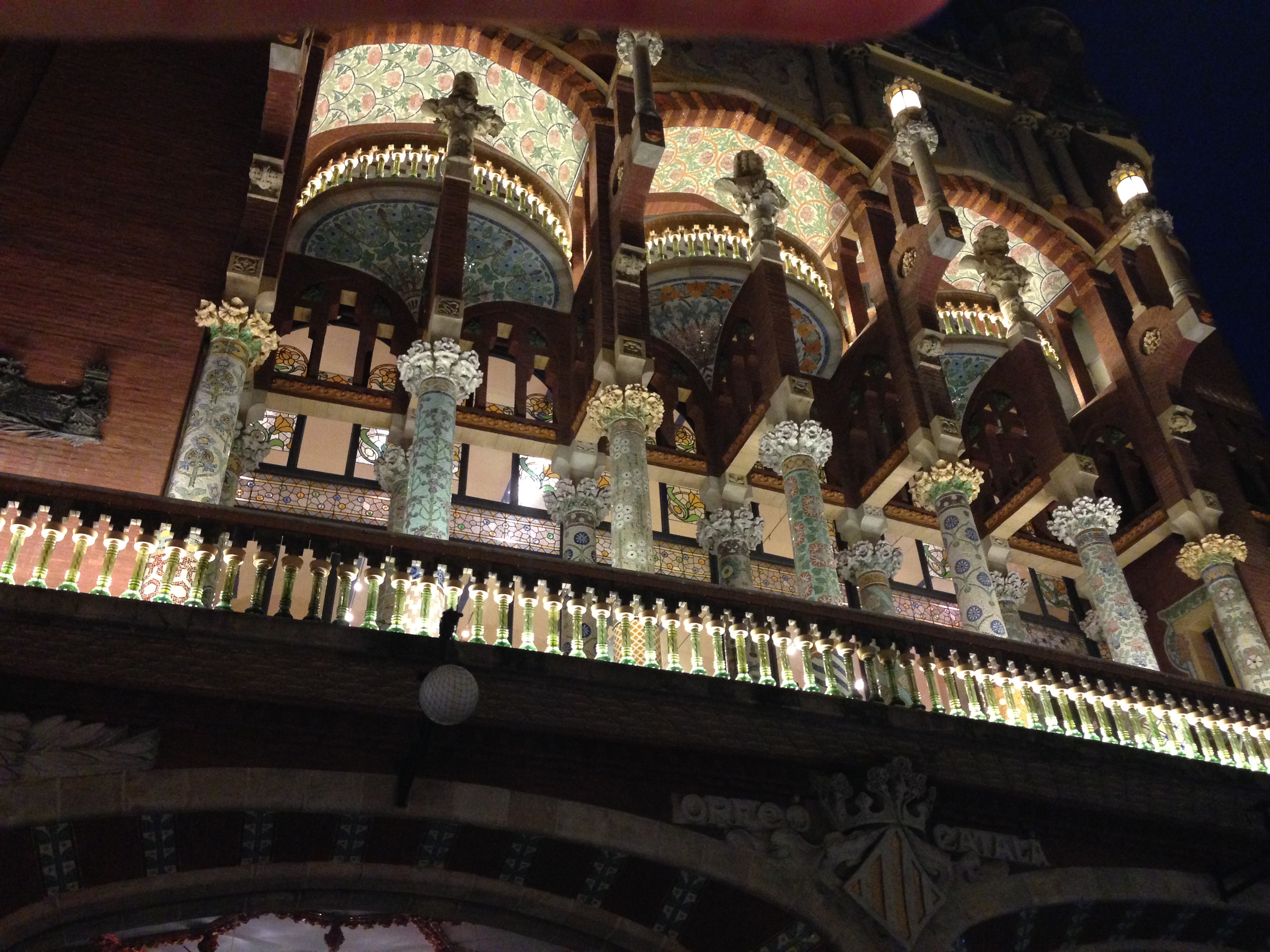
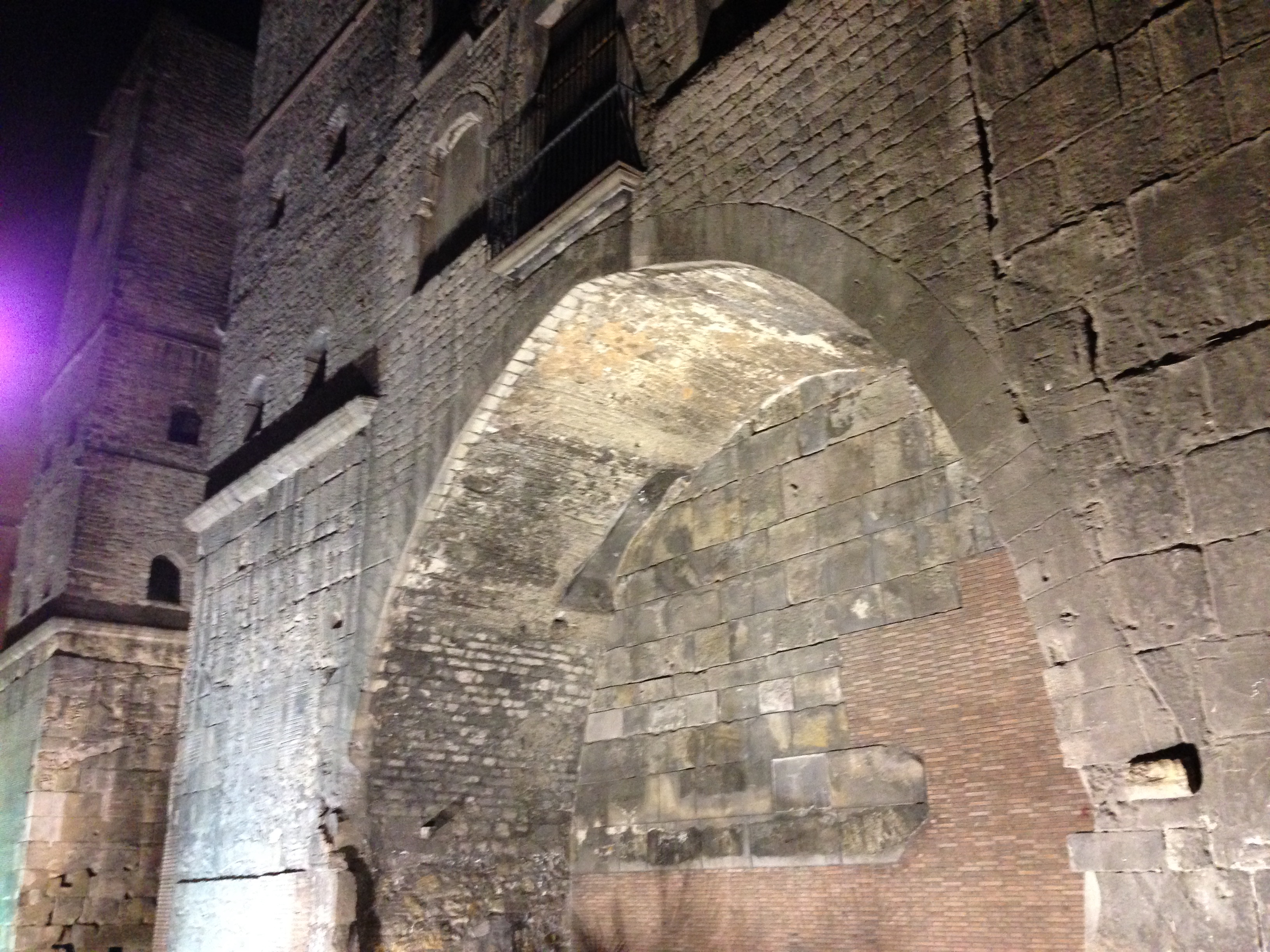
Barcelona was a great temperature and there was no end of things to do.  We started off with a free Sandeman’s walking tour through the Gothic and El Born quarters.  It was a good overview of some Catalonian history and the sights there- the cathedral, Roman ruins, Jewish synagogues, the Spanish civil war.  We stayed on for their Modernisme/Gaudi tour and had a really good explanation of buildings such as Casa Batllo, Casa Mila, and Casa Lleo-Morera in the Eixample district, and of course the Sagrada Familia (outside only). 

We enjoyed our walking tour so much that we stayed on with our group for the Tapas Tour, which wasn’t all that great, but we actually had fun chatting with the people we had been around all day and got to try three new tapas bars, so it wasn’t a total loss!

Deah practicing porron pour, Barcelona Spain
“Porron”, Spanish Wine Pitcher

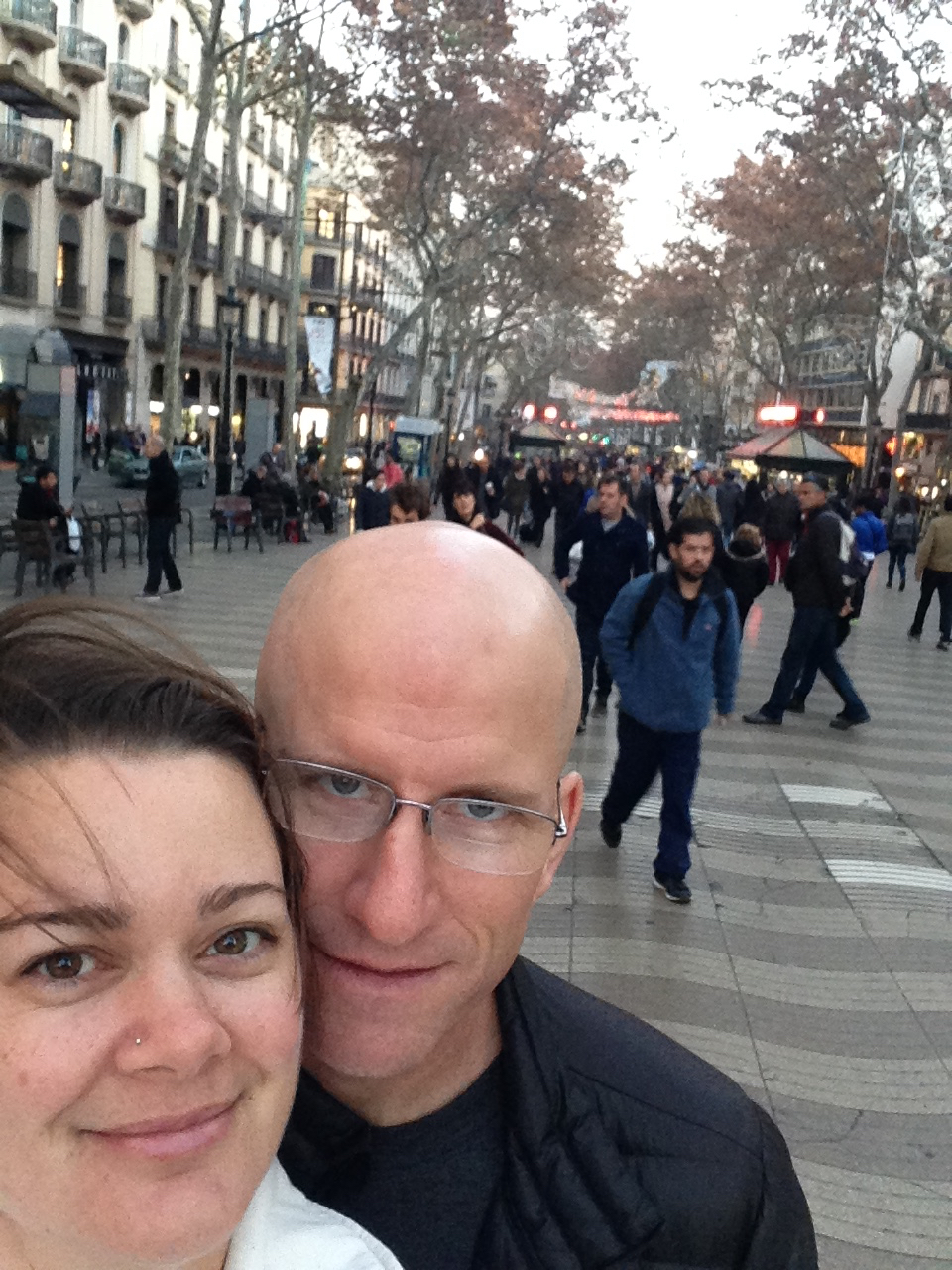
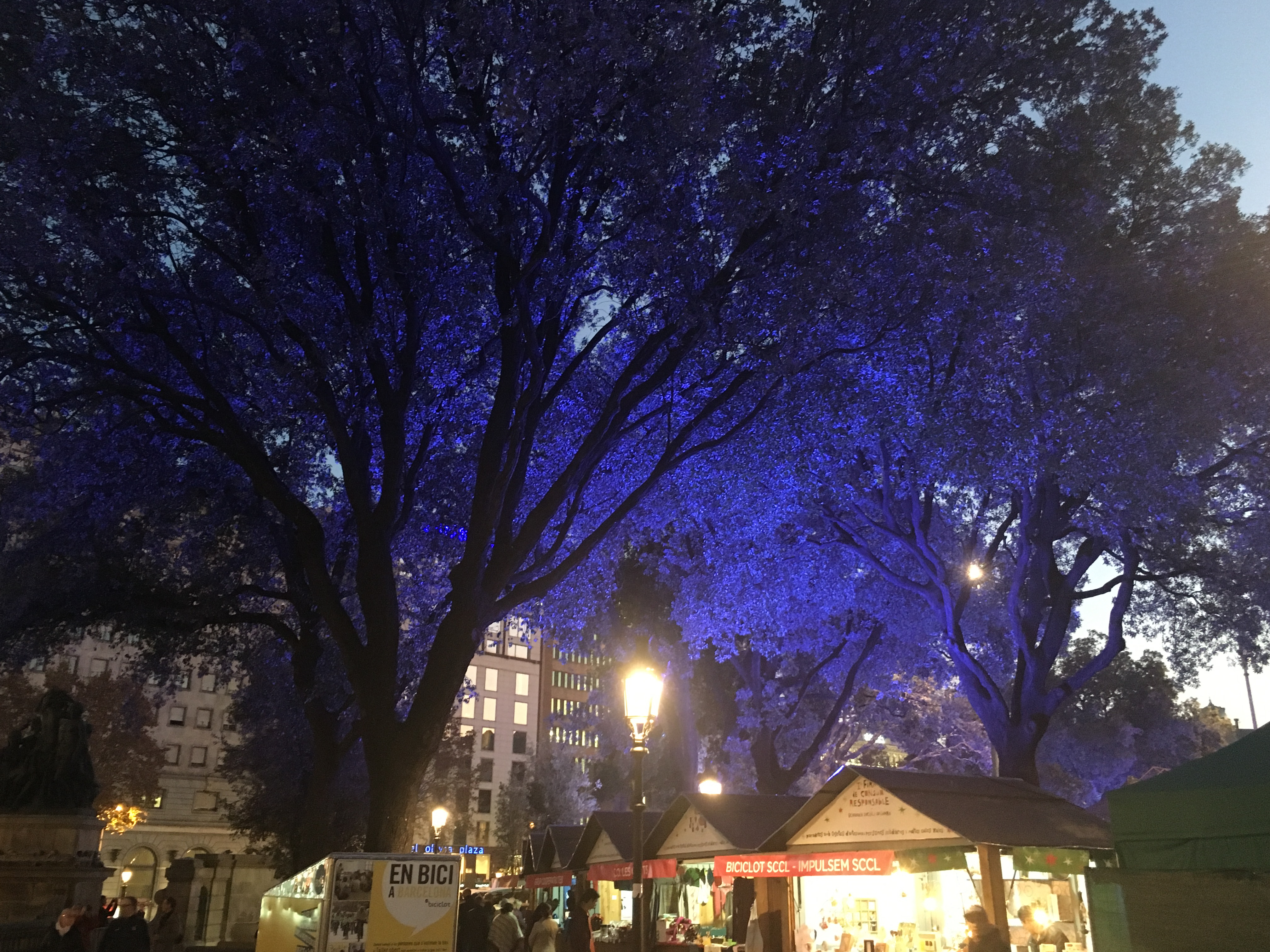
We stayed in a hotel on Las Ramblas, just yards away from Plaça de Catalunya, and our room (a former convent) overlooked the walled-in garden of a neighboring hotel.  There were no street traffic noises and it was very pleasant to be able to sleep with our balcony doors open and hear the bells toll the hour.

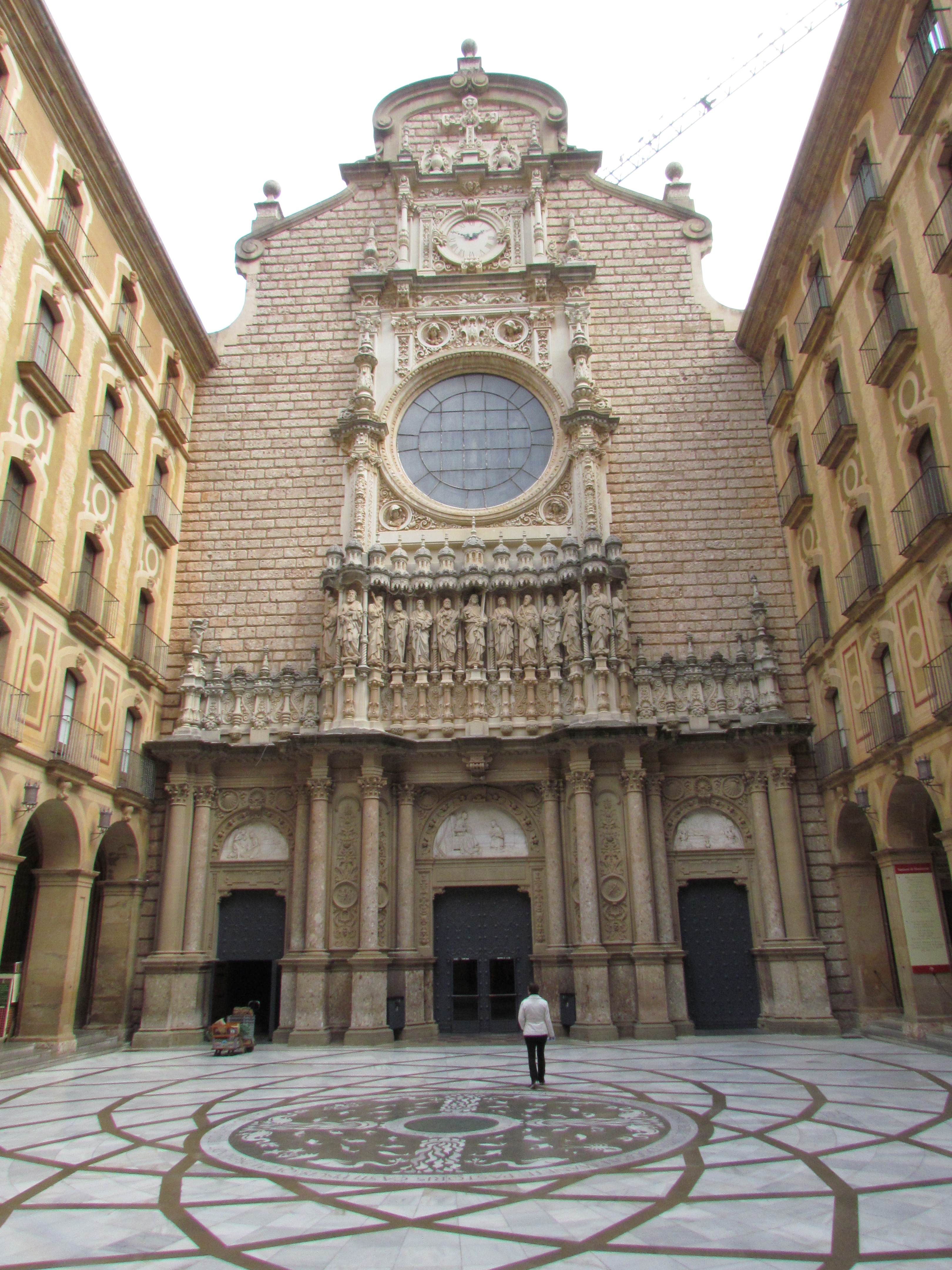
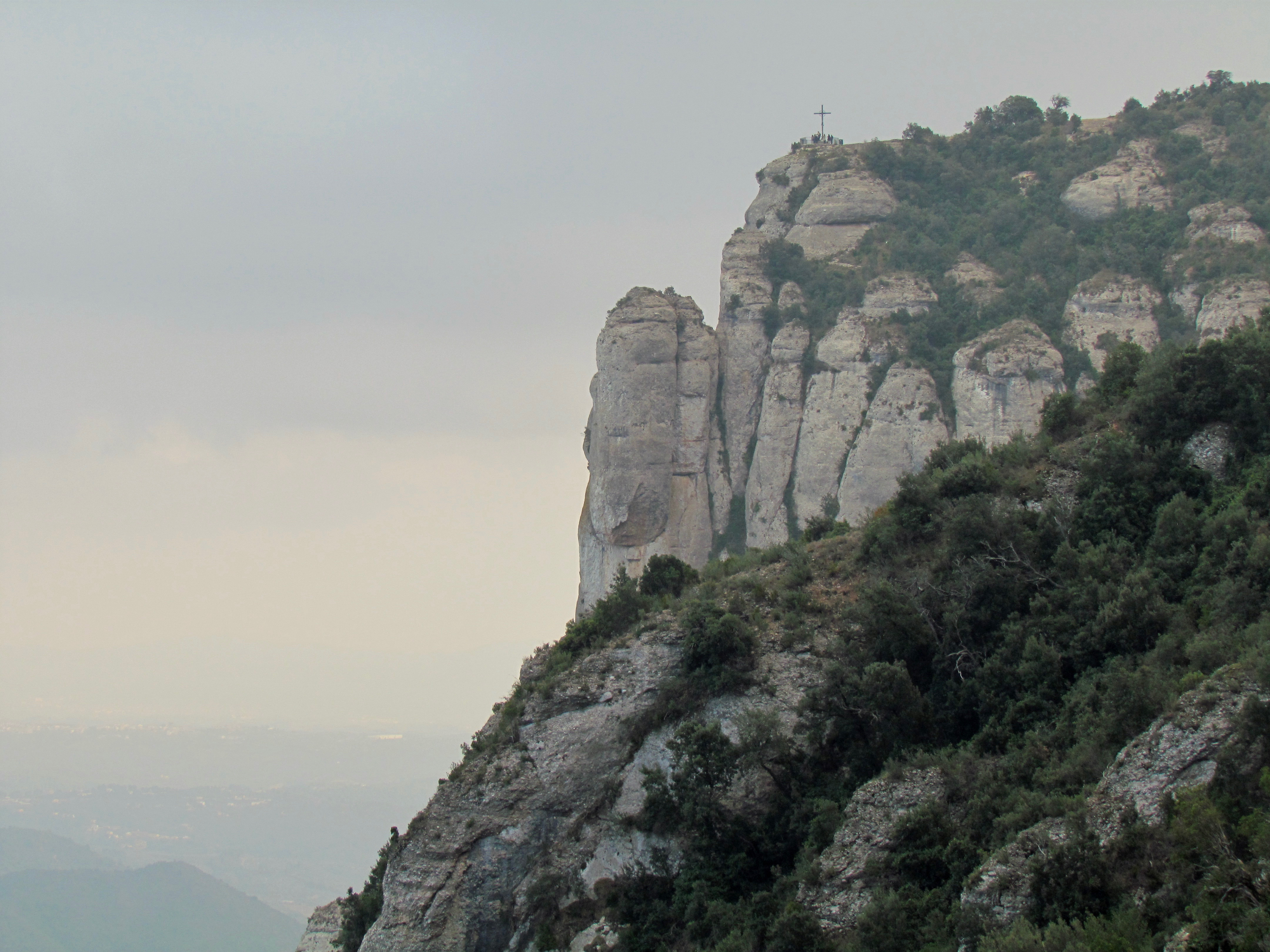
The following day we took the train out to Montserrat.  We purchased the combination ticket from Plaça d’Espanya, which got us the train ride out there, the cable car to the monastery, a short video about the place, and then rides on the two funiculars to various points on the mountain. It was a calm clear day and a lovely temperature; really great for walking.  There was so much beauty inside the church and the statue of the black-faced Madonna, La Moreneta.

On Christmas day, we reserved tickets for Sagrada Familia and used our T-10 metro pass (ten rides for ten euros, a great deal!).  Seeing the inside of the church was amazing.  The stain glass windows, the columns, the soaring heights… everything.  What a beautiful place.  And to think of what it will look like in 2026, when it is scheduled for completion!  Not done with Gaudi yet, we headed up the hill to Park Guell, to see some more of his architectural beauty.
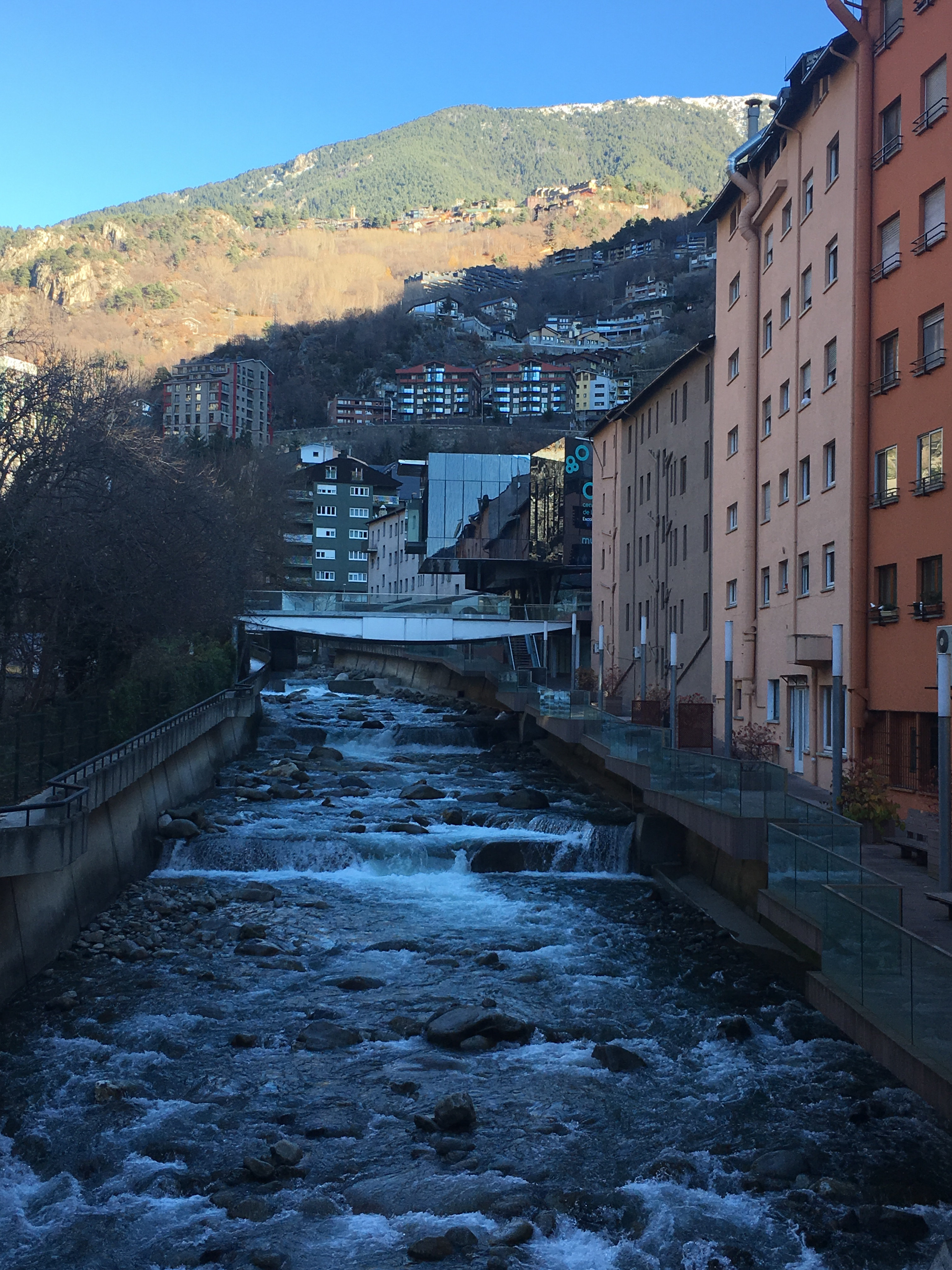
The next day we went to Sants Estacion and took the Direct Bus to Andorra. We stayed in Andorra la Vella, which took three hours by bus (25 Euro).  Aside from skiing or hiking, there’s not much to do in Andorra besides duty-free shop, so we decided that would be a perfect evening to take in the new Star Wars movie.  We also enjoyed some smoked salmon and a bottle of 2 Euro wine that night, specially chosen because it was named after our friend Chantal.  Not bad for 2 euro!

On Sunday, after walking around the old district of Andorra- a very quaint little area of cobblestone streets and 16th century buildings- we took the bus back to Barcelona.  This time we stayed in the Sants/Tarragona area, in a very nice hotel, but one that unfortunately had a lot of traffic noise, so we had to sleep with the windows shut.  We had a great meal that night at a restaurant on top of Arenas- some amazing eggplant starters and then a great bistecca.

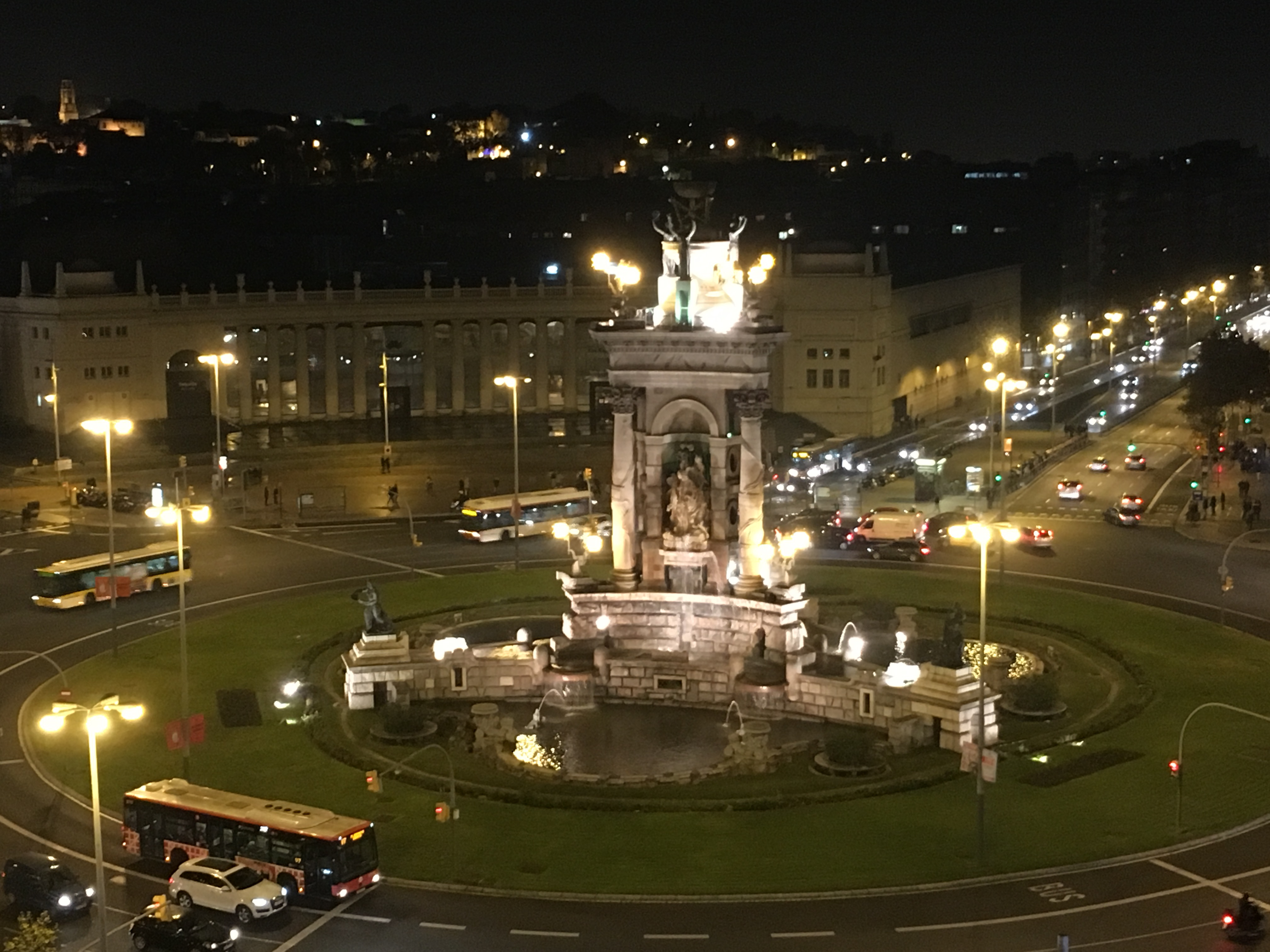
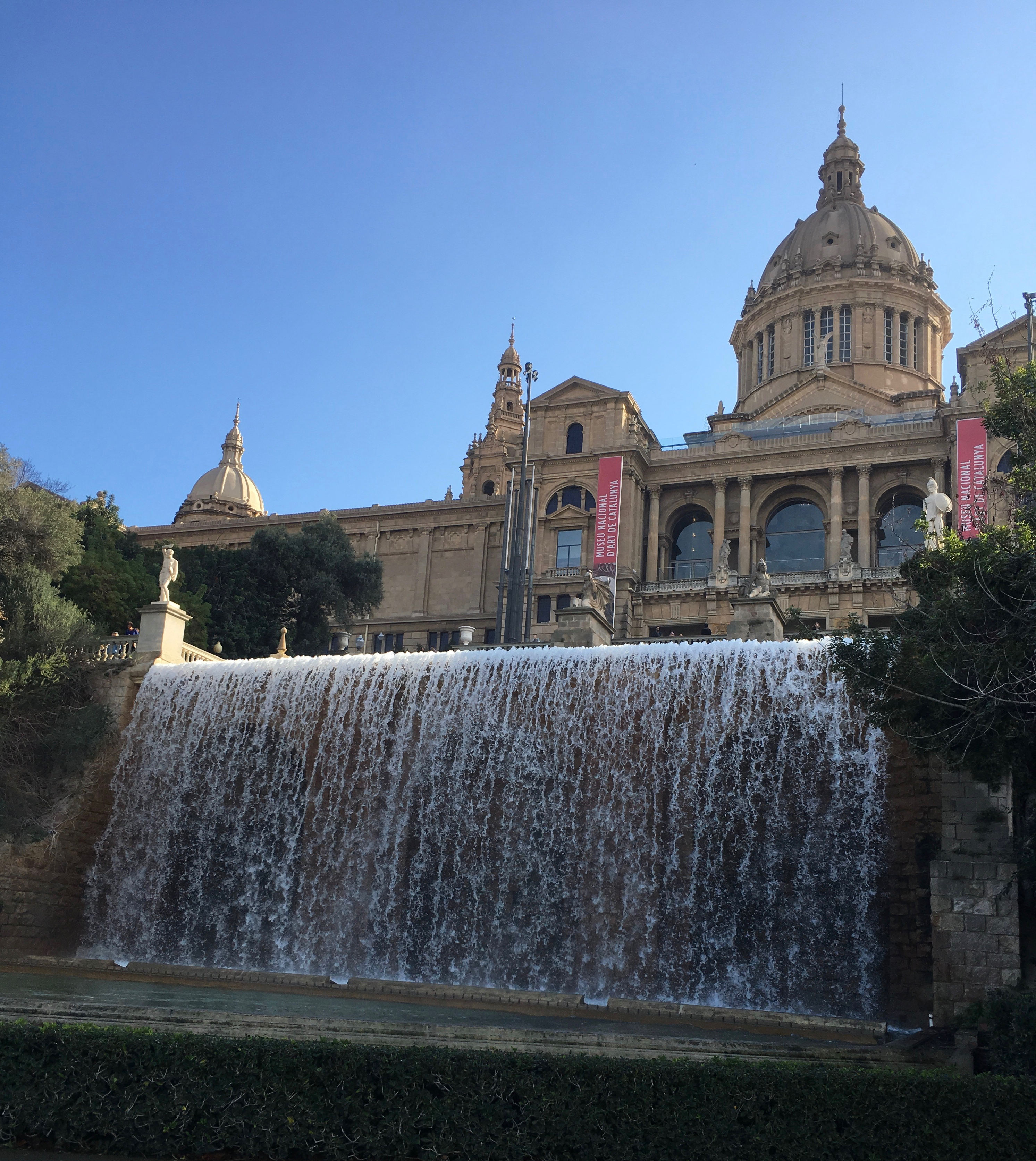
We spent the next day walking all around the Montjuic area- from the Magic Fountain, up to the really beautiful National Art of Catalonia building, and then around the back of that to the site of the 1992 Olympics.  Really nice sports stadiums and practice spaces there.  And a botanic garden, a teleferique, and a castle.  It was nice to spend the day outside and we didn’t even need our coats.  On the way back to our hotel, we stopped at a Peruvian place to eat that was fantastic, and then met my friend Rydah for drinks.  I worked with her in Sudan and the last time I had seen her was in December 2011, at a party on Chantal’s rooftop celebrating my graduation from my Library Sciences degree.  Rydah travels about as much as Chris and I do, so it was nice to hear all about her time in West Africa working on an art project there in the fall, and her month in Spain in December.

Our last day, Tuesday, we spent again on Montjuic, visiting the Poble Espanyol (The Spanish Village).  It’s a little Epcot-style village built for the 1929 world exhibition, showing 117 buildings that reflect the regions of Spain.  Although a little touristy with the dozens of shops and restaurants, I really liked looking at the architectural styles of Catalonia, Andalusia, Basque, Aragon, Castile, and Extremadura. There are lots of artisan workshops, so we were able to watch blacksmiths, glassblowers, leatherworkers, and bronzeworkers made their crafts. The museum there also houses a collection of over 300 paintings, including Dali, Picasso, Miro, and Barcelo. Outside, near a replica of the monastery of St Miguel, there’s a lovely sculpture garden.  So all in all, a pretty fun place to spend the day.

And then our time in Spain was over, and we were heading back to the US.  Although I’ve flown from Europe to the US several times, it was the first time I’d ever seen Greenland- definitely not green. That might be another place on our list to visit, but definitely not in the winter!

A trip to Mainland Greece

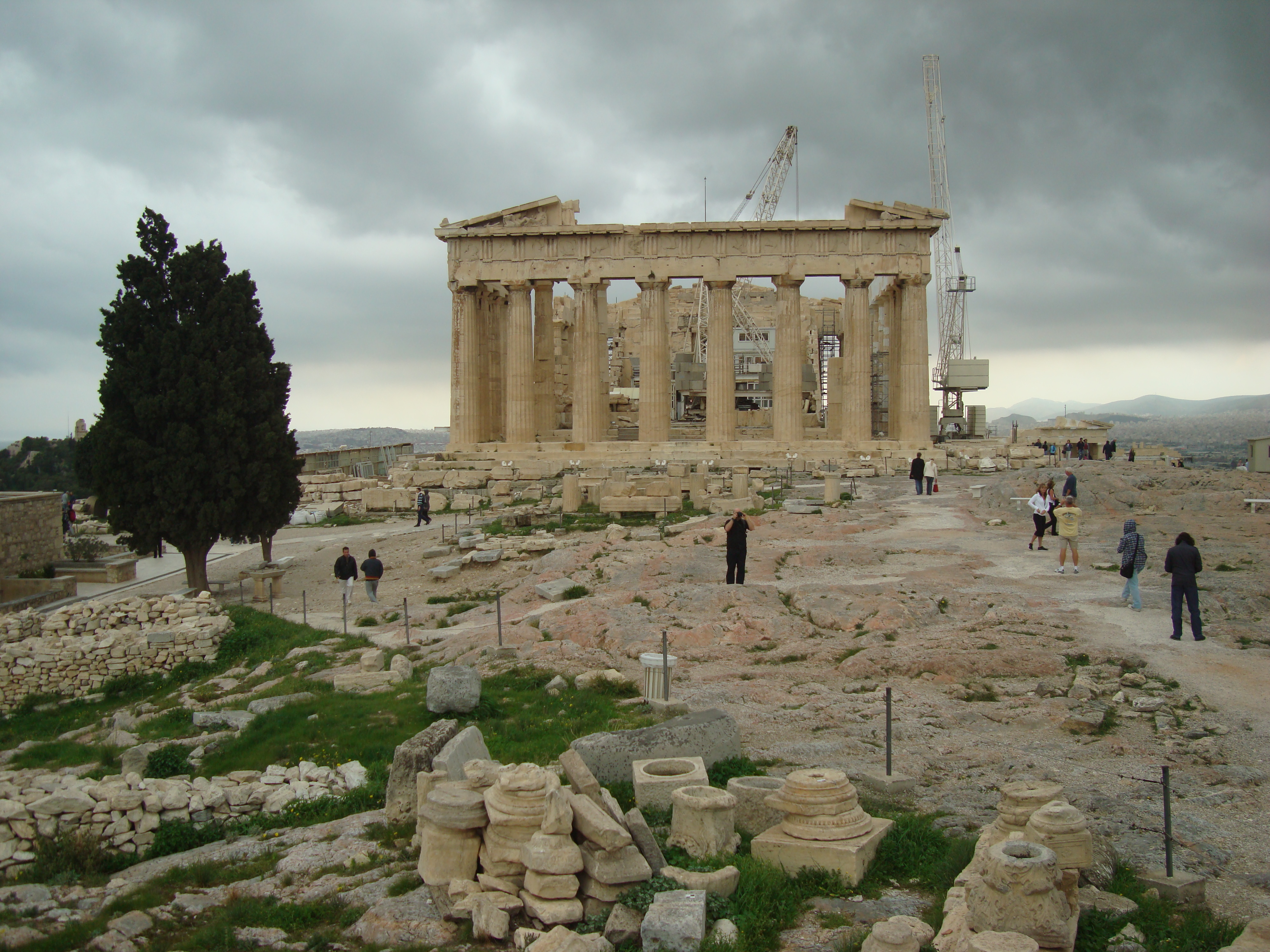
Chris and Deah in Athens, Parhenon

This most recent vacation was really special to me, because it was the first vacation in a long time that Chris and I were able to actually fly to together!  Although we often meet up with each other in a new city or country, it is rare that we are both flying from the same place.  In fact, the last time we were on a flight together was three years ago when we flew to Sao Tome for Christmas!  So it was really nice to be able to fly to Istanbul and then Athens together last week.

We had a long layover in Istanbul and discovered that transit passengers could go on a free day tour of Istanbul.  The airline handled everything and we had a wonderful breakfast, tour, and lunch with a small group of 10, and then back to the airport.  We flew on to Greece the same day and arrived in Athens in the early evening.

Super tired (our flight had left Khartoum at 3:30 am), we slept well and were ready to go see the Acropolis on Thursday.  The huge outcropping of rock with the remains of the temples on it was amazing!  It started to rain, but we really didn’t even mind, as we have spent these last long weeks in the hot dry desert, so the rain to us felt wonderful.

We spent the rest of the day and the next exploring Athens, looking for cozy tavernas to sit in and drink wine, ouzo, and beer while trying dishes such as souvlaki, moussaka, and of course lots of Greek salads.

Sadly, on Sunday Chris had to leave for work, so I headed up to Delphi to see the oracle and get any advice.  Getting off the bus at the same time as me were two Americans that, it turned out, are teaching in Qatar.  We found a hotel and did some sightseeing, and soon met another lonely traveler who was looking for adventure and had a car.  We all agreed to stay in Delphi another day, eat lots of pork souvlaki, and then head to Meteora together.

Delphi arch ruins Greece
Delphi

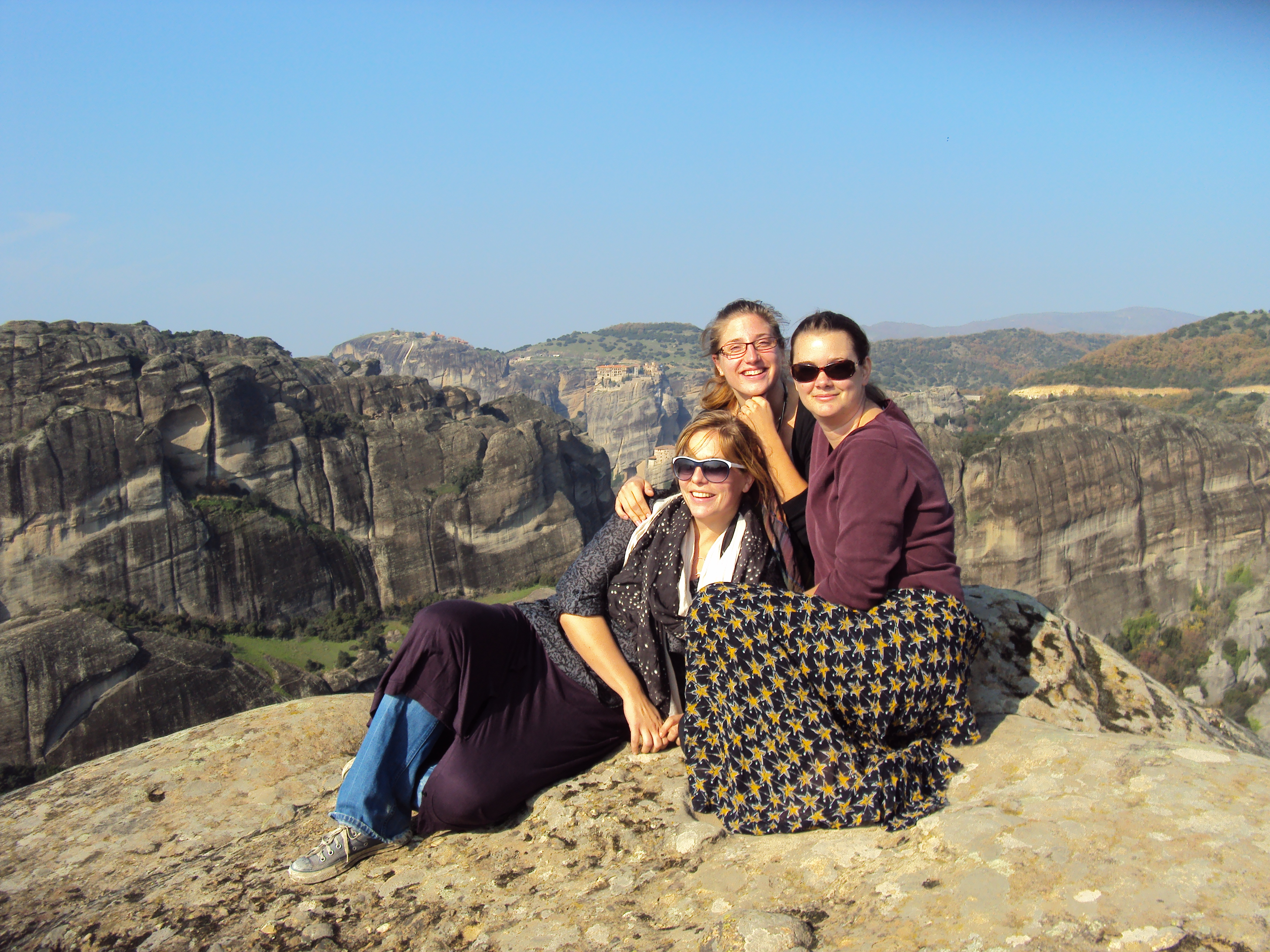
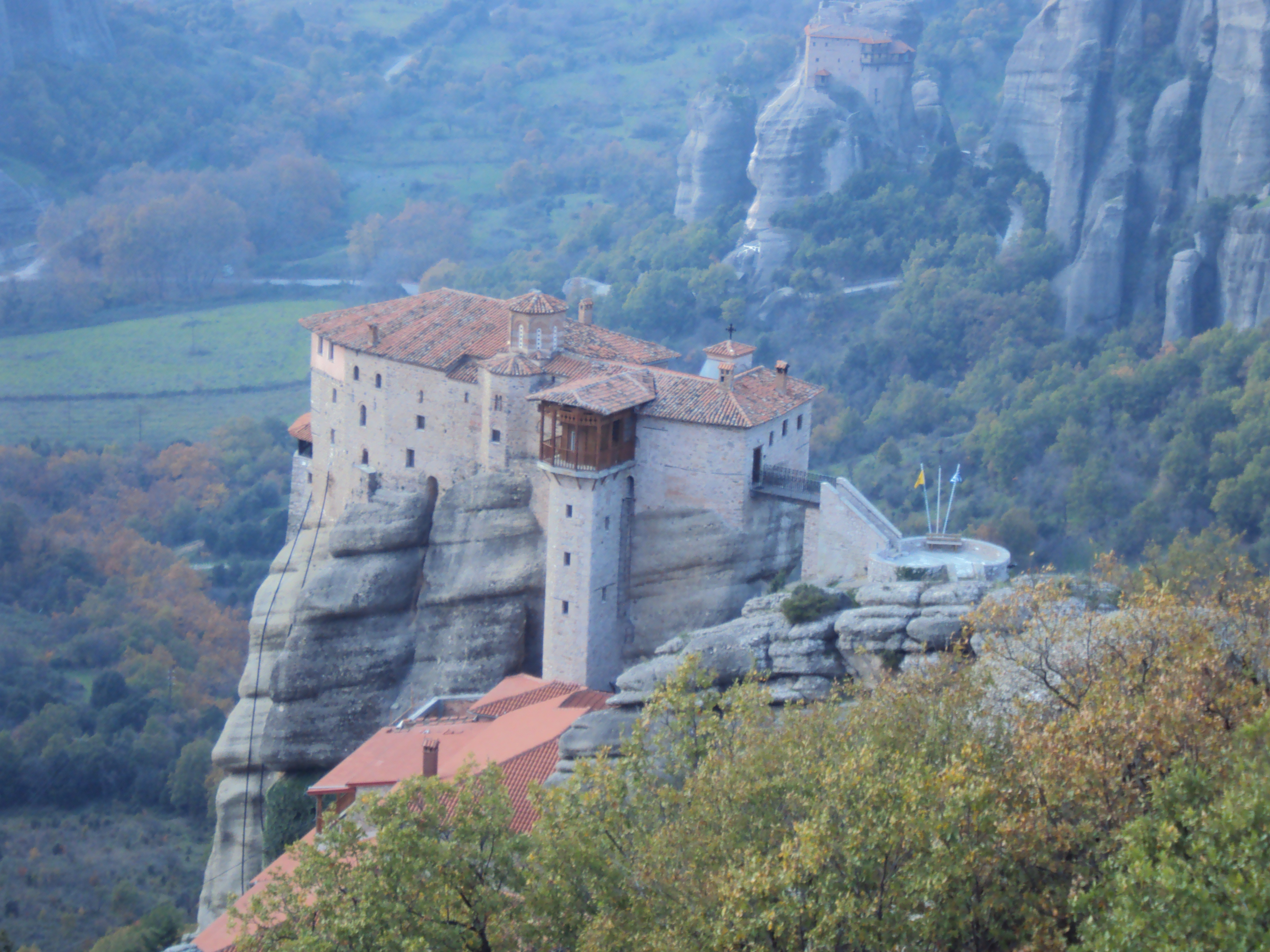
On Tuesday we drove up to Meteora and explored the fabulous monasteries there atop the cliffs.  The weather was wonderful and it felt great to be outside.  The view from the monasteries was majestic, and that night we stayed in the beautiful Guesthouse Iridanos, where we had a fireplace in our room and a balcony overlooking the mountains. The owner recommended a restaurant in the town of Kalambaka, which was delicious.

I headed north next, to Thessaloniki, and spent two days there.  Another day of rainy weather, but to me the cool fall weather was a welcome change and I was determined to relish it while I could.  It was bacon for breakfast, pork souvlaki for lunch, and grilled pork chops for dinner, as all too soon it would be time to head back to Khartoum.  In between stuffing myself, I found some Macedonian museums and Byzantine churches to explore as well.

After taking the night train from Thessaloniki to Istanbul, I had two days in the East/West capital and revisited some of my favorite sights of that city.  The Hagia Sophia, the Blue Mosque, the Basilica Cistern are wondrous and I will likely never get tired of them.  I was looking for some of the hanging Turkish lanterns and trying to avoid the ubiquitous carpet sellers while I shopped my way through the Grand Bazaar.  Sadly, the hour did arrive and I was on my way back to Sudan.  Luckily, it’s a bit cooler now that it is November, and with the Caledonian Society ball and a retreat to the Nile River planned for the next two weekends, time should pass quickly and then Adam, Hussam, and I will be on our way to Mt. Kilimanjaro!

From Madrid to Casablanca: I visit Spain and Morocco on my way back to Sudan

Spain

Trying to get a vacation as well as a free trip back to work this year, I worked out a dope deal where I pieced together a flight to Spain, and then a flight from Morocco to Sudan, paid for by work, while I would travel in between on my own for a few weeks. Unfortunately I had to also work on a summer school graduate class, which resulted in me having to work on assignments each day and having to constantly look for wifi and electrical outlets, but I was able to have a fabulous vacation, finish my class, and get back to work in time for the school year to begin. Success!

Deah in Madrid Deah in Madrid
Madrid, Spain Madrid, Spain

I started my trip in Cordoba, because I only had ten days and I wanted to see Andalucia more than I wanted to see the big cities like Madrid or Barcelona. After living in Sudan for a year, Continue reading “From Madrid to Casablanca: I visit Spain and Morocco on my way back to Sudan”