Tearing ourselves away from Laos, we headed to Cambodia. A long travel day got us to Siem Reap, where luckily our hotel was just off the very fun and very diverse Pub Street- where the draft beers are 50 cents, all day and all night. I’m not ashamed to say we ate at a Mexican restaurant. In Cambodia. And it was pretty good.
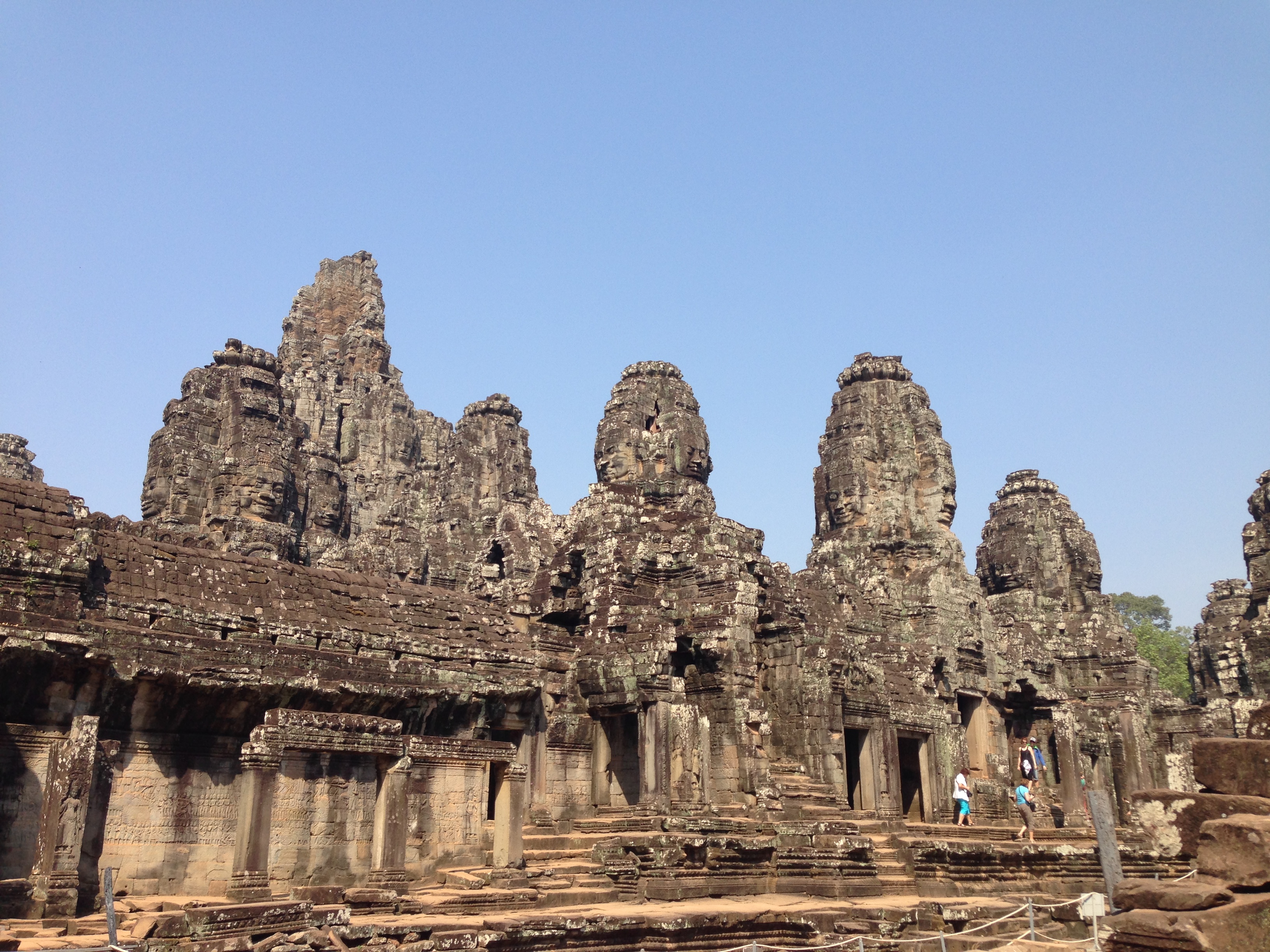
The next day, we hired a tuk tuk driver to take us to the Angkor Wat temple, as well as two others, Angkor Thom and Ta Prohm (yes, that’s the one from Tomb Raider). We tried to stay out of the way of the huge Chinese tour groups, and avoided getting scammed by the “free” guides and guidebook sellers. The huge, falling down temples are really beautiful…..and big. Truly, a sight to see.
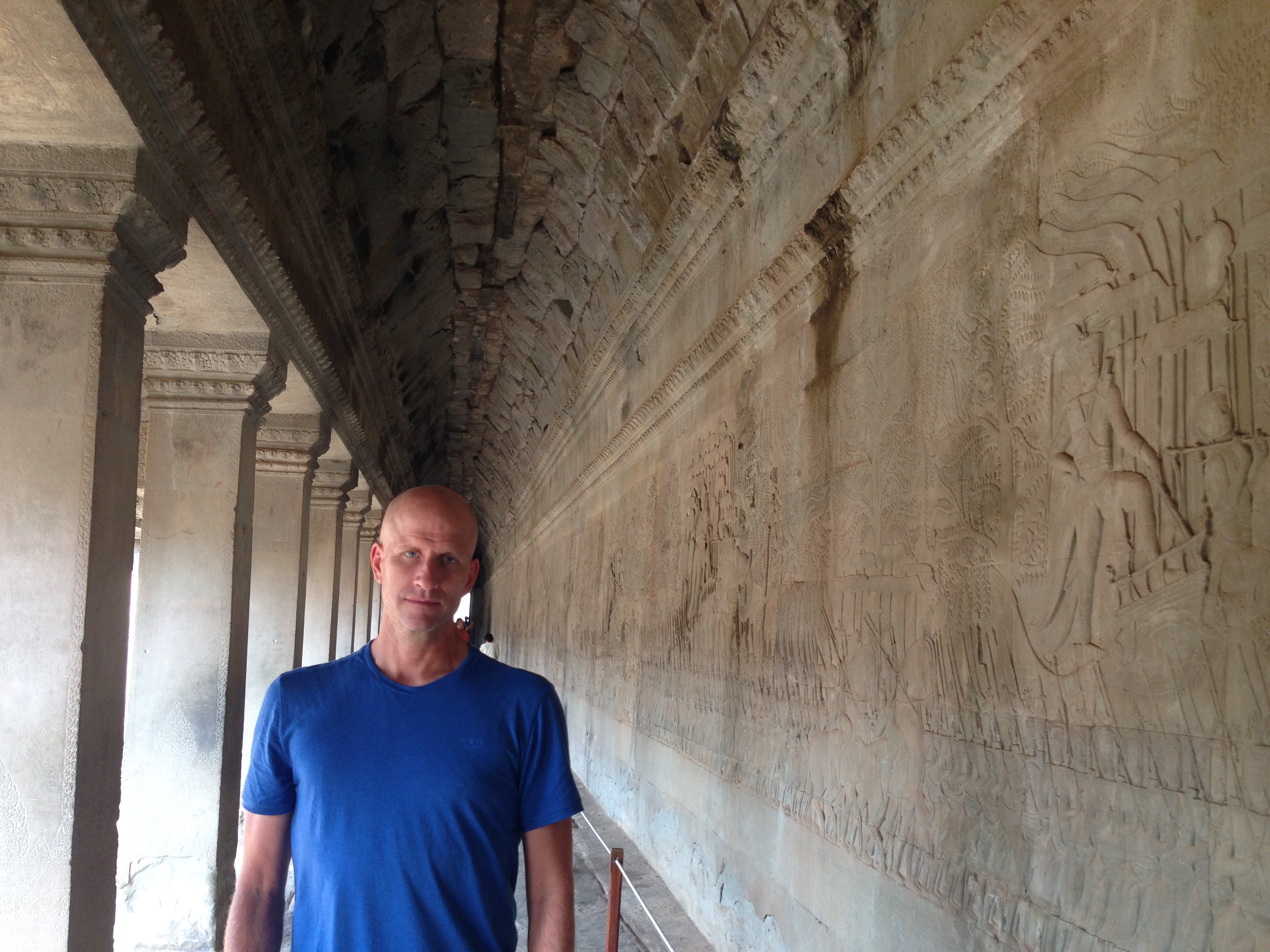
Angkor Wat
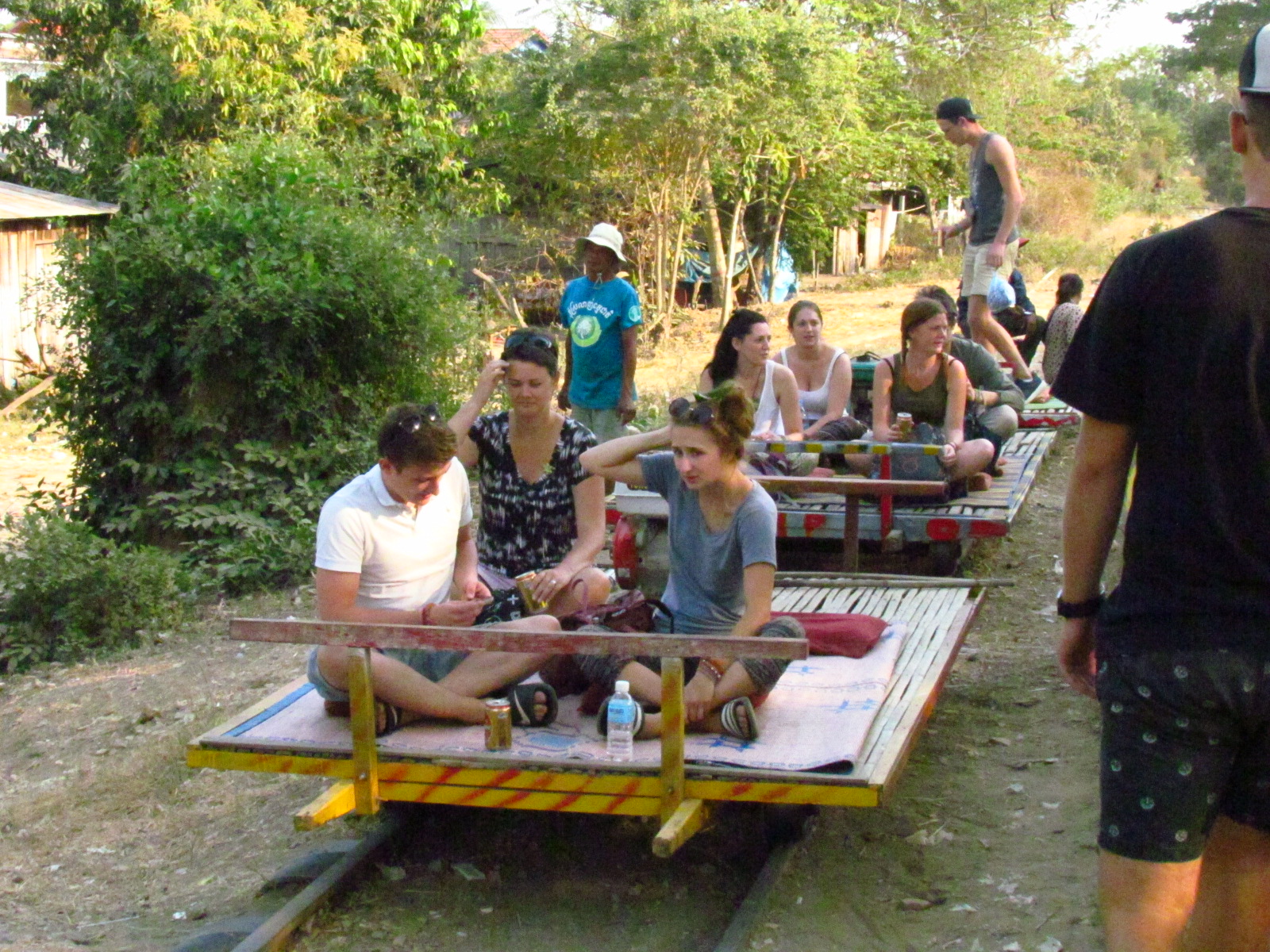
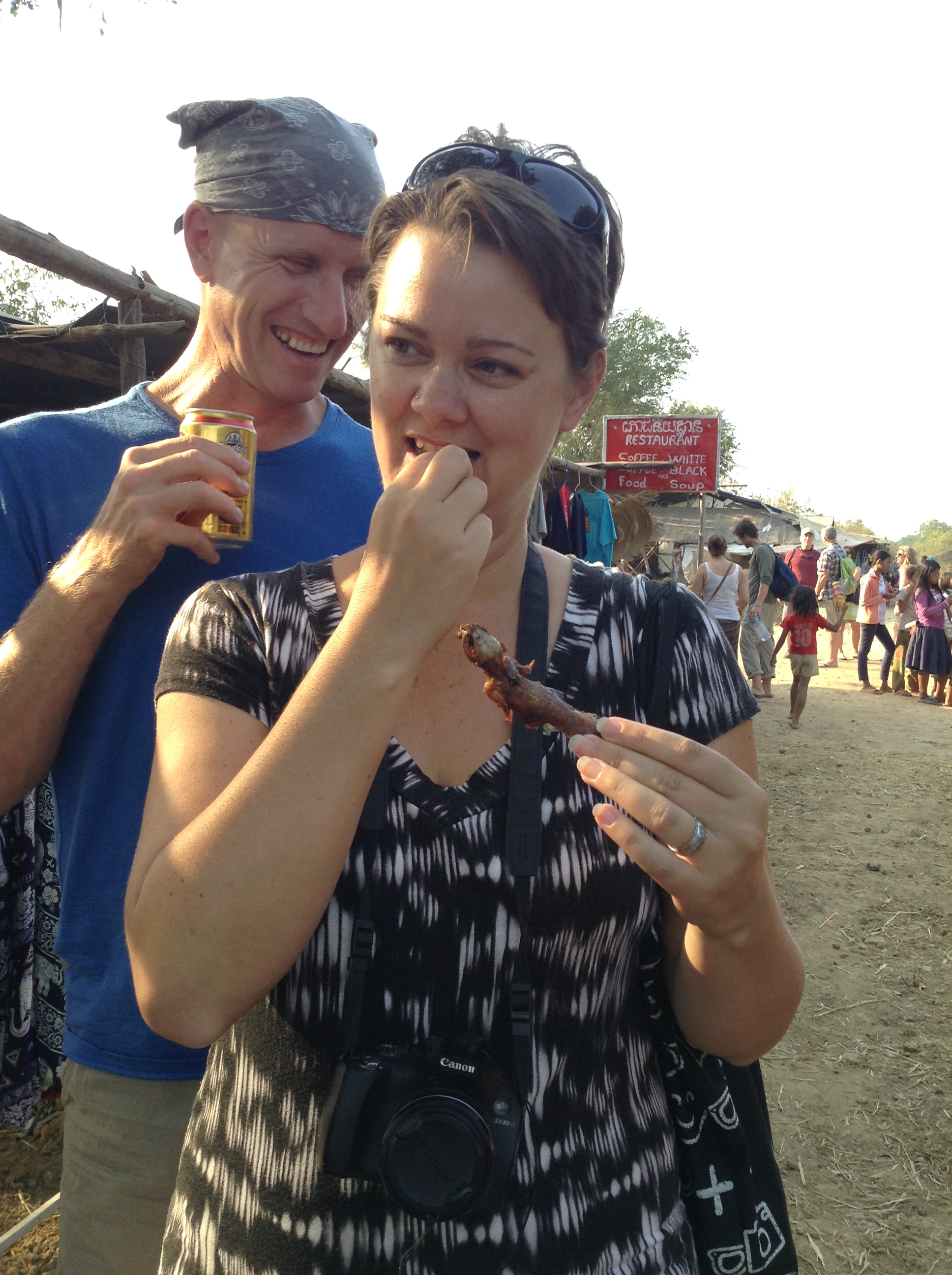
After a couple of days in Siem Reap on our own, we rejoined our Stray bus compatriots and went to Battambang, where we rode the Bamboo Train. It used to go from Cambodia to Bangkok, but is no longer in use except for a few kilometers used for tourism. The locals make these square bamboo pallets, and place them on top of two axels and add a small motor. If two pallets “collide”, one party simply gets off the tracks and picks up their “train”, letting the other party pass. At the end of the track we stopped in a small village for a cold beer and some barbecued mouse, which really doesn’t have all that much meat on it…
The Bamboo Railroad
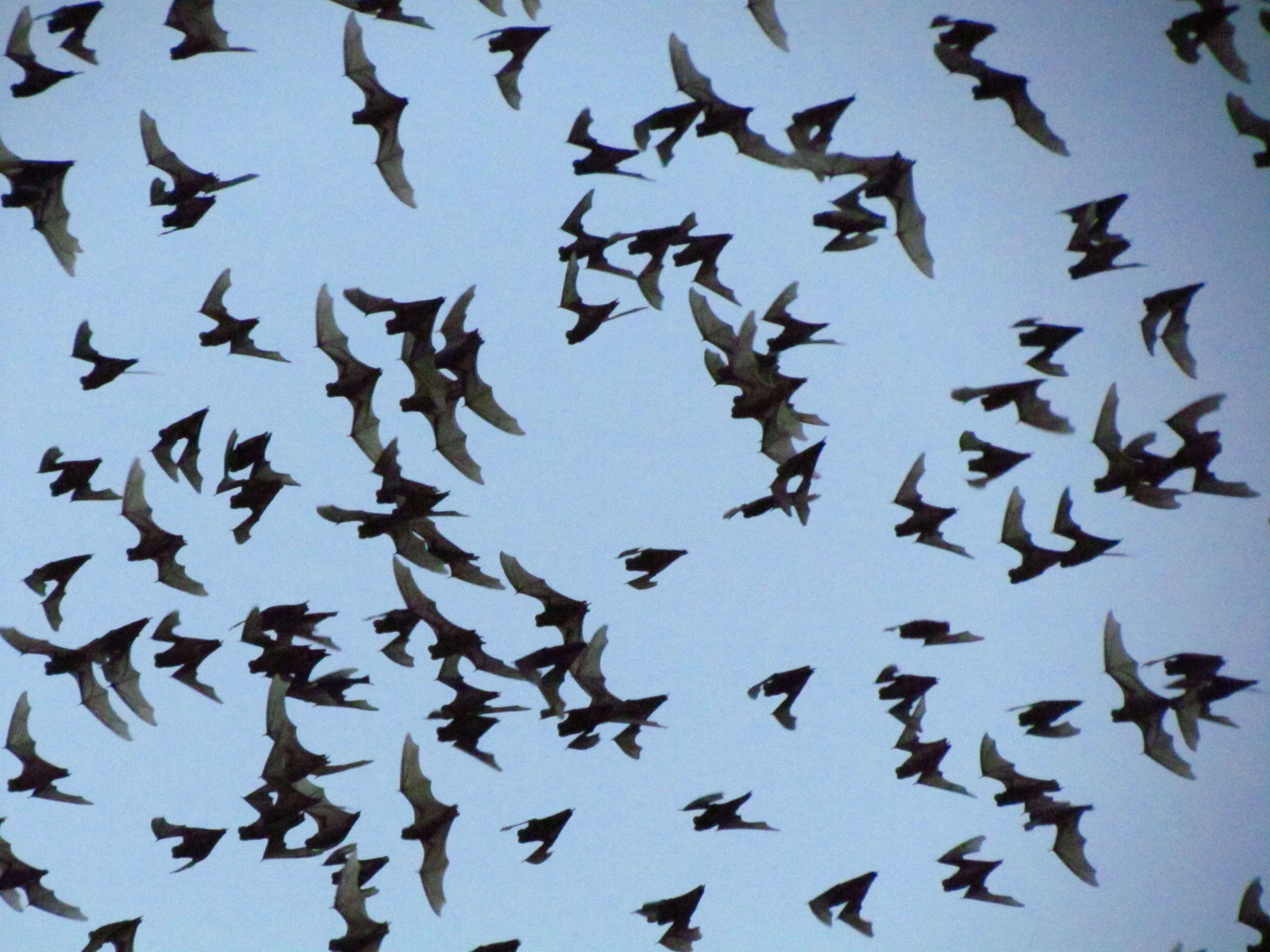
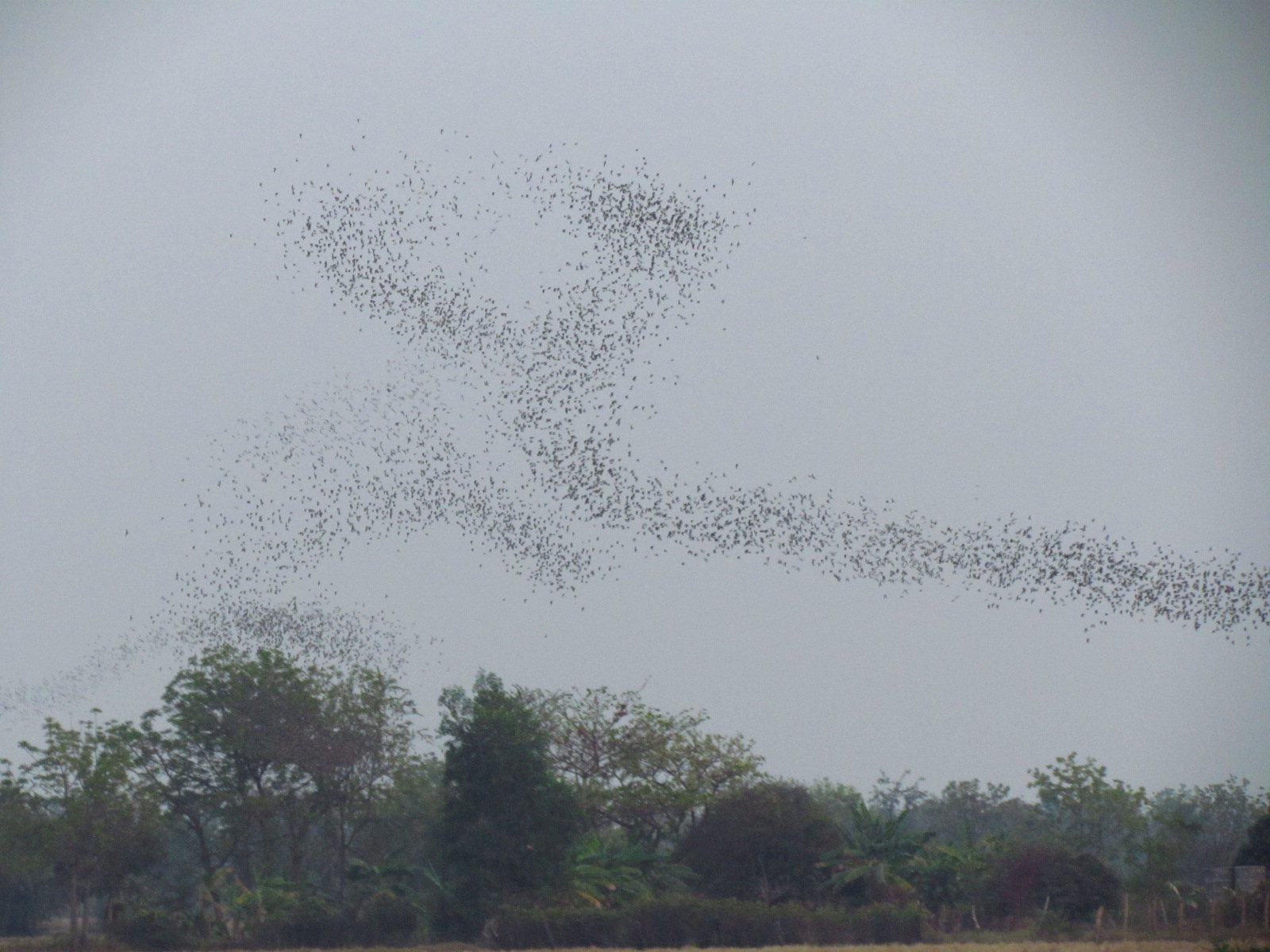
After the train, six of us wanted to go see the bats leave their cave at dusk, while the others went to a local market. It was pretty cool seeing 3+ million bats streaming out of their cave. They fly up to 200 km away and then return about 8 hours later. They eat a lot of insects every night!
Bats in Cambodia
Later we rejoined our group at a homestay, where we had the best fish amok! It’s fish pieces baked in a bamboo leaf, in a coconut milk and Khmer spice broth. Really good. We learned a little about the family who own the house, and what life is like for them in the village, and how they got started in tourism and turning their barn into a homestay area. It’s nice to think that we are helping many members of local families with our tourism dollars.
Then it was a brief stop in Uodong, then two nights in Sihanoukville, a beach town, pretty much catering to mass tourism (not too much local culture there). Good food, a decent bottle of wine, some beach time.
Uodong
We went to Kampot, and hopped off the bus there for three days, to see our old friend Dave, who I used to teach with. Kampot is a nice little river town, not too overrun with tourists, with a small but growing expat community of people who have found the perfect place to run out their senior years on less than $700 a month. Hmmm, good chance we’ll be back to Kampot one day.
Kampot
After Kampot, we spent one night on the tiny island of Koh Tansay, in a bungalow that only had electricity from 6pm to 9 pm. 13 bungalows, one restaurant, one massage pavilion with five pallets…. Well that’s all I needed for the 20 hours we were there. A very relaxing and romantic way to spend Valentine’s with my sweetheart (and ten other Stray bussers).
Koh Tansay Island
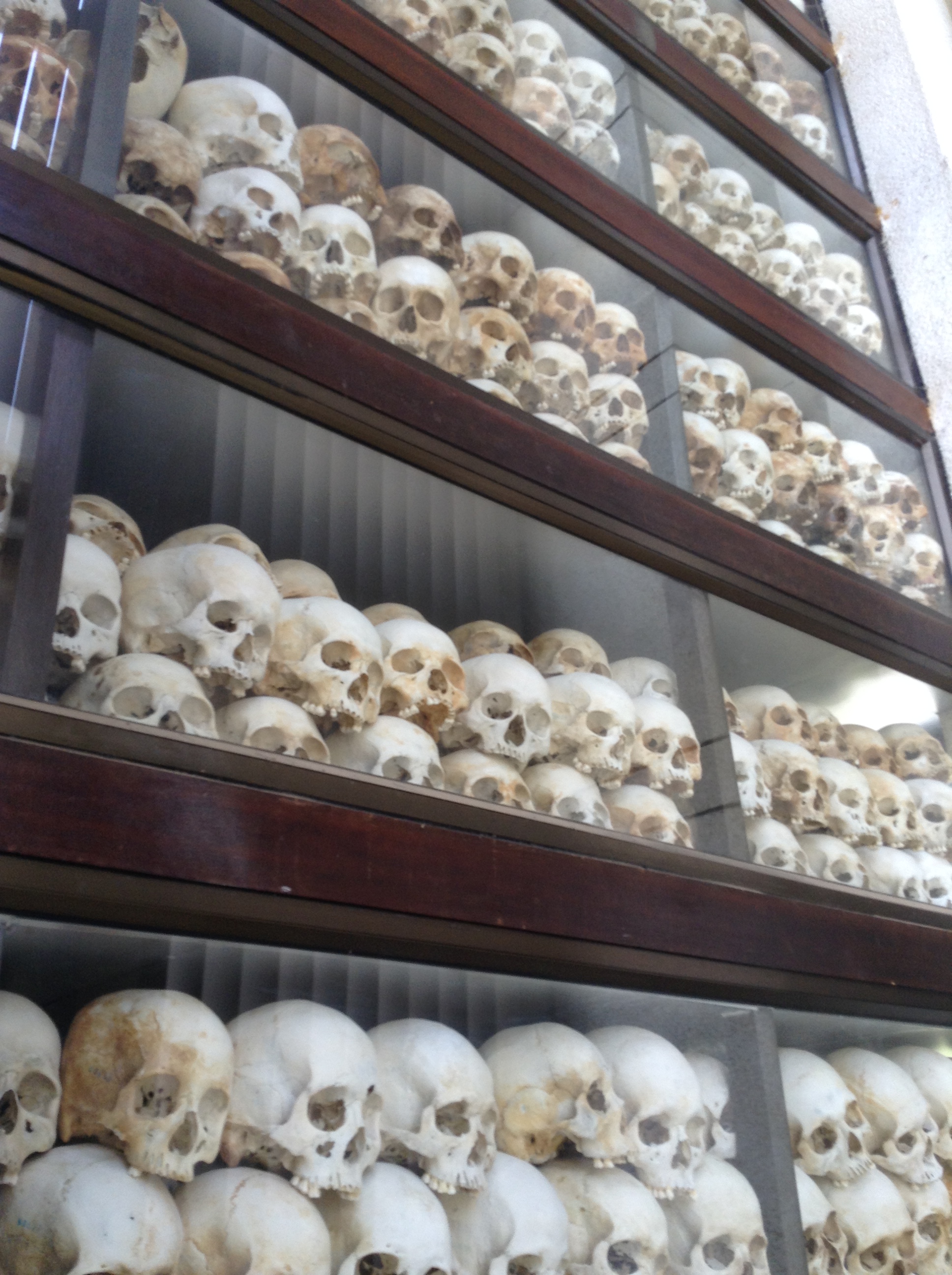
Our last stop in Cambodia is Pnom Penh. On the way into town, we visited the Killing Fields. Chris and I bought the audio guides, which were pretty interesting, although sad. Then we went to S21, one of the Khmer Rouge’s security prisons, where they tortured and killed thousands of intellectuals, teachers, doctors, dissidents, basically anyone who might challenge the 1975-1979 vision of a communist Cambodia. Horribly, the place used to be a school before the schools were shut down.
At the Killing Fields
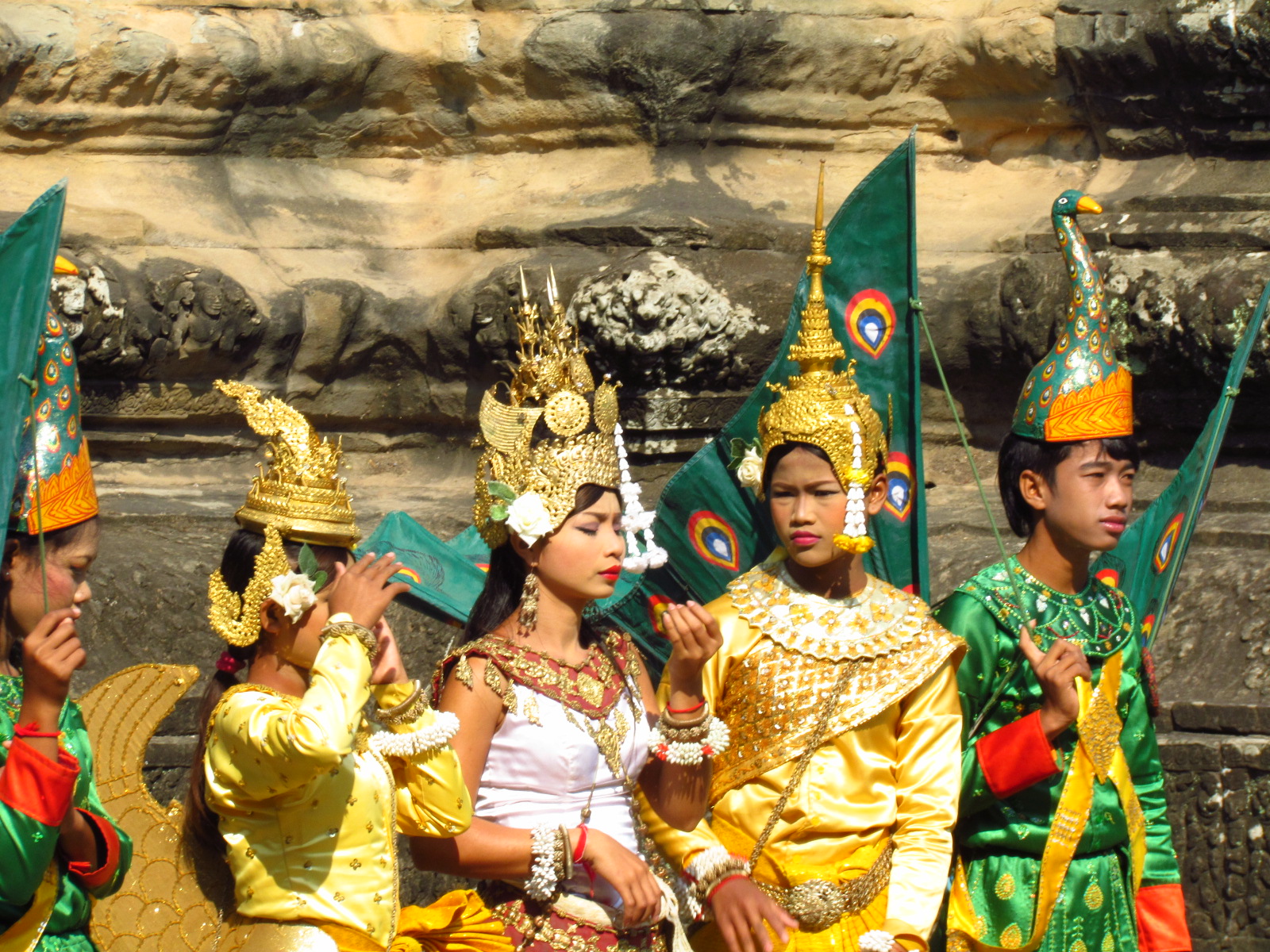
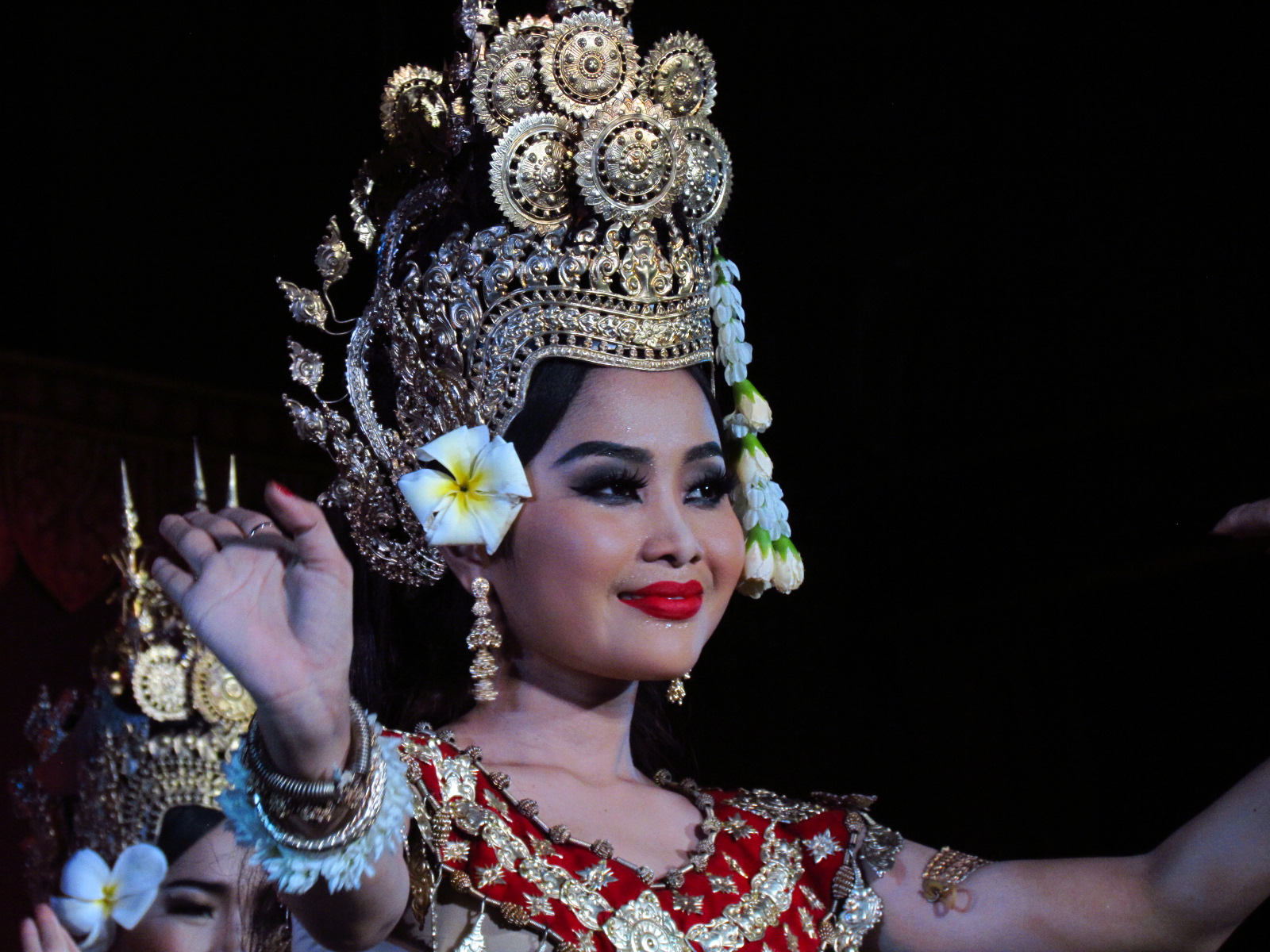
To end on a more positive note, we went to a cultural dance show in Pnom Penh, sponsored by an organization called Cambodian Living Arts, which was really good! They performed about a dozen folk dances and blessing songs and had beautiful costumes. They all seemed to be enjoying themselves and we were happy to see the arts thriving in Cambodia- a minor miracle, considering 90% of their artists were killed 35 years ago.
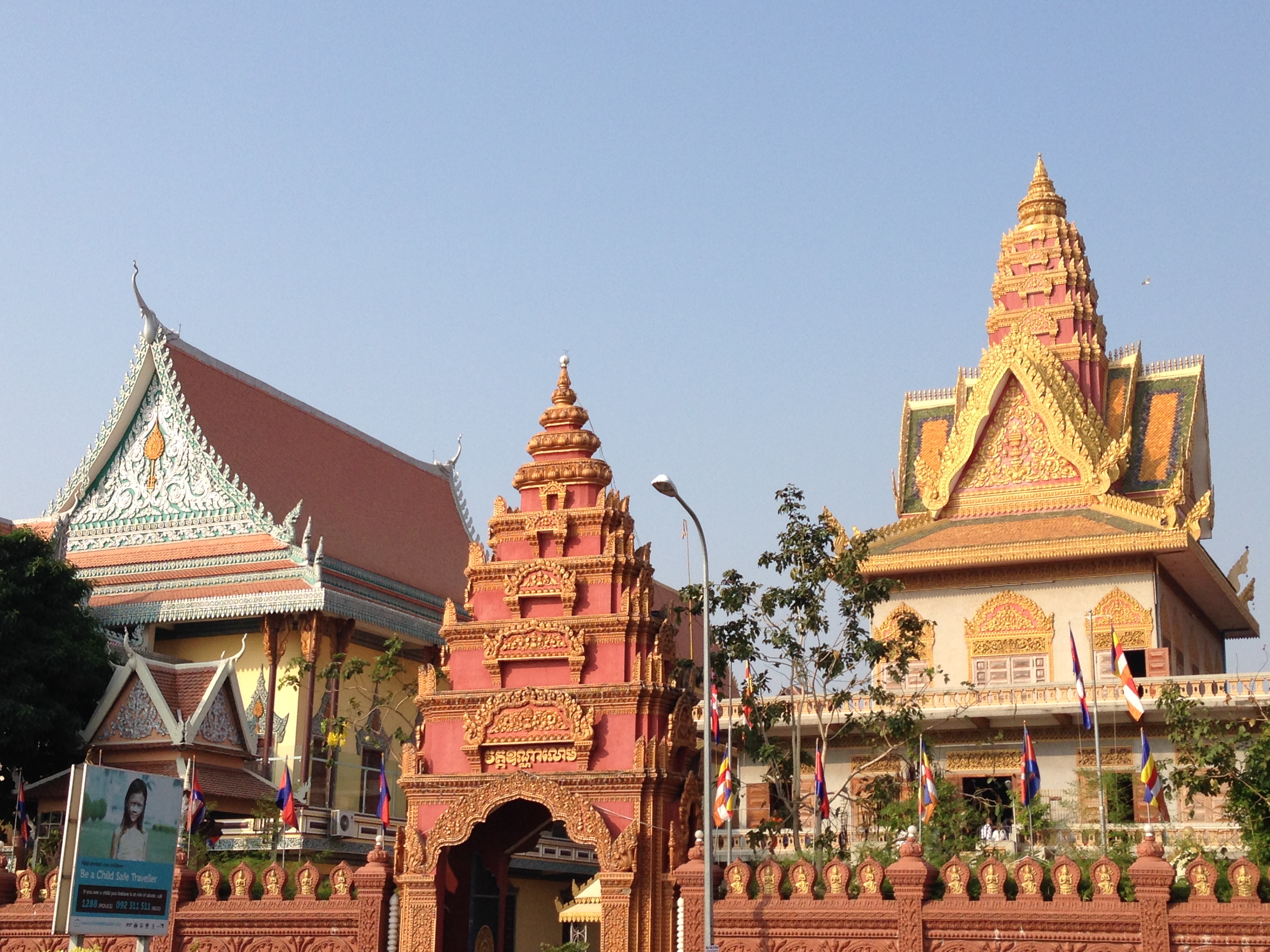
Pnom Penh
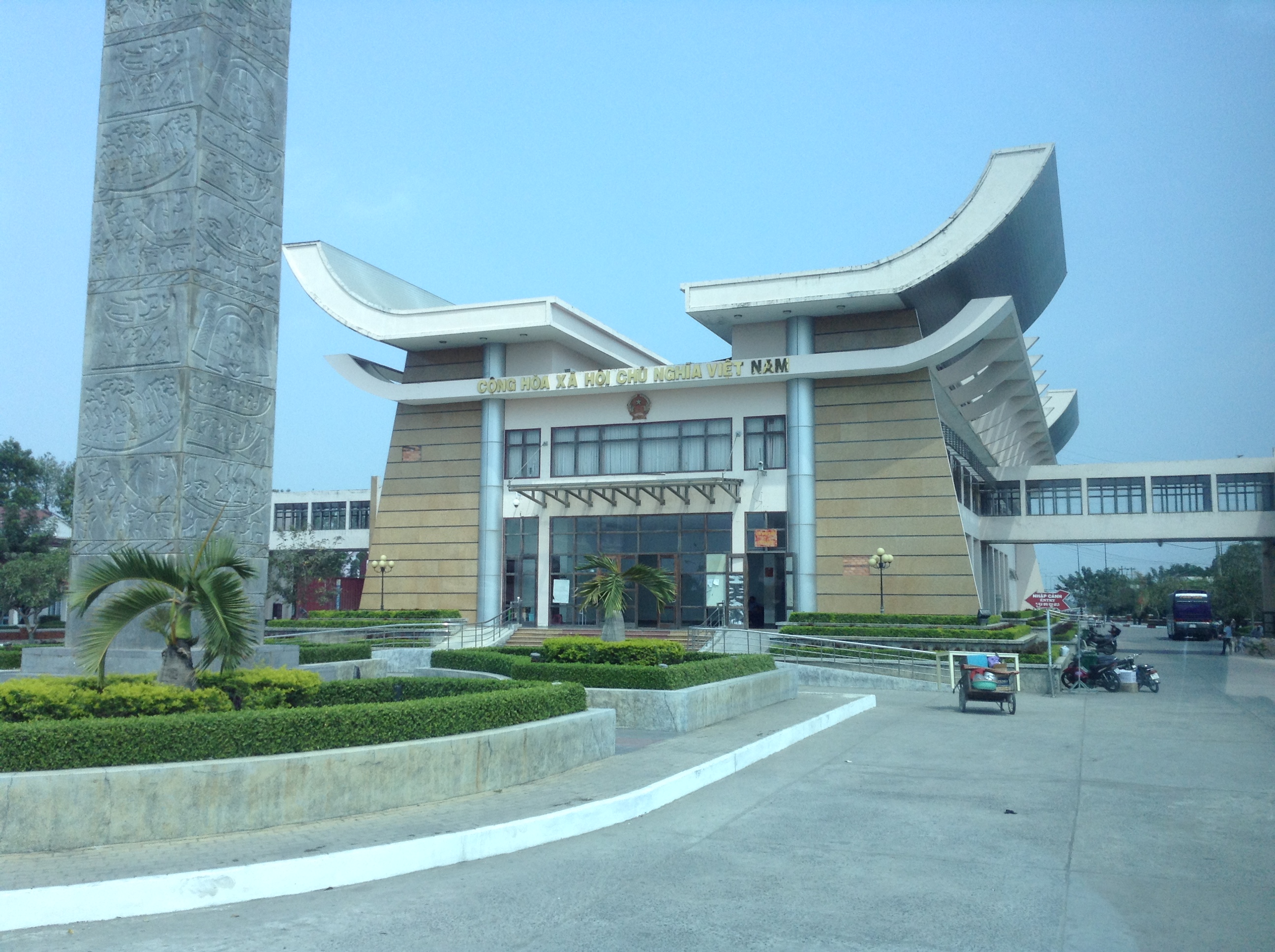
All in all, a very interesting country to come to, well worth a visit if you’re in the area. And now we are crossing the border into Vietnam……..
We crossed the Thai/Laos border with our Stray bus group, and boarded a long flat covered boat for our two day sail down the Mekong River. It was very cool looking at the scenery along the way, although after two eight hour days on the river we were definitely ready to be on land! The night between the two boat rides, we stopped in a small highland village and had a homestay. The village had about 60 family houses, and we divided our group of 18 or so into five houses. We had dinner and breakfast with our hosts, spent the night on their floor on mattresses and under mosquito nets, and tried the local “Lao Lao”, which is a homemade local rice whisky. Pretty gross, but it’s cheap and a few shots of that will do the trick!
A villagae on the Mekong River
When we finished our boat journey, we were in Luang Prabang, the ancient Siam capital of the north. A pretty and small city, perfect for some walking around and gazing at all the goods offered in the markets. We visited the public library, and donated a book for their village outreach program, a “book boat” that travels to remote areas and gives kids there the chance to access a book. And Luang Prabang is great place for baguette sandwiches: Laos, having once been part of French Indochina, retains the love of French bread that is so missing from Thailand and Malaysia.
Buddha Cave
From Luang Prabang we headed south to Vang Vueng, a kind of grungy river town that basically centers on the backpackers coming through and tubing the river. For five dollars we rented a tube, got dropped off a couple of miles upstream, and floated lazily down the river. There are five or six bars along the way; if you want to get out, a young Laos boy throws a filled water bottle attached to a rope at you and reels you in, like a fish. We tubed the river with most of the group from our Stray bus, so it wasn’t long before the Lao Lao was flowing and the beer pong was a-playing.
A relaxing day on the river
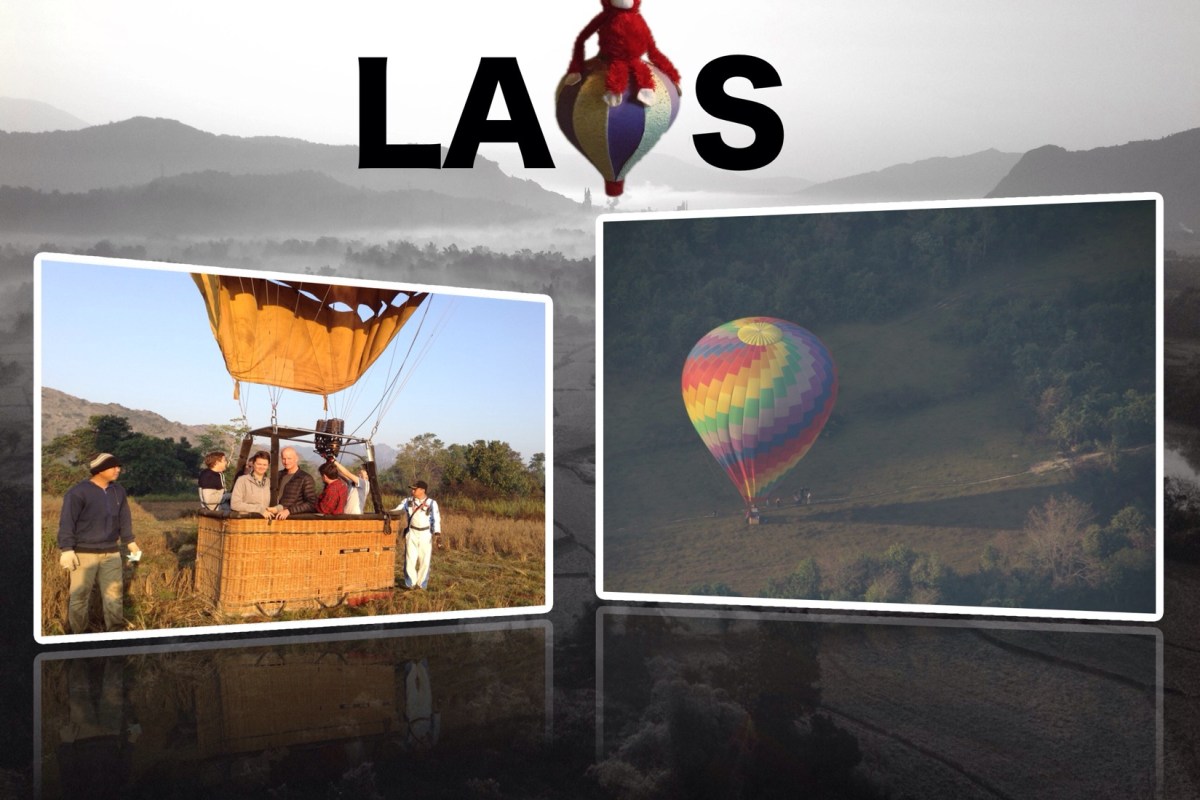
The next morning we had the chance to go up in a hot air balloon for only $80 US, so we couldn’t pass that up. We rose up to 1,000 meters and looked down at the river, the karst mountains, the mist, the rice fields… Really beautiful. A bit of a scary “crash” landing, but we were all okay, if a little shaken.
We headed to the Kong Lor area, too small to even really be called a village. Just five or six guest houses, two restaurants, all a kilometer from the kong Lor cave, which we were there to explore. We got a boat ride into the cave- 7 kilometers into the cave- had to portage three times- walked around inside the cave for a while. Pretty spooky feeling, being that far under a mountain. At the end, when we returned to the starting point, we all swam in the cold, clear water in a natural swimming hole at the cave’s entrance. Back at our guesthouse, we all lazed the rest of the day away, nothing to do but look out over the green tobacco fields and the surrounding mountains. What beautiful scenery!
Kung Lor Cave
Ventiane, the capital, was next. We didn’t do much there except visit the Victory Arch, a temple, and COPE, an organization that helps bomb victims deal with their injuries and adjustment. We learned about the millions of bombs dropped over Laos during Vietnam and the “Secret War”. Laos is the most bombed country, per capita! And there are still thousands of UXO here, in fields, rivers, jungles, and villages.
Visiting Ventiane
After Ventiane we had another homestay, not with a family, but in a big farmhouse owned by a local and given over to Stray bus for their three times a weeks stop in the village of Xe Champhone. After dinner, the Lao Lao started flowing and the music started playing and the kids on our bus (because, yes, of course Chris and I are the oldest) started partying. This time I wasn’t in the mood, and kind of felt that the loud partying was a bit disrespectful to the rest of the village, although several locals did stop by to meet us and have a drink.
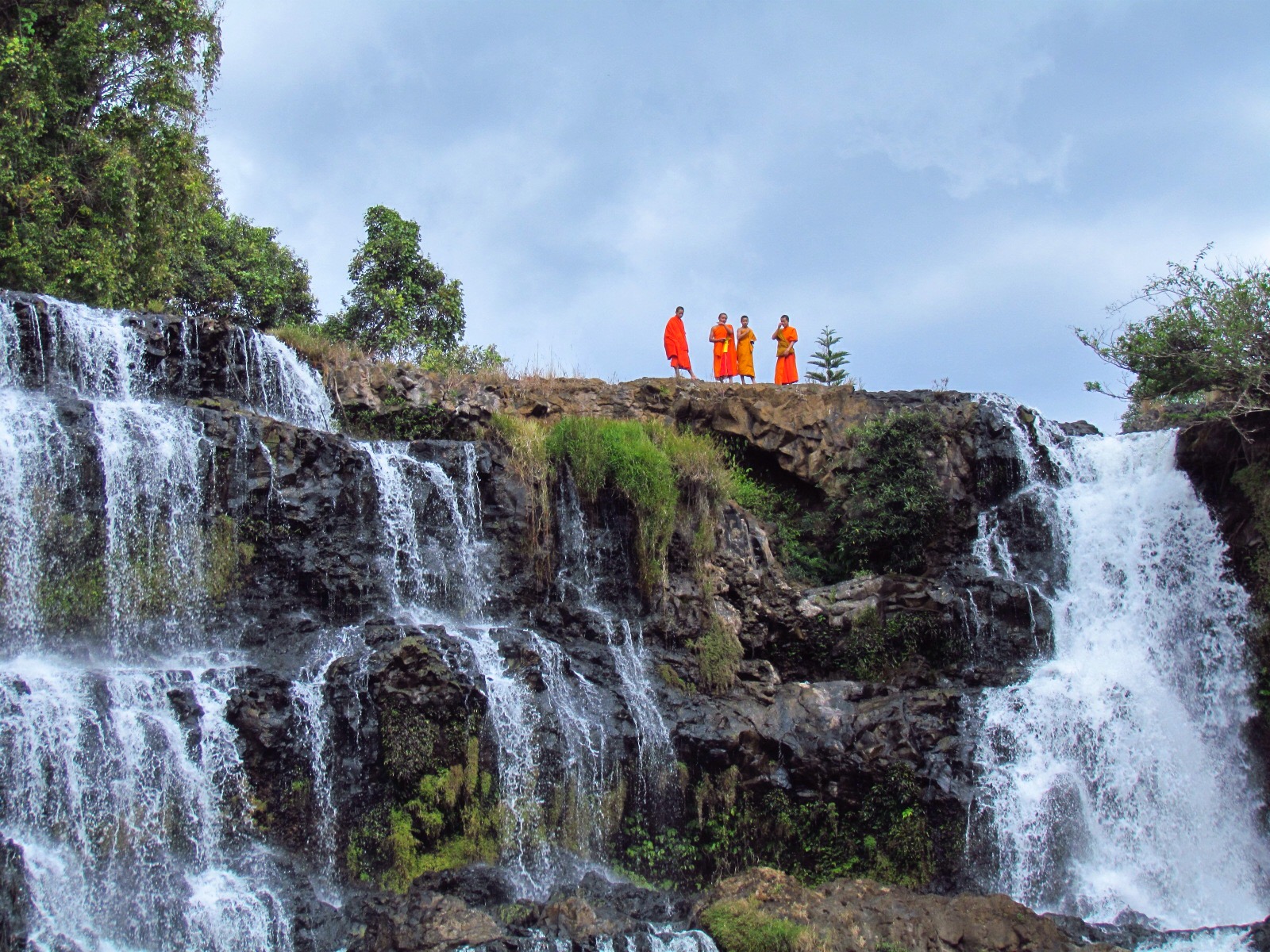
Some of our side trips on these days have included Buddha caves, UNESCO temples, waterfalls, a turtle lake, a coffee plantation, and a monkey forest where we hand fed dozens of macaque monkeys.
Our last stop in Laos, and where 12 of the 15 of us hopped off the bus for three days, has been an area called “4000 islands” in southern Laos. We are on an island called Don Dett, about 2 miles long and one mile wide. Just “beach” bungalows, bars, tubing, kayaking, and bicycle rentals. It’s a nice place to explore and I even managed a run yesterday morning before breakfast. Rice fields, water buffalo, sunsets, and relaxing. We really needed the break. Tomorrow we head across the border to Cambodia, starting with Angkor Wat.
“When I die I will be a Burman … and I will always walk about with a pretty almond-coloured girl who shall laugh and jest too, as a young maiden ought. She shall not pull a sari over her head when a man looks at her and glare suggestively from behind it, nor shall she tramp behind me when I walk: for these are the customs of India. She shall look all the world between the eyes, in honesty and good fellowship, and I will teach her not to defile her pretty mouth with chopped tobacco in a cabbage leaf, but to inhale good cigarettes of Egypt’s best brand. ” — Rudyard Kipling, “Mandalay”
Myanmar, formerly Burma, is a country full of contradictions. Full of Buddhists, the country actually has a small minorities of Muslims, who are denied citizenship if they cannot prove their ancestors were in Burma before 1823. The buildings in the capital city look as if they desperately need a wash and a paint job, while office buildings rent to NGOs and businesses for exorbitant rates such as $25,000 a month, increased from $4,000 a month just two years ago (click here for an article about the $90,000 monthly rent paid by UNICEF). The train station, a glorious architectural gem built in 1877 by the British, looks ready to fall down- a 620 km train ride from Yangon to Bagan takes a stated 16 hours (more likely to be 20), while the bus ride takes only 8.
Downtown Yangon
Yangon train station
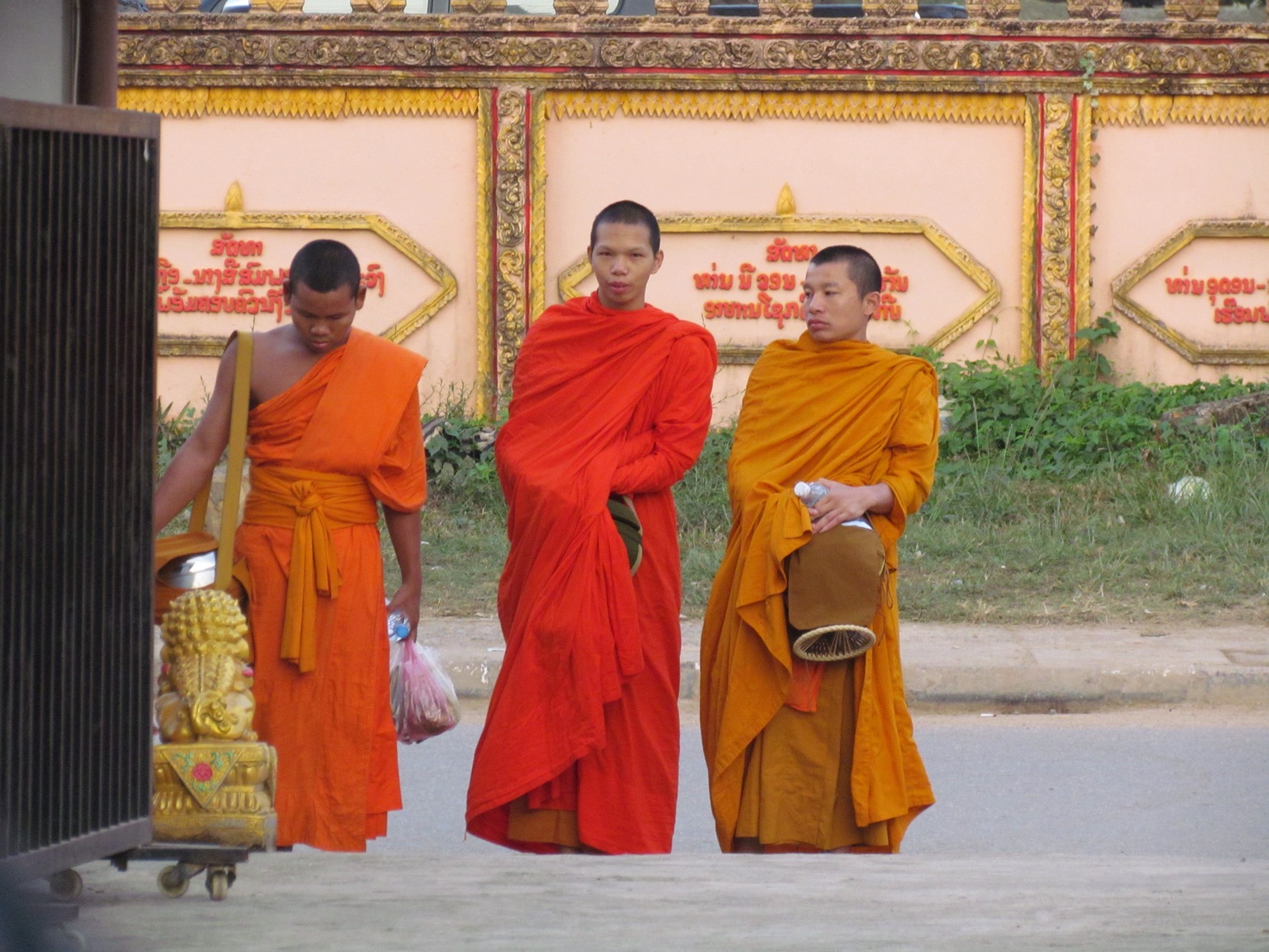
From Bangkok, it was a simple matter of applying online for a Myanmar visa, and booking a cheap flight to Ÿangon on Air Asia. The flight was 90 minutes long, and we were met at the airport by a taxi driver sent by our friend Maia, whom we had worked with in Sudan. While visiting her in Ÿangon, we went to the Shwedagon Pagoda, a wonderful Buddhist Shrine that, according to local legend, began in 600 BC, and was continually enlarged by a succession of kings to its present height of 99 meters. (Historians and archaeologists say it was more likely built between 600 and 900 AD. One of the difficulties of researching Myanmar history is a lack of many written historical accounts). We found the pagoda to be quite beautiful and a nice place to walk around and people watch, particularly all the monks and nuns (shaved heads all around). It’s very peaceful up there, away from the cars and traffic, and you can just sit and listen to the tinkling sound of the tiny brass bells atop each stupa.
Shwedagon pagoda
We visited the National Museum, but unfortunately you can’t take photos there. I don’t know why many developing nations won’t let you take photos. The museum was interesting, with a huge array of artifacts and cultural information. Definitely worth a visit.
We do a lot of walking around cities, just looking at the buildings, the parks, the people. One of our favorite pastimes is to try street food or settle for a while at an alley cafe and watch the world go by. It’s a good way to chat with some locals and try new foods. Sometimes we’re pleasantly surprised, and other times we’re not.
Beer stop in the city
Before we left Yangon, we walked by Aung San Suu Kyi’s house, where she was held under house arrest for several years, opposing the government. She has now been released and is head of the National League of Democracy.
NLD
Rather than the scenic but very grimy and outdated train, we opted for the bus to Bagan, a northern plains area covered by literally three thousand stupas, temples, and shrines. We took a night bus and arrived at 5 am, so we decided to walk to the “archaeological zone” and watch the sun rise. In less than half an hour, we could start to see the faint outlines of temples…. And then the sun began to rise and we could see dozens. We began to hear a whooshing noise, and slowly a hot air balloon rose above the trees and temples….and then a dozen more. As we walked, we lost count of the temples. We walked all over the area, including down to the banks of the Irrawaddy River, and just marveled. Eventually we wandered back to town, got some lunch, and took a nap. We got up at four and went back out to watch the sun set behind some other temples. Bagan, and other cities in Myanmar, has that acrid smell from burning trash and controlled-burning cultivation techniques. I remember Sudan and Egypt had the same smell. It’s not terrible, as long as it’s at a distance.
Sunrise in Bagan
We stayed in Bagan for two days, walking around and bicycling around, and trying different restaurants. Then we bought a bus ticket to head east, to the area around Lake Inle. Our bus turned out to be a minivan, and we were the only passengers. Weird. The ride was interesting, though, passing through villages, crossing a few rivers, and going over a small mountain range. Eventually- at 4:30 even though the driver said we would arrive at 2- we arrived in Nuangshwe, a small town on the edge of Lake Inle. We found a hotel for $25 with hot water, wifi (semi), and breakfast, and then walked around town for a bit. Like Bagan, the town consists of four paved roads, in a grid, with maybe six more dirt roads making up the entire main center of action. There’s probably a dozen small hotels/guesthouses here, a dozen restaurants, and a dozen tour services shops, helping travelers to organize boat rides, trekking, bus tickets, share taxis, bicycle rentals, or air tickets. It’s impossible to get lost and you really don’t need a map.
Bagan
On the western end of town is a canal, which feeds into the lake. Perhaps fifty boatmen await, hoping to entice you with a boat tour of the lake and the Shan and Karen villages that border it. They have very long- 15 meter- boats that are very narrow, and very shallow, because the lake is an average of three feet deep. We negotiated a boat tour on our second day in town, and off we went to the southern end of the lake, 20 miles away. We visited a lovely pagoda site, rising up from the banks of the lake like a Disney castle, and then boated through a floating village, the houses all set up on stilts with their canoes parked underneath. We passed men catching fish, and women harvesting rice or washing laundry in the lake. We even saw a woman hanging strands of rice noodles in the sun to dry. We visited a Shan village to see a pottery worker, and got to try our hand at a candle holder and a vase. We also visited a boat building yard, where it takes four men one month to build the 15 meter boats by hand. We visited a cheroot rolling house, made with tobacco, cloves, honey, tamarind, and rice wine. And we saw a weaving workshop, where they made thread out of cotton, silk, and lotus stems to make clothing and scarves. The lotus stem part really blew me away- a very painstaking process. Those scarves are very expensive. If you’ve ever seen pictures of traditionally dressed Myanmar women, the way they wear their scarves wrapped around their heads show which tribe they belong to. The men all wear the longyii, which is a long piece of fabric around their waist, tied like a wrap around skirt. In the villages they wear the Burmese conical woven hats, but not in the city.
Lake Inle fishermen
The boat driver wanted to take us to the “long neck village”, but I declined. I do not want to pay tourist dollars to continue the exploitation of the young girls. If they take the rings off their necks they cannot even hold their heads up. And now they do it for tourist dollars, even busing them into Thailand and China to display.
Also near the lake is a winery, one of two in Myanmar. We walked out to the vineyards and tried four of their wines, enjoying the views from their hilltop of the small villages nearby. A nice way to spend our last afternoon in Naungshwe. We left that evening on a night bus, arriving in Mandalay in the morning.
Chris at Red Mountain Winery
In Mandalay, there wasn’t a whole lot to do. There’s an ancient walled Grand Palace, but it was destroyed in World War II, and rebuilt with forced labor and new materials, rather than the original teakwood. So instead we climbed Mandalay Hill, just outside of town, where you pass through pagodas, shrines, and temples as you ascend the hill. Really nice views from the top, as well. And at the bottom, we visited the Kuthodow Pagoda, which claims to be the largest book in the world, consisting of 1774 stupas, each one holding an inscribed tablet of the Tripitaka, a sacred Buddhist text.
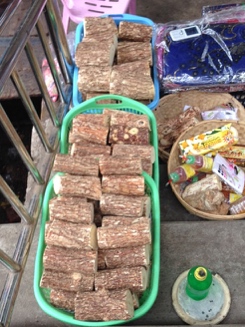
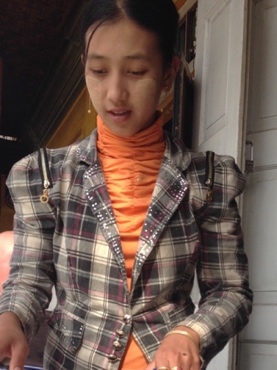
* The women in Myanmar all decorate their faces with a yellow paste made from tree bark. They wear this as decoration, and as sunscreen. It takes a little getting used to, but now I think it’s very pretty.
Tree branch used for face paint
Myanmar girl with face painted
* There are no bicycles, scooters, or motorcycles allowed in Yangon. Very rare for an Asian city. No one is quite sure why they are illegal in that one city.
* The fishermen on lake Inle have developed a unique way of paddling. They stand on one leg in the prow of their boats, and wrap their other leg around their paddle. They use that leg to steer and push themselves forwards, while keeping their hands free for their nets.
Thinking of Visiting Thailand? Follow these eight tips to make sure you make the most of your visit!
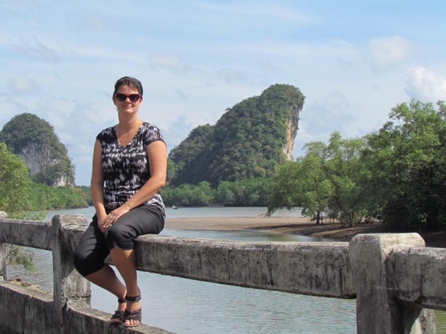
Krabi:
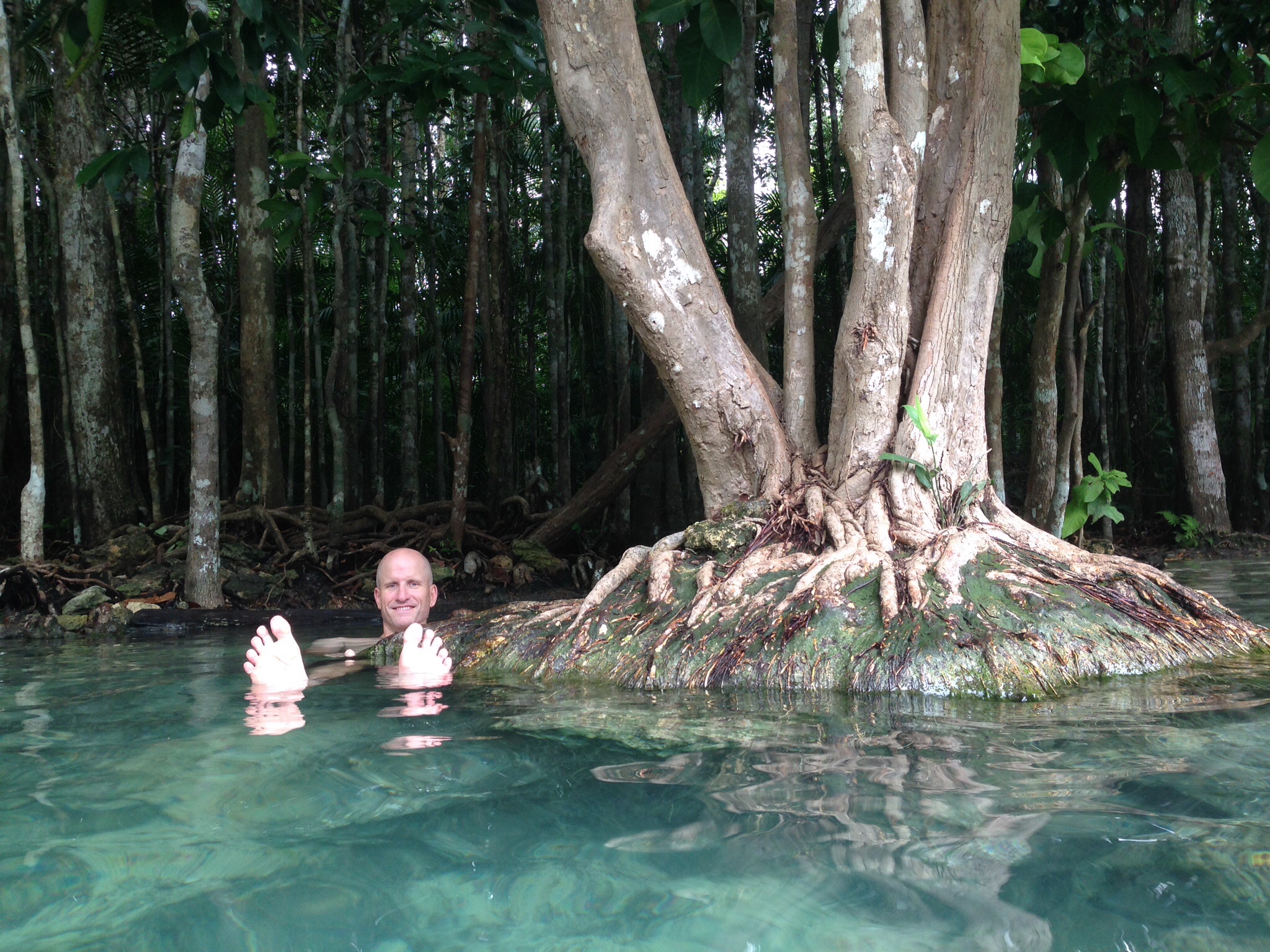
Visit the hot springs waterfall and the Emerald pools- lovely and refreshing!
There are tons of things to do in Krabi- you won’t have time to see them all!
Phuket
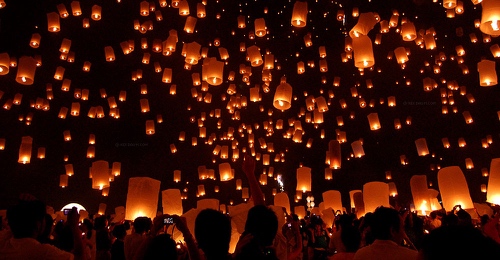
Spend New Year’s Eve on Patong Beach with 6,000 other people, setting off fireworks and paper lanterns.
New Year’s Eve at Phuket Beach
Semilan Islands
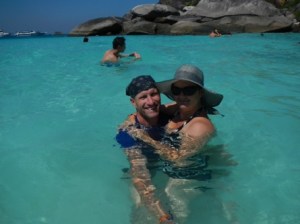
Go on an over night tent camping trip to the uninhabited islands in the Andaman Sea. Didn’t bring a tent? You can rent one here, no problem.
Semilan Islands
Night train to Bangkok
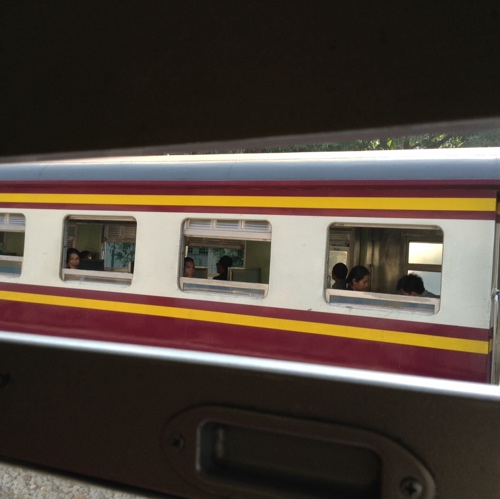
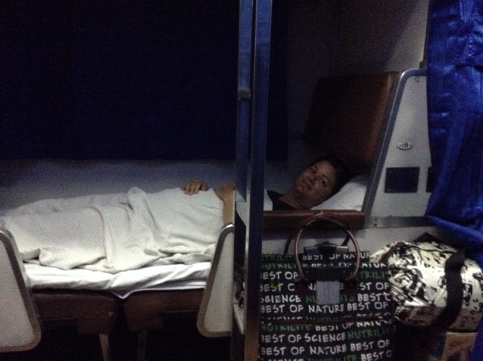
Take the train! My number one favorite way to travel long distances. Thai trains are comfortable, fast, and there are plenty of them.
Bangkok:
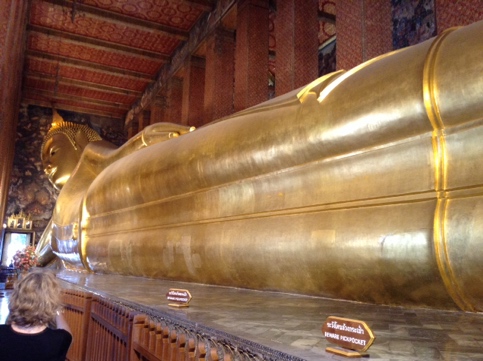
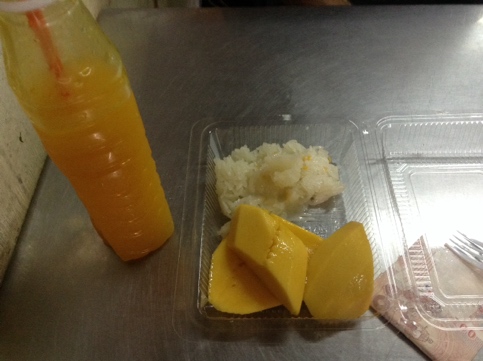
See the Grand Palace and the Reclining Buddha. Eat street food. Hello, mango sticky rice and pad Thai and avocado shakes and hot tea with sweetened condensed milk. Mmmmm. From the train market to the night market, you will find so much food, and at such great prices.
Buddhas and mangoes, a winning combination
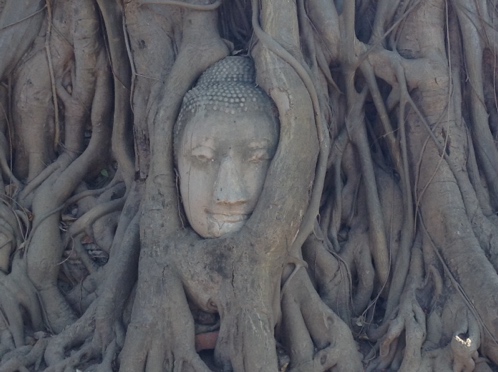
Ayutthaya
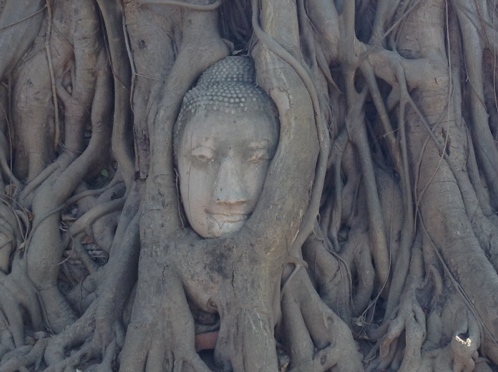
Visit the ancient capital of Siam, sacked by the Burmese in 1767.
Chiang Mai
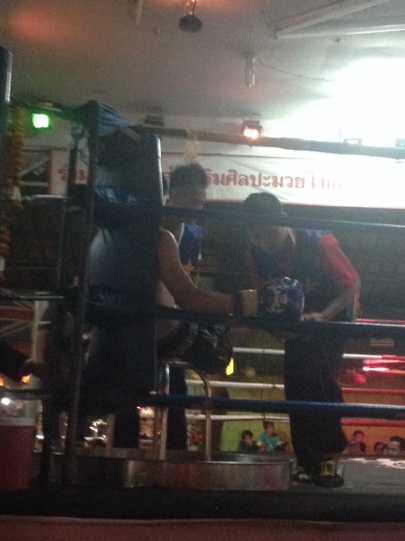
The “Rose of the North”, Chiang Mai is home to Thai boxing and stupas and yoga studios galore
Muay Thai Boxing
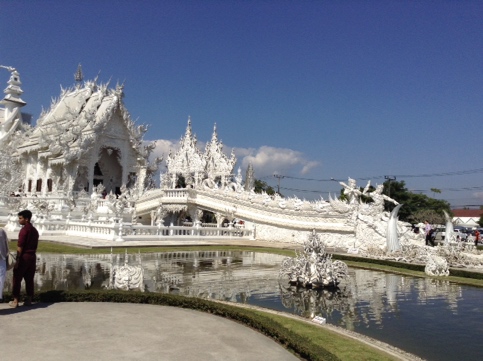
Chiang Rai
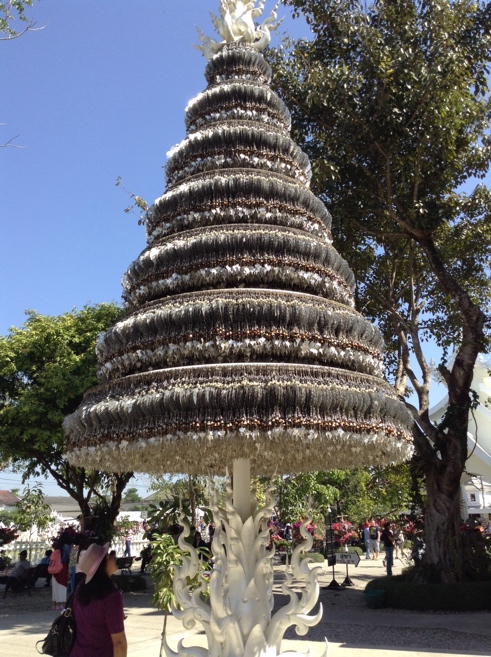
The futuristic and weird White Palace is not to be missed
And there’s more! So much more to Thailand. It would be impossible to list everything here. But this is a good start.
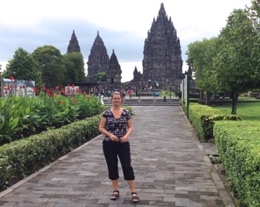
After Bali, we hopped on a flight to the Indonesian island of Java, next door. We landed in Yogyakarta, home to two UNESCO world heritage sites. Using public transportation, we made our way to Prambanan, a large Hindu temple complex, and to Borobudur, the largest Buddhist temple. Both were built in the 900’s and were amazing to see and also amazingly hot and humid. In Yogya, we also got to engage in one of my favorite travel past times: seeing a movie! We caught Mockingjay at a theater, which I loved.
Borobudur
Parambaran
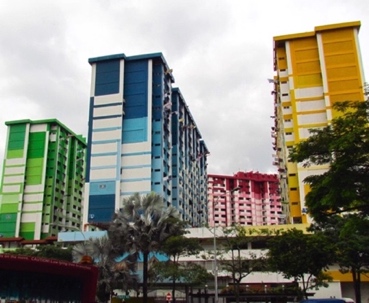
We flew to Singapore, the island state at the very tip of SE Asia. For two days we did the Hop on, Hop off bus there. I have to say, there isn’t much to do in Singapore except shop and eat. Although, we did stay in the red light district, where prostitution is legal, so that made for some very interesting street-watching in the evenings. And the huge buildings and skyscrapers were fascinating. The Singapore Changi airport is also one of the best in the world, with a sunflower garden on the roof, a kinetic rain sculpture, free massages, and a pool.
Changi Airport
Marina Bay Sands SkyparkColorful SingaporeThe Singapore Skyline
After Singapore, we took a bus into Malaysia, and stopped in Malacca. We stayed there for three days, and enjoyed their river walk area, a river cruise, the Jonker Street night market, and a very nicely done museum on the history of the area, beautifully housed in the shah’s old wooden palace.
River boat in MalaccaJonkers Street
Another bus, this time up to Kuala Lumpur. What a skyline! The twin Petronas towers are so cool to look at. We rode up to the top of the KL Tower to get a better view of the Petronas towers, also went up to the 33rd floor Skybar of a nearby hotel to get a great night shot. Like Singapore, KL is mainly about shopping and eating. We did also visit the orchid and hibiscus gardens, and took the metro out to Batu Caves, a huge limestone cave that houses some Hindu shrines and a giant gold statue of Lord Murugan, the Hindu God of war. And we saw another movie – the last Hobbit film (we don’t usually see this many movies on vacation, but it is seriously hot and humid here. Indoor activities are nice).
Batu CavesPetronas Towers
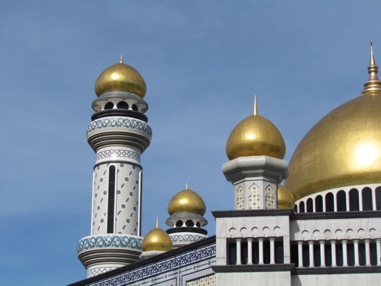
From KL we found a flight to Brunei, a tiny country the size of Delaware on the island of Borneo. We spent four days there, including Christmas. We did a city tour and visited two huge mosques, the Royal Regalia museum, and the water village- a large portion of the city’s population live in houses built on stilts in the river. Brunei is interesting- they have sharia law there, but also a large number of multi-faith Indonesians and Malaysians living there. Christmas was a public holiday, although most shops and businesses stayed open. The Sultan of Brunei is supposedly the richest man in the world, and owns all the oil and gas there. Petrol costs 32 cents a liter.
Chris, at a bar near the water villageMosque in Brunei
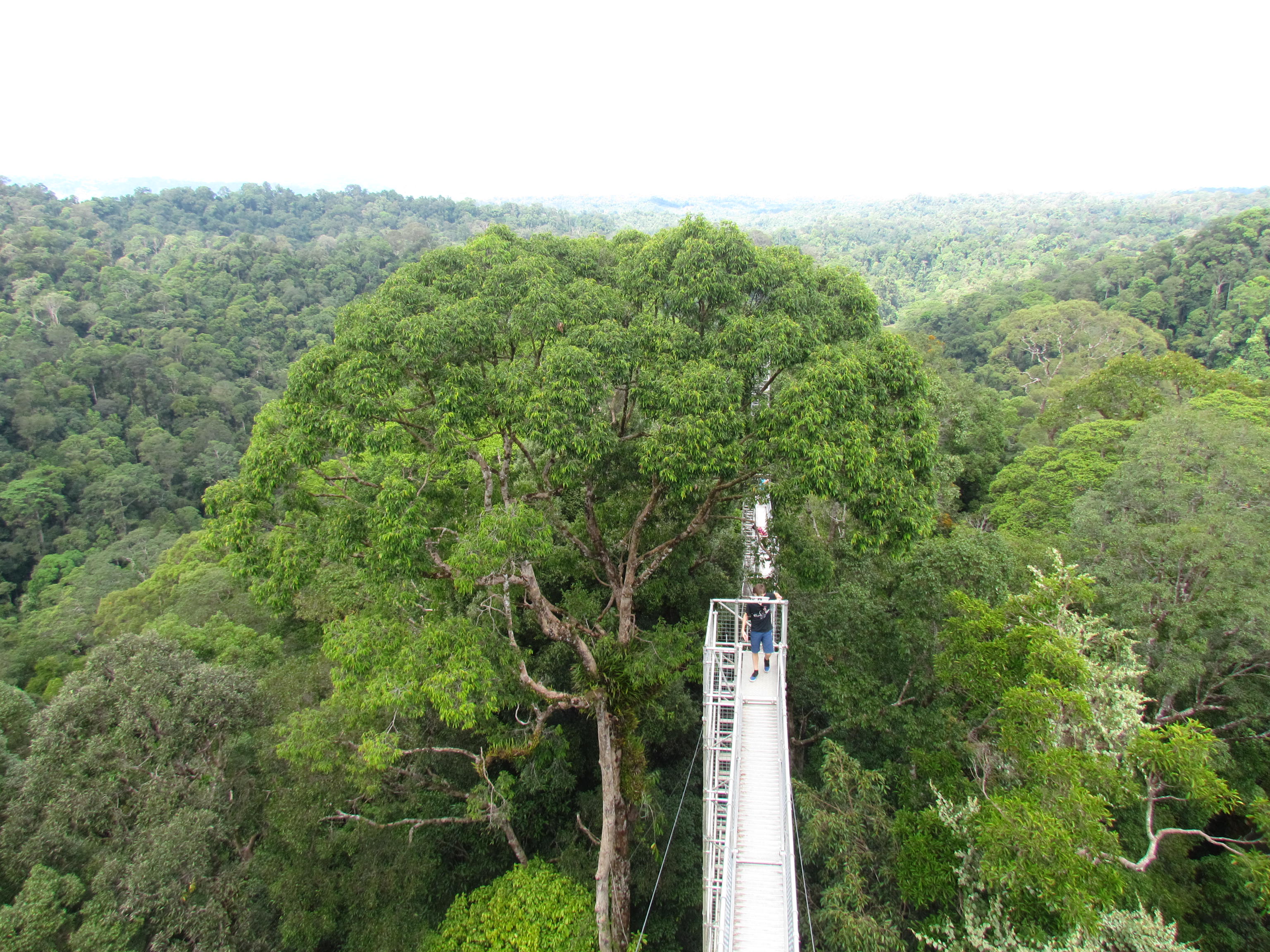
The coolest thing we did in Brunei was go on a river and rainforest tour. We rode up the river for about 45 minutes, then rode in a van another 25. Then we got in another boat, a very shallow draft, longboat, and rode another 45 minutes into the national forest. Then we hiked in and up the forest, until we came to four huge canopy towers. We climbed up the towers- 50 meters high- and walked across the top of the forest. It was very neat to see the top of the forest like that.
The Cloud Rainforest
Some notes about things I’ve noticed this week while traveling. My t shirts are starting to get pretty stretched out from all the washing and wearing, especially the necklines. So I decided to replace one of them at a mall in KL. Do you know how hard it is to find a shirt without a super scooped neck or deeply v-necked shirt? I had to buy one from the boys department at H&M.
Also, every single hotel we have had in SE Asia has had free internet. Why do so many US hotels still charge for wifi?
Next up for us is Thailand, and getting a chance to visit our dear friend Chantel.
























 PalmTreeMusings