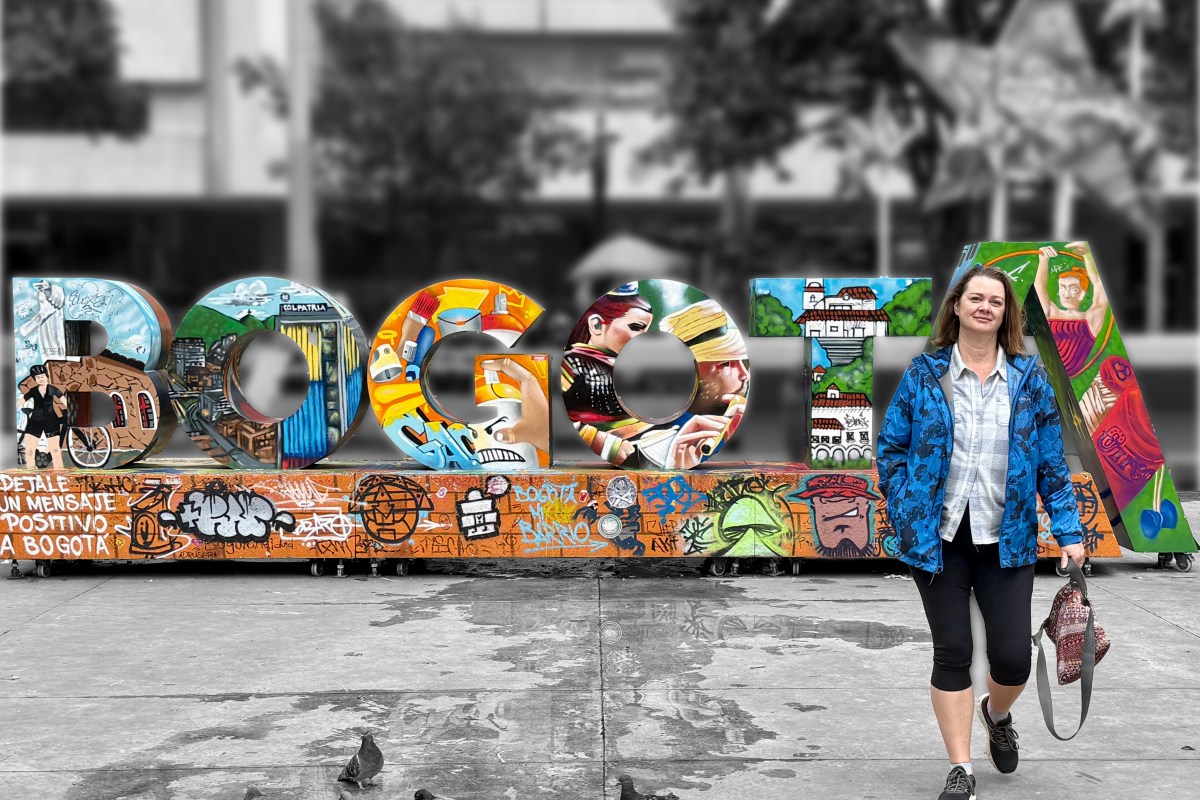
With a week off for Thanksgiving Break, we decided to head to South America and visit one of the capital cities we’d never seen. From Dallas/Fort Worth it was a 5 hour, direct flight on American Airlines, landing in El Dorado International Airport. We arrived late at night, grabbed an Uber, and were at our hotel just outside the Candelaria neighborhood in downtown Bogotá in less than half an hour.
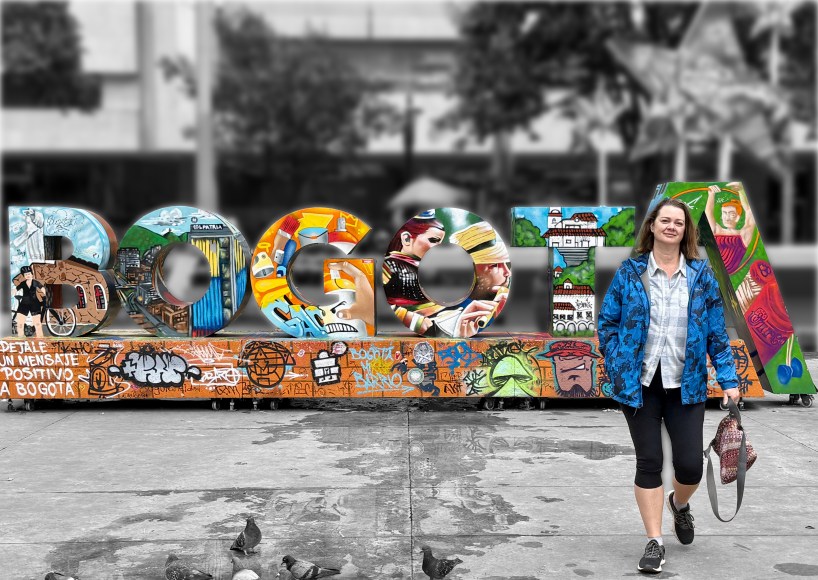
With six days to spend in the city, we got to sample a lot of great food, do some guided walks around town, visit several attractions, and enjoy the ever-changing Bogotá weather. Read on for a list of the best things to do in this vibrant city.
Guided Walking Tour
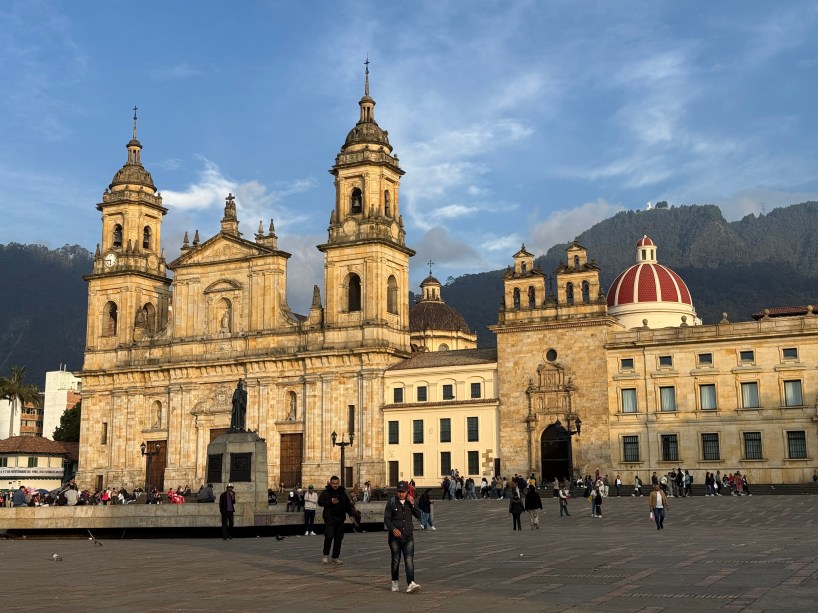
I like to use the Guru app to find a walking tour when I arrive in a new city. It helps me get oriented to where the main attractions in the city are, it familiarizes me with the history and the culture of the city, and I get my steps in, which is good, because I also like to ask the guides for suggestions on where to eat! In Bogotá we actually did three different walking tours- La Candelaria neighborhood, a food tour, and a tour about the political violence and cartels in Colombia. All of our guides were so well-informed and did such a good job showing us their beautiful city. I learned so much, especially from Hector, our guide from the conflict tour. Price: the walking tours are “free”, but be sure to tip your guide, about $10-12 US or 50,000 pesos.
The Museo del Oro
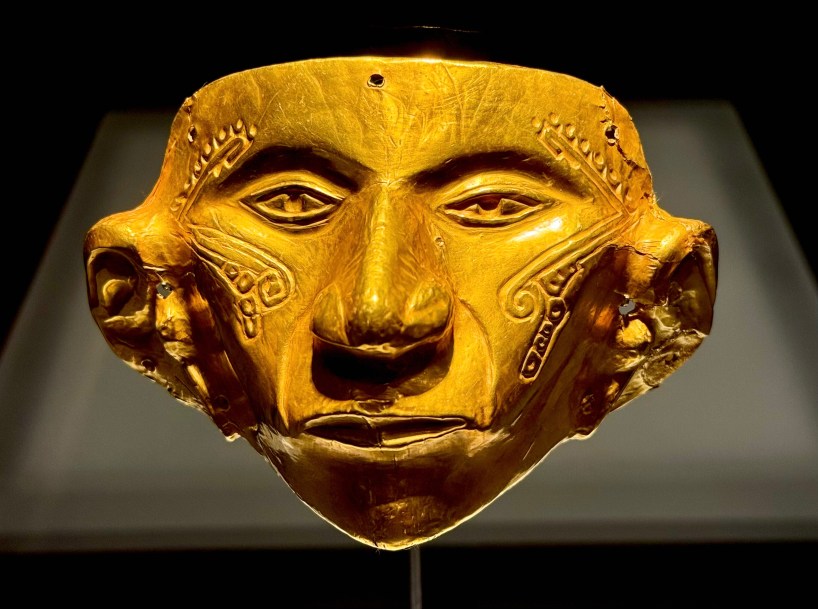
Bogotá’s very existence owes a lot to the discovery of gold in the area, and it has shaped a lot of the history, culture, and conflict in the country. A visit to the Gold Museum is a must if you are in the city. They have a huge collection of over 55,000 pre-Hispanic artifacts, and the museum does such a good job explaining the social and spiritual contexts in which gold was used. The museum is open every day of the week, costs 5000 pesos (about $1.50 US), and is free on Sundays.
The Salt Cathedral
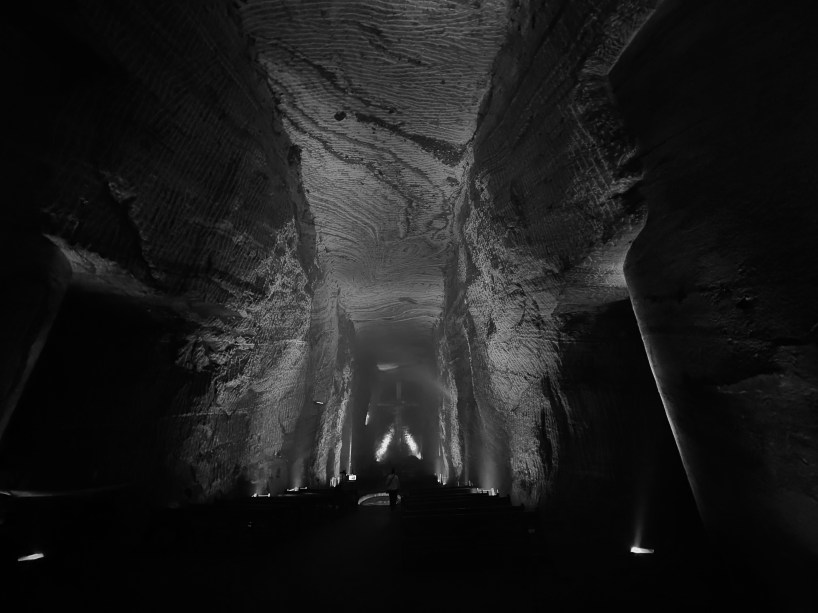
- If you have an extra day, I hope you will take the time to go to Zipaquirá, just an hour or so outside of Bogotá. You can find a group tour (that will probably also include a visit to the nearby Guatavita Lake), but you can also easily do it on your own. We hopped on the TransMilenio bus system and took a bus that went to the North Portal, and then got on a second bus that went straight to Zipaquirá. The bus driver let us off in the center of town, and there are well-marked signs pointing to the Salt Cathedral. We purchased our tickets, and spent the next two hours wandering deeper and deeper into this old salt mine, which now houses a huge cathedral 600 feet underground. The audioguide, included in the ticket, is informative and easy to use. This attraction is considered one of the major wonders of Colombia, so don’t miss out! The cathedral is open every day of the week, and is a church on Sundays, so it can get quite busy then. The price is 34,000 pesos for nationals, and 55,000 pesos (about $15 USD) for foreigners.
Monserrate
Of course, if we are going to visit an underground mine, we also have to see Bogotá from on high. Looming over one edge of the city is the green mountain of Monserrate, which stands at 10,341 feet. Luckily, you can take a funicular (cable car) or a teleferico (gondola) to get to the top. It costs 27,000 pesos (about $7 US) to do a round trip, but you can also walk up for free, or do what we did, which is buy a one way ticket up, and later spend an hour walking down the paved path. Sundays are half price, but also gets very crowded with families going to church at the top. At the top of the mountain there are a couple of restaurants, a church, bathrooms, and even a marker for the Camino de Santiago. It’s a nice place to spend a couple of hours, with a fantastic view of the sprawling city of Bogotá below you.

Museo Nacional de Colombia
The weather is pretty temperate in Bogotá, but if the day is too hot or too rainy, you can spend a few hours indoors at the National Museum. The museum houses more than 20,000 objects, including a first edition of Nobel Prize winner Gabriel Garcia Marquez’s One Hundred Years of Solitude. A lot of thought has gone in to how to archive and exhibit the tumultuous history of Colombia, and you can tell as you walk through this museum. It’s only about a mile walk from the Candelaria area, or a quick uber or bus ride. The museum is closed Mondays, open 9 am to 6 pm the rest of the week, and is free for those under 6 or over 60. For foreigners, the entrance price is 40,000 pesos (about $10 US).

Quinta de Simon Bolivar
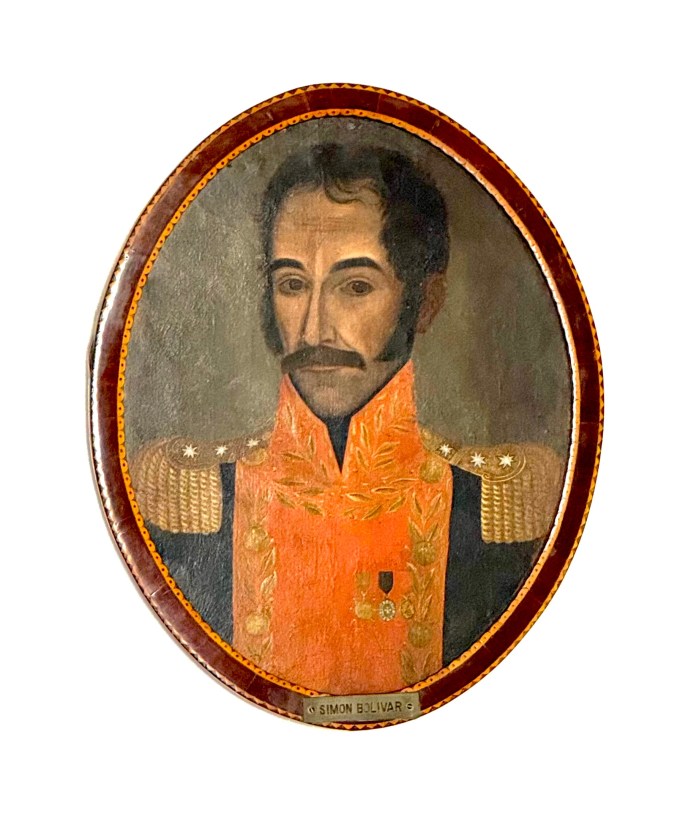
Generally regarded as the “Liberator of South America”, Simon Bolivar spent most of his adult life living in Colombia as its first president (some would say dictator). Upon achieving independence from Spain, Bolivar created “Gran Colombia”, which included modern-day Panama, Colombia, Ecuador, and Venezuela. You can visit his quinta, or country estate, which is now on the edge of modern-day Bogotá. In fact, it’s very close to the cable car for Montserrate, so it’s easy to visit both in one day. The house itself is well preserved and shows how Bolivar and his wife lived, and the gardens surrounding the house are probably the most beautiful, labyrinthine gardens I have visited in South America. Seniors over 60 can visit for free, as can all visitors on Wednesday afternoons. Otherwise, it is 50,000 pesos.
Sample Colombia’s varied dishes
Of course, all that touristing around is going to leave you very hungry. We enjoyed the Colombian cuisine so much that we did a food tour, but you can also sample local dishes on your own.
- Keep an eye out for tamales, often served at breakfast or lunch, generally made with cornmeal and stuffed full of hardboiled eggs, shredded chicken, peas, carrots, and spices, then wrapped in banana leaves and steamed for hours.
- We also liked the ajiaco soup, a hearty stew made with potatoes, corn, chicken, onion, garlic, and cilantro. It’s usually served with a portion of cream, capers, avocado, and rice. If you like pozole in Mexico, you’ll like this soup. Chris had it three times during our six day visit!
- This is going to sound a little weird, but stay with me here. Colombians love cheese, and they love hot chocolate. So they figured, why not put the two together? We gave it a try and I have to say… it works! You slice the soft cheese into small chunks, stir them around in your hot chocolate, then eat with a spoon. Don’t knock it till you try it.
- Fritanga, or bandeja paisa, is a large platter that is considered Colombia’s “national dish”. You’ll definitely want to share this with a friend. It usually consists of rice, beans, a fried egg, ground beef, chorizo or blood sausage, pork rinds (chicharrón), plantain, avocado, and arepa (corn cake). Yes, it’s all as delicious as it sounds.
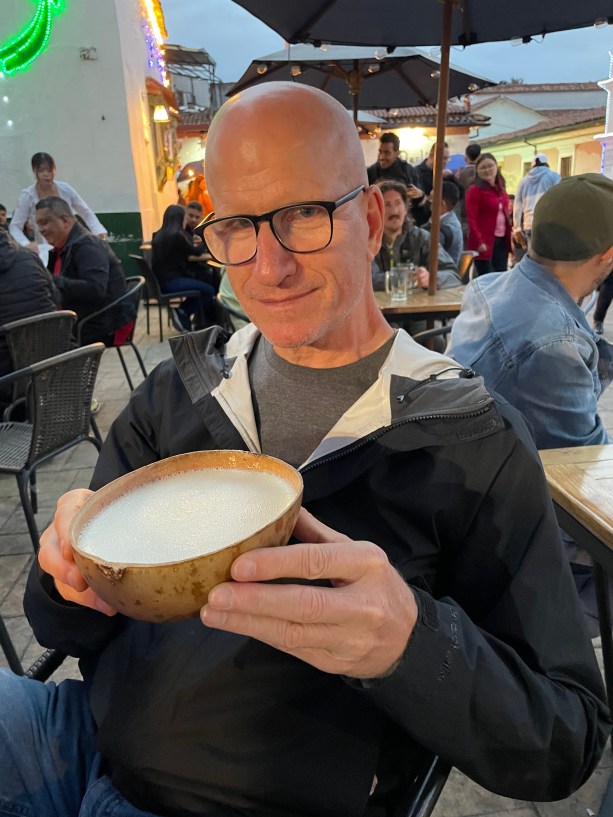
- We found that in most evenings, Bogotá goes to bed fairly early, but on Friday and Saturday nights, people were out and about, eating and drinking with friends. That’s the perfect time to visit the Candelaria neighborhood and visit the Chorro de Quevedo plaza, home to the last remaining chicherias. You can sample their many-flavored fermented corn drinks and indulge in a bowl of it while crowd watching.
Relax and enjoy the coffee culture
Of course, Colombia is home to some of the best coffee in the world. Their rich volcanic soil, high altitude, and ideal climate makes coffee production in Colombia one of their biggest exports. They are, in fact, one of the only countries that produce 100% arabica beans. Some coffee plantations are planted near banana groves, while others are planted near cacao trees. Notes from both help create the rich, smooth taste of Colombian coffee. You can visit a coffee plantation within a few hours of Bogotá, or visit one of several coffee cafes in town that will explain the ins and outs of coffee production and various ways to prepare it. Then, sit back and relax with a cup of some of the purest coffee in the world, and reflect on how far Colombia has come in recent decades.

Have you visited Colombia? For a look at another part of this beautiful and varied country, check out our visit from several years ago to the north, when we visited Santa Marta and hiked the Ciudad Perdida!






 PalmTreeMusings