Do you live in the Washington DC area and are looking for a quick vacation spot that is close to home? Are you visiting DC soon and want to add in a day trip to somewhere outside the city? Do you wonder how how find direct flights from nearby airports? Do you need some packing tips? If so, check out this presentation:
Do you love Washington DC? What is your favorite place to visit outside the city itself? Let us know in the comments below.
Even if you’ve never been to Malta, that doesn’t mean you’ve never seen some of its natural and historical beauty! Malta has featured as a filming location in dozens of movies over the years, so chances are, you’re more familiar with Malta than you think.
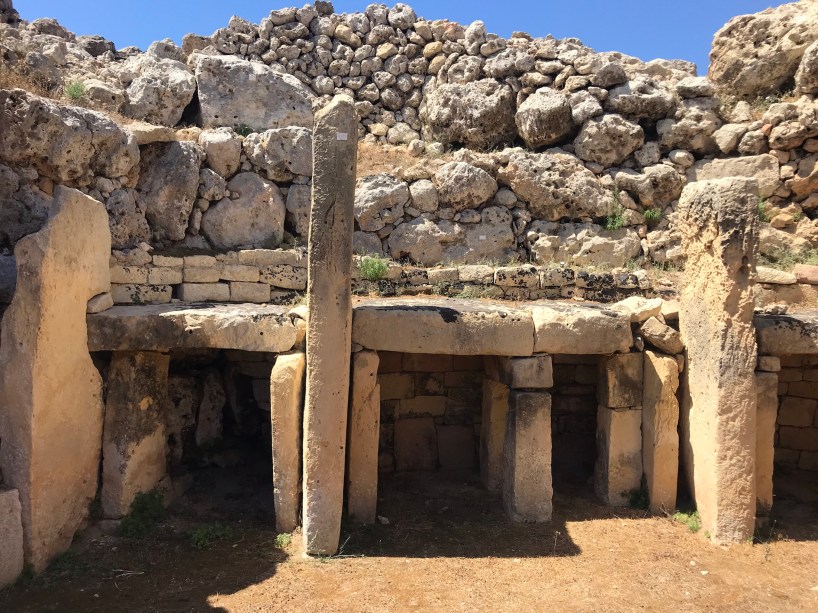
The oldest structures on Malta- in fact, the oldest structures on Earth– date back to 3500 BC. These prehistoric megalithic temples on both Malta and it’s sister island Gozo showed up in the 1953 movie The Malta Story, starring a young Alec Guinness.
These temples have stood here on earth longer than the pyramids in Egypt, or Stonehenge.
As Malta has long been a handy place for resupplying with water from its fresh water springs, ancient seafaring societies such as the Phoenicians, Greeks, and Romans established a presence on these three islands. It’s not hard to see why they would choose some of the beaches and caves here to film scenes from Clash of the Titans (1981) and Troy (2004). The scene showing Achilles (Brad Pitt) talking with his mother, the sea nymph Thetis, was filmed on the Maltese island of Comino.
Ghajn Tuffieha Bay, on the north coast of Malta, was used for the beach scene when the Greeks land at Troy (photo credit: moviesmadeinmalta)
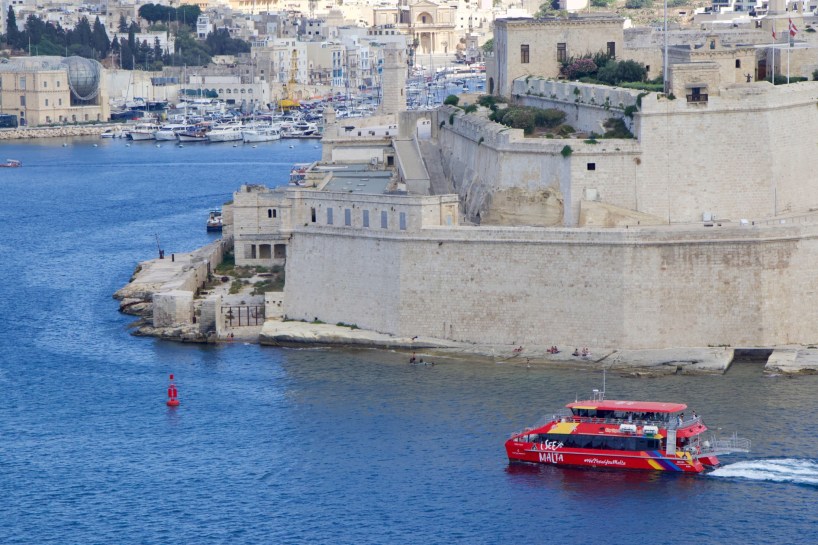
With its monochromatic sandstone walls, it’s easy to see why Malta has represented other scenes from Ancient Greece and Rome as well. Fort Ricasoli, just across the Grand Harbor from Valletta, was turned into ancient Rome for 19 weeks while they filmed Gladiator here in 1999. In fact, it was after a night of drinking at “The Pub” in Valletta that Oliver Reed, who played Antonio’s Proximo, died- which is why his final scene had to have some CGI magic to complete.
Fort Ricasoli, now controlled by the Malta Film Commission, was used for Gladiator and for the movie Troy.
Filming Troy wasn’t the only time Brad Pitt visited Malta. He and Angelina Jolie honeymooned here, and she directed By The Sea on the island of Gozo, one of the three islands that make up Malta. You can also spot some of Gozo in Game of Thrones season one – the Dothraki wedding- and in Clash of the Titans- the scene featuring the battle of the Kraken was shot at the Azure Window.
The Azure Window, before it’s collapse in 2017 (photo credit: Condé Nast)
In the late Middle ages, Malta was home to the Hospitaller Order of St John of Jerusalem, so it is no surprise that Malta would be a perfect place to film movies set in the times of the Crusades. The Order built most of the island’s defense fortifications in the 200 years they ruled Malta as a vassal state of Sicily (from 1530 to 1798). Roman Polanski’s 1984 movie “Pirates” was filmed here, as was 1995’s Cutthroat Island, starring Geena Davis. The city of Valletta has also doubled as both “Italy” and “France”, in movies such as Murder on the Orient Express, the DaVinci Code, and The Count of Monte Cristo.
The Grand Harbor makes an excellent Grand Canal in Venice
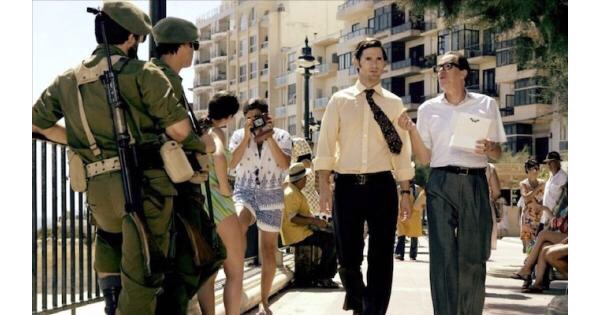
Not all the movies filmed here take advantage of Malta’s distant past. Thanks to being a British Protectorate from 1800 to 1964, a number of buildings were built in the modern neo-classical style. You can see some of these buildings in Munich (2005), and The Holiday (2021).
The Tel Aviv promenade scenes in “Munich” were actually filmed in Sliema, Malta (photo credit: common sense media)
In fact, some of Malta’s film locations feature the current times or the near-future. Thanks to the adaptability of the streets of Valletta and the Grand Harbor itself, Malta has acted as Jerusalem in World War Z, and as the African coast in Captain Philips, starring Tom Hanks.
The walls around Birgu, one of the Three Cities across from Valletta: just add zombies, and you have the scene from World War Z as Brad Pitt is leaving Jerusalem
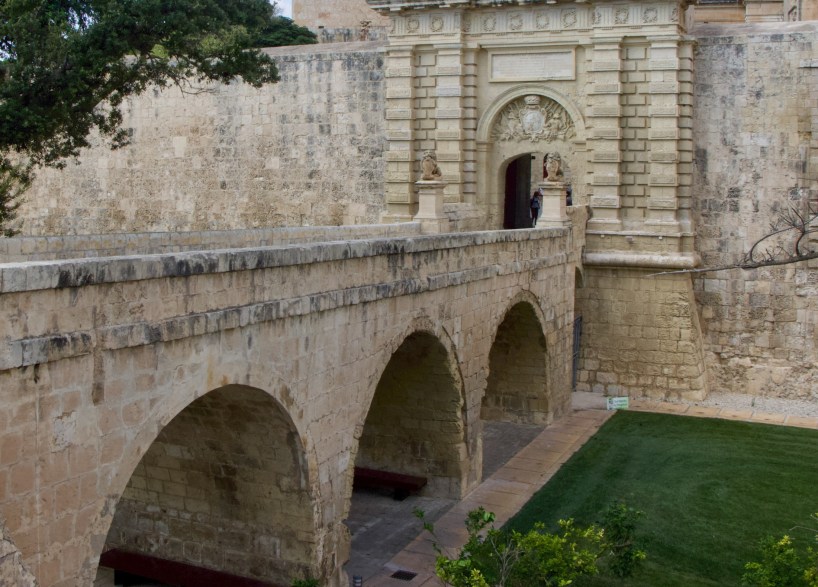
Finally, the timeless features of Malta lend themselves seamlessly to sets that are neither historical nor geographical, at least not in our world. The popular video game, Assassin’s Creed, was filmed as a movie here. Game of Thrones season one used several locations around Malta, including the city of Mdina, posing as the Red Keep in King’s Landing, and Littlefinger’s brothel.
The Mdina Gate, and the last place Catelyn Stark saw Ned Stark alive
Even Malta underground gets in on the movie action. Valletta has three levels of underground tunnels, some of which have existed for hundreds of years. The knights built tunnels for water collection as well as sewage purposes, and in the 1940s, thousands of Maltese spent considerable time in bomb shelters as more than 17,000 tons of bombs dropped on the island. You can tour some of these underground tunnels via the Lascaris War Rooms museum, and see them in action in the film The Malta Story.
These tunnels sheltered 10,000 people in 1941-1942
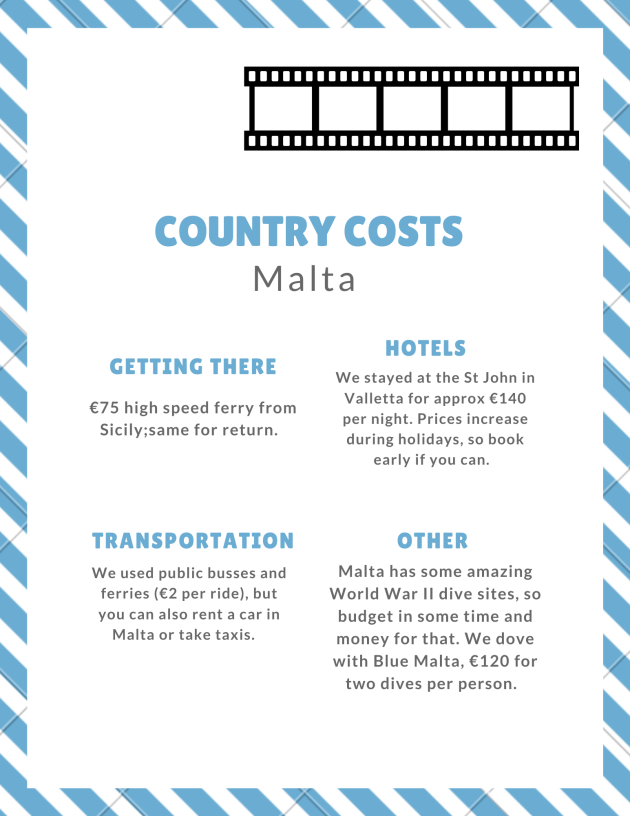
If you’re ready to come visit Malta and see these sights for yourself, it’s not difficult to get here. You can take a a high speed ferry from Sicily, or fly in using various airlines (RyanAir has a hub here so look for great deals). Once on the island, there is an excellent public bus network (each ride €2 but includes a 2 hour transfer window), as well as multiple daily ferries to the Three Cities, Gozo, and Comino. With 300 days of sunshine here, it gets quite warm in the summer, but the rest of the year can be quite nice.
It may seem as though Tunisia, perched on the northern end of Africa, is very far away and inaccessible, but really that’s not true! With nine international airports, and visa-free up to 90 days for many nationalities, getting in and out of Tunisia is not all that difficult.
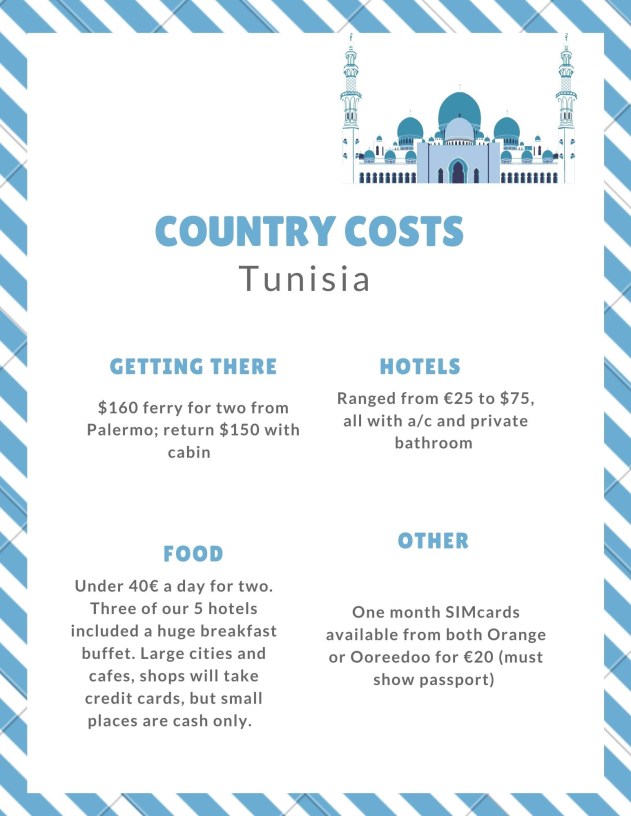
Since Chris and I were already very near Tunisia geographically, we decided to take a GNV ferry from Sicily to Tunis. However, if you’re in Europe, many international airlines fly into the Tunis-Carthage airport as well as the other main airports of the country, including Lufthansa, Air France, Alitalia, Turkish Airlines, and Emirates. (Also TunisAir if you’re feeling really brave).
The tomb of Tunisia’s first President, Habib Bourguiba
We started our two weeks in-country in the city of Tunis. The Carleton Hotel provided a soft landing for us, at a very reasonable rate. This century-old hotel has friendly staff and an amazing breakfast. Our first day here was part of the Eid holiday, so we visited the medina and found it was almost empty, but a few shops were open. We returned the next day to experience it with a bustling crowd, and then went back that night for a tour with Salah, who we found on Guruwalk. We were really impressed by the small details he pointed out to us- embellishments and motifs we never would have noticed on our own- and the number of beautiful antique buildings he got us into, hidden behind otherwise nondescript doors.
Al-Zaytuna Mosque, built 698 AD, in the middle of the Tunis medina
It’s fairly easy to get around Tunisia, as long as you have a bit of patience. We wanted to visit some cities in the south, so we got a train ticket (24 Dinar/$8US) for one of the 3 daily trains departing Tunis and arriving in Gabes. From there, we got a collective taxi (called a “louage“) for just 2 Dinar each to take us to Matmata, which happens to be where they filmed several scenes from two of the Star Wars movies. It’s very easy to walk around Matmata and visit the Hotel Sidi Idriss- also know as Luke Skywalkers’s family homestead- on your own (1 Dinar entry), or you can book the hotel via their Facebook page for approximately $20 a night. The small town of Matmata actually has a tiny tourist information office, and they sent us with a guide to show us the Hotel Sidi Idriss, as well as a Berber troglodyte (cave) house, where we had tea and bread with olive oil with the family living there. Again, you can do all this on your own, but we enjoyed chatting with our guide and didn’t mind the 30 Dinar ($10US) fee.
A galaxy far, far away…. Hotel Sidi Idriss, which featured as the home Luke Skywalker grew up in
Matmata is considered “the doorway of the Sahara”, so from there you can choose to head further into the desert to see other Star Wars filming locations such as Nefta, Ksar Hadada, or Ong Jemel, or you can rent quads and go out to the sand dunes, or visit an oasis. Since Chris and I use to live in the middle of the Sahara desert, we decided instead to head north to El Djem, a small city two hours north of Gabes. El Djem is home to the third largest Roman coliseum (after the ones in Rome and Capua). Seating 35,000 people, it was built by the African Emperor Gordion the Third around 238 AD. Entrance to the colosseum is 12 Dinar ($4US) and also gets you in to the nearby Archaeological Museum, home to dozens of mosaics and other Roman artifacts found in the town, which the Romans called Thysdrus.
The El Djem coliseum
From El Djem, it’s a quick one hour train ride north to Sousse. Since this train will already be in progress coming from the south, it will likely already be a) late and b) full. Be prepared to stand for a while, even if you purchase first class seats (5 Dinar), or ride at the end of the car with an open doorway, hobo style. At least there’s a nice breeze!
Chris is ready to ride the rails
Sousse is home to a pretty good sized walled Medina, and the second best archaeological museum in Tunisia. For the past year, the National Bardo Museum in Tunis, which shares a building with the National Assembly, has been closed due to politics. There are no stated plans to reopen the museum, so if you’re into history, geography, and archaeology, head to the Sousse museum. At 10 dinar entry, it won’t break the bank, and it only takes an hour or two to visit. You can spend the rest of the day or the evening in the Medina of Sousse, or hop on a louage to go the short distance to Montesir, another walked city on the coast featuring a ribat (fort).
The Sousse Archaeological Museum
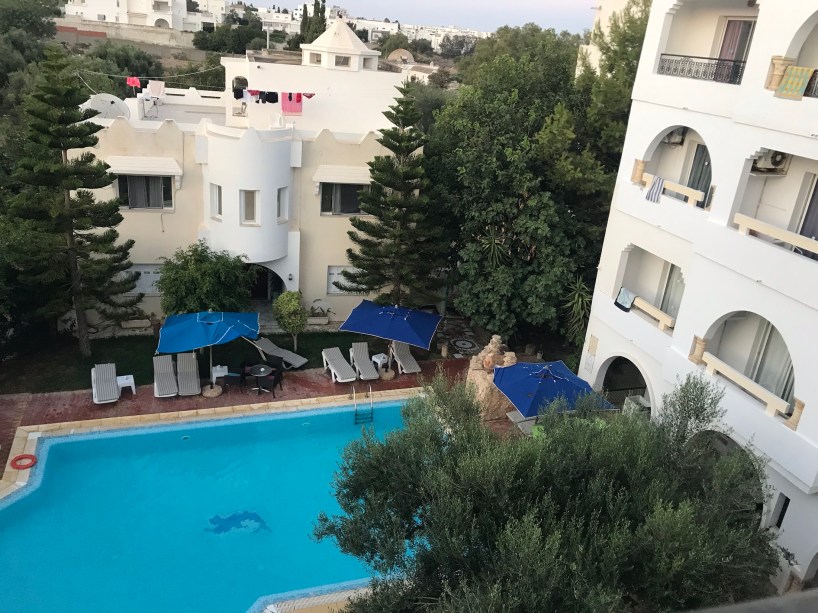
Heading north once more from Sousse and Monastir, we took a louage to Hammamet, a beach town full of resorts near Tunis. You can find hotels in this town for anywhere from $25 a night in up to $400 if you’re super fancy. We are not, so we stayed at the Hotel Residence Romane, complete with pool and a somewhat “private” beach across the road. Even better, there’s a German bakery next door, so we were quite happy with our choice. They also have a tour desk, and can get you set up with a 2 day/1 night tour to Matmata, El Djem, and the Tozeur desert at a pretty reasonable rate.
The Residence Romane
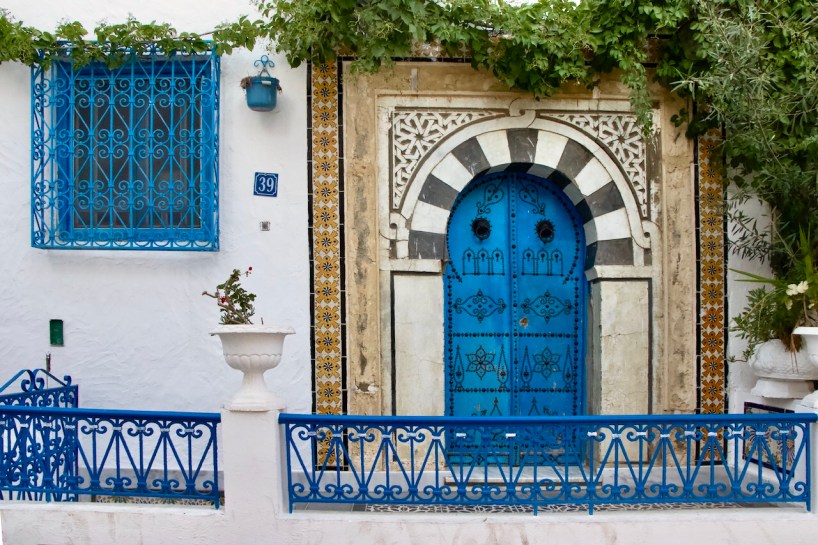
After three days at the beach, we wanted to visit Carthage. You can take a louage from Hammamet to Tunis, and from there switch to their light-rail system. It only has a few stops, and one of them is quite close to the Roman ruins, while the next station is at the foot of the hill that the blue and white city of Sidi Bou Said sits upon. Both areas are worth at least a full day and an evening of your time, if not more. Another nice place to visit, very close to the ruins of the Ancient Roman theater, is the American North Africa military cemetery.
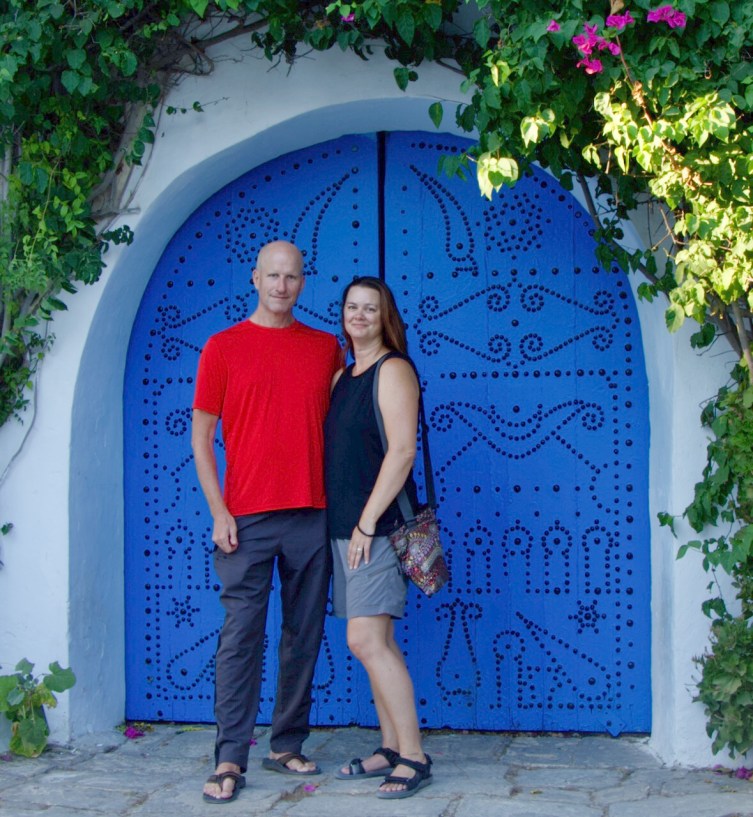
The Roman ruins in Carthage (a one-day pass to 8 sites will cost you 12 dinar/$4 US)Sidi Bou Said, named for a 12th c Sufi prophet
We enjoyed wrapping up our trip in the center of Carthage, staying in a small bungalow owned by a family that lives on the edge of Sidi Bou Said. Pro tip: we had a washing machine, so we were able to launder everything while we prepared for the next part of our trip. After one last stroll around the serene blue-and-white city, we were ready for our overnight ferry out of Tunisia.
We are fond of “slow travel”, and less fond of flying, so we decided to use ferries as our primary means of getting around the Med this summer. We found the website/app Direct Ferries to be the most helpful at helping us arrange our passages and keep all our boarding passes in one place.
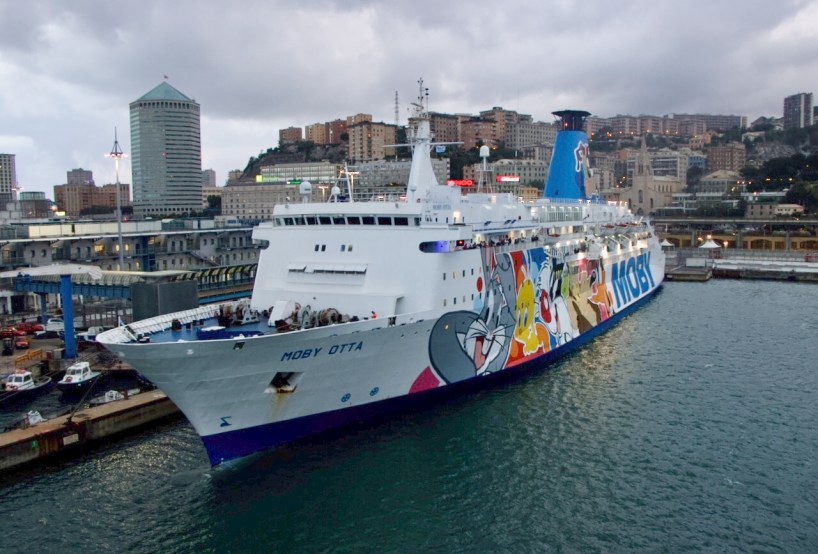
Our home for 12 hours
From Genoa, we boarded a Moby ferry boat at 8 pm, watched as the city receded into the distance, and retired to our cabin for a shower and a good night’s sleep. When we awoke at 6 am, we were arriving in Bastia, Corsica.
Bastia Harbor
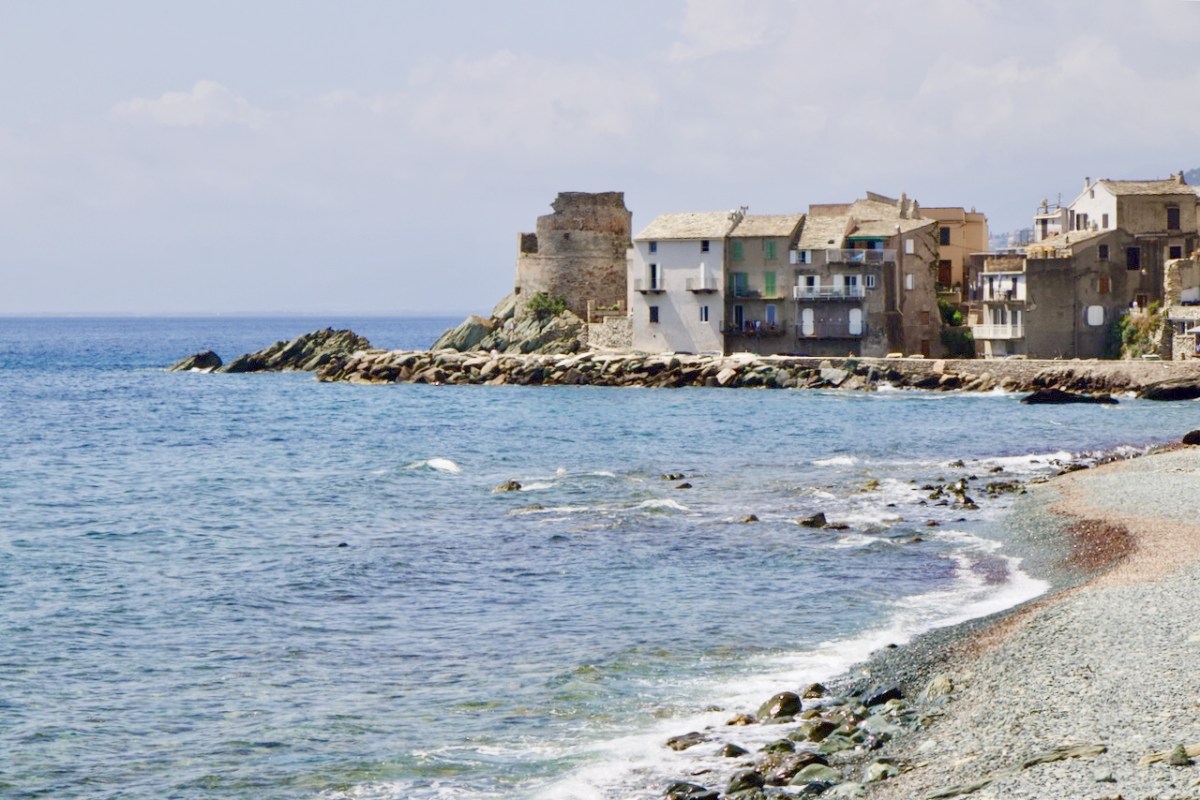
Corsica is a semi-autonomous region of France, but it has a varied past including several centuries under the rule of Pisa and then Genoa, a short independence, and then “suzerainty” under the French (slightly different from “sovereignty”). As such, people who live there speak French, but also a lot of Italian, and even a local language called Corsu that has ties to Latin. Aside from the beaches and lovely small towns, many people come to Corsica to hike the GR20.
In Bastia we dropped off our luggage, had a leisurely breakfast on the quay, and took a “tiny train” tour up to the walled city and through some of the historic sites of the town. We also had time for a swim in the Mediterranean and lunch overlooking the brilliant blue waters. That night, our town was hosting a big concert and DJ in the main plaza, so that was fun to listen to as well.
Inside Bastia’s walled city
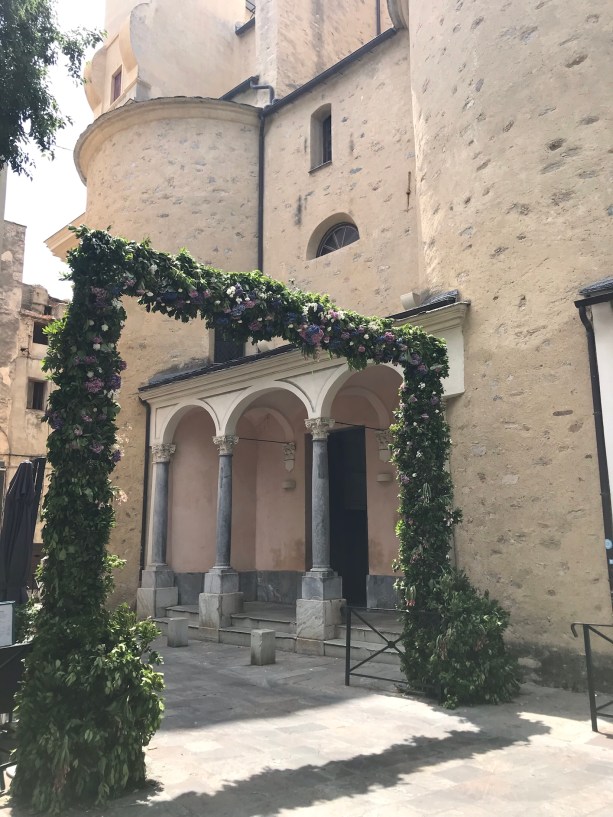
After a couple of days exploring Bastia, we took a bus south to Porto Vecchio. We actually arrived in the midst of a huge, weekly farmers market, every stall selling various sheep’s cheeses, cured meats, honey, herbs, French bread, and pastries. We put together the makings of a picnic, and had lunch next to the church in the center of the historic fortress city. Once the weekly market closed down, Porto Vecchio turned out to be a much quieter town, full of high end shops advertising the sorts of items you’d see wealthy people wear on their yacht vacations.
Napoleon was born in Corsica
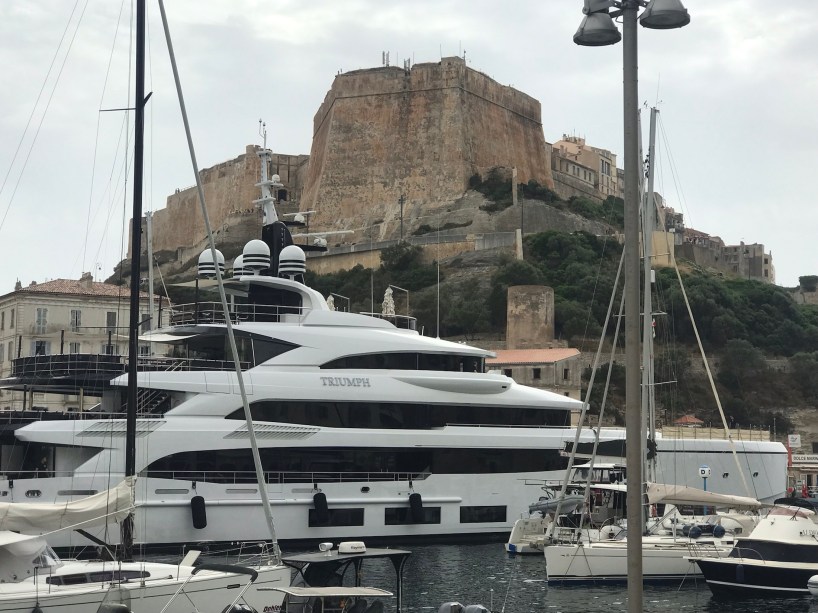
After missing our bus out of Porto Vecchio- but 30 minutes later getting one that would be “twice as much time but half the price”- and a meandering route through four mountain villages (which I quite enjoyed), we arrived in our final Corsican town, Bonifacio. Talk about #yachtlife! The harbor here was filled not only with boats, but yachts, and superyachts at that! Some you could rent for a day, sone for a week, some for a month. Our hotel, the Solemare, featured a pool next to the harbor, and I was content to float there while watching these amazing boats maneuver their way in and out of the harbor.
Now that’s a boat
We walked up the hill to the walled city- Chris took a detour and explored the beautiful cliffs nearby- and we could see the town from above, which was stunning. In the far distance, we could see Sardinia, our next stop. On our last day, something strange happened as we were walking towards our ferry- the sea level began to rise- quite quickly!- and the waters began bubbling up out of the storm grates in the roads. Shopkeepers hastily closed their shop doors as water began to pour in. Boat owners came out of their cabins and looked around in confusion. After a few minutes, the waters began to recede and after just 10 or 12 minutes the boats were actually now lower than normal, their gangplanks tilted sharply up towards the docks. Everyone was talking excitedly but no one seemed to know the cause- perhaps a spring tide, perhaps a small underground earthquake. We never did find out, but it was quite interesting to watch!
The view of Bonifacio from the cliffs opposite
It’s just a one hour ferry to Sardinia from Corsica. From the Nuragic to the Phoenicians, Carthaginians to Romans, Vandals, Byzantines, and Aragonese, it seems everyone has wanted to conquer this island in the middle of the Mediterranean. Now a semi-autonomous region of Italy, Sardinia is known for its food, its beachy coastline, its archaeological finds, and its hiking trails. We arrived in Santa Teresa de Gallura, a small town full of B&Bs (the kind you used to be able to stay in before AirBnB took over the market). We stayed at a family home full of heirloom antiques, featuring a delightful homemade breakfast. There was a lovely nearby beach, so we were able to enjoy another swim in the sea.
View from a cross-island bus
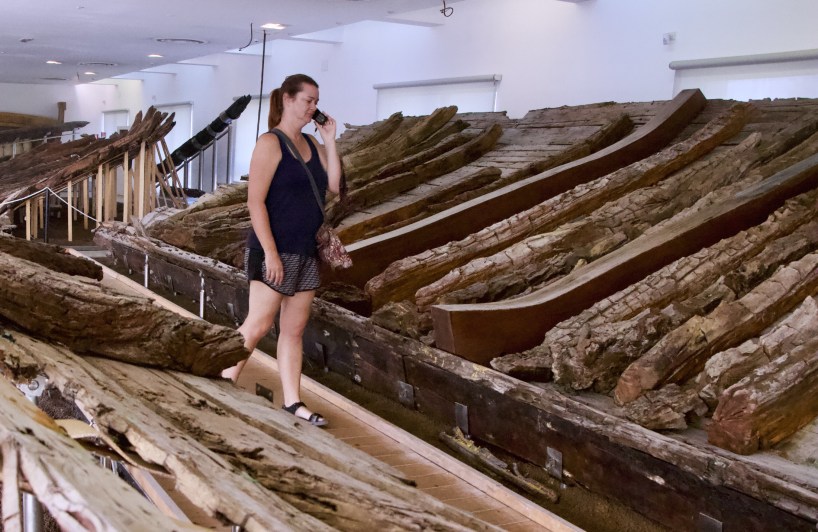
We took the bus to Olbia, on the eastern side of the island. Here we visited the museum, which told of all the invading and conquering of Sardinia, and featured artifacts from shipwrecks and a harbor attack centuries ago. The museum is not quite finished, but what they had was great.
Amidst the recovered shipwrecks at Olbia’s museum
After Olbia, it was a train ride across and down the entire island to Cagliari, the capital. A free walking tour by Catch the Pink! showed us the highlights and also informed us of the main foods we must try while in town. We stayed in a private room in a hostel which was formerly a monastery- their female dorm is actually a converted chapel.
The sights of Cagliari
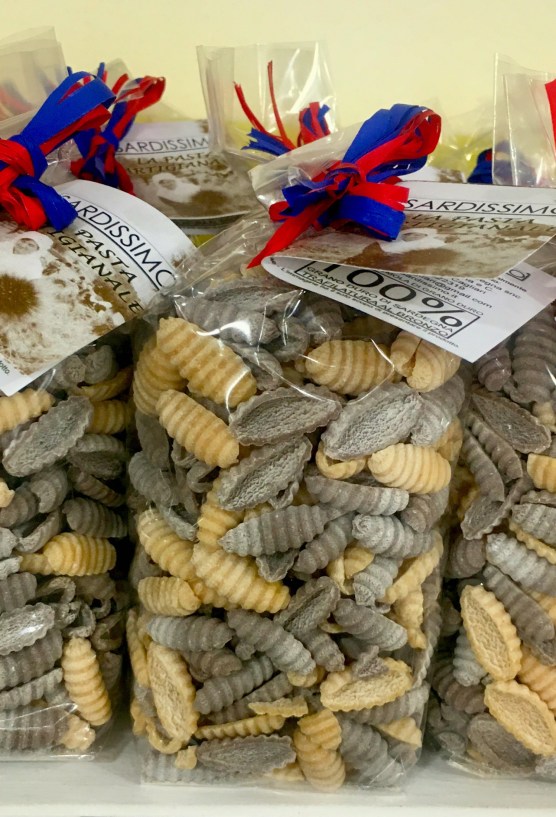
In the hot part of the day, we nap or sit in a shaded cafe and drink Aperol spritzes, which I don’t actually care for, but they are giant and they are refreshingly cool. Often they come with tagliere (salami and cheese tray), gratis. We’ve also tried culurgiones, a stuffed and braided pasta filled with potatoes, basil, and cream (delicious), pane fratau (a lasagna-like dish made with very thin Corsican bread), malloredus alla campidanese (a rolled pasta with indentations, sometimes tinted with saffron), and freggola (small pasta balls similar to pearled couscous) served with mussels or other seafood. For dessert, cheese wrapped in pastry, fried, and covered with honey called seada, followed by a nightcap of myrto, or myrtle liquor.
Malloredus pasta, which gets its shape from being rolled against the side of a reed basket
After three days in Cagliari, it was time to catch our next ferry. Visit our site next month- or hit the “Follow” button below- to find out where Chris and Deah wind up next. Ciao!
Portugal may be a small country in Europe, but it is packed with things to do, food to eat, wines to drink, and trails to hike. Not to mention the beaches, the cities, and a rich historical past.
Chris on the Camino Portuguese, an alternate route to Santiago de Compostela
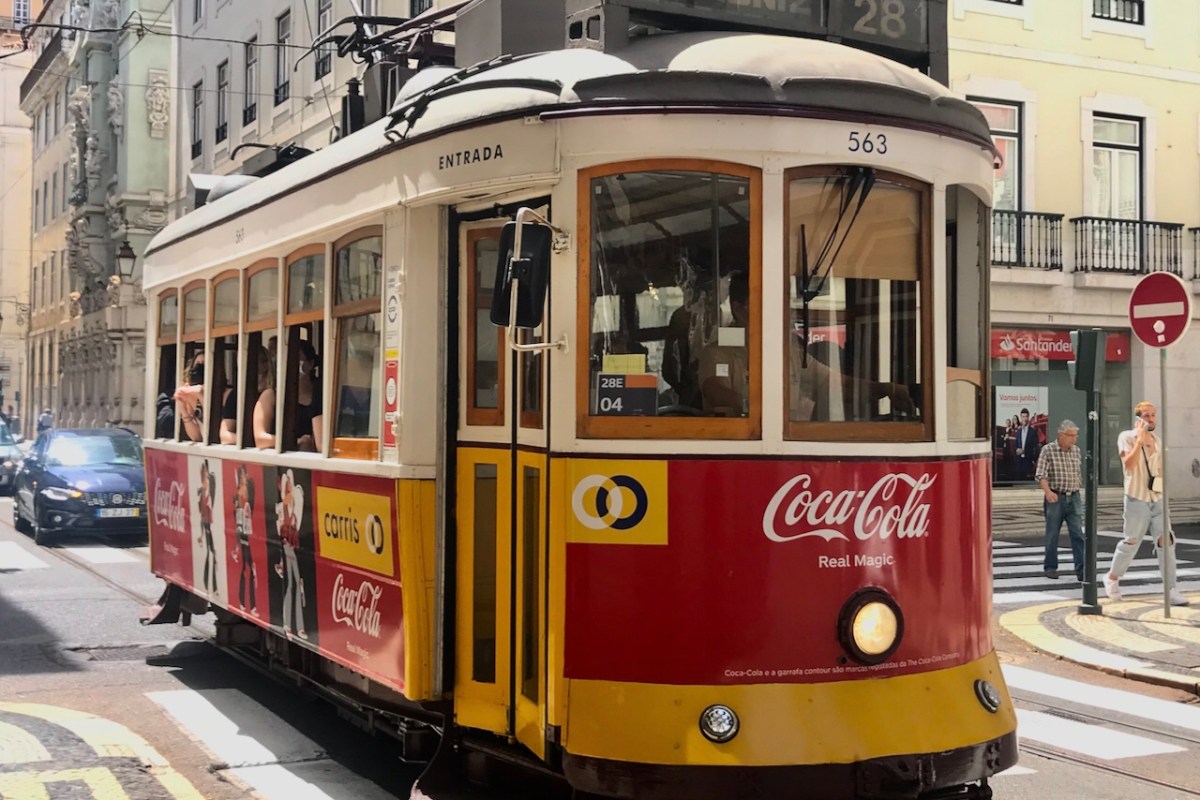
I first visited Portugal in 2008 when I was teaching school in Angola, so I was already familiar with the cities of Lisbon and Porto. For this trip, Chris and I flew in to Lisbon and spent just a few days there. We joined a walking tour, explored the Chiado and Alfama neighborhoods, and ate as many pasteis com natas as possible. We went out to the Tower of Belem and the Monument to the Discoverers, and walked back along the river for a while before hopping on one of Lisbon’s ubiquitous yellow trams. At night we walked through alleys with the sounds of fado singers spilling out, and smelling of baked bacalou from the kitchens.

















 PalmTreeMusings