
Busy with life and other adulting things, C and I decided we needed a break. I checked my Google Map to see what fun locations we had pinned as “Want to Visit”, and Oaxaca caught my eye. A month later, we were immersed in this cool town, wowed by the laid-back lifestyle, the temperate weather, and the fun things to do nearby. Read on to find out more about vibrant Oaxaca!
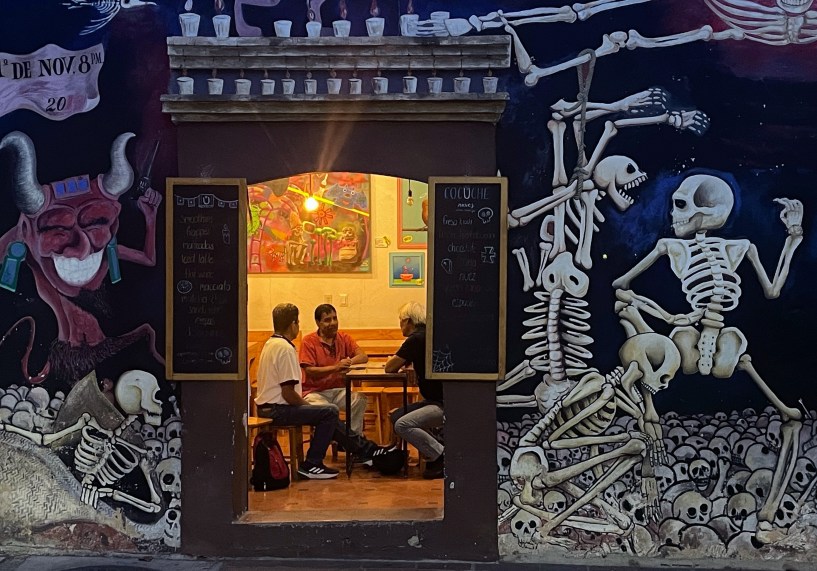
Dia de Muertos: Although the main day for this festival is the night of November 2, in Oaxaca they celebrate for a week straight, so try to stop by the town sometime in that week. You’ll find the plazas awash in yellow and gold chrysanthemums, ofrendas in front of every business, calendas parading around town, and skeletons everywhere. Not sure what Dia de Muertos is? Try watching the Disney movie Coco for a fun overview!
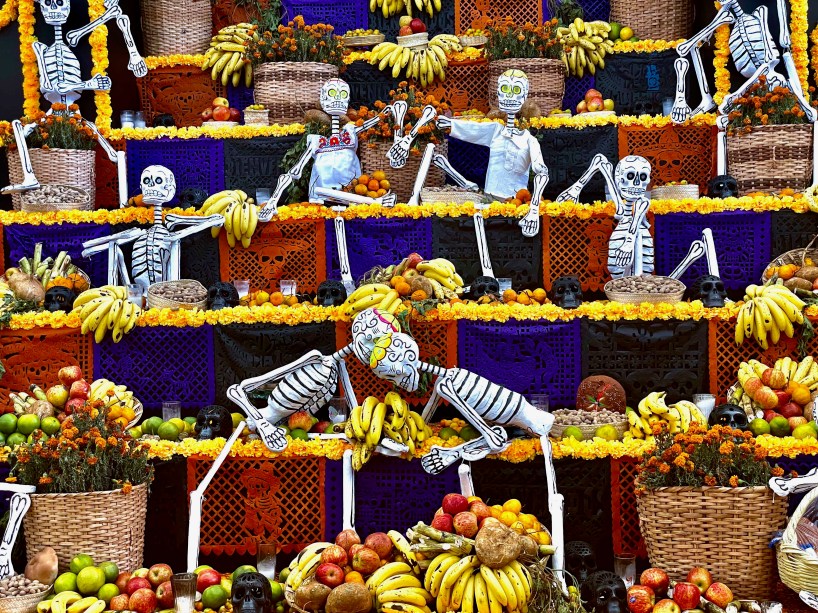
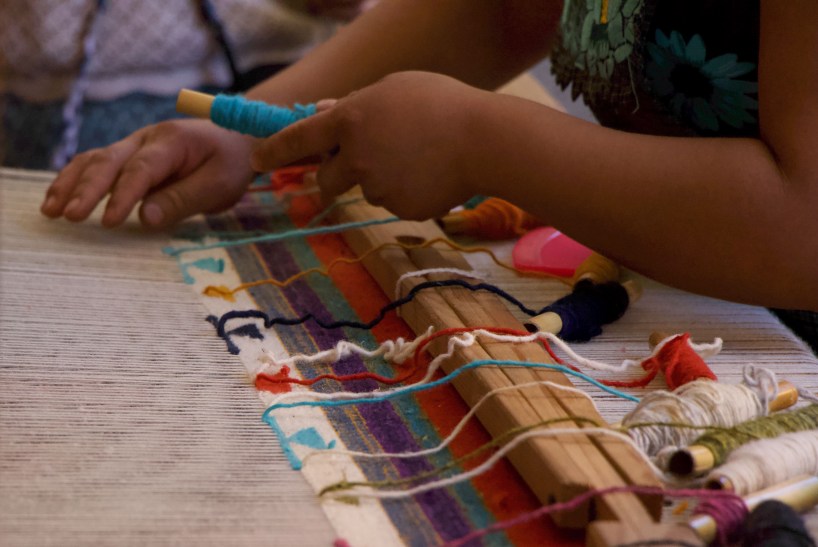
Besides this one-of-a-kind festival, there are plenty of things to do in Oaxaca. An area of great importance to the Zapotec people, the Oaxaca valley has been settled for thousands of years. Families in the region still make mezcal from the blue agave plant using the same time-honored traditions as their forbears, and nearby, entire families use natural ingredients to dye wool and create rugs and tapestries using ancient techniques.
Mt Alban historical site: Inhabited for over 1500 years, Monte Alban is an important site for the Zapotec people, as well as the Olmec and the Mixtecs. The archeological site is laid out according to the stars, and features several pyramids, tombs, and terraces. Visiting the site is fairly easy; you can join a day tour, on sale at the zocalo (main plaza) in Oaxaca, you can take a private taxi, or you can take a shuttle bus, which departs from the front of the Hotel Rivera del Angel (2 blocks south of the zocalo, costs 100 pesos). Once at the ruins, plan for about 3 hours, and entry is 90 pesos for foreigners. Tip: Take an umbrella or wear a hat; the sun is strong up there.

Day tour to the Hierve el Agua: Another popular day trip is visiting the Hierve el Agua. You can do this on your own, but it’s rather far out of town, so it’s very easy to do a full day tour, which visits several sites in the same general direction. We booked our day trip from one of the touts in the zocalo, and got picked up from our hotel at 8 am. We visited Santa Maria del Tule, a small town that features the largest tree (by circumference) in the world. Then we visited a family rug-making factory, and learned all about the natural dying techniques and how long it takes to make their intricate and colorful patterns. We also visited Mitla, another set of archaeological ruins, and had lunch. The afternoon was spent at Hierve el Agua (“the water boils”) to swim in the springs and see the limestone cliffs. We ended the day with a tour of a small mezcal factory, along with a tasting, and were dropped off back at home at 8 pm. The tours range from 400 to 500 pesos, so try to strike a good bargain!
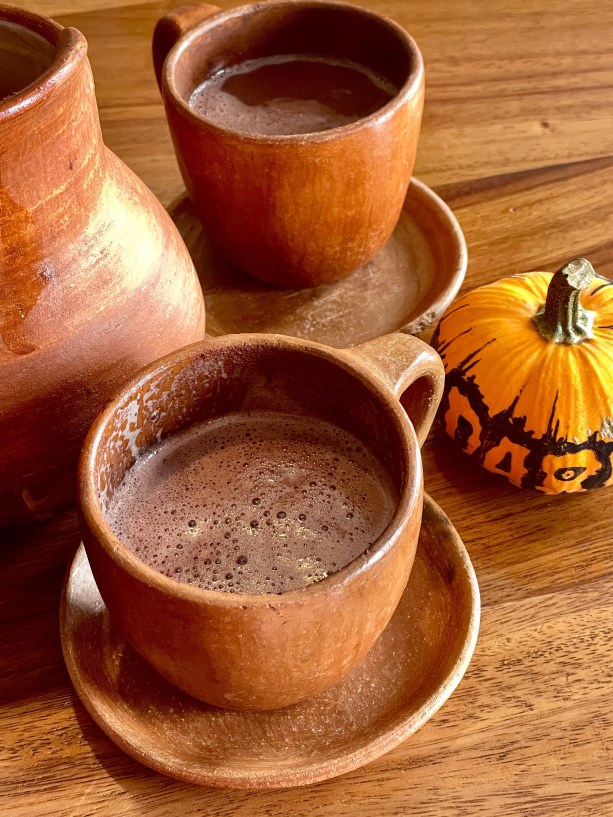
Enjoy the coffee culture: Or, even better, enjoy a Mexican beverage of choice. We found so many cafes and outdoor terraces, perfect for enjoying a cold beer, a tasty coffee, or my personal favorite, chocolate y agua. Another fun one to try is tejate, made from toasted corn, cacao beans, cacao flowers, ice, and sugar. Of course, if it’s 5:00 somewhere, you may as well try one of the dozens of kinds of mezcals, made from the local blue agave cactus.
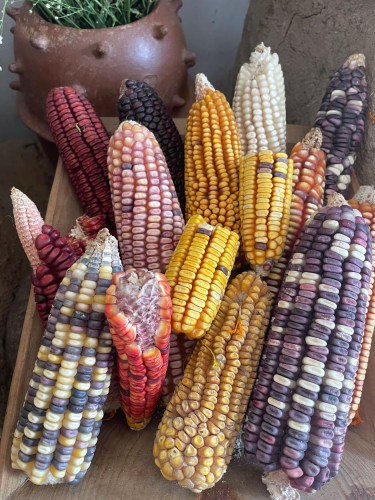
Sample the culinary delights: If you like food, then Oaxaca is a great place for you. From dozens of varieties of corn, several different kinds of tomatoes, and of course all kinds of chiles, you can try a different meal every time you go out. Oaxaceños are known for their seven unique mole sauces (rojo, coloradito, amarillo, verde, negro, chichilo, and manchamantel), as well as the tlayuda, a thin, crispy tortilla covered with beans, cheese, lettuce, avocado, meat, and salsa. Yes, it sounds like a taco, but it’s also… not. Best to just try it for yourself.

Visit the historical city center: The Spaniards invaded Oaxaca and had declared it a city by 1529, and immediately began laying the streets in a grid pattern and building churches, cathedrals, and plazas. The zocalo, or main plaza, of Oaxaca is always filled with musicians, tourists, locals, art exhibits, concerts, and more. There are two sixteenth-century churches in Oaxaca, both of which are worth a visit for their architecture and their lovely surrounding grounds.

Explore nearby neighborhoods: In addition to spending a lot of time in the main historic center, we also did some exploring in the nearby neighborhoods. We especially liked both Barrio de Jalatlaco and Xochimilco, slightly north of the city center. Using our Guruwalks app, we booked a walking tour for each neighborhood. In Jalatlaco, we looked at some of the fabulous street art, and ended at a delicious local taco stand (which we returned to the next night for more!). In Xochimilco, we found a hidden organic market, visited a mezcaleria, and ended in a cemetery, still decorated for Dia de Muertos.

Logistics:
You can fly direct to Oaxaca from US cities DFW, Houston, and Los Angeles. If you’re already in Mexico or South America, you can fly directly from Cancun, Guadalajara, Guatemala City, Merida, Mexico City (Santa Lucia), Monterrey, or Tijuana.
There is no Uber presently in Oaxaca. The best way to get around is to call a taxi company, take a collecctivo taxi from the airport, or take the public bus.
Hotels in Oaxaca run anywhere from $10US a night to several hundred, depending on how fancy you need to be. We stayed at a hotel two blocks from the Zocalo called Hotel Dainzu, and paid $45 a night for a double bed, private bathroom, with a balcony. Later in the week we stayed at an AirBnB in Xochimilco for approximately the same price, and later we tried another hotel in Jalatlaco, Casa Gubidxa, which was $40 per night, and featured a king sized bed and several rooftop terraces.
Have you been to Oaxaca? What was your favorite part of the town? Did you visit during Dia de Muertos, or another time of year?
 PalmTreeMusings